

P1451 on 2014-2020 Ram 2500 6.7L Cummins: Diesel Particulate Filter Performance Causes and Fixes
On a 2014-2020 Ram 2500 with the 6.7L Cummins, P1451 almost always points to an issue with the DPF pressure sensor system. The most common and cheapest fix is cleaning or replacing the sensor's rubber hoses and, critically, clearing the metal ports they connect to, which get clogged with soot. Expect to pay $20-$50 for new hoses. If that doesn't work, the sensor itself is the next likely culprit.
- Do not assume the expensive DPF is bad. P1451 is almost always caused by a cheap and simple-to-fix issue.
- Your first diagnostic step should always be to inspect, clean, or replace the DPF pressure sensor hoses and the metal ports they connect to.
- Driving habits matter. If you take frequent short trips, you may need to perform a long highway drive to allow the DPF to regenerate.
- Check with a dealer if your truck has the latest PCM software, as a simple update may fix the problem.
What's Unique About the 2014-2020 Ram 2500
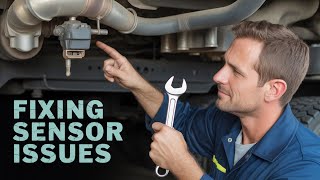
On the 6.7L Cummins, the aftertreatment system is sensitive to driving cycles, and P1451 is a very common code. Frequent short trips or prolonged idling often prevent the exhaust from reaching the high temperatures needed for regeneration, leading to soot buildup. Chrysler/Ram has released multiple software updates via Technical Service Bulletins (TSBs) for both generations in this year range to refine the diagnostic logic, suggesting the original programming was often too sensitive 🎬 Watch: Understanding the Ram-specific P1451 fault code for real-world driving conditions.
Generation note: This range covers the end of the Fourth Generation (2014-2018) and the start of the Fifth Generation (2019-2020). The P1451 code is a known issue on both generations, with specific TSBs for software updates applying to each. For example, TSB 18-053-14 REV. B applies to 2014 models and addresses multiple fault codes to prevent unnecessary MILs. TSB 18-101-22 REV. A applies to 2019 models and includes an update for P1451 among many other system improvements. Manufacturer service bulletin #1813022REVA also identifies P1451 as a performance issue that may be addressed through software recalibration on certain 6.7L platforms.
Symptoms You May Notice
- "Exhaust Filter Full See Dealer" or "CATALYST FULL: SEE OWNERS MAN" message on the instrument cluster display (EVIC).
- Check Engine Light illuminated.
- Automatic DPF regeneration is disabled by the vehicle's computer.
- Reduced engine power or 'limp mode' if the DPF becomes critically clogged.
- Immediately replacing the entire Diesel Particulate Filter (DPF) assembly. The DPF itself is expensive and rarely the cause of P1451. The issue is almost always a much cheaper supporting component like a hose, port, or sensor.
Most Likely Causes
- Clogged, Cracked, or Melted DPF Differential Pressure Sensor Hoses 🔴 High Probability The rubber or silicone hoses are constantly exposed to high exhaust temperatures and road debris, causing them to become brittle, crack, melt, or get clogged with soot. This is the most frequent cause of P1451.
How to confirm: Visually inspect the hoses running from the DPF to the pressure sensor for any cracks, melting, or kinks. Remove the hoses and attempt to blow compressed air through them; if they are blocked, they need cleaning or replacement.
Typical fix: Replace the hoses with new high-temperature silicone hoses. OEM part numbers vary by year; examples include Upstream Tube 68363173AC and Downstream Hose 68363177AC for later models.
Est. part cost: $20-$60 - Clogged DPF Pressure Sensor Ports 🔴 High Probability The metal tubes on the DPF housing where the pressure hoses connect are a significant chokepoint and frequently become blocked with hard-packed soot, leading to incorrect sensor readings even if the hoses are new.
How to confirm: After removing the hoses, use a small wire, a pick, or a 1/8" drill bit (turned by hand) to carefully clean out the metal ports on the DPF assembly until they are completely clear.
Typical fix: Carefully clean the ports to remove all soot buildup. This step is critical and often missed.
Est. part cost: $0 - Failed DPF Differential Pressure Sensor 🟡 Medium Probability The sensor operates in a harsh environment and can fail electronically over time, sending incorrect or irrational voltage signals to the ECM.
How to confirm: If the hoses and ports are confirmed to be clear, the sensor is the next likely failure point. It can be tested with a scan tool to monitor its pressure readings or checked for proper voltage (typically a 5V reference, ground, and signal wire).
Typical fix: Replace the DPF differential pressure sensor. Part numbers are year-specific: Mopar 68085750AB for 2013-2018 models and 68312096AB for 2019+ models.
Est. part cost: $80-$160 - Outdated Powertrain Control Module (PCM) Software 🟡 Medium Probability → Shop Engine Control Module (ECM) Ram has issued multiple TSBs to update the PCM software, which refines the sensitivity and logic for triggering P1451, indicating the original factory logic was prone to setting the code unnecessarily.
How to confirm: A Ram dealership or a properly equipped independent shop can check your vehicle's VIN against the TSB database to see if an update like TSB 18-053-14 (for 2014 models) or TSB 18-101-22 (for 2019 models) is available.
Typical fix: Reprogram the PCM with the latest available software.
Est. part cost: $0-$200 - Driving Habits ⚪ Low Probability The 6.7L Cummins' aftertreatment system requires sustained highway speeds to generate enough heat for passive and active DPF regeneration. Frequent short trips, excessive idling, or light-load driving prevent this process.
How to confirm: Review your typical driving patterns. If they consist primarily of short-distance, low-speed trips, this is a likely contributing factor.
Typical fix: Perform an extended drive at highway speeds (over 50 mph for at least 30-45 minutes) to allow a regeneration cycle to complete. If the DPF is too clogged, a dealer-forced 'stationary regen' may be required.
Est. part cost: $0
Rare But Worth Checking
- Underlying Engine Issue Causing Excessive Soot: P1451 can be a symptom of another problem like faulty injectors, a stuck-open EGR valve, a failing turbocharger, or boost leaks from cracked piping. TSB #1810222REVA notes that P1451 can sometimes be accompanied by P0299 (Turbocharger Underboost) or P026B (Injection Timing Performance).
- Faulty Thermostat: A thermostat stuck open (often setting code P0128) can prevent the engine from reaching the necessary temperature for DPF regeneration, leading to soot buildup and P1451. TSB #1813022 specifically lists P0128 (Thermostat Rationality) as a related fault that may appear alongside P1451.
- DPF Ash Accumulation: At very high mileage (typically 150,000+ miles), the DPF can become filled with ash, which is the non-combustible material left after soot is burned off. This is indicated by code P242F and requires professional cleaning or DPF replacement.
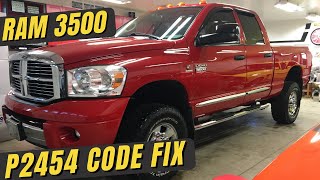
- Chafed DPF Sensor Wiring Harness: On some models, the wiring harness for the DPF pressure sensor can rub against a grounding strap on the transmission bell housing, causing the wires to chafe and short out. This can trigger P1451 or related sensor codes like P2454. 🎬 See how to diagnose DPF sensor code P2454
Diagnosis Steps
- Read all stored Diagnostic Trouble Codes (DTCs). Address any other codes first, especially for the thermostat, EGR, or turbo systems.
- Visually inspect the DPF differential pressure sensor hoses. Look for obvious cracks, melting, kinks, or loose connections.
- Remove the hoses from both the sensor and the DPF assembly.
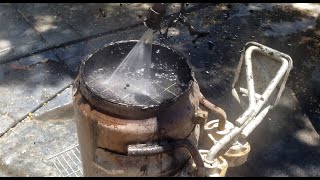
- Thoroughly inspect and clean the metal ports on the DPF where the hoses connect. This is a critical step as they are a common soot chokepoint. Use a small wire or 1/8" drill bit (turned by hand) to ensure they are clear. 🎬 Watch: Step-by-step guide to cleaning a DPF yourself
- Attempt to blow compressed air through the hoses. If they are blocked or brittle, replace them.
- Inspect the electrical connector and wiring harness for the DPF pressure sensor. Look for corrosion, damage, or loose pins. Pay attention to the harness routing near the transmission for any signs of chafing.
- If all other steps fail to resolve the issue, replace the DPF differential pressure sensor.
- If the code persists, consult a dealer to check for and perform any available PCM software updates related to TSBs for P1451.
- As a final step, if the DPF continues to clog quickly, perform advanced diagnostics to check for underlying engine problems causing excessive soot, such as injector or turbo issues.
Parts You'll Likely Need
- DPF Differential Pressure Sensor Hoses
(OEM #Varies by year, e.g., 68363173AC (Upstream), 68363177AC (Downstream))— These hoses are the most common failure point, frequently cracking, melting, or clogging with soot due to heat and environmental exposure. - DPF Differential Pressure Sensor
(OEM #68085750AB (2013-18) or 68312096AB (2019+))— This sensor is the next most likely part to fail after the hoses and ports have been confirmed clear. It can fail electronically, providing incorrect data to the ECM.
Related Codes That Often Appear With This One
- P2463 — This code for 'Diesel Particulate Filter Restriction - Soot Accumulation' is a more severe indicator of the same problem. P1451 is often the initial warning that leads to P2463.
- P242F — This code for 'Diesel Particulate Filter Restriction - Ash Accumulation' indicates the filter is clogged with non-burnable material, a more permanent issue than soot, which can happen at high mileage.
- P0128 — This code for 'Coolant Thermostat Malfunction' can cause P1451 because if the engine doesn't get hot enough, it cannot perform a DPF regeneration.
Technical Service Bulletins (TSBs) & Recalls
- 18-053-14 REV. B: For 2014 models, this PCM update changes several codes to 'two-trip' faults to reduce unnecessary check engine lights and includes other system improvements.
- 18-101-22 REV. A: For 2019 models, this extensive PCM update addresses a long list of potential DTCs, including P1451, P2463, and P242F, and improves various system behaviors like idle stability and shifting.
- Bulletin #1806623: This bulletin for 2019 models notes that P1451-00 (Diesel Particulate Filter System Performance) may be set alongside P0506 (Idle Control System RPM - Lower Than Expected) and P20EE (NOx Catalyst Efficiency Below Threshold).
Platform-Specific Known Issues
- The Critical Port Cleaning Step: A common repair story involves an owner who first replaces the DPF pressure sensor hoses, only for the P1451 code to return. The issue is on
Mechanic-Grade Diagnostic Values
- DPF Differential Pressure Sensor 5V Reference Supply — expected: 4.9 to 5.1 Volts with key on, engine off, measured at the sensor connector.. Failure: Voltage below 4.9V or above 5.1V indicates a problem with the PCM or wiring.
- DPF Differential Pressure Sensor Signal Voltage (Key On, Engine Off) — expected: Approximately 0.61 to 0.77 VDC, depending on ambient temperature.. Failure: A reading of 0V or 5V, or a value that does not change when pressure is applied (using a hand pump), indicates a failed sensor or circuit issue.
- DPF Differential Pressure Sensor Ground Circuit Resistance — expected: Less than 10.0 ohms between the sensor connector ground pin and a known good chassis ground.. Failure: High resistance indicates a poor ground connection, which can cause erratic sensor readings.
- DPF Differential Pressure Sensor Harness Resistance — expected: Less than 10.0 ohms on the signal and supply wires between the sensor connector and the ECM connector.. Failure: Resistance above 10.0 ohms indicates an open or high-resistance wire in the harness.
Scan Tool Commands That Help
- wiTECH or capable aftermarket (e.g., AlfaOBD): Stationary Desoot / Forced DPF Regeneration — Used when the DPF is too clogged for a normal driving regen. This command forces the engine to high idle to burn off soot after the root cause of P1451 (like bad hoses) has been fixed.
- wiTECH or capable aftermarket: DPF Pressure Sensor Learning / Reset DPF Values — This is a critical step required after replacing the DPF pressure sensor or the DPF assembly itself. It resets the PCM's learned values to ensure it correctly interprets data from the new component.
- wiTECH: Reprogram Engine Control Module (ECM) — Used to apply software updates from Technical Service Bulletins (TSBs). Multiple TSBs exist for P1451 to correct overly sensitive diagnostic logic. This should be checked before extensive parts replacement.
Wiring & Ground Locations
- DPF Pressure Sensor Connector — The sensor is typically mounted on a bracket on the passenger side of the transmission, away from direct exhaust heat.. This is the primary connection point to test for voltage, ground, and signal. The connector itself can become corroded or the pins can loosen, causing faulty readings.
- Harness Chafe Point (Connector C108 area) — A known chafe point exists where the sensor wiring harness passes the transmission bell housing on the passenger side. A metal grounding strap can rub through the harness insulation.. A short to ground on the signal wire from this chafing is a hidden cause of DPF sensor codes like P2454 and can also trigger P1451. The wire may be intermittently contacting the ground strap, making it hard to diagnose.
- Engine Block Grounds — Main battery-to-block ground cables are located on both the passenger and driver sides of the engine block.. While not a direct cause, poor engine grounds can create floating voltages and unstable sensor readings across the entire engine management system, potentially contributing to sensor performance codes.
Real Owner Repair Stories
- YouTube user 'Ovens Garage' (2009 Ram 3500 6.7L Cummins (similar system)) — Check Engine Light with code P2454 (DPF Pressure Sensor Circuit Low), a code often seen with or preceding P1451.
❌ Tried (didn't work) Replacing the DPF differential pressure sensor.
✅ What actually fixed it Found the sensor wiring harness was rubbing against a metal grounding strap on the transmission bell housing. The signal wire's insulation had worn through, causing it to short to ground. The fix was to repair the damaged wire and secure the harness away from the strap with a zip tie. - Go-Parts research on 2009-2010 Ram 2500 (2009-2010 Ram 2500 6.7L Cummins) — Recurring P1451 code and 'CATALYST FULL' message.
❌ Tried (didn't work) Replacing the DPF pressure sensor., Replacing the rubber hoses.
✅ What actually fixed it The small metal ports on the DPF housing where the hoses connect were packed solid with hard carbon. Cleaning these ports out with a small wire finally resolved the code.
OEM Part Supersession History
68085750AA→68085750AB— Standard part revision by the manufacturer.
Model Year Variations Within This Range
- 2013-2018: Uses DPF Differential Pressure Sensor Mopar P/N 68085750AB.
- 2019-2020: Uses DPF Differential Pressure Sensor Mopar P/N 68312096AB.
Diagnostic Flowchart
Other Known Issues on This Vehicle
Issues unrelated to this code that are worth knowing about as an owner of this generation:
- Grid Heater Bolt Failure 🔴 High — Can occur at any mileage, but becomes more likely on trucks over 100,000 miles. The bolt/nut can loosen from vibration and heat cycles, fall into the intake, and cause catastrophic engine damage, often to cylinder #6. (Ref: No recall for the bolt itself, but a related recall (Y76/Y08) was issued for the heater relay on 2021-2023 models due to fire risk.)
- CP4.2 High-Pressure Fuel Pump Failure (2019-2020 models) 🔴 High — A known failure point on 2019-2020 models before a switch back to the CP3 pump. The pump can fail internally, sending metal debris throughout the entire fuel system, requiring a costly replacement of the pump, injectors, lines, and tank cleaning. (Ref: Recall Y78 was issued to replace the CP4.2 pump with a more robust design. TSB 18-099-22 REV. A also addresses this.)
- Front End 'Death Wobble' 🟠 Medium — Common on solid front axle trucks, especially after leveling or lifting. Caused by worn components like the track bar bushings, ball joints, or steering stabilizer, leading to violent shaking after hitting a bump at speed.
- Water Pump Failure 🟠 Medium — The water pumps on the 6.7L Cummins are a known wear item and can fail prematurely, sometimes with little warning, leading to overheating.
- Cracked Exhaust Manifold 🟡 Low — The stock exhaust manifold can crack due to heat cycles, causing exhaust leaks that may be audible as a ticking noise when the engine is cold.
Used vs. New Parts: Buying Guide for This Vehicle
When a used part is the smart pick: For this repair, using used parts is generally not recommended. The primary failure items are inexpensive wear-and-tear components (hoses) or sensitive electronics (sensor). The cost savings of a used sensor are minimal compared to the risk of it failing soon after installation.
Donor-vehicle mileage cap: roughly under 75000 miles for the part to have meaningful remaining life.
What to inspect on the donor part:
- For a sensor, ensure the donor vehicle has no stored emission system codes.
- Visually inspect the sensor's plastic housing for any signs of heat damage, melting, or cracks.
- Check that the electrical connector pins are clean, straight, and free of corrosion.
- Verify the hose ports are clear and not broken.
OEM-only on this vehicle (don't cheap out):
- DPF Differential Pressure Sensor: While some aftermarket options exist, OEM (Mopar) sensors are strongly recommended for this specific application to ensure correct calibration and avoid compatibility issues with the PCM software.
Brands owners have reported issues with on this vehicle:
- Generic, unbranded sensors from online marketplaces are a significant gamble. Forum discussions frequently highlight issues with incorrect readings or premature failure from no-name electronic parts.
Real Owner Stories
Aggregated from forums and TSBs cited above. Mileages and costs reflect what owners reported in those sources.
2014 Ram 2500 6.7L Cummins
Symptoms: The owner replaced the DPF pressure sensor hoses, but the P1451 code returned shortly after.
What fixed it: Cleaning the metal ports on the DPF housing with a drill bit to remove hard-packed soot that was blocking the sensor's ability to read pressure.
Source hint: vehicle_specific_issues: The Critical Port Cleaning Step
2019 Ram 2500 6.7L Cummins
Symptoms: Check engine light with P1451, P2463, and P242F codes present.
What fixed it: A PCM software update at the dealership as per TSB 18-101-22 REV. A.
Source hint: tsbs_cited: 18-101-22 REV. A
2014-2020 Ram 2500 6.7L Cummins
Symptoms: P2454 code (related to DPF sensor) and intermittent electrical issues.
What fixed it: Repairing a chafed wiring harness that was rubbing against the transmission bell housing.
Source hint: forum_citations: YouTube - Ovens Garage: Chafed Wiring Harness
Related OBD-II Codes
Frequently Asked Questions
My 2014 Ram 2500 has a P1451 code; is there a specific software update for this?
I have a 2019 Ram 2500 Cummins with P1451. What TSB should I mention to the dealer?
What are the specific Mopar part numbers for the DPF pressure sensor on these trucks?
Can I clean the DPF ports myself on my Ram 2500?
Are there specific replacement hose part numbers for the later model 6.7L Cummins?
Could a wiring issue cause this code on my Ram?
Helpful Videos
Used OEM Parts in Stock
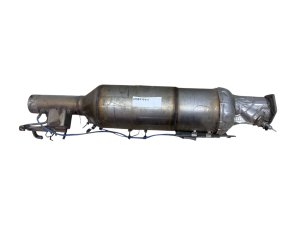
New Aftermarket Parts Available


The information in this article is provided for general reference and educational purposes only. Vehicle specifications, procedures, and part compatibility can vary by production date, trim level, and region. Always consult your vehicle's factory service manual and verify part numbers before purchasing or performing repairs. Safety-critical components such as airbags, seat belts, and braking systems should be installed by a qualified professional.
- Ram 2500:
- 🧭 Diagnostic Flowchart
- 🎬 Helpful Videos
- 🛍️ Shop This Part
- What's Unique About the 2014-2020 Ram 2500
- Symptoms You May Notice
- Most Likely Causes
- Rare But Worth Checking
- Diagnosis Steps
- Parts You'll Likely Need
- Related Codes That Often Appear With This One
- Technical Service Bulletins (TSBs) & Recalls
- Platform-Specific Known Issues
- Mechanic-Grade Diagnostic Values
- Scan Tool Commands That Help
- Wiring & Ground Locations
- Real Owner Repair Stories
- OEM Part Supersession History
- Model Year Variations Within This Range
- Other Known Issues on This Vehicle
- Used vs. New Parts: Buying Guide for This Vehicle
- Real Owner Stories
- 2014 Ram 2500 6.7L Cummins
- 2019 Ram 2500 6.7L Cummins
- 2014-2020 Ram 2500 6.7L Cummins
- Related OBD-II Codes
- Frequently Asked Questions
- 🎟️ Get 5% Off