

P1451 on 2015-2021 Subaru WRX: EVAP System Clog Explained
On a 2015-2021 Subaru WRX, P1451 indicates a clog in an EVAP system pipe, not a circuit failure. The most likely cause is a faulty valve assembly or a saturated charcoal canister located near the rear of the vehicle. Expect a repair cost of several hundred dollars at a dealership.
- P1451 on a Subaru means there is a physical clog in the EVAP system, not an electrical fault.
- Do not trust generic code websites for this specific code; refer to Subaru-specific information.
- The most likely culprits are a stuck valve in the check valve assembly (42084VA031) or a fuel-saturated charcoal canister (42035VA010).
- Avoid topping off your fuel tank to prevent saturating the charcoal canister, which is a common cause of this issue.
- Diagnosis can be complex and may require a smoke machine to locate the blockage. Be prepared for a potentially expensive repair, as dealerships often replace multiple components.
What's Unique About the 2015-2021 Subaru WRX
The VA generation WRX (2015-2021) has a complex EVAP system located near the rear passenger-side wheel well. Unlike the more common P1449 code on Subarus which points to a clogged vent filter, P1451 suggests the clog is elsewhere in the system's piping or within a major component like the charcoal canister or an associated check valve assembly. Owner experiences suggest this can be a costly and difficult code to diagnose correctly, with dealerships sometimes recommending the replacement of multiple expensive components without a guaranteed fix.
Symptoms You May Notice
- Check Engine Light is on
- Difficulty refueling (gas pump nozzle clicks off repeatedly)
- Possible faint fuel odor
- Hissing sound when removing the gas cap
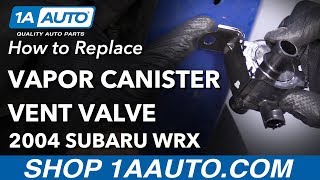
- Replacing the Purge Solenoid 🎬 See how to replace a Subaru vent valve
- Replacing the Gas Cap
Most Likely Causes
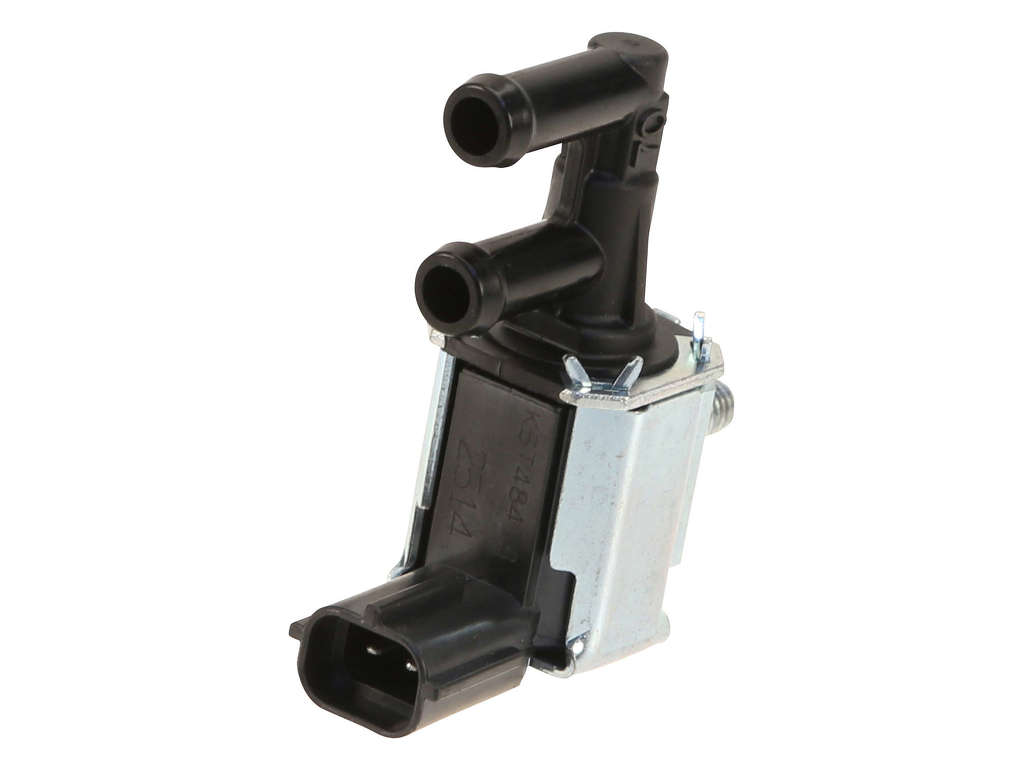
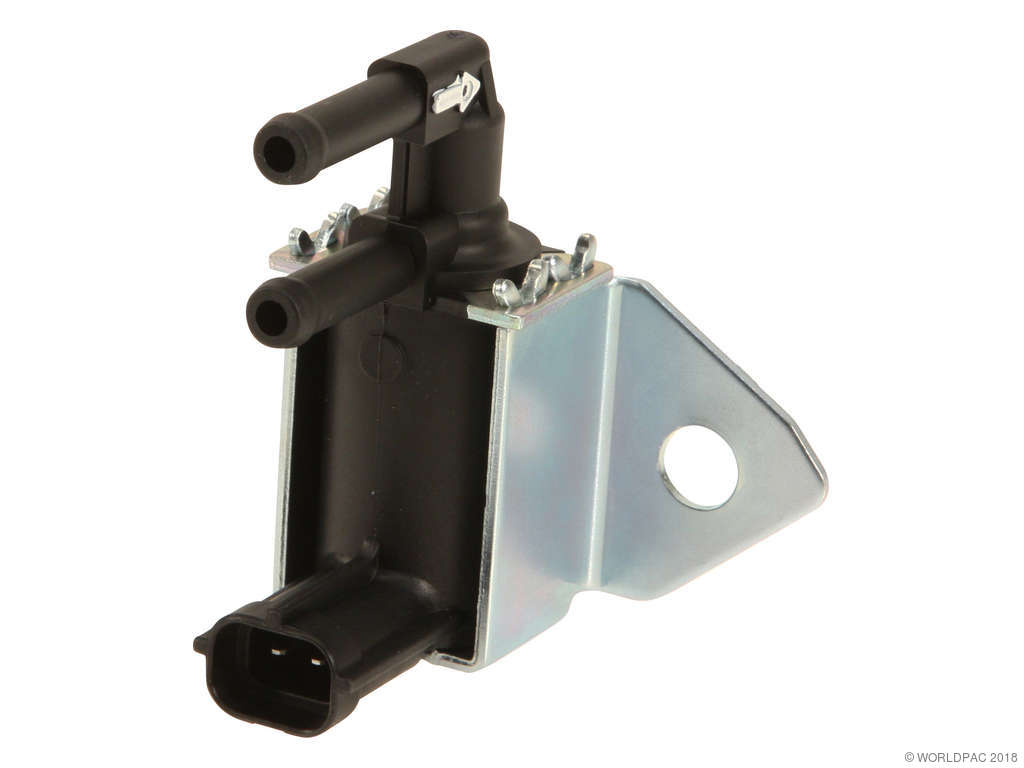
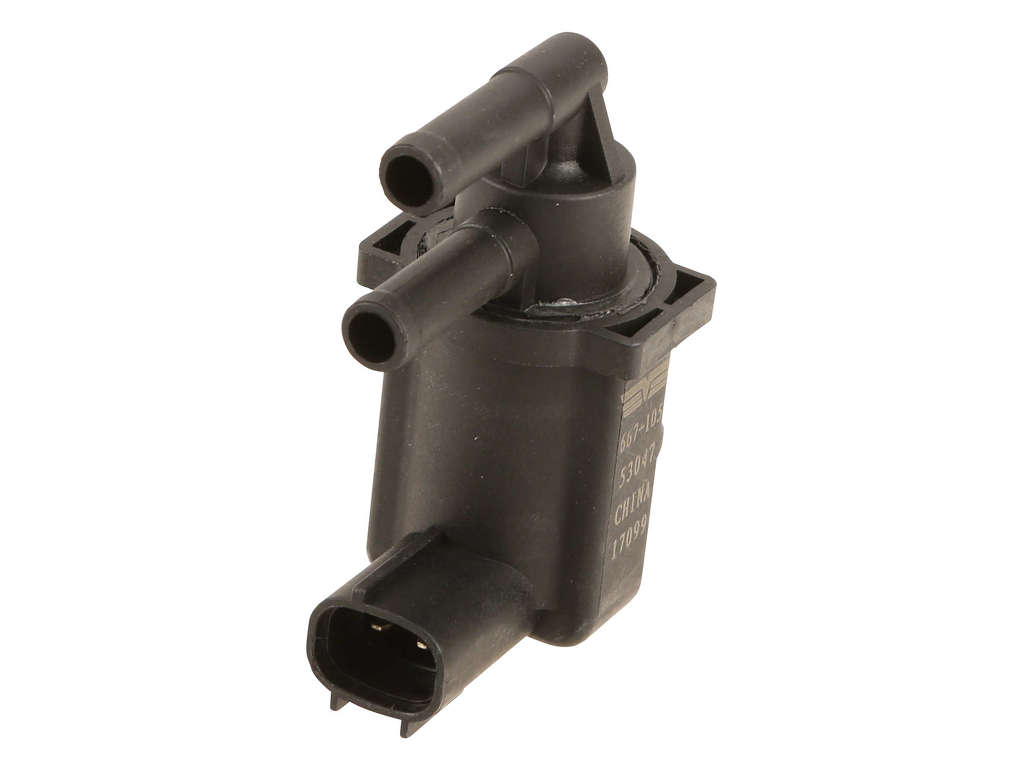
- Failed Valve Check Assembly 🔴 High Probability This assembly, also called the Leak Detection Valve Assembly, contains multiple valves that can stick closed, creating a blockage that the ECU interprets as a clogged pipe. It is a common failure point cited by dealerships.
How to confirm: A technician can command the valves to open and close with a high-end scan tool while monitoring system pressure. A smoke test can also reveal a lack of flow through the assembly. Visual inspection is difficult as it's located above the rear subframe.
Typical fix: Replacement of the entire valve check assembly. This is often done in conjunction with the vapor canister.
Est. part cost: $150-$250 - Saturated or Failed Charcoal Canister 🟡 Medium Probability → Shop Vapor Canister Repeatedly overfilling the fuel tank (topping off after the pump clicks) can force liquid gasoline into the charcoal canister, saturating it and turning it into a major blockage. The charcoal pellets can also break down and clog the outlet.
How to confirm: The canister may feel heavy or have visible signs of fuel saturation. A smoke machine test will show no flow through the canister. Disconnecting the canister and checking for loose charcoal granules in the lines is another indicator.
Typical fix: Replacement of the charcoal canister. It is critical to also clean out any connected lines to remove loose charcoal granules.
Est. part cost: $300-$500 - Blocked or Kinked EVAP Hose ⚪ Low Probability Hoses can become pinched or clogged with debris, especially for vehicles driven in dusty environments or those that have had rear-end suspension or exhaust work done. The canister is located in the rear passenger wheel well, making lines in that area susceptible.
How to confirm: Visually inspect all EVAP lines running from the fuel tank to the canister and to the engine bay. Use compressed air (at low pressure) or a smoke machine to check for flow through each section of hose.
Typical fix: Replace the damaged section of hose or clear the blockage.
Est. part cost: $20-$60
Rare But Worth Checking
- Insect Nests in Vent Lines: Spiders are notoriously attracted to the scent of gasoline vapors and have been known to build nests in EVAP vent lines, causing a blockage that can trigger various EVAP codes. While more common for vent filter codes like P1449, it's possible for a nest to form in a way that triggers P1451.
Diagnosis Steps
- Verify the code with a scanner. Note any other pending or active codes.
- Visually inspect all accessible EVAP hoses between the charcoal canister (located in the rear passenger wheel well area) and the fuel tank for any obvious kinks, cracks, or disconnections.
- Locate the EVAP vent filter. While a clog here typically sets a P1449, check it for blockages from dirt or spider webs as a severe clog could contribute to a P1451.
- If possible, use a bidirectional scan tool to command the vent valve and other solenoids to cycle. Listen for an audible click.
- Perform a smoke test on the EVAP system. With the vent valve commanded closed, introduce smoke and check for leaks. Then, command the vent valve open and ensure smoke can flow freely out of the vent port. A lack of flow indicates a blockage.
- If a blockage is confirmed, systematically disconnect sections of the EVAP system (hoses, canister, valve assemblies) to isolate the point of restriction.
- Pay close attention to the Valve Check Assembly (Part No. 42084VA030, superseded by 42084VA031) as it is a very common failure point according to owner forums.
Parts You'll Likely Need
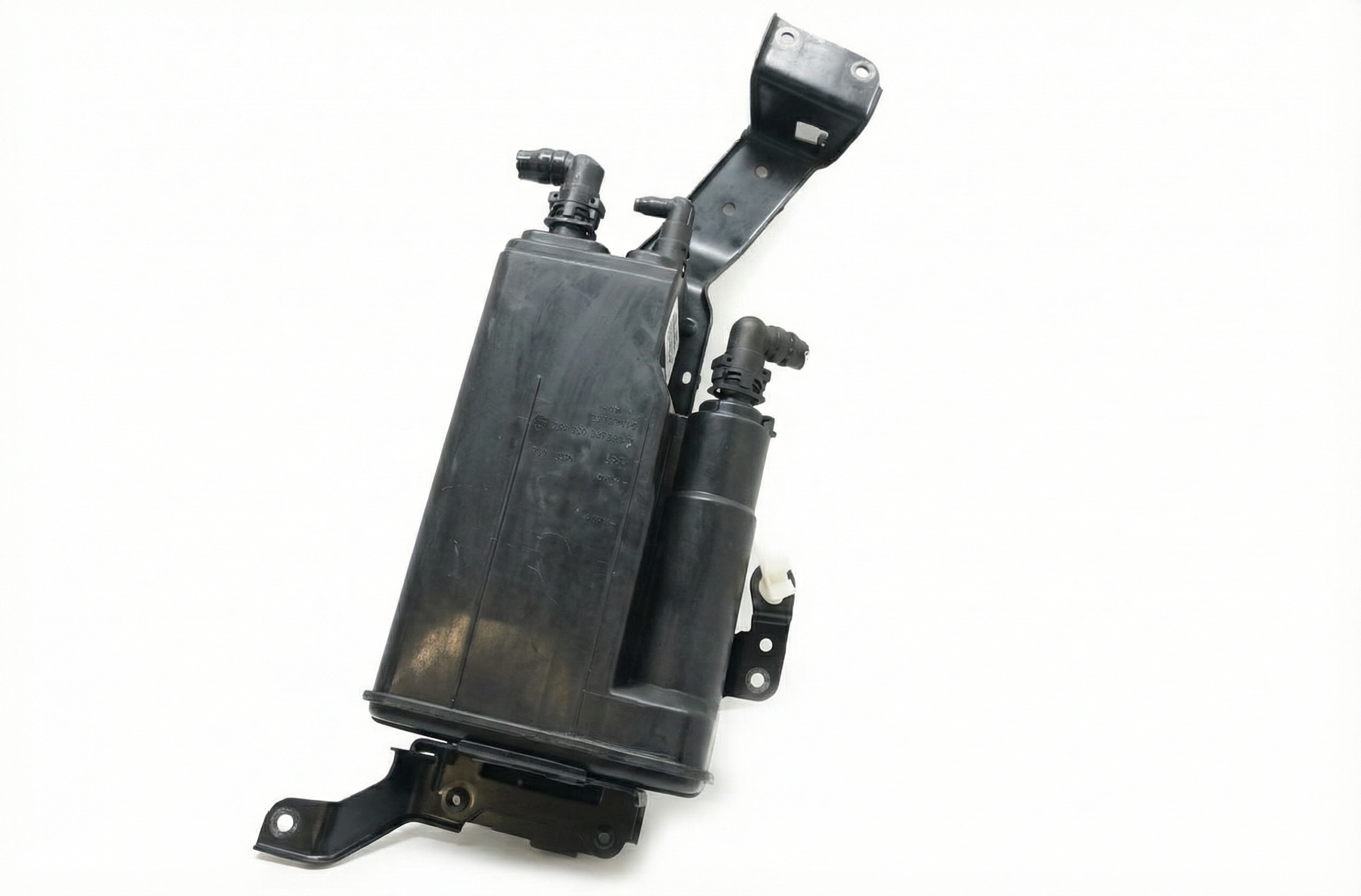
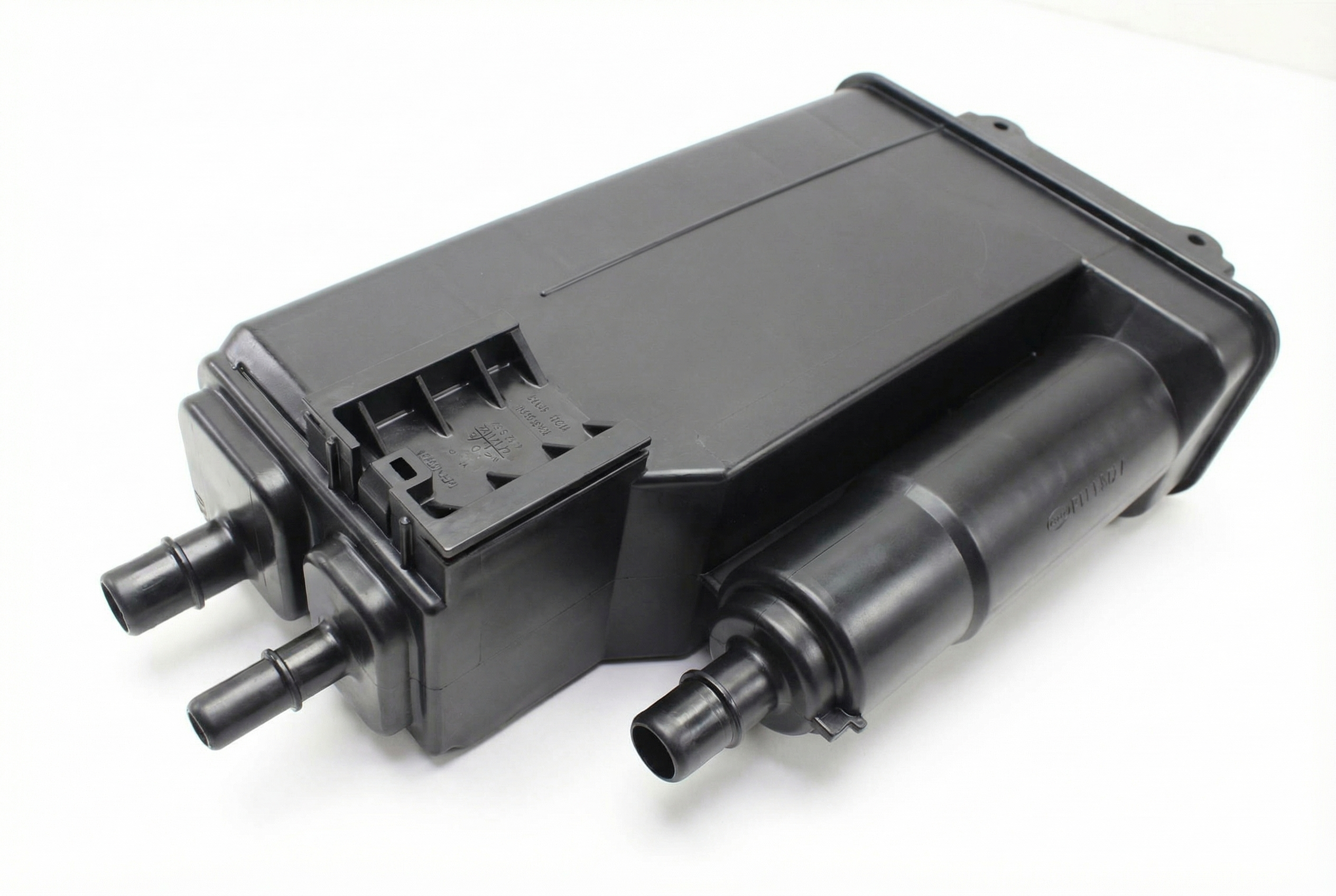
- Vapor Canister
(OEM #42035VA010)— This is often replaced alongside the valve assembly, as it can become saturated with fuel from overfilling or contaminated by a failing valve. Dealerships often recommend replacing both parts at the same time.
Trusted brands: Subaru (OEM)
OEM price range: $300-$500
Aftermarket price range: $200-$350 - Valve Check Assembly
(OEM #42084VA030, superseded by 42084VA031)— A dealership-recommended replacement for a 2016 WRX with this code, suggesting it's a primary failure point that causes the 'clogged pipe' condition. This part is often referred to as the Leak Detection Valve Assembly.
Trusted brands: Subaru (OEM)
OEM price range: $150-$250
Aftermarket price range: N/A
Platform-Specific Known Issues
- Dealership Parts Cannon Approach: Multiple owners on forums like Reddit report that dealerships often suggest replacing both the Valve Check Assembly and the Vapor Canister simultaneously, leading to a high repair bill (over $1200) without a definitive diagnosis of which part failed. One owner paid $450 for a diagnosis that only temporarily cleared the code.
- Difficult DIY Access: The EVAP canister and valve assembly are located in the rear passenger wheel well area, and accessing them may require removing the muffler and other components, making it a challenging DIY job.
Scan Tool Commands That Help
- Subaru Select Monitor (SSM) or equivalent high-end scan tool: Evaporative System Leak Test — This is the primary bidirectional function used to diagnose the entire EVAP system. The tool commands the vent and purge valves to seal the system, then monitors the fuel tank pressure sensor to check for pressure changes. For P1451, a technician would watch for the system's inability to draw a vacuum or release pressure when commanded, which points to a blockage rather than a leak.
Wiring & Ground Locations
- ELCM Main Connector (R400) — The main electrical connector on the Evaporative Leakage Check Module (ELCM), also known as the Valve Check Assembly, located near the charcoal canister in the rear passenger-side wheel well area.. While P1451 is a clog code, not a circuit code, inspecting this connector for corrosion or damage is a crucial step if the valve assembly is suspected of being unresponsive to scan tool commands. A poor connection can prevent the internal valves from actuating, mimicking a physical clog.
Real Owner Repair Stories
- Reddit r/WRX user (2016 Subaru WRX) — P1451 Check Engine Light
❌ Tried (didn't work) Dealership diagnosis for $450 which only cleared the code for one day., Dealership blowing air into a valve as a temporary fix.
✅ What actually fixed it The dealership ultimately recommended replacing both the Valve Check Assembly (42084VA030) and the Vapor Canister (42035VA010) for $1293. The user's experience strongly suggests the Valve Check Assembly was the primary point of failure, aligning with the common cause.
OEM Part Supersession History
42084VA030→42084VA031— The updated part likely features an improved internal valve design to prevent the sticking and binding issues that lead to the P1451 clog detection. Supersessions of electronic or electro-mechanical parts are often done to increase durability and address known failure patterns.
Model Year Variations Within This Range
- 2015-2021: There were no significant mechanical changes to the EVAP system design or the primary components related to P1451 across the VA generation (2015-2021) WRX. The main change was the supersession of the Valve Check Assembly part number, which applies to all years as a replacement part.
Diagnostic Flowchart
Other Known Issues on This Vehicle
Issues unrelated to this code that are worth knowing about as an owner of this generation:
- Intake Valve Carbon Buildup 🔴 High — Becomes a noticeable issue typically between 30,000 and 60,000 miles. It is an inevitable consequence of the direct-injection (DIT) engine design. (Ref: TSB #09-74-21R provides a procedure for cleaning carbon deposits.)
- Throw-Out Bearing (Clutch Release Bearing) Failure 🟠 Medium — Can occur at low mileage (as early as 25,000 km). Symptoms include a chirping or squeaking noise when the clutch pedal is depressed. (Ref: TSB #03-78-17R announces a redesigned clutch release bearing to address a chirping sound.)
- Clutch Fork Failure 🟠 Medium — The stock stamped-metal clutch fork is a known weak point, prone to flexing or breaking, especially with upgraded clutches. Failure leads to an inoperable or stiff clutch pedal.
- Connecting Rod Failure (Tuned Engines) 🔴 High — Primarily affects modified and tuned engines running higher-than-stock boost and torque levels. Not a common issue on stock vehicles.
- Low-Pressure Fuel Pump Failure 🔴 High — Affects certain 2018-2019 models. (Ref: Recall #21V587000 was issued for a low-pressure fuel pump that may fail, potentially causing the engine to stall.)
Used vs. New Parts: Buying Guide for This Vehicle
When a used part is the smart pick: Used parts are generally not recommended for this specific repair due to the high failure rate of the primary components. Simple hoses or brackets could be sourced from a junkyard, but the core parts (canister and valve assembly) are a significant gamble.
Donor-vehicle mileage cap: roughly under 40000 miles for the part to have meaningful remaining life.
What to inspect on the donor part:
- For a charcoal canister, ensure there is no fuel odor, rattling (indicating broken charcoal), or visible signs of liquid fuel saturation.
- Inspect the donor vehicle for signs of rear-end collision damage, which could have compromised the EVAP components.
- Check electrical connectors for clean, corrosion-free pins.
OEM-only on this vehicle (don't cheap out):
- Valve Check Assembly (42084VA031): This is a complex, model-specific part. Aftermarket options are not readily available, and the failure is internal. An OEM part is the only reliable fix.
Brands owners have reported issues with on this vehicle:
- Generic, unbranded charcoal canisters from online marketplaces should be avoided. Poor quality charcoal or incorrect flow characteristics can cause the code to return or new EVAP codes to appear.
Real Owner Stories
Aggregated from forums and TSBs cited above. Mileages and costs reflect what owners reported in those sources.
2016 Subaru WRX
Symptoms: Check engine light for P1451. The dealership charged $450 for an initial diagnosis that only temporarily cleared the code.
What fixed it: The dealership recommended replacing both the Valve Check Assembly (42084VA030) and Vapor Canister (42035VA010), though they admitted it was not a guaranteed solution.
Cost: $1,200-$1,300
Source hint: r/WRX on Reddit - 'P1451 code evap canister question'
Related OBD-II Codes
Frequently Asked Questions
Is there a specific part number I should look for when replacing the Valve Check Assembly on my WRX?
Why does the gas pump nozzle keep clicking off when I try to fill up my 2015-2021 WRX?
Can I use a used charcoal canister from a high-mileage donor car to fix P1451?
Does the carbon buildup TSB #09-74-21R relate to my P1451 code?
Is there a recall for the fuel system on 2018-2019 WRX models?
Where is the charcoal canister located on the 2015-2021 WRX?
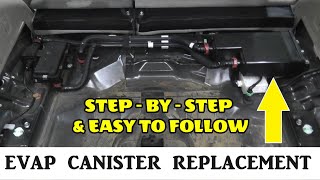
Helpful Videos
Used OEM Parts in Stock
New Aftermarket Parts Available

The information in this article is provided for general reference and educational purposes only. Vehicle specifications, procedures, and part compatibility can vary by production date, trim level, and region. Always consult your vehicle's factory service manual and verify part numbers before purchasing or performing repairs. Safety-critical components such as airbags, seat belts, and braking systems should be installed by a qualified professional.
- Subaru WRX:
- 🧭 Diagnostic Flowchart
- 🎬 Helpful Videos
- 🛍️ Shop This Part
- What's Unique About the 2015-2021 Subaru WRX
- Symptoms You May Notice
- Most Likely Causes
- Rare But Worth Checking
- Diagnosis Steps
- Parts You'll Likely Need
- Platform-Specific Known Issues
- Scan Tool Commands That Help
- Wiring & Ground Locations
- Real Owner Repair Stories
- OEM Part Supersession History
- Model Year Variations Within This Range
- Other Known Issues on This Vehicle
- Used vs. New Parts: Buying Guide for This Vehicle
- Real Owner Stories
- 2016 Subaru WRX
- Related OBD-II Codes
- Frequently Asked Questions
- 🎟️ Get 5% Off