

P1451 on 2004-2009 Toyota Prius: Fuel Tank Pressure Sensor Fault Causes and Fixes
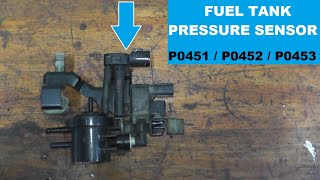
On a Gen 2 Prius, P1451 is not a vent valve code. It indicates a problem with the Fuel Tank Pressure Sensor's signal. The most common fix is replacing the sensor itself (OEM P/N: 89461-47010), which is located on the charcoal canister assembly above the rear subframe, requiring significant labor to access.
- P1451 on a 2004-2009 Prius is a Fuel Tank Pressure Sensor performance fault, NOT a vent solenoid circuit fault.
- The most common cause is a failed Fuel Tank Pressure Sensor, OEM part number 89461-47010.
- Diagnosis involves checking the sensor's signal for erratic or stuck behavior using a scan tool's live data.
- The sensor is difficult to access, located on the charcoal canister above the rear subframe.
- Do not replace the EVAP vent solenoid or gas cap for this specific code.
What's Unique About the 2004-2009 Toyota Prius
The key difference for the Prius is the definition of the code itself. While P1451 on most vehicles points to the EVAP vent solenoid, on the 1NZ-FXE hybrid platform, Toyota designated it as a fault with the fuel tank pressure sensor's signal integrity. This sensor is part of a complex EVAP system that includes a unique bladder-style fuel tank designed to minimize vapor space. Misinterpreting this code as a vent valve issue will lead to replacing the wrong parts, a common misdiagnosis.
Symptoms You May Notice
- Check Engine Light is on.
- Vehicle will fail an emissions test.
- No noticeable drivability symptoms (e.g., poor performance, reduced fuel economy) are typically associated with this specific code.
- Replacing the EVAP Canister Vent Solenoid: This is the most common misdiagnosis because P1451 means 'Vent Solenoid Circuit Malfunction' on many other manufacturers, but not on this specific Prius.
- Replacing the Gas Cap: A faulty gas cap typically causes EVAP leak codes (like P0456 or P0455), not a sensor performance code like P1451.
Most Likely Causes
- Faulty Fuel Tank Pressure Sensor 🔴 High Probability → Shop Fuel Tank The sensor is exposed to fuel vapors and can fail internally over time, causing its voltage output to become erratic or stuck. This is the most common point of failure for this specific code.
How to confirm: Using a scan tool with live data, monitor the fuel tank pressure sensor voltage (VPTANK) or pressure reading. If the reading is stuck at a specific value (e.g., 5V) or fluctuates wildly when the car is stationary, the sensor is likely bad. A service manual states the ECM sets the code if the voltage fluctuates rapidly for 10 seconds or doesn't change for 5 minutes, which strongly indicates a sensor failure.
Typical fix: Replace the fuel tank pressure sensor. The sensor is mounted on the charcoal canister assembly, which requires lowering the rear subframe for access. The OEM part number is 89461-47010.
Est. part cost: $40-$100 - Wiring or Connector Issue 🟡 Medium Probability The wiring harness to the charcoal canister is located underneath the vehicle and is exposed to road debris, moisture, and potential corrosion, which can lead to an open or shorted circuit.
How to confirm: Visually inspect the wiring harness and connector leading to the fuel tank pressure sensor for any signs of damage, corrosion, or loose pins. Use a multimeter to check for 5V reference voltage at the connector and test for continuity between the connector and the ECM.
Typical fix: Repair the damaged section of the wiring harness or clean/replace the connector.
Est. part cost: $5-$50
Rare But Worth Checking
- Faulty Engine Control Module (ECM): → Shop Engine Control Module (ECM) This is very rare. The ECM should only be considered after thoroughly ruling out the sensor and its wiring. An ECM failure is unlikely but possible.
Diagnosis Steps
- Verify the Code Definition: Confirm that P1451 for your Toyota Prius relates to the Fuel Tank Pressure Sensor, not the vent solenoid.
- Connect a Scan Tool: Access the live data stream and monitor the parameter for the Fuel Tank Pressure Sensor 🎬 Watch: How to test and replace the fuel tank pressure sensor (may be labeled as 'VPTANK' or similar).
- Analyze Sensor Data: With the engine running and the vehicle stationary, observe the sensor's voltage or pressure reading. The reading should be relatively stable. If you see erratic, rapid fluctuations or a value that is completely static (often stuck near 5V) and never changes, the sensor is suspect.
- Inspect the Wiring: Raise the vehicle and locate the charcoal canister assembly above the rear subframe. Visually inspect the wiring harness and connector going to the fuel tank pressure sensor. Look for chafed wires, corrosion in the connector, or any obvious damage.
- Test the Circuit: If the wiring looks okay, disconnect the sensor. Use a multimeter to check for a 5-volt reference signal and a good ground at the connector. Check for continuity on the signal wire back to the ECM.
- Replace the Sensor: If the wiring and voltages are correct, the Fuel Tank Pressure Sensor is the most likely culprit. Replacement requires lowering the charcoal canister assembly for access. The OEM part number is 89461-47010.
- Clear Codes and Retest: After replacement, clear the diagnostic trouble codes and perform a drive cycle to ensure the code does not return.
Parts You'll Likely Need
- Fuel Tank Pressure Sensor
(OEM #89461-47010)— This sensor is the direct cause of the code, failing due to internal wear which causes its signal to become erratic or stuck.
Trusted brands: Toyota (Genuine), Denso, Aisin, Standard Motor Products
OEM price range: $70-$120
Aftermarket price range: $40-$100
Related Codes That Often Appear With This One
- P1453 — P1453 indicates 'Fuel Tank Pressure Sensor High Input'. It often appears with P1451 because a failing sensor can get stuck sending a high voltage signal (e.g., 5V), which triggers both the 'high input' and 'range/performance' faults.
- P0451 — P0451 is the generic SAE code for 'Evaporative Emission Control System Pressure Sensor Range/Performance'. It is essentially the same fault as the manufacturer-specific P1451 and they may appear together.
Platform-Specific Known Issues
- Access to the sensor is difficult. It is located on top of the charcoal canister, which is situated above the rear subframe. Mechanics often need to lower the subframe to gain enough clearance to replace the sensor.
- A PriusChat user noted that there can be minor differences in EVAP components and ECUs between model years within the same generation (e.g., 2005 vs. 2006), so using exact-match parts is crucial. In one case, a user swapped a canister from a 2006 into a 2005 and noted differences in purge valves and tank shapes.
Mechanic-Grade Diagnostic Values
- Fuel Tank Pressure Sensor Signal Voltage (VPTANK) — expected: Approximately 1.5V to 3.5V with key on, engine off, and fuel cap removed (at atmospheric pressure). The voltage should vary with pressure changes.. Failure: Voltage is stuck high (near 5V), stuck low (near 0V), or fluctuates erratically without corresponding pressure changes. A voltage over 4.9V for 0.5 seconds can trigger P1453.
- Fuel Tank Pressure Sensor Reference Voltage — expected: 5V DC between the reference wire and a known good ground at the sensor connector (with sensor unplugged, key on).. Failure: Significantly lower than 5V, or no voltage, indicates a wiring issue or a problem with the ECM's 5V reference circuit.
- Fuel Tank Pressure Sensor Ground Circuit — expected: Near 0V between the ground wire at the sensor connector and the negative battery terminal, indicating good continuity to ground.. Failure: Voltage reading above a few millivolts indicates a poor ground connection.
Scan Tool Commands That Help
- Toyota Techstream: EVAP System Check (Automatic Mode) — This function, found under 'Engine and ECT' -> 'Utility', forces the EVAP system to run its self-test without waiting for the natural 5-6 hour 'key off' cold soak period. It activates the solenoids and pump to check for leaks and component responses, which can help verify a repair or diagnose an intermittent issue. 🎬 Watch a mechanic diagnose an EVAP leak on a Prius
Wiring & Ground Locations
- E7 ECM Connector — Behind the right side of the dashboard.. This is the main engine computer connector where the fuel tank pressure sensor wiring terminates. Pin E7-30 is a key test point for the sensor circuit according to service literature for related codes.
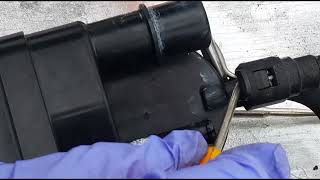
- V7 Canister Connector — On the charcoal canister assembly, located above the rear subframe. 🎬 See how to safely unplug Toyota charcoal canister hose connections. This is the electrical connector for the fuel tank pressure sensor. Technicians must test for 5V reference, ground, and signal voltage at this connector's pins to diagnose the sensor and wiring harness.
- BQ Ground Point — Located in the right rear of the vehicle, near the EVAP system components.. This is a likely ground point for the EVAP system components. A corroded or loose connection at this ground could cause erratic sensor readings and trigger a P1451.
Real Owner Repair Stories
- PriusChat user 'Paul Schenck' (2005 Toyota Prius with 597,000 miles) — Check Engine Light with codes P1451 and P1453, preventing the vehicle from passing smog.
❌ Tried (didn't work) Replaced the gas cap., Swapped the entire charcoal canister and fuel tank assembly from a known-good 2006 Prius.
✅ What actually fixed it The user's final post implies the issue was resolved by understanding the specific Toyota definition of the codes (sensor performance, not vent valve) and likely replacing the original fuel tank pressure sensor itself, as testing the harness showed a good 5V signal, pointing to the sensor as the failure point.
OEM Part Supersession History
89461-47010→89461-47010 (no supersession)— This part number remains current for the specified vehicle range but is also used on many newer Toyota models, indicating a long service life for this part design.77740-47020 (Canister Assy for 2004-2005)→77740-47050 (Canister Assy for 2006-2009)— Model year update.
Heads up: The charcoal canister assemblies are different between 2004-2005 and 2006-2009 models. A forum user noted differences in the purge valves (2-contact vs 6-contact) and the physical shape to accommodate fuel tank changes. Swapping the entire assembly between these year ranges without modifying wiring can cause persistent codes.
Model Year Variations Within This Range
- 2004-2005 vs 2006-2009: The charcoal canister assembly and some associated EVAP components, like purge valves, are different between the early and late years of the Gen 2 Prius. The fuel tanks also have slight shape differences. Using a canister from the wrong year group can lead to compatibility issues and unresolved trouble codes.
Diagnostic Flowchart
Other Known Issues on This Vehicle
Issues unrelated to this code that are worth knowing about as an owner of this generation:
- Combination Meter (Speedometer) Failure 🟠 Medium — Very common, especially in 2004-2005 models and in cold weather. The display goes blank, and the car may not power off correctly. (Ref: Toyota issued TSB T-SB-0172-09 and a Warranty Enhancement Program (ZTV) extending coverage. The common fix is replacing a single capacitor on the circuit board.)
- Inverter Coolant Pump Failure 🔴 High — Extremely common failure item. The electric pump fails, causing the hybrid system to overheat and shut down, triggering a Master Warning Light and code P0A93. (Ref: Subject of Toyota Safety Recall C0U (previously Limited Service Campaign ZC2). The original pumps were prone to internal motor failure.)
- Excessive Oil Consumption 🟠 Medium — Often begins after 100,000 miles. Caused by piston rings (specifically low-tension oil control rings) getting clogged with carbon. Some owners report consumption of over 1 quart per 1000 miles. (Ref: No recall, but widely discussed. Toyota's official stance is that consumption up to 1.1 quarts per 600 miles is 'normal'. DIY fixes like a 'piston soak' with solvent are popular among owners.)
- Brake Actuator Assembly Failure 🔴 High — A common high-cost failure. The electric pump or internal seals in the actuator fail, leading to a loss of braking assist and multiple brake-related warning lights. (Ref: No recall for Gen 2, but Toyota issued a Warranty Enhancement Program for later models (e.g., 2010+) which highlights the known issues with the component design.)
- HID Headlight Ballast/Bulb Failure 🟡 Low — Common on models equipped with High-Intensity Discharge (HID) headlights. The ballasts or bulbs fail frequently, causing intermittent or total loss of one headlight.
Used vs. New Parts: Buying Guide for This Vehicle
When a used part is the smart pick: Buying a complete, used charcoal canister assembly from a junkyard can be a cost-effective option, especially if multiple EVAP components are suspect or if the plastic housing of the original is damaged. However, given the high failure rate of the pressure sensor and the significant labor to access it, this is a gamble.
Donor-vehicle mileage cap: roughly under 80000 miles for the part to have meaningful remaining life.
What to inspect on the donor part:
- Ensure the donor vehicle is from the correct model year group (2004-2005 or 2006-2009) to avoid component incompatibility.
- Inspect the plastic housing for cracks or damage.
- Check that all hose nipples and electrical connectors are intact and not broken.
- If possible, get a vehicle history report to check for prior EVAP-related codes on the donor car.
OEM-only on this vehicle (don't cheap out):
- Fuel Tank Pressure Sensor (P/N 89461-47010): Due to the extreme difficulty and high labor cost of accessing this part, using a new, genuine OEM (Toyota/Denso/Aisin) sensor is strongly recommended to avoid having to do the job twice. The risk of a used or cheap aftermarket sensor failing prematurely is too high.
Aftermarket brands forum-validated for this vehicle:
- Aisan (often the OEM supplier for Toyota)
- Standard Motor Products (SMP)
- Denso
Brands owners have reported issues with on this vehicle:
- No-name, unbranded sensors from online marketplaces are a significant risk due to the high labor cost involved in replacement.
Real Owner Stories
Aggregated from forums and TSBs cited above. Mileages and costs reflect what owners reported in those sources.
2005 Prius 1.5L Hybrid — 597000 miles
Symptoms: Check engine light with codes P1451 and P1453. P1451 description was 'EVAP emission control system vent control circuit'.
What fixed it: The owner was troubleshooting by swapping parts between a 2005 and 2006 model. A technician suggested the issue was caused by a mismatch of parts, specifically using a 2006 gas tank with a 2005 purge pump and ECU.
Source hint: PriusChat.com Thread 'Gen 2 EVAP CODE P1451, P1453'
Related OBD-II Codes
Frequently Asked Questions
Is there a specific part number I should use for the Fuel Tank Pressure Sensor on my 2004-2009 Prius?
Can I use EVAP parts from a 2006 Prius to fix my 2005 model?
Is the P1451 code on my Prius related to the vent solenoid like on other vehicles?
Why is the labor for replacing the fuel tank pressure sensor so expensive on this car?
Does the Inverter Coolant Pump recall (C0U) have anything to do with my P1451 code?
Will P1451 cause my Prius to fail an emissions test even if it drives fine?
Helpful Videos
We Have This Part in Stock


The information in this article is provided for general reference and educational purposes only. Vehicle specifications, procedures, and part compatibility can vary by production date, trim level, and region. Always consult your vehicle's factory service manual and verify part numbers before purchasing or performing repairs. Safety-critical components such as airbags, seat belts, and braking systems should be installed by a qualified professional.
- Toyota Prius:
- 🧭 Diagnostic Flowchart
- 🎬 Helpful Videos
- 🛍️ Shop This Part
- What's Unique About the 2004-2009 Toyota Prius
- Symptoms You May Notice
- Most Likely Causes
- Rare But Worth Checking
- Diagnosis Steps
- Parts You'll Likely Need
- Related Codes That Often Appear With This One
- Platform-Specific Known Issues
- Mechanic-Grade Diagnostic Values
- Scan Tool Commands That Help
- Wiring & Ground Locations
- Real Owner Repair Stories
- OEM Part Supersession History
- Model Year Variations Within This Range
- Other Known Issues on This Vehicle
- Used vs. New Parts: Buying Guide for This Vehicle
- Real Owner Stories
- 2005 Prius 1.5L Hybrid — 597000 miles
- Related OBD-II Codes
- Frequently Asked Questions
- 🎟️ Get 5% Off