

P1456 on 2002-2005 Acura NSX: EVAP Fuel Tank Leak Causes and Fixes
For a 2002-2005 Acura NSX, code P1456 almost always points to a loose or faulty gas cap. Before buying any parts, ensure the cap is tightened at least three clicks. If the light returns, a new OEM gas cap is the most likely fix. This code specifically indicates a leak on the fuel tank side of the EVAP system, as opposed to code P1457 which points to the canister side.
- P1456 specifically means the leak is on the fuel tank side of the EVAP system.
- Always check that the gas cap is tightened to at least three clicks before performing any repairs.
- Replacing the gas cap with an OEM part (17670-SM4-A04) is the most probable, easiest, and cheapest fix.
- Do not replace canister-side EVAP components like the purge valve or charcoal canister, as these are related to code P1457.
- If a new gas cap doesn't fix the issue, a professional smoke test is the best way to find the leak.
- The EVAP self-test may only run when the fuel tank is between 25% and 75% full, which can affect when the CEL appears.
What's Unique About the 2002-2005 Acura NSX
On Honda and Acura vehicles, the EVAP system diagnostics are specifically split. P1456 points to a leak on the fuel tank side, while a different code, P1457, indicates a leak on the canister side of the system. This distinction, confirmed by Acura's own technical service bulletins like B99-040, is crucial for accurate diagnosis and prevents unnecessary replacement of canister-side components 🎬 Watch: Troubleshooting both P1456 and P1457 codes on a Honda like the charcoal canister or vent shut valve. For the mid-engine NSX, accessing some EVAP components near the tank can be more involved than on a typical front-engine sedan.
Diagnostic Flowchart
Tap your situation to follow the diagnostic path that matches what you're seeing on this vehicle.
Symptoms You May Notice
- Check Engine Light is on
- A faint smell of fuel may be noticeable in rare cases
- Inability to pass an emissions (smog) test
- Replacing the EVAP charcoal canister, canister vent shut (CVS) valve, or purge valve. These components are on the canister side of the system and would trigger a P1457 code, not P1456.
Most Likely Causes
- Loose or Faulty Gas Cap 🔴 High Probability → Shop Fuel Tank Cap This is the most common cause for P1456 across all Honda/Acura models of this era. The cap's rubber seal can degrade and crack over time, or it may not have been tightened properly after refueling. Forum users repeatedly confirm this is the first and most successful fix.
How to confirm: Ensure the gas cap is tightened until it clicks at least three times. Visually inspect the cap's seal for cracks, stiffness, or debris. If the cap looks worn, the seal is compromised, or it doesn't click securely, it's suspect. Clear the code and see if it returns after a few drive cycles.
Typical fix: Replace the gas cap with a new OEM part. Owners strongly recommend using a genuine Honda/Acura part over aftermarket versions, which may not seal correctly.
Est. part cost: $30-$55 - Faulty Fuel Tank Pressure (FTP) Sensor ⚪ Low Probability → Shop Fuel Tank The sensor itself can fail electronically, sending incorrect voltage readings to the ECU even if no physical leak is present. This can happen from age or exposure to fuel vapors.
How to confirm: Requires testing the sensor's voltage output with a multimeter or a capable OBD-II scanner to see if it's within the manufacturer's specified range. With the key on and engine off (KOEO) and the gas cap removed (atmospheric pressure), the voltage should be between 2.4V and 2.8V. This is typically done after a smoke test has found no physical leaks.
Typical fix: Replace the fuel tank pressure sensor.
Est. part cost: $50-$100 - Cracked or Disconnected EVAP Hose Near Fuel Tank ⚪ Low Probability → Shop Fuel Tank
How to confirm: A visual inspection of the EVAP hoses connected to the fuel tank and filler neck may reveal obvious cracks or disconnections. A definitive diagnosis requires a smoke test, which forces low-pressure smoke into the EVAP system to reveal the location of small leaks.
Typical fix: Replace the damaged hose section and secure the connection.
Est. part cost: $15-$40 - Rusted or Damaged Fuel Filler Neck ⚪ Low Probability → Shop Fuel Filler Neck Though less common on the aluminum-bodied NSX compared to steel-bodied cars like the Accord or TL, corrosion can still form on the filler neck where the gas cap seals, preventing a proper seal. This is more likely in regions that use road salt.
How to confirm: Visually inspect the rim of the fuel filler neck for rust, pitting, or damage that would compromise the gas cap seal. Run a finger along the sealing surface to feel for imperfections.
Typical fix: Clean the filler neck surface with a light abrasive. If severely corroded, the filler neck must be replaced.
Est. part cost: $150-$300
Rare But Worth Checking
- Cracked Fuel Tank: → Shop Fuel Tank
- Faulty EVAP Two-Way Valve:
Diagnosis Steps
- Read the code with an OBD-II scanner to confirm P1456 is present.
- Check the gas cap. Remove it, inspect the seal for cracks or wear, and reinstall it, making sure to tighten it until it clicks at least three times.
- Clear the code using the scanner and drive the vehicle for a few days to complete a full EVAP drive cycle. Note that the self-test often runs only when the fuel level is between 1/4 and 3/4 full.
- If the light returns, the easiest and most cost-effective next step is to replace the gas cap with a new OEM part. Many forum users report aftermarket caps fail to solve the problem.
- If a new gas cap does not solve the issue, perform a visual inspection of the fuel filler neck for corrosion and the visible EVAP hoses near the fuel tank for any obvious cracks or damage.
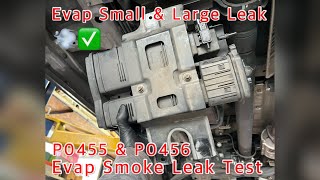
- For a definitive diagnosis, have a professional mechanic perform a smoke test. This test will pressurize the fuel tank side of the EVAP system with smoke, making even the smallest leaks visible. 🎬 See how to perform a professional EVAP smoke leak test
- If no leaks are found during the smoke test, the Fuel Tank Pressure (FTP) sensor should be tested for correct electrical function. Using a multimeter, back-probe the sensor's 3-wire connector. With the key on and engine off, you should find a 5-volt reference wire, a ground wire, and a signal wire. The signal wire should read between 2.4V and 2.8V with the gas cap off.
Parts You'll Likely Need
- Fuel Filler Cap
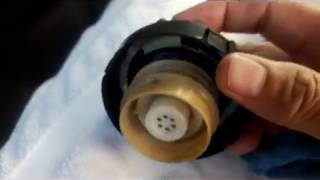
(OEM #17670-SM4-A04)— This is the most frequent cause of a P1456 code. The seal wears out over time, causing a leak that the system detects. This part number fits the NSX for the specified years and is also used on other Acuras like the CL, Integra, and RL from the same era.
Trusted brands: Acura (OEM)
OEM price range: $30-$55
Aftermarket price range: $15-$30
Technical Service Bulletins (TSBs) & Recalls
- B99-040: Updates troubleshooting procedures for DTC P1456 (EVAP Control System Leakage [Fuel Tank System]) and DTC P1457, confirming the specific location of the leak for this code.
- 99-075: A related TSB for Honda Accords that provides detailed steps for troubleshooting P1456/P1457, including specific voltage checks for the Fuel Tank Pressure sensor (2.45-2.55V).
Platform-Specific Known Issues
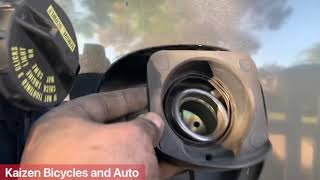
- Owner Experiences Consistently Point to Gas Cap: → Shop Fuel Tank Cap Across multiple forums, including AcuraZine and Honda-Tech, owners 🎬 Watch: A mechanic diagnoses a P1456 code on a 3.2 TL of various Acura models from this period report that replacing the OEM gas cap resolved their P1456 code after initial checks (tightening the cap) failed. One user on AcuraZine with a 2002 RL noted that even though their old cap clicked, it wasn't fully tightening, and a new cap fixed the issue.
- EVAP Self-Test Fuel Level Requirement: An important detail noted by an Acura TL owner is that the EVAP system self-test which triggers the code often only runs when the fuel level is between 1/4 and 3/4 of a tank. This can explain why the light may not appear immediately after refueling to full or when the tank is near empty, only to illuminate later.
Mechanic-Grade Diagnostic Values
- Fuel Tank Pressure (FTP) Sensor Voltage — expected: 2.4V - 2.8V with key on, engine off, and fuel cap removed (atmospheric pressure).. Failure: Voltage stuck low (near 0V) or high (near 5V), or does not change when pressure/vacuum is applied.
- EVAP Two-Way Valve Vacuum Test — expected: Valve opens (holds vacuum then releases) between 0.8 kPa and 2.1 kPa (6-16 mmHg).. Failure: Valve opens below 0.8 kPa or above 2.1 kPa.
- EVAP Two-Way Valve Pressure Test — expected: Valve opens (holds pressure then releases) above 1.0 kPa (8 mmHg).. Failure: Valve opens below 1.0 kPa.
- EVAP Bypass Solenoid Valve Resistance — expected: Approximately 30-36 Ohms at room temperature.. Failure: An open circuit (infinite resistance) or a short (near zero resistance) indicates a failed solenoid coil.
Hidden / Shadow Codes Worth Checking
- Mode $06, Test ID (TID): Before a hard code like P1456 is set, the ECU runs internal tests. The results of these tests are stored in Mode $06 data. A technician can view this data with an advanced scan tool to see the raw values from the EVAP leak test, even before the Check Engine Light comes on. This can show if the system is borderline failing. (see via Advanced OBD-II scanner with Mode $06 functionality, or a dealer-level tool like the Honda PGM Tester.)
Scan Tool Commands That Help
- Honda PGM Tester (or equivalent advanced scanner): EVAP System Function Test — This is a bidirectional command that forces the vehicle's computer to run the entire EVAP leak detection sequence on demand. It manually closes the vent valve, opens the purge valve to apply engine vacuum, and monitors the FTP sensor to check for a leak. If the test fails, the tool will often point to the specific part of the system (tank or canister) that has failed, confirming P1456 vs P1457.
Wiring & Ground Locations
- FTP Sensor Connector — On top of the fuel tank, typically as part of the fuel pump assembly.. This 3-wire connector provides the FTP sensor with a 5V reference, ground, and returns the signal voltage to the PCM. A visual inspection for corrosion or damage is crucial if the sensor's voltage readings are erratic. Testing for 5V and good ground at this connector is a key step if a new sensor doesn't fix the problem.
Real Owner Repair Stories
- 2CarPros Forum User (1998 Honda Accord) — Persistent P1456 code, smell of gas fumes.
❌ Tried (didn't work) Replaced two EVAP hoses, Replaced gas cap, Replaced vapor canister
✅ What actually fixed it The user was trying to avoid a smoke test, which is the next logical step. The mechanic on the forum provided the factory diagnostic flowchart, which points towards performing a smoke test when visual inspection and component replacement fail to resolve the issue. The final fix was not posted, but the story highlights the futility of replacing multiple parts without a definitive leak test.
OEM Part Supersession History
17670-SV1-A01, 17670-SM4-A03→17670-SM4-A04— Standard part revision and consolidation over time.
Heads up: The latest part number, 17670-SM4-A04, is the correct replacement for the earlier versions and is specified for the 2002-2005 NSX.
Helpful Videos
We Have This Part in Stock



The information in this article is provided for general reference and educational purposes only. Vehicle specifications, procedures, and part compatibility can vary by production date, trim level, and region. Always consult your vehicle's factory service manual and verify part numbers before purchasing or performing repairs. Safety-critical components such as airbags, seat belts, and braking systems should be installed by a qualified professional.
- Acura NSX:
- 🧭 Diagnostic Flowchart
- 🎬 Helpful Videos
- 🛍️ Shop This Part
- What's Unique About the 2002-2005 Acura NSX
- Symptoms You May Notice
- Most Likely Causes
- Rare But Worth Checking
- Diagnosis Steps
- Parts You'll Likely Need
- Technical Service Bulletins (TSBs) & Recalls
- Platform-Specific Known Issues
- Mechanic-Grade Diagnostic Values
- Hidden / Shadow Codes Worth Checking
- Scan Tool Commands That Help
- Wiring & Ground Locations
- Real Owner Repair Stories
- OEM Part Supersession History
- 🎟️ Get 5% Off