

P1456 on 1999-2003 Acura TL: EVAP Leak (Fuel Tank System) Causes and Fixes
For a 1999-2003 Acura TL, code P1456 almost always points to a loose or faulty gas cap. Before anything else, tighten your gas cap by at least three clicks. If the code returns, replace it with a new OEM Acura cap (part #17670-S84-A01 or its successor 17670-T3W-A01) for about $25-$40. Aftermarket caps are a common source of this code.
- Start with the simplest fix: make sure your gas cap is tight (3+ clicks).
- If the light returns, the next logical and most effective step is to replace the gas cap with a genuine OEM part (17670-S84-A01 or successor). Do not use an aftermarket cap.
- P1456 specifically points to a leak on the fuel tank side, not the engine bay side of the EVAP system.
- If a new OEM gas cap doesn't fix it, your next step is a thorough visual inspection of the fuel filler neck for rust, especially if you live in a region that uses road salt.
What's Unique About the 1999-2003 Acura TL
Honda and Acura vehicles from this era use a sophisticated diagnostic system that splits the EVAP system into two parts for testing. Code P1456 specifically points to a leak on the fuel tank side, which includes the tank, gas cap, filler neck, and associated valves. A different code, P1457, indicates a leak on the charcoal canister side of the system. This specificity is a significant advantage, as it helps narrow down the potential causes, often pointing directly to the gas cap or fuel filler neck area, unlike more generic EVAP codes on other vehicles.
Diagnostic Flowchart
Tap your situation to follow the diagnostic path that matches what you're seeing on this vehicle.
Symptoms You May Notice
- Check Engine Light is on
- A faint smell of gasoline, particularly around the rear driver's side of the car
- No whoosh of pressure when opening the gas cap after driving
- In some cases, difficulty refueling where the pump clicks off repeatedly
- Slightly reduced fuel economy in some cases
- Replacing the EVAP Purge Solenoid (usually under the hood) - this part is on the canister side of the system and would typically set a P1457 or other code.
- Replacing Oxygen Sensors - O2 sensors are part of the exhaust system and are unrelated to EVAP leaks.
- Assuming an aftermarket gas cap is good - Many forum posts confirm that even brand new, store-brand gas caps fail to seal properly on these cars.
Most Likely Causes
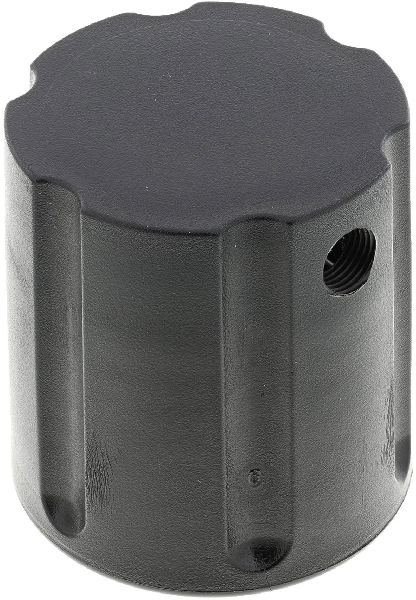
- Loose or Faulty Gas Cap 🔴 High Probability → Shop Fuel Tank Cap The gas cap is the most frequently handled part of the EVAP system. Its rubber O-ring seal can crack, harden, or get dirty over time. Aftermarket caps are notorious for not sealing correctly on these vehicles.
How to confirm: Ensure the cap is tightened at least three clicks. Inspect the rubber O-ring seal for cracks, dirt, or stiffness. If the seal is damaged, the cap doesn't click, or it's a non-OEM cap, it's the prime suspect.
Typical fix: Replace the gas cap. It is highly recommended to use a genuine OEM Acura cap, as aftermarket caps are a frequent cause of this code even when new.
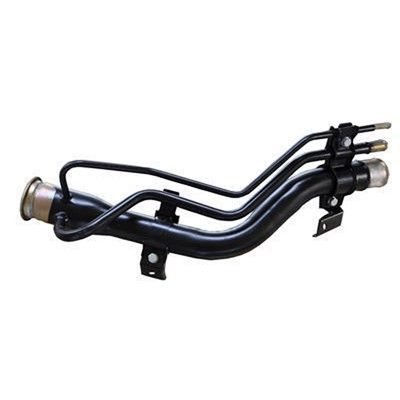
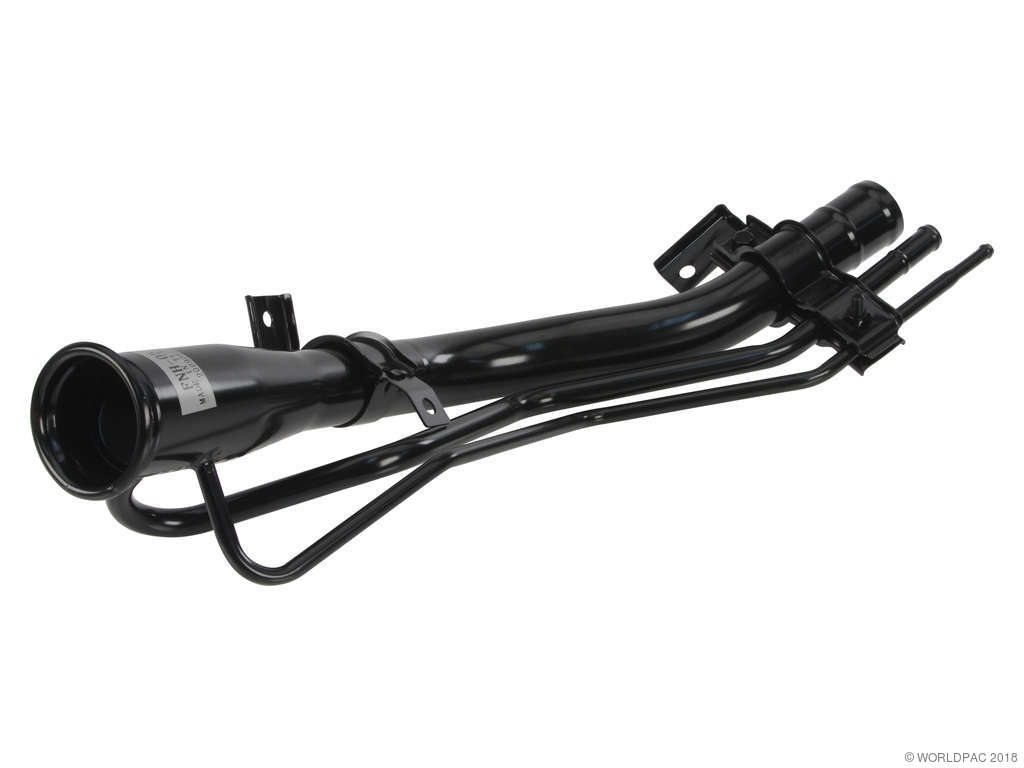
Est. part cost: $25-$40 - Rusted or Damaged Fuel Filler Neck 🟡 Medium Probability → Shop Fuel Filler Neck In areas with road salt ('Rust Belt'), the metal fuel filler neck (the pipe you put the gas nozzle into) can rust where it meets the gas cap. This creates a rough, pitted surface that prevents even a new gas cap from sealing properly.
How to confirm: Remove the driver's side rear wheel and the plastic splash guard to visually inspect the filler neck. Pay close attention to the very top lip where the gas cap's rubber seal makes contact. Look for bubbling paint, flaking metal, and pitting.
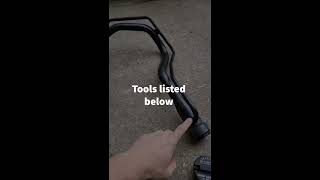
Typical fix: The correct fix is to replace the fuel filler neck. This is a more involved repair but is often necessary if rust 🎬 See this step-by-step guide for replacing a rusted filler neck. has compromised the sealing surface. A temporary fix that some owners have had success with involves sanding the neck smooth and applying a fuel-resistant sealant like Permatex, but this is not a permanent solution.
Est. part cost: $150-$250 - Faulty EVAP Two-Way Valve ⚪ Low Probability This valve, located near the fuel tank, is part of the diagnostic system. Over time, its internal components can fail or stick, causing it to leak.
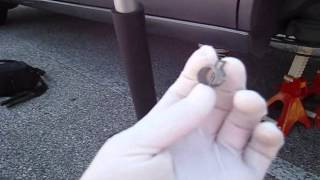
How to confirm: This requires testing with a hand-held vacuum pump as outlined in the official TSB (B99-040). 🎬 Watch: A mechanic's step-by-step diagnosis of the P1456 code. It involves disconnecting hoses, applying vacuum to the valve, and checking if it holds vacuum under specific conditions. This is more advanced than a visual inspection.
Typical fix: Replace the EVAP two-way valve. It is often replaced along with the bypass solenoid as a single assembly.
Est. part cost: $40-$70 - Cracked or Disconnected EVAP Hoses ⚪ Low Probability Rubber hoses, especially in the wheel well area, can become brittle and crack with age and exposure to the elements. Sometimes a hose can simply become disconnected during other repairs or due to vibration.
How to confirm: Visually inspect all EVAP hoses running from the fuel tank to the EVAP canister (located near the driver's side rear tire) for obvious cracks, brittleness, or loose connections. A professional smoke test is the most effective way to find a small hose leak.
Typical fix: Replace the cracked hose section or reconnect the loose hose. Ensure the spring clamp is properly seated.
Est. part cost: $5-$20
Rare But Worth Checking
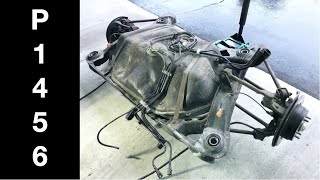
- Cracked Fuel Tank: → Shop Fuel Tank While very rare, rust can eventually perforate the top of the fuel tank, causing a leak that triggers P1456. This is a major repair and is usually accompanied by a strong fuel smell and visible fuel leakage. A YouTube video by 'Project TL' shows a full fuel tank replacement on a 2002 Acura TL-S to fix this exact issue. 🎬 Watch: How to replace the fuel tank on a TL-S.
- Faulty Fuel Tank Pressure (FTP) Sensor: → Shop Fuel Tank The sensor that detects the leak can itself fail. Diagnosis requires testing the sensor's voltage output with a multimeter or a Honda Diagnostic System (HDS) scan tool, as described in TSB B99-040. A bad sensor can report a leak when none exists.
- Cracked Fuel Pump Housing: On some Honda/Acura models, the plastic housing of the fuel pump assembly, which seals against the top of the tank, can develop hairline cracks, causing a P1456 code. This may be accompanied by a fuel smell inside the cabin, especially after filling up.
Diagnosis Steps
- Verify the code with an OBD-II scanner.
- Inspect the gas cap. Remove it, check the seal for damage, and clean any debris. Reinstall it and tighten until it clicks at least three times.
- Clear the code using the scanner. Drive the vehicle for a few days to see if the code returns. The EVAP monitor runs under specific conditions (e.g., fuel level between 15-85%, moderate ambient temperatures, steady speed), so it may take several drive cycles for the system to re-test itself.
- If the code returns, purchase a new GENUINE OEM gas cap. This is an inexpensive and extremely common fix that resolves the issue for a majority of owners.
- If a new OEM cap doesn't solve it, perform a visual inspection. Safely raise the vehicle and remove the driver's side rear wheel and plastic splash shield. Carefully check the fuel filler neck for rust or pitting on its sealing surface. Also inspect the EVAP hoses in that area for cracks or disconnection.
- If no visual issues are found, the next step is a professional smoke test. A machine fills the EVAP system with a harmless, UV-dyed smoke, and any leaks will become visible under a blacklight.
- Based on the smoke test or further diagnostics (like testing valves per TSB B99-040), replace the leaking component, which could be the filler neck, a hose, the two-way valve, or the FTP sensor.
Parts You'll Likely Need
- Fuel Filler Cap
(OEM #17670-S84-A01 (superseded by 17670-T3W-A01))— This is the most common failure point. The seal wears out over time, causing a leak. Using an OEM cap is critical for a proper seal on Honda/Acura vehicles of this era.
Trusted brands: Acura (Genuine OEM)
OEM price range: $25-$40
Aftermarket price range: $10-$25 - Fuel Filler Neck
(OEM #17660-S0K-A00)— Prone to rusting in salt-belt states, which prevents the gas cap from sealing correctly. This is the second most common cause after the gas cap.
Trusted brands: Spectra Premium, Dorman, Acura (Genuine OEM)
OEM price range: $200-$300
Aftermarket price range: $150-$250
Technical Service Bulletins (TSBs) & Recalls
- B99-040: Updates troubleshooting procedures for DTC P1456 and P1457.
Platform-Specific Known Issues
- Acura issued Technical Service Bulletin (TSB) B99-040, which provides dealers with an updated, highly detailed, step-by-step diagnostic procedure for P1456 (and P1457). It requires a Honda-specific scan tool (HDS) to test individual valves and monitor the Fuel Tank Pressure (FTP) sensor voltage. This indicates the code was common enough to warrant a specific, advanced troubleshooting guide.
- The strong consensus among owners in forums is that aftermarket gas caps, even when new, are a primary cause of P1456. Many have chased the issue by replacing other parts, only to find the problem was the non-OEM cap all along.
Mechanic-Grade Diagnostic Values
- Fuel Tank Pressure (FTP) Sensor Voltage, Key On Engine Off, Gas Cap Removed — expected: 2.45V - 2.55V. Failure: A voltage outside this range indicates a potential issue with the FTP sensor or its circuit.
- Fuel Tank Pressure (FTP) Sensor Voltage, Key On Engine Off, System Sealed — expected: Should not be between 2.3V and 2.7V. Failure: If the voltage is between 2.3V and 2.7V, it indicates the system is at atmospheric pressure (has a leak). A value outside this range (e.g., 1.5V) indicates the system is holding vacuum/pressure.
- EVAP System Leak Test (HDS) — expected: Voltage should not increase more than 0.05V in 20 seconds after vacuum is applied to 1.50V.. Failure: An increase of more than 0.05V in 20 seconds confirms a leak in the tested portion of the system.
- EVAP Bypass Solenoid Valve Resistance — expected: Approximately 35 ohms. Failure: A reading that is significantly higher (open) or lower (short) indicates a faulty solenoid.
Scan Tool Commands That Help
- Honda Diagnostic System (HDS): EVAP FUNCTION TEST — This is the first step in the official TSB B99-040 diagnostic procedure. It runs an automated test of the entire EVAP system to confirm a fault exists before beginning manual troubleshooting.
- Honda Diagnostic System (HDS): INSPECTION > EVAP TEST > MULTI SOLENOIDS > PCS ON / CVS ON / BPS ON — This function allows a technician to manually command the various EVAP solenoids (Purge Control, Canister Vent Shut, Bypass Solenoid) to open or close. This is critical for isolating specific sections of the EVAP system during a leak test with a vacuum pump or smoke machine.
Wiring & Ground Locations
- G401 — Center of the dash.. This is a primary ground point for many components within the dashboard area. While not directly tied to the rear-mounted EVAP components, a poor ground here can cause erratic behavior in the gauge assembly or PCM, which interprets the sensor data.
- EVAP Canister Assembly — Under the car, near the driver's side rear wheel.. This is the location of the EVAP canister, two-way valve, bypass solenoid, and canister vent shut valve. Nearly all physical components (besides the gas cap and filler neck) that can cause P1456 are located in this area, making it the primary focus for inspection.
Real Owner Repair Stories
- YouTube channel 'The Auto Reporter' (2003 Acura 3.2 TL) — Check Engine Light with code P1456.
❌ Tried (didn't work) The video begins with the diagnosis, not detailing previously failed fixes.
✅ What actually fixed it A disconnected EVAP hose on top of the vapor canister assembly. The hose had come off its nipple. The fix was to re-secure the hose and add a clamp to prevent it from coming off again. - YouTube channel 'Project TL' (2002 Acura TL-S) — Check Engine Light with code P1456 and a visible fuel leak/puddle under the car after filling the tank.
❌ Tried (didn't work) Not specified, as the fuel leak pointed directly to a major issue.
✅ What actually fixed it Complete replacement of the fuel tank. The top of the original steel tank had rusted through, causing a large leak that triggered the P1456 code. The repair involved dropping the subframe and exhaust to install a new Spectra brand fuel tank (HO14A).
Model Year Variations Within This Range
- 1999-2003: There are no significant documented changes to the EVAP system, its components, or the diagnostic procedure for P1456 within the 1999-2003 Acura TL generation. The primary causes and fixes are consistent across all model years in this range.
Helpful Videos

We Have This Part in Stock


The information in this article is provided for general reference and educational purposes only. Vehicle specifications, procedures, and part compatibility can vary by production date, trim level, and region. Always consult your vehicle's factory service manual and verify part numbers before purchasing or performing repairs. Safety-critical components such as airbags, seat belts, and braking systems should be installed by a qualified professional.
- Acura TL:
- 🧭 Diagnostic Flowchart
- 🎬 Helpful Videos
- 🛍️ Shop This Part
- What's Unique About the 1999-2003 Acura TL
- Symptoms You May Notice
- Most Likely Causes
- Rare But Worth Checking
- Diagnosis Steps
- Parts You'll Likely Need
- Technical Service Bulletins (TSBs) & Recalls
- Platform-Specific Known Issues
- Mechanic-Grade Diagnostic Values
- Scan Tool Commands That Help
- Wiring & Ground Locations
- Real Owner Repair Stories
- Model Year Variations Within This Range
- 🎟️ Get 5% Off