

P1456 on 1998-2002 Honda Accord: EVAP Leak Causes and Fixes
On a 1998-2002 Honda Accord, code P1456 is almost always caused by a loose, worn, or incorrect gas cap. Before attempting any other repairs, tighten the cap until it clicks several times or replace it with a genuine OEM Honda cap for about $25-$40. Aftermarket caps are a frequent cause of this code.
- P1456 on your Accord means there's a small leak in the fuel tank side of the emissions system.
- The most likely cause is a loose or faulty gas cap. Always check and tighten it first.
- Only use a genuine Honda OEM gas cap for replacement; aftermarket caps are a common source of this code.
- This code will not affect how your car drives, but it will cause you to fail an emissions test.
- Do not confuse P1456 with P1457, which relates to a leak on the EVAP canister side.
What's Unique About the 1998-2002 Honda Accord
For this generation of Honda and Acura vehicles, the EVAP diagnostic codes are very specific. P1456 points to a leak on the fuel tank side of the system, which is why the gas cap is the primary suspect. This is distinct from the related P1457 code, which indicates a leak on the EVAP canister side of the system (involving components like the vent solenoid or charcoal canister). Owners frequently confuse the two, but P1456 will not be fixed by replacing canister-side parts.
Symptoms You May Notice
- Check Engine Light (CEL) is illuminated.
- No noticeable impact on drivability or fuel economy in most cases.
- A faint smell of fuel from the rear of the car, especially near the driver's side rear wheel, is possible in some cases.
- Replacing the charcoal canister or canister vent solenoid. These parts are associated with code P1457, not P1456.
Most Likely Causes
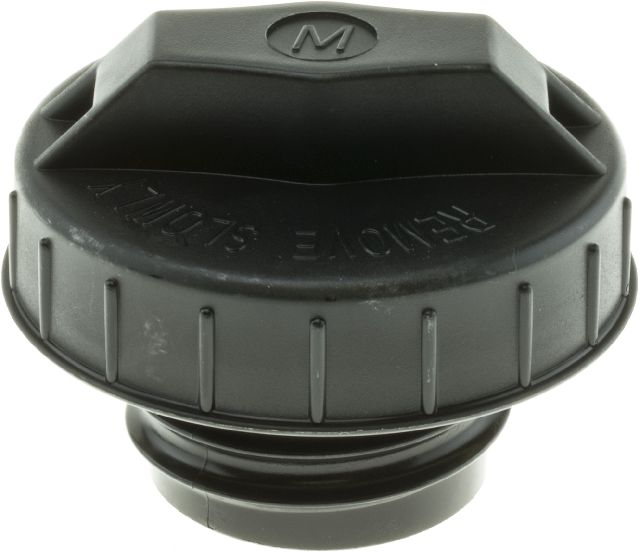
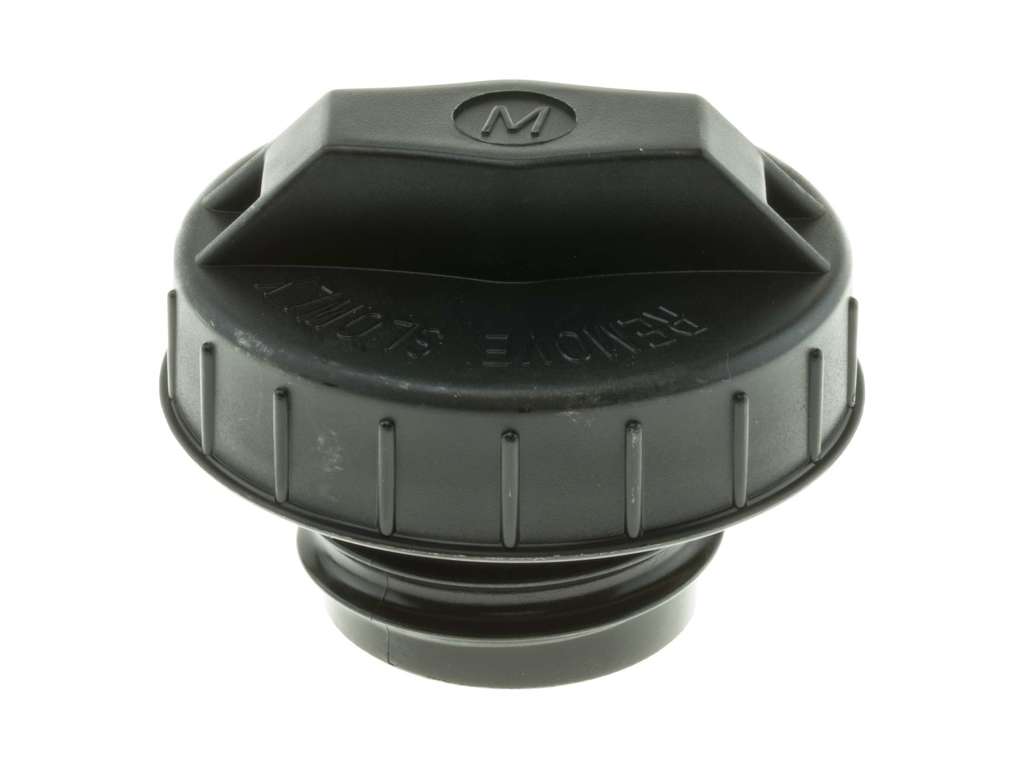
- Loose, Worn, or Incorrect Gas Cap 🔴 High Probability → Shop Fuel Tank Cap The gas cap seal is a simple rubber gasket that degrades over time, losing its ability to maintain pressure. Aftermarket caps are notorious for failing to seal with the precision of the OEM design, often causing this code.
How to confirm: Ensure the cap is tightened until it clicks at least three times. Inspect the cap's seal for cracks, stiffness, or debris. If the cap is not a genuine Honda part, it is highly suspect, even if new.
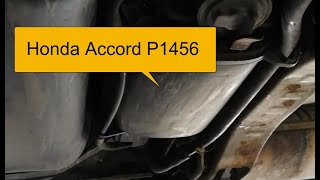
Typical fix: Clean the cap and filler neck sealing surfaces. If the light returns, replace the gas cap with a new OEM part. After replacement, the code must be cleared with a scanner or by 🎬 Watch: Step-by-step guide to diagnosing and fixing the P1456 code. disconnecting the battery.
Est. part cost: $25-$40 - Rusted or Damaged Fuel Filler Neck 🟡 Medium Probability → Shop Fuel Filler Neck In regions with road salt (the "rust belt"), the metal fuel filler neck can rust, especially around the lip where the gas cap seals. This creates an uneven, pitted surface that prevents a proper seal even with a new cap. NHTSA ODI #10315726 highlights this regional vulnerability, noting that owners in areas like New England are particularly likely to encounter P1456 and P1457 issues due to environmental exposure.
How to confirm: Remove the gas cap and visually inspect the metal lip of the filler neck for rust, corrosion, or pitting. Run your finger along the edge to feel for imperfections. A smoke test will definitively show a leak from this area.
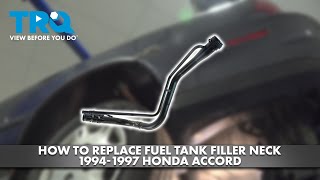
Typical fix: If corrosion is minor, it can be cleaned off with emery cloth or a wire brush. If the neck is heavily rusted, pitted, or perforated, it must be replaced. This is a more involved repair. 🎬 See this walkthrough on how to replace a rusted filler neck.
Est. part cost: $70-$150 - Leaking EVAP Two-Way Valve or Bypass Solenoid ⚪ Low Probability
How to confirm: These components are located together in a plastic box near the fuel tank, ahead of the driver's side rear wheel. Diagnosis requires a smoke test or using a bi-directional scan tool to command the valves while monitoring the Fuel Tank Pressure 🎬 Watch: How to test the vent shut valve and solenoids. (FTP) sensor voltage. A failing two-way valve was the cause of a P1456 in one detailed forum thread.
Typical fix: Replacement of the faulty valve assembly. The EVAP Bypass Solenoid OEM part number is 17012-S84-A01.
Est. part cost: $50-$100 - Cracked or Disconnected EVAP Hose ⚪ Low Probability
How to confirm: Visually inspect all rubber and plastic hoses connected to the fuel tank, filler neck, and two-way valve assembly for cracks, brittleness, or loose connections. A smoke test is the most effective way to find a small leak in a hose.
Typical fix: Replace the damaged section of hose. In one instance, a user found a slit in a hose and sealed it temporarily with silicone.
Est. part cost: $10-$30
Rare But Worth Checking
- Faulty Fuel Tank Pressure (FTP) Sensor: → Shop Fuel Tank It's uncommon for the sensor itself to fail. It's more likely that it is correctly detecting a leak elsewhere. However, if all other components have been verified as good, the sensor could be providing false readings. TSB 99-075 provides voltage checks to verify its function; it should read ~2.5V with the gas cap off.
- Leaking Fuel Pump Sealing Gasket: The fuel pump is mounted to the top of the tank with a large gasket, accessible through a panel in the trunk. If this gasket fails, it can cause an EVAP leak. This is usually only a suspect if the fuel tank has been dropped, the fuel pump has been recently replaced, or if there is visible moisture and dirt caked around the connections on top of the tank.
- Rusted/Perforated Fuel Tank: → Shop Fuel Tank In severe rust belt cases, the fuel tank itself can develop pinhole leaks from corrosion. This is a major repair requiring the tank to be dropped and replaced. It is typically diagnosed with a smoke test after all other possibilities are exhausted.
Diagnosis Steps
- Read the code with an OBD-II scanner to confirm P1456 is present.
- Inspect the gas cap. Remove it, check for damage to the seal, and ensure it's a genuine Honda OEM part.
- Tighten the gas cap until it clicks at least three times.
- Clear the trouble code using the scanner or by disconnecting the negative battery terminal for 15 minutes.
- Drive the vehicle for a few days. The EVAP monitor runs under specific conditions (fuel tank 1/4 to 3/4 full, stable temperatures), so the light may not return immediately.
- If the code returns, carefully inspect the lip of the fuel filler neck for rust or damage that could prevent the cap from sealing.
- Visually inspect the hoses around the fuel filler neck and the EVAP components located under the car near the driver's side rear wheel for obvious cracks or disconnections.
- If no obvious issues are found, the next step is a professional smoke test to pinpoint the exact location of the leak.
Parts You'll Likely Need
- Fuel Filler Cap (Gas Cap)
(OEM #17670-S84-A01)— This is the most frequent cause of a P1456 code. The seal wears out over time, and aftermarket caps are known to cause leaks. Using the OEM part is strongly recommended.
Trusted brands: Honda (OEM)
OEM price range: $25-$40
Aftermarket price range: $10-$25
Technical Service Bulletins (TSBs) & Recalls
- Honda Service Bulletin 99-075 (revised August 9, 2013): Provides updated, detailed troubleshooting procedures for DTC P1456 and P1457 on 1998-2002 Accords. It instructs technicians on using the Honda HDS/PGM Tester to run an EVAP function test and monitor sensor voltages while activating various solenoids to isolate the leak.
Platform-Specific Known Issues
- Many owners on forums report that aftermarket gas caps, even when new, fail to seal properly and will continue to set the P1456 code. Only the genuine Honda cap (17670-S84-A01) is recommended for a reliable fix.
- The EVAP self-test will only run when the fuel tank is between approximately 25% and 75% full. This can confuse owners, as the Check Engine Light may not appear immediately after filling up but rather a day or two later once some fuel has been used.
Mechanic-Grade Diagnostic Values
- Fuel Tank Pressure (FTP) Sensor Voltage, Gas Cap Off (Atmospheric Pressure) — expected: 2.45V - 2.55V. Failure: A reading outside this range suggests a faulty sensor, a restriction in the sensor's hoses, or a wiring issue.
- Fuel Tank Pressure (FTP) Sensor Voltage, during vacuum test — expected: Should drop to ~1.5V and hold for at least 20 seconds.. Failure: If the voltage does not hold and rises back toward atmospheric pressure, it indicates a leak in the system.
- Fuel Tank Pressure (FTP) Sensor Voltage, during pressure build-up — expected: Should rise to approximately 3.0V after the car has been running.. Failure: Failure to build pressure (e.g., only reaching 2.55V) can indicate a faulty two-way valve that is venting pressure too early.
- EVAP Canister Purge Valve Resistance — expected: 30 - 38 ohms (when engine is cool). Failure: A reading outside this range indicates a faulty valve coil.
- EVAP Canister Vent Solenoid Resistance — expected: 25 - 55 ohms. Failure: A reading outside this range suggests a faulty solenoid coil.
Hidden / Shadow Codes Worth Checking
- Mode $06, Test ID $27 (decimal 39): This is a non-continuously monitored test that, if failed, can cause a P1456 to be set. A forum user with a persistent P1456 saw this test failing with a reported value of 1 when the minimum was 10, pointing to a significant failure in the tank-side pressure test. (see via A professional scan tool capable of reading Mode $06 data.)
Scan Tool Commands That Help
- Honda HDS (Honda Diagnostic System) / PGM Tester: EVAP TEST > SINGLE SOLENOID > BYPASS SOLENOID (ON/OFF) — This command is used to manually activate the EVAP Bypass Solenoid. A technician uses this to isolate the tank side of the system, apply a controlled vacuum with a hand pump, and monitor the FTP sensor voltage to see if the system holds vacuum, per TSB 99-075.
- Honda HDS (Honda Diagnostic System) / PGM Tester: EVAP TEST > MULTI SOLENOIDS > PCS ON, CVS ON, BPS ON — This command activates multiple solenoids at once to perform specific leak checks as outlined in Honda's advanced diagnostic procedures. It allows a technician to test different segments of the EVAP system sequentially.
- Honda HDS (Honda Diagnostic System) / PGM Tester: EVAP FUNCTION TEST — This is an automated test sequence run before beginning manual troubleshooting. If the system fails this test, it confirms a malfunction is present, and the technician can proceed with the detailed steps in TSB 99-075.
Wiring & Ground Locations
- G401 — Located behind the driver's side kick panel, high up in the dash. It is a bolt to the body with multiple ground wires attached.. This is a primary ground point for many components on the driver's side of the vehicle. While not exclusively for the EVAP system, a poor connection at G401 can cause intermittent electrical issues for various sensors and solenoids, potentially including those in the EVAP system that rely on a solid ground reference.
- Fuel Filler Neck Ground Wire — A small wire that connects the metal fuel filler neck to the vehicle's chassis, often near the filler neck mounting bolts.. This wire is for static electricity dissipation during refueling and is not directly related to the P1456 code's leak detection logic. However, its presence is important for safety, and it is often handled or disconnected during filler neck replacement, a common fix for P1456 in rust-belt states.
Real Owner Repair Stories
- Honda-Tech Forum User 'Rich' (Year not specified, but within the 1998-2002 range.) — Persistent P1456 code, even after passing a vacuum hold test.
❌ Tried (didn't work) Verifying the system holds vacuum (it did)., Clearing the code, which would return as 'pending' after about 10 minutes of driving.
✅ What actually fixed it The user diagnosed that the tank system could hold a vacuum but could not build sufficient pressure. The FTP sensor voltage would only rise to 2.55V, not the expected 3.0V. He correctly deduced the two-way valve was venting pressure prematurely. Replacing the two-way valve finally resolved the P1456 code. - Honda Accord Forum User 'Gordon2' (1998 Honda Accord LX 2.3L with 242K miles.) — Initially had a P1456 code. After fixing it, a P1457 code appeared.
❌ Tried (didn't work) Replacing the gas cap with a new Honda OEM part did not fix the initial P1456.
✅ What actually fixed it The P1456 code was resolved by replacing the EVAP two-way valve. The user noted finding fuel inside the old valve upon removal, indicating it had failed internally. - YouTube user 'T's Garage' (2000 Honda Odyssey (shares similar EVAP system).) — Persistent P1456 code for many months.
❌ Tried (didn't work) Replacing the gas cap with a new OEM part., Replacing the two-way valve., Replacing the vent valve.
✅ What actually fixed it The user identified rust and pitting on the sealing surface of the fuel filler neck. He cleaned the surface and applied Permatex gasket sealant to the filler neck lip where the gas cap seals. This created a proper seal and resolved the P1456 code long-term. - NHTSA ODI #10078623 — An owner reported receiving error codes P0401 (Insufficient EGR Flow) and P1456 (EVAP System Leak), noting that these seem to be very common problems with these models. Despite attempts to ensure the gas cap was tight, the issues persisted.
- NHTSA ODI #10195472 — A technician identified a failure involving codes P0420, P0505, and P1456 on a vehicle that experienced the issue at approximately 80,000 miles.
"I Checked Everything" — The Actual Cause
- A user on Honda-Tech passed a vacuum-hold test (the inverse of a smoke test) but still had the P1456 code. The issue was not a leak, but the system's inability to build positive pressure. The two-way valve was venting pressure to the canister side too early, preventing the FTP sensor from reaching its target voltage. This is a functional failure, not a static leak, and would be missed by a standard smoke test looking for escaping smoke.
Diagnostic Flowchart
Other Known Issues on This Vehicle
Issues unrelated to this code that are worth knowing about as an owner of this generation:
- Automatic Transmission Failure 🔴 High — Very common, particularly on V6 models but also affects 4-cylinders. Often occurs between 60,000 and 120,000 miles, manifesting as slipping, harsh shifts, or complete failure. (Ref: While no single recall covered all failures, numerous TSBs were issued regarding transmission fluid and shift quality. It is a widely documented weak point.)
- Faulty Ignition Switch 🔴 High — Widespread enough to trigger multiple recalls. The switch can wear prematurely, causing the engine to stall while driving. (Ref: NHTSA Campaign ID 02V120000 (and others). Honda recalled affected vehicles to replace the electrical portion of the ignition switch.)
- Clogged EGR Valve and Ports 🟠 Medium — Common on both 4-cylinder and V6 models with higher mileage. Carbon buildup clogs the EGR valve and intake manifold ports, leading to hesitation, stalling, and a Check Engine Light.
- Failing Hydraulic Motor Mounts 🟠 Medium — The hydraulic-filled front and side motor mounts are known to leak and collapse over time, causing excessive engine vibration at idle and while driving.
- Peeling Paint and Clear Coat Failure 🟡 Low — Extremely common, especially on dark-colored cars. The clear coat and paint on horizontal surfaces like the roof, hood, and trunk will often peel, fade, and delaminate.
Used vs. New Parts: Buying Guide for This Vehicle
When a used part is the smart pick: For this repair, used parts are a reasonable choice for mechanical and structural components like the fuel filler neck, provided they come from a rust-free region. Electronic components like the two-way valve assembly can also be sourced used, but carry a higher risk of having the same age-related failure.
Donor-vehicle mileage cap: roughly under 150000 miles for the part to have meaningful remaining life.
What to inspect on the donor part:
- For a Fuel Filler Neck: Inspect the sealing lip where the gas cap sits for any signs of rust, pitting, or bubbling paint. Ensure the metal is smooth. Check the rest of the pipe for significant corrosion.
- For a Two-Way Valve/Bypass Solenoid Assembly: Look for a unit that is clean and free of heavy corrosion. Check that the plastic is not brittle or cracked. Ensure electrical connectors are free of corrosion or damage.
- Avoid parts from vehicles in the 'rust belt' or areas with heavy road salt usage.
OEM-only on this vehicle (don't cheap out):
- Fuel Filler Cap (Gas Cap)
Brands owners have reported issues with on this vehicle:
- Any aftermarket brand for the Fuel Filler Cap. Forum and mechanic consensus is overwhelming that only a genuine Honda OEM cap provides a reliable seal for this system.
Real Owner Stories
Aggregated from forums and TSBs cited above. Mileages and costs reflect what owners reported in those sources.
1998-2002 Honda Accord
Symptoms: Check Engine Light with code P1456 persisted despite checking the gas cap.
What fixed it: Diagnosis using a vacuum pump and activating the bypass solenoid revealed a faulty EVAP two-way valve, which was replaced.
Source hint: HondaAccordForum.com
1998-2002 Honda Accord
Symptoms: A faint smell of fuel was present near the rear of the car along with the P1456 code.
What fixed it: A visual inspection revealed a slit in an EVAP hose. The owner sealed it temporarily with silicone to resolve the leak.
Source hint: common_causes section on Cracked or Disconnected EVAP Hose
1999-2003 Acura TL
Symptoms: The owner noted the Check Engine Light for P1456 would only appear when the fuel tank was over 3/4 full.
What fixed it: The owner learned that the EVAP test only runs within a specific fuel level range (25-75%), explaining the symptom. The underlying cause was determined to be one of the common issues like the gas cap or filler neck.
Source hint: AcuraZine.com
Related OBD-II Codes
Frequently Asked Questions
I replaced my gas cap with a new one from the auto parts store, but the P1456 code came back. What's wrong?
Why did my Check Engine Light for P1456 appear a few days after I filled up my tank, not right away?
Is there an official Honda Service Bulletin for the P1456 code on my 2001 Accord?
I live in a snowy state. Could winter road conditions be related to my P1456 code?
Besides the gas cap, what's the next most likely part to fail and cause a P1456?
Where are the EVAP valves located on my 1998-2002 Accord?
My friend's Acura TL has the same P1456 code. Is the fix the same?
Helpful Videos
We Have This Part in Stock


The information in this article is provided for general reference and educational purposes only. Vehicle specifications, procedures, and part compatibility can vary by production date, trim level, and region. Always consult your vehicle's factory service manual and verify part numbers before purchasing or performing repairs. Safety-critical components such as airbags, seat belts, and braking systems should be installed by a qualified professional.
- Honda Accord:
- 🧭 Diagnostic Flowchart
- 🎬 Helpful Videos
- 🛍️ Shop This Part
- What's Unique About the 1998-2002 Honda Accord
- Symptoms You May Notice
- Most Likely Causes
- Rare But Worth Checking
- Diagnosis Steps
- Parts You'll Likely Need
- Technical Service Bulletins (TSBs) & Recalls
- Platform-Specific Known Issues
- Mechanic-Grade Diagnostic Values
- Hidden / Shadow Codes Worth Checking
- Scan Tool Commands That Help
- Wiring & Ground Locations
- Real Owner Repair Stories
- "I Checked Everything" — The Actual Cause
- Other Known Issues on This Vehicle
- Used vs. New Parts: Buying Guide for This Vehicle
- Real Owner Stories
- 1998-2002 Honda Accord
- 1998-2002 Honda Accord
- 1999-2003 Acura TL
- Related OBD-II Codes
- Frequently Asked Questions
- 🎟️ Get 5% Off