

P1456 on 2011-2016 Hyundai Elantra 1.8L: EVAP System Fuel Tank Leak Causes and Fixes
On a 2011-2016 Hyundai Elantra, code P1456 almost always indicates a small leak in the evaporative emissions (EVAP) system, most often caused by a loose or faulty gas cap. Check that the cap is tight and clicks several times. If that doesn't fix it, an OEM replacement cap (P/N 31010-3L600) is the next logical step and costs around $25. If the code persists, the canister close valve or fuel tank pressure sensor are the next most likely culprits.
- P1456 on your Elantra means there's a small leak in the fuel vapor system, not a major engine problem.
- Always start with the simplest and most likely fix: check that your gas cap is tight. If the light comes back, spend the $25 on a new OEM gas cap before attempting any other repairs.
- You can continue to drive the car without worry, but the Check Engine Light will cause it to fail an emissions inspection.
- If a new gas cap doesn't solve the problem, a professional smoke test is the most efficient way to find the leak, which could be a sensor, a hose, or the charcoal canister.
What's Unique About the 2011-2016 Hyundai Elantra
While P1456 is famously a Honda-specific code, Hyundai also uses it to designate an EVAP system leak on the fuel tank side. Unlike some generic definitions that might incorrectly point to a fuel tank temperature sensor, the 2011-2016 Elantra's service documents do not list such a sensor, but do include a Fuel Tank Pressure Sensor (FTPS) which is responsible for detecting these leaks. The most common failure points are consistent with other vehicles (the gas cap), but diagnosis may also lead to the Fuel Tank Pressure Sensor itself, which is located on the fuel pump assembly, or the Canister Close Valve (CCV).
Symptoms You May Notice
- Check Engine Light is on.
- A faint fuel smell may be noticeable, particularly around the rear of the vehicle or near the gas cap.
- No noticeable change in engine performance or drivability.
- Slight difficulty starting the engine immediately after refueling (rare).
- Replacing the purge valve (PCSV) in the engine bay. While the purge valve is a common failure item for other EVAP codes like P0441 or P0456, the P1456 code specifically points to a leak on the fuel tank side of the system, making the gas cap, CCV, FTPS, or canister area more likely culprits.
Most Likely Causes
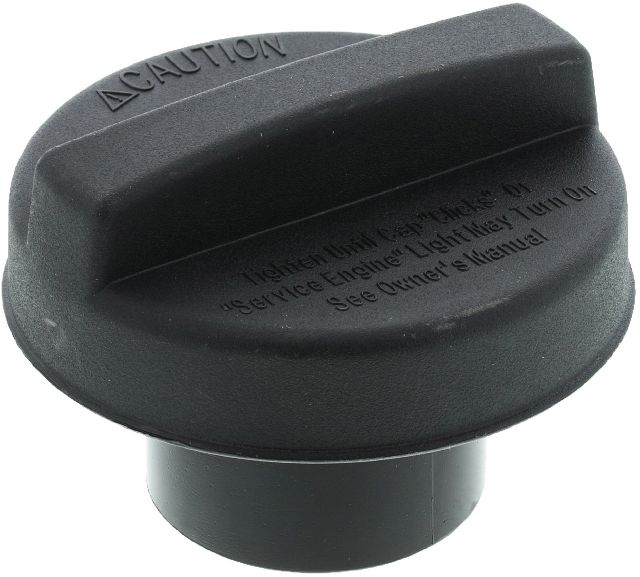
- Loose, Dirty, or Faulty Gas Cap 🔴 High Probability → Shop Fuel Tank Cap The gas cap seal is a simple rubber O-ring that can degrade, crack, or get dirty over time, preventing a proper seal. This is the most common failure point for any EVAP leak code. A user on Hyundai Forums noted their check engine light issues started when their gas cap stopped clicking.
How to confirm: Ensure the gas cap is tightened until it clicks multiple times. Remove the cap and inspect the seal for any cracks, stiffness, or debris. Clean the seal and the fuel filler neck surface with a cloth.
Typical fix: If cleaning and tightening do not resolve the issue, replace the gas cap. It is highly recommended to use an OEM (Original Equipment Manufacturer) cap, as aftermarket versions are known to cause sealing issues.
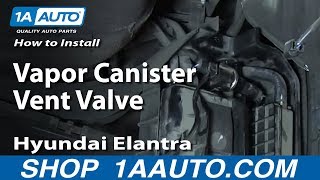
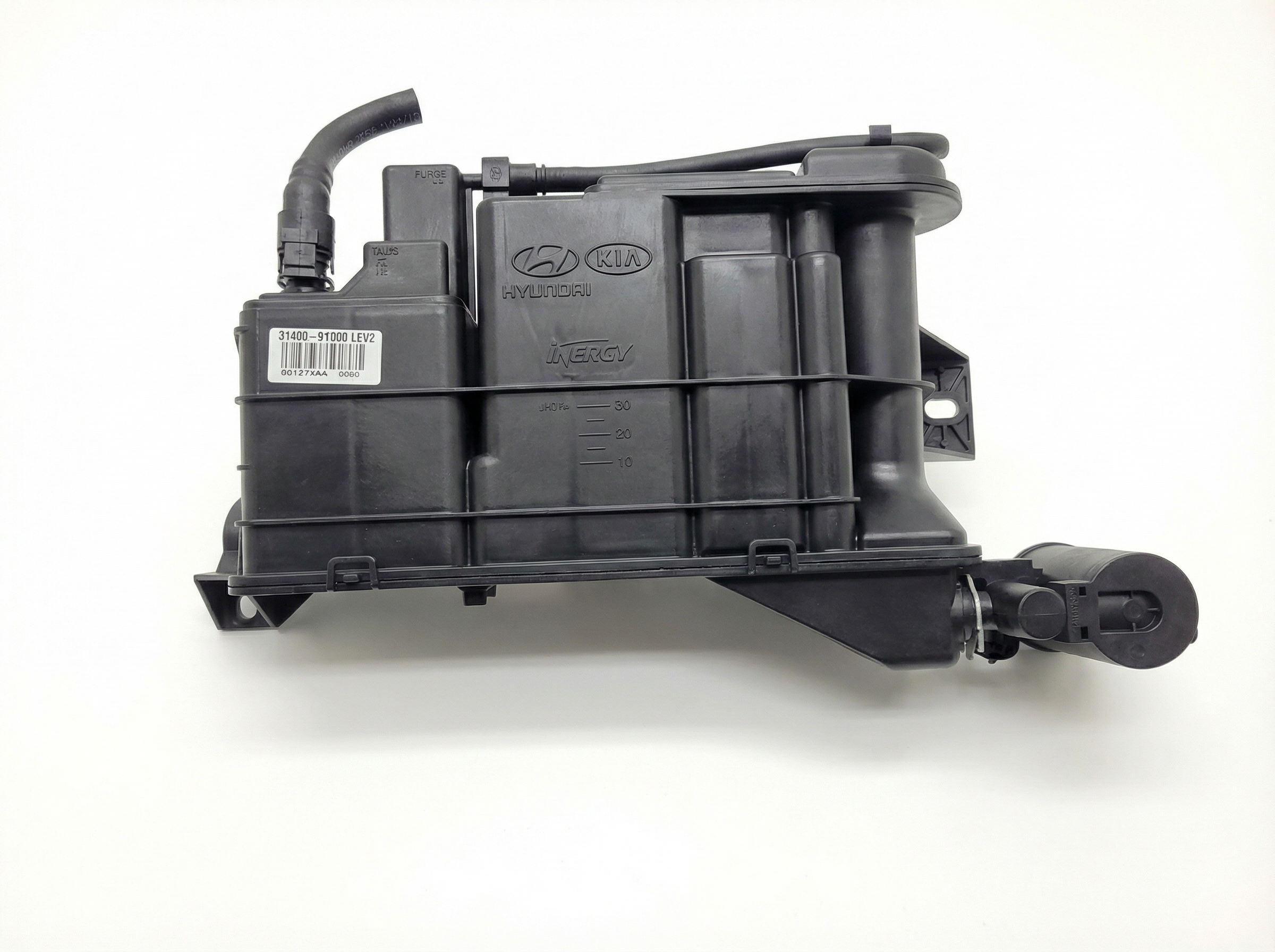
Est. part cost: $15-$35 - Faulty Canister Close Valve (CCV) 🟡 Medium Probability → Shop Vapor Canister The Canister Close Valve (also called a vent valve) is normally open and must close to seal the system for the EVAP test. It can get stuck open due to dirt or internal failure, causing a leak. Mechanics report this is a very common fix for persistent P0456/P1456 codes on Hyundai vehicles when a new gas cap doesn't solve it.
How to confirm: A smoke test is the best method. Smoke will be seen exiting a Canister Close Valve that is stuck partially open. The CCV can also be tested for proper electrical function and its ability to hold a vacuum when commanded closed by a scan tool. The coil's resistance can be measured and should be between 19.5 and 22.5 Ω.
Typical fix: Replacement of the Canister Close Valve. It is located near the charcoal canister at the rear of the vehicle. The OEM part number is 31453-3Q500. 🎬 Watch: Diagnosing Elantra EVAP leak codes
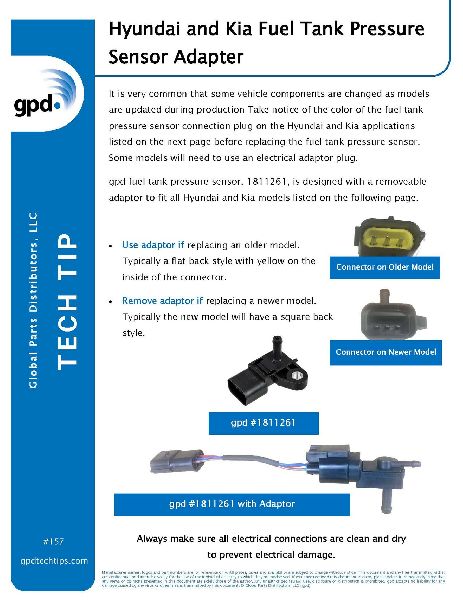
Est. part cost: $80-$110 - Faulty Fuel Tank Pressure Sensor (FTPS) ⚪ Low Probability → Shop Fuel Tank The sensor that detects the EVAP leak can itself fail or its seal can degrade, creating a leak at the point of measurement.
How to confirm: The FTPS is located on top of the fuel pump assembly, which is accessed from under the rear seat cushion inside the cabin. A smoke test is the most effective way to confirm a leak at the sensor's seal. The sensor's electrical circuit can also be tested for proper voltage. With the key on and gas cap off, the sensor should read approximately 2.5V.
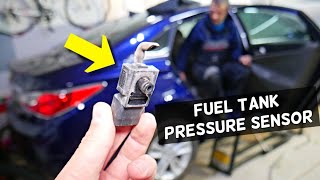
Typical fix: Replacement of the Fuel Tank Pressure Sensor. This involves removing the rear seat cushion to access the fuel pump service cover. The OEM part number may be 31435-3X500. 🎬 See this fuel tank pressure sensor replacement guide
Est. part cost: $70-$120 - Cracked or Disconnected EVAP Hoses ⚪ Low Probability The rubber and plastic hoses that make up the EVAP system can become brittle and crack with age and exposure to the elements, creating small leaks.
How to confirm: A visual inspection may reveal obvious cracks or loose connections on the vapor lines running from the fuel tank to the charcoal canister. A definitive diagnosis requires a smoke test to pinpoint the exact location of the small leak.
Typical fix: Replace the specific section of cracked hose or secure the loose connection.
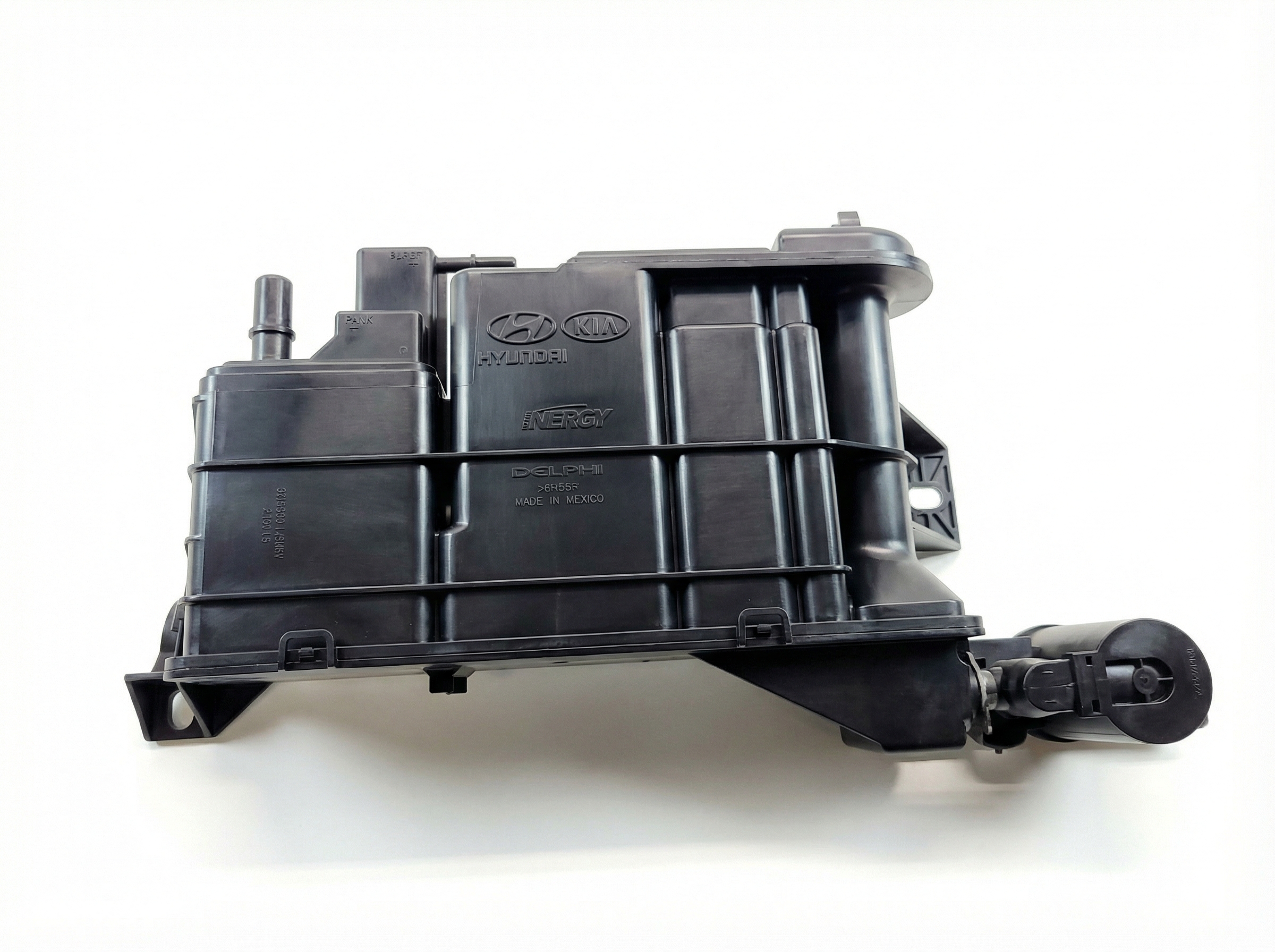
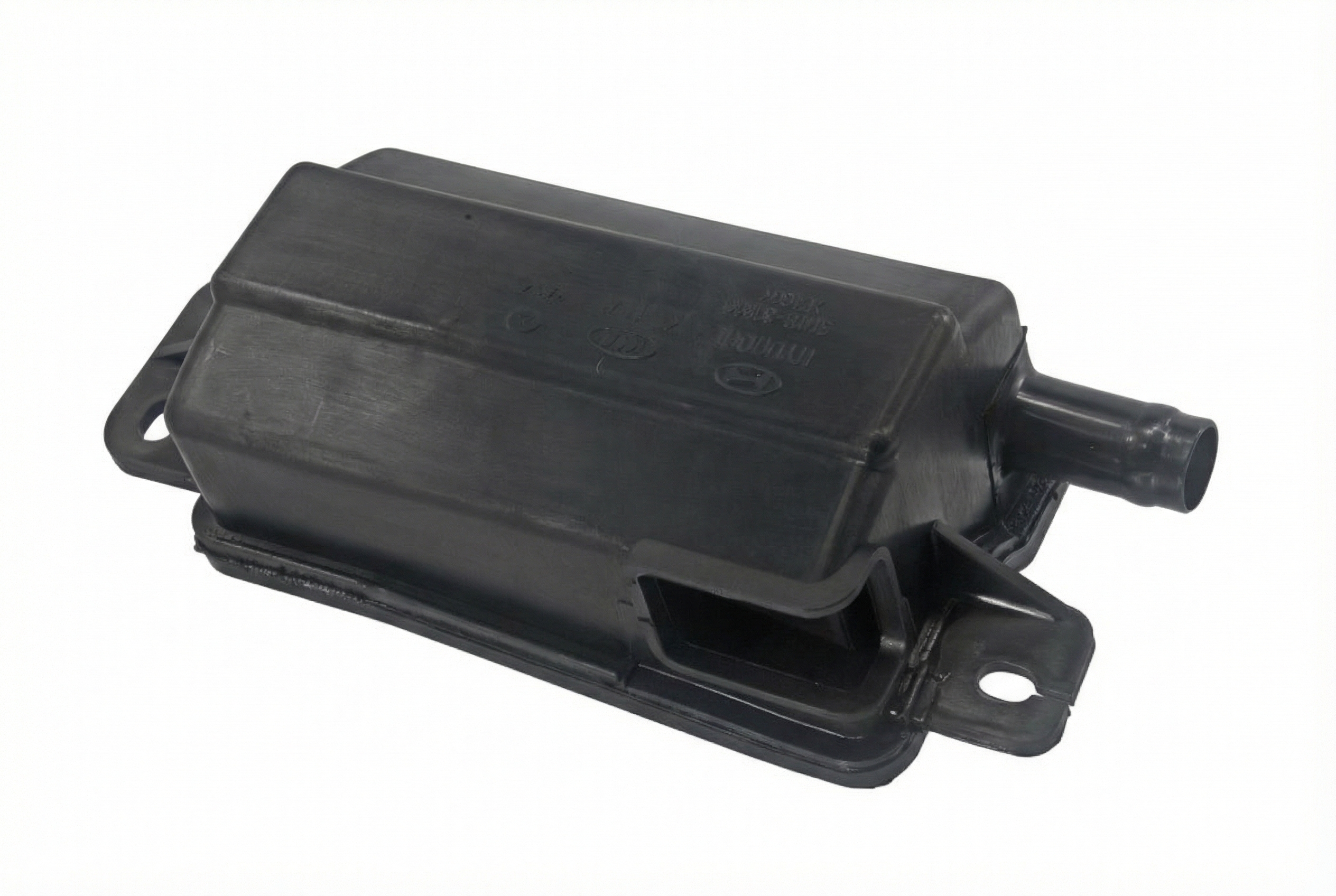
Est. part cost: $10-$50 - Faulty Charcoal Canister ⚪ Low Probability → Shop Vapor Canister
How to confirm: A smoke test is the best method. Smoke will be seen exiting a cracked canister body. These can develop hairline cracks that are difficult to see without smoke.
Typical fix: If the canister itself is cracked, it must be replaced.
Est. part cost: $100-$250
Rare But Worth Checking
- Hairline crack in the fuel filler neck: → Shop Fuel Filler Neck Rust or damage can cause a very small crack in the metal pipe leading to the gas tank, which can be very difficult to see without a smoke test.
- Leaking fuel pump gasket: The large O-ring that seals the fuel pump assembly to the top of the fuel tank can degrade and cause a fuel vapor leak. This would be noticeable during a smoke test and may also present a strong fuel smell inside the car after refueling. Access is under the rear seat.
Diagnosis Steps
- Check the Gas Cap: Ensure the gas cap is tight. Remove it, inspect the rubber seal for damage or debris, and reinstall it, making sure it clicks several times. Use a cloth to wipe down the filler neck sealing surface. Clear the code and drive for a few days to see if it returns.
- Replace the Gas Cap: If the light returns, the easiest and most inexpensive next step is to replace the gas cap with a new OEM part (P/N 31010-3L600). Aftermarket caps are a known cause of this code.
- Visual Inspection: Inspect the EVAP hoses and components around the fuel tank and charcoal canister (located at the rear, driver's side) for any obvious cracks, damage, or loose connections.
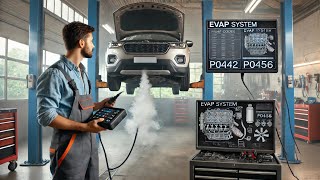
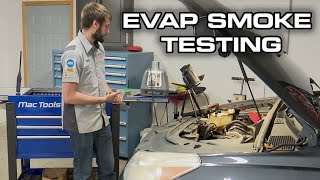
- Perform a Smoke Test: If the above steps do not solve the issue, a smoke test is required for an accurate diagnosis. This involves injecting pressurized smoke into the EVAP system (usually via the service port) to find the source of the leak. 🎬 Watch: How to perform an EVAP smoke test
- Inspect Components based on Smoke Test: Based on where the smoke exits, inspect and test the Canister Close Valve (CCV), Fuel Tank Pressure Sensor (FTPS), charcoal canister, and fuel filler neck for leaks.
- Repair and Retest: Replace the faulty component identified by the smoke test. Clear the codes and perform a drive cycle to allow the ECM to re-run the EVAP monitor and confirm the fix.
Parts You'll Likely Need
- Fuel Cap
(OEM #31010-3L600)— This is the most common cause for P1456 due to a worn or dirty seal preventing the system from sealing correctly.
Trusted brands: Hyundai (OEM)
OEM price range: $20-$35
Aftermarket price range: $15-$25 - Canister Close Valve
(OEM #31453-3Q500)— This valve often fails by sticking partially open, creating an intermittent leak that is a common cause of P1456 when the gas cap is not at fault.
Trusted brands: Hyundai (OEM), Dorman
OEM price range: $80-$110
Aftermarket price range: $50-$80 - Fuel Tank Pressure Sensor
(OEM #31435-3X500)— This sensor detects the pressure for the EVAP test. A faulty sensor or a bad seal on the sensor itself can cause this code.
Trusted brands: Bosch, Standard Motor Products, NTK
OEM price range: $150-$200
Aftermarket price range: $70-$120
Related Codes That Often Appear With This One
- P0455 — This code indicates a large EVAP leak. If a component fails significantly, it may present as a large leak (P0455) before or alongside the small leak code.
- P0442 — This is the generic SAE code for a small EVAP leak. P1456 is the manufacturer-specific equivalent, and the two can sometimes appear together depending on the scanner's interpretation.
- P0456 — This is the generic SAE code for a 'very small' EVAP leak. It is functionally identical to P1456 and P0442 for diagnostic purposes, often triggered by the same faults.
Platform-Specific Known Issues
- Owner Experience: Gas Cap Confusion: → Shop Fuel Tank Cap A user on the Hyundai Forums reported getting a P0456 code (functionally the same as P1456) after their original gas cap stopped clicking. They replaced it with a new OEM cap, but the light remained on for two weeks. After clearing the code, it returned. This highlights that even with the correct fix, the EVAP monitor can take a significant amount of time and specific drive cycle conditions to run its self-test and turn the light off.
Mechanic-Grade Diagnostic Values
- Canister Close Valve (CCV) Coil Resistance — expected: 19.5 - 22.5 Ω at 20°C (68°F). Failure: A resistance measurement outside of this range, or an open circuit (OL), indicates a faulty solenoid coil.
- Canister Purge Valve (PCSV) Coil Resistance — expected: 22.0 - 26.0 Ω at 20°C (68°F). Failure: A reading outside this range suggests a failing coil. This valve is in the engine bay and is more often associated with P0441 but can also cause leak codes.
- Fuel Tank Pressure Sensor (FTPS) Voltage — expected: ~2.5V with key on, engine off, and gas cap removed (atmospheric pressure).. Failure: During a manually induced vacuum test, voltage should drop to ~1.0V and hold steady. If it rises quickly, a leak is present. A reading stuck high or low regardless of pressure indicates a faulty sensor.
Scan Tool Commands That Help
- Hyundai GDS (or equivalent professional scanner): EVAP Leak Test — This is an automated, bidirectional function that commands the Canister Close Valve (CCV) shut and monitors the Fuel Tank Pressure Sensor to measure pressure decay. It can verify a leak exists or confirm a repair has been successful without needing a smoke machine.
- Hyundai GDS (or equivalent professional scanner): Canister Close Valve (CCV) Activation — During a smoke test, this command is used to manually force the CCV closed, sealing the EVAP system so it can be filled with smoke to find the source of a leak.
Wiring & Ground Locations
- Canister Purge Valve (PCSV) — In the engine bay, on the driver's side of the 1.8L engine, attached to the intake manifold and easily accessible after removing the plastic engine cover.. While not the primary cause for a tank-side leak code, its connector is a key test point for power and ECM control signals for the EVAP system.
- Canister Close Valve (CCV) — At the rear of the vehicle, mounted near or on the charcoal canister assembly, typically on the driver's side.. This is a primary suspect for P1456. Its wiring and connector are exposed to road debris and moisture, making them a potential point of failure.
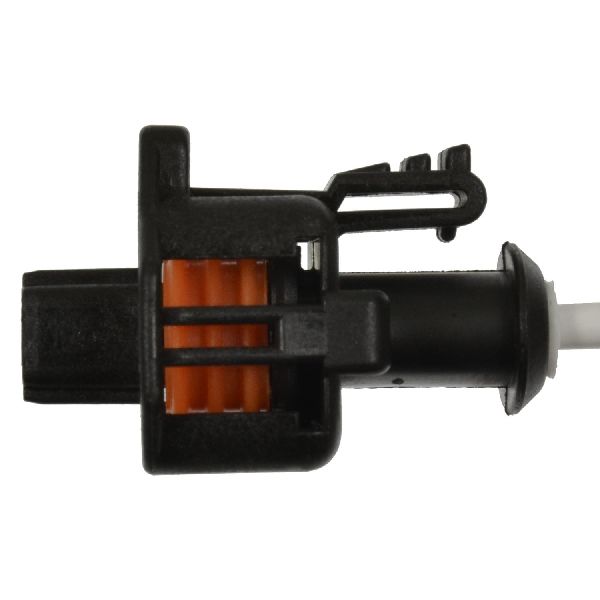
- Fuel Tank Pressure Sensor (FTPS) — On top of the fuel pump assembly. Access requires removing the rear seat bottom cushion and opening a service cover in the floor pan.. A leak can occur at the sensor's seal on the fuel pump module. The wiring harness connection is inside the vehicle, protecting it from elements, but it can be disturbed during fuel pump service.
Real Owner Repair Stories
- YouTube User 'Check Engine Light Report' (2013 Hyundai Elantra GT) — Check Engine Light with code P0456.
❌ Tried (didn't work) Tightening the gas cap., Clearing the code, which returned after 50 miles., Cleaning the gas cap gasket and fuel filler neck., Clearing the code again, which returned after another 50 miles.
✅ What actually fixed it Replacing the vapor canister purge valve (solenoid) in the engine bay. The Check Engine Light did not return after 1,000 miles of driving.
"I Checked Everything" — The Actual Cause
- In a documented case for a related Hyundai model with a persistent EVAP code, after replacing common parts, a smoke test failed to identify the leak. The technician then had to drop the fuel tank and found the leak was coming from the main seal of the fuel pump housing on top of the tank. Replacing the entire fuel pump assembly, which included a new seal, was the final fix.
When the Usual Fixes Don't Work
- A 2015 Elantra owner on Reddit reported a recurring P0456 code. After replacing the gas cap themselves, they took it to a mechanic who performed a smoke test and replaced the purge valve. The fix appeared to work for 5,000 miles before the same code returned, indicating that either the replacement part failed, the initial diagnosis was incomplete, or another intermittent leak exists in the system. This highlights that even a professional diagnosis and common part replacement may not be a permanent solution if a more obscure or intermittent fault is present.
Diagnostic Flowchart
Other Known Issues on This Vehicle
Issues unrelated to this code that are worth knowing about as an owner of this generation:
- Engine Ticking / Piston Slap 🔴 High — Widespread issue affecting the 1.8L Nu engine, often noticeable on cold starts. Can lead to excessive oil consumption, internal scoring, and eventual engine failure, sometimes before 100,000 miles. (Ref: TSB #22-EM-009H / TXXK (Warranty Extension for engine long block in certain states).)
- Worn Steering Coupler 🟠 Medium — Extremely common. The flexible rubber coupler in the electronic power steering motor disintegrates over time, causing a distinct clicking or clunking noise in the steering column when turning the wheel. (Ref: Warranty Extension TSB 17-ST-002 extended coverage to 10 years/100,000 miles.)
- Excessive Oil Consumption 🟠 Medium — Often related to the piston slap issue, these engines can consume significant amounts of oil between changes, leading to low oil levels that can cause further engine damage or trigger other codes like P0016 (cam/crank correlation). (Ref: Covered under the same engine warranty extension (TXXK) as the piston slap issue.)
- Brake Light Switch Failure 🟡 Low — A faulty brake pedal stopper pad can deteriorate, causing the brake lights to stay on or the vehicle to fail to start (if it has a push-button start). This was subject to a recall. (Ref: Recall #20V061000)
Used vs. New Parts: Buying Guide for This Vehicle
When a used part is the smart pick: For this repair, used parts are generally not recommended for sensors or valves. However, obtaining a used charcoal canister body (if cracked) or specific EVAP hoses from a low-mileage donor vehicle can be a cost-effective option, provided they are thoroughly inspected for cracks, brittleness, or damage before installation.
Donor-vehicle mileage cap: roughly under 60000 miles for the part to have meaningful remaining life.
What to inspect on the donor part:
- For hoses: Squeeze the hose to check for pliability. If it feels hard, brittle, or makes crunching sounds, it is no good.
- For canister body: Inspect visually for any hairline cracks, especially around mounting tabs and hose connections.
- Check the donor vehicle's history if possible to ensure it's not from a rust-belt region, which accelerates material degradation.
OEM-only on this vehicle (don't cheap out):
- Fuel Cap - Aftermarket gas caps are a widely documented cause of persistent EVAP leak codes on Hyundai vehicles; using an OEM part is critical for this specific component.
Aftermarket brands forum-validated for this vehicle:
- Bosch (for sensors)
- NTK (for sensors)
- Standard Motor Products (SMP)
Brands owners have reported issues with on this vehicle:
- No-name or unbranded gas caps from online marketplaces.
Real Owner Stories
Aggregated from forums and TSBs cited above. Mileages and costs reflect what owners reported in those sources.
2011-2016 Hyundai Elantra 1.8L
Symptoms: The check engine light came on after the original gas cap stopped clicking.
What fixed it: Replaced the gas cap with a new OEM cap and cleared the code.
Source hint: Hyundai Forums thread titled 'P0456' (https://www.hyundai-forums.com/threads/p0456.598513/)
Related OBD-II Codes
Frequently Asked Questions
I replaced my gas cap on my Elantra but the P1456 code is still there. Is the new cap defective?
Can I use an aftermarket gas cap from a local auto parts store for my 2011-2016 Elantra?
Is there a specific part number for the Canister Close Valve if that is causing my P1456 code?
My Elantra has a ticking noise and high oil consumption; is this related to the P1456 EVAP code?
Where is the Fuel Tank Pressure Sensor located on the 2011-2016 Elantra?
How can I confirm if my Canister Close Valve is actually bad?
Helpful Videos
Used OEM Parts in Stock

New Aftermarket Parts Available


The information in this article is provided for general reference and educational purposes only. Vehicle specifications, procedures, and part compatibility can vary by production date, trim level, and region. Always consult your vehicle's factory service manual and verify part numbers before purchasing or performing repairs. Safety-critical components such as airbags, seat belts, and braking systems should be installed by a qualified professional.
- Hyundai Elantra:
- 🧭 Diagnostic Flowchart
- 🎬 Helpful Videos
- 🛍️ Shop This Part
- What's Unique About the 2011-2016 Hyundai Elantra
- Symptoms You May Notice
- Most Likely Causes
- Rare But Worth Checking
- Diagnosis Steps
- Parts You'll Likely Need
- Related Codes That Often Appear With This One
- Platform-Specific Known Issues
- Mechanic-Grade Diagnostic Values
- Scan Tool Commands That Help
- Wiring & Ground Locations
- Real Owner Repair Stories
- "I Checked Everything" — The Actual Cause
- When the Usual Fixes Don't Work
- Other Known Issues on This Vehicle
- Used vs. New Parts: Buying Guide for This Vehicle
- Real Owner Stories
- 2011-2016 Hyundai Elantra 1.8L
- Related OBD-II Codes
- Frequently Asked Questions
- 🎟️ Get 5% Off