

P1457 on 2001-2003 Acura MDX: EVAP Canister Leak Causes and Fixes
On a 2001-2003 Acura MDX, code P1457 almost always points to a leak in the EVAP canister system, not the gas cap. The most common failure is the Canister Vent Solenoid (CVS) valve, which rusts and fails, preventing a proper seal. Replacing the valve is a common DIY fix, but the mounting screws are notoriously difficult to remove due to rust. Parts typically cost between $30 and $120.
- P1457 means the leak is in the charcoal canister area under the car, not the gas cap.
- The most likely cause is a rusted Canister Vent Solenoid (CVS) valve.
- Expect to deal with heavily rusted screws when replacing parts on the canister.
- A smoke test is the fastest way to accurately diagnose the leak.
- You can continue to drive the vehicle, but you will not pass an emissions test.
What's Unique About the 2001-2003 Acura MDX
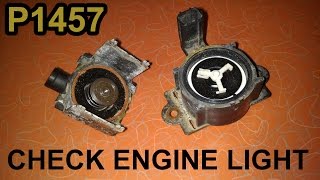
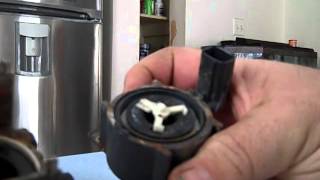
First-generation Acura MDX models, like many Hondas of this era, are known for P1457 failures due to the location of the EVAP canister components. The canister and its valves are mounted under the vehicle, in front of the driver's side rear wheel, where they are exposed to road salt, moisture, and debris. This exposure leads to significant rust and corrosion, causing the metal components of the valves to fail and the mounting hardware to seize. Forum users frequently describe the frustration of drilling or cutting out these 🎬 See how to handle these notoriously rusted-on canister valves. rusted screws, which complicates an otherwise straightforward repair.
Diagnostic Flowchart
Tap your situation to follow the diagnostic path that matches what you're seeing on this vehicle.
Symptoms You May Notice
- Check Engine Light is on
- Failure to pass a state emissions inspection
- A faint fuel smell may be noticeable in rare cases
- Replacing the gas cap. A faulty gas cap typically causes code P1456 (fuel tank side leak), not P1457 (canister side leak).
- Replacing the EVAP Purge Valve in the engine bay. While this part can fail, it is much less common for P1457 than the valves located on the canister itself under the vehicle.
Most Likely Causes
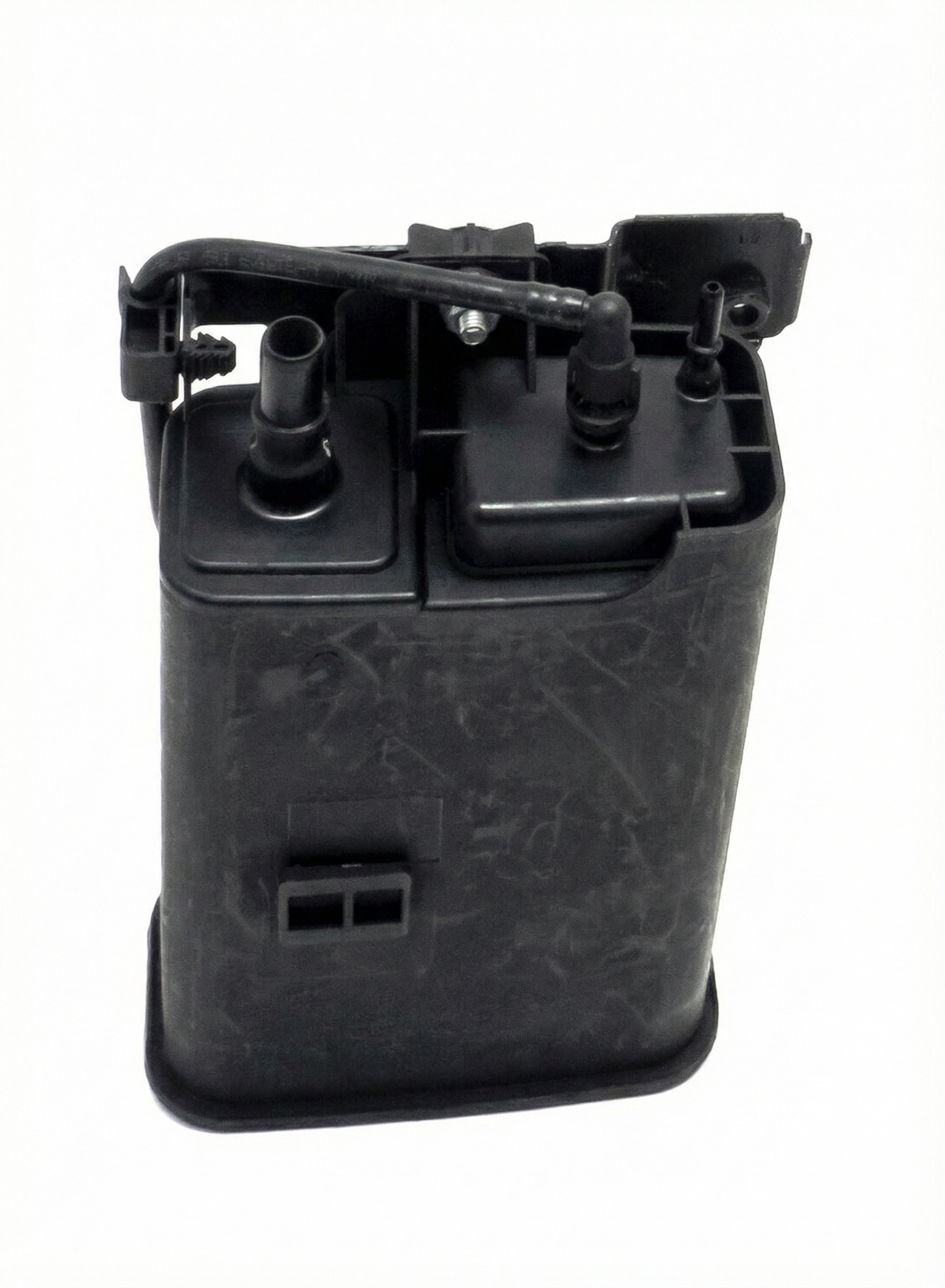
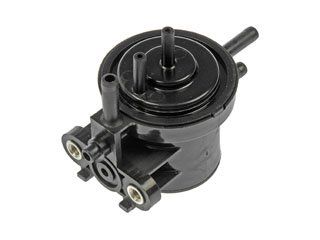
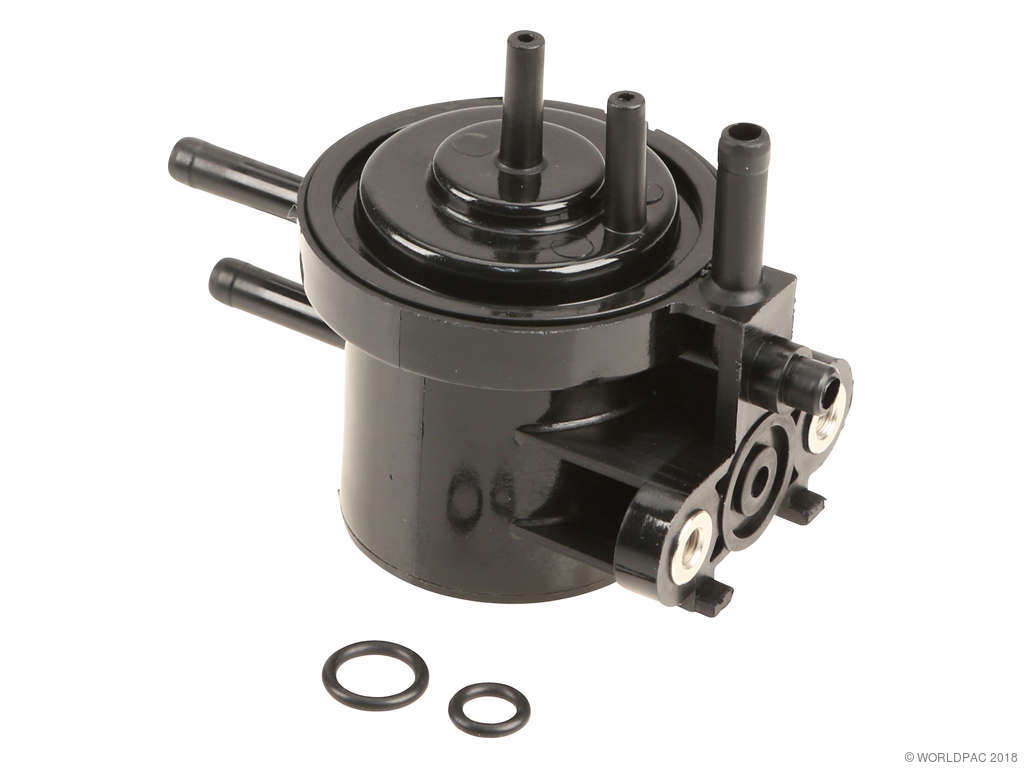
- Failed EVAP Canister Vent Solenoid (CVS) Valve 🔴 High Probability → Shop Vapor Canister The valve is made of a plastic body sandwiched by a metal bracket. It is located under the car where it is highly susceptible to rust from road salt and moisture. The metal rusts and expands, compromising the seal against the internal O-ring and causing a leak.
How to confirm: Visually inspect the valve for heavy rust. A mechanic can command the valve to close with a bi-directional scan tool and perform a smoke test to see if it leaks. You can also apply 12v power to the terminals to listen for a 'click', though a click doesn't guarantee it's sealing properly. Some DIYers have successfully disassembled the valve, cleaned the rusted metal plate and O-ring surface, and reassembled it to fix the leak.
Typical fix: Replace the Canister Vent Solenoid. The mounting screws are often extremely rusted and may need to be drilled, cut, or removed with an extractor. It is highly recommended to soak the screws in penetrating oil for an extended period before attempting removal.
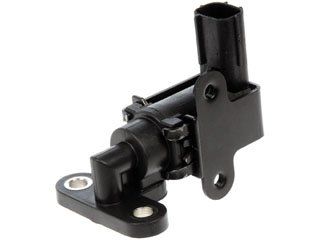
Est. part cost: $30-$120 - Failed EVAP Bypass Solenoid Valve 🟡 Medium Probability → Shop Vapor Canister Like the vent solenoid, this valve is also mounted on the canister assembly and is prone to corrosion and electrical failure. Honda TSB 03-001 specifically addresses this valve failing due to internal corrosion from water and road salt intrusion, particularly in regions that salt roads in winter.
How to confirm: A smoke test is the most effective method. After commanding the valve to close, a technician will introduce smoke into the EVAP system; smoke emerging from the valve indicates a leak. An electrical test can also be performed by listening for a click when activating it with a scan tool.
Typical fix: Replace the bypass solenoid valve. It is often replaced at the same time as the vent solenoid and canister as a preventative measure, especially if the screws are heavily corroded.
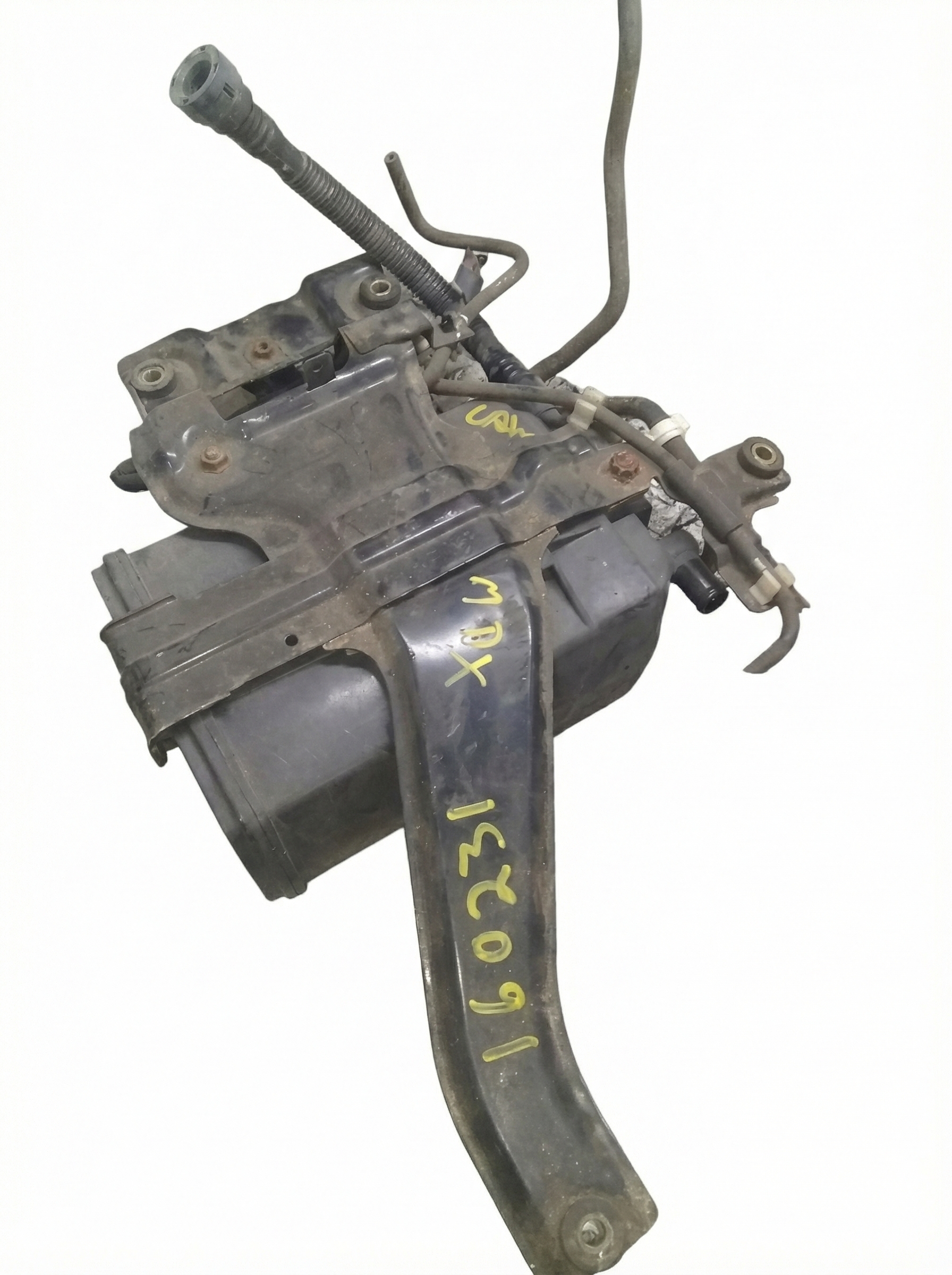
Est. part cost: $100-$150 - Cracked or Corroded EVAP Canister ⚪ Low Probability → Shop Vapor Canister The plastic body of the canister itself can become brittle over time and develop hairline cracks. More commonly, the metal mounting tabs or valve seats corrode, compromising the seal of the attached components. Removing seized valves can also crack the plastic housing.
How to confirm: A smoke test will show smoke seeping from cracks in the canister body or around the valve mounting points. Visual inspection may reveal cracks, especially around the screw holes for the valves.
Typical fix: Replace the entire EVAP canister assembly. This is often done when multiple components are failing or seized.
Est. part cost: $300-$350 - Cracked or Disconnected EVAP Hoses ⚪ Low Probability The rubber hoses connected to the canister can become brittle and crack with age and exposure to the elements. This can sometimes be the cause if the code returns after replacing the canister and valves.
How to confirm: Visually inspect all hoses connected to the EVAP canister for visible cracks or loose connections. A smoke test will quickly reveal leaks from hoses.
Typical fix: Replace the damaged section of hose.
Est. part cost: $10-$30
Rare But Worth Checking
- Faulty Powertrain Control Module (PCM): In very rare cases, a shorted EVAP solenoid can damage the driver circuit within the PCM. Honda TSB 03-001 notes that severe corrosion in the EVAP bypass solenoid valve could cause an internal short, requiring replacement of both the valve and the PCM. This should only be considered after all other components of the EVAP system have been tested and confirmed to be working correctly.
Diagnosis Steps
- Confirm the code is P1457, not P1456. Do not replace the gas cap.
- Safely raise the vehicle and locate the EVAP canister assembly, which is under a splash shield in front of the driver's side rear wheel.
- Liberally apply penetrating oil to all mounting screws for the canister and its valves and let it soak. These are notoriously prone to seizure from rust.
- Visually inspect the canister, valves, and all attached hoses for obvious signs of rust, corrosion, or physical damage. Pay close attention to the metal bodies of the solenoid valves.
- If you have a bi-directional scan tool, command the Canister Vent Solenoid (CVS) and Bypass Solenoid to close and listen for a click from each valve.
- The most definitive diagnostic step is a smoke test. With the vent solenoid commanded shut, inject low-pressure smoke into the EVAP service port and observe where the smoke exits. The most common leak points will be the Canister Vent Solenoid, the Bypass Solenoid, or cracks in the canister itself.
- If no leaks are found, test the electrical circuit for the solenoids, checking for power and ground signals from the PCM.
- Replace the component identified as the source of the leak. It is highly recommended to have new mounting screws on hand before starting the repair.
Parts You'll Likely Need
- EVAP Canister Vent Solenoid (CVS) Valve
(OEM #17310-S0X-A02)— This is the most frequent failure point for P1457 due to its construction and exposure to the elements, causing it to rust and no longer seal properly.
Trusted brands: Denso (OEM), Dorman (P/N: 911-752), Standard Motor Products
OEM price range: $80-$120
Aftermarket price range: $30-$80 - EVAP Canister Assembly
(OEM #17011-S84-A00)— Replaced if the canister body is cracked or if multiple valves are seized and cannot be removed without damaging the canister.
Trusted brands: Acura (Genuine), Dorman
OEM price range: $300-$350
Aftermarket price range: $200-$250 - EVAP Bypass Solenoid Valve
(OEM #17012-S84-A01)— The second most likely valve to fail from corrosion, as noted in TSB 03-001. Often replaced along with the vent solenoid as a preventative measure.
Trusted brands: Acura (Genuine), Standard Motor Products
OEM price range: $110-$150
Aftermarket price range: $70-$100 - Vent Solenoid Mounting Screws
(OEM #93893-05010-08)— These screws are almost guaranteed to be seized with rust and often break or must be drilled out during removal. It is essential to have replacements before starting the job.
Trusted brands: Honda/Acura (Genuine)
OEM price range: $2-$5 each
Aftermarket price range: $1-$3 each
Related Codes That Often Appear With This One
- P0455 — Indicates a large EVAP system leak. If the component causing P1457 fails completely, the leak may become large enough to trigger P0455 as well.
- P0456 — Indicates a very small EVAP leak. This can sometimes appear alongside P1457 if there are multiple small leaks in the system or if the computer's diagnosis is borderline between the two codes.
Technical Service Bulletins (TSBs) & Recalls
- B99-040: "THIS BULLETIN UPDATES THE TROUBLESHOOTING PROCEDURES FOR DTC P1456 (EVAP CONTROL SYSTEM LEAKAGE [FUEL TANK SYSTEM]) AND DTC P1457 (EVAP CONTROL SYSTEM LEAKAGE[EVAP CANISTER SYSTEM])."
- 03-001: Addresses MIL on with DTC P1457 due to a corroded EVAP bypass solenoid valve. It notes that water and road salt can enter the valve, causing corrosion and failure, and in rare cases, short out and damage the PCM. It applies to a wide range of Honda/Acura vehicles, including the Pilot, Odyssey, and Accord.
Platform-Specific Known Issues
- The mounting screws for the EVAP solenoids (Part # 93893-05010-08) are notorious for rusting completely, making removal very difficult. It is highly recommended to purchase new screws when ordering replacement valves. Technicians and DIYers often have to drill out, grind off, or use bolt extractors on the old screws. Soaking them in penetrating fluid for hours or even overnight is a common recommendation.
Mechanic-Grade Diagnostic Values
- EVAP Canister Vent Solenoid (CVS) and Bypass Solenoid Resistance — expected: Approximately 20-50 Ohms.. Failure: A reading of infinite resistance (open circuit) or zero resistance (short circuit) indicates a failed solenoid coil.
- Fuel Tank Pressure (FTP) Sensor Voltage — expected: 2.45V - 2.55V with the key on, engine off (atmospheric pressure).. Failure: A voltage significantly outside this range, or a voltage that does not change when the system is put under vacuum or pressure, indicates a faulty sensor. A reading slightly off (e.g., 2.43V) may be acceptable due to multimeter variance.
Scan Tool Commands That Help
- Bi-directional Scan Tool (e.g., Acura HDS, Autel, XTOOL): EVAP System Test: Canister Vent Solenoid ON/OFF — Use this command to manually close the vent valve. Listen for an audible 'click' to confirm mechanical operation. This is the first step before performing a smoke test, as the system must be sealed by closing the normally-open vent valve.
- Bi-directional Scan Tool (e.g., Acura HDS, Autel, XTOOL): EVAP System Test: Bypass Solenoid ON/OFF — Use this command to activate the bypass solenoid and listen for a 'click'. This helps verify if the solenoid is electrically functional before performing more complex diagnostics like a smoke test.
- Bi-directional Scan Tool (e.g., Acura HDS, Autel, XTOOL): EVAP System Test: Purge Valve ON/OFF — While less likely to be the cause of P1457, this command can be used to check the purge valve located in the engine bay. A clicking sound indicates it is likely functional.
Wiring & Ground Locations
- EVAP Solenoid Connector (Vent and Bypass) — On the EVAP canister assembly, located under the vehicle in front of the driver's side rear wheel.. The 2-pin connectors for the EVAP solenoids should have battery voltage (~12V) on one pin with the key in the ON position. The other pin is the ground, which is controlled by the PCM. If 12V is not present, check for a blown fuse in the under-hood fuse box.
- G601 — Under the left side of the floor.. This is a primary body ground point located in the general vicinity of the EVAP canister assembly. Corrosion or a loose connection at this ground could potentially cause intermittent electrical issues for canister-mounted components.
Real Owner Repair Stories
- AcuraZine Forum User (2003 Acura TL Type-S (shares similar EVAP components)) — P1457 code returning every ~200 miles.
❌ Tried (didn't work) Replaced the EVAP Canister (17011-S84-A00)., Replaced the Canister Vent Shut Valve (17310-S84-L31).
✅ What actually fixed it The user's issue was not resolved by replacing the most common parts. They planned to perform a smoke test to find a suspected leak in one of the EVAP hoses, highlighting that the common fixes are not always sufficient. - AcuraZine Forum User (Acura CL-S (shares similar EVAP components)) — P1457 code.
❌ Tried (didn't work) Initial diagnosis pointed to multiple possible failures.
✅ What actually fixed it A smoke test revealed the leak was coming from the EVAP Bypass Solenoid Valve (Part #17012-S84-A01). The owner chose to replace the bypass valve, the vent valve, and the entire canister at the same time as a preventative measure due to the high likelihood of related failures.
"I Checked Everything" — The Actual Cause
- In some cases, owners have replaced both the EVAP canister and the vent shut valve—the most common culprits—only to have the P1457 code return. This strongly suggests the leak is elsewhere, with the next most likely causes being a cracked or disconnected rubber hose connected to the canister, or a failure in the less-common EVAP bypass solenoid. A thorough smoke test is required to find these secondary leaks.
When the Usual Fixes Don't Work
- While replacing the EVAP Canister Vent Solenoid (CVS) and/or the entire canister assembly is the most common and often successful repair for P1457, it is not a guaranteed fix. In a documented case, a vehicle owner replaced both the canister and the vent valve, yet the P1457 code continued to reappear intermittently. This indicates that the leak can persist in other, less-common areas, such as the EVAP bypass solenoid or the various rubber hoses connecting the components, which can become cracked and brittle with age. If the code returns after replacing the primary components, a comprehensive smoke test is the next critical step to pinpoint the exact source of the remaining leak.
OEM Part Supersession History
17310-S84-A01, 17310-S84-A02→17310-S0X-A02— Part consolidation and potential design revision by the manufacturer.
Heads up: The new part number 17310-S0X-A02 is the correct direct replacement for the earlier versions on this vehicle.17012-S0X-A01→17012-S10-L01— Part consolidation and potential design revision by the manufacturer.
Heads up: The new part number 17012-S10-L01 is the correct replacement for the EVAP Bypass Solenoid Valve.
Model Year Variations Within This Range
- 2001-2002 vs 2003: The engine was updated in 2003 from the J35A3 to the J35A5, which increased horsepower. The 2003 model also introduced a drive-by-wire throttle system, replacing the throttle cable used in 2001-2002 models. However, the core EVAP components related to code P1457, such as the canister and vent/bypass valves, appear to remain the same across the 2001-2003 model years.
Helpful Videos
Used OEM Parts in Stock
New Aftermarket Parts Available


The information in this article is provided for general reference and educational purposes only. Vehicle specifications, procedures, and part compatibility can vary by production date, trim level, and region. Always consult your vehicle's factory service manual and verify part numbers before purchasing or performing repairs. Safety-critical components such as airbags, seat belts, and braking systems should be installed by a qualified professional.
- Acura MDX:
- 🧭 Diagnostic Flowchart
- 🎬 Helpful Videos
- 🛍️ Shop This Part
- What's Unique About the 2001-2003 Acura MDX
- Symptoms You May Notice
- Most Likely Causes
- Rare But Worth Checking
- Diagnosis Steps
- Parts You'll Likely Need
- Related Codes That Often Appear With This One
- Technical Service Bulletins (TSBs) & Recalls
- Platform-Specific Known Issues
- Mechanic-Grade Diagnostic Values
- Scan Tool Commands That Help
- Wiring & Ground Locations
- Real Owner Repair Stories
- "I Checked Everything" — The Actual Cause
- When the Usual Fixes Don't Work
- OEM Part Supersession History
- Model Year Variations Within This Range
- 🎟️ Get 5% Off