

P1457 on 2013-2017 Ford C-Max Hybrid: Causes, TSB, and Purge Valve Fix
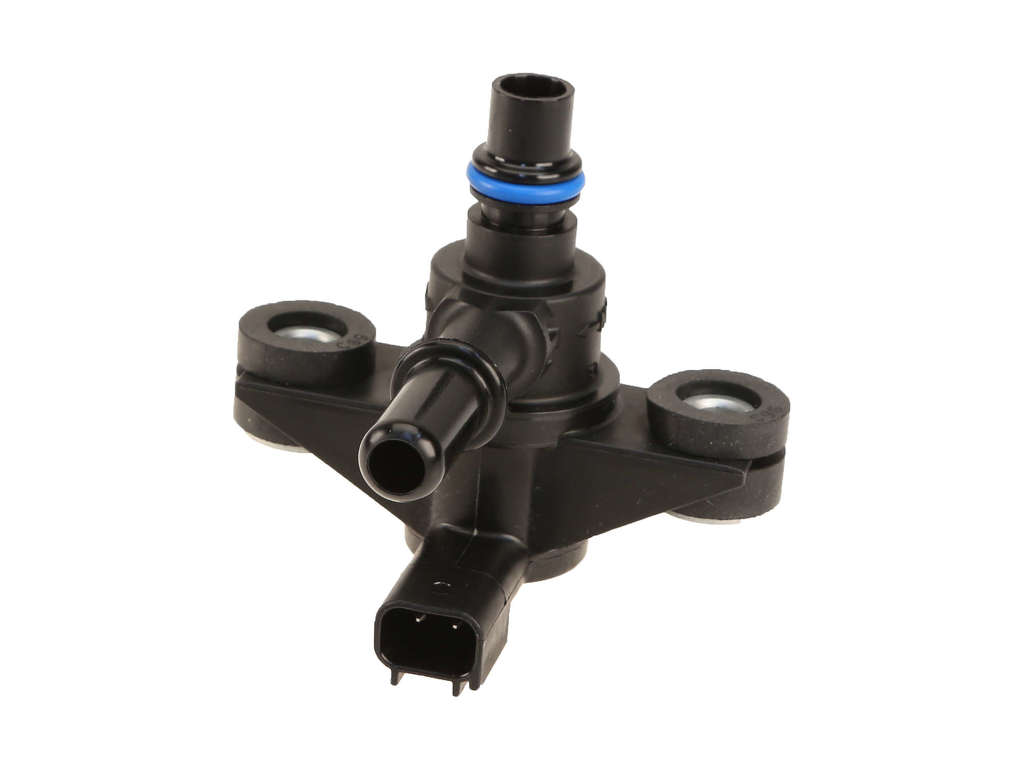
On a 2013-2017 Ford C-Max, code P1457 is almost always caused by a faulty canister purge valve (CPV). Ford issued TSB 19-2207 for this exact issue, which also affects its platform mates, the Ford Fusion Hybrid and Lincoln MKZ Hybrid. Replacing the valve is an easy DIY job with the updated OEM part (AU5Z-9C915-E) costing between $40 and $80.
- For a 2013-2017 Ford C-Max, P1457 is almost certainly caused by a bad canister purge valve.
- Check Ford TSB 19-2207, which specifically addresses this issue and lists other related codes (P1450, P0456).
- Before buying parts, perform a simple blow-through test on the purge valve; if air passes, it has failed.
- Replacing the purge valve is a very easy DIY job that takes less than 15 minutes and requires no special tools. Use the updated part number AU5Z-9C915-E.
- Do not immediately suspect the more expensive charcoal canister; the purge valve is the known weak point on this platform.
What's Unique About the 2013-2017 Ford C-Max
While P1457 is a generic code number used by other manufacturers like Honda, its cause on the 2013-2017 Ford C-Max is very specific. Ford released Technical Service Bulletin (TSB) 19-2207 that directly links P1457 (and other EVAP codes like P1450, P0456, P04EE, and P04EF) on this vehicle to a failing canister purge valve (CPV) due to poor sealing capability. This makes diagnosis much more straightforward than on other vehicles, as the purge valve is the primary suspect by a wide margin, rather than a random leak somewhere in the system.
Symptoms You May Notice
- Check Engine Light is on
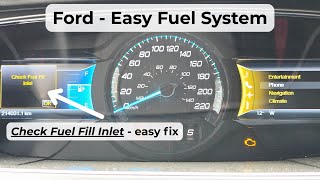
- A 'Check Fuel Fill Inlet' message may appear on the dashboard
- Difficulty starting the engine immediately after refueling (a symptom of the underlying purge valve issue)
- Rough idle (also a symptom of a failing purge valve)
- Audible 'whoosh' of air when opening the fuel filler door to refuel
- Replacing the charcoal canister. The canister is expensive and difficult to replace. It rarely fails in a way that causes a P1457 code; it's much more likely to be the purge valve.
- Looking for a loose gas cap. This vehicle uses a capless system, so there is no traditional gas cap to tighten.
Most Likely Causes
- Faulty Canister Purge Valve (CPV) 🔴 High Probability → Shop Vapor Canister Ford issued TSB 19-2207 specifically identifying a degraded internal seal on the canister purge valve as the primary cause for this code on this vehicle. The original part had insufficient sealing capability. This is a well-documented, high-failure-rate item on the C-Max and its platform mates (Fusion/MKZ Hybrid).
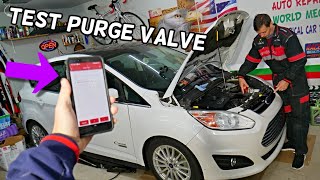
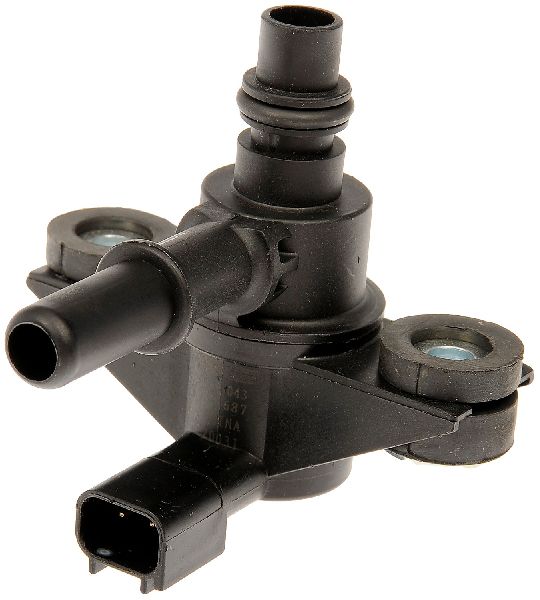
How to confirm: Locate the purge valve in the engine bay, on top of the engine cover. It has two hoses and an electrical connector. Disconnect the electrical connector and the two EVAP hoses (press the clips to release). With the vehicle off, try to blow through the valve. A good valve is normally closed and should not allow any air to pass. If you can blow through it, it is stuck open and has failed. This is the most common failure mode. 🎬 Watch: How to test the purge control valve solenoid
Typical fix: Replace the canister purge valve. The original part number AU5Z-9C915-D has been superseded by an updated part, AU5Z-9C915-E. The TSB also recommends a PCM software update, which must be done by a dealer, but many owners find lasting success by only replacing the valve.
Est. part cost: $40-$80 - Debris in Capless Fuel Filler Neck 🟡 Medium Probability The 'Easy Fuel' capless system can be prevented from sealing correctly if dirt, debris, corrosion, or even spider webs build up on the spring-loaded flap, preventing it from closing fully.
How to confirm: Visually inspect the fuel filler opening for any debris or corrosion that could be holding the metal flap slightly open. Use the special funnel that came with the vehicle to open and close the flap several times, checking for smooth operation and ensuring it snaps shut completely.
Typical fix: Carefully clean the sealing surface of the filler neck with a clean rag and a small amount of solvent if necessary. A small brush can help dislodge stubborn debris. Ensure the flap closes completely and seals tightly. 🎬 Watch: How to fix the check fuel fill inlet message If the seal is damaged, the entire filler neck assembly must be replaced.
Est. part cost: $0 for cleaning, $100-$150 for filler neck replacement.
Rare But Worth Checking
- Cracked or Disconnected EVAP Hose: While the purge valve is the most likely cause, a visual inspection of all accessible EVAP hoses in the engine bay for cracks or loose connections is a wise diagnostic step. A small split in a hose can cause this code.
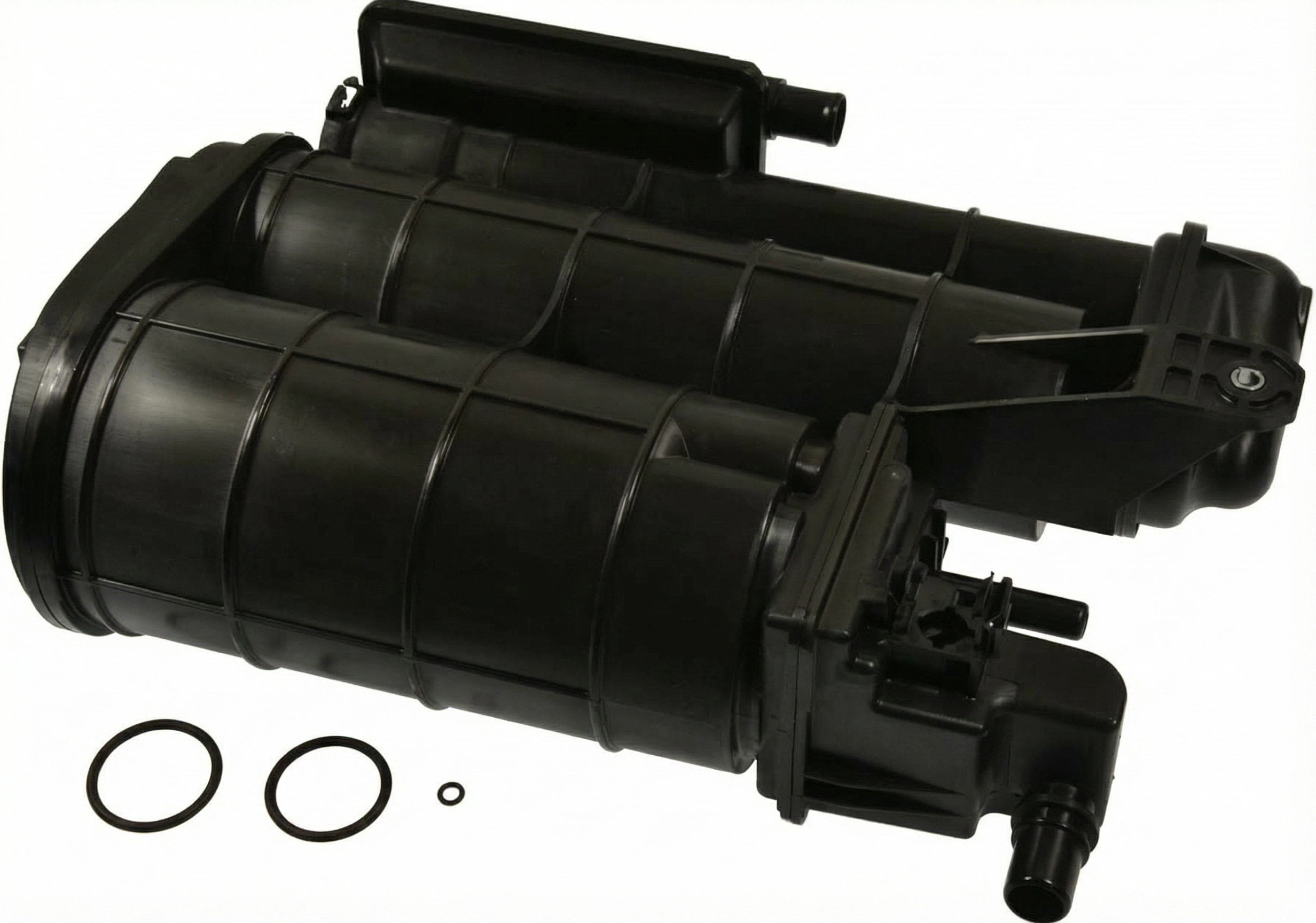
- Faulty EVAP Canister Vent Solenoid: → Shop Vapor Canister This valve is part of the canister assembly located near the fuel tank. It can get stuck open or closed, preventing the system from sealing or venting properly. It's less common than the purge valve failure for this code but is a possibility.
- Damaged Charcoal Canister: → Shop Vapor Canister Physical damage or internal corrosion of the charcoal canister can cause leaks, though this is rare. Inspect the canister (located near the rear of the vehicle) for any visible cracks or signs of corrosion.
Diagnosis Steps
- Verify the Check Engine Light is on and code P1457 is present using an OBD-II scanner.
- Inspect the capless fuel filler neck for any debris or damage that could prevent a proper seal. Clean as necessary using the vehicle's fuel funnel to actuate the flap.
- Locate the canister purge valve in the engine bay, sitting on top of the engine. It will have two hoses and one electrical connector.
- With the engine off, disconnect the hoses from the purge valve by pressing the colored clips.
- Attempt to blow through the valve. If any air passes through, the valve is stuck open and must be replaced. A functional valve should be completely closed when unpowered.
- If the valve tests good, visually inspect all accessible EVAP lines in the engine bay for cracks, brittleness, or loose connections.
- If no obvious issues are found, the next step would be a professional smoke test to find the source of the leak. However, given the high failure rate documented in TSB 19-2207, replacing the purge valve is often the most direct and successful fix.
Parts You'll Likely Need
- Vapor Canister Purge Valve
(OEM #AU5Z-9C915-E)— This is the updated part identified by Ford to fix the sealing issue described in TSB 19-2207, which is the primary cause of code P1457. It supersedes AU5Z-9C915-D, AU5Z-9C915-C, AU5Z-9C915-B, and AU5Z-9C915-A.
Trusted brands: Motorcraft (CX-2409 or CX-2695), Dorman (911-222), Standard Motor Products (CP758)
OEM price range: $50-$90
Aftermarket price range: $30-$60
Related Codes That Often Appear With This One
- P1450 — P1450 means 'Unable to Bleed Up Fuel Tank Vacuum'. It is often caused by the same faulty, stuck-open canister purge valve and is listed in the same TSB (19-2207) as P1457.
- P0456 — P0456 indicates a 'Very Small EVAP Leak'. This code is also included in TSB 19-2207 and can be triggered by a canister purge valve that is not sealing perfectly.
- P04EE / P04EF — These codes also relate to EVAP system leaks and are explicitly mentioned in TSB 19-2207 as being potentially caused by the faulty canister purge valve.
Technical Service Bulletins (TSBs) & Recalls
- 19-2207: Hybrid/Energi - Illuminated MIL With DTCs P1450, P0456, P0457, P04EE And/Or P04EF. This TSB is the primary source confirming the canister purge valve as the main culprit for a range of EVAP codes on this platform.
Platform-Specific Known Issues
- TSB 19-2207: Ford issued this bulletin for 2013-2017 C-Max, Fusion, and MKZ Hybrid/Energi models with EVAP codes P1450, P0456, P0457, P04EE, and/or P04EF. The bulletin identifies a faulty canister purge valve due to poor sealing capability and recommends its replacement along with a PCM software update.
Mechanic-Grade Diagnostic Values
- Canister Purge Valve (CPV) Solenoid Resistance — expected: 14-18 Ohms. Failure: A reading of infinite resistance (open circuit) or zero resistance (short circuit) indicates a failed solenoid coil.
- Fuel Tank Pressure (FTP) Sensor Voltage (Key On, Engine Off) — expected: 2.6 to 2.65 Volts at atmospheric pressure.. Failure: A significant deviation at rest, or a voltage drop immediately upon startup without the purge valve being commanded, indicates a stuck-open purge valve or a faulty sensor.
- Canister Purge Valve Connector Voltage (Key On, Engine Off) — expected: 11 to 12 Volts DC. Failure: No voltage at the harness connector suggests a wiring or fuse issue upstream of the valve.
- EVAP Canister Vent Valve Solenoid Resistance — expected: 12 - 80 Ohms. Failure: A reading outside this range indicates a faulty solenoid coil.
Scan Tool Commands That Help
- Ford IDS / FORScan: EVAP Purge Valve Command (Duty Cycle %) — This is the definitive test for a stuck purge valve. With the engine running, command the purge valve to 0% (closed). If live data for Fuel Tank Pressure (FTP) still shows vacuum building (voltage dropping), the valve is mechanically stuck open and must be replaced.
- Ford IDS / FORScan: On-Demand EVAP System Test — This is a guided diagnostic function that commands the purge and vent solenoids to seal the system, pulls a vacuum, and monitors the FTP sensor to check for leaks. It can confirm if a leak is present but may not pinpoint the source without further testing.
- Ford IDS / FORScan: EVAP Vent Valve Command (On/Off) — Use this to test the vent side of the system if a new purge valve doesn't fix the code. Commanding the vent valve closed should seal the system for a pressure/vacuum test. If it fails to seal, the vent valve may be stuck open.
Wiring & Ground Locations
- G105 — Left side of the engine compartment.. A poor or corroded ground at this location could affect the operation of engine-bay-mounted components of the EVAP system, such as the canister purge valve, leading to intermittent or failed operation.
- Main Engine Compartment Ground — To the right of the 12V battery, near the engine compartment fuse box.. This is a primary ground connection point for many systems in the engine bay. Verifying it is clean and tight is a good preliminary step when diagnosing any electrical fault.
- Powertrain Control Module (PCM) — Front of the left front wheelwell.. This is the location of the computer that controls the EVAP system. While unlikely to be the cause, it's the source of the control signals for the purge and vent valves.
OEM Part Supersession History
AU5Z-9C915-A, AU5Z-9C915-B, AU5Z-9C915-C, AU5Z-9C915-D→AU5Z-9C915-E— The original parts had insufficient sealing capability, leading to the leak detected by the EVAP monitor, as documented in TSB 19-2207. The updated part has improved internal seals to prevent this failure.
Diagnostic Flowchart
Other Known Issues on This Vehicle
Issues unrelated to this code that are worth knowing about as an owner of this generation:
- HF35 eCVT Transmission Bearing Failure 🔴 High — Common on earlier 2013-2015 models, less so on later years. Often presents as a whining, grinding, or thumping noise on acceleration between 50,000 and 120,000 miles. (Ref: TSB 20-2219, TSB 14B07)
- 12V Battery Drain / Electrical Gremlins 🟠 Medium — Widespread issue where a software glitch in a module (often the radio/SYNC) fails to let the car sleep, draining the 12V battery overnight. Owners report intermittent occurrences. (Ref: Multiple software-update TSBs exist, like 25-2081, but owner forums suggest mixed success.)
- MyFord Touch / APIM Failure 🟠 Medium — Common on 2013-2015 models. The Accessory Protocol Interface Module (APIM) fails, causing a black screen, frozen display, no Bluetooth/USB, and unresponsive controls. (Ref: Warranty Extension Program 12M02 for early models, but many failures occur outside of warranty.)
- Shift Cable Bushing Failure 🔴 High — The bushing that attaches the shifter cable to the transmission can degrade, causing a disconnect. The shifter will move, but the car won't go into the selected gear, potentially allowing it to roll away when in 'Park'. (Ref: Ford Recall 22S43)
- Power Steering Rack Failure 🔴 High — Less common than other issues, but reports exist of total failure of the electronic power steering rack, requiring a very expensive replacement.
Used vs. New Parts: Buying Guide for This Vehicle
When a used part is the smart pick: For this specific P1457 code, a used part is generally NOT recommended for the primary failure item (the canister purge valve). However, if diagnosis points to a physically damaged capless fuel filler neck assembly, a used part from a low-mileage donor vehicle is a reasonable and cost-effective option.
Donor-vehicle mileage cap: roughly under 80000 miles for the part to have meaningful remaining life.
What to inspect on the donor part:
- For a fuel filler neck: Inspect for corrosion, smooth operation of the flap, and an intact seal. Ensure it has not been physically damaged.
- For any used part: Verify the donor vehicle's year and model match exactly. Check for signs of excessive wear, heat damage, or corrosion on electrical connectors.
OEM-only on this vehicle (don't cheap out):
- Canister Purge Valve: Due to the known defect in the original part (superseded by AU5Z-9C915-E), installing a used valve is highly likely to result in a repeat failure. Always buy this part new from an OEM or reputable aftermarket source.
Aftermarket brands forum-validated for this vehicle:
- Motorcraft (OEM)
- Dorman
- Standard Motor Products (SMP)
Brands owners have reported issues with on this vehicle:
- No-name, unbranded parts from online marketplaces should be avoided, as their internal seal quality may be questionable and lead to a quick return of the P1457 code.
Real Owner Stories
Aggregated from forums and TSBs cited above. Mileages and costs reflect what owners reported in those sources.
2013-2017 Ford C-Max Hybrid 2.0L
Symptoms: Check engine light on with EVAP codes; owner was quoted a very high price for repair at a dealership.
What fixed it: DIY replacement of the canister purge valve using the updated part.
Cost: $40-$80
Source hint: reddit.com/r/cmaxhybrid thread 'Canister Purge Valve engine light'
2013-2017 Ford C-Max Hybrid 2.0L
Symptoms: EVAP-related check engine lights; owner confirmed the valve was faulty using a blow-through test.
What fixed it: Owner replaced the canister purge valve personally, noting it was a 10-minute job.
Source hint: fordcmaxhybridforum.com
Related OBD-II Codes
Frequently Asked Questions
Does TSB 19-2207 apply to my 2015 Ford C-Max Hybrid?
What is the updated part number for the C-Max canister purge valve?
Can I fix the P1457 code myself on a C-Max?
Why does my C-Max have trouble starting only after I fill up the gas tank?
My dashboard says 'Check Fuel Fill Inlet'—is this related to P1457?
How can I test if my C-Max purge valve is actually bad?
Helpful Videos


Used OEM Parts in Stock
New Aftermarket Parts Available


The information in this article is provided for general reference and educational purposes only. Vehicle specifications, procedures, and part compatibility can vary by production date, trim level, and region. Always consult your vehicle's factory service manual and verify part numbers before purchasing or performing repairs. Safety-critical components such as airbags, seat belts, and braking systems should be installed by a qualified professional.
- Ford C-Max:
- 🧭 Diagnostic Flowchart
- 🎬 Helpful Videos
- 🛍️ Shop This Part
- What's Unique About the 2013-2017 Ford C-Max
- Symptoms You May Notice
- Most Likely Causes
- Rare But Worth Checking
- Diagnosis Steps
- Parts You'll Likely Need
- Related Codes That Often Appear With This One
- Technical Service Bulletins (TSBs) & Recalls
- Platform-Specific Known Issues
- Mechanic-Grade Diagnostic Values
- Scan Tool Commands That Help
- Wiring & Ground Locations
- OEM Part Supersession History
- Other Known Issues on This Vehicle
- Used vs. New Parts: Buying Guide for This Vehicle
- Real Owner Stories
- 2013-2017 Ford C-Max Hybrid 2.0L
- 2013-2017 Ford C-Max Hybrid 2.0L
- Related OBD-II Codes
- Frequently Asked Questions
- 🎟️ Get 5% Off