

P1464 on 2019-2021 Ford Ranger: Not an A/C Issue, but a Turbo Problem
On a 2019-2021 Ford Ranger, code P1464 is misleading. It almost always indicates a problem with the turbocharger wastegate actuator, not the A/C system. The most common fix is replacing a small, missing e-clip or the entire wastegate actuator assembly. An actuator kit costs around $90-$120.
- For a 2019-2021 Ranger, P1464 is a powertrain code, not an A/C code.
- The issue is almost always a failed wastegate actuator or a missing e-clip on its linkage.
- The official fix is a service kit (LB5Z-9G488-B), not a full turbo replacement.
- This is a known issue across multiple Ford models with the 2.0L and 2.3L EcoBoost engines.
What's Unique About the 2019-2021 Ford RANGER
While P1464 is traditionally an A/C code, its appearance on the 2019-2021 Ranger is part of a well-documented pattern pointing to a specific hardware failure on the 2.3L EcoBoost's turbocharger. Ford has issued service bulletins acknowledging that a missing e-clip or a faulty electronic wastegate actuator is the root cause when P1464 appears with other boost-control DTCs. This turns what looks like an A/C fault into a powertrain and engine performance diagnosis. The actuator is known to perform a self-test or 'wake-up' cycle, sometimes described as an 'R2D2' sound, even when the truck is off, which can be confirmed by listening in the passenger side wheel well.
Diagnostic Flowchart
Tap your situation to follow the diagnostic path that matches what you're seeing on this vehicle.
Symptoms You May Notice
- Illuminated Malfunction Indicator Lamp (MIL) or Check Engine Light
- Wrench icon displayed on the dashboard
- Significant lack of power
- Vehicle enters 'reduced power' or 'limp mode'
- No audible sound of the turbocharger spooling up
- An unusually loud or grinding noise from the wastegate actuator during its startup/shutdown cycle.
- Replacing A/C system components (A/C pressure sensor, relays, etc.) based on the historical definition of P1464.
- Recharging the A/C system
- Replacing the entire turbocharger assembly (Ford states this is not necessary for this specific issue)
Most Likely Causes
- Missing Wastegate Actuator E-Clip 🔴 High Probability → Shop Turbocharger This is a known issue documented by Ford in TSB SSM 49427 and the superseding TSB SSM 50171. The small clip securing the actuator rod to the wastegate arm can fall off, disconnecting the actuator from the wastegate.
How to confirm: Visually inspect the turbocharger wastegate actuator, which is visible on the passenger side of the engine. Check if the actuator rod is connected to the wastegate arm. If it is disconnected and dangling, the e-clip is missing.
Typical fix: Replace the e-clip. Ford's updated service procedure involves installing a complete actuator kit (part LB5Z-9G488-B) which includes a new actuator, rod, and both e-clips to ensure a durable repair.
Est. part cost: $90-$120 for the full OEM kit. - Inoperative Electronic Wastegate Actuator 🔴 High Probability → Shop Turbocharger As documented in TSB SSM 50171, the electronic actuator itself can fail internally, either electrically or mechanically. This prevents it from correctly positioning the wastegate. Owners on forums sometimes note a change in the actuator's normal cycling sound before failure.
How to confirm: After confirming the e-clip and rod are intact, a diagnostic scan tool can be used to command the actuator to move. If it doesn't respond or makes grinding noises, it has failed. A user on a forum noted the startup actuation test was much louder than normal before the part failed.
Typical fix: Replace the turbocharger wastegate actuator assembly. The recommended OEM service kit is part number LB5Z-9G488-B for the Ranger.
Est. part cost: $90-$120 for the full OEM kit.
Rare But Worth Checking
- Damaged Wastegate Actuator Rod: → Shop Turbocharger Mentioned in TSB SSM 50171, there can be non-visible damage to the actuator rod itself. If the clip is present and the actuator motor seems to work but the code persists, the rod may be the issue. The service kit includes a new rod.
- Wiring Harness or Connector Issue: Damage to the wiring or connector for the electronic wastegate actuator could cause a loss of signal, triggering these faults. This should be inspected before replacing parts. On the related Mustang platform, a specific fuse for the wastegate actuator has been identified.
Diagnosis Steps
- Read all Diagnostic Trouble Codes (DTCs) with an OBD-II scanner. Confirm if P1464 is present with other turbo-related codes like P0299, P0243, etc.
- Turn the engine off and allow it to cool. The turbocharger and exhaust components get extremely hot.
- Locate the turbocharger on the passenger side of the 2.3L EcoBoost engine. The actuator is often visible from the passenger side wheel well.
- Visually inspect the electronic wastegate actuator mounted on the turbo. It's a small black box with a metal rod coming out of it.
- Carefully check if the metal rod is securely attached to the wastegate arm on the turbo housing with a small 'e-clip'. If the rod is dangling, the clip has fallen off.
- Listen for the actuator's cycling noise. A normal cycle sounds like a short whirring or 'R2D2' sound when the vehicle wakes up (e.g., a door is opened). A loud, grinding, or abnormal noise can indicate failure.
- Check for any visible damage to the actuator, its rod, or the electrical connector and wiring.
- If the linkage is secure and there is no visible damage, the actuator itself is the next suspect. Replacement is the most common repair.
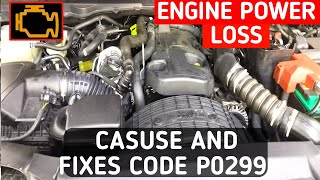
- After repair, clear all DTCs and perform a test drive to ensure the issue is resolved and power is restored. Note that the PCM 🎬 Watch: A walkthrough of the power loss cause and fix may need to go through a relearning process.
Parts You'll Likely Need
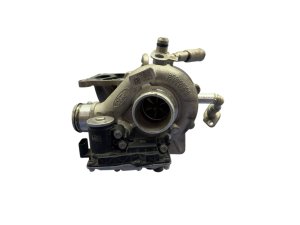
- Turbocharger Wastegate Actuator Kit
(OEM #LB5Z-9G488-B)— This is the official Ford service part to fix the known issue of a missing e-clip or failed actuator, as specified in TSB SSM 50171. It includes the electronic actuator, rod, and both e-clips. It is critical to replace all parts in the kit.
Trusted brands: Motorcraft (OEM)
OEM price range: $90-$120
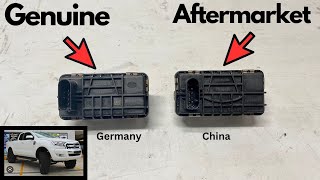
Aftermarket price range: $70-$100
Related Codes That Often Appear With This One
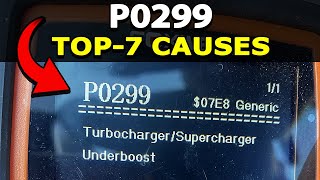
- P0299 — Turbocharger/Supercharger Underboost. This code is set because the faulty wastegate actuator cannot properly control boost pressure. 🎬 See this breakdown of common causes for underboost codes
- P0243 — Turbocharger/Supercharger Wastegate Solenoid 'A' Malfunction. This directly points to an issue with the wastegate control circuit.
- P02AB — Turbocharger/Supercharger Boost Control 'A' Position Exceeded Learning Limit. One of the group of codes listed in the TSBs.
- P25B3, P25B4, P2AB7, P2AB8, P2AB9 — These are all manufacturer-specific codes related to the turbocharger wastegate actuator control and position sensors, listed alongside P1464 in Ford's TSBs.
Technical Service Bulletins (TSBs) & Recalls
- SSM 50171: Details the lack of power and associated DTCs (including P1464) caused by an inoperative wastegate actuator, missing e-clip, or damaged rod. It provides the updated part number for the service kit (LB5Z-9G488-B for Ranger/Explorer) and lists numerous affected vehicles.
- SSM 49427: An earlier bulletin that specifically called out the missing wastegate actuator e-clip as a potential cause and mentioned the release of a service component.
Platform-Specific Known Issues
- Ford has issued Technical Service Bulletins (SSM 49427 and SSM 50171) for 2019-2021 Rangers with the 2.3L EcoBoost engine regarding a lack of power accompanied by a group of DTCs, including P1464. The cause is identified as a missing wastegate actuator e-clip or a faulty actuator. The bulletins state that replacing the entire turbocharger is not necessary.
- A user on the Ranger5G.com forum with a 2022 Ranger experienced the limp mode and associated codes at 34,000 miles. The dealer performed pinpoint tests and confirmed the wastegate needed replacement, which was covered under the standard 3-year/36,000-mile warranty.
Mechanic-Grade Diagnostic Values
- Wastegate Actuator Motor Internal Resistance — expected: 1-90 Ohms. Failure: A reading outside this range indicates an internal fault in the actuator motor.
- Wastegate Actuator Solenoid Coil Resistance (Reference) — expected: Typically 10-30 Ohms. Failure: A reading significantly outside this range suggests a failed solenoid coil.
- Voltage Supply at Actuator Connector — expected: ~11-14 Volts (Battery Voltage) on the power supply pin.. Failure: No voltage or significantly low voltage points to a problem in the supply circuit, fuse, or PCM.
Scan Tool Commands That Help
- Ford IDS / FORScan: Wastegate Actuator Full Cycle Test / Command Operation — This bidirectional command is used during diagnosis to force the actuator through its full range of motion. It can visually confirm if the actuator is stuck, slow, or has a disconnected linkage without having to physically manipulate it.
- Ford IDS / FORScan: Turbocharger Wastegate Actuator Relearn/Calibration — After replacing the wastegate actuator, this service function must be performed. The PCM uses it to learn the new actuator's precise start and end positions, ensuring accurate boost control. Failure to perform this step can result in persistent codes or improper performance.
Real Owner Repair Stories
- Ford Expedition Forum (2013 Ford Expedition) — After a front-end collision repair, the cooling fans were cycling on and off at high speed. A scan revealed only code P1464.
❌ Tried (didn't work) The owner suspected an overcharged A/C system from the body shop, so they evacuated and recharged it with the correct amount of refrigerant, but the issue persisted.
✅ What actually fixed it A visual inspection revealed the connector to the low-speed cooling fan was not fully seated. Pushing the connector until it clicked into place resolved the fan issue, normalized A/C pressures, and cleared the P1464 code.
When the Usual Fixes Don't Work
- While P1464 on the 2019-2021 Ranger almost always points to the turbo wastegate actuator, it should not be treated as an absolute rule. The code's original definition, 'A/C Demand Out of Self-Test Range,' can still be valid under specific circumstances. One documented case on a 2013 Expedition showed that a loose cooling fan connector from a previous accident repair caused A/C system pressures to go out of range during a self-test, setting a P1464 code without any turbo-related issues. This highlights that if the code appears in isolation, or after front-end service, the A/C system and its related components (pressure sensors, cooling fans, wiring) should still be considered as potential causes.
OEM Part Supersession History
N/A (Full Turbo Assembly)→LB5Z-9G488-B (Actuator Kit)— Ford released this service kit to allow for the replacement of only the failed actuator or missing e-clip, which are the most common points of failure.
Heads up: Prior to the release of TSB SSM 49427 and this service kit, the official repair was often to replace the entire turbocharger assembly, as the actuator was not serviced separately. This kit prevents the unnecessary cost and labor of a full turbo replacement.
Model Year Variations Within This Range
- 2019: A subset of 2019 Ford Rangers may have a PCM software issue that can cause underboost conditions and trigger related fault code P0299. Ford issued TSB 20-2152 to address this with a PCM reprogram. While the primary cause of P1464 is still the actuator, it's a relevant factor to consider if P0299 is also present on a 2019 model.
Helpful Videos
Used OEM Parts in Stock
New Aftermarket Parts Available


The information in this article is provided for general reference and educational purposes only. Vehicle specifications, procedures, and part compatibility can vary by production date, trim level, and region. Always consult your vehicle's factory service manual and verify part numbers before purchasing or performing repairs. Safety-critical components such as airbags, seat belts, and braking systems should be installed by a qualified professional.
- Ford RANGER:
- 🧭 Diagnostic Flowchart
- 🎬 Helpful Videos
- 🛍️ Shop This Part
- What's Unique About the 2019-2021 Ford RANGER
- Symptoms You May Notice
- Most Likely Causes
- Rare But Worth Checking
- Diagnosis Steps
- Parts You'll Likely Need
- Related Codes That Often Appear With This One
- Technical Service Bulletins (TSBs) & Recalls
- Platform-Specific Known Issues
- Mechanic-Grade Diagnostic Values
- Scan Tool Commands That Help
- Real Owner Repair Stories
- When the Usual Fixes Don't Work
- OEM Part Supersession History
- Model Year Variations Within This Range
- 🎟️ Get 5% Off