

OBD-II Code P1471: Comprehensive Diagnosis & Repair Guide
The Ultimate Guide to P1471: What It Means, Why It Triggers, and How to Fix It for Good
- P1471 is a manufacturer-specific code that primarily indicates a failed Intake Manifold Runner Control (IMRC) actuator on Fords or a faulty EVAP Leak Detection Pump (DMTL) on BMWs and VWs.
- Never ignore an IMRC-related P1471 for more than a month; the resulting rich air-fuel mixture will destroy your catalytic converter, turning a $250 repair into a $2,000 nightmare.
- For BMW and VW owners, a P1471 code almost always requires replacing the DMTL pump, a straightforward DIY repair that costs under $100 in parts compared to a $500 dealership quote.
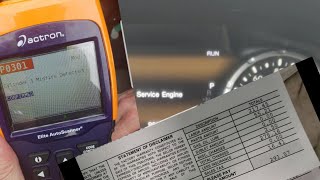
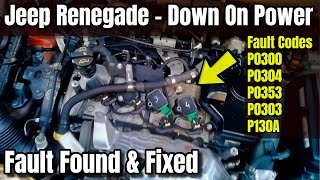
- If you drive a modern Jeep or Fiat with a 1.3L engine, P1471 is a secondary code triggered to protect the catalyst; you must diagnose and fix the accompanying cylinder misfire (codes P0300-P0304) first.
What Does P1471 Mean?
P1471 is a manufacturer-specific code with entirely different meanings based on your vehicle. On Ford, Mazda, and Land Rover, it indicates a failed Intake Manifold Runner Control (IMRC) system. On BMW, Audi, and VW, it flags a circuit failure in the EVAP Leak Detection Pump (DMTL/LDP). On Peugeot and Citroen diesels, it points to the EGR throttle body or DPF heating relay. On Fiat and Jeep, it acts as a 'Catalyst Protection' warning triggered by an active engine misfire.
Technical definition: The SAE definition for P1471 varies by manufacturer. Ford: Intake Manifold Runner Control (IMRC) Malfunction. BMW: Diagnostic Module Tank Leakage (DMTL) Pump Control Circuit Malfunction. Audi/VW: EVAP Emission Control LDP Circuit Short to B+. Mazda: Variable Tumble Control System (VTCS) Solenoid Valve Circuit Malfunction. Fiat/Jeep: Catalyst Protection Function Malfunction. Isuzu/Chevy (Diesel): Insufficient DPF Regeneration.
Can I Drive With P1471?
Yes, But With Caution. You can drive with this code, but limit trips until repaired. IMRC faults cause reduced engine power, poor fuel economy, and a rough idle. Ignoring an IMRC fault forces an imbalanced air-fuel mixture that destroys the catalytic converter, a secondary repair costing $800 to $2,500. EVAP faults show no driving symptoms but guarantee an emissions test failure.
Common Causes
- Faulty IMRC Actuator Motor or Solenoid (Very Common) — The electronic motor or vacuum solenoid that controls the intake manifold runners fails internally, preventing the flaps from moving.
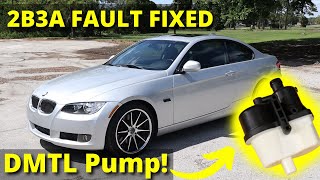
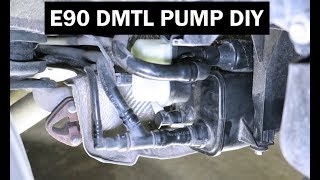
- Faulty EVAP Leak Detection Pump (DMTL/LDP) (Very Common) — On BMW and VW/Audi models, the internal motor or reed switch inside the DMTL pump wears out, causing it to fail the self-test and trigger a circuit code.
- Broken IMRC Linkages or Flaps (Common) — Plastic clips connecting the IMRC actuator to the intake manifold flaps become brittle from engine heat and snap, or carbon buildup jams the flaps entirely.
- Damaged Wiring or Corroded Connectors (Common) — Under-car components like the DMTL pump suffer from road salt corrosion at the electrical connector. Engine bay wiring harnesses can chafe and short out.
- Vacuum Leaks (Less Common) — On vacuum-operated IMRC systems, cracked or disconnected vacuum lines prevent the actuator from receiving the pressure needed to move the intake flaps.
- Clogged DPF Sensor Pipe (Diesel Models) (Less Common) — On Nissan and Isuzu diesels, soot blocks the metal pressure sensor pipe leading to the Diesel Particulate Filter, skewing pressure readings.
- Blown Circuit Fuse (Uncommon) — A blown fuse supplying power to the IMRC actuator or DMTL pump instantly triggers a circuit malfunction code.
- Outdated PCM Software (Rare) — Overly sensitive diagnostic logic in the engine computer falsely triggers the code. Manufacturers issue Technical Service Bulletins (TSBs) with software updates to fix this.
Symptoms
- Check Engine Light — The dashboard warning light illuminates immediately. For EVAP faults on BMW or VW, this is often the only symptom.
- Reduced Engine Power — IMRC faults cause a severe loss of torque at low RPMs or choke the engine at high RPMs because airflow is no longer optimized.
- Poor Fuel Economy — A failed IMRC system forces the engine to run inefficiently, dropping gas mileage by 10% to 15%.
- Rough Idle or Stalling — Intake flaps stuck in the high-RPM position cause the engine to idle roughly, misfire, or stall when coming to a stop.
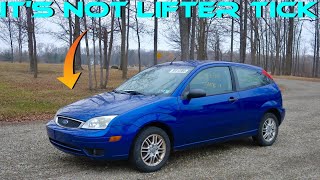
- Rattling Engine Noise — Broken plastic IMRC linkages or loose internal manifold flaps create a distinct ticking or rattling sound from the top of the engine. 🎬 Watch: How to tell if that ticking noise is the IMRC.
Diagnostic Flowchart
Tap your situation to follow the diagnostic path that matches what you're seeing on this code.
Common Fixes & Costs
- Replace IMRC Actuator/Solenoid — Parts: $50-$150, Labor: $100-$250, ~1.5 hr book time (Intermediate)
- Replace EVAP Leak Detection (DMTL) Pump — Parts: $60-$150, Labor: $100-$200, ~1.2 hr book time (Intermediate)
- Replace Broken IMRC Linkage Clips — Parts: $10-$30, Labor: $50-$100, ~0.8 hr book time (DIY)
- Repair Damaged Wiring or Connectors — Parts: $10-$40, Labor: $100-$250, ~1.5 hr book time (Intermediate)
- Clean Carbon Buildup from Intake Manifold — Parts: $20, Labor: $300-$500, ~3.5 hr book time (Professional)
- Update PCM/ECM Software — Parts: $0, Labor: $100-$200, ~1.0 hr book time (Professional)
Used vs. New Parts: Buying Guide
When a used part is worth it: Only consider a used IMRC actuator or DMTL pump if you are repairing a vehicle with over 150,000 miles and cannot afford a new part.
Donor-vehicle mileage cap: roughly under 80000 miles for the part to have meaningful remaining life.
Donor quality checklist:
- Ensure the donor part numbers match exactly.
- Inspect plastic housings for hairline cracks and electrical pins for green corrosion.
Decision logic:
- If The part is an electronic motor (IMRC actuator or DMTL pump). → Buy a new OEM or reputable aftermarket part. Used electric motors are a massive gamble.
- If You only need the plastic linkage clips. → Buy a new aftermarket repair kit (e.g., Dorman) for $15.
Warranty tradeoff: Used parts offer a 30-day warranty on the part only. New OEM parts offer a 1-year warranty. If a used part fails, you pay labor costs twice.
Worst-case if a used part fails: $300-$500 in repeat labor costs if the used part dies a month later.
What Happens If You Wait — Timeline
- 0-1 month: Code sets. IMRC faults cause a slight drop in low-end torque. EVAP faults show no symptoms. (MPG impact: 0-5%% · Added cost: $0)
- 1-4 months: IMRC faults cause noticeable hesitation, rough idle, and a clear drop in fuel economy due to an incorrect air-fuel mixture. (MPG impact: 10-15%% · Added cost: $50-$150 in wasted fuel.)
- 4-8 months: The rich fuel mixture from a broken IMRC system overheats the catalytic converter, cracking the internal substrate. (MPG impact: 15-25%% · Added cost: $1,200-$2,500 for catalytic converter replacement.)
- 8+ months: Total catalytic converter meltdown causes extreme exhaust backpressure, stalling the engine and potentially damaging internal components. (MPG impact: >25%% · Added cost: $3,000+ for exhaust and engine repairs.)
Cost of Not Fixing It
- 0-1 Month: IMRC faults cause a 10-15% drop in fuel economy and sluggish acceleration. EVAP faults cause no driving symptoms but fail emissions tests. (Added cost: $30-$60 per month in wasted fuel.)
- 1-6 Months: The imbalanced air-fuel mixture from a broken IMRC system dumps unburnt fuel into the exhaust, overheating and melting the catalytic converter substrate. (Added cost: $1,200-$2,500 for a replacement catalytic converter.)
- 6+ Months: Severe carbon buildup on intake valves and fouled spark plugs lead to constant misfires and potential internal engine damage. (Added cost: $500-$3,000 for deep engine cleaning and exhaust repairs.)
Diagnosis Steps
- Identify the System & Check TSBs
Confirm what system P1471 refers to for your specific vehicle make (e.g., IMRC for Ford, DMTL for BMW). Search for Technical Service Bulletins (TSBs) related to your year and model, as a PCM software update is sometimes the required fix.
Tools: OBD-II Scanner, Internet Access (Beginner) - Check the Gas Cap (EVAP Faults)
For BMW/VW EVAP codes, inspect the gas cap. Ensure it clicks tightly and the rubber O-ring is free of cracks. A loose cap triggers EVAP codes and is a free, one-minute check.
Tools: None (Beginner) - Check Relevant Fuses
Locate the fuse for the affected system (IMRC actuator or DMTL pump) using your owner's manual. Replace any blown fuses. If the new fuse blows immediately, you have a dead short in the component or wiring.
Tools: Fuse Puller, Multimeter (Beginner) - Visual Inspection of Linkages and Wiring
For IMRC: Inspect the intake manifold for broken plastic linkage clips or disconnected vacuum hoses. For DMTL: Locate the pump near the rear wheel well and check the electrical connector for green corrosion or broken wires.
Tools: Flashlight (Beginner) - Run a Scan Tool Actuator Test
Use a bi-directional scan tool to command the IMRC actuator or DMTL pump to turn on. Listen for a click or whirring sound. If the component remains silent, it is electrically dead or disconnected.
Tools: Advanced OBD-II Scanner (Intermediate) - Test the Circuit with a Multimeter
Disconnect the component's electrical harness. Turn the key to the ON position. Probe the power wire to ensure it receives 12 volts, and check the ground wire for continuity. Missing voltage indicates a wiring harness or PCM issue.
Tools: Digital Multimeter (Advanced) - Perform a Smoke Test (EVAP Faults)
If P1471 is paired with leak codes (P0442, P0456), connect a smoke machine to the EVAP test port. Look for smoke escaping from the DMTL pump housing, charcoal canister, or cracked hoses to pinpoint physical leaks.
Tools: EVAP Smoke Machine (Advanced) - Monitor IMRC Scan Tool PIDs
Graph the 'IMRC_CMD' (Command) and 'IMRCM' (Monitor/Feedback) PIDs on a scan tool. Rev the engine past 3,000 RPM. If the command changes but the monitor position stays flat, the actuator motor is broken.
Tools: Advanced OBD-II Scanner (Advanced) - VW/Audi LDP Resistance Check
Disconnect the VW/Audi Leak Detection Pump. Measure resistance across the pump's pins. Pins 1 & 3 should read 640-720 Ω. Pins 2 & 3 should read 15-17 Ω. Readings outside this range confirm internal pump failure.
Tools: Digital Multimeter (Advanced) - Scope Test the IMRC Command
Backprobe the IMRC command and feedback wires with an oscilloscope. Command the system on. You must see a crisp square wave from the PCM, followed immediately by a state change on the feedback wire. No command means a bad PCM; no feedback means a bad actuator.
Tools: Oscilloscope, Backprobe Pins (Professional)
When This Code Triggers (Freeze-Frame Conditions)
- Engine Coolant Temp: 180-205°F (82-96°C) (The fault logs when the engine reaches full operating temperature.)
- Engine RPM: 1500-3500 RPM (IMRC codes set during acceleration when the PCM commands the intake runners to change state at approximately 3,000 RPM.)
- Fuel Level: 15-85% (EVAP/DMTL self-tests require the fuel tank to be between 15% and 85% full to run the diagnostic monitor.)
- Vehicle Speed: 30-60 mph (48-97 kph) (The code sets during steady-state cruising when the PCM actively monitors system performance.)
Related Codes
- P2004 — Indicates 'Intake Manifold Runner Control Stuck Open'. Often appears with P1471 on Fords when the flaps are physically jammed.
- P0442 — Indicates 'EVAP System Leak Detected (Small Leak)'. Accompanies P1471 on BMW/VW if the DMTL pump fails while trying to pressurize the system.
- P0302 — Indicates a Cylinder 2 Misfire. On Fiat/Jeep models, this primary code triggers P1471 as a secondary catalyst protection measure.
Climate & Environmental Factors
- Cold Weather: Temperatures below freezing make plastic IMRC linkage clips and DMTL pump housings brittle, drastically increasing the chance of them snapping or cracking under stress.
- Road Salt and Humidity: Under-car EVAP components like the DMTL pump are bombarded with road salt, causing the electrical connector pins to corrode, increase resistance, and trigger circuit codes.
- Engine Heat Cycles: IMRC actuators bolted directly to the intake manifold endure extreme thermal cycling. Over 100,000 miles, this bakes the internal plastic gears and external linkages until they fail.
How to Talk to a Mechanic About This Code
Say this: "{'ford_mazda': 'I have a P1471 code for the IMRC system and hear a ticking noise at idle. Please test the IMRC actuator and linkage clips before recommending a full intake manifold replacement.', 'bmw_vw_audi': 'I have a P1471 code for the DMTL pump circuit. Please confirm power and ground at the pump connector and test the pump itself before looking for physical EVAP leaks.', 'jeep_fiat': 'I have a P1471 and a P0302 misfire code. I know the P1471 is a secondary catalyst protection code. Please diagnose the root cause of the cylinder 2 misfire.'}"
This proves you understand the specific system your car uses and prevents the shop from starting with the most expensive repair or chasing the wrong diagnostic tree.
Avoid saying:
- 'My check engine light is on, can you look at it?'
- 'Just fix whatever is causing the code.'
- 'I read online I need a new intake manifold.'
Questions to ask before authorizing the repair:
- Did you command the actuator/pump on with a bi-directional scan tool?
- Is the wiring harness corroded, or did the component fail internally?
- Are you using an OEM replacement part, and what is the warranty?
Where to Take It: Dealer vs Independent vs Chain
- Dealer:
Best for: Vehicles under factory or extended warranty., Applying required PCM software updates (TSBs) for VW or Jeep models.
Downsides: Labor rates are 50% to 100% higher than independent shops., They default to replacing entire expensive assemblies rather than small broken clips. (Typical cost: +50% vs. baseline) - Independent Shop:
Best overall fit. A reputable independent shop offers the best balance of diagnostic expertise and reasonable labor rates for IMRC and DMTL replacements.
Best for: Out-of-warranty vehicles requiring component replacement., European specialists diagnosing BMW DMTL or VW LDP faults.
Downsides: May lack the proprietary software needed to flash a PCM update. (Typical cost: +0% vs. baseline) - Chain Shop:
Avoid for diagnosis. Get the free code scan, but take the vehicle to a specialist for the actual repair.
Best for: Getting the code read for free.
Downsides: Technicians lack the advanced bi-directional scan tools required to test IMRC and DMTL circuits., High likelihood of misdiagnosing the root cause and firing the 'parts cannon'. (Typical cost: -10% vs. baseline)
When to Walk Away From the Repair
If the repair cost exceeds 50% of the car's private-party value, sell or trade it in rather than repairing it.
- Car worth $5000, fix is $300: Fix it. Replacing a BMW DMTL pump or Ford IMRC actuator is inexpensive and restores full function.
- Car worth $3000, fix is $1800: Walk away. If a shop insists on replacing the entire intake manifold on an older Ford, the cost is too high relative to the car's value.
What Scan Tool You Need for This Code
Minimum: A scanner that reads manufacturer-specific codes and provides live data graphing.
A $20 code reader only says 'P1471: Manufacturer-Specific'. It will not tell you if it is an IMRC or EVAP fault, and it cannot command the components to turn on for testing.
Budget: BlueDriver Pro (~$120) — Connects to your smartphone, translates manufacturer-specific codes accurately, and checks emissions readiness monitors.
Mid-range: Foxwell NT510 Elite (~$160) — Provides bi-directional control. You can press a button on the scanner to force the IMRC actuator or DMTL pump to run, instantly proving if the part is dead.
Professional: Autel MaxiCOM MK808S (~$380) — Offers OE-level diagnostics, full bi-directional control, and live PID graphing to monitor IMRC command vs. actual position in real-time.
Rent vs buy: Buy a mid-range scanner. Auto parts stores lend basic readers for free, but you need bi-directional control to properly diagnose a P1471 circuit fault without guessing.
How to Clear the Code After You Fix It
- Clear the code using an OBD-II scan tool.
- Perform a cold start and let the engine idle for 5 minutes.
- Drive the vehicle at steady highway speeds (55-60 mph) for 15 minutes to run the IMRC monitors.
- For BMW/VW, park the car and turn it off to allow the DMTL pump to run its self-test.
Drive cycle (~30 minutes): A full drive cycle requires a cold soak (engine off for 8 hours), followed by mixed city driving and steady highway cruising to reset all monitors.
Readiness monitors affected: Evaporative (EVAP) System, Catalyst (CAT), Oxygen (O2) Sensor
Before emissions retest: drive at least 100 miles to fully set monitors.
Watch out for:
- Disconnecting the battery clears the code but resets all readiness monitors, guaranteeing an instant emissions test failure.
- The EVAP monitor is notoriously difficult to set and requires the fuel tank to be between 15% and 85% full.
Will This Fail Emissions / State Inspection?
Yes — this code typically fails an OBD-II emissions inspection.
- California: An active P1471 code is an automatic smog check failure. All required OBD readiness monitors must be complete before a retest.
- New York: The NYVIP3 inspection fails any vehicle with an illuminated Malfunction Indicator Lamp (MIL) for a P1471 code.
- Texas: In emissions-testing counties, an active P1471 code prevents registration renewal.
Most Commonly Affected Vehicles
- BMW 3-Series (E46, E90), X5 (E70) (2000-2013) — Highly prone to DMTL pump failure. The Bosch-made pump fails electrically. Dealerships quote over $500, but the OEM Bosch part costs under $100 online.
- Ford Focus (2.0L Duratec) (2000-2011) — The IMRC actuator motor and the plastic control linkages fail frequently, causing severe hesitation and power loss.
- Ford Mustang (3.7L V6, 5.0L V8) (2005-2014) — S197 platform Mustangs experience stuck intake runner flaps and failed actuator motors, often requiring manifold removal to fix.
- Volkswagen / Audi Jetta, Golf, A4 (Mk4/Mk5) (2002-2010) — Commonly triggers P1471 for an 'EVAP LDP Circuit Short'. Check for TSBs regarding ECM software updates before replacing the pump.
- Land Rover Freelander (V6) (2002-2005) — The Variable Intake System (VIS) 'power' motor fails due to cracked internal solder joints. Re-soldering the board is a known DIY fix.
- Jeep / Fiat Renegade, 500X (1.3L Turbo) (2019-2023) — P1471 acts as a 'Catalyst Protection' code triggered by an engine misfire. Fix the misfire (e.g., bad ignition coil) to clear this code.
Manufacturer-Specific Notes
- Ford / Mazda: The small plastic clips connecting the IMRC actuator to the runner flaps are notoriously brittle. You can buy replacement clips for $15 instead of replacing the entire $200 actuator assembly.
- BMW: The DMTL pump runs its self-test after the vehicle is shut off. BMW issued extended warranties (e.g., SI B01 05 11) covering the DMTL pump for 10 years or 120,000 miles on many models. Check with a dealer before paying out of pocket.
- Fiat / Chrysler / Jeep: On 1.0L and 1.3L 'FireFly' engines, P1471 is strictly an informational code warning that the PCM is altering fueling to protect the catalytic converter from an active misfire. Do not replace the catalytic converter.
Real Owner Stories
2008 BMW 328i (E90)
Check Engine Light illuminated with code P1471. The car drove perfectly with no noticeable symptoms.
What they tried:
- Replaced the gas cap, assuming it was a standard EVAP leak.
- When the code returned, they researched the specific BMW definition and ordered a Bosch DMTL pump for $70.
Outcome: Replacing the DMTL pump behind the rear driver's side wheel well permanently resolved the code. The old pump's electrical connector was heavily corroded from road salt.
Lesson: On BMWs, P1471 points specifically to an electrical failure in the DMTL pump circuit, not a loose gas cap or a physical vapor leak.
2019 Ford F-250 6.2L
Check Engine Light with P1471 and a loud ticking noise at idle that sounded like a bad engine lifter.
What they tried:
- Used a bi-directional scan tool to command the IMRC system 'ON'. The ticking noise immediately stopped.
- Unplugged the IMRC solenoid harness, which also stopped the noise.
Outcome: The test proved the noise was the IMRC actuator failing, not internal engine damage. The owner replaced the intake manifold assembly to fix the integrated runner flaps.
Lesson: A bi-directional scan tool saves thousands in misdiagnosis. Commanding the component on/off instantly isolates the source of the failure.
2020 Jeep Renegade 1.3L
Check Engine Light with codes P1471 and P0302 (Cylinder 2 Misfire). The engine ran very rough.
What they tried:
- A local shop quoted $1,500 to replace the catalytic converter based on the P1471 'Catalyst Protection' definition.
Outcome: The owner took it to a dealer who ignored the P1471 and replaced the faulty ignition coil on cylinder 2. Fixing the misfire cleared both codes.
Lesson: On modern Fiat/Jeep vehicles, P1471 is a secondary warning. Always diagnose and fix accompanying misfire codes first.
How to Prevent This Code From Triggering
- Perform intake valve cleaning (Every 40,000 miles) — Dissolves carbon deposits that cause IMRC flaps to stick and burn out the actuator motor.
- Apply dielectric grease to underbody connectors (Once, or as needed) — Protects the DMTL pump electrical connector from road salt and moisture corrosion that triggers circuit codes.
- Avoid excessive short trips (Daily habit) — Allows the engine to reach full operating temperature, burning off moisture and reducing carbon buildup in the intake manifold.
Frequently Asked Questions
What is an Intake Manifold Runner Control (IMRC) system?
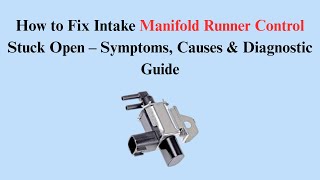
It uses butterfly flaps inside the intake manifold to change the length of the engine's air path. It uses long runners at low speeds for better torque, and short runners at high speeds for maximum horsepower.
What is a DMTL pump?
DMTL stands for Diagnostic Module for Tank Leakage. It is a small electric pump used by European manufacturers to pressurize the fuel tank after the car is turned off to check for emissions leaks.
What are the most common misdiagnoses for P1471?
For BMWs, mechanics often mistakenly replace the gas cap or charcoal canister when the code points specifically to a dead DMTL pump circuit. For Fords, shops may quote a full intake manifold replacement when only a $15 plastic linkage clip is broken.
Can a bad battery cause a P1471 code?
Yes. Because P1471 is a circuit malfunction code, low voltage from a dying battery or failing alternator causes the PCM to incorrectly flag sensitive components like the DMTL pump or IMRC motor.
Can I fix P1471 myself?
Yes. Replacing a broken IMRC linkage clip or swapping a BMW DMTL pump behind the wheel well are straightforward DIY jobs requiring basic hand tools.
How much does it cost to fix P1471?
Repair costs range from $20 for a DIY linkage clip to $400 for a shop to replace a Ford IMRC actuator. A BMW DMTL pump replacement typically costs $200 to $300 at an independent shop.
Will a P1471 code cause me to fail an emissions test?
Yes. P1471 illuminates the Check Engine Light, which results in an automatic failure for OBD-II emissions inspections in all jurisdictions.
Can I just delete or bypass the IMRC system?
While aftermarket tuners can lock the flaps open and delete the code, it ruins low-end torque and fuel economy. It is also illegal in areas with strict emissions testing and does not fix the underlying electrical short.
Key Takeaways
- P1471 is a manufacturer-specific code that primarily indicates a failed Intake Manifold Runner Control (IMRC) actuator on Fords or a faulty EVAP Leak Detection Pump (DMTL) on BMWs and VWs.
- Never ignore an IMRC-related P1471 for more than a month; the resulting rich air-fuel mixture will destroy your catalytic converter, turning a $250 repair into a $2,000 nightmare.
- For BMW and VW owners, a P1471 code almost always requires replacing the DMTL pump, a straightforward DIY repair that costs under $100 in parts compared to a $500 dealership quote.
- If you drive a modern Jeep or Fiat with a 1.3L engine, P1471 is a secondary code triggered to protect the catalyst; you must diagnose and fix the accompanying cylinder misfire (codes P0300-P0304) first.
Helpful Videos

Shop the Parts Behind P1471
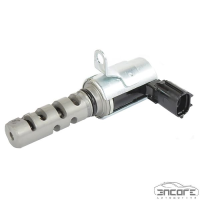
Below are the parts most often responsible for code P1471, ranked by how frequently each one is the actual culprit (per the diagnosis above). Tap any to see what we have for your vehicle.



The information in this article is provided for general reference and educational purposes only. Vehicle specifications, procedures, and part compatibility can vary by production date, trim level, and region. Always consult your vehicle's factory service manual and verify part numbers before purchasing or performing repairs. Safety-critical components such as airbags, seat belts, and braking systems should be installed by a qualified professional.
- 🧭 Diagnostic Flowchart
- 🎬 Helpful Videos
- 🛍️ Shop This Part
- What Does P1471 Mean?
- Can I Drive With P1471?
- Common Causes
- Symptoms
- Common Fixes & Costs
- Used vs. New Parts: Buying Guide
- What Happens If You Wait — Timeline
- Cost of Not Fixing It
- Diagnosis Steps
- When This Code Triggers (Freeze-Frame Conditions)
- Related Codes
- Climate & Environmental Factors
- How to Talk to a Mechanic About This Code
- Where to Take It: Dealer vs Independent vs Chain
- When to Walk Away From the Repair
- What Scan Tool You Need for This Code
- How to Clear the Code After You Fix It
- Will This Fail Emissions / State Inspection?
- Most Commonly Affected Vehicles
- Manufacturer-Specific Notes
- Real Owner Stories
- 2008 BMW 328i (E90)
- 2019 Ford F-250 6.2L
- 2020 Jeep Renegade 1.3L
- How to Prevent This Code From Triggering
- Frequently Asked Questions
- What is an Intake Manifold Runner Control (IMRC) system?
- What is a DMTL pump?
- What are the most common misdiagnoses for P1471?
- Can a bad battery cause a P1471 code?
- Can I fix P1471 myself?
- How much does it cost to fix P1471?
- Will a P1471 code cause me to fail an emissions test?
- Can I just delete or bypass the IMRC system?
- Key Takeaways
- 🎟️ Get 5% Off