

OBD-II Code P1475: Definitive Guide to a Complex Manufacturer-Specific Fault
What P1475 means for your car, why it triggers, and how to diagnose and fix it like a pro
- Confirm your vehicle's specific P1475 definition before opening the hood, as it means a fan failure on a Ford but a 5-volt sensor short on a Dodge.
- Stop driving immediately if P1475 triggers a cooling fan fault, as engine overheating causes a $2,000+ blown head gasket within minutes.
- Inspect the fuse box first on Ford and Jaguar vehicles, as a melted fan relay terminal is the leading cause of this code.
- Unplug sensors one by one on a Dodge Ram to isolate a 5-volt reference short, rather than immediately replacing the $1,500 Engine Control Module.
- Test the $80 EVAP purge valve on Audi and VW models before replacing the $300 Leak Detection Pump, as a stuck valve frequently triggers a false LDP code.
What Does P1475 Mean?
P1475 is a manufacturer-specific code, meaning its definition depends entirely on your vehicle. For Jaguar, Land Rover, Ford, and Mazda, it signals a problem with the engine's cooling fan circuit. For Dodge Ram Cummins trucks, it indicates the auxiliary 5-volt sensor power supply is too high. For Audi, Volkswagen, and BMW, it points to a fault in the evaporative emissions (EVAP) system's Leak Detection Pump (LDP). For Subaru, it relates to the exhaust bypass valve solenoid.
Technical definition: Because P1475 is not a generic SAE/ISO code, its formal definition varies. Common definitions include: Fan Relay (Low) Circuit Malfunction, Auxiliary 5 Volt Output Too High, EVAP Emission Control LDP Circuit Malfunction / Reed Switch Did Not Close, and Exhaust Bypass Valve Solenoid Malfunction Low.
Can I Drive With P1475?
Yes, But With Caution. Driving carries significant risk. If the fault relates to the cooling fan, engine overheating in traffic causes catastrophic damage like a blown head gasket ($1,500-$3,000) or a warped cylinder head ($5,000+). If it is a 5-volt sensor issue on a Dodge, you risk sudden stalling in traffic. If it is an EVAP issue, you will fail an emissions test, but the immediate safety risk is low.
Common Causes
- Damaged wiring or melted fuse box terminals (Very Common) — Wires leading to the fan motor, LDP, or sensors corrode, fray, or short. On Ford Mustangs and Jaguars, the terminal pin under the fan relay in the fuse box frequently burns and melts, causing an open circuit and triggering the code.
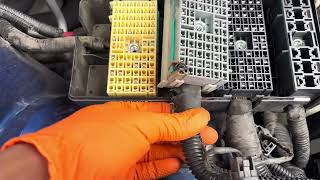
- Faulty cooling fan relay (Very Common) — The relay is an electronic switch controlling power to the fan. It fails from age, heat, or internal shorts, preventing the fan from turning on at the correct speed. This is the primary suspect for Ford, Jaguar, and Mazda vehicles. 🎬 Watch: How to diagnose a bad cooling fan relay.
- Faulty sensor shorting the 5V reference circuit (Very Common) — On Dodge Ram trucks, a sensor (like the MAP, oil pressure, or APP sensor) fails internally and shorts the 5-volt reference circuit to power, pushing the voltage above 5.7V and affecting all other sensors on that circuit.
- Stuck EVAP Purge Valve (N80) (Common) — On Audi and VW models, the purge valve gets stuck open, creating a constant vacuum leak. The Leak Detection Pump interprets this massive leak as a system fault, triggering P1475.
- Cracked or faulty EVAP Leak Detection Pump (LDP) (Common) — For Audi, VW, and BMW vehicles, the plastic housing of the EVAP system's LDP cracks with age, or the internal reed switch fails, preventing it from sealing or pressurizing the system for a self-test.
- Failed cooling fan control module (Common) — This module controls the variable speed of the cooling fan based on inputs from the engine computer. It fails electronically, causing incorrect fan operation or preventing the fan from running entirely.
- Failing radiator fan motor (Less Common) — The fan motor wears out over time. Worn brushes or seized bearings cause it to draw excessive current (blowing fuses or melting relays) or prevent it from spinning at the commanded speed.
- Faulty Engine Control Module (ECM) (Rare) — On Dodge Ram trucks, an internal fault in the ECM causes the 5-volt reference signal to spike. In other vehicles, an internal ECM driver failure incorrectly sets a code for a component that is actually working correctly.
Symptoms
- Engine overheating at idle or in traffic — When the vehicle is stopped, there is no natural airflow through the radiator. If the fan fails, the engine temperature rises quickly, often in just 5-10 minutes.
- Engine stalling, rough idle, or no-start — For Dodge Ram trucks with the 5V reference issue, the loss of accurate sensor data causes erratic engine behavior, stalling, or prevents the engine from starting altogether.
- A/C blows warm air when stationary — The A/C system requires airflow across the condenser to work effectively. A non-functioning fan causes poor A/C performance at low speeds or idle.
- Hard starting after refueling — For Audi and VW vehicles, a stuck-open EVAP purge valve floods the engine with fuel vapors, causing the engine to crank longer and run rough immediately after filling the gas tank.
- Check Engine Light is on (also visible on scanner) — The vehicle's computer detects a fault and stores the P1475 code, illuminating the warning light on your dashboard.
Diagnostic Flowchart
Tap your situation to follow the diagnostic path that matches what you're seeing on this code.
Common Fixes & Costs
- Replace cooling fan relay — Parts: $15-$70, Labor: $50-$75, ~0.2 hr book time (DIY)
- Repair damaged wiring or fuse box terminal — Parts: $10-$50, Labor: $150-$300, ~1.5 hr book time (Intermediate)
- Replace faulty sensor (Dodge 5V issue) — Parts: $40-$100, Labor: $50-$100, ~0.5 hr book time (DIY)
- Replace EVAP Purge Valve (N80) — Parts: $40-$120, Labor: $50-$100, ~0.5 hr book time (DIY)
- Replace EVAP Leak Detection Pump (LDP) — Parts: $150-$400, Labor: $125-$200, ~1.5 hr book time (Intermediate)
- Replace radiator fan assembly — Parts: $200-$700, Labor: $150-$400, ~2.0 hr book time (Professional)
- Replace Engine Control Module (ECM) — Parts: $800-$2000, Labor: $150-$300, ~1.5 hr book time (Professional)
Used vs. New Parts: Buying Guide
When a used part is worth it: For expensive, complex assemblies like a radiator fan module or a complete charcoal canister with LDP, a used part from a low-mileage vehicle offers significant savings. It is not recommended for simple electronic parts like relays or sensors.
Donor-vehicle mileage cap: roughly under 75000 miles for the part to have meaningful remaining life.
Donor quality checklist:
- Verify the part number matches exactly.
- Inspect plastic housings for cracks and electrical connectors for corrosion or damage.
- For fan assemblies, check for any wobble or resistance when spinning the fan blades by hand.
Decision logic:
- If The part is a simple relay or sensor and costs less than $100 new → Always buy new. The risk of premature failure of a used electronic part outweighs the minimal savings.
- If The part is a fan assembly or EVAP canister costing over $400 new → A used part from a reputable salvage yard with a warranty is a reasonable option, especially for older vehicles.
- If The part has a known high failure rate (e.g., fan control module) → Favor a new part with an updated design if available, or ensure the used part has a solid warranty.
Warranty tradeoff: Used parts typically come with a 30-90 day warranty covering only the part. New aftermarket parts often have a 1-year to limited lifetime warranty. New OEM parts carry a 1-year/12,000-mile warranty.
Worst-case if a used part fails: $300-$600 if a used part fails after the warranty period, requiring you to pay for the part and the installation labor a second time.
What Happens If You Wait — Timeline
- Immediate: Check Engine Light illuminates. For fan faults, A/C is ineffective at idle. For Dodge faults, intermittent rough idle occurs. For EVAP faults, there are no drivability symptoms. (MPG impact: 0-2%% · Added cost: $0)
- Minutes (for Fan) / Weeks (for Dodge/EVAP): Fan Fault: Engine overheats in first stop-and-go traffic situation. Dodge Fault: Stalling, no-start, and 'dead pedal' become frequent. EVAP Fault: Automatic failure of any state emissions inspection. (MPG impact: 1-5%% · Added cost: $150 (Towing) - $3000+ (Engine damage from overheating))
- Days (for Fan) / Months (for Dodge): Fan Fault: Repeated overheating cycles cause a blown head gasket or warp a cylinder head. Dodge Fault: Continued driving with a high-voltage short stresses and damages the Engine Control Module (ECM). (MPG impact: 5-10%% · Added cost: $1500-$5000+)
- Continuous: Fan Fault: Catastrophic engine failure (seized engine) requires complete engine replacement. Dodge Fault: The vehicle is undrivable due to cascading failure to the expensive ECM. (MPG impact: 10-20%% · Added cost: $2500-$8000+)
Cost of Not Fixing It
- Immediate (minutes to hours): For fan-related faults, engine overheating in traffic causes a blown head gasket, warped cylinder head, or complete engine seizure. (Added cost: $1,500-$5,000+)
- Days to Weeks: For Dodge 5V reference faults, continued driving leads to unpredictable stalling, no-start conditions, and potential damage to the ECM. (Added cost: $200 (towing) - $2,500+ (ECM replacement))
- Ongoing: For EVAP-related faults, the primary cost is failing an emissions test. There is also a negligible drop in fuel economy. (Added cost: $50-$150 (re-test fees, wasted fuel))
Diagnosis Steps
- Confirm the Code's Meaning for YOUR Vehicle
This is the most critical step. Use a professional scan tool or search online for 'P1475 [Your Make Model Year]' to find the exact definition. Do not proceed until you know if you are diagnosing a fan, an EVAP system, or a voltage circuit.
Tools: OBD-II Scan Tool, Internet Access (Beginner) - Inspect the Fuse Box and Relays
Locate the fuse box. Check for blown fuses related to the cooling fan or EVAP pump. For fan issues on a Ford or Jaguar, physically remove the fan relay and inspect the socket for signs of melting, burning, or deformed plastic. Swap the relay with an identical one from a non-critical circuit (like the horn) to see if the problem moves.
Tools: Flashlight, Pliers (Beginner) - Isolate the 5V Reference Fault (Dodge Ram)
If you have the 'Auxiliary 5 Volt Output Too High' fault, use a multimeter to measure the voltage on the 5V reference wire at the MAP sensor with the key on, engine off. If it reads above 5.7V, unplug sensors on that circuit one at a time (MAP, APPS, oil pressure). When the voltage drops back to a normal ~5.0V, the sensor you just unplugged is the one causing the short.
Tools: Multimeter (Intermediate) - Manually Test the EVAP Purge Valve (Audi/VW)
The EVAP purge solenoid (N80 valve) is a common failure point triggering LDP codes. Locate the valve in the engine bay, disconnect its hoses and electrical connector, and try to blow through it. If you can blow through it at all, it is stuck open and has failed.
Tools: Pliers, Basic Hand Tools (Intermediate) - Perform a Voltage Drop Test
For fan or LDP circuit faults, connect the black multimeter lead to the battery positive post and the red lead to the positive wire at the component connector WITH the component commanded ON. A reading of more than 0.5 volts indicates excessive resistance (corrosion or melted wire) in the power-side wiring. Repeat on the ground side. More than 0.2 volts indicates a bad ground.
Tools: Multimeter, Back-probe kit (Advanced) - Use a Scan Tool for Active Tests
For fan-related faults, use a bi-directional scanner to command the cooling fan ON and OFF. This tests the entire control circuit. For EVAP faults, initiate a system leak test, which operates the LDP and shows whether it passes or fails.
Tools: Bi-directional OBD-II scan tool (Advanced) - Test the Fan Motor Directly
Disconnect the fan motor and use fused jumper wires to carefully apply 12V power directly from the battery to the motor's terminals. If the motor spins, it is good. If it does not spin, the motor has failed.
Tools: Fused jumper wires, basic hand tools (Intermediate) - Monitor Key PIDs
Observe live data. For fan faults, monitor Engine Coolant Temperature (ECT) and Commanded Fan Speed. Watch if the fan command changes as the ECT rises (typically activating around 215°F). For EVAP faults, monitor Fuel Tank Pressure. During a system self-test, you should see the pressure change as the LDP activates.
Tools: OBD-II Scan Tool with live data capability (Advanced)
When This Code Triggers (Freeze-Frame Conditions)
- Engine Coolant Temp: 195-220°F (For fan-related faults, the code sets when the engine is fully warmed up and the fan is commanded on but does not respond.)
- Fuel Level: 15-85% (For EVAP-related faults, the system self-test only runs when the fuel level is within this range to ensure accurate pressure readings.)
- Ambient Air Temperature: 40-95°F (EVAP tests are disabled in extreme cold or hot temperatures; the code is most likely to set within this range.)
- Ignition On Time: >5 seconds (For the Dodge 5V reference fault, the code sets if the voltage remains above the 5.7V threshold for at least 5 seconds with the ignition on.)
Related Codes
- P1476 — Often a companion code. On Jaguar/Ford, P1475 is the low-speed fan relay and P1476 is the high-speed relay. On Audi/VW, P1475 is 'LDP Malfunction/No Signal' while P1476 is 'LDP Malfunction/Vacuum Too Low'.
- P0480 — A generic code for 'Fan 1 Control Circuit Malfunction'. P1475 is the manufacturer-specific code providing the precise reason for the generic P0480 fault. Diagnose the P1475 fault first.
- P0651 — On Dodge Ram trucks, P1475 means the 5V reference is too high, while P0651 points to an open or low voltage on the same circuit. Measure the 5V reference line; if above 5.7V, the fault is P1475.
- P0442 — A generic code for 'EVAP System Small Leak Detected'. On German vehicles, P1475 points specifically to a malfunction of the Leak Detection Pump, which is the component responsible for detecting the leak reported by P0442.
Climate & Environmental Factors
- Cold Weather: Significantly increases the likelihood of EVAP-related P1475 codes on Audi, VW, and BMW models. Cold temperatures cause plastic and rubber hoses, seals, and O-rings in the EVAP system to contract and become brittle, creating small leaks detected during self-tests.
- High Heat & Humidity: Increases stress on cooling systems, raising the failure rate for fan relays, control modules, and fan motors. In hot weather, the fan runs more frequently, increasing electrical load and heat exposure on fuse box terminals.
How to Talk to a Mechanic About This Code
Say this: "I have a check engine light and my scanner shows code P1475. I know this is a manufacturer-specific code, and for my [Ford/Dodge/Audi], it means [Cooling Fan/5-Volt Circuit/EVAP LDP]. I'd like to schedule a diagnostic to confirm the root cause before replacing any parts."
This immediately tells the shop you are an informed customer. It specifies the code and its likely meaning for your vehicle, focusing the technician's diagnostic path and preventing them from starting a generic, expensive diagnostic process.
Avoid saying:
- 'My check engine light is on, can you just fix it?' (This is too vague and invites shops to replace parts without proper diagnosis).
- 'I think I need a new [fan motor/ECM/EVAP pump].' (Don't diagnose for them; ask them to confirm the failure of a specific part).
- 'Just do whatever it takes.' (This gives a blank check and removes your ability to control costs).
Questions to ask before authorizing the repair:
- Can you provide a detailed, written estimate that breaks down parts and labor costs?
- For a Ford/Jaguar fan issue: 'Did you inspect the fan relay socket in the fuse box for melting or corrosion?'
- For a Dodge 5V issue: 'What was the exact voltage reading on the 5V reference circuit? Which sensor did you identify as the cause?'
- For an Audi/VW/BMW EVAP issue: 'Did you test the LDP circuit for power and ground? Did you check the N80 purge valve before condemning the pump?'
- What is the warranty on the parts and labor for this specific repair?
Where to Take It: Dealer vs Independent vs Chain
- Dealer:
Best for: Vehicles under warranty., Complex electrical or network issues on newer cars., German vehicle EVAP system faults where specialized tools (e.g., VAG-COM, ISTA) are required.
Downsides: Typically the highest labor rates (can be 40-50% more than independent shops)., May recommend replacing an entire assembly when only a smaller component has failed. (Typical cost: +40% vs. baseline) - Independent Shop:
Best overall fit, with a major condition: For Dodge 5V or German EVAP issues, you MUST choose an independent shop that specializes in that brand. For Ford/Jaguar fan issues, most competent general independent shops are suitable.
Best for: Out-of-warranty vehicles., Common P1475 variants like Ford/Jaguar fan issues., Shops that specialize in your vehicle's brand (e.g., a German auto specialist or a diesel truck shop) for more complex P1475 variants.
Downsides: Quality and expertise vary widely; vet shops carefully through reviews and certifications., A general shop lacks the specific tools or experience for the Dodge 5V circuit or German EVAP faults. (Typical cost: +0% vs. baseline) - Chain Shop:
AVOID. The diagnostic complexity of all P1475 variants is beyond the scope of what these shops typically handle well. There is a high risk of misdiagnosis and paying for unnecessary parts.
Best for: Tires, brakes, oil changes, and other routine maintenance.
Downsides: Technician skill is highly variable., Often lack the advanced diagnostic tools and training for complex, manufacturer-specific codes like P1475., Business model incentivizes upselling and part replacement over careful diagnosis. (Typical cost: -10% vs. baseline)
When to Walk Away From the Repair
If the estimated repair cost exceeds 40-50% of your car's private-party market value, it's time to seriously consider selling or trading it in instead of repairing it.
- Car worth $3500, fix is $1900: Walk away. The repair cost is over 50% of the car's value. This money is better put toward a replacement vehicle.
- Car worth $15000, fix is $1200: Fix it. The repair cost is less than 10% of the vehicle's value and well below the threshold.
- Car worth $5000, fix is $2200: Borderline. At 44% of the car's value, get a second opinion. If the rest of the car is in excellent shape, it might be worth fixing. If other repairs are also needed, it's better to sell.
What Scan Tool You Need for This Code
Minimum: A scanner that reads manufacturer-specific 'P1' codes and displays live data. A basic $20 reader that only pulls generic 'P0' codes will not see P1475.
Without live data, you cannot see what the computer is seeing. You need to monitor coolant temp vs. fan command (Ford), watch the 5V reference voltage (Dodge), or check EVAP pressure sensor readings (Audi/VW) to diagnose properly.
Budget: BlueDriver Pro (~$100) — Reads manufacturer-specific codes like P1475 and provides detailed live data graphing on your smartphone. This is enough to see the symptoms (e.g., voltage is high, fan isn't turning on when commanded).
Mid-range: Foxwell NT510 Elite / Autel MaxiCOM MK808S (~$180-400) — Adds bi-directional control. You can command the cooling fan ON/OFF to test the entire circuit (Ford/Jaguar) or command the EVAP LDP to run a system test (Audi/VW/BMW). This actively tests components instead of just passively observing data.
Professional: Autel MaxiCOM MK906BT / Innova 5610 (~$500-1200) — Offers full OEM-level bidirectional controls, advanced data graphing, and guided diagnostics. These tools provide the most certainty in complex electrical diagnoses, like tracing the Dodge 5V short or a network issue on a MINI.
Rent vs buy: For a one-time check, auto parts stores read codes for free. However, their basic scanners lack the manufacturer-specific definition or live data needed for P1475. If you plan to diagnose the issue yourself, buying at least a budget pick like the BlueDriver is essential.
How to Clear the Code After You Fix It
- Use an OBD-II scan tool to clear the P1475 code.
- Perform a complete drive cycle to allow readiness monitors to reset.
- Rescan for any pending or active codes.
Drive cycle (~30 minutes): Start with a cold soak (vehicle off for 8+ hours). Idle for 2-3 minutes with A/C on. Drive for 15-20 minutes with a mix of city (stop-and-go) and highway (steady speed of 55 mph for 3-5 minutes) conditions. Allow the vehicle to cool down.
Readiness monitors affected: Evaporative System (EVAP), Catalyst (CAT), Oxygen Sensor (O2S)
Before emissions retest: drive at least 100 miles to fully set monitors.
Watch out for:
- Clearing the code with a scan tool resets all readiness monitors to 'incomplete'. You must complete a drive cycle before an emissions test.
- The code returns immediately or within a few drive cycles if the underlying root cause has not been properly repaired.
Will This Fail Emissions / State Inspection?
Yes — this code typically fails an OBD-II emissions inspection.
- California: An active Check Engine Light is an automatic failure of the smog check. After repairs, a full drive cycle must be completed to set the readiness monitors before a re-test is possible.
- New York: A vehicle with an illuminated Check Engine Light automatically fails the emissions portion of the annual state inspection.
- Texas: In counties requiring emissions testing, an illuminated Malfunction Indicator Lamp (MIL) results in an automatic test failure. The vehicle cannot be registered until repaired.
Most Commonly Affected Vehicles
- Dodge Ram 2500/3500 with Cummins (2000-2007) — P1475 means 'Auxiliary 5 Volt Output Too High'. The ECM's 5V reference circuit is reading over 5.7 volts, usually caused by a faulty sensor (MAP, APPS) or chafed wiring.
- BMW Various (E39, E46, etc.) (1998-2006) — Commonly means 'Leakage Diagnostic Pump Reed Switch Did Not Close', pointing to an internal failure of the LDP in the EVAP system.
- Audi / Volkswagen Various (A4, Jetta, etc.) (1998-2008) — Uses P1475 for an EVAP system malfunction, typically 'LDP Circuit Malfunction'. This is caused by a failed LDP, wiring issue, or a stuck-open N80 purge valve.
- Jaguar X-Type, S-Type (2002-2008) — Frequently logs P1475 for 'Fan Relay (Low) Circuit Malfunction', pointing to the low-speed fan relay, its wiring, or the fan control module.
- Ford Mustang, Escort, Focus (1996-2004) — Defines P1475 as 'Fan Relay Low Circuit Malfunction'. A very common failure point on Mustangs is the fuse box itself, where the terminal for the fan relay overheats and melts.
- Land Rover Freelander (2002-2005) — Sets P1475 for 'Radiator slow fan low input/high input', indicating the fan is not reaching its commanded speed.
- Mazda Various (1996-2005) — Defines the code as 'Fan Relay Circuit Low Voltage', similar to Ford and Jaguar, pointing to a fault in the low-speed fan control circuit.
- Subaru WRX, STI (2002-2007) — On turbocharged models, P1475 is defined as 'Exhaust bypass valve solenoid Malfunction Low', indicating a problem in the turbocharger control solenoid's electrical circuit.
- Dodge (non-Cummins) Charger, Magnum (2005-2010) — On rear-wheel-drive cars, P1475 indicates a fault with the Steering Angle Sensor (SAS), part of the stability control system.
- MINI Cooper (2002-2008) — Defined as 'Wakeup Control Diagnosis', relating to a communication problem with the Body Control Module (BCM).
Manufacturer-Specific Notes
- Dodge / Ram (Cummins): P1475 means 'Auxiliary 5 Volt Output Too High'. The ECM detects the 5-volt reference it supplies to critical engine sensors is above 5.7 volts. This is often caused by a shorted sensor or chafed wiring. A common diagnostic trick is unplugging sensors on the 5V circuit one-by-one until the voltage returns to normal.
- Audi / Volkswagen / BMW: P1475 is for an EVAP system malfunction related to the Leak Detection Pump (LDP). This means the pump that pressurizes the fuel system to check for leaks has an electrical fault or its internal position switch is failing.
- Ford / Jaguar / Mazda: The definition relates to the cooling fan circuit, specifically the 'Fan Relay (Low) Circuit Malfunction'. On Mustangs, a known weak point is the fuse box itself, where the relay's female connector overheats and loses contact, requiring a terminal repair.
Real Owner Stories
2006 Dodge Ram 2500 Cummins at 175K miles with intermittent stalling.
Truck intermittently stalled, showed 'dead pedal' (no throttle response), and sometimes would not start. Check engine light was on with code P1475.
Outcome: The owner learned P1475 means 'Auxiliary 5 Volt Output Too High' and is often caused by a single shorted sensor. They started unplugging sensors on the 5V circuit. When the MAP sensor was disconnected, the voltage dropped to normal. A new MAP sensor fixed the problem.
Lesson: For a P1475 on a Dodge Ram, do not immediately blame the ECM. A single faulty sensor causes the high voltage reading. The diagnostic process of isolating the circuit by unplugging sensors is critical to avoid replacing expensive parts unnecessarily.
2004 Ford Mustang GT with engine overheating in traffic.
The car's temperature gauge shot up when idling or in stop-and-go traffic, but was fine on the highway. The A/C blew warm air at stops. The cooling fan was not turning on. Code P1475 'Fan Relay Low Circuit Malfunction' was stored.
Outcome: Upon removing the fan relay again, they looked closely at the socket in the fuse box and saw one of the female terminals was brown and melted. The plastic around the terminal was deformed, preventing a good connection even with a new relay. The fix was replacing the burned terminal in the fuse box.
Lesson: On Ford, Jaguar, and Mazda vehicles with a fan relay code, the relay itself might be good. Always inspect the relay socket for signs of melting or corrosion, as simply swapping the relay will not fix a bad connection.
2008 Audi A4 2.0T with hard starting after getting gas.
The car took a long time to crank after filling the fuel tank and ran rough for a moment after starting. Scanned codes showed multiple EVAP faults, including P1475 and P0455 (gross leak).
Outcome: Forum advice pointed towards a stuck-open EVAP purge valve (N80) causing the 'flooding' condition after refueling, which also triggers the LDP code (P1475). The owner replaced the N80 purge valve, which resolved both the hard starting and the EVAP codes.
Lesson: For P1475 on German vehicles, symptoms are key. A hard start specifically after refueling is a classic sign of a faulty EVAP purge valve (N80). While P1475 points to the LDP, the N80 valve is a common failure point that causes the LDP's system test to fail.
How to Prevent This Code From Triggering
- Apply dielectric grease to electrical connectors (Whenever a connector is disconnected for service) — Applying a small amount of dielectric grease inside connectors for the fan control module, LDP, or ECM seals out moisture. This prevents corrosion on the pins, which causes high resistance and intermittent circuit faults.
- Inspect and secure wiring harnesses (During every oil change) — Visually check that wiring harnesses are properly secured and not rubbing against hot engine components. Chafed wiring is a primary cause of shorts that trigger the P1475 fault on Dodge trucks and fan systems.
- Do not overfill the fuel tank (Every fill-up) — For EVAP-related faults, stopping at the first click of the fuel pump nozzle prevents liquid gasoline from flooding the charcoal canister. A saturated canister damages the LDP and other EVAP components over time.
- Perform periodic cooling system service (Every 30,000-50,000 miles) — A partially clogged radiator or aging thermostat makes the engine run hotter, forcing the cooling fan and its relay to work harder and more often. This accelerates wear and leads to premature failure.
Frequently Asked Questions
Why does P1475 have so many different meanings?
Codes starting with 'P1' are manufacturer-specific. The Society of Automotive Engineers standardizes 'P0' codes but allows manufacturers to create 'P1' codes for specific systems. This is why P1475 points to a fan on a Ford, a sensor circuit on a Dodge, and an emissions part on a BMW.
What is the most important first step in diagnosing P1475?
The absolute first step is correctly identifying what the code means for your specific make, model, and year. Use a high-quality scan tool or perform a targeted internet search before testing or replacing parts.
What does 'Fan Relay Low Circuit' actually mean?
This means the engine computer detects a problem on the electrical circuit controlling the low-speed cooling fan. A 'low circuit' code means the computer sees low voltage or ground when it expects battery voltage. This indicates a short in the wiring, a faulty relay, or a melted fuse box terminal.
What is the 'Auxiliary 5-Volt Output' on a Dodge Ram?
The Engine Control Module sends a precise 5-volt signal used as a reference by critical engine sensors. 'Auxiliary 5-Volt Output Too High' means this voltage exceeds 5.7V, causing sensors to send incorrect data and triggering severe running issues.
What is an EVAP LDP reed switch?
The Leak Detection Pump pressurizes the fuel tank to test for EVAP leaks. Inside is a magnetic reed switch that tells the computer the position of the pump's diaphragm. A 'Reed Switch Did Not Close' code means the switch failed to confirm the pump's movement, indicating an internal pump failure.
What are the most common mistakes when diagnosing P1475?
The biggest mistake is replacing parts without proper diagnosis, like buying a new fan motor when a melted $5 relay terminal is the real problem. Another error is failing to confirm the code's definition for your specific vehicle and diagnosing the wrong system entirely.
How much does it cost to fix a P1475 fault?
A simple relay replacement costs under $100, while an EVAP purge valve on a VW runs $125-$180. A full radiator fan assembly on a Jaguar exceeds $1,200. If the fault is a bad ECM on a Dodge truck, a replacement costs over $2,000.
Key Takeaways
- Confirm your vehicle's specific P1475 definition before opening the hood, as it means a fan failure on a Ford but a 5-volt sensor short on a Dodge.
- Stop driving immediately if P1475 triggers a cooling fan fault, as engine overheating causes a $2,000+ blown head gasket within minutes.
- Inspect the fuse box first on Ford and Jaguar vehicles, as a melted fan relay terminal is the leading cause of this code.
- Unplug sensors one by one on a Dodge Ram to isolate a 5-volt reference short, rather than immediately replacing the $1,500 Engine Control Module.
- Test the $80 EVAP purge valve on Audi and VW models before replacing the $300 Leak Detection Pump, as a stuck valve frequently triggers a false LDP code.
Helpful Videos
Shop the Parts Behind P1475
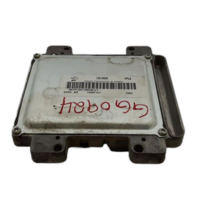
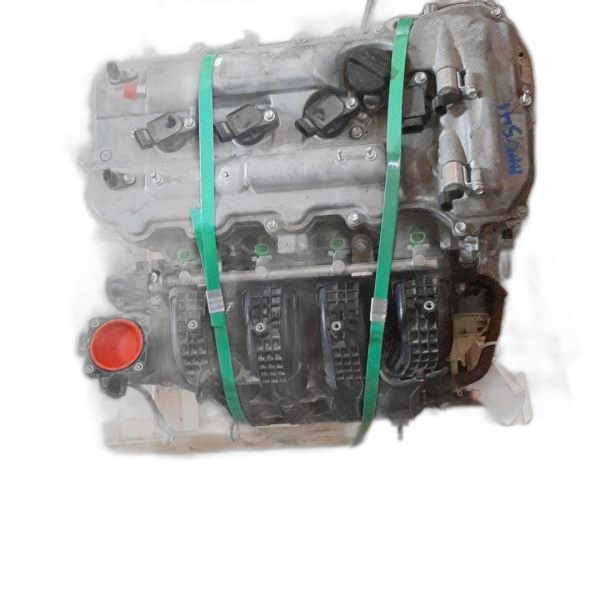
Below are the parts most often responsible for code P1475, ranked by how frequently each one is the actual culprit (per the diagnosis above). Tap any to see what we have for your vehicle.





The information in this article is provided for general reference and educational purposes only. Vehicle specifications, procedures, and part compatibility can vary by production date, trim level, and region. Always consult your vehicle's factory service manual and verify part numbers before purchasing or performing repairs. Safety-critical components such as airbags, seat belts, and braking systems should be installed by a qualified professional.
- 🧭 Diagnostic Flowchart
- 🎬 Helpful Videos
- 🛍️ Shop This Part
- What Does P1475 Mean?
- Can I Drive With P1475?
- Common Causes
- Symptoms
- Common Fixes & Costs
- Used vs. New Parts: Buying Guide
- What Happens If You Wait — Timeline
- Cost of Not Fixing It
- Diagnosis Steps
- When This Code Triggers (Freeze-Frame Conditions)
- Related Codes
- Climate & Environmental Factors
- How to Talk to a Mechanic About This Code
- Where to Take It: Dealer vs Independent vs Chain
- When to Walk Away From the Repair
- What Scan Tool You Need for This Code
- How to Clear the Code After You Fix It
- Will This Fail Emissions / State Inspection?
- Most Commonly Affected Vehicles
- Manufacturer-Specific Notes
- Real Owner Stories
- 2006 Dodge Ram 2500 Cummins at 175K miles with intermittent stalling.
- 2004 Ford Mustang GT with engine overheating in traffic.
- 2008 Audi A4 2.0T with hard starting after getting gas.
- How to Prevent This Code From Triggering
- Frequently Asked Questions
- Why does P1475 have so many different meanings?
- What is the most important first step in diagnosing P1475?
- What does 'Fan Relay Low Circuit' actually mean?
- What is the 'Auxiliary 5-Volt Output' on a Dodge Ram?
- What is an EVAP LDP reed switch?
- What are the most common mistakes when diagnosing P1475?
- How much does it cost to fix a P1475 fault?
- Key Takeaways
- 🎟️ Get 5% Off