

P1477 on 2012-2018 Ford Focus 2.0L: Intake Manifold Runner Control (IMRC) Circuit Malfunction
The diagnostic trouble code P1477 on a 2012-2018 Ford Focus with the 2.0L GDI engine indicates a malfunction in the Intake Manifold Runner Control (IMRC) system. While some generic Ford code lists mention a cooling fan relay circuit, the established definition for this platform points to the IMRC. This system uses flaps inside the intake manifold to optimize airflow for better performance and fuel economy. A fault can lead to reduced power, poor fuel economy, and a rough idle.
- P1477 on a 2012-2018 Focus almost certainly refers to a fault in the Intake Manifold Runner Control (IMRC) system, not the cooling fan.
- Symptoms typically include a Check Engine Light, reduced power, rough idle, and poor fuel economy.
- The most likely cause is a failed IMRC actuator motor located on the side of the intake manifold.
- When diagnosing, check for wiring harness damage near the intake manifold, as this is a known issue on earlier models of this generation.
- This specific code is very rare for this vehicle, so double-check the code number and its definition with a quality scan tool before ordering parts.
What's Unique About the 2012-2018 Ford Focus
The 2.0L GDI engine in the third-generation Focus relies on the IMRC system to balance low-end torque with high-end power. While the conflicting definition of 'Additional Fan Relay Circuit' appears in some generic Ford documentation, it is not specific to this platform and is likely for other models or generations. The P1477 code is exceptionally rare on the 2012-2018 Focus, with no specific forum threads or TSBs directly addressing it for this model. This suggests that while the IMRC system can fail, it does not commonly trigger this specific circuit code.
Symptoms You May Notice
- Check Engine Light is on
- Reduced engine power and acceleration, especially at low or high RPMs
- Poor fuel economy
- Rough or unstable idle
- Engine hesitation or stumbling
- Replacing cooling fan components due to the code's ambiguous definition in generic Ford code lists.
- Replacing the throttle body when the issue is with the IMRC system, as both can cause similar driveability symptoms.
Most Likely Causes
- Faulty Intake Manifold Runner Control (IMRC) Actuator/Solenoid 🔴 High Probability → Shop Engine Intake Manifold The IMRC actuator is an electro-mechanical part that is subject to wear and tear from constant adjustments. Carbon buildup within the intake manifold can also strain the actuator motor, leading to failure.
How to confirm: Use a capable OBD-II scanner to command the IMRC actuator open and closed while monitoring the position sensor data. Visually inspect the actuator linkage on the side of the intake manifold to see if it moves when the engine RPM is raised and lowered.
Typical fix: Replace the IMRC actuator assembly. In some cases, the entire intake manifold may be replaced if the internal flaps or linkage are damaged.
Est. part cost: $150-$400 - Wiring Harness Damage or Corrosion 🟡 Medium Probability The engine wiring harness on some 2012-2014 Focus models is known to chafe against the intake manifold near the throttle body, which can lead to various electrical faults and DTCs. This could potentially affect the IMRC circuit.
How to confirm: Carefully inspect the engine wiring harness where it runs near the intake manifold and throttle body for any signs of chafing, exposed wires, or damage. Check the electrical connector at the IMRC actuator for corrosion or loose pins.
Typical fix: Repair the damaged section of the wiring harness by soldering and heat-shrinking the affected wires. Protect the harness with convoluted loom or electrical tape to prevent future chafing.
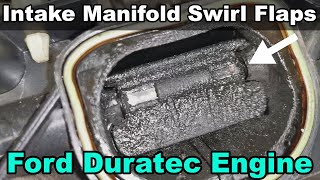
Est. part cost: $5-$25 - Carbon Buildup on IMRC Flaps ⚪ Low Probability As a Gasoline Direct Injection (GDI) engine, the 2.0L is susceptible to carbon buildup on the intake valves and runners, since fuel is not sprayed over them to keep them clean. Excessive buildup can cause the IMRC flaps to bind or stick.
How to confirm: This is difficult to confirm without removing the intake manifold for a visual inspection. A symptom would be an actuator that attempts to move but cannot complete its full range of motion.
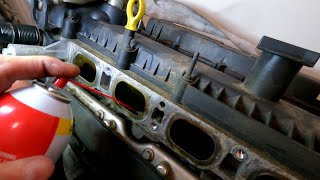
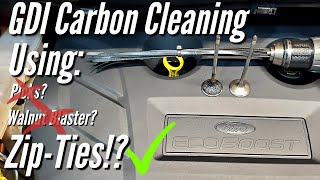
Typical fix: Remove the intake manifold and manually clean the carbon deposits from the runners and flaps. 🎬 See how to perform a GDI intake valve carbon cleaning This is a labor-intensive job.
Est. part cost: $20-$50 (for gaskets and cleaning supplies)
Rare But Worth Checking
- Failed Powertrain Control Module (PCM): → Shop Engine Control Module (ECM)
Diagnosis Steps
- CRITICAL FIRST STEP: Verify the code with a high-quality OBD-II scanner. Confirm the definition provided by the tool. While P1477 is rare for this car, ensure it wasn't misread.
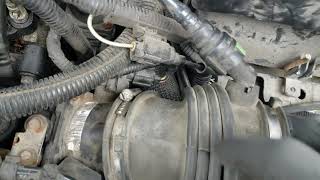
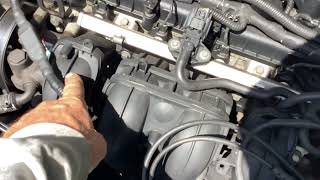
- VISUAL INSPECTION: Locate the IMRC actuator on the driver's side of the plastic intake manifold. Inspect the electrical connector and wiring harness for any visible damage, corrosion, or chafing.
- ACTUATOR FUNCTION TEST: Have a helper rev the engine from idle to around 3,000-4,000 RPM and back down. Watch the linkage on the IMRC actuator. You should see it move as the RPMs change.
- SCAN TOOL DIAGNOSIS: Use a scan tool with live data and bidirectional control. Monitor the IMRC desired position vs. actual position PIDs. Command the IMRC actuator open and closed to verify its operation. If it doesn't move, proceed to electrical checks.
- ELECTRICAL CHECKS: Disconnect the IMRC actuator. Check for power and ground at the connector according to the vehicle's wiring diagram. Check for continuity between the PCM and the actuator connector to rule out an open or shorted wire.
- WIRING HARNESS INSPECTION: If electrical faults are suspected, carefully inspect the engine harness for chafing, particularly where it may contact the intake manifold or other engine components, as noted in Ford TSB 18-2062 for early models.
Parts You'll Likely Need
- Intake Manifold Runner Control Actuator
(OEM #CM5Z-9E928-A (Motorcraft))— This is the electric motor that moves the runner flaps. It is the most likely component to fail in the IMRC system, causing a circuit malfunction code.
Trusted brands: Motorcraft, Dorman
OEM price range: $180-$250
Aftermarket price range: $120-$200 - Intake Manifold Assembly
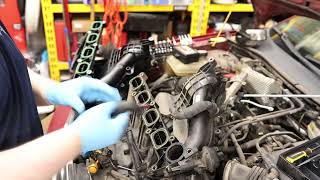
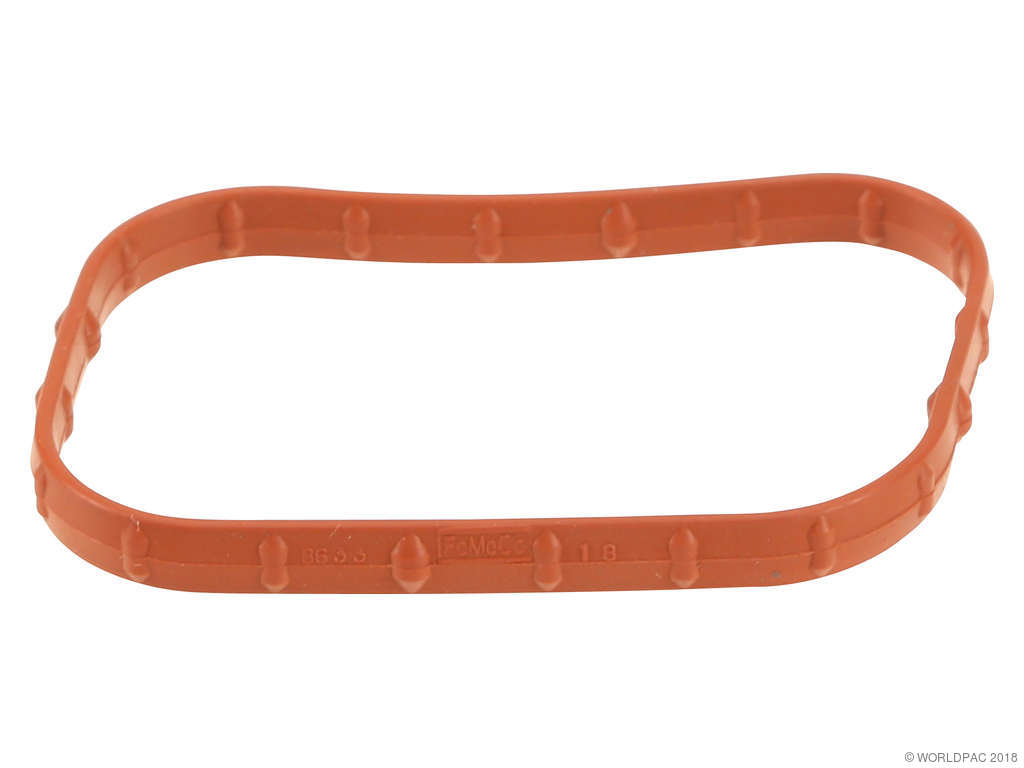
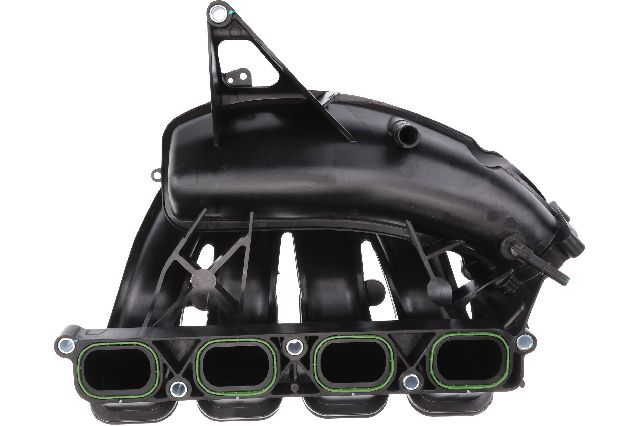
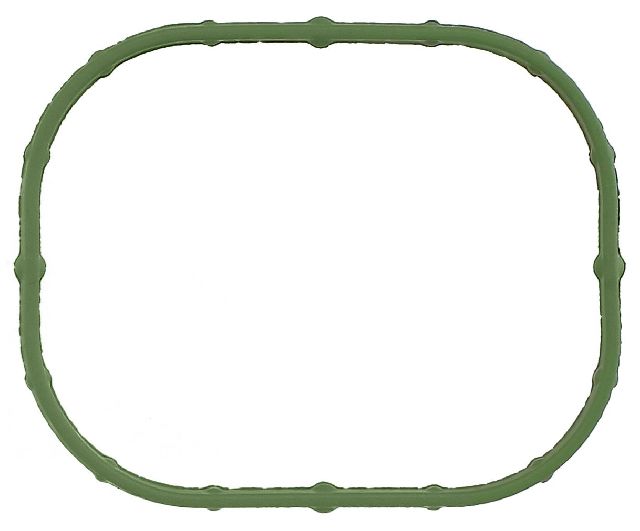
(OEM #BV6Z-9424-J (Motorcraft))— If the internal runner flaps or the linkage are broken or seized due to carbon buildup, the entire intake manifold assembly must be replaced 🎬 Watch: How to remove the intake manifold as the internal parts are not serviced separately.
Trusted brands: Motorcraft, Dorman
OEM price range: $300-$450
Aftermarket price range: $200-$350
Related Codes That Often Appear With This One
- P2004 - Intake Manifold Runner Control Stuck Open Bank 1
- P2008 - Intake Manifold Runner Control Circuit/Open Bank 1
Technical Service Bulletins (TSBs) & Recalls
- TSB 18-2062: While not for P1477 specifically, this TSB addresses various drivability issues on 2012-2014 Focus models caused by the engine wiring harness chafing against the intake manifold. This is a relevant diagnostic consideration for any electrical fault related to manifold-mounted components.
Mechanic-Grade Diagnostic Values
- IMRC Actuator/Solenoid Coil Resistance — expected: 25-35 Ohms (Ω).. Failure: Infinite resistance (OL) indicates an open circuit; near-zero resistance indicates a shorted circuit.
- IMRC Actuator Connector Voltage — expected: Approximately 12V (battery voltage) on the power supply pin with Key On, Engine Off (KOEO).. Failure: No voltage or significantly low voltage points to a problem in the power supply wire, a blown fuse, or an issue with the PCM power relay.
Scan Tool Commands That Help
- FORScan, Snap-on, Autel, or other professional-grade scanner: IMRC Actuation Test / Output State Test / Active Test — This bidirectional command allows the technician to command the IMRC actuator to open and close from the scan tool. It is the definitive way to test the electrical circuit and the actuator's mechanical function without revving the engine. If the actuator clicks or moves during the test, the PCM, wiring, and actuator motor are likely functional, pointing towards a mechanical binding issue (carbon) or a faulty position sensor. If it does not move, the next step is to check for power and ground at the connector.
Wiring & Ground Locations
- IMRC Actuator Connector — On the IMRC actuator motor, located on the driver's side of the plastic intake manifold.. This 4-wire connector is the primary point for electrical testing. The four pins typically serve these functions: 12V power from the PCM relay, chassis ground, a command signal from the PCM to activate the motor, and a feedback signal from the actuator's position sensor back to the PCM. A P1477 circuit code requires testing power, ground, and signal wire continuity at this connector.
- G103 — On the left rear of the engine.. This is a primary engine ground point. A loose or corroded G103 can cause a variety of intermittent electrical issues for engine-mounted sensors and actuators, including the IMRC system. Verifying this ground is clean and tight is a crucial step when diagnosing any circuit malfunction code.
Real Owner Repair Stories
- Compilation of multiple forum threads for related codes P2004/P2008 (2013 Ford Focus 2.0L GDI, approx. 95,000 miles) — Check Engine Light with code P2004 (Intake Manifold Runner Control Stuck Open), noticeable loss of power at low RPMs, and a slight stumble on acceleration from a stop.
❌ Tried (didn't work) Clearing the code (it returned within one drive cycle)., Checking for vacuum leaks (none found).
✅ What actually fixed it The owner observed that the IMRC actuator arm on the side of the intake manifold was not moving when the engine was revved. Upon removing the intake manifold, it was discovered that the plastic linkage for the runner flaps had broken internally and the flaps were seized with heavy carbon buildup. The entire intake manifold assembly, which included a new IMRC actuator, was replaced. This resolved the code and restored engine performance. Several owners note that while aftermarket (e.g., Dorman) manifolds are available, they sometimes have fitment or durability issues, and sticking with the OEM Motorcraft part is often recommended for longevity.
Model Year Variations Within This Range
- 2012-2014 vs 2015-2018: The Ford Focus received a significant facelift for the 2015 model year. While the core 2.0L GDI engine remained the same, there could be minor differences in wiring harness routing, connector types, or PCM software logic. The known wiring harness chafing issue documented in TSB 18-2062 specifically applies to 2012-2014 models. When diagnosing, always verify wiring diagrams and part numbers specific to the vehicle's exact model year.
Diagnostic Flowchart
Other Known Issues on This Vehicle
Issues unrelated to this code that are worth knowing about as an owner of this generation:
- DPS6 PowerShift Transmission Failure 🔴 High — Extremely common on 2012-2016 models. Symptoms include shuddering, jerking, delayed engagement, and complete failure. (Ref: Multiple warranty extensions and class-action lawsuits. Not a standard recall.)
- Faulty Canister Purge Valve 🟠 Medium → Shop Vapor Canister — Very common across all years (2012-2018). Can cause stalling after refueling, rough idle, and inaccurate fuel gauge readings. (Ref: Recalls 18V735000 and 19V515000. Customer Satisfaction Program 24N07 extends coverage.)
- Premature Engine Mount Failure 🟠 Medium — The passenger-side hydraulic engine mount frequently collapses, causing excessive vibration in the cabin at idle and while driving.
- Electronic Power Steering Failure 🔴 High — More common on earlier models (especially 2012-2014). Can result in a sudden loss of power steering assist while driving. (Ref: Subject of NHTSA investigations, but no universal recall was issued.)
- Wiring Harness Chafing 🟡 Low — Affects 2012-2014 models. The engine harness can rub against the intake manifold, causing a variety of electrical issues and DTCs. (Ref: TSB 18-2062)
Used vs. New Parts: Buying Guide for This Vehicle
When a used part is the smart pick: A complete used intake manifold assembly from a reputable salvage yard can be a cost-effective solution, especially if the internal flaps or linkage are the cause of failure. It is a good option if the donor vehicle has low mileage and no front-end damage.
Donor-vehicle mileage cap: roughly under 70000 miles for the part to have meaningful remaining life.
What to inspect on the donor part:
- Verify the donor vehicle's mileage is reasonably low.
- Inspect the plastic manifold for any cracks, especially around mounting points.
- Manually move the external actuator linkage arm; it should move smoothly with some spring resistance and not feel gritty or stuck.
- Ensure the electrical connector on the actuator is not cracked, and the pins are not corroded or bent.
OEM-only on this vehicle (don't cheap out):
- While not strictly 'OEM-only', the IMRC actuator itself is an electro-mechanical part prone to wear. Many technicians recommend using the OEM Motorcraft actuator (CM5Z-9E928-A) to ensure proper communication with the PCM and avoid premature failure, which is sometimes reported with aftermarket alternatives.
Aftermarket brands forum-validated for this vehicle:
- Dorman is a widely available aftermarket brand for both the actuator and the complete manifold assembly. It is a viable alternative to OEM, though some user forums report mixed long-term reliability compared to Motorcraft.
Brands owners have reported issues with on this vehicle:
- Avoid unbranded, no-name parts from online marketplaces, as their quality control, materials, and electronic compatibility can be highly questionable, often leading to repeat failures.
Real Owner Stories
Aggregated from forums and TSBs cited above. Mileages and costs reflect what owners reported in those sources.
2012 Ford Focus 2.0L GDI
Symptoms: Drivability issues and electrical faults caused by the engine harness rubbing against the intake manifold.
What fixed it: Repairing the damaged section of the wiring harness by soldering and heat-shrinking affected wires, then protecting it with convoluted loom.
Source hint: TSB 18-2062
Related OBD-II Codes
Frequently Asked Questions
My 2013 Ford Focus is hesitating and has a check engine light; could TSB 18-2062 be the cause?
Should I use an aftermarket IMRC actuator or the Motorcraft version for my 2.0L GDI engine?
Can carbon buildup cause P1477 on a 2015 Ford Focus 2.0L?
Is there a recall for the stalling and rough idle I'm experiencing alongside this code?
Can I buy a used intake manifold to fix this issue on my 2014 Focus?
Does the Ford Escape share this IMRC problem with the Focus?
Helpful Videos

We Have This Part in Stock

The information in this article is provided for general reference and educational purposes only. Vehicle specifications, procedures, and part compatibility can vary by production date, trim level, and region. Always consult your vehicle's factory service manual and verify part numbers before purchasing or performing repairs. Safety-critical components such as airbags, seat belts, and braking systems should be installed by a qualified professional.
- Ford Focus:
- 🧭 Diagnostic Flowchart
- 🎬 Helpful Videos
- 🛍️ Shop This Part
- What's Unique About the 2012-2018 Ford Focus
- Symptoms You May Notice
- Most Likely Causes
- Rare But Worth Checking
- Diagnosis Steps
- Parts You'll Likely Need
- Related Codes That Often Appear With This One
- Technical Service Bulletins (TSBs) & Recalls
- Mechanic-Grade Diagnostic Values
- Scan Tool Commands That Help
- Wiring & Ground Locations
- Real Owner Repair Stories
- Model Year Variations Within This Range
- Other Known Issues on This Vehicle
- Used vs. New Parts: Buying Guide for This Vehicle
- Real Owner Stories
- 2012 Ford Focus 2.0L GDI
- Related OBD-II Codes
- Frequently Asked Questions
- 🎟️ Get 5% Off