

P1477 on 2002-2007 Jeep Liberty 3.7L: Investigating an Uncertain Code
The definition of code P1477 for the 2002-2007 Jeep Liberty 3.7L is uncertain. While some databases define it as 'Too Much Secondary Air Injected,' there is no strong evidence this vehicle is equipped with a secondary air injection system. The most plausible, though unconfirmed, explanation is a fault within the EVAP system's Leak Detection Pump (LDP), similar to its definition in other brands like BMW/Mini. Diagnosis should begin by verifying the code with an advanced scan tool and checking for
- The meaning of code P1477 on a 2002-2007 Jeep Liberty 3.7L is highly uncertain.
- The most common definition found online refers to a 'Secondary Air Injection System,' but this system does not appear to be equipped on this vehicle.
- The most plausible theory is that the code relates to a fault in the EVAP Leak Detection Pump (LDP) or its circuit, a definition used by other auto manufacturers.
- Do not buy any parts until a professional diagnosis has been performed with an advanced scan tool and, ideally, a consultation of the factory service manual.
- Confirming the presence of other trouble codes is a critical first step, as P1477 may be a ghost code or an error in the scanner's database.
What's Unique About the 2002-2007 Jeep Liberty
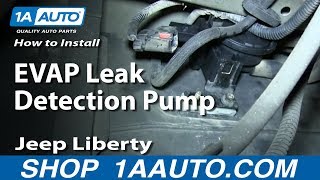
The primary issue with diagnosing P1477 on a KJ-generation Jeep Liberty is the conflict between the code's definition and the vehicle's actual hardware. Unlike other Chrysler/Dodge vehicles that may set this code for a secondary air injection system, the 3.7L PowerTech V6 in this chassis does not appear to use one. This suggests the code may be extremely rare, erroneously defined in some databases, or related to a different system. The leading theory is a fault in the EVAP system's Leak Detection Pump (LDP) 🎬 Watch: How to replace the leak detection pump, as this component exists on the vehicle and is a known failure point for EVAP codes in general. Other manufacturers (like BMW/Mini) use P1477 specifically for LDP circuit faults.
Symptoms You May Notice
- Check Engine Light is on
- Potential failure of emissions test
- Possible faint fuel odor if related to an EVAP system leak
- Replacing parts for a Secondary Air Injection system, which does not appear to exist on this vehicle.
Most Likely Causes
Rare But Worth Checking
- A software glitch in the PCM
- An error in the OBD-II scanner's database misinterpreting another code
Diagnosis Steps
- Confirm the Code: Use a high-quality OBD-II scanner to confirm that P1477 is the active code and to check for any other stored codes. The presence of other codes (especially from the P04xx range for the EVAP system) could provide critical diagnostic clues.
- Verify Vehicle Systems: Visually inspect the engine bay and emissions system components. Specifically, look for an air pump, diverter valves, and plumbing associated with a Secondary Air Injection system. Confirming its absence reinforces the misdiagnosis theory.
- Focus on the Leak Detection Pump (LDP): Given the evidence from other manufacturers, the LDP is the prime suspect. Locate the LDP (typically near the charcoal canister) and inspect its wiring for any signs of damage, corrosion, or chafing. Inspect the vacuum lines connected to it for cracks or disconnection.
- Check for Technical Service Bulletins (TSBs): A professional technician should search for any Jeep TSBs related to code P1477 for the Liberty. A TSB could clarify a known software issue or a mis-defined code. No public-facing TSBs directly mention P1477 for this vehicle.
- Consult OEM Service Information: The most reliable definition will be found in the official factory service manual for the Jeep Liberty. A dealership or qualified independent shop will have access to this information and can perform specific tests on the LDP circuit.
- Perform EVAP System Smoke Test: 🎬 Watch: Quick diagnostics for Liberty EVAP leak codes If a visual inspection reveals nothing, a smoke test can pressurize the EVAP system to reveal any hard-to-see leaks in hoses, the charcoal canister, or the fuel tank itself. While this typically sets other P04xx codes, it can help evaluate the overall health of the system the LDP monitors.
Parts You'll Likely Need
- Leak Detection Pump (LDP)
Related Codes That Often Appear With This One
- P0442 (EVAP System Leak Detected - Small Leak)
- P0455 (EVAP System Leak Detected - Large Leak)
- P0456 (EVAP System Leak Detected - Very Small Leak)
Mechanic-Grade Diagnostic Values
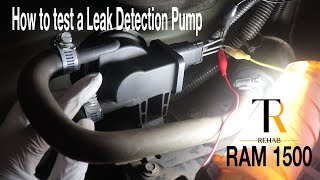
- Leak Detection Pump (LDP) Switch Voltage Test — expected: With the LDP connector plugged in and ignition on, the signal wire should show a constant voltage (typically 5V reference). When ~15 in. Hg of vacuum is applied to the canister port of the LDP, the voltage on the signal wire should drop significantly (towards 0V), indicating the internal reed switch has changed state.. Failure: If the voltage on the signal wire does not drop when vacuum is applied, the internal switch is faulty and the LDP needs to be replaced.
- Leak Detection Pump (LDP) Solenoid Click Test — expected: By applying a fused 12V power source and ground to the appropriate pins on the LDP connector, an audible 'click' should be heard. This confirms the internal solenoid is activating.. Failure: No click indicates a failed solenoid. Note that a clicking solenoid does not guarantee the pump's diaphragm or switch is working correctly.
Scan Tool Commands That Help
- Chrysler DRB III: LDP Monitor Test — This function, found under 'System Tests' or 'Monitors', allows a technician to force the PCM to run the EVAP Leak Detect Monitor, even if all normal enabling conditions (like a cold start) have not been met. It can be used to verify a repair or to observe the LDP switch and solenoid states in real-time to confirm a customer complaint.
- Advanced Bidirectional OBD-II Scanner: EVAP System Test / Vent Valve Control — To properly perform a smoke test, the EVAP system vent valve must be commanded closed. A bidirectional scanner can do this electronically. Without this command, smoke will simply exit through the fresh air filter, preventing the system from pressurizing and revealing leaks.
Wiring & Ground Locations
- Leak Detection Pump (LDP) Connector — On the Leak Detection Pump, which is typically mounted on or near the charcoal canister in the rear of the vehicle, often near the passenger side rear wheel well.. This 3-pin connector provides power, ground, and returns the switch signal to the PCM. Based on common Chrysler setups, the pinout is typically: Pin 1 - Solenoid Power (12V), Pin 2 - Switch Signal (to PCM), Pin 3 - Ground. Verifying power, ground, and signal integrity here is a primary diagnostic step.
- G100 — On the chassis, just below the Powertrain Control Module (PCM) on the driver's side of the engine bay.. This is a primary ground point for the PCM. A poor ground at G100 can cause a wide range of erratic sensor readings and seemingly unrelated trouble codes, including potential misinterpretation of signals from the EVAP system.
Real Owner Repair Stories
- Jeep KJ and KK Liberty Forum user 'JeepSpace' (2006 Jeep Liberty Sport 3.7L) — Recurring Check Engine Light with small and large EVAP leak codes (P0456, P0455), intermittent 'GASCAP' light, trouble starting after refueling, and occasional fuel fumes when accelerating uphill.
❌ Tried (didn't work) Replaced gas cap with OEM part, Replaced gas cap with aftermarket part, Replaced purge solenoid by the battery, Replaced Leak Detection Pump, Performed a smoke test which found no leaks
✅ What actually fixed it The user's thread details the extensive diagnostic process but concludes without a final confirmed fix, highlighting the difficulty of these intermittent EVAP issues. The fact that a smoke test passed while symptoms persisted strongly suggests an intermittent component failure (like the LDP switch) or a crack that only opens under specific conditions, which is a critical takeaway for others diagnosing similar issues. - Jeep KJ and KK Liberty Forum user 'mountainman' (Jeep Liberty (year not specified)) — Recurring EVAP leak codes (P0456, P0457).
❌ Tried (didn't work) Replaced gas cap, Replaced purge solenoid, Two separate smoke tests performed by shops failed to find a leak
✅ What actually fixed it The electrical connection to the Leak Detection Pump (also called ESIM) had corroded and eaten a hole in the side of the plastic valve housing. This was the source of the leak. It was an easy part to replace once identified.
"I Checked Everything" — The Actual Cause
- In multiple documented cases for the Jeep Liberty, a standard EVAP smoke test will pass (show no leaks), yet the vehicle continues to set EVAP codes. The root cause is often a component that is not sealing correctly internally or has an electrical fault, which a smoke test cannot detect.
- A faulty reed switch inside the Leak Detection Pump (LDP) will not be found by a smoke test. The system may be perfectly sealed, but if the PCM does not see the switch change state when it expects to, it will flag a fault.
- A leak caused by corrosion at the LDP's electrical connector can be missed by a smoke test, as the test pressure may not be sufficient to reveal a leak at that specific point, or the technician may not focus on that area.
- Very small cracks on the top of the fuel tank, particularly around the fuel pump module seal, may not show up on a smoke test but can open up under vacuum or specific thermal conditions, causing intermittent codes.
OEM Part Supersession History
4861959AA→4861959AB, 4861959AC— Standard part revisions by the manufacturer.
Heads up: These part numbers are for the Evaporative System Integrity Monitor (ESIM) / Leak Detection Pump commonly used on Chrysler/Jeep/Dodge vehicles of this era, including the Liberty. Always confirm fitment with a VIN, but these are the generally accepted parts for EVAP system repairs.
Model Year Variations Within This Range
- 2002-2007: The EVAP system on the 3.7L V6 KJ Liberty remained consistent throughout its production run, utilizing a Leak Detection Pump (LDP) mounted on the charcoal canister. There were no major system redesigns (e.g., switching to a Natural Vacuum Leak Detection system) within this generation.
Diagnostic Flowchart
Other Known Issues on This Vehicle
Issues unrelated to this code that are worth knowing about as an owner of this generation:
- Power Window Regulator Failure 🔴 High — Extremely common across all model years (2002-2007). Plastic components in the regulator break, causing the window to drop into the door suddenly.
- Front Lower Ball Joint Failure 🔴 High — Common enough to warrant a major safety recall (NHTSA ID: 06V288000, Recall F23). The ball joints can wear prematurely, leading to separation and a loss of steering control. (Ref: Recall F23 / 06V288000)
- Dropped Valve Seats 🔴 High — A known, serious issue with the 3.7L PowerTech engine. The intake valve seats can dislodge, causing misfires, rough running, and potentia
Used vs. New Parts: Buying Guide for This Vehicle
When a used part is the smart pick: For this vehicle, sourcing a used charcoal canister from a dry, salt-free climate can be a cost-effective option if the original is physically damaged. However, electronic components like the Leak Detection Pump (LDP) or purge solenoid are best purchased new due to their high failure rate and the difficulty of testing them.
Donor-vehicle mileage cap: roughly under 100000 miles for the part to have meaningful remaining life.
What to inspect on the donor part:
- For a charcoal canister, ensure there are no cracks in the plastic housing.
- Check that all hose connection nipples are intact and not brittle.
- Avoid parts from vehicles showing significant undercarriage rust or corrosion, as this can affect the LDP/ESIM seal.
OEM-only on this vehicle (don't cheap out):
- Gas Cap: Aftermarket gas caps are a very common cause of recurring EVAP codes on this platform. Always use a genuine Mopar gas cap to eliminate it as a variable.
Aftermarket brands forum-validated for this vehicle:
- Dorman: Offers a widely available replacement Leak Detection Pump (e.g., Dorman 310-500) that is a common repair part for related EVAP codes.
- Standard Motor Products (SMP): A generally trusted brand for emissions components like purge valves and LDPs.
Brands owners have reported issues with on this vehicle:
- No-name, unbranded electronic parts from online marketplaces should be avoided, as their internal components may not meet the precise specifications required by the PCM, leading to persistent codes.
Real Owner Stories
Aggregated from forums and TSBs cited above. Mileages and costs reflect what owners reported in those sources.
Mini Cooper (referenced for P1477 diagnostic path)
Symptoms: Still seeing P1477 after replacing the leak diagnostic pump.
What fixed it: Repairing chafed and broken wires in the wiring harness leading to the Leak Detection Pump (LDP).
Source hint: North American Motoring (MINI forum) thread titled 'Still seeing P1477 after replacing leak diagnostic pump'
2002-2007 Jeep Liberty 3.7L V6
Symptoms: Chronic EVAP system issues including large and small leaks.
What fixed it: Replacing cracked lines, replacing bad gas caps, or repairing small cracks found on top of the fuel tank.
Source hint: Jeep KJ and KK Liberty Forum threads discussing codes like P0455 and P0456
Related OBD-II Codes
Frequently Asked Questions
Is there a recall for the front lower ball joints on my 2002-2007 Jeep Liberty?
I have P1477 and an EVAP leak; should I buy an aftermarket gas cap?
Where is the Leak Detection Pump (LDP) located on the Liberty?
Can I use a used Leak Detection Pump from a donor vehicle to fix P1477?
Is there a TSB for code P1477 on the Jeep Liberty 3.7L?
What aftermarket brands are recommended for replacing the LDP?
Helpful Videos
We Have This Part in Stock


The information in this article is provided for general reference and educational purposes only. Vehicle specifications, procedures, and part compatibility can vary by production date, trim level, and region. Always consult your vehicle's factory service manual and verify part numbers before purchasing or performing repairs. Safety-critical components such as airbags, seat belts, and braking systems should be installed by a qualified professional.
- Jeep Liberty:
- 🧭 Diagnostic Flowchart
- 🎬 Helpful Videos
- 🛍️ Shop This Part
- What's Unique About the 2002-2007 Jeep Liberty
- Symptoms You May Notice
- Most Likely Causes
- Rare But Worth Checking
- Diagnosis Steps
- Parts You'll Likely Need
- Related Codes That Often Appear With This One
- Mechanic-Grade Diagnostic Values
- Scan Tool Commands That Help
- Wiring & Ground Locations
- Real Owner Repair Stories
- "I Checked Everything" — The Actual Cause
- OEM Part Supersession History
- Model Year Variations Within This Range
- Other Known Issues on This Vehicle
- Used vs. New Parts: Buying Guide for This Vehicle
- Real Owner Stories
- Mini Cooper (referenced for P1477 diagnostic path)
- 2002-2007 Jeep Liberty 3.7L V6
- Related OBD-II Codes
- Frequently Asked Questions
- 🎟️ Get 5% Off