

OBD-II Code P1484: Engine Cooling Fan Performance
What P1484 means, why it triggers, and how to fix it
- P1484 almost always indicates a failed electronic fan clutch on 2002-2009 GM SUVs like the Chevy TrailBlazer and GMC Envoy.
- Verify your vehicle's make before diagnosing; P1484 means 'Cooling Fan Performance' on GM, but points to DPF failures on Nissan/Renault diesels and VCRM faults on Fords.
- Listen for a constant 'jet engine' roar or watch for overheating at idle, which confirm the fan clutch is either seized or failing to engage.
- Inspect the fan clutch wiring harness for chafing before buying parts; damaged wires cause a large percentage of P1484 codes and cost under $50 to fix.
- Check for accelerator pedal codes (P1221/P1271) alongside P1484; this combination guarantees the fan clutch wiring is shorting the shared 5-volt reference circuit.
What Does P1484 Mean?
P1484 is a manufacturer-specific code. On General Motors (GM) vehicles, the Powertrain Control Module (PCM) detects the electronically controlled cooling fan spinning faster or slower than commanded. For manufacturers like Ford, Nissan, or Volkswagen, this code points to entirely different systems like the VCRM or Diesel Particulate Filter.
Technical definition: For General Motors (GM) vehicles, the official definition is 'Cooling Fan System Performance'. The PCM sets this code when the actual fan speed, monitored by a Hall-effect sensor inside the fan clutch, differs from the desired fan speed by more than 1,000 RPM for 100 seconds. For other manufacturers, this code has completely different meanings.
Can I Drive With P1484?
Yes, But With Caution. Yes, but avoid long distances, heavy traffic, or towing. The primary risk is engine overheating, causing a blown head gasket ($1,500-$3,000) or complete engine failure ($5,000+). On GM vehicles, this code triggers 'Reduced Engine Power' mode, limiting speed and making highway driving unsafe. 🎬 Watch: How Reduced Engine Power mode affects your GM vehicle. A seized fan clutch also stresses the water pump bearing, risking premature failure ($400-$800).
Common Causes
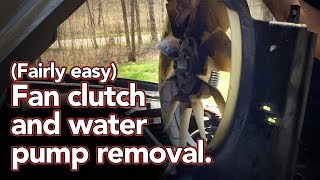
- Defective Electronic Fan Clutch (Very Common) — The internal electronic components or clutch mechanism fails, causing it to lock up (spin too fast) or freewheel (spin too slow). Pre-2005 GM clutches are notoriously unreliable. 🎬 Watch: An easy step-by-step guide to replacing your fan clutch.
- Damaged Fan Clutch Wiring or Connector (Common) — The wiring harness leading to the fan clutch frays, corrodes, or melts from heat and vibration. This interrupts the signal between the PCM and the fan clutch, often where the harness rubs against the fan shroud.
- Shorted 5-Volt Reference Circuit (Common) — The fan clutch speed sensor shares a 5-volt reference circuit with critical sensors like the Accelerator Pedal Position (APP) sensor. A short-to-ground in the fan clutch wiring pulls this circuit down, triggering P1484, P1221, and 'Reduced Engine Power' mode.
- Failed Fan Control Relay (Less Common) — The relay sending the pulse-width modulated (PWM) signal to the fan clutch fails, preventing the PCM from controlling fan speed.
- Damaged Fan Blade or Shroud (Less Common) — A warped fan blade causes imbalance, or a broken shroud allows the fan to make contact. This alters fan speed and triggers the code.
- Low System Voltage (Rare) — A weak battery or failing alternator drops voltage below the 8.5 volts required for the fan control system to operate correctly.
- Faulty Powertrain Control Module (PCM) (Very Rare) — The driver circuit within the PCM controlling the fan clutch fails. Consider this only after exhaustively checking wiring and connectors.
Symptoms
- Loud Roaring Noise from Engine Bay — A seized fan clutch spins at maximum speed constantly, creating a loud noise that sounds like a jet engine during acceleration.
- Engine Overheating at Low Speeds or Idle — If the fan clutch fails to engage, it pulls insufficient air through the radiator in traffic, causing the engine temperature to rise.
- Reduced Engine Power Warning — On GM vehicles, this fault triggers a 'Reduced Engine Power' or 'Limp Mode,' severely limiting acceleration as a protective measure.
- Poor Fuel Economy and Sluggish Performance — A constantly engaged fan puts parasitic drag on the engine, reducing power and hurting gas mileage by up to 15%.
- A/C System Not Blowing Cold at Idle — If the fan fails to engage at idle, insufficient airflow across the condenser prevents the A/C from cooling the cabin effectively.
- Check Engine Light is On (also visible on scanner) — The PCM illuminates the Malfunction Indicator Lamp (MIL) after detecting the fault on consecutive trips.
Diagnostic Flowchart
Tap your situation to follow the diagnostic path that matches what you're seeing on this code.
Common Fixes & Costs
- Replace Electronic Fan Clutch
— Parts: $200-$350, Labor: $150-$250, ~1.5 hr book time
(Intermediate)
Chevrolet Trailblazer / GMC Envoy: OEM GM 25790869 (Alt: Dorman 622-001, Hayden 3200, ACDelco 15-40133) - Repair Fan Clutch Wiring Harness — Parts: $10-$50, Labor: $100-$150, ~1.0 hr book time (Intermediate)
- Replace Water Pump and Fan Clutch Together — Parts: $300-$500, Labor: $300-$450, ~3.0 hr book time (Intermediate)
- Replace Fan Control Relay — Parts: $20-$40, Labor: $0-$50, ~0.2 hr book time (DIY)
- Replace Powertrain Control Module (PCM) — Parts: $300-$800, Labor: $150-$300, ~1.5 hr book time (Professional)
Used vs. New Parts: Buying Guide
When a used part is worth it: Buying a used electronic fan clutch is never recommended. The failure rate on original GM parts is exceptionally high, making a used part a poor gamble.
Donor-vehicle mileage cap: roughly under 60000 miles for the part to have meaningful remaining life.
Donor quality checklist:
- Verify the part is from a vehicle scrapped for non-engine reasons.
- Avoid parts from rust-belt states due to connector corrosion.
- Match the part number exactly to avoid PCM flashing issues.
Decision logic:
- If Vehicle is a 2002-2009 GM SUV (Trailblazer, Envoy, etc.) → Buy a new, quality aftermarket or OEM part. The original design was flawed.
- If Budget is the absolute primary concern and the vehicle has over 150k miles → A used part is a high-risk option but may function temporarily. Expect to replace it again.
- If The goal is a long-term, reliable repair → Buy new. The cost savings of a used part are eliminated by repeat labor costs.
Warranty tradeoff: Used parts offer a 30-90 day warranty. New aftermarket parts come with a 1-year to lifetime warranty. OEM parts have a 12-month warranty.
Worst-case if a used part fails: $150-$250 in repeat labor costs if a used part fails after the warranty period.
What Happens If You Wait — Timeline
- 0-1 month: Code P1484 sets. If failed 'off', A/C performance drops at idle. If seized 'on', a loud roar is constant and fuel economy drops. (MPG impact: 5-15%% · Added cost: $0-$50 in wasted fuel.)
- 1-4 months: A seized clutch wears out the water pump bearing. A failed-off clutch causes minor overheating events in city driving, stressing the head gasket. (MPG impact: 10-20% (if seized)% · Added cost: $50-$150 in wasted fuel. Risk of water pump failure increases.)
- 4-8 months: A seized clutch causes complete water pump bearing failure. A failed-off clutch leads to a major overheating event (240°F+), blowing the head gasket. (MPG impact: 10-20%+% · Added cost: $400-$800 for a water pump, or $1,500-$3,000 for head gasket repair.)
- 8+ months: Ignoring severe overheating cracks the cylinder head or engine block, leading to catastrophic engine failure. (MPG impact: N/A (vehicle likely undrivable)% · Added cost: $5,000-$8,000+ for engine replacement.)
Cost of Not Fixing It
- 0-1 month: Noticeable 5-15% drop in fuel economy and poor A/C performance at idle. A seized clutch creates a constant loud roaring noise. (Added cost: $50-$150 in extra fuel costs.)
- 1-6 months: A seized fan clutch destroys the water pump bearing. A disengaged clutch causes engine overheating in traffic, risking head gasket damage. (Added cost: $400-$800 for water pump replacement, or $1,500-$3,000 for head gasket repair.)
- 6+ months: Catastrophic engine failure due to repeated overheating events warping cylinder heads or cracking the engine block. (Added cost: $5,000-$8,000+ for engine replacement.)
Diagnosis Steps
- Verify the Code and Check Freeze Frame Data
Use an OBD-II scanner to confirm P1484. Check freeze frame data for engine conditions when the code set. Note any other codes (e.g., P1481, P1221, P0526, P0495) as they provide critical diagnostic shortcuts.
Tools: OBD-II Scanner (Beginner) - Listen to the Fan Operation
Start the cold engine. The fan roars loudly for a minute, then quiets down. If the roar is constant and never stops, the clutch is seized. If the engine gets hot in traffic and you never hear the fan engage, it has failed in the 'off' position.
Tools: None (Beginner) - Perform a Visual and Physical Inspection
With the engine OFF, inspect the fan clutch wiring harness for damage, chafing, or corrosion near the fan shroud. Grasp the fan blade and push it in and out; wobble exceeding 2mm indicates a failed water pump bearing. Spin the fan by hand; it should have resistance and stop within 1-2 rotations.
Tools: Flashlight, Wrench/Socket for belt tensioner (Beginner) - Command Fan Speed and Monitor Live Data
Using a bidirectional scan tool, command the fan speed to 25%, 75%, and 90%. Monitor the 'Actual Fan Speed' PID. If the PCM sends the command but the actual RPM stays at 0 or doesn't match the desired speed, the fan clutch assembly is faulty.
Tools: Bidirectional Scan Tool (Intermediate) - Check for Power, Ground, and 5V Reference
Disconnect the fan clutch electrical connector. Check for battery voltage on the power wire and continuity to ground on the ground wire (<0.5 ohms). Check the 5-volt reference wire for a stable 5V supply from the PCM. Readings outside 4.8V-5.2V indicate circuit or PCM issues.
Tools: Multimeter, Vehicle-specific wiring diagram (Intermediate) - Fan Clutch Solenoid Resistance Test
Test the internal resistance of the fan clutch solenoid at the connector pins. A typical GM clutch reads between 5 and 15 ohms. Infinity (open circuit) or near zero (short circuit) confirms an electrically failed solenoid requiring replacement.
Tools: Multimeter (Ohms), Service Manual (Advanced) - [PRO TIP] Test the PCM Control Signal
Probe the signal wire from the PCM with a multimeter set to duty cycle. With the engine running, command the fan to 50% via scan tool. The multimeter must show a ~50% duty cycle. A mismatch points to a wiring or PCM driver issue.
Tools: Bidirectional Scan Tool, Multimeter with Duty Cycle (Advanced) - [PRO TIP] Analyze the Fan Speed Sensor Signal
Connect an oscilloscope to the fan speed sensor signal wire. A spinning fan produces a clean square wave pattern increasing in frequency. Missing or erratic patterns confirm a failed Hall-effect sensor inside the clutch.
Tools: Oscilloscope, Wiring Diagram (Advanced)
When This Code Triggers (Freeze-Frame Conditions)
- Engine Coolant Temp: 185-220°F (85-104°C) (Engine is fully warmed up and under load.)
- Engine RPM: 1200-2500 RPM (During steady cruise or light acceleration, not at idle.)
- Vehicle Speed: 25-55 mph (40-90 kph) (Triggers during city or highway cruise conditions where fan speed is actively managed.)
- Desired vs. Actual Fan Speed: >800 RPM difference (The PCM commands a specific RPM but the fan's speed sensor reports a significantly different value for a set duration.)
Related Codes
- P1481 — Indicates an electrical fault in the fan speed control circuit. If you only have P1484, the mechanical clutch or internal sensor is the culprit. If you have P1481, focus on wiring and relays.
- P1482 — Indicates a fault with the fan relay circuit. A failed relay prevents the fan from activating, which subsequently causes the performance code P1484 to set.
- P0495 — Means 'Fan Speed High'. It is the direct cause for P1484 when the fan clutch seizes and spins too fast. Having both codes strongly suggests a mechanically locked clutch.
- P0526 — Means 'Fan Speed Sensor Circuit Malfunction'. This points directly to an electrical problem with the speed sensor inside the fan clutch or its wiring.
- P1221 / P1271 — Accelerator pedal position sensor codes. On GM trucks, their appearance alongside P1484 guarantees the shared 5-volt reference circuit is shorted by the fan clutch wiring.
Climate & Environmental Factors
- High Ambient Temperatures: Hot weather and stop-and-go traffic place maximum demand on the cooling system, making a pending fan clutch failure obvious via overheating.
- High Humidity and/or Road Salt (Rust Belt): Moisture and salt accelerate corrosion of the electrical connector pins, increasing circuit resistance and triggering performance codes.
- Extreme Cold: A fan clutch seized in the 'on' position over-cools the engine in winter, preventing optimal operating temperatures and ruining heater performance.
How to Talk to a Mechanic About This Code
Say this: "I have a P1484 code on my [Make, Model]. I'd like to schedule a diagnostic. If the 'Reduced Engine Power' light is also on, please specifically check the fan clutch wiring harness for shorts to the 5-volt reference circuit before recommending a new fan clutch."
This directs the technician to check for a cheaper wiring fix first, potentially saving you from buying an expensive fan clutch unnecessarily. Mentioning the 5V circuit shows you understand the complex electrical nature of this code.
Avoid saying:
- 'My car is making a loud roaring noise.'
- 'My check engine light is on, can you just fix it?'
- 'I think I need a new fan clutch.' (Don't diagnose for them)
Questions to ask before authorizing the repair:
- Did you test the fan clutch with a bidirectional scanner to command different speeds?
- Did you check the 5-volt reference at the fan clutch connector? What was the voltage?
- Did you inspect the full length of the wiring harness for chafing near the shroud?
- If recommending a water pump, can you explain why it needs replacement?
- Does the new fan clutch part number require a PCM flash to work correctly?
Where to Take It: Dealer vs Independent vs Chain
- Dealer:
Best for: Vehicles where a new fan clutch requires a PCM software flash., Complex electrical issues where factory tools are essential., Vehicles under extended warranty.
Downsides: Highest labor rates., May replace the entire fan clutch assembly without checking for a simpler wiring fault. (Typical cost: +50% vs. baseline) - Independent Shop:
Best fit for most cases. This is a bread-and-butter repair for independent shops. Ask if they can perform a PCM flash if needed before committing.
Best for: Most out-of-warranty GM vehicles where this is a well-understood repair., Cost-effective diagnosis and labor rates.
Downsides: May lack the equipment to perform a PCM flash if required for an updated part. (Typical cost: +0% vs. baseline) - Chain Shop:
Use with caution. Acceptable for a straightforward fan clutch replacement, but not recommended for initial diagnosis if 'Reduced Engine Power' warnings are present.
Best for: Getting the code read for free.
Downsides: High pressure to sell parts leads to quick fan clutch replacements without proper wiring diagnosis., Unlikely to handle 5-volt reference shorts or PCM flashing. (Typical cost: -10% vs. baseline)
When to Walk Away From the Repair
If the estimated repair cost exceeds 50% of the car's private-party value, seriously consider selling or trading in the vehicle.
- Car worth $4000, fix is $600: Fix it. The repair cost is well below the 50% threshold and restores critical engine function.
- Car worth $2500, fix is $1300: Borderline. This repair is over 50% of the car's value. Get a second opinion, and consider if the car needs other major repairs soon.
- Car worth $1800, fix is $1500: Walk away. The repair cost is almost the entire value of the car. It is not economical to proceed.
What Scan Tool You Need for This Code
Minimum: A bidirectional scan tool that commands the cooling fan speed.
A basic $20 code reader only shows the P1484 code. It cannot command the fan to turn on and off to see if the clutch responds, leaving you guessing between the clutch, wiring, or computer.
Budget: Thinkdiag2 / Kingbolen Ediag Elite (~$95) — These Bluetooth dongles offer full bidirectional control, allowing you to command the fan speed percentage and monitor actual RPM to confirm clutch response.
Mid-range: Foxwell NT510 Elite / XTOOL D7 (~$150-350) — These handheld scanners offer full bidirectional control and better live data graphing, useful if P1484 is combined with other electrical issues.
Professional: Autel MaxiCOM MK808BT (~$450-600) — Provides robust bidirectional control and OE-level diagnostics. Wireless Bluetooth connectivity makes it easier to work around the engine bay while commanding the fan.
Rent vs buy: Auto parts store 'loaner' tools lack the bidirectional capability needed for this code. Buy a budget-friendly Bluetooth dongle for a one-time fix, or invest in a mid-range tool for ongoing DIY repairs.
How to Clear the Code After You Fix It
- Use an OBD-II scan tool to clear the P1484 code.
- Reconnect any disconnected components.
- Perform a complete GM drive cycle to allow readiness monitors to run.
Drive cycle (~25 minutes): From a cold start, idle for 3 minutes with A/C on. Turn A/C off, accelerate to 55 mph and hold for 3 minutes. Coast down to 20 mph without braking. Accelerate to 60 mph and hold for 5 minutes. Coast down again.
Readiness monitors affected: Catalyst Monitor, Oxygen (O2) Sensor Monitor, Evaporative (EVAP) System Monitor
Before emissions retest: drive at least 100 miles to fully set monitors.
Watch out for:
- Disconnecting the battery clears the code but resets all readiness monitors to 'Not Ready', causing an automatic emissions failure.
- The code returns immediately if the underlying mechanical or electrical fault remains.
- GM vehicles require up to five individual drive cycles before the catalyst monitor completes its test.
Will This Fail Emissions / State Inspection?
Yes — this code typically fails an OBD-II emissions inspection.
- California: An illuminated Check Engine Light from P1484 is an automatic failure. All readiness monitors must be 'Ready' for the test to proceed.
- New York: NYS inspection includes an OBD-II scan. P1484 causes an automatic failure. You must repair the fault and complete the drive cycle before re-testing.
- Texas: In emissions-testing counties, an active P1484 code is an automatic failure. After repair, you can have at most one readiness monitor 'Not Ready' to pass.
Most Commonly Affected Vehicles
- Chevrolet TrailBlazer (2002-2009) — Extremely common issue. Pre-2005 models had highly unreliable clutches. Later replacements may require a PCM reflash.
- GMC Envoy (2002-2009) — Shares the GMT360 platform and 4.2L engine with the TrailBlazer, making it equally susceptible.
- Oldsmobile Bravada (2002-2004) — The Oldsmobile counterpart to the TrailBlazer, using the identical powertrain and fan clutch assembly.
- Isuzu Ascender (2003-2008) — A rebadged version of the GM GMT360 platform experiencing identical P1484 problems.
- Saab 9-7x (2005-2009) — Built on the GM platform, known for this code due to fan clutch failure.
- Nissan Qashqai / Rogue Sport (1.5 dCi Diesel) (2012-2018) — P1484 indicates a fault with the exhaust flap valve sensor in the DPF system, not the cooling fan.
- Renault Clio / Captur (1.5 dCi Diesel) (2016-2023) — P1484 points to a problem with the DPF or exhaust flap valve system.
- Ford Various Models (e.g., Mustang, Explorer) (1996-2004) — P1484 is defined as 'Open Power To Ground VCRM' (Variable Control Relay Module), controlling the fan, fuel pump, and A/C.
Manufacturer-Specific Notes
- Ford: P1484 means 'Open Power To Ground VCRM' (Variable Control Relay Module). This is an electrical circuit fault within the module, not a fan performance code.
- Renault / Nissan: For 1.5 dCi diesel models, P1484 points to a faulty reading from the exhaust flap valve sensor in the DPF system. It is unrelated to engine cooling.
- Volkswagen / Audi: P1484 indicates a fault in the Exhaust Gas Recirculation (EGR) system or a 'Secondary Air Injection Pump Relay 2 Electrical Circuit Malfunction'.
- Porsche: P1484 indicates high pressure in the EVAP system, pointing to a fault in the fuel vapor management system.
- General Motors: A TSB for 2002-2005 GM utilities notes that codes P1221 and P1271 appearing with P1484 are caused by the fan clutch wiring harness shorting the 5V reference circuit.
Real Owner Stories
2002 Chevy Trailblazer LTZ - P1484 with 'Reduced Engine Power'
Owner replaced a locked-up fan clutch. A month later, 'Reduced Engine Power' (REP) illuminated alongside P1484.
What they tried:
- Dealer misdiagnosed a bad thermostat and replaced it.
- Dealer suspected a bad PCM because it wouldn't accept a new flash.
- Owner traced the issue to a wiring short on the shared 5-volt reference circuit.
Outcome: The final resolution involved troubleshooting the wiring harness for shorts and disconnecting aftermarket electronics before successfully flashing the PCM.
Lesson: If P1484 accompanies 'Reduced Engine Power,' the fan clutch wiring harness is shorting the 5V reference circuit. Do not replace the PCM without checking wiring first.
2002 Oldsmobile Bravada - P1484 code returns constantly
P1484 triggered. The owner saw and heard the fan working, so they cleared the code, but it returned every 50 miles.
What they tried:
- Cleared the code repeatedly, assuming a false positive.
Outcome: Mechanic confirmed the internal Hall-effect speed sensor within the fan clutch failed. The PCM wasn't getting a correct speed signal, requiring a full clutch replacement.
Lesson: A visibly spinning fan does not mean the clutch works correctly. A failed internal sensor is an invisible failure that requires replacing the entire assembly.
2016 Renault Clio 1.5 dCi - P1484 with 'Check Injection System'
P1484 appeared with anti-pollution warnings and poor fuel economy on this diesel vehicle.
What they tried:
- Replaced sensors and paid £200 for a professional DPF cleaning.
- Inspected the exhaust flap motor mechanically.
Outcome: The code returned. Expert advice confirmed P1484 on this specific vehicle points to a faulty reading from the exhaust flap valve sensor, unrelated to the cooling fan.
Lesson: P1484 is manufacturer-specific. On modern Renault/Nissan diesels, it points to the DPF and exhaust system. Always verify the code definition for your exact make.
How to Prevent This Code From Triggering
- Inspect and Secure the Fan Clutch Wiring Harness (Every oil change) — Wiring is the second most common failure point. Securing the harness away from the spinning fan and hot engine components prevents chafing and shorts.
- Clean Debris from Radiator and Condenser Fins (Annually, before summer) — Blocked airflow forces the fan clutch to work harder and longer to maintain engine temperature, accelerating wear on the clutch mechanism.
- Maintain Cooling System Health (Every 5 years or 100,000 miles) — Old coolant causes internal water pump corrosion. A failing water pump bearing creates wobble that physically destroys the fan clutch mounted to it.
Frequently Asked Questions
Can I just ignore P1484 if my car isn't overheating?
No. A faulty fan clutch causes reduced engine power, poor AC performance, and bad fuel economy. If seized, it puts constant strain on the water pump bearing, leading to a $400-$800 water pump failure.
My fan is spinning. Doesn't that mean the fan clutch is working?
Not necessarily. The fan always spins to some degree with the engine. The error occurs when it spins too fast (locked up) or too slow (not engaging) compared to the computer's commanded speed.
I replaced the fan clutch and the P1484 code came back. What now?
The problem is almost certainly in the wiring harness between the clutch and the PCM. Carefully inspect the entire harness for breaks, chafing, or corrosion, especially the 5-volt reference wire. Also, ensure the replacement part is compatible, as some newer designs require a PCM software update.
Why did my car go into 'Reduced Engine Power' mode with a fan code?
The fan clutch speed sensor shares a 5-volt reference circuit with critical sensors like the accelerator pedal position (APP) sensor. A short in the fan clutch wiring disrupts this shared circuit, causing the computer to lose track of throttle position. The PCM triggers limp mode as a safety measure to prevent unintended acceleration.
What is the most common misdiagnosis for P1484?
On GM vehicles, the most common mistake is replacing the fan clutch when the actual problem is a chafed wiring harness. Another frequent error is replacing the accelerator pedal when P1484 appears with pedal codes, missing the 5V reference short.
Can a bad water pump cause a P1484 code?
Indirectly, yes. A failing water pump bearing causes the fan to wobble. This wobble damages the fan clutch's internal sensor or external wiring harness, triggering the code.
What tool do I need to remove the fan clutch on a Trailblazer?
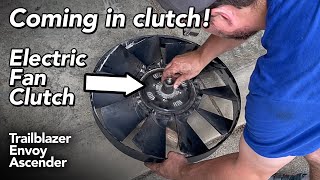
You need a special fan clutch wrench set, available as a loaner tool from auto parts stores. One 36mm wrench fits the large nut, and another tool holds the water pump pulley still. It uses a standard right-hand thread (counter-clockwise to loosen).
Key Takeaways
- P1484 almost always indicates a failed electronic fan clutch on 2002-2009 GM SUVs like the Chevy TrailBlazer and GMC Envoy.
- Verify your vehicle's make before diagnosing; P1484 means 'Cooling Fan Performance' on GM, but points to DPF failures on Nissan/Renault diesels and VCRM faults on Fords.
- Listen for a constant 'jet engine' roar or watch for overheating at idle, which confirm the fan clutch is either seized or failing to engage.
- Inspect the fan clutch wiring harness for chafing before buying parts; damaged wires cause a large percentage of P1484 codes and cost under $50 to fix.
- Check for accelerator pedal codes (P1221/P1271) alongside P1484; this combination guarantees the fan clutch wiring is shorting the shared 5-volt reference circuit.
Helpful Videos


Shop the Parts Behind P1484
Below are the parts most often responsible for code P1484, ranked by how frequently each one is the actual culprit (per the diagnosis above). Tap any to see what we have for your vehicle.


The information in this article is provided for general reference and educational purposes only. Vehicle specifications, procedures, and part compatibility can vary by production date, trim level, and region. Always consult your vehicle's factory service manual and verify part numbers before purchasing or performing repairs. Safety-critical components such as airbags, seat belts, and braking systems should be installed by a qualified professional.
- 🧭 Diagnostic Flowchart
- 🎬 Helpful Videos
- 🛍️ Shop This Part
- What Does P1484 Mean?
- Can I Drive With P1484?
- Common Causes
- Symptoms
- Common Fixes & Costs
- Used vs. New Parts: Buying Guide
- What Happens If You Wait — Timeline
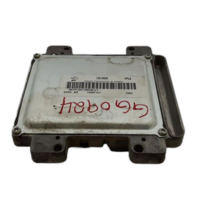
- Cost of Not Fixing It
- Diagnosis Steps
- When This Code Triggers (Freeze-Frame Conditions)
- Related Codes
- Climate & Environmental Factors
- How to Talk to a Mechanic About This Code
- Where to Take It: Dealer vs Independent vs Chain
- When to Walk Away From the Repair
- What Scan Tool You Need for This Code
- How to Clear the Code After You Fix It
- Will This Fail Emissions / State Inspection?
- Most Commonly Affected Vehicles
- Manufacturer-Specific Notes
- Real Owner Stories
- 2002 Chevy Trailblazer LTZ - P1484 with 'Reduced Engine Power'
- 2002 Oldsmobile Bravada - P1484 code returns constantly
- 2016 Renault Clio 1.5 dCi - P1484 with 'Check Injection System'
- How to Prevent This Code From Triggering
- Frequently Asked Questions
- Can I just ignore P1484 if my car isn't overheating?
- My fan is spinning. Doesn't that mean the fan clutch is working?
- I replaced the fan clutch and the P1484 code came back. What now?
- Why did my car go into 'Reduced Engine Power' mode with a fan code?
- What is the most common misdiagnosis for P1484?
- Can a bad water pump cause a P1484 code?
- What tool do I need to remove the fan clutch on a Trailblazer?
- Key Takeaways
- 🎟️ Get 5% Off