

P1488 on 2020 GMC Sierra 2500: Particulate Matter Sensor Fault Causes and Fixes
On a 2020 GMC Sierra 2500 with the 6.6L Duramax L5P engine, code P1488 is most frequently caused by a faulty Particulate Matter (PM) sensor, a diagnosis supported by multiple GM Technical Service Bulletins (TSBs) that recommend its replacement. Another common cause is an exhaust leak at the joint just before the sensor, which allows air to be drawn into the exhaust, skewing sensor readings. Diagnosis involves a smoke test for leaks, followed by sensor replacement if no leaks are found.
- P1488 on a 2020 Sierra 2500 Duramax is very specific and almost always relates to the Particulate Matter (PM) sensor or an exhaust leak just before it.
- Before buying a new sensor, perform a thorough inspection of the exhaust system for leaks, as this is a known cause cited in a GM service bulletin.
- The most probable fix is replacing the Particulate Matter sensor itself, a repair supported by multiple TSBs from the manufacturer.
- The repair is manageable for a DIYer with moderate experience, but ensure you have the correct tools (like a sensor socket) and check if a scan tool is needed for a relearn procedure afterward.
What's Unique About the 2020-2020 Gmc SIERRA 2500

This specific model year and its platform mates (Chevrolet Silverado 2500/3500) with the L5P engine are known to have issues with the P1488 code, to the point that General Motors has released multiple Technical Service Bulletins (TSBs). These bulletins acknowledge that the code can set falsely and provide specific diagnostic steps. Initial guidance in TSBs like PIP5748D was to investigate potential false failures and exhaust leaks, but this was later updated in the authoritative TSB #PIP5748F to explicitly instruct technicians to replace the particulate matter sensor. TSB 21-NA-095 further details a common issue with an exhaust leak between the Under Floor Selective Catalyst Reduction (UFSCR) unit and the tailpipe, which can draw in air and cause the fault.
Diagnostic Flowchart

Tap your situation to follow the diagnostic path that matches what you're seeing on this vehicle.
Symptoms You May Notice

- Check Engine Light (Malfunction Indicator Lamp) is on
- "Service Emission System" message on the driver information center
- Reduced engine power or "limp mode"
- Vehicle may fail to perform DPF regeneration cycles
- Unstable idle during DPF regeneration attempts
- Replacing the Diesel Particulate Filter (DPF) unnecessarily. The P1488 code relates to the sensor that *monitors* the DPF, not usually the filter itself. A faulty sensor can prevent regeneration, leading to a clogged DPF, but the sensor is the root cause.
- Replacing NOx sensors. While part of the same system, the P1488 code is specific to the Particulate Matter sensor.
- Ignoring the exhaust leak. Some may replace the sensor first, only to have the code return because the underlying cause was a small, hard-to-detect exhaust leak.
Most Likely Causes

- Faulty Particulate Matter (PM) Sensor 🔴 High Probability GM has issued multiple TSBs (e.g., PIP5748F, PIP5748D) that directly call for the replacement of the PM sensor to resolve this code, indicating a known issue with the component on this model year. This is the most common resolution after exhaust leaks are ruled out.
How to confirm: After confirming there are no exhaust leaks or wiring issues, replacing the sensor is the most direct confirmation, as per GM's service bulletins. A diagnostic scan tool can be used to monitor the sensor's live data for readings that are stuck, erratic, or illogical compared to engine load and other exhaust sensor data.
Typical fix: Replace the Particulate Matter sensor located in the exhaust system, downstream of the DPF. After replacement, a sensor relearn procedure may be required using a GM-specific scan tool.
Est. part cost: $150-$250 - Exhaust Leak Before the PM Sensor 🟡 Medium Probability TSB 21-NA-095 specifically identifies an exhaust leak between the NOx catalytic converter/UFSCR and the rear exhaust pipe as a primary cause for code P1488. A leaking clamp or seal can introduce fresh air between exhaust pulses, which the PM sensor interprets as a fault. TSB PIP5748D also highlights checking for misaligned joints that may not seal properly even without an obvious leak.
How to confirm: Perform a visual inspection for soot trails around exhaust joints and clamps. A smoke test of the exhaust system is the most effective method to pinpoint leaks. Per TSB PIP5748D, the smoke may need to be introduced downstream of the DPF to be effective.
Typical fix: Replace the leaking exhaust clamp (GM P/N 84283544) and/or graphite seal. TSB 21-NA-095 was updated in January 2023 to recommend installing a new graphite seal instead of the previous 'Tiger Patch' tape method. Ensure pipe surfaces are clean and the new clamp is torqued to specification (28 Nm or 21 lb ft).
Est. part cost: $30-$60 - Damaged Wiring or Connector ⚪ Low Probability The wiring harness for exhaust sensors is exposed to harsh conditions. TSB 21-NA-149 notes that engine harness chafing against the frame, shock tower, or brackets can cause a variety of codes, including P1488, on GM trucks. The bulletin advises checking specific locations for harness contact. Poor ground connections, such as at G110 and G114, are also a known issue 🎬 See: Expert diagnostic tips for the Duramax L5P platform on this platform causing various electrical faults.
How to confirm: Visually inspect the PM sensor's wiring harness and connector for any signs of melting, corrosion, chafing, or loose pins. Gently pull on the individual wires at the connector to check for internal breaks. Check and clean main chassis and engine block ground connections, particularly G110 and G114.
Typical fix: Repair the damaged section of the wire or replace the connector pigtail. Secure the harness away from heat sources or sharp edges using sleeves and zip-ties. Clean, tighten, and protect corroded ground connections.
Est. part cost: $15-$40
Rare But Worth Checking
- ECM Software Anomaly:
Diagnosis Steps
- Scan the ECM for P1488 and any other related trouble codes. Note if P24DA is also present, as this is common.
- Perform a thorough visual inspection of the entire exhaust system from the DPF back. Look for signs of soot or black marks at clamps and joints, which indicate an exhaust leak.
- Conduct an exhaust system smoke test to confirm any suspected leaks. Per TSB guidance, it may be necessary to introduce smoke *after* the DPF to ensure it reaches the PM sensor area. Pay close attention to the clamp between the UFSCR/NOx converter and the rear pipe.
- If a leak is found, repair it by replacing the clamp and the graphite seal as per the latest revision of TSB 21-NA-095. Torque the new clamp to 28 Nm (21 lb ft).
- If no leaks are found, carefully inspect the Particulate Matter sensor's wiring harness and connector for any signs of damage, melting, or corrosion, paying attention to known chafe points. Inspect and clean critical ground locations like G110 and G114.
- Check that the PM sensor itself is securely tightened into the exhaust pipe. A loose sensor was an initial check mentioned in early TSBs.
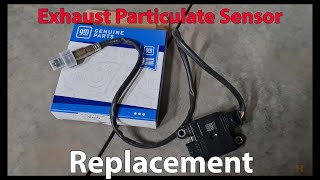
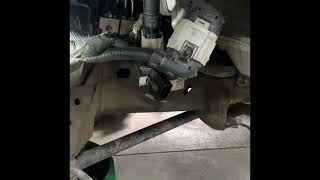
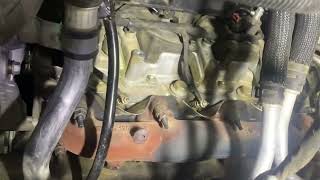
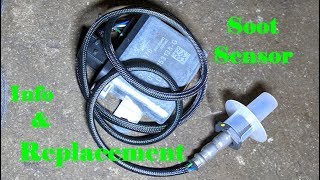
- If no exhaust leaks or wiring faults are found, the most likely cause is a failed Particulate Matter sensor. Replace the sensor (GM P/N 12696927). 🎬 Watch: Step-by-step guide to replacing a particulate matter sensor
- After replacement, clear all diagnostic trouble codes. A relearn or reset procedure for the new sensor is required using a capable scan tool (like the GM GDS2) to ensure the ECM recognizes the new component correctly.
Parts You'll Likely Need
- Particulate Matter Sensor
(OEM #12696927)— This is the most common failure part for code P1488 on this vehicle, as identified by multiple GM Technical Service Bulletins.
Trusted brands: ACDelco (GM OE), Bosch
OEM price range: $200-$250
Aftermarket price range: $150-$200 - Exhaust Pipe Clamp
(OEM #84283544)— If an exhaust leak is found at the UFSCR joint, this specific clamp must be replaced to fix the root cause, as per TSB 21-NA-095 and PIP5748D.
Trusted brands: ACDelco (GM OE)
OEM price range: $30-$50
Aftermarket price range: $20-$40 - Exhaust System Seal (Graphite)
(OEM #Not specified in TSB, must be sourced based on application.)— The latest revision of TSB 21-NA-095 (Jan 2023) specifies replacing the graphite seal at the leaking joint, superseding the previous repair that used special tape.
Trusted brands: ACDelco, Walker Exhaust
OEM price range: $10-$20
Aftermarket price range: $5-$15
Related Codes That Often Appear With This One
- P24DA — This code is for 'Particulate Matter Sensor Protection Tube Performance' and is often set alongside P1488, as they relate to the same component and are mentioned together in GM service bulletins like PIP5748D and 21-NA-095.
Technical Service Bulletins (TSBs) & Recalls
- PIP5748F: Recommends replacement of the particulate matter sensor to resolve P1488.
- PIP5748D: Details diagnostic steps for a potential false P1488, including checking for exhaust leaks and joint misalignment before replacing the sensor.
- 21-NA-095: Identifies exhaust leaks at the UFSCR/tailpipe joint as a primary cause for P1488 and provides a repair procedure involving a new clamp and seal.
- 21-NA-149: Notes that engine harness chafing can be a potential cause for P1488 among other codes, and shows specific areas to inspect.
Platform-Specific Known Issues
- TSB PIP5748F: Explicitly instructs technicians to replace the particulate matter sensor for a P1488 code.
- TSB PIP5748D/E: Details diagnostic steps for a potential false P1488/P24DA, including checking for exhaust leaks and joint misalignment before replacing the sensor.
- TSB 21-NA-095: Details a common cause being an exhaust leak between the NOx catalytic converter (UFSCR) and the rear exhaust pipe. The repair procedure was updated in Jan 2023 to use a new graphite seal and clamp instead of tape.
- Owner Experience: A forum member on AT4-Forum.com with a 2021 3.0L Duramax (a platform mate with similar issues) reported that after multiple failed attemp
Mechanic-Grade Diagnostic Values
- High-Speed GMLAN Network Resistance — expected: Approximately 60 Ω when measured across Pins 6 and 14 of the Data Link Connector (DLC).. Failure: A reading of 120 Ω indicates one of the two terminating resistors is not being seen by the network. An open or shorted reading indicates a wiring fault. While not specific to P1488, it confirms the integrity of the communication network the PM sensor module uses.
Scan Tool Commands That Help
- GDS2 (GM Dealer Tool) or equivalent professional scanner: Service Regeneration / DPF Manual Regeneration — Use this command to manually initiate a DPF cleaning cycle. This is often necessary if the P1488 fault has prevented the system from performing automatic regenerations, leading to high soot load.
- GDS2 (GM Dealer Tool) or equivalent professional scanner: Particulate Matter Sensor Learn / Reset — This function must be performed after replacing the Particulate Matter sensor. It resets the ECM's learned values and allows it to correctly calibrate and communicate with the new sensor. Failure to perform this step can cause the P1488 code to return immediately.
Wiring & Ground Locations
- G110 and G114 — These are ground connections on 2019-2020 Sierra/Silverado models. While exact locations vary, they are primary grounds for various vehicle systems.. GM issued engineering information (PIE0548) to investigate issues caused by loose connections at these specific grounds. A poor ground can cause erratic voltage and unpredictable behavior from sensitive electronic modules and sensors, including the PM sensor, leading to false performance codes.
- Engine Block to Chassis Ground Strap — A braided ground strap typically located on the passenger side, connecting the rear of the engine block to the vehicle's frame/firewall.. This is a main ground for the engine's electrical system. Corrosion or breakage of this strap is a common issue that leads to a host of electrical problems, including sensor errors, communication faults, and low voltage conditions that could trigger a P1488 code.
Real Owner Repair Stories
- Reddit user 'Antenna_haircut' in r/Duramax (2021 with LM2 engine (similar emissions system)) — Check Engine Light with code P1488.
✅ What actually fixed it The user advised to first check for exhaust leaks around the converter and sensors. If no leaks with visible carbon buildup were found, the next step was to replace the soot sensor (Particulate Matter sensor), which resolved the issue for them.
"I Checked Everything" — The Actual Cause
- According to GM TSB PIP5748D, it is possible for the exhaust joint before the PM sensor to pass a smoke test but still be the root cause of the code. Misalignment of the joint, even without a detectable leak, can cause air to be drawn into the exhaust stream between exhaust pulses, which the PM sensor interprets as a performance fault. Technicians are advised to separate the joint and inspect the witness marks for proper alignment even if no smoke is seen.
OEM Part Supersession History
12696927→N/A— This is the primary OEM part number for the PM sensor on 2020 Sierra/Silverado 2500/3500 HD trucks.
Heads up: Be aware that different applications may use different sensors. For example, 2021-2023 Cab & Chassis models may use part number 12698454. Always verify the part number with the vehicle's VIN.
Model Year Variations Within This Range
- 2020+: While the 2020 Sierra 2500 uses PM sensor P/N 12696927, GM specifies a different part number (12698454) for later Cab & Chassis models. This highlights the importance of verifying the correct part for the specific vehicle configuration, as parts are not always interchangeable across the entire model line.
Helpful Videos
Used OEM Parts in Stock
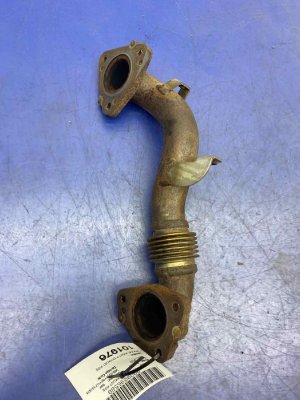
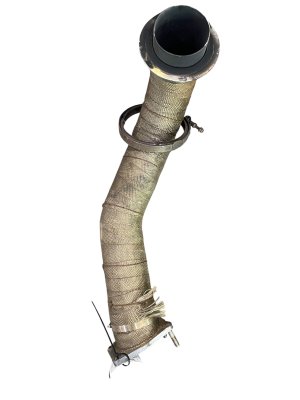
New Aftermarket Parts Available
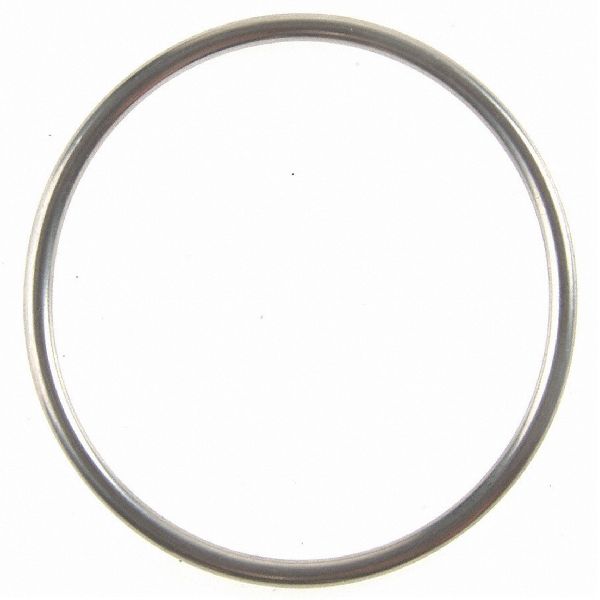
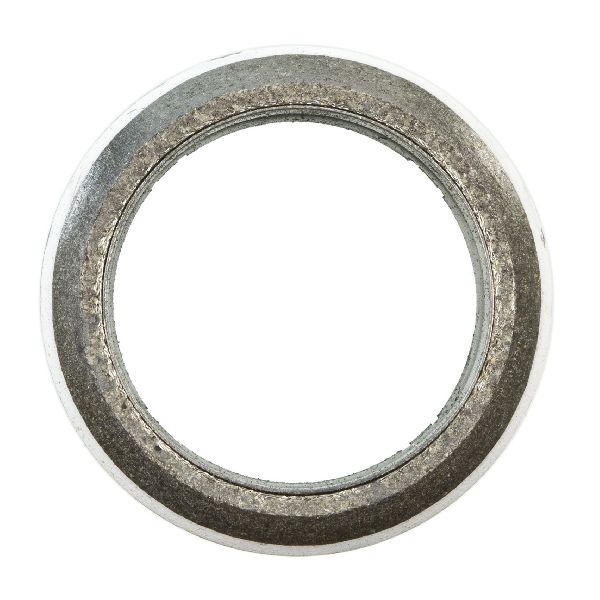

The information in this article is provided for general reference and educational purposes only. Vehicle specifications, procedures, and part compatibility can vary by production date, trim level, and region. Always consult your vehicle's factory service manual and verify part numbers before purchasing or performing repairs. Safety-critical components such as airbags, seat belts, and braking systems should be installed by a qualified professional.
- Gmc SIERRA 2500:
- 🧭 Diagnostic Flowchart
- 🎬 Helpful Videos
- 🛍️ Shop This Part
- What's Unique About the 2020-2020 Gmc SIERRA 2500
- Symptoms You May Notice
- Most Likely Causes
- Rare But Worth Checking
- Diagnosis Steps
- Parts You'll Likely Need
- Related Codes That Often Appear With This One
- Technical Service Bulletins (TSBs) & Recalls
- Platform-Specific Known Issues
- Mechanic-Grade Diagnostic Values
- Scan Tool Commands That Help
- Wiring & Ground Locations
- Real Owner Repair Stories
- "I Checked Everything" — The Actual Cause
- OEM Part Supersession History
- Model Year Variations Within This Range
- 🎟️ Get 5% Off