

OBD-II Code P1492: A Comprehensive Guide to Its Many Meanings
What P1492 means, why it triggers, and how to fix it on your vehicle
- Verify your vehicle's specific manufacturer definition for P1492, as it means 'Battery Temperature Sensor High' on a Jeep but 'EVAP Purge Valve Circuit' on a Nissan.
- On Chrysler, Dodge, and Jeep vehicles, P1492 triggers when the Powertrain Control Module detects a battery temperature sensor signal voltage above 4.9 volts for more than 3 seconds.
- Inspect the sensor wiring harness first, as 80% of P1492 codes result from an unplugged connector, corroded terminal, or pinched wire rather than a failed sensor.
- Do not replace your battery or alternator for a Chrysler P1492 code until you test the $40 battery temperature sensor, which dictates the alternator's charging rate.
What Does P1492 Mean?
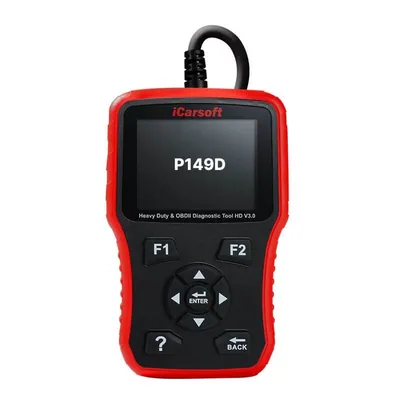
P1492 is a manufacturer-specific code, meaning its definition changes based on your vehicle's make. For Chrysler, Dodge, Jeep, and Mitsubishi, it signals high voltage in the Battery Temperature Sensor circuit. For Nissan and Infiniti, it points to a fault in the EVAP Canister Purge Control Valve or a wheel speed sensor. For Subaru, it indicates an electrical issue within the EGR system.
Technical definition: The SAE/OBD-II definition for P1492 varies by manufacturer. Common definitions include: 'Battery Temperature Sensor Voltage Too High' (Chrysler/Dodge/Jeep/Mitsubishi), 'EVAP Canister Purge Control Valve/Solenoid Circuit' (Nissan/Infiniti), 'EGR Solenoid Valve Signal 1 Circuit Malfunction Low Input' (Subaru), and 'Right Front Wheel Speed Sensor Circuit Erratic Signal' (Nissan).
Can I Drive With P1492?
Yes, But With Caution. You can safely drive with a P1492 code, but address it promptly. On Chrysler/Jeep/Dodge vehicles, ignoring it causes an undercharged battery and no-start conditions in cold weather. On Nissan models, a stuck-open EVAP valve reduces fuel economy and damages the catalytic converter over time. In all cases, an active P1492 automatically fails state emissions tests.
Common Causes
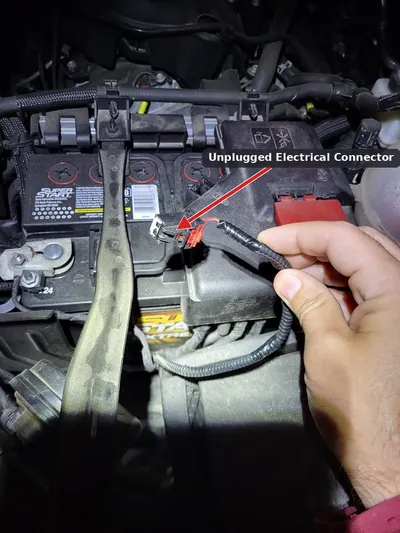
- Unplugged or Damaged Wiring/Connectors (Very Common) — The wires leading to the sensor (Battery Temperature, EVAP Purge, or EGR) are unplugged, frayed, corroded, or pinched. This creates an open or short circuit, triggering the code. On Chrysler/Jeep models, the battery temperature sensor is frequently left unplugged after a routine battery replacement.
- Failed Sensor or Solenoid (Common) — The component itself has failed internally. This includes a dead Battery Temperature Sensor (thermistor), a stuck EVAP Purge Valve, a shorted EGR Solenoid, or a faulty ABS Wheel Speed Sensor.
- Ruptured EVAP Charcoal Canister (Nissan) (Less Common) — On older Nissan vehicles, the internal membrane of the charcoal canister ruptures, sending charcoal pellets into the EVAP lines. These pellets clog the purge valve, causing it to stick open and trigger the code.
- Carbon Buildup in EGR Valve (Subaru) (Less Common) — While P1492 is an electrical code on Subarus, severe carbon buildup causes the EGR valve to stick, indirectly leading to circuit performance issues or triggering the code alongside mechanical faults.
- Faulty Powertrain Control Module (PCM) (Rare) — The vehicle's main computer has an internal fault and misinterprets the sensor signal. Consider this only after exhaustively testing the wiring harness and replacing the sensor.
Symptoms
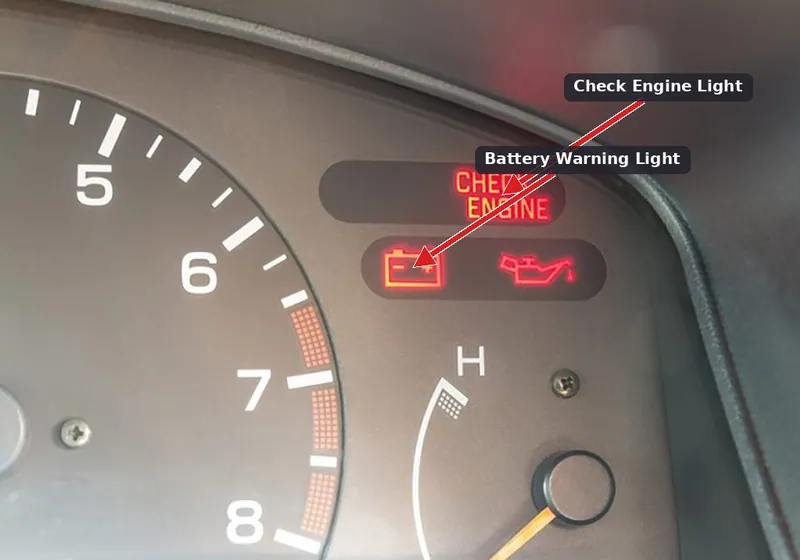
- Check Engine Light is On — The PCM illuminates the malfunction indicator lamp immediately upon detecting the circuit fault.
- Battery or Charging System Warning Light — On Chrysler/Dodge/Jeep models, a faulty battery temperature sensor forces the alternator into a default low-charge state, illuminating the battery light.
- Rough Idle, Hard Starting, or Stalling — On Nissan models, a stuck-open EVAP purge valve creates a massive vacuum leak, causing the engine to run rough, stall at low speeds, or struggle to start after refueling.
- Reduced Fuel Economy — A stuck-open EVAP valve wastes fuel vapor, while a faulty battery temperature sensor prevents the engine control unit from entering closed-loop fuel management.
- Failed Emissions Test (scan-tool only — no driver-felt sign) — A malfunctioning EVAP or EGR system automatically fails a smog check. A bad battery temperature sensor also prevents readiness monitors from setting.
Diagnostic Flowchart

Tap your situation to follow the diagnostic path that matches what you're seeing on this code.
Common Fixes & Costs
- Repair Damaged Wiring or Clean Connectors — Parts: $5-$20, Labor: $125-$250, ~1.5 hr book time (Intermediate)
- Replace Battery Temperature Sensor (Chrysler/Dodge/Jeep) — Parts: $35-$75, Labor: $75-$125, ~0.7 hr book time (DIY)
- Replace EVAP Purge Control Valve (Nissan) — Parts: $40-$130, Labor: $80-$160, ~0.8 hr book time (Intermediate)
- Replace EGR Control Solenoid (Subaru) — Parts: $70-$150, Labor: $100-$150, ~1.2 hr book time (Intermediate)
- Replace ABS Wheel Speed Sensor (Nissan) — Parts: $150-$310, Labor: $100-$150, ~1.2 hr book time (Intermediate)
- Replace Ruptured EVAP Canister and Clean Lines (Nissan) — Parts: $150-$300, Labor: $200-$400, ~2.0 hr book time (Advanced)
DIY vs Professional
- Repair Damaged Wiring or Clean Connectors — Beginner: No
Tools: Digital multimeter, wire strippers, soldering iron, heat shrink tubing. - Replace Battery Temperature Sensor (Chrysler/Dodge/Jeep) — Beginner: Yes
Tools: 10mm and 13mm sockets, battery terminal cleaner. - Replace EVAP Purge Control Valve (Nissan) — Beginner: Yes
Tools: Pliers, socket set. - Replace EGR Control Solenoid (Subaru) — Beginner: No
Tools: Socket set with extensions, penetrating oil, torque wrench. - Replace ABS Wheel Speed Sensor (Nissan) — Beginner: No
Tools: Jack, jack stands, socket set, hammer, punch. - Replace Ruptured EVAP Canister and Clean Lines (Nissan) — Beginner: No
Tools: Jack, jack stands, socket set, compressed air.
Used vs. New Parts: Buying Guide
When a used part is worth it: Used parts only make sense for expensive, non-wear electronic modules on vehicles over 150,000 miles. Never buy a used battery temperature sensor or EVAP purge valve.
Donor-vehicle mileage cap: roughly under 100000 miles for the part to have meaningful remaining life.
Donor quality checklist:
- Verify the exact OEM part number matches.
- Avoid parts from rust-belt vehicles to prevent corroded connectors.
Decision logic:
- If The part costs under $75 new (e.g., Battery Temp Sensor) → Always buy new. The labor and risk of a used part failing are not worth the $20 savings.
- If The part is a solenoid with moving internal components (EVAP/EGR valve) → Buy new aftermarket or OEM. Used solenoids are often internally clogged with carbon or charcoal.
Warranty tradeoff: Salvage yard parts offer a 30-day part-only warranty. New aftermarket sensors provide a 1-year to lifetime warranty.
Worst-case if a used part fails: $150-$300 in repeat labor if a used solenoid fails immediately.
What Happens If You Wait — Timeline
- 0-2 months: Check Engine Light illuminates. Chrysler charging rate defaults to 13.5V. Vehicle fails emissions tests. (MPG impact: 0-5%% · Added cost: $0)
- 2-6 months: Chrysler models struggle to start in cold weather. Nissan models idle roughly after refueling. (MPG impact: 5-10%% · Added cost: $25-$75 in wasted fuel)
- 6-12 months: Chrysler batteries fail completely. Nissan engines stall at idle; rich conditions stress the catalytic converter. (MPG impact: 7-15%% · Added cost: $150-$400)
- 12+ months: Nissan and Subaru catalytic converters melt or clog from unburned fuel and excessive heat. (MPG impact: 10-20%% · Added cost: $1200-$2800)
Cost of Not Fixing It
- 0-3 Months: Chrysler/Jeep models risk no-start conditions due to an undercharged battery. Nissan/Subaru models experience a 5-10% drop in fuel economy. (Added cost: $20-$50 in wasted fuel)
- 3-12 Months: Chrysler/Jeep models suffer premature battery failure. Nissan models with a stuck-open EVAP valve foul spark plugs and stress the catalytic converter. (Added cost: $150-$400 for a new battery or spark plugs)
- 12+ Months: Nissan and Subaru models face catalytic converter failure due to prolonged rich fuel mixtures and high combustion temperatures. (Added cost: $1200-$2800 for catalytic converter replacement)
Diagnosis Steps
- Scan Codes and Verify Definition
Connect an OBD-II scanner to confirm P1492. Look up the specific definition for your vehicle's make to identify the correct system (Battery Temp, EVAP, or EGR). Note any freeze frame data.
Tools: OBD-II Scanner (Beginner) - Perform a Targeted Visual Inspection
Locate the specific component based on your vehicle's definition. Inspect the sensor, its connector, and the wiring harness for corrosion, broken wires, or an unplugged connector. On Jeeps, check for wires crushed under the battery tray.
Tools: Flashlight (Beginner) - Check Live Data
Use a scan tool to view live data. For Chrysler/Jeep, check the Battery Temperature Sensor PID; a reading of 4.9V or 5.0V confirms an open circuit. For Nissan, monitor the EVAP Purge Valve duty cycle to see if the PCM is commanding it to open.
Tools: OBD-II Scan Tool with Live Data (Intermediate) - Check Connector Voltage (Key On, Engine Off)
Disconnect the sensor. Turn the ignition on. Test the harness connector terminals with a multimeter. One pin must have a 5-volt reference from the PCM, and the other must have a solid ground. Missing voltage or ground indicates a wiring failure upstream.
Tools: Digital Multimeter (Intermediate) - Test Sensor Internal Resistance
With the sensor disconnected, measure the resistance (Ohms) across its terminals. A Chrysler battery temperature sensor should read 10,000-11,000 ohms at 77°F (25°C). An infinite reading (OL) confirms an internal open circuit and a dead sensor.
Tools: Digital Multimeter (Intermediate) - Inspect Wiring Harness for Continuity
If the sensor tests good but the code persists, test the wiring between the sensor connector and the PCM. Use a multimeter to check for continuity, ensuring there are no breaks or shorts to ground in the harness.
Tools: Digital Multimeter, Vehicle-specific Wiring Diagram (Advanced) - Test EVAP/EGR Solenoids
For Nissan (EVAP) or Subaru (EGR), disconnect the solenoid and connect a 12V test light across the harness terminals. Start the engine. If the test light flashes (PCM is commanding it) but the valve doesn't click, replace the solenoid.
Tools: 12V Test Light (Intermediate)
When This Code Triggers (Freeze-Frame Conditions)
- Engine Coolant Temp: 175-210°F (80-99°C) (Fully warmed up (required for EVAP/EGR monitor tests).)
- Vehicle Speed: 45-65 mph (72-105 kph) (Steady highway driving triggers EGR/EVAP monitor tests.)
- Battery Temp Sensor Voltage (Chrysler/Jeep): > 4.9 Volts (Indicates an open circuit; fault is detected immediately with key on, engine off.)
Related Codes
- P1493 — Indicates 'Battery Temperature Sensor Voltage Too Low' on Chrysler vehicles. P1492 (High Voltage) points to an open circuit, while P1493 points to a short to ground.
- P0443 — The generic OBD-II equivalent for 'EVAP Purge Control Valve Circuit'. If it appears alongside P1492 on a Nissan, it guarantees the fault lies in the purge valve or its wiring.
- P1496 — Indicates 'EGR Solenoid Valve Signal 3 Circuit Low' on Subarus. Appearing with P1492 (Signal 1 Low) suggests a shared ground failure or a completely dead EGR solenoid assembly.
- P0455 — Indicates a 'Large EVAP System Leak'. On Nissans, this triggers alongside P1492 if the purge valve is stuck open, causing the system to fail its vacuum self-test.
Climate & Environmental Factors
- Cold Weather: On Chrysler/Jeep models, a failed battery temperature sensor prevents the PCM from increasing the alternator's charging rate to compensate for cold temperatures, resulting in a dead battery.
- High Heat and Humidity: Moisture interacts with sulfuric acid fumes from the battery, rapidly accelerating corrosion on the battery temperature sensor and its wiring located directly underneath the tray.
How to Talk to a Mechanic About This Code
Say this: "I have an engine code P1492. On my vehicle, I believe this points to the [Battery Temperature Sensor / EVAP Purge Solenoid / EGR Solenoid] circuit. Please start by testing the specific circuit and wiring harness before recommending replacement of larger components."
This directs the technician to the most likely cause for your specific vehicle, preventing them from starting a generic diagnostic path. It avoids common misdiagnoses, like replacing a good alternator on a Jeep when the battery sensor is the real issue.
Avoid saying:
- 'My check engine light is on, can you look at it?'
- 'Just fix whatever is wrong.'
- 'My car won't start right, I think I need a new battery and alternator.'
Questions to ask before authorizing the repair:
- For Chrysler/Jeep: Did you see a voltage of 4.9V or higher on the battery temp sensor's live data feed?
- For Nissan: Were you able to command the EVAP purge valve to open and close using your scan tool?
- For Subaru: Did you find a 'low input' voltage on the EGR solenoid's signal wire?
- Does the estimate include both parts and labor, and what is the warranty on this specific repair?
Where to Take It: Dealer vs Independent vs Chain
- Dealer:
Best for: Vehicles still under a powertrain or emissions warranty., Complex manufacturer-specific issues, like Subaru EGR electrical faults requiring TSB software updates.
Downsides: Highest labor rates., Tendency to replace entire wire harnesses rather than repairing a single broken wire. (Typical cost: +50% vs. baseline) - Independent Shop:
Best overall fit. An experienced independent mechanic correctly diagnoses wiring faults and replaces sensors much cheaper than a dealer.
Best for: Out-of-warranty vehicles where cost is a factor., Common variants of P1492 (Chrysler battery sensor, Nissan EVAP valve) which are well-understood repairs.
Downsides: Diagnostic capabilities vary; ensure they have bidirectional scan tools. (Typical cost: +0% vs. baseline) - Chain Shop:
Avoid for initial diagnosis due to the high risk of being upsold incorrect and expensive parts.
Best for: Simple, accessible part swaps if you have already diagnosed the issue yourself.
Downsides: High potential for misdiagnosis. They are highly likely to upsell a battery and alternator for a Chrysler P1492 instead of testing the $40 sensor. (Typical cost: -10% vs. baseline)
When to Walk Away From the Repair
If the estimated repair cost exceeds 40-50% of your car's private-party value, consider selling the vehicle instead of repairing it.
- Car worth $3000, fix is $250: Fix it. A simple sensor or wiring repair is well below the threshold and extends the car's life.
- Car worth $4000, fix is $1800: Walk away. The repair cost is 45% of the car's value. This is too much to invest in an older vehicle.
- Car worth $10000, fix is $600: Fix it. The repair cost is a small fraction of the vehicle's value.
What Scan Tool You Need for This Code
Minimum: A scanner that reads and graphs live data is essential for the Chrysler/Jeep version. For Nissan/Subaru, a scanner with bidirectional control (active tests) is required to command solenoids on and off.
A basic $20 code reader only shows 'P1492'. It cannot display the live 5V reading from a Chrysler battery sensor, nor can it command a Nissan EVAP purge valve to open. Without this data, you are guessing.
Budget: BlueDriver Pro Scan Tool (~$99) — Connects via Bluetooth and graphs live battery temperature sensor voltage, making it easy to spot an open circuit stuck at 5V.
Mid-range: Foxwell NT530 or Innova 5610 (~$150-350) — Includes bidirectional controls to actively test the Nissan EVAP purge valve or Subaru EGR solenoid by commanding them on and off.
Professional: Autel MaxiCOM MK808 (~$500-900) — Provides extensive bidirectional controls and OEM-level diagnostics to trigger EVAP system tests and cycle solenoids rapidly.
Rent vs buy: Auto parts stores loan basic scanners for free, but these cannot read live data or perform active tests. Buying a budget-tier scanner with live data is mandatory to diagnose P1492 correctly.
How to Clear the Code After You Fix It
- Reconnect the battery if disconnected during repair.
- Use an OBD-II scan tool to clear the P1492 code.
- Perform the manufacturer-specific drive cycle to reset readiness monitors.
Drive cycle (~30 minutes): A standard drive cycle requires a cold start, 5 minutes of idling, 15 minutes of stop-and-go city driving, and 10 minutes of steady highway cruising at 55 mph.
Readiness monitors affected: Evaporative System (EVAP), Exhaust Gas Recirculation (EGR), Comprehensive Component Monitor
Before emissions retest: drive at least 50 miles to fully set monitors.
Watch out for:
- Disconnecting the battery clears the code but resets all monitors to 'Not Ready', guaranteeing an emissions failure if tested immediately.
- The code returns instantly upon startup if a wiring short was ignored and only the sensor was replaced.
Will This Fail Emissions / State Inspection?
Yes — this code typically fails an OBD-II emissions inspection.
- California: An active Check Engine Light is an automatic fail. All readiness monitors must be set to 'Ready' to pass.
- New York: Testing a vehicle immediately after clearing the P1492 code results in failure due to 'Not Ready' monitors.
- Texas: Allows one monitor to be 'Not Ready' for 2001+ vehicles, but an active P1492 code causes an automatic failure.
Most Commonly Affected Vehicles
- Jeep Cherokee (XJ) / Grand Cherokee (ZJ, WJ) (1996-2004) — Extremely prone to battery temperature sensor failure due to acid corrosion or wiring crushed under the battery tray during replacement.
- Dodge Ram 1500 / Dakota (1998-2003) — Sets P1492 when the PCM detects over 4.9 volts on the battery temperature sensor circuit for more than 3 seconds.
- Mitsubishi Eclipse / Galant (1999-2005) — Shares the Chrysler platform and definition ('Battery Temperature Sensor High Voltage'), requiring identical diagnostic steps.
- Nissan Sentra / Maxima / I30 (1998-2007) — Frequently sets P1492 for the EVAP purge valve. On 1998-1999 Maxima models, a ruptured charcoal canister is the root cause of the valve failure.
- Subaru Forester / Impreza / Legacy (2004-2012) — P1492 indicates an EGR solenoid 'Signal 1 Circuit Low' fault. It frequently appears alongside P1496, pointing to a shared electrical ground issue.
- Chrysler Sebring / Town & Country (2001-2007) — Sets P1492 for a battery temperature sensor circuit fault, with diagnostics identical to Dodge and Jeep counterparts.
- Mahindra Maxximo (2010-2016) — On BS-III models, P1492 indicates a fuel system issue: 'maximum positive deviation of rail pressure exceeded'.
Manufacturer-Specific Notes
- Chrysler/Dodge/Jeep: The code exclusively refers to the battery temperature sensor. A failure causes the PCM to default to a lower alternator charging rate to prevent perceived battery overheating, leading to dead batteries in cold weather.
- Nissan: P1492 has multiple meanings, referring to either the EVAP purge solenoid or a wheel speed sensor. On older Maximas, always inspect for a ruptured charcoal canister if the purge valve fails.
- Subaru: Points to a low input signal on the EGR solenoid valve's electrical circuit. While primarily an electrical issue, cleaning the EGR passages of carbon buildup is required practice during inspection.
Real Owner Stories
1997 Jeep Cherokee (XJ) with P1492
The Check Engine Light illuminated, causing a failed emissions test. The owner found the battery temperature sensor under the battery tray completely unplugged.
What they tried:
- Attempted to locate the missing connector plug on the wiring harness.
Outcome: Replaced the entire battery temperature sensor and harness assembly for $45. Plugging the new harness in cleared the P1492 code permanently.
Lesson: Always suspect an incomplete repair by a previous owner. A physically present but unplugged sensor is the most common cause of a 'Voltage Too High' open-circuit code.
2001 Jeep Cherokee (XJ) with recurring P1492
The P1492 code returned immediately after installing a brand-new battery temperature sensor.
What they tried:
- Replaced the sensor a second time, assuming the first replacement was defective.
Outcome: The owner traced the wiring harness and found it crushed between the battery tray and the vehicle frame. Repairing the crushed wire fixed the short and cleared the code.
Lesson: If a new sensor doesn't fix the code, the fault is in the wiring. Visually inspect the entire wire length for pinch points caused during previous battery replacements.
2004 Subaru Forester 2.0L with P1492 & P1496
The Check Engine Light came on at 12,000 miles with codes P1492 (EGR Signal 1 Low) and P1496 (EGR Signal 3 Low). The car ran perfectly.
What they tried:
- The dealer cleared the codes, but they returned within days.
- Considered cleaning the EGR valve to remove carbon.
Outcome: The presence of two distinct low-voltage electrical codes pointed to a shared wiring fault rather than carbon buildup. The issue was traced to a faulty main EGR connector.
Lesson: When multiple electrical fault codes appear for the same component, focus your diagnosis on shared power wires, ground wires, or the main connector.
How to Prevent This Code From Triggering
- Clean Battery Terminals and Apply Protectant (Every 6-12 months) — Prevents acid fumes and moisture from corroding the battery temperature sensor and its wiring located directly beneath the battery tray.
- Avoid Overfilling the Fuel Tank (Every fill-up) — Topping off forces liquid fuel into the Nissan EVAP charcoal canister. This breaks down the charcoal pellets, which then travel through the lines and destroy the purge valve.
- Perform Periodic Highway Driving (Twice a month) — Sustained highway speeds increase exhaust temperatures, burning off soot from the Subaru EGR valve and preventing mechanical sticking.
- Ensure Gas Cap is Tightened (Every fill-up) — Maintains proper EVAP system pressure, reducing operational stress on the purge and vent valves.
Frequently Asked Questions
What is the most common cause of a P1492 code?
The most common cause is damaged, corroded, or unplugged wiring connected to the sensor. The sensor itself failing internally is the second most common cause.
Can I fix a P1492 code myself?
Yes, replacing a Chrysler battery temperature sensor or a Nissan EVAP purge valve is highly DIY-friendly. However, diagnosing complex wiring shorts or replacing a seized Subaru EGR valve requires intermediate skills.
How much does it cost to fix a P1492 code?
A DIY battery temperature sensor replacement costs $35 to $75. A professional EVAP purge valve or EGR solenoid replacement ranges from $120 to $300 for parts and labor.
Will a P1492 code cause my car to fail an emissions test?
Yes. An active P1492 code illuminates the Check Engine Light and prevents emissions readiness monitors from setting, resulting in an automatic failure.
What does the battery temperature sensor do?
It monitors battery heat so the PCM can adjust the alternator's charging voltage. It commands higher voltage in the cold and lower voltage in the heat to prevent overcharging.
What are the most common misdiagnosis mistakes for P1492?
On Chrysler vehicles, mechanics often mistakenly replace the battery or alternator to fix a charging issue without testing the battery temperature sensor. Because a bad sensor reduces the charge rate to 13.5V, it mimics a failing alternator. Always wiggle the sensor harness to check for intermittent wiring faults before replacing parts.
I replaced the sensor, but the P1492 code came back. What now?
If a new sensor doesn't fix the code, the problem is in the wiring harness or the PCM. Perform a continuity test on the signal and ground wires between the sensor connector and the PCM to locate the break.
Can a bad gas cap cause P1492?
No. A loose gas cap causes generic EVAP leak codes like P0455. Code P1492 specifically points to an electrical circuit malfunction in the purge valve, not a system leak.
Key Takeaways
- Verify your vehicle's specific manufacturer definition for P1492, as it means 'Battery Temperature Sensor High' on a Jeep but 'EVAP Purge Valve Circuit' on a Nissan.
- On Chrysler, Dodge, and Jeep vehicles, P1492 triggers when the Powertrain Control Module detects a battery temperature sensor signal voltage above 4.9 volts for more than 3 seconds.
- Inspect the sensor wiring harness first, as 80% of P1492 codes result from an unplugged connector, corroded terminal, or pinched wire rather than a failed sensor.
- Do not replace your battery or alternator for a Chrysler P1492 code until you test the $40 battery temperature sensor, which dictates the alternator's charging rate.
Shop the Parts Behind P1492
Below are the parts most often responsible for code P1492, ranked by how frequently each one is the actual culprit (per the diagnosis above). Tap any to see what we have for your vehicle.



The information in this article is provided for general reference and educational purposes only. Vehicle specifications, procedures, and part compatibility can vary by production date, trim level, and region. Always consult your vehicle's factory service manual and verify part numbers before purchasing or performing repairs. Safety-critical components such as airbags, seat belts, and braking systems should be installed by a qualified professional.
- 🧭 Diagnostic Flowchart
- 🛍️ Shop This Part
- What Does P1492 Mean?
- Can I Drive With P1492?
- Common Causes
- Symptoms
- Common Fixes & Costs
- DIY vs Professional
- Used vs. New Parts: Buying Guide
- What Happens If You Wait — Timeline
- Cost of Not Fixing It
- Diagnosis Steps
- When This Code Triggers (Freeze-Frame Conditions)
- Related Codes
- Climate & Environmental Factors
- How to Talk to a Mechanic About This Code
- Where to Take It: Dealer vs Independent vs Chain
- When to Walk Away From the Repair
- What Scan Tool You Need for This Code
- How to Clear the Code After You Fix It
- Will This Fail Emissions / State Inspection?
- Most Commonly Affected Vehicles
- Manufacturer-Specific Notes
- Real Owner Stories
- 1997 Jeep Cherokee (XJ) with P1492
- 2001 Jeep Cherokee (XJ) with recurring P1492
- 2004 Subaru Forester 2.0L with P1492 & P1496
- How to Prevent This Code From Triggering
- Frequently Asked Questions
- What is the most common cause of a P1492 code?
- Can I fix a P1492 code myself?
- How much does it cost to fix a P1492 code?
- Will a P1492 code cause my car to fail an emissions test?
- What does the battery temperature sensor do?
- What are the most common misdiagnosis mistakes for P1492?
- I replaced the sensor, but the P1492 code came back. What now?
- Can a bad gas cap cause P1492?
- Key Takeaways
- 🎟️ Get 5% Off