

P1516 on 2004-2007 Buick Rainier: Reduced Engine Power Causes and Fixes
On a 2004-2007 Buick Rainier, code P1516 almost always points to a problem with the electronic throttle body, triggering 'Reduced Engine Power' mode. The most common fix is thoroughly cleaning the throttle body of carbon buildup. If that fails, inspecting the wiring harness for breaks and checking engine grounds is critical before replacing the entire throttle body assembly.
- P1516 on a Buick Rainier will immediately put the vehicle into 'Reduced Engine Power' mode.
- The first and most important diagnostic step is to thoroughly clean the electronic throttle body.
- If cleaning does not fix the issue, inspect the wiring connector at the throttle body for damage before replacing parts.
- If the wiring is good, replacing the entire throttle body assembly is the most reliable repair.
- The issue is known to be worse on high-mileage vehicles and in very cold weather.
What's Unique About the 2004-2007 Buick RAINIER
The Buick Rainier shares its GMT360 platform with the Chevy Trailblazer, GMC Envoy, and others, and this P1516 fault is a well-documented issue across all of them. The problem is often caused by simple carbon buildup restricting the throttle plate's movement, especially on higher-mileage vehicles, a condition explicitly noted in GM Technical Service Bulletin PIP4578B. Manufacturer bulletins also note that these throttle-related codes can be triggered during very cold starts (approx. -10°F / -23°C), suggesting the mechanism can be sensitive to freezing temperatures or that voltage drops during cold cranking exacerbate underlying electrical issues.
Diagnostic Flowchart
Tap your situation to follow the diagnostic path that matches what you're seeing on this vehicle.
Symptoms You May Notice
- "Reduced Engine Power" message displayed on the instrument cluster
- Check Engine Light is on
- Severely limited acceleration and throttle response
- Unstable, rough, or low idle
- Engine may stall when coming to a stop
- Hesitation or bucking during acceleration
- In some cases, the code may be stored with no noticeable driving issues.
- Replacing only the accelerator pedal position (APP) sensor. While the APP sensor is part of the overall system, P1516 specifically points to a disagreement at the throttle body itself, making the pedal sensor an unlikely cause.
- Assuming a new throttle body is defective when the issue persists. Often, the root cause was a hidden wiring/ground issue, or a mandatory throttle relearn procedure was skipped after installation.
Most Likely Causes
- Dirty Throttle Body 🔴 High Probability → Shop Fuel Injection Throttle Body Carbon and oil vapor from the PCV system can bake onto the throttle plate and bore over time. As this buildup occurs, the PCM adapts by opening the throttle slightly more at idle. Eventually, the buildup restricts movement beyond the PCM's ability to compensate, triggering the code.
How to confirm: Remove the air intake duct and visually inspect the throttle plate and bore for a thick black coating of carbon. The buildup is often worst on the backside of the plate.
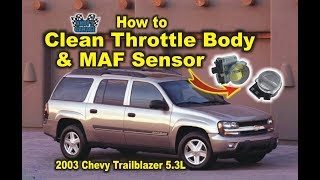
Typical fix: Remove the throttle body (typically four 10mm bolts) and clean it thoroughly with specialized throttle body cleaner and a soft brush or rag. Do not use 🎬 Watch: Step-by-step guide to cleaning your Rainier's throttle body. harsh tools that could scratch the bore. A throttle relearn procedure is required afterward.
Est. part cost: $5-$15 for cleaner - Wiring or Connector Issue 🟡 Medium Probability The wiring harness to the throttle body is a known weak point. Engine vibration and heat can cause the wires, particularly the yellow and brown wires, to break internally while the outer insulation appears intact. Poor ground connections, especially G103 and G104 on GMT360 trucks, are also a known cause of intermittent throttle issues and a host of other electrical gremlins.
How to confirm: With the engine running, carefully wiggle the connector and wiring harness at the throttle body to see if it affects the idle or triggers the code. Gently pull on individual wires (especially yellow and brown) near the connector; if one stretches, it's broken internally. For grounds, locate G103 (front of passenger side cylinder head) and G104 (rear of driver's side cylinder head), remove the bolt, and clean the contact surfaces to bare metal.
Typical fix: Repair the damaged section of wiring or replace the pigtail connector (GM part #88988581 is a common pigtail). For grounds, clean and tighten the connections securely. Some owners add redundant ground straps from the engine block to the firewall as a preventative measure.
Est. part cost: $15-$40 for a new pigtail connector - Failed Throttle Body Assembly 🟡 Medium Probability → Shop Fuel Injection Throttle Body The internal electric motor or the integrated Throttle Position Sensors (TPS) can wear out and fail, especially on high-mileage vehicles as noted in TSB PIP4578B. The wear surfaces inside the sensor can develop dead spots, causing erratic voltage signals.
How to confirm: If a thorough cleaning and wiring/ground inspection doesn't resolve the code, the assembly itself is the likely culprit. A scan tool can be used to monitor the two TPS voltage signals (TPS1 and TPS2); they should move smoothly and in opposite directions. Any jumps or dropouts indicate a failed sensor.
Typical fix: Replace the entire throttle body assembly. This is sold as a complete unit with a new motor and sensors. A relearn procedure is mandatory after replacement.
Est. part cost: $100-$300
Rare But Worth Checking
- Failing Powertrain Control Module (PCM): This is very rare. The PCM should only be considered after all other possibilities, including the throttle body, wiring, and grounds, have been exhaustively tested and ruled out. Sometimes a PCM software update from a dealer can resolve logic-related issues.
Diagnosis Steps
- Scan for all DTCs. Note any other codes that appear with P1516, as they can help confirm the diagnosis.
- Inspect the throttle body visually. Remove the intake boot and check for heavy carbon buildup around the throttle plate and bore.
- Clean the throttle body. If dirty, remove it for a thorough cleaning. Be sure to clean both sides of the plate and the bore completely.
- Inspect the wiring harness and connector. With the engine idling, wiggle the harness near the throttle body connector. If the idle stumbles or the code sets, you have a wiring issue. Gently tug on the yellow and brown wires to check for internal breaks.
- Check engine grounds. Locate, remove, clean, and securely re-tighten grounds G103 (front of passenger cylinder head) and G104 (rear of driver's side cylinder head). A poor ground can cause erratic voltage and trigger this code.
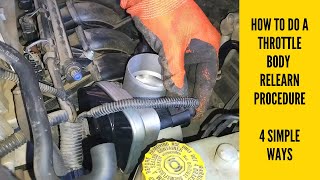
- Perform a throttle relearn procedure. After cleaning, replacement, or even just disconnecting the battery, the PCM needs to relearn the throttle's idle position. A common method is to start the engine and let it idle in Park for 3 minutes, turn the engine off for 60 seconds, then restart and idle for another 3 minutes. 🎬 Watch: Four different ways to perform a throttle relearn procedure.
- If the code persists after cleaning and verifying the wiring and grounds, replace the throttle body assembly.
Parts You'll Likely Need
- Fuel Injection Throttle Body Assembly
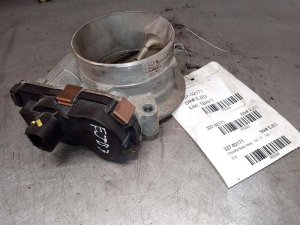
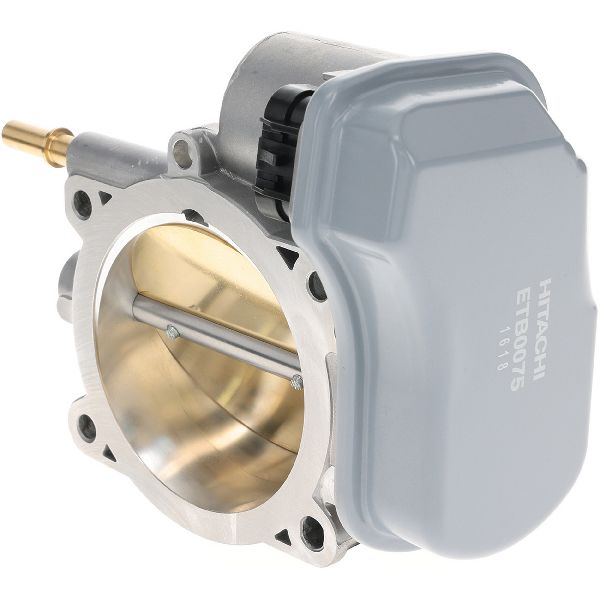
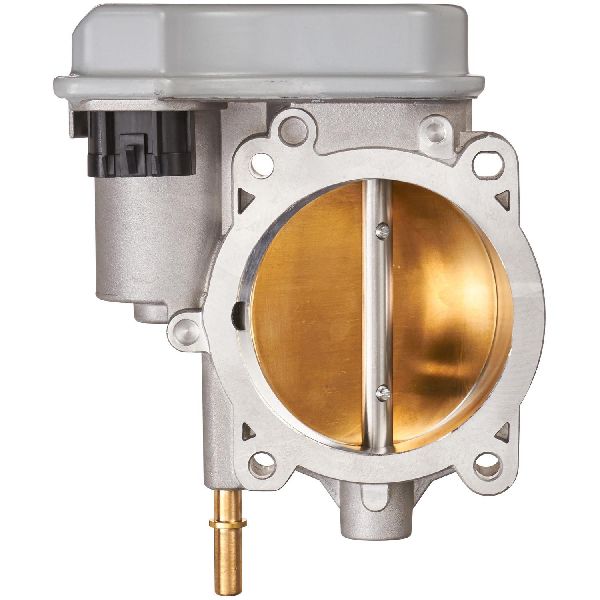
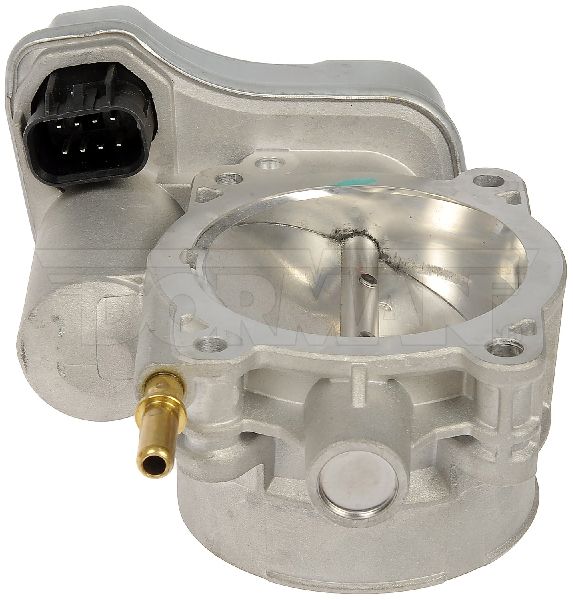
(OEM #ACDelco 217-3153 (or GM 12580760) for 5.3L V8; ACDelco 217-2296 (or GM 12570800) for 4.2L I6)— This is the most common repair if cleaning and wiring checks fail. The assembly includes the throttle plate, housing, electric motor, and new position sensors, resolving the common failure points all at once.
Trusted brands: ACDelco, GM Genuine, Hitachi, Bosch
OEM price range: $200-$350
Aftermarket price range: $100-$220
Related Codes That Often Appear With This One
- P2101 — Directly related to 'Control Module Throttle Actuator Control Motor Circuit Range/Performance'. It often appears with P1516 and is mentioned in the same TSBs.
- P2135 — Indicates a 'Throttle/Pedal Position Sensor/Switch A/B Voltage Correlation' error. This means the two internal throttle position sensors are not agreeing with each other, a common failure mode inside the throttle body assembly.
- P0121 — Indicates 'Throttle/Pedal Position Sensor 'A' Circuit Performance'. This is another code pointing to an issue with the sensor data coming from the throttle body, often due to carbon buildup or sensor failure.
- P2119 — Relates to 'Throttle Actuator Control Throttle Body Range/Performance', often indicating the throttle plate is not moving as it should, for example, due to being stuck with carbon.
- P2176 — Indicates 'Throttle Actuator Control System - Idle Position Not Learned'. This code often appears after a throttle body has been cleaned or replaced but a relearn procedure has not been performed correctly.
Technical Service Bulletins (TSBs) & Recalls
- PIP4578B: Mentions P1516 in a group of codes related to idle surge and reduced power on high-mileage vehicles due to carbon buildup in the throttle body. It stresses the importance of performing an 'idle learn reset' after cleaning.
- PIP4573B: Connects P1516 and other throttle codes to cold start issues in freezing temperatures.
- PIP3089: Specifically calls out inspecting the Yellow TAC Motor Control Circuit
Platform-Specific Known Issues
- High-Mileage Carbon Buildup: As stated in TSB PIP4578B, high-mileage vehicles are more prone to this code as the PCM's ability to compensate for carbon buildup reaches its limit.
- Cold Weather Sensitivity: The issue can be more frequent in extremely cold weather (-10°F / -23°C), as mentioned in TSB PIP4573B, suggesting mechanical sticking or electronic issues are exacerbated by the cold.
- Internal Wire Breakage: A known failure is for the yellow or brown wire in the throttle body harness to break inside the insulation, about 1-4 inches from the connector, due to engine vibration. This requires a careful pull test to diagnose.
Mechanic-Grade Diagnostic Values
- Throttle Position Sensor (TPS) Voltage — expected: Approximately 0.5V at idle (closed throttle) to 4.5V at wide-open throttle (WOT). The voltage should change smoothly as the throttle plate moves.. Failure: Voltage that is stuck at 0V or 5V, or any jumps, dropouts, or erratic readings as the throttle is slowly opened indicates a failing sensor.
- System Voltage — expected: Approximately 12.0-12.6V with Key On, Engine Off (KOEO) and 13.2-14.8V with the engine running.. Failure: Low battery voltage can cause a variety of unpredictable electronic faults, including TAC module performance codes.
Scan Tool Commands That Help
- Tech2 or equivalent professional scan tool: Throttle Actuator Control (TAC) Test / Bidirectional Control — After confirming wiring and grounds are good, this function allows the technician to command the throttle plate to specific percentages (e.g., 10%, 25%, 50%) with the key on and engine off. This directly tests the TAC motor and position sensors; failure of the plate to move as commanded, or if the reported position doesn't match the command, points to a faulty throttle body assembly.
- Tech2 or equivalent professional scan tool: Idle Learn Reset / Throttle Relearn — This function should be used after cleaning or replacing the throttle body to clear the old learned values from the PCM and initiate a new learning process. While a manual relearn procedure often works, using the scan tool function is the official and most reliable method.
Wiring & Ground Locations
- G103 — On the front of the passenger side cylinder head.. This is a primary engine ground. TSBs specifically mention that a loose or corroded G103 can cause intermittent TAC module codes like P1516. It must be removed, cleaned to bare metal, and securely tightened.
- G104 — On the rear of the driver's side cylinder head.. Similar to G103, this is a critical engine ground point. Poor contact here can cause erratic voltage and signal issues for various sensors, including the throttle body. It is often cited as a solution for persistent, intermittent P1516 codes.
- Throttle Body Connector — The 8-pin electrical connector on the electronic throttle body itself.. Wires, particularly the yellow and brown ones, are known to break internally within 1-4 inches of the connector due to engine vibration. A visual inspection is not enough; a 'pull test' on each wire is required to see if it stretches, indicating an internal break.
Real Owner Repair Stories
- Tahoe Yukon Forum user (GM SUV (Tahoe/Yukon)) — Recurring 'Reduced Engine Power' message and P1516 code, even after trying common fixes.
❌ Tried (didn't work) Replacing parts without success.
✅ What actually fixed it The owner solved the problem by adding new, redundant ground wires. One 10-gauge wire was run from a spare threaded hole on the driver's side valve cover to the firewall. A second ground wire was added from the TAC module mounting bolt to the firewall. This suggests the original grounding path had become insufficient. - GM Forum user 'dpieroni3' (2006 GMC Sierra 2500HD 6.0L) — P1516 with 'Reduced Engine Power' mode, primarily at idle or when coming to a stop. Also occasionally saw P2135 and P0220. The throttle butterfly could be heard clicking right before the fault occurred.
❌ Tried (didn't work) Cleaning the throttle body., Replacing the throttle position sensor on the side of the throttle body., Performing a throttle relearn procedure., Visually inspecting grounds.
✅ What actually fixed it Replacing the entire throttle body assembly finally resolved all codes and the limp mode issue. - PerformanceTrucks.net forum discussion (GM Truck) — Intermittent 'Reduced Engine Power' and P1516 code.
❌ Tried (didn't work) Wiggling wires sometimes temporarily helped.
✅ What actually fixed it The confirmed diagnostic technique from an experienced user was to pull firmly on the individual brown and yellow wires near the throttle body connector. If a wire stretches, it is broken inside the insulation and must be repaired. This is a common failure that a simple visual check will miss.
"I Checked Everything" — The Actual Cause
- While not a smoke test issue, a common pattern for P1516 is that cleaning the throttle body does not fix the problem. The next step is often replacing the throttle body, but the actual cause is frequently a hidden electrical issue. In one documented case, after all common fixes failed, the owner resolved the code by adding new, redundant ground straps from the engine block to the firewall and from the TAC module to the firewall, indicating a poor factory ground path was the true root cause.
When the Usual Fixes Don't Work
- While cleaning the throttle body is the most common first step, many owners report this does not solve the issue. The next most common cause cited in owner forums is not the throttle body assembly itself, but an electrical fault. These faults are often either a broken wire inside the insulation near the throttle body connector (diagnosed with a 'pull test') or a poor engine ground at location G103 or G104. In some persistent cases, adding new, redundant ground straps has been the only successful fix.
OEM Part Supersession History
GM 12570800 (For 4.2L LL8 I6)→GM 19420713— Standard part lifecycle update, integrating potential design or material improvements.
Heads up: The new part number (19420713) is the correct service replacement for the original (12570800). The corresponding ACDelco service part is 217-2296.
Helpful Videos



Used OEM Parts in Stock
New Aftermarket Parts Available




The information in this article is provided for general reference and educational purposes only. Vehicle specifications, procedures, and part compatibility can vary by production date, trim level, and region. Always consult your vehicle's factory service manual and verify part numbers before purchasing or performing repairs. Safety-critical components such as airbags, seat belts, and braking systems should be installed by a qualified professional.
- Buick RAINIER:
- 🧭 Diagnostic Flowchart
- 🎬 Helpful Videos
- 🛍️ Shop This Part
- What's Unique About the 2004-2007 Buick RAINIER
- Symptoms You May Notice
- Most Likely Causes
- Rare But Worth Checking
- Diagnosis Steps
- Parts You'll Likely Need
- Related Codes That Often Appear With This One
- Technical Service Bulletins (TSBs) & Recalls
- Platform-Specific Known Issues
- Mechanic-Grade Diagnostic Values
- Scan Tool Commands That Help
- Wiring & Ground Locations
- Real Owner Repair Stories
- "I Checked Everything" — The Actual Cause
- When the Usual Fixes Don't Work
- OEM Part Supersession History
- 🎟️ Get 5% Off