

P1516 on 2004-2007 Buick Rainier 4.2L: Reduced Engine Power Causes and Fixes
On a 2004-2007 Buick Rainier, P1516 almost always means the electronic throttle body is dirty or failing, causing 'Reduced Engine Power' mode. The most common fix is a thorough cleaning of the throttle body. If that doesn't work, inspect the wiring harness at the connector for hidden breaks and check engine grounds. If those are good, the throttle body assembly likely needs replacement, costing around $150-$300 for the part.
- P1516 will immediately put your Rainier into 'Reduced Engine Power' mode, making it unsafe for normal driving.
- The first, cheapest, and most common fix is to thoroughly clean the carbon buildup from the throttle body.
- If cleaning doesn't work, perform a 'wiggle test' on the throttle body's wiring harness to check for hidden broken wires before buying parts.
- If you replace the throttle body, a 'relearn' procedure is mandatory for proper operation.
- Always check if your vehicle needs a 6-pin or 8-pin connector before purchasing a new throttle body.
What's Unique About the 2004-2007 Buick Rainier
The Buick Rainier shares its GMT360 platform and LL8 4.2L engine with the Chevy Trailblazer and GMC Envoy, making this a very well-documented issue. Failures of the electronic throttle body are extremely common across this entire family of vehicles. The problem is often caused by simple carbon buildup interfering with the throttle plate's movement, but the wiring harness connector at the throttle body is also a known weak point, with wires (especially the yellow and brown ones) breaking inside the insulation near the connector. Furthermore, poor or corroded engine grounds (G103 and G104) are a frequently cited root cause that is often overlooked.
Symptoms You May Notice
- "Reduced Engine Power" warning message on the dash
- Check Engine Light is on
- Severely limited acceleration and top speed (limp mode)
- Rough or unstable idle
- Hesitation or surging during acceleration
- Engine may stall at idle or when coming to a stop
- Little to no throttle response from the gas pedal
- Replacing the Accelerator Pedal Position (APP) sensor. P1516 specifically points to a problem at the throttle body or its related circuits, not the pedal. The APP sensor has its own distinct codes (e.g., P2138).
- Assuming a new throttle body is defective. Often, the true cause was a hidden wiring issue, a bad ground, or a skipped throttle relearn procedure.
Most Likely Causes
- Dirty or Binding Throttle Body 🔴 High Probability → Shop Fuel Injection Throttle Body Carbon and oil vapor from the PCV system builds up in the throttle body over time, creating a sticky residue that physically restricts the movement of the throttle plate, especially at idle. Manufacturer Bulletin #PIP4578B notes that high mileage vehicles may experience idle surge or reduced engine power mode alongside P1516 due to these conditions.
How to confirm: Remove the air intake tube from the throttle body and visually inspect the throttle bore and plate for a black, sticky layer of carbon. Manually (with the engine off and being careful not to force it) push the plate to feel for any sticking or binding. Do not use your fingers to manipulate the plate while the ignition is on.
Typical fix: Thoroughly clean the throttle body bore and plate with a dedicated throttle body cleaner and a soft cloth or brush. A throttle position relearn procedure is highly recommended after cleaning.
Est. part cost: $5-$15 - Wiring Harness or Connector Issue 🟡 Medium Probability The wiring harness leading to the throttle body is subject to engine heat and vibration, which can cause wires to break internally, often within 1-4 inches of the connector. The yellow and brown wires (motor control) are commonly cited as the culprits. The connector pins can also become loose or corroded.
How to confirm: With the engine idling, carefully wiggle the wiring harness and connector for the throttle body. If this action causes the engine to stumble or triggers the 'Reduced Engine Power' mode, a wiring fault is present. Perform a 'tug test' on each individual wire at the connector (with key off) to see if one feels stretchy or pulls out, indicating an internal break.
Typical fix: Repair the broken wire(s) or replace the throttle body connector pigtail. Use proper solder and heat-shrink techniques for a durable repair. The common pigtail part is ACDelco PT2628 or Dorman 645-800.
Est. part cost: $15-$40 - Failed Throttle Body Assembly 🟡 Medium Probability → Shop Fuel Injection Throttle Body The internal electronic components of the throttle position sensor (TPS) or the actuator motor can wear out and fail, causing an internal disagreement between the two sensors (often setting P2135) or a failure to respond to commands. Some owners report that aftermarket throttle bodies are less reliable than OEM.
How to confirm: If a thorough cleaning and wiring inspection do not resolve the code, the throttle body itself is the most likely cause. A scan tool can monitor commanded vs. actual throttle position; a significant, lagging discrepancy points to a bad throttle body.
Typical fix: Replace the entire throttle body assembly. A relearn procedure is mandatory after replacement.
Est. part cost: $150-$350 - Poor Ground Connection ⚪ Low Probability The TAC system is sensitive to voltage. Corroded or loose engine grounds (specifically G103 on the front of the passenger side cylinder head and G104 on the rear of the driver's side cylinder head) can cause intermittent voltage drops that trigger this code. This is a well-documented 'final fix' for many owners who have already replaced parts.
How to confirm: Locate the main engine and chassis ground points. Check for looseness and corrosion. Perform a voltage drop test on the ground circuit; it should be less than 100mV (0.1V). Many owners on forums report solving the issue by adding redundant ground straps from the engine block to the firewall.
Typical fix: Remove, clean all contact surfaces to bare metal, and securely re-fasten the ground connections for G103 and G104. Adding a supplemental 10-gauge ground wire from the engine block to the firewall is a common preventative fix.
Est. part cost: $0-$20
Rare But Worth Checking
- Failing Powertrain Control Module (PCM): This should only be considered after all other possibilities (throttle body, wiring, grounds) have been definitively ruled out. PCM failure is very rare. TSB PIP5660B advises against replacing the PCM for P1516 alone.
- Failing Fan Clutch Assembly: The electro-viscous fan clutch shares a 5-volt reference circuit with the accelerator pedal and throttle body position sensors. A short in the fan clutch or its wiring can disrupt this circuit, causing REP mode and various throttle-related codes, including P1516. If the code appears alongside fan-related issues (like a loud roaring sound), the fan clutch should be investigated.
- Frozen PCV System (Extreme Cold): TSB PIP4573B notes that in extremely cold weather (approximately -10 Fahrenheit), a frozen PCV system can cause pressure imbalances that interfere with proper throttle operation and may trigger a P1516 code. This bulletin also mentions that technicians may find oil leaks from crank seals or the dipstick in these conditions.
Diagnosis Steps
- Check for other stored trouble codes. Codes like P2135 or P2101 strongly point toward a faulty throttle body.
- Visually inspect and clean the throttle body. Remove the intake duct and use throttle body cleaner and a soft rag to remove all carbon buildup from the bore and plate. This is the most common and cheapest first step.
- Inspect the throttle body wiring and connector. Look for any signs of damage, corrosion, or loose pins. With the engine idling, perform a 'wiggle test' on the harness to see if you can induce the fault. Perform a 'tug test' on each wire at the connector to check for internal breaks.
- Check for proper ground connections. Locate, clean, and tighten the main engine grounds G103 (front of passenger cylinder head) and G104 (rear of driver's side cylinder head). Consider adding a redundant ground strap as a robust fix.
- Using a scan tool, monitor the commanded vs. actual throttle position percentages. If there is a significant and consistent mismatch after cleaning and checking wires/grounds, the throttle body assembly has likely failed.
- If all other steps fail, replace the throttle body assembly.
- Perform the throttle relearn procedure after cleaning or replacement. A common no-tool method is: 1) Start engine and idle in Park for 3 minutes. 2) Turn ignition OFF for 60 seconds. 3) Start engine and idle in Park for another 3 minutes. The idle should now be stable. 🎬 Watch: How to manually reset and relearn your throttle body
Parts You'll Likely Need
- Throttle Body Assembly
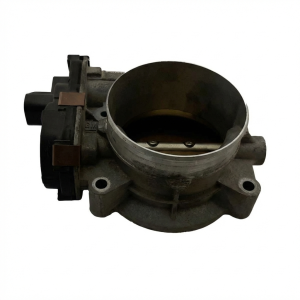
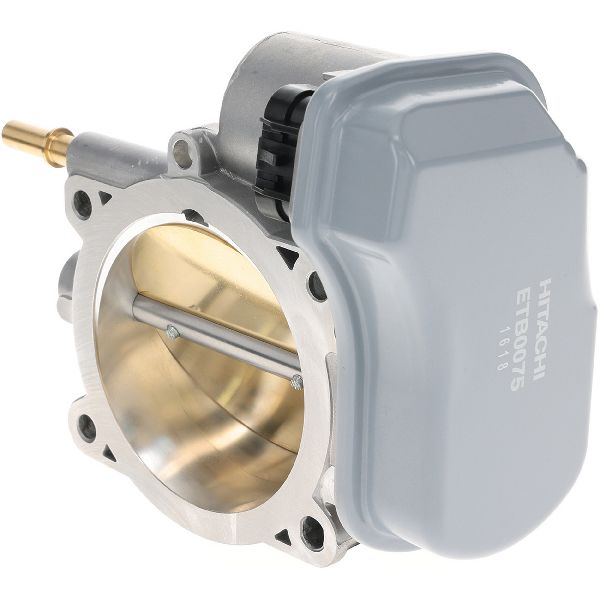
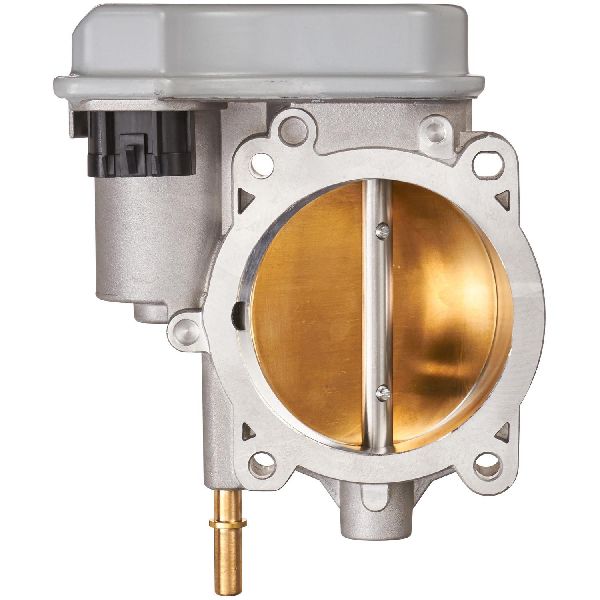
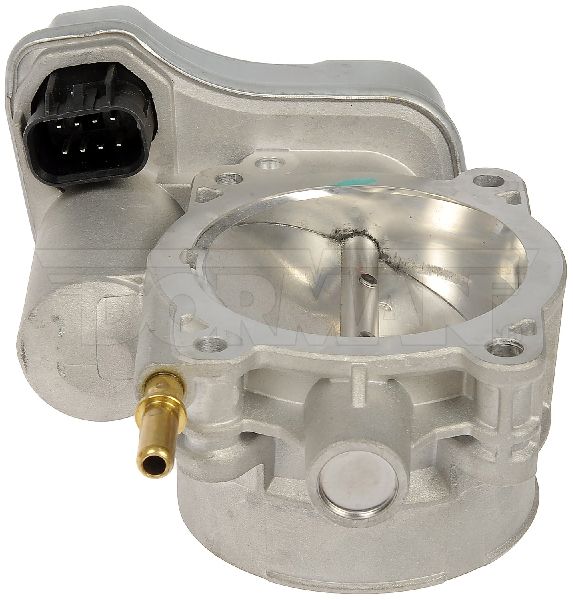
(OEM #ACDelco 217-2296 (supersedes 12572658))— This is the most common part to fail if cleaning and wiring checks do not resolve the issue. The internal sensors or motor wear out.
Trusted brands: ACDelco (GM Genuine), Bosch, Hitachi, Dorman
OEM price range: $250-$350
Aftermarket price range: $150-$250 - Throttle Body Cleaner — Required for the most common and first diagnostic step: cleaning the throttle plate and bore.
Trusted brands: CRC, Berryman, Gumout
Aftermarket price range: $5-$15 - Throttle Body Connector Pigtail
(OEM #ACDelco PT2628 / Dorman 645-800)— The wiring harness near the throttle body is a common failure point due to heat and vibration. This pigtail is used to repair broken wires at the connector.
Trusted brands: ACDelco, Dorman, Standard Motor Products (S-1745)
OEM price range: $30-$40
Aftermarket price range: $15-$25
Related Codes That Often Appear With This One
- P2135 — This code indicates a correlation error between the two throttle position sensors inside the throttle body assembly. It's a very common companion to P1516 and strongly suggests the throttle body itself has failed internally.
- P2101 — This code relates to the performance of the throttle actuator control motor circuit. It often appears with P1516 and points to an issue with the motor or its control within the throttle body assembly.
- P0120 — This is a more generic code for a fault in the Throttle Position Sensor 'A' circuit, which can be triggered by the same conditions that cause P1516.
- P0220 — Similar to P0120, this code points to a fault in the Throttle Position Sensor 'B' circuit, further indicating an issue within the throttle body assembly.
- U0107 — This code means 'Lost Communication With Throttle Actuator Control Module' and can appear with P1516, especially if there are severe wiring or ground issues.
Technical Service Bulletins (TSBs) & Recalls
- TSB PIP5660B: Advises against replacing the PCM for P1516 alone.
- TSB PIP4573B: Notes that a P1516 code can be triggered by a frozen PCV system in extremely cold weather.
- Bulletin #PIP4578B: Updates information concerning idle surge and reduced engine power mode for high mileage vehicles experiencing DTC P1516.
Platform-Specific Known Issues
- The GMT360 platform, which includes the Rainier, is notorious for throttle body issues leading to P1516 and 'Reduced Engine Power' mode.
- Internal wire breaks within the harness, 1-4 inches from the throttle body connector, are a very common and sometimes difficult-to-diagnose cause.
- Poor engine grounds (G103/G104) are a significant and often-overlooked cause of this code, leading many owners to replace parts unnecessarily.
Mechanic-Grade Diagnostic Values
- Throttle Actuator Control (TAC) Motor Resistance — expected: 2 to 13 Ohms between the Yellow and Brown wires (Pins E and F).. Failure: A reading below 1 Ohm suggests an internal short circuit; an infinite reading (OL) indicates an open circuit.
- Throttle Position Sensor (TPS) 1 Resistance — expected: Approximately 3 kOhms between the Black wire (Pin C) and the Grey wire (Pin G).. Failure: A reading of 0 Ohms indicates a short, and an infinite reading (OL) indicates an open circuit.
- 5-Volt Reference at Throttle Body Connector — expected: Approximately 5.0 volts with Key On, Engine Off on the Grey wire (Pin G for TPS1) and the Light Blue/Black wire (Pin B for TPS2).. Failure: Voltage significantly lower than 5.0V or no voltage indicates a wiring issue or a problem with the PCM.
- Ground Circuit Voltage Drop — expected: Less than 100mV (0.1V) between the main engine ground points (like G103/G104 studs) and the battery negative terminal.. Failure: A voltage drop greater than 0.1V indicates high resistance in the ground circuit, which can cause intermittent electronic issues.
- TPS Signal Voltage Sweep — expected: With the sensor connected and key on, voltage on the signal wires (Dark Green for TPS1, Purple for TPS2) should sweep smoothly from ~0.5V at closed throttle to ~4.5V at wide-open throttle.. Failure: Voltage that is jumpy, inconsistent, or has dropouts during the sweep indicates a worn or faulty TPS sensor inside the throttle body.
Scan Tool Commands That Help
- Tech II / High-End Scan Tool: Throttle Position Live Data Monitoring — Use this to compare 'Commanded Throttle Position (%)' vs. 'Actual Throttle Position (%)'. A significant lag or mismatch between these two values while pressing the accelerator pedal confirms a fault within the TAC system, often pointing to a failing throttle body motor or binding plate.
- Tech II / High-End Scan Tool: TAC Module / Throttle Relearn — This function should be used after cleaning or replacing the throttle body. While a manual relearn procedure often works, using the scan tool command is the official GM procedure to reset learned throttle angle values and ensure proper idle and throttle response.
Wiring & Ground Locations
- Throttle Body Connector (X107) — The 8-pin electrical connector that plugs directly into the electronic throttle body assembly on the driver's side of the engine.. This is the single point of connection for all power, ground, and signal wires for the throttle actuator motor and both throttle position sensors. Wires often break inside the insulation within 1-4 inches of this connector due to heat and vibration.
- Throttle Body Connector Pinout — Pin A: Dark Green (TPS 1 Signal), Pin B: Light Blue/Black (5V Ref TPS 2), Pin C: Black (Ground TPS 1), Pin D: Purple (TPS 2 Signal), Pin E: Yellow (TAC Motor Control), Pin F: Brown (TAC Motor Control), Pin G: Grey (5V Ref TPS 1), Pin H: Black/White (Ground TPS 2).. Knowing the specific function of each pin is essential for performing accurate voltage and resistance tests to isolate a fault between wiring, the PCM, or the throttle body itself.
- G103 — Wiring diagrams show conflicting information. One common location is on the left front of the engine compartment, on the radiator support. Another cited location is on the cowl, above the brake booster. It is a primary ground point for various engine compartment components.. A poor connection at this major ground point can cause intermittent voltage drops to the PCM and related sensors, triggering P1516 and other electronic faults.
- G104 / G109 / G110 — These are the main engine block grounds. Locations vary slightly by year but are typically found on the lower left (driver's) side of the engine block. Pass 2 mentioned G104 on the rear of the driver's side head, which is a common location for engine-to-firewall ground straps.. These are the primary ground paths for the engine block. Corrosion or looseness here is a well-documented cause of intermittent 'Reduced Engine Power' issues that defy other diagnostic efforts.
Real Owner Repair Stories
- Tahoe Yukon Forum (GM SUV (similar GMT800 platform, but fix is identical for GMT360)) — Recurring 'Reduced Engine Power' message and P1516 code, especially after hitting bumps.
❌ Tried (didn't work) Replacing the throttle body, Replacing the pigtail connector, Cleaning existing grounds
✅ What actually fixed it The owner permanently solved the problem by adding multiple redundant ground wires. Specifically, a 10-gauge wire was run from the firewall to an unused threaded hole on the engine block/valve cover, and another from the TAC module mounting bolt to the firewall. This suggests the factory ground paths had developed high resistance that wasn't visible. - GM Forum (GM Truck) — Truck goes into 'Reduced Engine Power' mode at idle, butterfly on the throttle body clicks back and forth right before the fault.
❌ Tried (didn't work) Cleaning the throttle body, Performing a throttle relearn, Visually inspecting grounds
✅ What actually fixed it After confirming the wiring and grounds were not the issue, the owner replaced the entire throttle body assembly, which resolved the problem completely. The clicking sound indicated the internal motor or gears were failing.
When the Usual Fixes Don't Work
- While cleaning the throttle body or replacing it are the most common fixes, a significant number of owners on forums report that these steps did not solve their intermittent P1516 issue. In many of these documented cases, the final solution was addressing a high-resistance ground path. This was often not a visibly corroded or loose ground, but an internal issue in the factory ground straps that was only resolved by adding new, redundant ground wires from the engine block directly to the firewall and/or chassis.
OEM Part Supersession History
12568580→ACDelco 217-2296— Standard part number update and branding change from GM to ACDelco Genuine Parts.
Heads up: The part numbers are directly interchangeable for the 2004-2007 LL8 engine.
Model Year Variations Within This Range
- 2004-2007: Some sources indicate that the throttle body could have either a 6-pin or an 8-pin electrical connector during this period. It is critical to visually inspect the connector on the vehicle before ordering a replacement part to ensure a match.
Diagnostic Flowchart
Other Known Issues on This Vehicle
Issues unrelated to this code that are worth knowing about as an owner of this generation:
- Electro-viscous Fan Clutch Failure 🔴 High — Extremely common. Often fails by either locking on (loud roar, sounds like a jet engine) or not engaging at all (overheating at idle). Can also short out the 5V reference circuit it shares with the throttle body, causing REP mode.
- Faulty Ignition Switch 🟠 Medium — Common failure. Worn electrical contacts inside the switch cause intermittent loss of power to various systems, leading to bizarre electrical behavior, stalling, or no-start conditions. Often mistaken for a battery or alternator problem.
- Cracked Exhaust Manifold 🟠 Medium — The cast iron exhaust manifold is prone to cracking from thermal cycles, causing an exhaust leak that is most noticeable as a ticking sound when the engine is cold.
- Water Pump Failure 🟡 Low — The water pump is a common wear item, with failures often occurring between 80,000 and 120,000 miles. Symptoms include coolant leaks from the front of the engine and overheating.
- Front Axle Disconnect (4WD Models) 🟠 Medium — The front axle disconnect actuator (splined disconnect) is a known weak point on 4WD models. The plastic fork can break or the actuator motor can fail, resulting in a loss of 4WD and a 'Service 4WD' light.
Used vs. New Parts: Buying Guide for This Vehicle
When a used part is the smart pick: A used OEM throttle body from a low-mileage donor vehicle can be a cost-effective choice, especially for DIY repair. Since the failure is electronic wear, a part from a vehicle with significantly fewer miles can provide good service life for a fraction of the cost of a new OEM part.
Donor-vehicle mileage cap: roughly under 80000 miles for the part to have meaningful remaining life.
What to inspect on the donor part:
- Verify the donor vehicle's mileage if possible.
- Inspect the connector pins for any signs of corrosion or damage.
- Check the throttle plate for excessive carbon buildup, which might suggest a poorly maintained engine.
- If possible, perform a resistance check on the TAC motor and TPS sensor pins at the junkyard before purchasing.
OEM-only on this vehicle (don't cheap out):
- While not strictly 'OEM-only', many forum users express a strong preference for ACDelco (GM Genuine) or other OE-supplier brands like Bosch or Hitachi for the throttle body itself. Some have reported premature failures or calibration issues with cheaper, unbranded aftermarket units.
Aftermarket brands forum-validated for this vehicle:
- ACDelco (GM Genuine)
- Bosch
- Hitachi
- Standard Motor Products (SMP)
Brands owners have reported issues with on this vehicle:
- Unbranded, 'white-box' parts from online marketplaces are frequently cited as being problematic, sometimes failing shortly after installation or causing persistent idling issues even after a relearn procedure.
Real Owner Stories
Aggregated from forums and TSBs cited above. Mileages and costs reflect what owners reported in those sources.
2006 Chevrolet Trailblazer 4.2L I6
Symptoms: Reduced Engine Power mode; owner discussed cleaning the throttle body and checking for broken wires, noting the throttle body might just be 'tired' and need replacement.
What fixed it: Replacement of the throttle body assembly.
Source hint: GMTNation thread titled 'SOLVED: P1516 06 4.2 ls trailblazer'
2003 GMC Envoy 4.2L I6
Symptoms: Reduced Engine Power Lamp illuminated; owner previously replaced the PCM and the throttle body itself without success.
What fixed it: Replacing the throttle body pigtail connector.
Source hint: GMTNation thread titled '2003 Envoy, Reduced Engine Power Lamp'
GMT360 Platform (Rainier/Trailblazer/Envoy)
Symptoms: Persistent P1516 code and Reduced Engine Power message that remained after replacing various parts.
What fixed it: Adding new, redundant ground wires from the firewall to the engine block and TAC module.
Source hint: Tahoe Yukon Forum post 'Solution to Reduced Engine Power Message and p1516. Look Here'
GMT360 Platform (Rainier/Trailblazer/Envoy)
Symptoms: Reduced Engine Power (REP) mode triggered.
What fixed it: Replacing a failing fan clutch that was shorting the 5V reference circuit shared with the throttle body.
Source hint: GMTNation discussion 'Reduced Engine Power...'
Related OBD-II Codes
Frequently Asked Questions
Does TSB PIP5660B apply to my Rainier if I only have code P1516?
Can extremely cold weather trigger the 'Reduced Engine Power' mode on my 4.2L I6?
Which specific wires in the Rainier's throttle body harness are most likely to break?
I've replaced the throttle body but the P1516 code persists. Are there specific ground points I should check?
Is there a way to relearn the throttle position on my Rainier without a professional scan tool?
What is the recommended replacement pigtail if my throttle body connector is damaged?
Helpful Videos

Used OEM Parts in Stock
New Aftermarket Parts Available




The information in this article is provided for general reference and educational purposes only. Vehicle specifications, procedures, and part compatibility can vary by production date, trim level, and region. Always consult your vehicle's factory service manual and verify part numbers before purchasing or performing repairs. Safety-critical components such as airbags, seat belts, and braking systems should be installed by a qualified professional.
- Buick Rainier:
- 🧭 Diagnostic Flowchart
- 🎬 Helpful Videos
- 🛍️ Shop This Part
- What's Unique About the 2004-2007 Buick Rainier
- Symptoms You May Notice
- Most Likely Causes
- Rare But Worth Checking
- Diagnosis Steps
- Parts You'll Likely Need
- Related Codes That Often Appear With This One
- Technical Service Bulletins (TSBs) & Recalls
- Platform-Specific Known Issues
- Mechanic-Grade Diagnostic Values
- Scan Tool Commands That Help
- Wiring & Ground Locations
- Real Owner Repair Stories
- When the Usual Fixes Don't Work
- OEM Part Supersession History
- Model Year Variations Within This Range
- Other Known Issues on This Vehicle
- Used vs. New Parts: Buying Guide for This Vehicle
- Real Owner Stories
- 2006 Chevrolet Trailblazer 4.2L I6
- 2003 GMC Envoy 4.2L I6
- GMT360 Platform (Rainier/Trailblazer/Envoy)
- GMT360 Platform (Rainier/Trailblazer/Envoy)
- Related OBD-II Codes
- Frequently Asked Questions
- 🎟️ Get 5% Off