

P1516 on 2007-2014 Cadillac Escalade: Reduced Power and Throttle Control Fixes
On a 2007-2014 Escalade, P1516 almost always means the electronic throttle body assembly has failed, triggering 'Reduced Engine Power' mode. This is a very common failure on high-mileage GMT900 platform vehicles. Cleaning is rarely a fix; replacement of the entire throttle body is the common solution, costing around $150-$350 for the part. Before replacing, it is crucial to inspect the wiring harness at the throttle body and check key engine grounds (G103/G104), as these are also known failure p
- P1516 on a 2007-2014 Escalade means there's a problem with the electronic throttle control system.
- The most common symptom is the 'Reduced Engine Power' message, which severely limits vehicle speed.
- The most likely cause is a failed throttle body assembly; cleaning it is not a permanent fix for this electronic fault.
- Before replacing parts, check the wiring connector at the throttle body and the main engine ground straps for damage or corrosion.
- Replacement is a DIY-friendly job for those with basic tools, typically taking less than an hour.
What's Unique About the 2007-2014 Cadillac ESCALADE
The 2007-2014 Escalade belongs to the GMT900 platform, which is known for electronic throttle body failures, especially at higher mileage. The issue is so common that GM issued a Special Coverage Adjustment (#11273A) for some 2008-2011 models, extending the warranty for throttle position sensor failure. Unlike many other vehicles where a sensor can be replaced separately, on this Escalade the throttle position sensor is integrated into the throttle body assembly, meaning the entire unit must be replaced when the internal electronics fail.
Diagnostic Flowchart
Tap your situation to follow the diagnostic path that matches what you're seeing on this vehicle.
Symptoms You May Notice
- "Reduced Engine Power" message on the dashboard
- Check Engine Light is on
- "Service Stabilitrak" warning may appear
- Poor or no acceleration
- Unstable or rough idle
- Vehicle may stall
- A clicking or grinding noise from the throttle body area at idle, just before it enters limp mode.
- Replacing the accelerator pedal position (APP) sensor. While it can cause similar symptoms, it usually generates different trouble codes.
- Only cleaning the throttle body. While a dirty throttle body can cause a rough idle or other codes like P0507, cleaning will not fix the internal electronic failure that triggers P1516 and the 'Reduced Engine Power' mode.
Most Likely Causes
- Failing Throttle Body Assembly 🔴 High Probability → Shop Fuel Injection Throttle Body The internal electronic sensors and motor are known wear items on the GMT900 platform. The sensor is integrated and cannot be replaced separately. Carbon buildup can also impede plate movement, but the electronic failure is the primary cause of P1516.
How to confirm: Use a scan tool to monitor commanded vs. actual throttle position; they should match. A mismatch, lag, or jump indicates an internal fault. A grinding or rapid clicking noise from the throttle body motor during operation is also a definitive sign of failure.
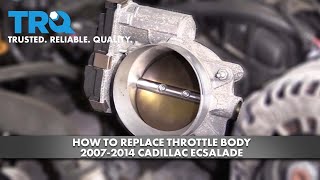
Typical fix: Replace the entire throttle body assembly. 🎬 Watch this step-by-step guide to replacing your Escalade's throttle body. A 'relearn' procedure is required after installation, which can sometimes be done via a specific drive cycle but may require a scan tool like a Tech 2/GDS.
Est. part cost: $150-$350 - Poor Electrical Connection or Damaged Wiring 🟡 Medium Probability The wiring harness connector at the throttle body is exposed to engine heat and vibration. This can lead to loose crimps, backed-out pins, or wires breaking inside the insulation, typically within 1-4 inches of the connector.
How to confirm: Visually inspect the connector for corrosion or backed-out pins. Perform a 'wiggle test' on the harness with the engine running; if wiggling the wires near the connector triggers the fault or causes the engine to stumble, the harness is faulty.
Typical fix: Repair the damaged section of the wiring harness or replace the connector pigtail. GM offers a pigtail connector, but proper splicing with crimping tools is essential to avoid future issues.
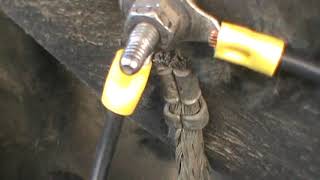
Est. part cost: $20-$50 - Poor Ground Connection ⚪ Low Probability Certain engine grounds, particularly G103 (front of passenger side cylinder head 🎬 Check out this breakdown of the top causes for P1516.) and G104 (left rear of engine block), can become corroded or loose, causing a variety of difficult-to-diagnose electrical issues, including TAC module problems.
How to confirm: Locate the ground points on the engine block and firewall. Check for tightness and signs of corrosion. A voltage drop test across the grounds can confirm a bad connection.
Typical fix: Remove, clean all contact surfaces with a wire brush or sandpaper, and securely re-tighten the ground connections. Some owners add redundant ground straps from the engine block to the firewall as a preventative measure.
Est. part cost: $0-$15
Rare But Worth Checking
- Failing Powertrain Control Module (PCM): This is extremely rare. The PCM should only be considered after all other possibilities, including the throttle body, wiring, and grounds, have been thoroughly ruled out.
- Failing Alternator/Voltage Regulator: In some rare cases documented in forums, a failing voltage regulator inside the alternator caused erratic system voltage, leading to TAC module codes. This should be investigated if the problem persists after addressing the more common causes.
Diagnosis Steps
- Verify the battery is fully charged (at least 12.6V) and the terminals are clean. Low voltage can cause issues with electronic modules.
- Scan for all DTCs. Note P1516 and any other codes present, like P2101 or P2135, and analyze freeze frame data for clues.
- Visually inspect the throttle body wiring harness and connector. Look for chafing, melting, or corrosion. Check for broken wires inside the insulation by gently pulling on the yellow and brown wires within 4 inches of the connector; if they stretch, they are broken internally.
- Inspect the main engine ground straps, especially G103 on the front of the passenger cylinder head and G104 on the rear of the driver's side cylinder head, for corrosion and tightness.
- Using a scan tool with live data, monitor both the Commanded Throttle Position and the Actual Throttle Position (TP Sensor 1 and 2). Command the throttle open and closed with the scan tool or by pressing the pedal (engine off, key on). The actual positions should track the commanded position smoothly and without delay. A lag, jump, or mismatch points to a faulty throttle body.
- If scan tool data is inconclusive, perform a 'wiggle test' on the throttle body connector and harness while monitoring the TP sensor voltages. If the voltage fluctuates or the code sets, the connector or wiring is faulty.
- If wiring and connections are good, but the scan tool data shows a performance issue or a grinding noise is heard from the unit, the throttle body assembly is the confirmed culprit and should be replaced.
- After replacement, perform the throttle relearn procedure. This typically involves letting the engine idle for 3 minutes, turning it off for 60 seconds, and repeating the cycle. A drive cycle or a scan tool may be required if the idle remains high.
Parts You'll Likely Need
- Throttle Body Assembly
(OEM #12605109)— This is the most common failure for code P1516. The internal electronics fail, and the sensor is not serviceable separately on this model. The ACDelco service part number is 217-3153, which corresponds to GM OEM part 12605109 or 19420707.
Trusted brands: ACDelco (GM Genuine), Bosch, Hitachi, Dorman
OEM price range: $250-$350
Aftermarket price range: $150-$250
Related Codes That Often Appear With This One
- P2101 — This code, 'Throttle Actuator Control Motor Circuit Range/Performance', is often set alongside P1516 as it also points directly to a problem with the throttle body's internal motor or its control.
- P2135 — This code, 'Throttle/Pedal Position Sensor/Switch A/B Voltage Correlation', indicates a mismatch between the two internal throttle position sensors, a common failure mode within the throttle body assembly that triggers limp mode.
- P0068 — Relates to a discrepancy between the Mass Airflow (MAF) sensor, Manifold Absolute Pressure (MAP) sensor, and the throttle position, which can be triggered by the throttle not being where the PCM expects it to be.
- P0121 — This code, 'Throttle/Pedal Position Sensor/Switch 'A' Circuit Range/Performance', directly relates to the performance of the throttle position sensor, which is part of the throttle body assembly.
Technical Service Bulletins (TSBs) & Recalls
- PIP4578B: Addresses idle surge, reduced engine power, and DTCs including P1516 on high-mileage vehicles, pointing towards throttle body issues related to carbon buildup, but also acknowledges the set of related electronic codes.
- PIP3089B: Specifically calls out intermittent P1516 and P2135 codes being caused by loose wiring crimps or broken wires within 1-4 inches of the throttle body connector, advising inspection before part replacement.
Platform-Specific Known Issues
- The electronic throttle body is a widely acknowledged weak point on high-mileage 2007-2014 GM trucks and SUVs, including the Escalade.
- Failure almost always results in the 'Reduced Engine Power' limp mode, which is a significant drivability and safety concern.
- Wiring failures are common within a few inches of the throttle body connector due to heat and vibration. TSB #PIP3089B specifically calls out checking for loose crimps or broken wires in this area.
- Corroded or loose grounds at the back of the engine block (G104) are a known, though less common, cause that can mimic a failed throttle body.
Mechanic-Grade Diagnostic Values
- Throttle Position Sensor (TPS) Voltage — expected: Typical range is approximately 0.5V at closed throttle to 4.5V at wide-open throttle.. Failure: Voltage that is jumpy, erratic, or does not smoothly track from 0.5V to 4.5V as the throttle plate is opened indicates a failing sensor.
- Battery/System Voltage — expected: Approximately 12.6V with Key On, Engine Off. Between 13.7V and 14.7V with the engine running.. Failure: Sustained voltage below 12V or erratic fluctuations can cause various electronic modules, including the TAC module, to set faults.
- Ground Circuit Voltage Drop — expected: Less than 100mV (0.1V). Failure: A voltage reading higher than 100mV between the ground point (e.g., G103/G104 stud) and the negative battery terminal indicates high resistance in the ground circuit, which can cause intermittent electronic issues.
Scan Tool Commands That Help
- Tech 2 / GDS2 or equivalent professional scan tool: Throttle Position/TAC Motor Control — With the key on and engine off, this bidirectional control allows a technician to command the throttle plate to specific percentages (e.g., 0%, 25%, 50%) and observe if the actual throttle position reported by the sensors matches the command without lag or error, which is crucial for confirming a faulty throttle body.
- N/A - Manual Procedure: Idle Learn / Throttle Relearn Procedure — After replacing the throttle body or disconnecting the battery, the PCM needs to relearn the closed throttle position. The common manual procedure is: warm up the engine, let it idle in Park for 3 minutes, turn the engine off for 60 seconds, restart and idle for another 3 minutes. A short drive cycle may be needed if idle remains high.
Wiring & Ground Locations
- G103 — On the front of the passenger side cylinder head, visible as a nut on a stud holding two ground wires.. A loose or corroded G103 ground can cause intermittent electrical faults for various engine sensors and modules, potentially leading to TAC-related codes like P1516. TSBs recommend checking this ground.
- G104 — On the left rear (driver's side) corner of the engine, mounted to the cylinder head. It can be difficult to access.. This is a critical ground point. Multiple owner and technician reports identify a loose or corroded G104 as a direct, though less common, cause of P1516 and 'Reduced Engine Power' mode after other common fixes have failed.
- Throttle Body Connector — The 6-pin electrical connector plugged directly into the throttle body assembly.. This is the most common point for wiring failures. Wires can break internally within 1-4 inches of the connector due to heat and vibration, causing intermittent loss of signal for the throttle motor or position sensors. A 'wiggle test' on this harness is a key diagnostic step.
Real Owner Repair Stories
- Tahoe Yukon Forum user (2003-2006 GM SUV (similar GMT800 platform, but issue is identical on GMT900)) — Recurring 'Reduced Engine Power' message and code P1516, especially in cold weather or after hitting bumps.
❌ Tried (didn't work) Replacing the Throttle Position Sensor (TPS) by the previous owner., Adding multiple redundant ground wires from the firewall to the engine block and TAC module; this provided a temporary fix but the problem returned.
✅ What actually fixed it The user discovered the aftermarket pigtail connector on the throttle body was poorly crimped. Wiggling the harness near the connector immediately triggered the 'Reduced Engine Power' mode. Properly repairing the crimped connections on the pigtail permanently solved the problem. The user concluded that the wiring, not the throttle body or grounds, was the true root cause. - GM Forum user (2006 GMC Sierra 2500HD 6.0L) — P1516, P2135, P0220 codes and 'Reduced Engine Power' mode, primarily at idle or when coming to a stop. A clicking sound was heard from the throttle body just before it entered limp mode.
❌ Tried (didn't work) Cleaning the throttle body., Replacing the throttle position sensor on the side of the throttle body., Performing an idle relearn procedure.
✅ What actually fixed it After observing that the gear inside the throttle position sensor housing was loose, the user replaced the entire throttle body assembly. This completely resolved the codes and the 'Reduced Engine Power' issue.
OEM Part Supersession History
12605109→19420707— Standard part number update by GM.
Heads up: The ACDelco service part number is 217-3153, which corresponds to these GM numbers. They are directly interchangeable.12570790 (Silver Blade)→12605109 (Gold Blade)— Part design change.
Heads up: The earlier silver blade throttle body (12570790) was used on some 2007-2008 models. The later gold blade (12605109) was used from 2009-2014. While they may be physically interchangeable, it is best to match the blade color and part number to the vehicle's original equipment to ensure correct software compatibility.
Model Year Variations Within This Range
- 2007-2008 vs 2009-2014: There was a change in the throttle body part number around the 2009 model year. Earlier models may have used a throttle body with a silver blade (PN 12570790), while later models used one with a gold blade (PN 12605109/19420707). While functionally similar, using the correct part for the vehicle's specific year is recommended.
Helpful Videos


Used OEM Parts in Stock
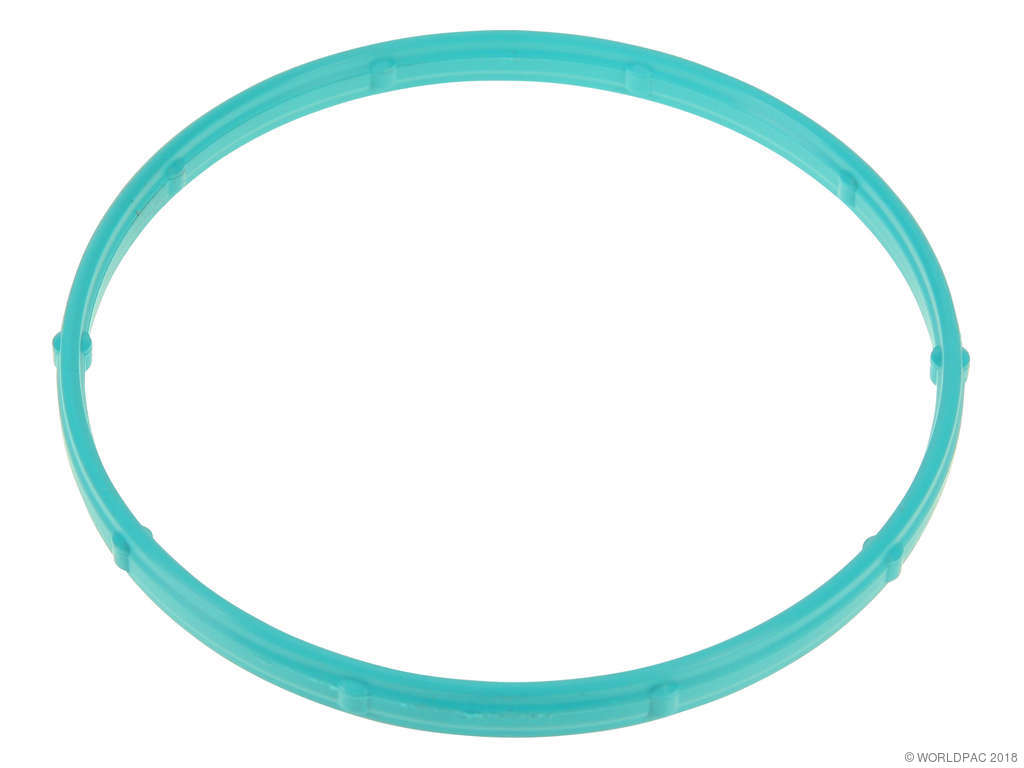
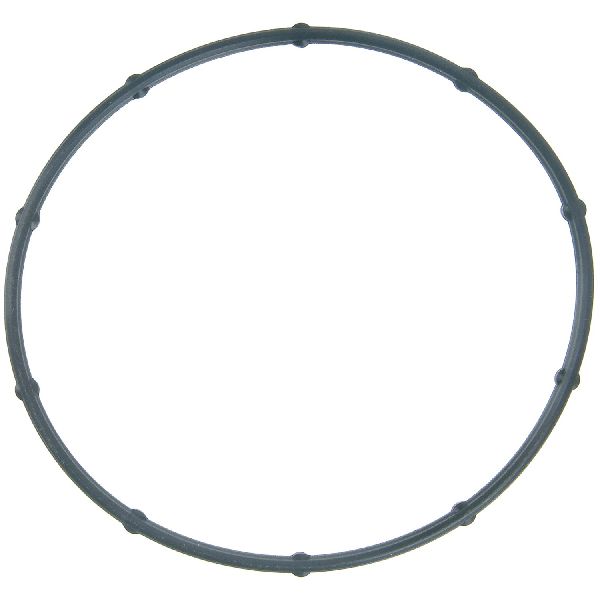
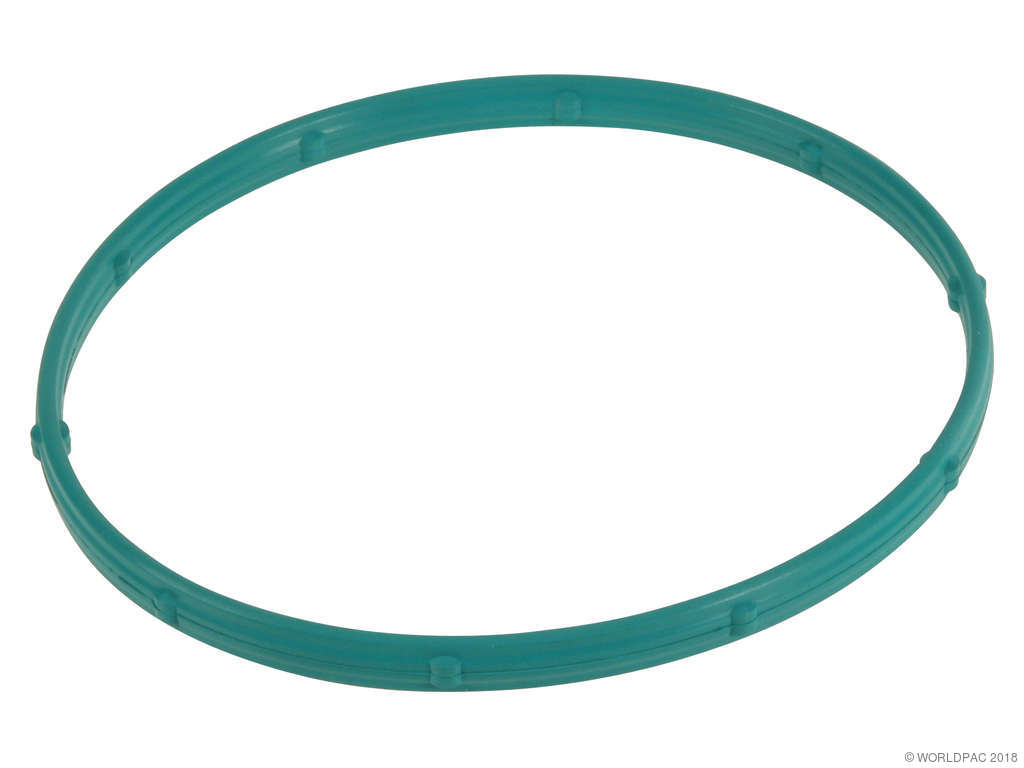
New Aftermarket Parts Available


The information in this article is provided for general reference and educational purposes only. Vehicle specifications, procedures, and part compatibility can vary by production date, trim level, and region. Always consult your vehicle's factory service manual and verify part numbers before purchasing or performing repairs. Safety-critical components such as airbags, seat belts, and braking systems should be installed by a qualified professional.
- Cadillac ESCALADE:
- 🧭 Diagnostic Flowchart
- 🎬 Helpful Videos
- 🛍️ Shop This Part
- What's Unique About the 2007-2014 Cadillac ESCALADE
- Symptoms You May Notice
- Most Likely Causes
- Rare But Worth Checking
- Diagnosis Steps
- Parts You'll Likely Need
- Related Codes That Often Appear With This One
- Technical Service Bulletins (TSBs) & Recalls
- Platform-Specific Known Issues
- Mechanic-Grade Diagnostic Values
- Scan Tool Commands That Help
- Wiring & Ground Locations
- Real Owner Repair Stories
- OEM Part Supersession History
- Model Year Variations Within This Range
- 🎟️ Get 5% Off