

P1516 on 2007-2013 Chevrolet Avalanche: Reduced Power, Causes, and Fixes
On a 2007-2013 Chevy Avalanche, code P1516 almost always points to a problem with the electronic throttle body system, triggering the 'Reduced Engine Power' message. The most common fix is replacing the entire throttle body assembly, which costs between $100-$290 for the part. However, checking for corroded wiring at the throttle body connector and verifying engine ground connections are crucial diagnostic steps that can lead to a much cheaper repair.
- P1516 on a 2007-2013 Avalanche will almost certainly trigger the 'Reduced Engine Power' warning, making it unsafe for normal driving.
- The most probable cause is a failing electronic throttle body assembly. Replacing the entire unit is the most common and effective fix.
- Before replacing parts, always inspect the throttle body wiring connector for damage and check that engine ground connections are clean and tight, as these are also common culprits.
- After cleaning or replacing the throttle body, an idle relearn procedure is necessary to ensure proper engine operation. This can usually be done without a scan tool.
What's Unique About the 2007-2013 Chevrolet AVALANCHE
On this generation of GM trucks (GMT900 platform), including the Avalanche, the electronic throttle control system is a known weak point, especially on higher-mileage vehicles. The issue is so common that GM issued Technical Service Bulletins (TSBs) that directly mention P1516 in conjunction with the 'Reduced Engine Power' mode. The problem often stems from either electronic failure within the throttle body assembly itself (worn internal contacts), poor electrical grounds, or a corroded/damaged wiring connector at the throttle body.
Diagnostic Flowchart
Tap your situation to follow the diagnostic path that matches what you're seeing on this vehicle.
Generation note: The 2007-2013 Chevrolet Avalanche covers a single generation (GMT900 platform), so the causes and fixes are consistent across this year range. The issue is also shared with its platform mates like the Silverado, Sierra, Tahoe, and Yukon.
Symptoms You May Notice
- "Reduced Engine Power" message on the dashboard.
- Check Engine Light is on.
- "Service Stabilitrak" or "Traction Control Off" message may appear simultaneously.
- Limited throttle response and poor acceleration (limp mode).
- Rough or high idle.
- Stalling, especially when coming to a stop or at idle.
- Hard or erratic automatic transmission shifting as a result of the engine power issue.
- In rare cases, the truck may turn over but fail to start.
- Replacing the accelerator pedal sensor first. While related to throttle control, it's far less likely to be the cause of P1516 than the throttle body, its wiring, or grounds.
- Replacing the Mass Airflow (MAF) sensor. A dirty MAF can cause performance issues but does not typically set P1516.
Most Likely Causes
- Faulty Throttle Body Assembly 🔴 High Probability → Shop Fuel Injection Throttle Body The electronic components (motor and position sensor) within the throttle body are a known high-failure item on these GM trucks. The internal potentiometer contacts wear out over time, creating dead spots and sending erratic signals to the PCM. This is noted in TSB PIP4578B for high-mileage vehicles.
How to confirm: With a scan tool, monitor the commanded vs. actual throttle position percentages. If they don't match, jump erratically, or the actual position is stuck, the throttle body is likely faulty. Often, after ruling out wiring and grounds, replacement is the most effective fix.
Typical fix: Replace the entire throttle body assembly. After replacement, a throttle relearn procedure is required, which can be done without special tools by letting the vehicle idle for several minutes in specific cycles.
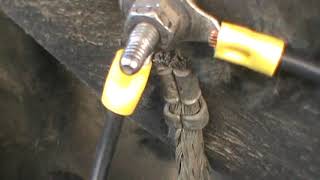
Est. part cost: $100 - $290 - Wiring or Connector Issues at Throttle Body 🟡 Medium Probability → Shop Fuel Injection Throttle Body The wiring harness connector (pigtail) at the throttle body is exposed to engine heat and vibration, which can lead to loose terminal crimps, corrosion, or wires breaking inside the insulation, typically within 1 to 4 inches of the connector. 🎬 Watch: How to find and fix common wiring harness issues. This is a very common point of failure.
How to confirm: With the engine running, carefully wiggle the wiring harness near the throttle body connector. If this causes the engine to stumble or immediately triggers the 'Reduced Engine Power' message, a wiring fault is present. Visually inspect the connector pins for green corrosion or backed-out terminals.
Typical fix: Repair the damaged section of wire or replace the throttle body connector pigtail. Replacement pigtails like the Dorman 645-203 are widely available.
Est. part cost: $15 - $40 - Poor Engine Ground Connections 🟡 Medium Probability Numerous forum discussions and a GM TSB point to corroded or loose engine ground straps as a common cause for intermittent electronic issues on this platform. A bad ground can cause voltage fluctuations that disrupt the TAC module's operation. The ground strap from the firewall to the back of the cylinder head is a frequent culprit.
How to confirm: Inspect the main ground straps from the engine block to the chassis and firewall. On GMT900 trucks, grounds G103 (front passenger side of cylinder head) and G104 (rear driver's side of cylinder head) are frequently mentioned as culprits. A voltage drop test across the grounds can confirm a bad connection. Many owners report simply adding redundant ground wires as a permanent fix.
Typical fix: Remove, clean the ground connection points with a wire brush until they are shiny metal, apply dielectric grease, and re-secure them tightly. In some cases, owners add extra ground wires from the throttle body or engine block to the firewall.
Est. part cost: $5 - $20 - Dirty or Carbon-Clogged Throttle Body ⚪ Low Probability → Shop Fuel Injection Throttle Body As mentioned in TSB PIP4578B, carbon buildup from the PCV system can restrict the movement of the throttle plate, causing the actual position to deviate from the commanded position, especially near idle on high-mileage engines.
How to confirm: Remove the air intake tube and visually inspect the throttle bore and plate. If significant black carbon buildup is visible, especially around the edges of the plate, it needs cleaning.
Typical fix: Clean the throttle body thoroughly with a dedicated throttle body cleaner and a soft cloth or brush. It is best to remove the throttle body for cleaning. Do not spray cleaner directly into the electronic components. An idle relearn procedure must be performed after cleaning.
Est. part cost: $5 - $15
Rare But Worth Checking
- Failing Powertrain Control Module (PCM): This is very rare. Before condemning the PCM, all other possibilities, especially wiring, grounds, and the throttle body itself, must be exhaustively ruled out. A failing PCM may also set other unrelated codes.
- Faulty Accelerator Pedal Position (APP) Sensor: While a failing pedal sensor can cause similar symptoms, it usually triggers different codes specific to the pedal, such as P2138. It's an uncommon cause for an isolated P1516, and replacing it often does not fix the issue.
Diagnosis Steps
- Retrieve all fault codes using an OBD-II scanner. Note any other codes that appear with P1516, such as P2101 or P2135.
- Perform a wiggle test: With the engine idling, carefully wiggle the wiring harness and connector at the throttle body. If the idle stumbles or the REP message appears, the fault is in the wiring/connector.
- Visually inspect the throttle body connector for loose pins, corrosion (green crust), or damaged wires. Check for broken wires inside the insulation near the connector.
- Inspect and clean the primary engine ground connections. Key locations on GMT900 trucks include G103 (front passenger cylinder head) and G104 (rear driver's side cylinder head), and the firewall-to-engine ground strap.
- Use a scan tool to monitor live data for 'Commanded Throttle Position' and 'Actual Throttle Position'. The values should closely track each other as the pedal is pressed. Erratic jumps or a lack of response from the 'Actual' value points to a bad throttle body.
- Remove the air intake duct and inspect the throttle body for heavy carbon buildup. Clean if necessary, following the proper procedure.
- If wiring and grounds are confirmed good and cleaning does not resolve the issue, the throttle body assembly is the most likely failed component and should be replaced.
- After any repair (cleaning or replacement), perform a throttle relearn procedure. This can often be done by starting the engine, idling for 3 minutes, turning it off for 60 seconds, and repeating the 3-minute idle.
Parts You'll Likely Need
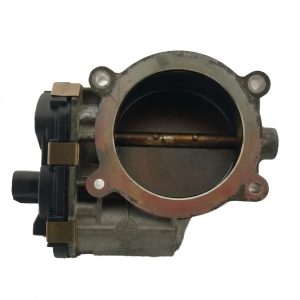
- Electronic Throttle Body Assembly
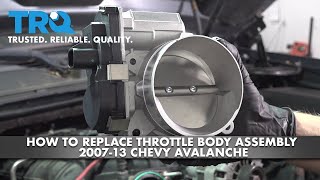
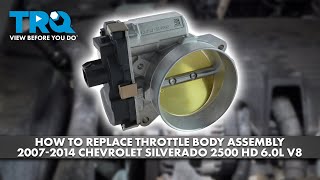
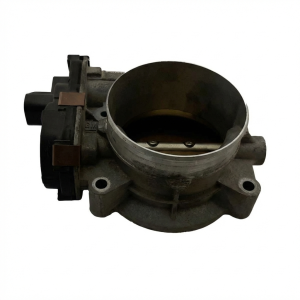
(OEM #12678223 (superseded by 12740727))— This is the most frequent point of failure for code P1516. The assembly contains the throttle plate, motor, and position sensors, and replacing it as a unit resolves the issue in most cases.
Trusted brands: ACDelco (OEM), Bosch, Hitachi, Cardone
OEM price range: $200-$290
Aftermarket price range: $100-$205 - Throttle Body Connector Pigtail
(OEM #ACDelco PT2319)— If the wiring at the throttle body is found to be damaged or corroded from heat and vibration, replacing the connector pigtail is the standard repair.
Related Codes That Often Appear With This One
- P2101 — This code specifically means 'Control Module Throttle Actuator Control Motor Circuit Range/Performance', directly pointing to an issue with the throttle body motor, a common cause of P1516. They often appear together and are mentioned in the same TSB.
- P2135 — This code indicates a 'Throttle/Pedal Position Sensor/Switch 'A'/'B' Voltage Correlation' error. It often appears with P1516 when the internal sensors of the throttle body fail and send conflicting signals to the PCM.
- P0121 — This is a general code for 'Throttle/Pedal Position Sensor 'A' Circuit Performance'. It can be logged alongside P1516 when the throttle body's performance is compromised by carbon buildup or electronic failure.
Technical Service Bulletins (TSBs) & Recalls
- PIP4578B
- 07-06-04-019G
Platform-Specific Known Issues
- GM Technical Service Bulletin PIP4578B specifically addresses idle surge, reduced engine power, and a list of DTCs including P1516 on high-mileage V8 engines, recommending throttle body inspection, cleaning, and an idle learn reset.
- GM Technical Service Bulletin #07-06-04-019G addresses intermittent P1516, P2101, P2135, and other codes, pointing to poor terminal tension at the throttle body connector or broken wires within the harness insulation. It also advises checking grounds G103 and G104.
- Owner forums frequently cite adding redundant ground wires from the engine block to the firewall as a robust, long-term solution to prevent recurrence of various electrical gremlins, including P1516.
Mechanic-Grade Diagnostic Values
- Throttle Position Sensor (TPS) Reference Voltage — expected: ~5.0 volts. Failure: Voltage significantly lower than 5.0V indicates a problem with the PCM or wiring.
- Throttle Position Sensor (TPS) Signal Voltage (Throttle Closed) — expected: ~0.5 volts. Failure: Voltage significantly different from 0.5V at closed throttle suggests a faulty sensor or incorrect calibration.
- Throttle Position Sensor (TPS) Signal Voltage (Throttle Wide Open) — expected: ~4.5 volts. Failure: Voltage does not reach ~4.5V, or the voltage sweep is erratic with dropouts, indicating a worn or faulty sensor.
- Engine Grounds Voltage Drop — expected: Less than 0.1 volts. Failure: A reading higher than 0.1 volts between the ground point (e.g., G103/G104 stud) and the negative battery terminal indicates a poor ground connection that needs cleaning or repair.
Scan Tool Commands That Help
- GDS2 / Tech2: Throttle Position Sensor Data Display — Use this to monitor the live data stream of Commanded vs. Actual throttle position percentages. A discrepancy between the two values while pressing the accelerator pedal points directly to a fault in the TAC system.
- GDS2 / Tech2: Idle Learn / Throttle Relearn — This function must be performed after cleaning or replacing the throttle body. It resets the learned idle and closed-throttle positions in the PCM. While it can often be done without a tool, using the scan tool function is the most reliable method.
Wiring & Ground Locations
- G103 — On the front of the passenger side cylinder head, visible as a nut on a stud holding two ground wires.. This is a primary engine and PCM ground. A poor connection here is a well-documented cause of intermittent TAC module codes like P1516, as noted in GM service information.
- G104 — On the rear of the driver's side cylinder head, near the firewall. A ground strap often connects from here to the firewall. It is very difficult to reach.. This ground is critical for the engine block-to-body connection. Corrosion or looseness here can cause fluctuating voltages for various sensors, leading to P1516.
- Throttle Body Connector (C1) — The 8-pin electrical connector plugged directly into the electronic throttle body assembly.. This is the most common point for wiring failures. Wires can break internally from vibration and heat, or pins can corrode, causing a loss of signal between the PCM and the throttle body motor/sensors. A wiggle test here is a key diagnostic step.
- Throttle Actuator Control (TAC) Module — On older GMT800 platforms it was a separate module, but on the 2007-2013 GMT900 platform, the TAC logic is integrated into the Powertrain Control Module (PCM). The relevant wiring to check is the throttle body harness and the main PCM connectors.. Confusion with the older, separate TAC module can lead to misdiagnosis. For this vehicle, all checks lead back to the throttle body, its wiring, the grounds, and the PCM itself.
Real Owner Repair Stories
- Tahoe Yukon Forum user (2003-2006 GM SUV (similar GMT800/900 architecture)) — Recurring 'Reduced Engine Power' message and P1516 code, especially when hitting bumps or on cold nights.
❌ Tried (didn't work) Replacing the TPS sensor, Replacing the throttle body, Replacing the accelerator pedal sensor
✅ What actually fixed it The user first found a poorly crimped wire on the aftermarket throttle body pigtail connector. After repairing that, the issue returned intermittently. The final, permanent fix was adding several new, redundant 10-gauge ground wires: one from the firewall to the engine block (driver side valve cover), and another from the TAC module/PCM case to the firewall. The user concluded that the factory grounds were insufficient or had degraded over time. - YouTube user Jim Robinson (GM Truck (year not specified, but similar issue)) — Random and frequent 'Reduced Power' light and P1516 code.
❌ Tried (didn't work) Initial diagnosis was inconclusive.
✅ What actually fixed it The owner cleaned multiple engine and chassis ground connections. After cleaning the grounds, he drove the truck for 40 miles without the code returning, concluding that the poor ground connections were the likely cause of the intermittent fault.
OEM Part Supersession History
12678223→12740727— Standard part number update and consolidation by GM. The new part is the current OEM replacement.
Heads up: Part number 12740727 also replaces several other throttle body numbers (12620263, 12678312, etc.) and is used on a wide range of GM engines. It is the correct service replacement for the Avalanche in this year range.
Helpful Videos

Used OEM Parts in Stock
New Aftermarket Parts Available


The information in this article is provided for general reference and educational purposes only. Vehicle specifications, procedures, and part compatibility can vary by production date, trim level, and region. Always consult your vehicle's factory service manual and verify part numbers before purchasing or performing repairs. Safety-critical components such as airbags, seat belts, and braking systems should be installed by a qualified professional.
- Chevrolet AVALANCHE:
- 🧭 Diagnostic Flowchart
- 🎬 Helpful Videos
- 🛍️ Shop This Part
- What's Unique About the 2007-2013 Chevrolet AVALANCHE
- Symptoms You May Notice
- Most Likely Causes
- Rare But Worth Checking
- Diagnosis Steps
- Parts You'll Likely Need
- Related Codes That Often Appear With This One
- Technical Service Bulletins (TSBs) & Recalls
- Platform-Specific Known Issues
- Mechanic-Grade Diagnostic Values
- Scan Tool Commands That Help
- Wiring & Ground Locations
- Real Owner Repair Stories
- OEM Part Supersession History
- 🎟️ Get 5% Off