

P1516 on 2004-2011 Chevrolet Colorado: Reduced Power and Throttle Body Fixes
P1516 on a 2004-2011 Colorado almost always indicates a problem with the electronic throttle body, triggering 'Reduced Engine Power' mode. The most common fixes, in order, are: cleaning the throttle body, inspecting and improving engine ground connections, and replacing the throttle body assembly. Wiring issues at the throttle body connector are also a known culprit.
- P1516 on a 2004-2011 Colorado will put the truck in 'Reduced Engine Power' mode.
- The first and most important diagnostic step is to thoroughly clean the throttle body.
- If cleaning doesn't work, check for bad ground connections before buying expensive parts.
- If the throttle body does need replacement, it is a straightforward DIY job for most home mechanics.
- This code is often accompanied by other throttle-related codes like P2101, P2119, and P2176, all pointing to the same root problem area.
What's Unique About the 2004-2011 Chevrolet COLORADO
The first-generation Chevrolet Colorado and its platform mates (GMC Canyon, Hummer H3) are known to set this code, particularly in high-mileage vehicles or under extreme cold-start conditions, as documented in GM Technical Service Bulletins (TSBs). Owners frequently experience the dreaded 'Reduced Engine Power' message, which severely limits vehicle speed. While the root cause is often a simple-to-fix dirty throttle body, poor grounding straps and wiring harness issues are also very common culprits on this specific platform, sometimes making diagnosis tricky. Many owners on forums like 355nation.net and TahoeYukonForum.com have permanently solved recurring P1516 issues by adding redundant ground wires between the battery, firewall, engine block, and TAC module.
Diagnostic Flowchart
Tap your situation to follow the diagnostic path that matches what you're seeing on this vehicle.
Symptoms You May Notice
- "Reduced Engine Power" message on the instrument cluster
- Check Engine Light is on
- Severely limited acceleration and throttle response
- Engine may stall or hesitate, especially at idle
- Rough or surging idle
- Difficulty starting the engine
- "Service Stab Sys" or "Traction Failed" messages may appear simultaneously on some models.
- Replacing the accelerator pedal position (APP) sensor. While the APP sensor is part of the throttle control system, P1516 and its companion codes (like P2101) specifically point to a problem at the throttle body itself, not the pedal.
Most Likely Causes
- Dirty or Carbon-Clogged Throttle Body 🔴 High Probability → Shop Fuel Injection Throttle Body As noted in TSB PIP4578B, this is common on high-mileage vehicles. Carbon and oil vapor from the PCV system build up in the throttle bore, restricting the movement of the throttle plate, especially when cold. The PCM learns to compensate for this buildup, but a sudden change (like from cleaning) or excessive buildup can cause a correlation error.
How to confirm: Remove the air intake hose from the throttle body and visually inspect for a thick black ring of carbon where the throttle plate closes. The plate may feel sticky or slow to move when pushed by hand.
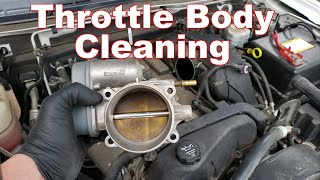
Typical fix: Thoroughly clean the throttle body bore and plate with a dedicated throttle body cleaner 🎬 Watch: A step-by-step guide to cleaning your throttle body properly. and a soft brush or rag. Do not spray cleaner directly into the electronics. An idle relearn procedure is recommended after cleaning.
Est. part cost: $5-$15 - Poor Ground Connections 🔴 High Probability This is a widely documented issue on GMT355 platform trucks. Corroded or weak ground straps between the engine, body, and firewall cause voltage drops that disrupt communication between the PCM and the TAC module. Forum users report that grounds on the back of the engine block are a primary culprit but are difficult to access.
How to confirm: Inspect the main ground straps for corrosion, looseness, or breakage. A voltage drop test between the engine block and battery negative terminal can confirm a bad ground. Wiggling harnesses while the engine is running may trigger the fault.
Typical fix: Clean all ground connection points to bare metal and tighten securely. Many owners add new, redundant 8 or 10-gauge ground wires from the battery negative terminal to the throttle body, the firewall, and the engine block to permanently solve the problem.
Est. part cost: $10-$30 - Failing Throttle Body Assembly 🟡 Medium Probability → Shop Fuel Injection Throttle Body The electronic motor and integrated position sensors within the throttle body can wear out over time, leading to the performance correlation error that cleaning cannot fix.
How to confirm: If a thorough cleaning and verification of all grounds and wiring does not resolve the code, the throttle body itself is the likely failure point. A scan tool monitoring commanded vs. actual throttle position can show a persistent deviation.
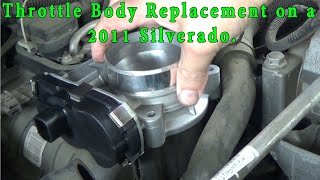
Typical fix: Replace the entire throttle body assembly. An idle relearn procedure is required after installation, which can often be done without a scan tool by letting the vehicle idle for several minutes. OEM Part numbers include ACDelco 217-3106 and GM 12601387 🎬 Watch: How to replace the throttle body assembly yourself., depending on the engine.
Est. part cost: $100-$250 - Damaged Wiring or Connector at Throttle Body 🟡 Medium Probability → Shop Fuel Injection Throttle Body Engine vibration and heat can cause the wires in the harness connector (pigtail) at the throttle body to fray or break internally over time, often right at the connector. This is a very common point of failure.
How to confirm: With the engine running, carefully wiggle the connector and wiring harness leading to the throttle body to see if it triggers the fault or causes a change in idle. Visually inspect the wires for any signs of damage, and gently tug on each wire at the connector to check for internal breaks.
Typical fix: Repair the damaged wire or replace the throttle body connector pigtail. Pigtail replacement kits are widely available (e.g., Duralast 417, GM Genuine Parts PT1798).
Est. part cost: $15-$40
Rare But Worth Checking
- Extreme Cold Weather: TSB PIP4573B specifically notes that this code can be triggered during cold starts when ambient temperatures are around -10°F (-23°C). This may be due to a frozen PCV system causing excessive crankcase pressure or a weak battery affecting throttle plate operation.
- Failing Powertrain Control Module (PCM): This is very rare. The PCM should only be considered after all other possibilities (throttle body, wiring, grounds) have been exhaustively ruled out. Sometimes, simply having the PCM reflashed with the latest GM calibration can resolve intermittent electronic issues.
- Weak or Failing Battery: A weak battery can cause low voltage during cranking, especially in cold weather, which can be misinterpreted by the TAC module and trigger a P1516 code. If the code appears primarily during startup, the battery should be tested.
Diagnosis Steps
- Scan the PCM for trouble codes. Confirm P1516 is present and note any other codes, especially P2101, P2119, or P2176.
- Visually inspect the wiring harness and connector at the throttle body. With the engine idling, carefully wiggle the connector and harness to see if the engine stumbles or the code sets.
- Inspect and test the battery and charging system. A weak battery can cause erroneous TAC module codes during startup.
- Remove the air intake duct from the throttle body. Inspect the throttle bore and plate for heavy carbon buildup.
- If dirty, clean the throttle body thoroughly using a dedicated cleaner, a soft cloth, and a toothbrush. Manually move the plate to ensure it doesn't bind or stick.
- Inspect, clean, and tighten the main engine and body ground points. Key locations are on the frame below the driver's door, the front of the frame, and the engine block. For persistent issues, consider adding redundant ground wires as a permanent fix.
- If cleaning and grounds don't resolve the issue, use a scan tool with live data to monitor commanded vs. actual throttle position. A significant, persistent deviation points to a faulty throttle body.
- If the code persists after the above steps, replace the throttle body assembly.
- After cleaning or replacement, perform a throttle body relearn procedure. This can often be done by starting the engine and letting it idle for 3 minutes, turning it off for 1 minute, then restarting and idling for another 3 minutes. A scan tool provides the most reliable method.
Parts You'll Likely Need
- Throttle Body Assembly
(OEM #ACDelco 217-3106 (for 2.9L/3.7L), GM 12601387)— This is the most common repair if cleaning and grounding do not solve the problem. The integrated motor and sensors wear out over time. - Throttle Body Connector Pigtail
(OEM #Wells 1P2573, GM PT1798)— The wires frequently break at the connector due to engine vibration and heat, causing intermittent connection issues. - Ground Straps/Wire — Factory grounds are known to corrode or become loose. Adding redundant grounds is a common, permanent fix for persistent electrical issues related to this code.
Related Codes That Often Appear With This One
- P2101 — Control Module Throttle Actuator Position Performance. This code is very similar to P1516 and is often set alongside it, as noted in TSB PIP4578B. It directly relates to the performance of the throttle actuator motor.
- P2119 — Throttle Actuator Control Throttle Body Range/Performance. This code also points to the throttle body's inability to move correctly, as mentioned in TSBs PIP4578B and PIP4573B.
- P2176 — Throttle Actuator Control System - Idle Position Not Learned. This code often appears after a battery disconnect or throttle body cleaning/replacement if the relearn procedure isn't performed correctly. It is also cited in TSBs PIP4578B and PIP4573B.
- P0068 — MAP/MAF - Throttle Position Correlation. This code indicates a mismatch between the airflow measured by the MAF/MAP sensor and the position of the throttle, which can be a direct result of the throttle not being where the PCM expects it to be. It is also cited in TSB PIP4578B.
Technical Service Bulletins (TSBs) & Recalls
- PIP4578B: Addresses idle surge, reduced power, and a group of DTCs including P1516 on high-mileage vehicles due to carbon buildup in the throttle body.
- PIP4573B: Mentions P1516 in the context of cold-start issues in extremely low temperatures, potentially caused by a frozen PCV system or weak battery.
Platform-Specific Known Issues
- TSB #PIP4578B: High-Mileage Idle Surge & Reduced Power: This TSB notes that as carbon builds up in high-mileage vehicles, the PCM learns to open the throttle plate more at idle. This can eventually lead to an idle surge, Reduced Engine Power mode, and DTCs including P1516. The prescribed fix is to clean the throttle body and perform an idle learn reset with a scan tool.
- TSB #PIP4573B: Extreme Cold Start Issues: This bulletin links P1516 and other TAC codes to cold starts in ambient temperatures around -10°F (-23°C). The cause can be a frozen PCV system creating excessive crankcase pressure that may lead to oil leaks, or a weak battery struggling in the cold.
- Forum-Documented Grounding Fix: A very common repair documented by owners on forums like 355nation.net and TahoeYukonForum.com is to add supplementary ground wires. A popular solution involves running a new ground wire from the negative battery terminal directly to one of the bolts on the Throttle Actuator Control (TAC) module, and adding other grounds from the firewall to the engine block. This often permanently resolves intermittent P1516 codes that cleaning or parts replacement could not fix.
Mechanic-Grade Diagnostic Values
- Throttle Valve Position at Rest (Key-On, Engine-Off) — expected: Approximately 20% open. Failure: The throttle plate is fully closed, stuck open further than specified, or does not move freely with spring pressure.
- Ignition Voltage (for DTC to run) — expected: Greater than 8.0 volts. Failure: Voltage below 8.0V during cranking or operation may cause erroneous codes.
- DTC Set Time — expected: N/A. Failure: The code sets if the mismatch between commanded and actual throttle position persists for more than 0.5 seconds.
Scan Tool Commands That Help
- Tech2 or similar professional scan tool: Throttle Blade Control Function — Use this function, found in the Throttle Actuator Control (TAC) system menu, to command the throttle through its entire range of motion. This helps determine if the throttle body motor and mechanism are operating correctly without binding or hesitation.
Wiring & Ground Locations
- G103 — Located at the left rear of the engine compartment on the cowl, above the brake booster.. This is a critical ground point that serves the Body Control Module (BCM), Instrument Panel Cluster (IPC), and Data Link Connector (DLC). A poor connection here can cause a wide range of communication errors, including those that trigger P1516.
- G104 — Located on the rear of the cylinder head/bank.. This is a primary engine ground. A voltage drop test on this ground is a key diagnostic step for intermittent P1516 codes, as it directly affects engine sensor and module grounding.
- G102 — Located at the left rear of the engine.. Grounds the ignition coils. While not directly tied to the throttle body, poor ignition system grounding can create electrical noise that may interfere with sensitive modules like the PCM/TAC.
- Throttle Body Connector — The 6-pin female connector that plugs directly into the electronic throttle body assembly.. The wires in the pigtail leading to this connector are a frequent failure point, often breaking internally within 1-4 inches of the connector due to heat and vibration.
Real Owner Repair Stories
- Tahoe Yukon Forum user 'mdmcinti' (GM SUV (Tahoe/Yukon platform, which shares similar engine controls and wiring issues with the Colorado)) — Recurring 'Reduced Engine Power' message and P1516 code, especially when hitting bumps or during cold starts.
❌ Tried (didn't work) The previous owner had already replaced the throttle body pigtail and the Throttle Position Sensor (TPS) without success.
✅ What actually fixed it The owner added multiple new, redundant 10-gauge ground wires to supplement the factory grounds. Key additions included a wire from the firewall to the engine block (valve cover bolt) and another from the TAC module mounting bolt to the firewall. This, combined with cleaning all existing major ground points, permanently resolved the issue.
"I Checked Everything" — The Actual Cause
- While not a vacuum-related code, P1516 often has a root cause that basic tests miss. Many owners report that replacing the throttle body, pigtail, and cleaning grounds provides no fix. The actual, hidden cause is often high resistance in the ground circuit that is only apparent under electrical load. A simple multimeter check for continuity to ground will read 'good,' but a voltage drop test performed while the system is active will reveal the poor connection. This is why adding new, redundant ground straps is often the final fix that resolves the issue when all other part replacements have failed.
OEM Part Supersession History
12601387→12629992— Standard part revision and replacement by manufacturer.
Heads up: The replacement part 12629992 may require programming and/or special setup procedures after installation to ensure proper operation, which may require a dealer-level scan tool.
Model Year Variations Within This Range
- 2004-2011: While specific throttle body part numbers vary between the 4-cylinder (2.8L/2.9L) and 5-cylinder (3.5L/3.7L) engines, the failure modes (carbon buildup, wiring, grounds) and the diagnostic approach for code P1516 are consistent across the entire first generation.
Helpful Videos
Used OEM Parts in Stock
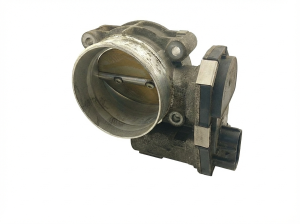
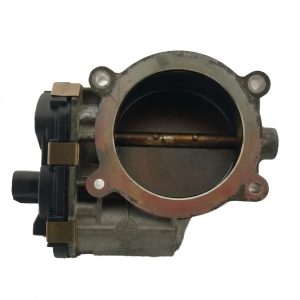
New Aftermarket Parts Available
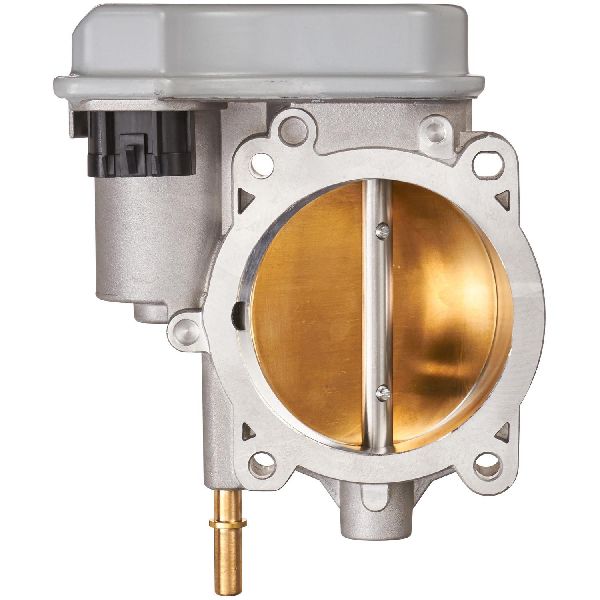



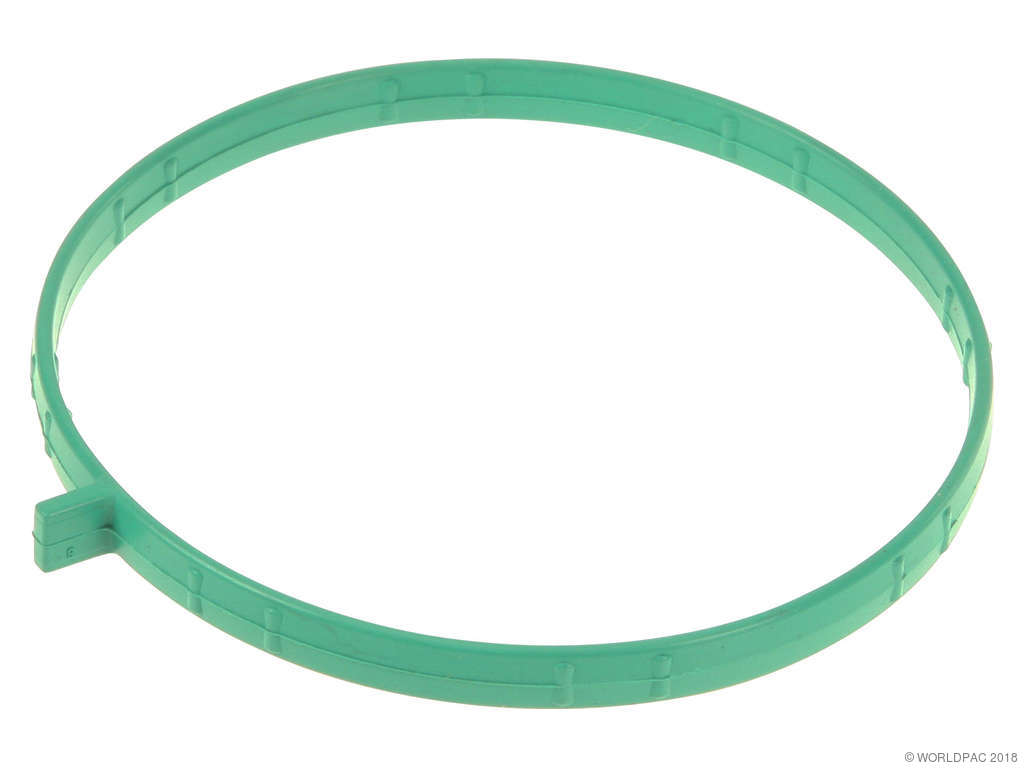

The information in this article is provided for general reference and educational purposes only. Vehicle specifications, procedures, and part compatibility can vary by production date, trim level, and region. Always consult your vehicle's factory service manual and verify part numbers before purchasing or performing repairs. Safety-critical components such as airbags, seat belts, and braking systems should be installed by a qualified professional.
- Chevrolet COLORADO:
- 🧭 Diagnostic Flowchart
- 🎬 Helpful Videos
- 🛍️ Shop This Part
- What's Unique About the 2004-2011 Chevrolet COLORADO
- Symptoms You May Notice
- Most Likely Causes
- Rare But Worth Checking
- Diagnosis Steps
- Parts You'll Likely Need
- Related Codes That Often Appear With This One
- Technical Service Bulletins (TSBs) & Recalls
- Platform-Specific Known Issues
- Mechanic-Grade Diagnostic Values
- Scan Tool Commands That Help
- Wiring & Ground Locations
- Real Owner Repair Stories
- "I Checked Everything" — The Actual Cause
- OEM Part Supersession History
- Model Year Variations Within This Range
- 🎟️ Get 5% Off