

P1516 on 2005-2013 Chevrolet Corvette: Throttle Control Fault Causes and Fixes
On a C6 Corvette, P1516 almost always means a problem with the electronic throttle body or its wiring, triggering 'Reduced Engine Power' mode. The most common fix is inspecting the wiring connector for damage and cleaning or replacing the throttle body assembly. Expect to pay $250-$550 for a quality OEM replacement part. Aftermarket throttle bodies are strongly discouraged by owner experiences.
- P1516 on a C6 Corvette will immediately put the car in 'Reduced Engine Power' mode.
- Before buying any parts, always inspect the wiring and connector at the throttle body first, as this is a very common and cheap fix.
- If you must replace the throttle body, using a genuine OEM (ACDelco) part is strongly recommended, as aftermarket units are known to cause persistent problems.
- Cleaning a dirty throttle body is a valid first step, but be prepared for the possibility that the unit has failed internally and will require replacement.
What's Unique About the 2005-2013 Chevrolet Corvette
The C6 Corvette's drive-by-wire system is sensitive to electrical and mechanical issues at the throttle body. Unlike some other GM vehicles, the problem is rarely a separate Throttle Actuator Control (TAC) module, but rather the throttle body assembly itself or its direct wiring. GM has issued several Technical Service Bulletins (TSBs) acknowledging common failure points, including poor wire crimps near the connector and carbon buildup causing the throttle plate to stick. Forum discussions repeatedly emphasize that these engines are particularly sensitive to non-OEM throttle bodies, which often fail quickly.
Symptoms You May Notice
- "Reduced Engine Power" message displayed on the instrument cluster.
- Check Engine Light is on.
- Severely limited throttle response and acceleration.
- "Service Traction Control" or "Service Active Handling" message may appear, as these systems rely on trusted torque data from the engine controller.
- Rough or unstable idle.
- In some cases, the engine may stall or be difficult to start.
- Replacing the Accelerator Pedal Position (APP) sensor. P1516 specifically points to a fault at the throttle body, not the pedal. Pedal sensor faults typically set other codes, such as P2138.
Most Likely Causes
- Poor Connection or Damaged Wiring at Throttle Body 🔴 High Probability → Shop Fuel Injection Throttle Body Engine vibration and heat can cause wires to break inside the insulation or terminal pins to develop corrosion ('fretting'). TSB PIP3089B specifically calls out loose crimps or broken wires usually occurring within 1 to 4 inches of the throttle body connector.
How to confirm: With the engine off, disconnect the throttle body connector and inspect for corrosion or backed-out pins. Perform a 'wiggle test' by gently pulling and wiggling each of the eight individual wires near the connector; if a wire feels stretchy, limp, or causes the fault to appear when wiggled with the engine running, it is likely broken internally and needs repair.
Typical fix: Repair the damaged wire or replace the entire throttle body connector pigtail. The common replacement pigtail is ACDelco PT2628 (GM #13580112).
Est. part cost: $30-$60 - Dirty or Failing Electronic Throttle Body Assembly 🔴 High Probability → Shop Fuel Injection Throttle Body Carbon and oil vapor from the PCV system can build up around the throttle plate, causing it to bind and not respond to PCM commands quickly enough. Additionally, the internal motor, plastic gears, or position sensors can wear out over time, causing intermittent signal loss. Aftermarket throttle bodies are widely reported on forums to be unreliable and a common cause of repeat failures.
How to confirm: Remove the air intake tube and visually inspect the throttle bore and plate for heavy black carbon buildup. If cleaning doesn't resolve the code, and wiring is confirmed good, the throttle body itself is the likely failure point. Many owners report that replacing with a new OEM unit is the only permanent fix.
Typical fix: Thoroughly clean the throttle body bore and plate with a dedicated cleaner. If the issue persists, replace the entire throttle body assembly with a high-quality OEM part (e.g., ACDelco). An idle relearn procedure is required after cleaning or replacement.
Est. part cost: $250-$550 - PCV System Oil Contamination (LS7 Engine) ⚪ Low Probability On 7.0L LS7 engines, excessive oil from the PCV system can saturate the air intake snorkel. This can cause an internal fabric-like hydrocarbon absorber patch to come loose, which can alter or block airflow into the throttle body, triggering P1516 among other codes, as noted in TSB PIP3786B.
How to confirm: Inspect the inside of the air intake tube between the air filter and the throttle body for excessive oil residue or a dislodged hydrocarbon absorber patch.
Typical fix: Clean the oil from the intake system, secure or replace the air intake snorkel if the absorber is loose, and investigate the source of excessive PCV oil (e.g., install an oil catch can).
Est. part cost: $0-$250
Rare But Worth Checking
- Poor Ground Connection: A bad engine or chassis ground can cause a variety of difficult-to-diagnose electrical issues, including throttle control faults. On related GM truck platforms, grounds G103 and G104 are common culprits. While locations differ on the Corvette, checking and cleaning the main engine-to-chassis ground straps (G106, G107) is a valid diagnostic step if other fixes fail.
- Failing Powertrain Control Module (PCM): While possible, a faulty PCM is extremely rare and should only be considered after all other possibilities (wiring, throttle body, grounds) have been definitively ruled out.
Diagnosis Steps
- Scan for Codes: Use an OBD-II scanner to confirm P1516 is present and check for any other related codes like P2101 or P2135.
- Inspect the Throttle Body Connector: Disconnect the battery. Unplug the main electrical connector at the throttle body. Look for any signs of green or white corrosion, moisture, or bent/backed-out pins.
- Perform a 'Wiggle Test': Reconnect the battery and start the engine (if it runs). Gently pull and wiggle each of the wires leading into the throttle body connector. If wiggling a specific wire causes the engine to stumble or triggers the 'Reduced Engine Power' message, that wire is broken internally.
- Inspect and Clean the Throttle Body: Disconnect the battery again and remove the air intake ducting. If the throttle plate and bore are coated in black carbon, clean them thoroughly with throttle body cleaner and a soft cloth. Manually open the plate to clean the edges. Do not spray cleaner directly into electrical components.
- Perform an Idle Relearn Procedure: After cleaning or replacing the throttle body, an idle relearn is critical. See the 'Idle Relearn Procedure' section below.
- Check Ground Connections: Inspect and clean the main engine-to-chassis and battery ground connections. Ensure they are tight and free of corrosion. Key grounds to check are G106 and G107 on the engine block.
- Test with a Scan Tool: If the problem persists, a scan tool that can read live data can be used to monitor the commanded vs. actual throttle position to confirm a discrepancy, further pointing to a faulty throttle body.
- Replace the Throttle Body: If wiring and grounds are confirmed to be good and cleaning provides no fix, the throttle body assembly is the culprit and should be replaced with an OEM part.
Parts You'll Likely Need
- Electronic Throttle Body Assembly
(OEM #ACDelco 217-2296 (GM 12570790) for LS2; ACDelco 217-3153 (GM 12605109) for LS3/LS7)— This is the most common cause of P1516 when wiring and cleanliness are ruled out. The internal motor or sensors fail. Owner experiences strongly suggest avoiding aftermarket brands.
Trusted brands: ACDelco (OEM)
OEM price range: $250-$550
Aftermarket price range: $150-$300 - Throttle Body Connector Pigtail
(OEM #ACDelco PT2628 (GM 13580112))— Fixes issues where the connector itself or the wires immediately attached to it are damaged due to heat and vibration, a known weak point documented in TSBs.
Trusted brands: ACDelco, Dorman
OEM price range: $30-$60
Aftermarket price range: $20-$40
Related Codes That Often Appear With This One
- P2101 — This code, 'Control Module Throttle Actuator Position Performance', directly relates to the throttle actuator control motor's performance and often appears with P1516 when the throttle body is failing or binding.
- P2135 — This code, 'Throttle/Pedal Position Sensor/Switch A/B Voltage Correlation', indicates a disagreement between the two internal throttle position sensors. It strongly suggests the throttle body assembly itself is faulty.
- P0120 / P0220 — These are general codes for the throttle position sensor circuits ('A' and 'B' respectively) and can be triggered by the same wiring or component faults that cause P1516.
Technical Service Bulletins (TSBs) & Recalls
- PIP3089B: Reduced Power Message and DTCs P0120, P0220, P1516, P2101, or P2135 - Points to a loose wiring crimp or broken wire within 1-4 inches of the throttle body connector.
- PIP4578B: P1516 in High Mileage Vehicles - Suggests carbon buildup in the throttle body as a cause. Manufacturer Bulletin #PIP4578B notes that high mileage vehicles may experience reduced engine power mode and/or DTCs P0068, P0121, P1516, P2101, P2119, and/or P2176.
- PIP3786B: SES Light And/Or Oil In Air Intake System (LS7 Engine) - Notes that oil contamination can cause an intake hydrocarbon absorber to come loose, leading to P1516.
Platform-Specific Known Issues
- A known issue documented in TSB PIP3089B involves broken wires inside the insulation near the throttle body connector, which can be hard to spot visually and is best found with a 'wiggle test'.
- High-mileage vehicles are prone to carbon buildup causing the throttle plate to stick, as noted in TSB PIP4578B, which can also trigger idle surge and reduced power modes.
- Forum consensus is overwhelming: do not use aftermarket throttle bodies on C6 Corvettes. They are known to fail quickly or cause persistent codes.
Mechanic-Grade Diagnostic Values
- Throttle Actuator Control (TAC) Motor Voltage — expected: Peak voltage should be within 1 volt of battery voltage (B+) on both motor control circuits (terminals A and B) when the ignition is first turned ON.. Failure: If the peak voltage is not within 1 volt of B+, it indicates an open or high resistance in that circuit or a faulty ECM driver.
- Throttle Position Sensor (TPS) Signal Voltage at Wide-Open Throttle (WOT) — expected: Approximately 4.4 Volts.. Failure: A reading that is significantly different, or does not change smoothly as the throttle is opened, points to a sensor failure within the throttle body.
Scan Tool Commands That Help
- GM GDS2 / Professional Scan Tool: Throttle Position Control / Actuator Test — To directly test the throttle body's functionality. This allows a technician to command the throttle plate to specific open percentages (e.g., 10%, 25%) and compare the commanded value to the actual position reported by the sensors, confirming if the unit is responding correctly.
- GM GDS2 / Professional Scan Tool: Special Function > Idle Learn Reset — This is mandatory after cleaning or replacing the throttle body. It resets the PCM's learned idle values. Failing to perform this reset can cause codes like P1516 to appear after the service, as the PCM's old compensation values conflict with the clean or new throttle body's baseline position.
Wiring & Ground Locations
- G107 — On the driver's side of the engine block, just below where the cylinder head connects to the block.. This is a primary ground for the ignition coil packs. A poor connection here can cause a no-spark condition and various electrical issues, potentially contributing to erratic signals that the PCM could misinterpret. A forum member confirmed a loose G107 caused their C6 to shut off while driving and not restart.
- G106 — On the front frame cross rail / engine block area.. This is a main engine ground. A loose or corroded connection here can cause widespread electrical problems. It is located near the starter's positive terminal, so the battery must be disconnected before servicing it to prevent a dangerous short circuit.
- G101 — In the engine compartment on the front left (driver's side) frame member, behind the headlight.. This is a chassis ground that has been reported by owners to become loose over time. While not a direct engine sensor ground, poor chassis grounds can create electrical noise and intermittent issues throughout the vehicle.
Real Owner Repair Stories
- CorvetteForum.com user 'Matthew Bull' (2005 C6 Corvette M6) — Initially P1516 and P2135 with Reduced Engine Power. After a new throttle body, P1516 would return intermittently with slow throttle response but no REP message.
❌ Tried (didn't work) Replacing the throttle body with a non-OEM unit, Cleaning the MAF sensor
✅ What actually fixed it Thoroughly cleaning the throttle body's electrical connector and ensuring it was seated tightly. The root cause was determined to be a poor pin connection at the connector, not the throttle body itself. - CorvetteForum user (2009 Corvette LS3, stock) — P1516 and P2101, Reduced Engine Power mode at highway speed, rough idle with bouncing RPMs.
❌ Tried (didn't work) Restarting the car (temporary fix), Cleaning the throttle body (issue returned after a few days)
✅ What actually fixed it Replacing the entire throttle body assembly with a new unit purchased from Amazon for $150. This permanently resolved the issue. - LS1Tech.com forum user (C5 Corvette with an LS2 throttle body conversion) — Intermittent 'Reduced Engine Power' (REP) mode with code P1516, happening randomly.
❌ Tried (didn't work) Replacing a used LS2 throttle body with a new GM LS3 Gold Blade throttle body (worked for 3,000 miles then failed), Replacing the LS3 Gold Blade with a Soler Performance modified throttle body (failed almost immediately)
✅ What actually fixed it Replacing the entire throttle body assembly with a new, OEM-style LS2 silver blade unit AND simultaneously replacing the Caspers adapter harness. The combination of a fresh, correct-spec throttle body and a new wiring harness resolved the issue permanently. - NHTSA ODI #11103827 — An owner reported that their vehicle experienced issues about 8 times in varying circumstances, mostly while in motion. Error codes retrieved from a handheld programmer included P1516, P2101, and P2135.
"I Checked Everything" — The Actual Cause
- In the context of P1516, the equivalent of a 'smoke test clean' scenario is when replacing the throttle body—the most common fix—does not resolve the issue. One owner reported that after installing a new throttle body, the P1516 code continued to appear intermittently. The actual root cause was a poor electrical connection at the throttle body connector. The final fix was not another part, but thoroughly cleaning the connector pins and ensuring the plug was seated with proper tension, which solved the problem permanently.
When the Usual Fixes Don't Work
- While replacing the throttle body is the most cited fix, it is not always the solution. In one documented case, an owner replaced the throttle body, but the P1516 code persisted. The final repair was to meticulously clean the electrical connector and ensure it was securely fastened, suggesting the fault was in the connection's tension, not the component itself. This highlights the importance of ruling out wiring and connection integrity before committing to expensive part replacement.
OEM Part Supersession History
GM 12605109 (ACDelco 217-3153)→GM 19420707— Standard part number update by GM.
Heads up: This is the 'gold blade' throttle body for late 2008-2013 LS3/LS7 engines. The part numbers are interchangeable.
Model Year Variations Within This Range
- 2005-2008 vs 2008-2013: A critical mid-generation change occurred with the throttle body. LS2 (2005-2007) and early 2008 LS3/LS7 engines use a 'silver blade' throttle body (GM #12570790). Late 2008-2013 LS3/LS7 engines use a 'gold blade' unit (GM #12605109). They are not interchangeable without significant PCM tuning because the gold blade rotates in the opposite direction of the silver blade.
Diagnostic Flowchart
Used vs. New Parts: Buying Guide for This Vehicle
When a used part is the smart pick: Given the high failure rate of the internal electronics and the strong forum consensus against non-OEM parts, buying a used throttle body is a significant gamble. It should only be considered as a low-cost temporary measure if the part is from a very low-mileage, verified running vehicle. A new OEM part is the recommended path for a permanent fix.
Donor-vehicle mileage cap: roughly under 40000 miles for the part to have meaningful remaining life.
What to inspect on the donor part:
- Verify it is a genuine GM/ACDelco part, not a generic replacement.
- Check the connector pins for any signs of corrosion, discoloration, or damage.
- Ensure the throttle plate moves smoothly by hand without binding or sticking.
- Confirm the correct 'silver blade' (for LS2/early LS3) or 'gold blade' (for late LS3/LS7) for your specific model year.
OEM-only on this vehicle (don't cheap out):
- Electronic Throttle Body Assembly
Brands owners have reported issues with on this vehicle:
- Unbranded, generic throttle bodies from online marketplaces like Amazon or eBay are frequently reported to be defective out of the box or fail within a short period, causing the P1516 code to return.
Real Owner Stories
Aggregated from forums and TSBs cited above. Mileages and costs reflect what owners reported in those sources.
C6 Chevrolet Corvette
Symptoms: Car went into 'Reduced Engine Power' mode with an intermittent P1516 code after installing an aftermarket throttle body.
What fixed it: After much frustration and troubleshooting, replacing the aftermarket unit with a new OEM throttle body permanently resolved the code.
Source hint: CorvetteForum.com: 'Intermittent p1516 Code'
C6 Chevrolet Corvette
Symptoms: Intermittent 'Reduced Engine Power' mode and P1516 code, especially when the engine was running and the wiring harness was moved.
What fixed it: Performed a 'wiggle test' on the throttle body harness as suggested by TSB PIP3089B and found a wire that was broken internally about two inches from the connector. Repairing the wire by replacing the connector pigtail (ACDelco PT2628) fixed the issue.
Source hint: TSB PIP3089B
Chevrolet Corvette LS7 7.0L
Symptoms: Check Engine Light on with P1516 and found excessive oil inside the air intake tube.
What fixed it: Found the hydrocarbon absorber patch inside the air intake snorkel had come loose due to oil saturation from the PCV system, as described in TSB PIP3786B. Cleaning the intake and securing the snorkel resolved the P1516.
Source hint: CorvetteForum.com: 'code p1516 ..my worst nightmare!!!!'
High Mileage Chevrolet Corvette — ~120000 miles
Symptoms: Reduced Engine Power message and P1516 code appeared. Throttle response was very poor.
What fixed it: As suggested by TSB PIP4578B for high mileage vehicles, the throttle body was removed and found to have significant carbon buildup causing the plate to stick. A thorough cleaning of the throttle bore and plate resolved the issue.
Source hint: TSB PIP4578B: P1516 in High Mileage Vehicles
C6 Chevrolet Corvette
Symptoms: An owner reported in NHTSA ODI #11103827 that their vehicle experienced issues about 8 times, mostly while in motion, with error codes P1516, P2101, and P2135 appearing on a handheld programmer.
What fixed it: Diagnostic records indicate these codes often point to a failing throttle body assembly or wiring harness issues near the connector.
Source hint: NHTSA ODI #11103827
Related OBD-II Codes
Frequently Asked Questions
My Corvette threw a P1516. I heard there's a TSB about wiring, does that apply?
I need to replace my throttle body. Is it okay to use a cheaper aftermarket one on my C6 Corvette?
I have the 7.0L LS7 engine and got a P1516. Is there anything specific I should check?
What is the 'wiggle test' and how do I perform it for a P1516 code?
Do I need to do anything special after cleaning or replacing the throttle body on my Corvette?
Why did I get a 'Service Traction Control' message along with the P1516 code?
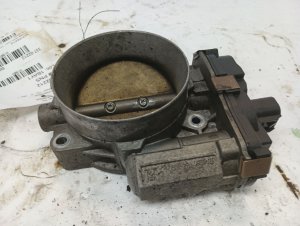
Used OEM Parts in Stock
New Aftermarket Parts Available


The information in this article is provided for general reference and educational purposes only. Vehicle specifications, procedures, and part compatibility can vary by production date, trim level, and region. Always consult your vehicle's factory service manual and verify part numbers before purchasing or performing repairs. Safety-critical components such as airbags, seat belts, and braking systems should be installed by a qualified professional.
- Chevrolet Corvette:
- 🧭 Diagnostic Flowchart
- 🛍️ Shop This Part
- What's Unique About the 2005-2013 Chevrolet Corvette
- Symptoms You May Notice
- Most Likely Causes
- Rare But Worth Checking
- Diagnosis Steps
- Parts You'll Likely Need
- Related Codes That Often Appear With This One
- Technical Service Bulletins (TSBs) & Recalls
- Platform-Specific Known Issues
- Mechanic-Grade Diagnostic Values
- Scan Tool Commands That Help
- Wiring & Ground Locations
- Real Owner Repair Stories
- "I Checked Everything" — The Actual Cause
- When the Usual Fixes Don't Work
- OEM Part Supersession History
- Model Year Variations Within This Range
- Used vs. New Parts: Buying Guide for This Vehicle
- Real Owner Stories
- C6 Chevrolet Corvette
- C6 Chevrolet Corvette
- Chevrolet Corvette LS7 7.0L
- High Mileage Chevrolet Corvette — ~120000 miles
- C6 Chevrolet Corvette
- Related OBD-II Codes
- Frequently Asked Questions
- 🎟️ Get 5% Off