

P1516 on 2006-2010 Chevrolet Express: Reduced Power, Causes, and Fixes
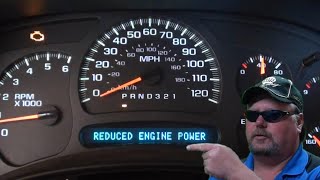
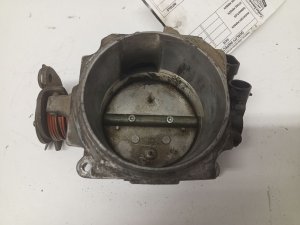
This code indicates a problem with the electronic throttle control system, often causing 'Reduced Engine Power' mode. The most common fixes are cleaning the throttle body, checking for bad wiring or grounds near the throttle body, or replacing the throttle body assembly itself. This is a very common issue on GM trucks and vans of this era.
- P1516 almost always points to an issue with the electronic throttle body system, triggering 'Reduced Engine Power' mode.
- Before buying any parts, your first step should be to remove and thoroughly clean the throttle body.
- If cleaning doesn't work, carefully inspect the wiring harness and connector going to the throttle body for damage or corrosion.
- If cleaning and wiring checks fail to resolve the issue, the throttle body assembly itself likely needs to be replaced.
What's Unique About the 2006-2010 Chevrolet EXPRESS
On this generation of GM trucks and vans, code P1516 is frequently linked to a few well-documented issues. Carbon buildup in the throttle body is a primary cause, especially on high-mileage vehicles, as noted in GM's own service bulletins. Furthermore, wiring problems are a very common point of failure that can mimic a faulty throttle body. TSB PIP3089B points to loose wiring crimps or wires breaking inside the insulation within 1-4 inches of the throttle body connector. Poor engine grounds, specifically G103 and G104 on C/K truck platforms, are also a known cause of intermittent P1516 codes. Unlike newer GM vehicles where the throttle control is integrated into the ECM, these models use a separate Throttle Actuator Control (TAC) module, which is another potential point of failure.
Diagnostic Flowchart
Tap your situation to follow the diagnostic path that matches what you're seeing on this vehicle.
Symptoms You May Notice
- "Reduced Engine Power" message on the dashboard
- Check Engine Light is on
- Limited or no throttle response
- Vehicle hesitates or stalls during acceleration
- Rough or unstable idle
- Difficulty starting the engine
- Engine shaking or running rough
- Replacing the accelerator pedal position (APP) sensor. A faulty APP sensor usually triggers its own specific codes (like P2138) and is not the typical cause for P1516.
Most Likely Causes
- Dirty or Carbon-Fouled Throttle Body 🔴 High Probability → Shop Fuel Injection Throttle Body As noted in TSB PIP4578B, carbon buildup is common on high-mileage GM vehicles and can cause the throttle plate to stick or move slowly, creating a mismatch between the commanded and actual position.
How to confirm: Remove the air intake duct and visually inspect the throttle bore and plate for a layer of black carbon. Manually check if the plate moves freely without binding.
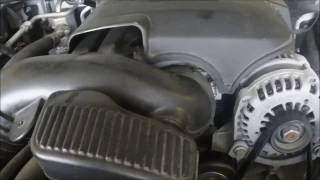
Typical fix: Remove the throttle body and clean it thoroughly with throttle body cleaner and a soft, lint-free cloth. Do not use aggressive tools. 🎬 Watch: A step-by-step guide to cleaning your GM throttle body. After reinstallation, an idle relearn procedure is required.
Est. part cost: $5-$15 for cleaner - Wiring Harness or Connector Issue 🔴 High Probability The harness to the throttle body is susceptible to heat and vibration, causing wires to break inside the insulation, often within 4 inches of the connector. Poor ground connections, especially grounds G103 and G104, are a known intermittent cause. The plastic wire loom can deteriorate, exposing wires to chafing on brackets.
How to confirm: With the engine running, carefully wiggle the wiring harness and connector at the throttle body to see if it causes the idle to stumble or triggers the 'Reduced Power' mode. Visually inspect for chafing, melting, or corrosion. Check for backed-out pins inside the connector.
Typical fix: Repair the specific damaged wire or replace the pigtail connector (e.g., ACDelco PT2628). Many owners solve intermittent issues by cleaning and tightening main engine grounds or adding redundant ground straps from the engine block to the firewall. 🎬 See how cleaning grounds can finally fix a stubborn P1516 code.
Est. part cost: $15-$50 for a new pigtail connector - Failed Throttle Body Assembly 🟡 Medium Probability → Shop Fuel Injection Throttle Body The internal electronic motor or the throttle position sensors (TPS) integrated into the assembly can fail over time due to wear on the internal contacts, creating dead spots.
How to confirm: If the throttle body is perfectly clean and the wiring/grounds are confirmed to be good, the internal components are the likely culprit. A scan tool can be used to graph the TPS sensor voltages; erratic or non-linear readings indicate failure. Visual inspection of the internal potentiometer may show heavy wear marks.
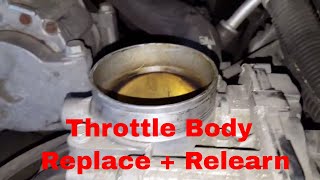
Typical fix: Replace the entire throttle body assembly. This is the definitive repair after ruling out dirt and wiring. 🎬 Watch: How to replace the throttle body on a Chevy Express.
Est. part cost: $120-$350
Rare But Worth Checking
- Failing Powertrain Control Module (PCM): This is very rare, but if a new throttle body, pigtail, and checked grounds do not resolve the code, the PCM's driver circuit for the throttle actuator could be at fault.
- Low Battery Voltage: The electronic throttle system requires a stable voltage. A weak battery or failing alternator can sometimes trigger this code, though it's less common.
- Failed Throttle Actuator Control (TAC) Module: On these specific models, a separate TAC module controls the throttle body. Failure of this module or its connector can cause P1516.
Diagnosis Steps
- Retrieve all stored DTCs with a scan tool. Note any other codes that appear with P1516, as they can help pinpoint the issue (e.g., P2101, P2135).
- Visually inspect the throttle body for heavy carbon buildup. Remove the intake tube for a clear view.
- If dirty, remove and thoroughly clean the throttle body. Reinstall and perform an Idle Relearn Procedure.
- If the code returns, inspect the wiring harness and connector at the throttle body. Per TSB PIP3089B, check for broken wires inside the insulation within 4 inches of the connector by wiggling them.
- Check for poor ground connections. On the Express platform, check G103 (on right rear of engine) and G104 (on lower right front of engine). Clean and tighten main engine-to-chassis grounds. Some owners add redundant grounds to solve intermittent issues.
- Use a scan tool to monitor live data for Commanded Throttle Position vs. Actual Throttle Position (TPS1 and TPS2). If there is a consistent discrepancy or the voltage readings are erratic after cleaning and checking wires, the throttle body assembly is likely faulty.
- If a new throttle body and confirmed good wiring do not fix the issue, inspect the separate Throttle Actuator Control (TAC) module and its connector, located on the driver's side firewall. If all else fails, the problem may lie with the Powertrain Control Module (PCM), but this should be the absolute last resort.
Parts You'll Likely Need
- Throttle Body Assembly
(OEM #12679525 (supersedes older numbers), 19420713)— This assembly contains the throttle plate, motor, and position sensors that are the root cause of the code when cleaning and wiring checks don't solve it.
Trusted brands: ACDelco (OEM), Cardone (Remanufactured), Dorman
OEM price range: $200-$350
Aftermarket price range: $120-$250 - Throttle Body Connector Pigtail
(OEM #ACDelco PT2628)— The connector or wires leading to the throttle body can become damaged from heat and vibration, causing a poor connection that triggers the code. Replacing the pigtail is a common repair.
Trusted brands: ACDelco, Dorman
OEM price range: $30-$50
Aftermarket price range: $15-$30
Related Codes That Often Appear With This One
- P2101 — This code, 'Throttle Actuator 'A' Control Motor Circuit Range/Performance,' is very similar to P1516 and often appears with it, as they both relate to a discrepancy in throttle plate position or motor control.
- P2119 — 'Throttle Closed Position Performance' can be set alongside P1516 if carbon buildup prevents the throttle plate from closing properly.
- P2176 — 'Minimum Throttle Position Not Learned' often appears after a throttle body has been cleaned or replaced but the idle learn procedure was not performed correctly.
- P0068 — This code indicates a mismatch between the MAP sensor, MAF sensor, and throttle position, which can be triggered by the same throttle body issues that cause P1516.
- P2135 — 'Throttle/Pedal Position Sensor/Switch A/B Voltage Correlation' can appear if the issue is related to the throttle body's internal sensors, which is a common cause of P1516.
Technical Service Bulletins (TSBs) & Recalls
- PIP4578B: Addresses idle surge, reduced engine power, and DTCs including P1516 on high-mileage vehicles due to carbon buildup in the throttle body.
- PIP3089B: Points to intermittent P1516, P0120, P0220, and P2135 codes being caused by loose wiring crimps or broken copper strands inside the wire insulation near the throttle body connector.
Platform-Specific Known Issues
- GM Technical Service Bulletin (TSB) #PIP4578B directly addresses P1516 on high-mileage vehicles, linking it to carbon buildup in the throttle body that requires cleaning followed by an idle learn reset procedure.
- GM TSB #PIP3089B addresses intermittent P1516 and other TAC codes caused by poor terminal crimps or broken wires within the harness, 1-4 inches from the throttle body connector. It also advises checking grounds G103 and G104 on C/K trucks.
Mechanic-Grade Diagnostic Values
- 5-Volt Reference Circuit Voltage at Throttle Position Sensor — expected: Approximately 5.0 Volts. Failure: Voltage significantly lower than 5.0V or no voltage indicates a problem with the PCM, wiring, or another sensor on the same circuit.
- Throttle Position Sensor (TPS) Internal Wear — expected: Smooth, clean conductive tracks inside the sensor housing.. Failure: Visible scoring or heavy wear marks on the potentiometer tracks, especially at the closed-throttle position, indicate physical failure of the sensor.
Scan Tool Commands That Help
- Manual Procedure (No Scan Tool): Idle Learn Reset Procedure — Required after cleaning or replacing the throttle body to allow the ECM to relearn the new closed-throttle position. Failure to do this can cause a high idle and other DTCs like P2176. One common method is to start the engine, let it idle in Park for 3 minutes, turn the ignition off for 60 seconds, and then restart and idle for another 3 minutes.
- Manual Procedure (No Scan Tool) - Alternative: Idle Learn Procedure with A/C — A more comprehensive manual procedure to force the ECM to learn idle under different loads. After reaching operating temperature (185°F+), idle with A/C ON for 10 seconds, then in Drive (foot on brake) for 10 seconds, then A/C OFF for 10 seconds, then back in Park before shutting down.
Wiring & Ground Locations
- G103 — On the right rear of the engine. (Note: TSB PIP3089B refers to this ground, and other sources for similar truck platforms may show different locations, but this is the listed location for the Express van).. This is a primary engine ground point referenced in service bulletins for fixing intermittent TAC-related codes. A poor connection here can cause erratic voltage and trigger P1516.
- G104 — On the lower right front of the engine.. Also referenced in TSB PIP3089B, this ground is critical for stable sensor readings. Cleaning and tightening this ground is a key diagnostic step.
- Throttle Actuator Control (TAC) Module — Mounted on the driver's side firewall, under the corner brace. It has two connectors, a 10-pin and a 16-pin, that plug into the bottom.. This is the 'brain' for the throttle body on these models. The module itself, its connectors, or its own ground can be the source of the problem, separate from the throttle body or PCM.
- Throttle Body Connector — 8-pin connector directly on the throttle body assembly.. Wires are known to break inside the insulation within 1-4 inches of this connector due to heat and vibration, causing intermittent faults that are hard to see visually.
Real Owner Repair Stories
- Tahoe Yukon Forum (2005 Yukon Denali (similar GMT800 platform)) — Reduced Engine Power message, P1516 code.
❌ Tried (didn't work) The previous owner had replaced the pigtail and TPS sensor but the problem persisted.
✅ What actually fixed it The user identified the problem as a grounding issue. They added a new 10-gauge ground wire from the firewall to an unused threaded hole on the driver-side valve cover, and a second ground wire from the TAC module mounting bolt to the firewall. This permanently solved the problem. - GM Forum (2006 GMC Sierra 2500HD 6.0L (similar platform)) — P1516, P2135, P0220, Reduced Engine Power mode, especially at idle or when coming to a stop.
❌ Tried (didn't work) Cleaned the throttle body, replaced the TPS sensor on the side of the throttle body.
✅ What actually fixed it The user discovered the gear inside the throttle body actuator was loose. Replacing the entire throttle body assembly was the final fix. - Tahoe Yukon Forum (GM Truck (unspecified year)) — P1516, P1518, P2108, P2135, ABS light, doors unlocking, especially when hitting bumps.
❌ Tried (didn't work) Replaced throttle body and pigtail connector.
✅ What actually fixed it The user added multiple redundant ground wires between the battery, TAC module, firewall, alternator bracket, and PCM to finally resolve the issue, indicating a severe and difficult-to-trace grounding problem.
"I Checked Everything" — The Actual Cause
- While not a vacuum-related code, P1516 has a common diagnostic parallel: 'wiring and grounds test okay, but the problem persists.' The actual cause in many of these cases is a high-resistance ground connection that doesn't show up as a fully open circuit during a simple continuity test. These poor grounds can provide enough connection for a multimeter to read 'good' but fail under the electrical load of the TAC system, causing intermittent voltage drops and triggering the code. The confirmed fix in these scenarios is often not repairing a specific wire but adding new, redundant ground straps between the engine, body, and key components.
When the Usual Fixes Don't Work
- While cleaning a dirty throttle body is the most frequently recommended first step, numerous owner accounts on forums show that this often does not fix the P1516 code. In many cases, the problem persists until either the entire throttle body assembly is replaced due to internal electronic failure, or a difficult-to-find wiring or grounding issue is resolved. Specifically, owners have reported having to add new, redundant ground straps from the engine block to the firewall to finally solve intermittent 'Reduced Engine Power' events after replacing both the throttle body and pigtail connector to no avail.
OEM Part Supersession History
12679525→19420713— GM regularly updates service parts to integrate new materials or technologies.
Heads up: Part 19420713 is the current OEM replacement for 12679525 for this application.
Model Year Variations Within This Range
- 2003-2007 (approx, including 2006-2010 Express): These models use a separate, dedicated Throttle Actuator Control (TAC) module located on the firewall to control the throttle body. Newer GM vehicles (approx. 2008+ for many platforms) integrate the TAC functionality directly into the Engine Control Module (ECM). This makes the separate TAC module and its associated wiring a unique point of failure for P1516 on this specific generation of vehicle.
Helpful Videos
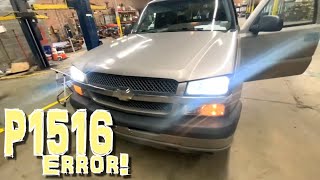
Used OEM Parts in Stock
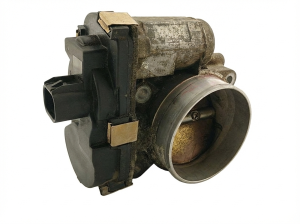
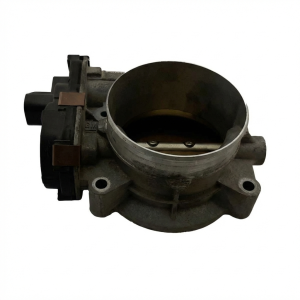
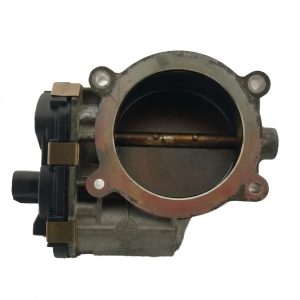
New Aftermarket Parts Available


The information in this article is provided for general reference and educational purposes only. Vehicle specifications, procedures, and part compatibility can vary by production date, trim level, and region. Always consult your vehicle's factory service manual and verify part numbers before purchasing or performing repairs. Safety-critical components such as airbags, seat belts, and braking systems should be installed by a qualified professional.
- Chevrolet EXPRESS:
- 🧭 Diagnostic Flowchart
- 🎬 Helpful Videos
- 🛍️ Shop This Part
- What's Unique About the 2006-2010 Chevrolet EXPRESS
- Symptoms You May Notice
- Most Likely Causes
- Rare But Worth Checking
- Diagnosis Steps
- Parts You'll Likely Need
- Related Codes That Often Appear With This One
- Technical Service Bulletins (TSBs) & Recalls
- Platform-Specific Known Issues
- Mechanic-Grade Diagnostic Values
- Scan Tool Commands That Help
- Wiring & Ground Locations
- Real Owner Repair Stories
- "I Checked Everything" — The Actual Cause
- When the Usual Fixes Don't Work
- OEM Part Supersession History
- Model Year Variations Within This Range
- 🎟️ Get 5% Off