

P1516 on 1997-2003 Ford F-150: Intake Manifold Runner Control Causes and Fixes
On 1997-2003 Ford F-150s with V8 engines, P1516 almost always means the small plastic clips connecting the Intake Manifold Runner Control (IMRC) actuator to the intake flaps have broken. This is a very common, inexpensive part failure, though access for the repair, located at the back of the engine, can be challenging.
- P1516 on a V8 F-150 is almost always a mechanical problem, not electrical.
- Before buying any parts, inspect the back of the intake manifold. The most likely cause is a set of broken plastic clips that cost under $30.
- Access is tight. A good flashlight and an inspection mirror are essential tools for diagnosis.
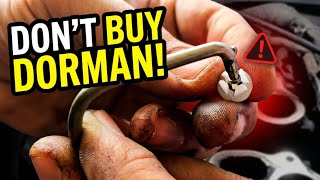
- When replacing the clips, ONLY use OEM (Motorcraft) parts. Aftermarket clips from brands like Dorman are widely reported to be defective and will not stay attached.
- The V8 engines use an electric actuator; vacuum leak diagnosis for this code on a V8 is a misdiagnosis and only applies to the 4.2L V6 model.
What's Unique About the 1997-2003 Ford F-150
The 10th generation F-150 (1997-2003) with 4.6L and 5.4L 2-valve V8 engines relies on an electric IMRC actuator located at the rear of the intake manifold. The system's primary weak point is the set of small plastic linkage clips that connect the actuator rod to the runner levers. These clips become brittle with constant exposure to engine heat cycles, eventually breaking and causing the linkage to detach. This specific mechanical failure is overwhelmingly more common than an electronic failure of the actuator motor or sensor on this platform.
Symptoms You May Notice
- Check Engine Light is on
- Noticeable loss of low-end torque and sluggishness from a stop (if flaps are stuck open)
- Reduced horsepower at higher engine speeds, feeling like it 'runs out of breath' above 3,000 RPM (if flaps are stuck closed)
- A slight decrease in fuel economy
- In some cases, a plastic rattling noise from the back of the intake manifold where the loose linkage rod is vibrating against other components
- Replacing the entire IMRC actuator when only the inexpensive plastic clips were broken.
- Replacing the intake manifold when the issue is a simple external linkage or actuator problem.
- Assuming the V8 has a vacuum issue, when its IMRC system is electric.
Most Likely Causes
- Broken IMRC Actuator Linkage Clips/Bushings 🔴 High Probability The original plastic clips are exposed to constant, high heat cycles at the back of the engine bay, causing them to become extremely brittle and fail over time. This is the most frequent point of failure for the system, confirmed by countless owner experiences.
How to confirm: Using a flashlight and an inspection mirror, visually inspect the IMRC actuator on the back of the intake manifold, below the firewall. You will likely see the metal actuator rod disconnected from one or both of the black plastic levers that control the intake flaps. The small, typically white or green, plastic clip will be broken or completely missing.
Typical fix: Replace the broken plastic clips. It is highly recommended to use genuine Motorcraft parts (F5RZ-9F955-AB). Aftermarket versions, like the Dorman 47099, have been widely reported 🎬 Watch: Why you should avoid Dorman clips for this repair by mechanics and owners to lack the internal 'teeth' to grip the metal rod securely, causing them to pop off immediately after installation.
Est. part cost: $15-$30 for a set of OEM clips - Faulty IMRC Actuator 🟡 Medium Probability The actuator is an electromechanical part containing a small motor and a position sensor. After many years and miles, the motor can burn out or the internal sensor can fail, though this is far less common than the clips breaking.
How to confirm: If the linkage clips are intact and properly connected, use a scan tool to command the IMRC actuator open and closed. Monitor the IMRC position sensor PID (Parameter ID). If the actuator doesn't move or the position value doesn't change, test the actuator's connector for power and ground. If power and ground are present but the actuator doesn't work, it has failed.
Typical fix: Replace the IMRC actuator assembly. The Motorcraft part number is F75Z-9L490-DA, though it may be discontinued; aftermarket alternatives are available.
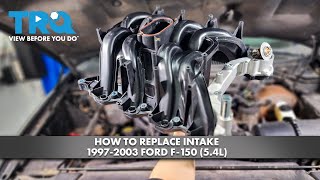
Est. part cost: $70-$180 - Vacuum Leak (on 4.2L V6 models) ⚪ Low Probability This cause is specific to the V6 engine, which uses 🎬 See this full IMRC service walkthrough for the 4.2L V6 a vacuum-operated IMRC system. Rubber vacuum lines can crack, perish, or become disconnected, preventing the vacuum-operated actuator from functioning.
How to confirm: On a V6, visually inspect all vacuum lines running to the IMRC actuator and solenoid for cracks, damage, or loose connections. Use a handheld vacuum pump to test the actuator's ability to hold a vacuum and move the runner arm.
Typical fix: Replace the damaged vacuum lines or the vacuum actuator.
Est. part cost: $5-$50 - Binding Runner Flaps ⚪ Low Probability Heavy carbon buildup inside the intake manifold can, in rare cases, cause the butterfly flaps to stick, preventing movement. This is more likely on higher-mileage engines.
How to confirm: With the actuator linkage disconnected, try to move the runner flap levers by hand. They should move smoothly with some spring tension. If they are stuck, very stiff, or do not spring back, there is an internal restriction.
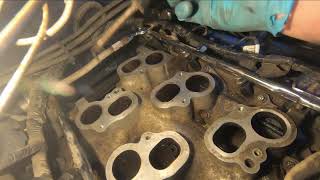
Typical fix: Remove the upper and lower intake manifold and thoroughly clean the carbon deposits 🎬 Watch: Step-by-step guide to removing the intake manifold from the runners and flaps. This requires replacing the intake gaskets.
Est. part cost: $20-$60 for gaskets
Rare But Worth Checking
- Damaged Wiring or Connector: The wiring harness to the IMRC actuator is in a hot, tight location against the firewall. It can become brittle, chafed, or damaged over time, causing an open or short in the circuit. Always inspect the wiring carefully before replacing the actuator.
- Failed Powertrain Control Module (PCM): This is extremely rare. The PCM itself can fail, but all other potential causes, including wiring, should be exhaustively ruled out before considering PCM replacement.
Diagnosis Steps
- Retrieve the P1516 code and any other codes with an OBD-II scanner.
- With the engine off, use a good flashlight and an inspection mirror to get a clear view of the back of the intake manifold, right up against the firewall. The IMRC actuator is a black box with a metal rod coming out of it.
- Visually inspect the linkage rod and the small plastic clips that connect it to the runner control levers. This is the most common failure point. Check if the clips are broken or if the rod has popped off the lever's ball stud.
- If the linkage is broken, replace the clips. A helpful tip is to use a dab of grease to hold the new clip on your finger or a long screwdriver to maneuver it into the tight space.
- If the linkage is intact, connect a scan tool that can perform active tests. Command the IMRC system on and off (or open/closed).
- While commanding the actuator, watch for physical movement of the linkage. Also, monitor the IMRC position sensor voltage or percentage on the scan tool. It should change smoothly as the actuator moves.
- If there is no movement, check the electrical connector at the actuator for 5V reference, ground, and signal wires. Wiggle the harness to check for intermittent connections.
- If the actuator moves but the code returns, or if it seems to struggle, disconnect the linkage from the actuator and manually operate the levers to feel for any binding or sticking of the flaps inside the manifold.
Parts You'll Likely Need
- Intake Manifold Runner Control (IMRC) Linkage Clips
(OEM #F5RZ-9F955-AB)— These small plastic parts are the most common failure point. They become brittle from engine heat and break, detaching the actuator from the runner flaps. It is critical to use the OEM Motorcraft part, as aftermarket versions are known to be defective.
Trusted brands: Motorcraft
OEM price range: $15-$30
Aftermarket price range: $10-$20 - Intake Manifold Runner Control (IMRC) Actuator
(OEM #F75Z-9L490-DA)— If the linkage is intact but the system doesn't move when commanded by a scan tool (and power/ground are confirmed), the actuator's internal motor or position sensor has failed.
Trusted brands: Motorcraft, Dorman, Standard Motor Products
OEM price range: $120-$180
Aftermarket price range: $70-$150
Platform-Specific Known Issues
- Owner Experience: The Inevitable Clip Failure: A user on F150Forum.com describes the classic P1516 scenario: a loss of low-end power and finding the IMRC linkage disconnected at the back of the manifold. The consensus in the thread is to immediately check the clips before suspecting any other component, with one user noting, 'They are also pretty much the sole point of failure in the system.'
- Repair Story: The Dorman vs. OEM Clip Dilemma: A YouTube video by 'G Auto Repair' provides a crucial side-by-side comparison of the Motorcraft and Dorman (47099) clips. The video clearly shows the Dorman part lacks the internal retaining 'teeth' that grip the metal ball stud, causing it to fall off with minimal force. The mechanic demonstrates that the OEM part snaps on securely while the Dorman part is 'useless'.
- DIY Tip for Tight Access: In a forum discussion about replacing the clips in the tight space behind the engine, a member offers a pro tip: 'Use grease to stick the grommets to your finger so you can get them in place
Mechanic-Grade Diagnostic Values
- IMRC Position Sensor Reference Voltage — expected: ~5.0 V. Failure: No voltage or significantly lower voltage indicates a problem with the PCM or the wiring.
- IMRC Position Sensor Signal Voltage — expected: A variable signal between ~0.5V and ~4.5V, changing smoothly as the actuator moves.. Failure: Voltage that is stuck high, low, or does not change when the actuator is commanded indicates a failed sensor or wiring issue.
- IMRC Actuator Motor Power — expected: Battery Voltage (~12V) when commanded by the PCM.. Failure: No voltage when commanded suggests a wiring issue, faulty relay, or PCM driver fault.
- IMRC Actuator Motor Command Signal — expected: The PCM pulls the voltage on the command wire to 0V to turn the actuator ON and raises it to ~12V to turn it OFF.. Failure: Signal does not change when commanded on a scan tool, indicating a PCM or wiring fault.
Scan Tool Commands That Help
- Ford IDS / Capable Professional Scan Tool (e.g., Snap-on, Autel): Active Command / Output State Test / Bidirectional Control for IMRC — This is used after a visual inspection confirms the linkage is intact. It allows the technician to command the IMRC actuator open and closed while observing both the physical movement of the linkage and the corresponding change in the position sensor PID on the scan tool. This directly tests the entire control loop from PCM to actuator motor and back through the sensor.
Wiring & Ground Locations
- IMRC Actuator Connector (C167) — On the IMRC actuator itself, located at the rear of the intake manifold against the firewall.. This is the central connection point for all power, ground, and signals for the system. Probing these wires is essential for diagnosis. The pinout is reported as: Black wire (Ground), Red/Yellow wire (12V Power), Brown wire (PCM Command), and Orange/White wire (Position Sensor Feedback).
- IMRC Harness Routing — The harness runs from the main engine harness to the back of the intake manifold.. If this harness is misrouted during a previous repair (e.g., placed behind the IMRC linkage instead of between the linkage and the manifold), the moving linkage can rub through the insulation, causing a short or open circuit.
- Engine Ground Bolt — There is a ground bolt located on the engine block near the IMRC actuator at the rear of the engine.. While not a common cause for this specific code, a poor ground connection at this point can cause various electrical issues. It should be checked for tightness and corrosion if electrical tests show erratic voltage readings.
Real Owner Repair Stories
- Ford F150 Forum (Ford F-150 with 5.4L V8) — P1516 code after replacing a CHT sensor.
❌ Tried (didn't work) Revving the engine in park/neutral to see if the IMRC actuator would move.
✅ What actually fixed it The user discovered two key things: 1) The IMRC will not activate by revving in neutral; it requires engine load. They were able to trigger it by brake-torquing the engine in gear. 2) The root cause was that the wiring harness for the IMRC and CHT sensor had been misrouted behind the IMRC linkage during the CHT sensor replacement, causing it to rub and bind the linkage. Correctly routing the harness resolved the issue.
OEM Part Supersession History
F65Z-9L490-A→F75Z-9L490-DA— Standard part revision.F75Z-9L490-DA→None (Discontinued)— Part is no longer available from Ford (NLA).
Heads up: As this OEM part is discontinued, owners must rely on New Old Stock (NOS), used parts, or aftermarket alternatives.
Model Year Variations Within This Range
- 1999-2003 (5.4L) & 2001-2003 (4.6L): Starting in 1999 for the 5.4L V8 and 2001 for the 4.6L V8, Ford introduced Performance Improved (PI) heads and intake manifolds. These PI intakes have improved flow characteristics and do not use the IMRC butterfly valve system. Therefore, trucks from these years onward will not have this component, and P1516 would indicate a different fault or be impossible to set. The issue of broken clips and faulty electric actuators is specific to the earlier, non-PI engines (1997-98 5.4L, 1997-2000 4.6L).
- 1999: The first year of the PI intake manifold on the 5.4L engine (1999) was made of cast aluminum, whereas subsequent years (2000+) used a composite plastic design. This does not affect the P1516 diagnosis, as neither version has the IMRC system, but it is a notable variation within the generation.
Diagnostic Flowchart
Other Known Issues on This Vehicle
Issues unrelated to this code that are worth knowing about as an owner of this generation:
- Spark Plug Ejection (2-Valve V8s) 🔴 High — Very common, especially on the 4.6L and 5.4L Triton engines. Can occur at any mileage, often after a spark plug change. Caused by insufficient thread engagement in the aluminum cylinder heads. (Ref: Ford issued TSB 07-21-2 regarding the updated torque specification, but the fundamental design is the weak point.)
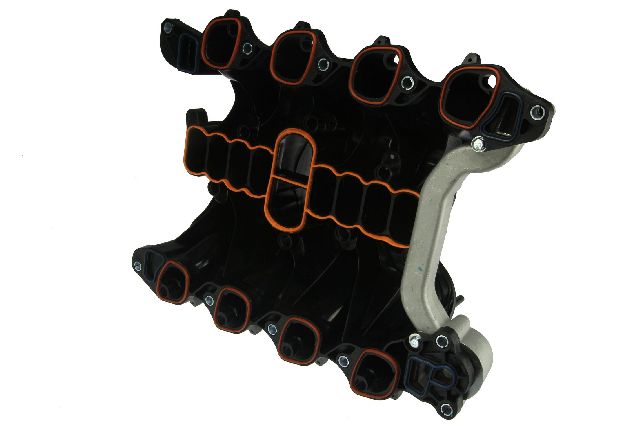
- Cracked Plastic Intake Manifold 🟠 Medium → Shop Engine Intake Manifold — Common on 4.6L V8 engines. The front coolant passage on the composite intake manifold can crack, leading to coolant leaks and potential overheating.
- Leaking/Cracked Exhaust Manifolds 🟠 Medium — The factory cast iron exhaust manifolds are prone to warping or cracking, and the mounting studs often rust and break. This results in a loud ticking noise, especially when the engine is cold.
- DPFE Sensor Failure 🟡 Low — The Differential Pressure Feedback EGR (DPFE) sensor is known to fail, causing EGR-related trouble codes. The plastic housing can melt if the catalytic converters become restricted.
- Blend Door Actuator Failure 🟠 Medium — A common issue where the plastic blend door or its electric actuator inside the dashboard fails, resulting in the inability to control cabin temperature (e.g., stuck on heat or cold).
Used vs. New Parts: Buying Guide for This Vehicle
When a used part is the smart pick: A used IMRC actuator assembly from a junkyard may be a viable option, as the OEM part is discontinued. The primary failure mode is the external plastic clips, not usually the internal motor. A used part can provide the needed actuator if the motor has failed.
Donor-vehicle mileage cap: roughly under 150000 miles for the part to have meaningful remaining life.
What to inspect on the donor part:
- Inspect the donor vehicle for signs of front-end collision; rear-end collisions are preferred as the engine is less likely to be damaged.
- Manually move the actuator arms on the used part. They should move without excessive binding, though some stiffness is normal.
- Check the plastic housing for cracks or signs of extreme heat damage.
- Most importantly, obtain the wiring connector pigtail along with the actuator if possible.
OEM-only on this vehicle (don't cheap out):
- Intake Manifold Runner Control (IMRC) Linkage Clips
Aftermarket brands forum-validated for this vehicle:
- Standard Motor Products (for the actuator assembly)
Brands owners have reported issues with on this vehicle:
- Dorman (specifically for the 47099 linkage clips, which are widely reported as defective)
Real Owner Stories
Aggregated from forums and TSBs cited above. Mileages and costs reflect what owners reported in those sources.
1997-2003 Ford F-150
Symptoms: Loss of low-end power and finding the IMRC linkage disconnected at the back of the manifold.
What fixed it: Replacing the broken plastic linkage clips at the back of the engine bay.
Source hint: F150Forum.com - 'IMCR help'
Ford Econoline Van (Platform Mate)
Symptoms: The vehicle felt 'gutless' for some time until reaching the power band around 3200 RPM, at which point it would pull nicely.
What fixed it: Repairing the IMRC system (Intake Runner Control) to restore low-end torque.
Source hint: Ford Truck Enthusiasts Forums - 'SWAP HELP - IMRC'
1997-2003 Ford F-150
Symptoms: The owner attempted a repair with Dorman 47099 bushings, but the part lacked internal retaining teeth and fell off the metal ball stud with minimal force.
What fixed it: Replacing the 'useless' aftermarket bushings with secure OEM Motorcraft clips.
Source hint: G Auto Repair on YouTube - 'Don't Buy Dorman Intake link Bushings for Ford F150!'
Frequently Asked Questions
Which specific plastic clips should I buy for my F-150's IMRC linkage?
Is the IMRC system on my 1997 4.2L V6 the same as the one on the V8 models?
My F-150 feels 'gutless' until it hits about 3,200 RPM. Is this related to P1516?
What is the part number for the electric IMRC actuator if I need to replace the whole unit?
How can I install the new clips in the tight space behind the intake manifold?
Helpful Videos
Used OEM Parts in Stock
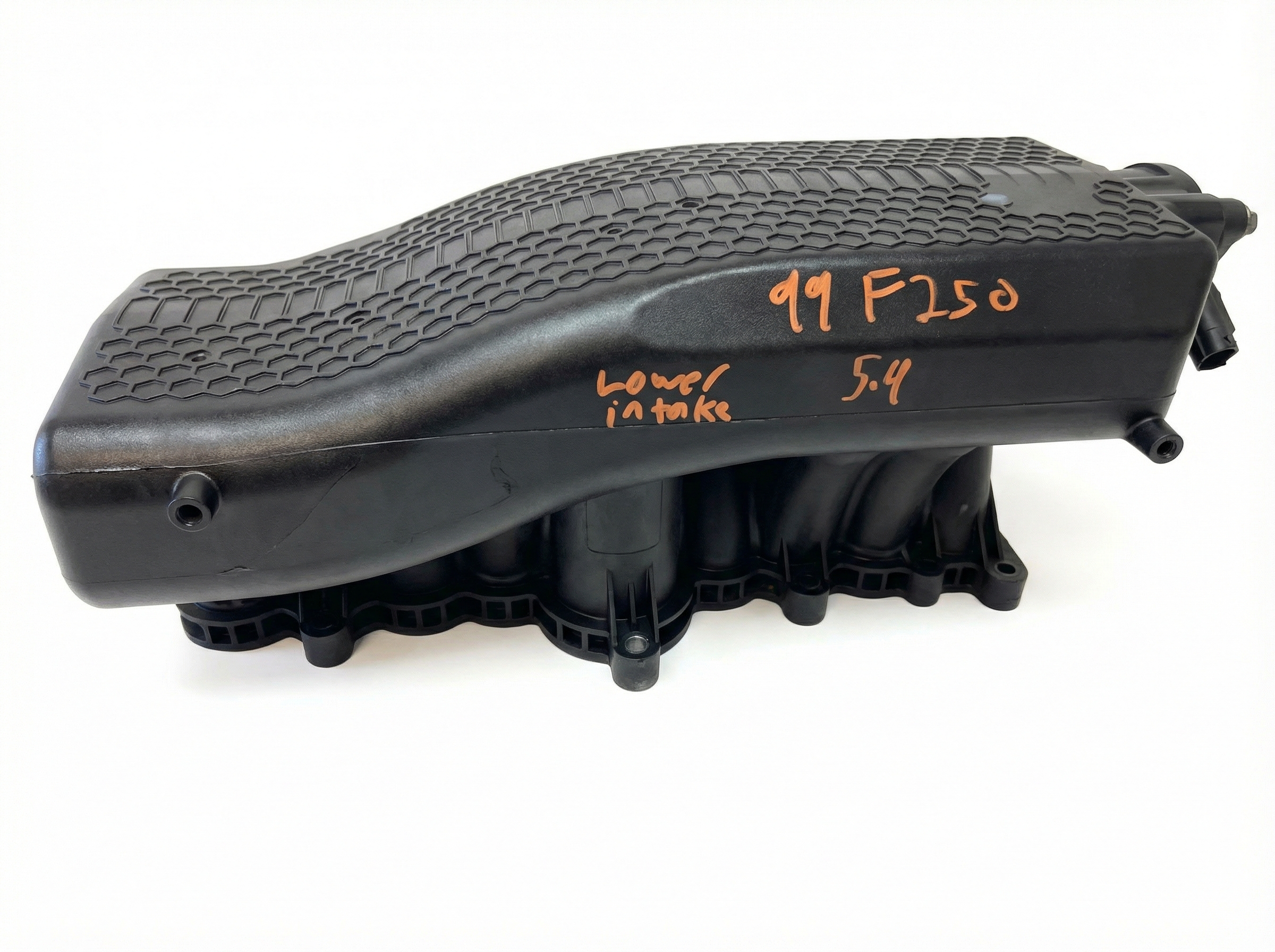
New Aftermarket Parts Available


The information in this article is provided for general reference and educational purposes only. Vehicle specifications, procedures, and part compatibility can vary by production date, trim level, and region. Always consult your vehicle's factory service manual and verify part numbers before purchasing or performing repairs. Safety-critical components such as airbags, seat belts, and braking systems should be installed by a qualified professional.
- Ford F-150:
- 🧭 Diagnostic Flowchart
- 🎬 Helpful Videos
- 🛍️ Shop This Part
- What's Unique About the 1997-2003 Ford F-150
- Symptoms You May Notice
- Most Likely Causes
- Rare But Worth Checking
- Diagnosis Steps
- Parts You'll Likely Need
- Platform-Specific Known Issues
- Mechanic-Grade Diagnostic Values
- Scan Tool Commands That Help
- Wiring & Ground Locations
- Real Owner Repair Stories
- OEM Part Supersession History
- Model Year Variations Within This Range
- Other Known Issues on This Vehicle
- Used vs. New Parts: Buying Guide for This Vehicle
- Real Owner Stories
- 1997-2003 Ford F-150
- Ford Econoline Van (Platform Mate)
- 1997-2003 Ford F-150
- Frequently Asked Questions
- 🎟️ Get 5% Off