

OBD-II Code P1520: Intake Manifold Runner Control Circuit Malfunction
What P1520 means, why it triggers, and how to fix it
- Verify your vehicle's specific P1520 definition, as it means an IMRC fault on Fords but a brake switch failure on Toyotas.
- Inspect the IMRC linkage manually before buying parts; a broken $20 plastic clip or carbon-seized flaps often mimic a dead $200 actuator motor.
- Expect a 5-15% drop in fuel economy, rough idling, and sluggish acceleration until the IMRC system is repaired.
- Fix P1520 within 1-4 months to prevent unburnt fuel from destroying your catalytic converter, which adds $1,000 to $2,500 to your repair bill.
What Does P1520 Mean?
P1520 means the Powertrain Control Module (PCM) detects an electrical problem with the Intake Manifold Runner Control (IMRC) system. The IMRC uses butterfly flaps inside the intake manifold to change the airflow path length. By adjusting airflow—long runners for low-RPM torque, short runners for high-RPM power—the IMRC maximizes engine efficiency across the entire powerband.
Technical definition: P1520 is a manufacturer-specific code. For Ford, Mazda, and others, it means 'Intake Manifold Runner Control (IMRC) Circuit Malfunction,' indicating an open, short, or electrical fault in the IMRC actuator circuit. For Toyota, GM, and BMW, it points to completely different systems (see 'Manufacturer Quirks'). Verify the definition for your specific vehicle before diagnosing.
Can I Drive With P1520?
Yes, But With Caution. You can drive, but expect poor engine performance, reduced power, and bad gas mileage. Fix it soon. Driving for extended periods with misfires overheats and destroys the catalytic converter, adding $1,000 to $2,500 to the final repair bill.
Common Causes
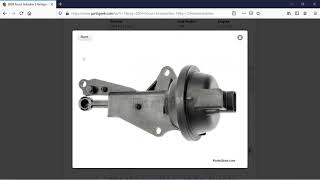
- Faulty IMRC Actuator or Solenoid (Very Common) — The electric motor (actuator) or vacuum-controlled switch (solenoid) moving the runner flaps fails. Internal motors burn out, gears strip, or they stop responding to PCM commands.
- Broken or Disconnected Linkage (Common) — Plastic or metal clips connecting the actuator to the flaps become brittle from heat cycles and break. The actuator motor works perfectly, but the disconnected flaps trigger the code.
- Carbon Buildup on Runner Flaps (Common) — Carbon deposits build up on the flaps and intake runners in direct-injection engines, causing them to seize. The PCM commands a change, sees no result, and sets a circuit code, mistaking a mechanical jam for an electrical fault.
- Wiring or Connector Damage (Less Common) — Electrical wiring to the IMRC actuator gets damaged from engine heat or friction, leading to a short to ground, an open circuit, or corrosion in the connector pins.
- Vacuum Leak (for vacuum-actuated systems) (Less Common) — Cracked, disconnected, or clogged vacuum lines running to the IMRC solenoid prevent the flaps from moving, triggering the P1520 code on vacuum-actuated systems.
- Leaking Intake Manifold Gasket (Rare) — A significant vacuum leak from a failed intake manifold gasket disrupts airflow, causing the PCM to misinterpret data and flag an IMRC fault. This is often accompanied by lean codes like P0171.
- Faulty IMRC Position Sensor (Rare) — If the IMRC position sensor fails, provides an erratic signal, or its reading doesn't match the commanded position, the PCM sets a P1520 code.
- Faulty Powertrain Control Module (PCM) (Very Rare) — The driver circuit within the PCM that controls the IMRC actuator fails. This is the absolute last consideration after ruling out wiring, actuators, and mechanical jams.
Symptoms
- Check Engine Light On — This is the first and sometimes only symptom a driver notices.
- Reduced Engine Power and Acceleration — The car feels sluggish or 'flat' at specific RPMs because the engine lacks optimized airflow. The failure is most noticeable depending on whether flaps are stuck in the long-runner or short-runner position.
- Rough Idle or Stalling — If the runner flaps stick in the short-runner (high RPM) position, reduced air velocity at low speeds causes an unstable, rough idle or engine stalling.
- Audible Clicking or Ticking Noise — A broken linkage arm causes a light ticking or rattling sound from the intake manifold as the actuator tries to move the disconnected flaps.
- Poor Fuel Economy (also visible on scanner) — When the IMRC system fails, combustion efficiency drops, leading to a 5-15% decrease in gas mileage.
Diagnostic Flowchart
Tap your situation to follow the diagnostic path that matches what you're seeing on this code.
Common Fixes & Costs
- Replace IMRC Actuator/Motor
— Parts: $150-$400, Labor: $150-$300, ~1.5 hr book time
(Intermediate)
Ford F-150 (2015-2017 5.0L): OEM FR3Z-9L492-C (Alt: Standard Motor Products IMA120/IMA121)
Ford Focus (2003-2007): OEM W0133-2310039 (Alt: Dorman 911-904)
Dodge/Chrysler (3.5L): OEM 04591854AC (Alt: Dorman 68166970AA) - Repair or Replace IMRC Linkage/Clips
— Parts: $10-$50, Labor: $50-$150, ~0.8 hr book time
(DIY)
Chevy Cruze/Sonic (2011-2018 1.8L): OEM 55570283 (Alt: Dorman 911-929A)
Ford F-150 (4.2L, 4.6L, 5.4L): OEM F5RZ-9F955-AB (Alt: Dorman 47099) - Replace Intake Manifold Assembly
— Parts: $300-$1200, Labor: $300-$600, ~3.5 hr book time
(Professional)
VW/Audi (2.0T TSI, Gen 1/2): OEM 06J133201BH (Alt: URO Parts 06J133201BH-URP)
Ford F-150 (2015-2017 5.0L): OEM FR3Z-9424-A (Alt: Dorman 615-916) - Clean Intake Manifold and Runner Flaps — Parts: $20-$50, Labor: $500-$1000, ~5 hr book time (Professional)
- Repair Damaged Wiring or Connector — Parts: $5-$30, Labor: $100-$300, ~1.5 hr book time (Intermediate)
Used vs. New Parts: Buying Guide
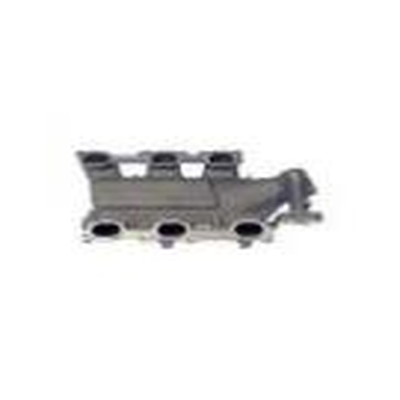
When a used part is worth it: For a complete intake manifold assembly, a used part from a low-mileage vehicle is a cost-effective option, as the plastic manifold itself rarely fails. It's a good choice when on a tight budget and the vehicle is older.
Donor-vehicle mileage cap: roughly under 80000 miles for the part to have meaningful remaining life.
Donor quality checklist:
- Verify the part number matches exactly.
- Inspect for cracks around mounting points and seams.
- Check that linkage arms and flaps are intact and not caked with excessive oil or carbon.
- Avoid parts from vehicles scrapped due to engine failure or fire.
Decision logic:
- If The failure is a common, separate part like an actuator or linkage arm. → Buy a new, upgraded aftermarket part (e.g., Dorman). Savings are high and reliability is often better than OEM.
- If The vehicle is less than 8 years old and the part cost is under $500. → Buy a new OEM or high-quality aftermarket part for warranty and peace of mind.
- If The vehicle is over 10 years old and the repair requires a full manifold replacement. → A used part is an acceptable risk to save money, but replace all associated gaskets with new ones.
Warranty tradeoff: Used parts from salvage yards typically have a 30-90 day warranty. New aftermarket parts offer a 1-year to limited lifetime warranty. New OEM parts carry a 1-2 year warranty.
Worst-case if a used part fails: $400-$1000 if a used manifold assembly is cracked or fails after installation, requiring repeat labor costs.
What Happens If You Wait — Timeline
- 0-1 month: Check Engine Light is on. A slight rough idle or lack of high-RPM power is noticeable. The code causes an immediate emissions test failure. (MPG impact: 3-8%% · Added cost: $0-40 in wasted fuel)
- 1-4 months: MPG loss becomes significant. The engine runs consistently with a sub-optimal air-fuel mixture, causing rough idle or sluggish acceleration. (MPG impact: 8-15%% · Added cost: $50-200 in wasted fuel)
- 4-8 months: The rich running condition overheats the catalytic converter. The internal ceramic substrate begins to crack or melt from excess unburnt fuel. (MPG impact: 10-20%% · Added cost: $1,000-$2,500 (Catalytic converter requires replacement).)
- 8+ months: Catastrophic catalytic converter failure creates a major exhaust blockage. This causes severe power loss, engine overheating, and damages downstream O2 sensors. (MPG impact: 20-35%+% · Added cost: $1,500-$4,000+)
Cost of Not Fixing It
- 0-1 month: Noticeable drop in fuel economy (5-15%), poor acceleration, and rough idle. Guaranteed emissions test failure. (Added cost: Negligible, besides increased fuel cost.)
- 1-6 months: An incorrect air-fuel mixture from a stuck IMRC causes the engine to run rich, sending unburnt fuel into the exhaust. This overheats and destroys the catalytic converter. (Added cost: $1,000-$3,000)
- 6+ months: Sustained poor combustion leads to fouled spark plugs, increased carbon buildup, and potential internal engine damage. (Added cost: $300-$1,500+)
Diagnosis Steps
- Verify Code and Check Freeze Frame Data
Confirm P1520 is present using an OBD-II scanner and check for related codes (e.g., P2004, P2015, P0171). Document the freeze frame data to capture engine conditions (RPM, speed, temp) at the exact moment the fault triggered.
Tools: OBD-II Scanner (Beginner) - Perform a Thorough Visual Inspection
Locate the IMRC actuator on the side of the intake manifold. Inspect the actuator, electrical connector, and linkage. Look for broken plastic arms, disconnected rods, or damaged vacuum lines.
Tools: Flashlight (Beginner) - Manually Test Flap Movement
Try moving the IMRC linkage arm by hand with the engine off. It must move smoothly with light spring resistance. Extreme stiffness indicates carbon-seized flaps, while zero resistance means the linkage is broken internally.
Tools: None (Intermediate) - Command the Actuator with a Scan Tool
Use a bi-directional scan tool to command the IMRC actuator on and off. If the motor runs but the linkage doesn't move, the internal gears are stripped. If nothing happens, it points to a bad motor or a circuit issue.
Tools: Bi-directional Scan Tool (Intermediate) - Check the Electrical Circuit
With the actuator unplugged and the key on, use a multimeter to verify battery voltage on the power wire and a solid ground on the ground wire. Check for continuity on the signal wire between the actuator and the PCM to rule out a broken wire.
Tools: Multimeter, Vehicle-Specific Wiring Diagram (Advanced) - [PRO TIP] Test Actuator Motor Resistance
Disconnect the actuator's electrical connector. Measure the resistance between the power and ground terminals on the actuator using a multimeter. An open circuit (infinite resistance) means the motor is burned out. Zero Ohms indicates an internal short circuit.
Tools: Multimeter, Service Manual (Advanced) - Check for Vacuum (if applicable)
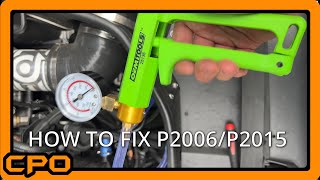
For vacuum-operated systems, use a hand-held vacuum pump to test the actuator's diaphragm for leaks. Check for vacuum at the supply hose with the engine running. Trace the line back to its source if vacuum is missing.
Tools: Hand-held Vacuum Pump, Vacuum Gauge (Intermediate) - [PRO TIP] Test IMRC Position Sensor (if equipped)
Back-probe the signal wire at the sensor's connector using a multimeter. With the key on (engine off), manually move the IMRC linkage. You should see a smooth, linear voltage change (e.g., 0.5V to 4.5V). Dropouts or dead spots indicate a failed sensor.
Tools: Multimeter or Oscilloscope, T-pins (Advanced) - [PRO TIP] Analyze Scan Tool Live Data
Monitor 'IMRC_CMD' (commanded position) and 'IMRC_MON' (actual position) on a scan tool. As you rev the engine, these values must match. A discrepancy where the commanded state changes but the monitored state does not confirms a fault.
Tools: Advanced OBD-II Scan Tool (Advanced)
When This Code Triggers (Freeze-Frame Conditions)
- Engine Coolant Temp: 180-210°F (Engine at full operating temperature.)
- RPM: 1500-3000 RPM (During acceleration or when the PCM commands a change in runner position.)
- Engine Load: 25-70% (Moderate acceleration or steady cruise, when a transition between long and short runners is expected.)
- Vehicle Speed: 25-60 mph (City or highway driving where engine speed varies.)
Related Codes
- P2004 / P2005 — These codes mean the IMRC is 'Stuck Open' on Bank 1 (P2004) or Bank 2 (P2005). Seeing P1520 alongside P2004 strongly suggests a mechanical jam or broken linkage.
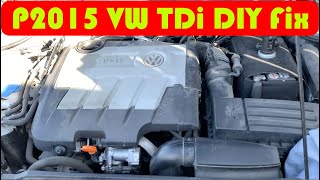
- P2015 — This code for 'Intake Manifold Runner Position Sensor Circuit Range/Performance' is extremely common on VW/Audi 2.0T engines. It indicates a failure of the internal flap mechanism, requiring a full manifold replacement.
- P1518 / P1519 — These are manufacturer-specific codes indicating the IMRC is 'Stuck Open' (P1518) or 'Stuck Closed' (P1519). Getting them with P1520 points to a failed actuator that is also jammed.
- P0171 / P0174 — These 'System Too Lean' codes appear with P1520 if the IMRC is stuck open, creating a vacuum leak condition at idle. This is a secondary code caused by the primary IMRC fault.
Climate & Environmental Factors
- Cold Weather: Cold temperatures make plastic components, like IMRC linkage clips, brittle and susceptible to breaking.
- Engine Operating Temperature: Frequent short trips prevent the engine from reaching full operating temperature, accelerating carbon buildup. Incomplete combustion leaves deposits on intake valves, causing flaps to seize.
- High Humidity: On Ford EcoBoost engines, high humidity causes moisture buildup in the intercooler, leading to misfires. While not a direct cause of P1520, it triggers related drivability issues addressed in TSB 13-8-1.
How to Talk to a Mechanic About This Code
Say this: "I have a P1520 code for the Intake Manifold Runner Control circuit. Before replacing any parts, I need you to manually check if the runner flaps are seized by carbon or if the linkage is broken to confirm if it's a mechanical jam or a true electrical failure."
This directs the technician to perform a crucial physical test before defaulting to a part replacement, preventing the installation of a new actuator when the real problem is a mechanical jam.
Avoid saying:
- 'Just fix whatever's wrong'
- 'My check engine light is on, can you look at it?'
- 'Whatever you recommend'
Questions to ask before authorizing the repair:
- Did you confirm the runner flaps move freely by hand?
- If the flaps are stuck, what is the cost difference between cleaning the intake manifold and replacing it entirely?
- If you're recommending an actuator replacement, what tests confirmed the old one failed?
- Can you show me the damaged part after it's removed?
- What is the warranty on the parts and labor for this repair?
Where to Take It: Dealer vs Independent vs Chain
- Dealer:
Recommended only if you suspect your vehicle is covered by a warranty or a manufacturer-specific issue that an independent shop might misdiagnose.
Best for: Vehicles still under powertrain or emissions warranty., Vehicles with known manufacturer-specific quirks, like a VW/Audi with a P2015 code or a Toyota where P1520 means a brake switch issue.
Downsides: Higher labor rates, often 1.5-2x that of an independent shop., May default to replacing an entire assembly when a smaller component repair or cleaning is sufficient. (Typical cost: +50% vs. baseline) - Independent Shop:
Best fit for most P1520 repairs. A good independent shop performs necessary mechanical checks and offers flexible repair options, like cleaning the manifold instead of replacing it.
Best for: Out-of-warranty vehicles where cost is a major factor., Common IMRC failures on brands like Ford or Chevy.
Downsides: Shop quality and diagnostic skill vary widely. Vet the shop through reviews and ask if they are comfortable with intake system diagnostics. (Typical cost: +0% vs. baseline) - Chain Shop:
Avoid for P1520 diagnosis. They may replace an actuator without checking for seized flaps, leading to a repeat failure.
Best for: Simple, routine maintenance like oil changes or brake pad replacement.
Downsides: Technicians lack specialized diagnostic experience for complex electrical or mechanical issues., High pressure to upsell leads to unnecessary part replacements without proper diagnosis. (Typical cost: -10% vs. baseline)
When to Walk Away From the Repair
If the estimated repair cost exceeds 50% of your car's private-party market value, seriously consider selling or trading in the vehicle instead of repairing it.
- Car worth $4000, fix is $2200: Walk away. The repair cost is over 50% of the car's value. It's not a sound financial decision.
- Car worth $12000, fix is $1500: Fix it. The repair cost is well below the 50% threshold and is a reasonable investment.
- Car worth $2500, fix is $1500: Walk away. At 60% of the vehicle's value, this repair is a poor investment.
What Scan Tool You Need for This Code
Minimum: A bi-directional scan tool that performs active tests on the IMRC actuator.
A basic $20 code reader only shows the P1520 code. It cannot command the IMRC actuator to move, which is a critical diagnostic step to determine if the actuator motor is dead or if the problem is mechanical.
Professional: Launch X431 Series / Autel MaxiSys MS906 Pro (~$900-1500) — Offers OEM-level diagnostics, including advanced features like ECU coding and topology mapping. Overkill for DIY, but provides the fastest data for a professional technician diagnosing complex wiring faults.
Rent vs buy: Rent for free from a store like AutoZone if you only want to read the code. However, rental tools typically lack the bi-directional control needed for a full P1520 diagnosis. You must buy a tool with this capability to diagnose it yourself.
How to Clear the Code After You Fix It
- Use an OBD-II scan tool to clear the diagnostic trouble codes (DTCs).
- Perform a complete drive cycle to allow the vehicle's readiness monitors to run.
- Reconnect the battery (only if required by the repair procedure, as this resets all monitors).
Drive cycle (~30 minutes): A typical drive cycle includes a cold start (sitting for 8+ hours), 5 minutes of idling, 15-20 minutes of mixed city/highway driving (including steady speeds around 55 mph), and at least four 30-second idle periods. The goal is to meet the specific conditions required for each readiness monitor to complete its self-test.
Readiness monitors affected: Comprehensive Component Monitor, Misfire Monitor, Catalyst Monitor, O2 Sensor Monitor
Before emissions retest: drive at least 100 miles to fully set monitors.
Watch out for:
- Disconnecting the battery clears the code but resets all emissions readiness monitors to 'Not Ready', causing an automatic smog test failure.
- The code returns immediately if the underlying mechanical or electrical fault is not fixed.
- Failing to drive the vehicle through a varied drive cycle prevents necessary monitors from setting before a re-test.
Will This Fail Emissions / State Inspection?
Yes — this code typically fails an OBD-II emissions inspection.
- California: An illuminated Check Engine Light is an automatic failure. After repair, most readiness monitors must be 'complete'. Driving 50-100 miles is needed to reset them before a retest.
- New York: The NYVIP3 inspection includes an OBD-II scan. An active P1520 code results in an automatic inspection failure.
- Texas: In counties requiring emissions testing, an illuminated Check Engine Light is an automatic failure. You may be allowed one or two 'Not Ready' monitors depending on vehicle year.
Most Commonly Affected Vehicles
- Ford Focus, Mondeo, Kuga (2004-2018) — Very common issue related to IMRC actuator failure or flaps stuck by carbon.
- Ford F-150 (2011-2017) — The 5.0L V8 engine frequently experiences broken plastic IMRC linkage components.
- Ford Windstar (1999-2003) — Prone to failure of the plastic clips holding the control rods to the actuator due to engine heat.
- Mazda 3, 6, MPV (2000-2016) — Shares a similar IMRC design with Ford and is susceptible to the same actuator and carbon buildup issues.
- Volkswagen / Audi GTI, Jetta, Passat, Tiguan, A3, A4 (2008-2017) — The 2.0T TSI engine is notorious for IMRC issues, triggering code P2015. The failure is typically the plastic actuator arm, requiring full manifold replacement. VW extended the warranty for this part on many vehicles.
- Chevrolet Cruze, Sonic (2011-2018) — The 1.8L engine is known for failure of the plastic IMRC linkage arm. Dorman offers an upgraded replacement arm (part 911-929A) with a durable brass ball stud.
- Dodge / Chrysler Charger, Magnum, 300 (2006-2010) — The 3.5L V6 engine is known for IMRC-related failures, often due to a faulty actuator or seized flaps.
- Nissan / Infiniti Various Models (2000-2016) — On many Nissan and Infiniti models, P1520 is defined as an issue with the electronic throttle control or stop lamp switch circuit, NOT the IMRC system.
Manufacturer-Specific Notes
- Toyota / Lexus: P1520 means 'Stop Lamp Switch Malfunction.' The computer detects a conflict in the brake light switch signals. Diagnosis involves checking brake light operation and testing the switch's voltage signals.
- General Motors (GM): For many GM models, P1520 indicates a 'Transmission Range Switch Circuit' issue, causing no-start conditions or incorrect gear indication. For the Cruze/Sonic, it correctly refers to the IMRC system.
- BMW: P1520 relates to the camshaft position actuator ('B' Camshaft Position Actuator Signal Fault), indicating a problem with the variable valve timing system (VANOS), not the intake runners.
- Volkswagen / Audi: VW issued multiple extended warranties for the intake manifold on 2.0T TSI engines due to high failure rates causing code P2015. Owners should check with a dealer using their VIN for coverage.
Real Owner Stories
2017 Ford F-150 5.0L with P2007 (IMRC Stuck Closed)
Check Engine Light came on during a road trip. No noticeable symptoms like rough idle or power loss were present.
What they tried:
- Scanned code at AutoZone, revealing P2007 (IMRC Stuck Closed, Bank 2).
- Owner drove the truck home to perform the repair himself.
Outcome: Owner replaced the entire intake manifold assembly. Another user upgraded to a ported 2018 Mustang manifold and a custom tune for $1400, avoiding a $2000 dealer quote.
Lesson: On the Ford 5.0L, a broken IMRC linkage requires full intake manifold replacement. Upgrading to a performance manifold is a cost-effective alternative to OEM replacement.
2012 VW Jetta SportWagen TDI with P2015
Car sat unused for over a year. Check Engine Light illuminated with code P2015 at 350,000+ miles.
What they tried:
- Initial diagnosis suggested the intake swirl flap assembly was seized.
- A shop quoted over $900 for a full intake manifold replacement.
Outcome: The owner installed an aftermarket repair bracket from Dieselgeek. The bracket limits the actuator arm's range of motion, preventing the sensor from reporting an out-of-range signal caused by plastic wear. This fixed the issue for a fraction of the cost.
Lesson: For VW/Audi 2.0T engines with P2015, check for warranty coverage first. If not covered, low-cost aftermarket repair brackets are a proven fix for common plastic linkage wear.
2001 Mazda MPV with intermittent IMRC failure
IMRC system worked correctly on cold starts but stopped working after 15 minutes of driving, setting the code.
What they tried:
- Cleaned the runner valves.
- Repaired known vacuum leaks.
- Confirmed the PCM was stopping the signal to the IMRC solenoid once the engine warmed up.
Outcome: The owner suspected a failing sensor elsewhere (like ECT or O2) was providing bad data to the PCM, causing it to disable the IMRC as a protective measure.
Lesson: Intermittent electrical faults are difficult to diagnose. If the component and wiring are fine, consider what other engine sensor data the PCM uses to control that component.
Toyota with P1520
Check Engine Light on, but no noticeable engine performance issues.
What they tried:
- Scanning the code revealed P1520.
Outcome: For Toyota vehicles, P1520 indicates a 'Stop Lamp Switch Malfunction'. The fix was inspecting and replacing the brake light switch.
Lesson: Always verify the code's definition for your exact make and model. Assuming P1520 is an IMRC fault on a Toyota leads to wasted diagnostic effort.
How to Prevent This Code From Triggering
- Use Top Tier certified gasoline. (Every fill-up) — Top Tier fuels contain high concentrations of detergent additives that prevent carbon deposits on intake valves, a primary cause of stuck IMRC flaps in GDI engines.
- Perform periodic fuel system cleaning. (Every 10,000-15,000 miles) — Using a quality fuel system cleaner removes existing carbon deposits, keeping the intake runners and flaps moving freely.
- Avoid frequent short trips. (Daily habit) — Engines that don't reach full operating temperature accumulate moisture and fuel byproducts, which bake onto hot valves and accelerate carbon buildup.
- Install an oil catch can (for advanced users). (Once) — On GDI engines, the PCV system vents oil mist into the intake manifold. An oil catch can intercepts this mist, significantly reducing carbon buildup.
- Follow manufacturer-specified oil change intervals with high-quality oil. (Per vehicle schedule) — High-quality synthetic oil minimizes oil consumption and blow-by, reducing the oil vapor entering the PCV system.
Frequently Asked Questions
Can I fix a P1520 code myself?
Yes, if the problem is an easily accessible broken linkage clip or a simple solenoid. If the intake manifold requires removal for cleaning or the actuator is buried, take it to a professional shop.
What is the most common cause of P1520 on a Ford?
On most Ford vehicles, the most common cause is a failed IMRC actuator motor or broken plastic linkage clips connecting the motor to the intake flaps.
What is a common misdiagnosis for P1520?
Mechanics frequently replace the IMRC actuator when the real problem is carbon-seized runner flaps. Always manually check if the linkage moves freely before replacing electrical components. A seized linkage quickly burns out a brand-new actuator.
Will a P1520 code cause my car to fail an emissions test?
Yes, a P1520 code causes an automatic failure in any state with emissions testing because the Check Engine Light is illuminated. The underlying problem also increases harmful emissions by disrupting the optimal air-fuel mixture.
Why does this one code have so many different meanings?
Codes in the P1xxx range are manufacturer-specific, unlike universal P0xxx codes. This gives manufacturers flexibility to create codes for unique systems. You must verify the code definition for your exact year, make, and model before attempting a repair.
Can a bad gas cap cause a P1520 code?
No, a loose or faulty gas cap relates to the EVAP system and triggers codes like P0455 or P0457. It does not cause a P1520 code.
Can I just delete or bypass the IMRC system?
Deleting the IMRC system causes a persistent Check Engine Light, guarantees emissions test failure, and results in a noticeable loss of low-end torque. It is not recommended for street-driven vehicles.
Why does my car run worse at low speeds with a P1520 code?
The IMRC system closes flaps at low RPMs to increase air velocity, improving torque and engine stability. If the flaps stick open, air velocity drops too low at idle, causing a rough run condition and poor acceleration.
Key Takeaways
- Verify your vehicle's specific P1520 definition, as it means an IMRC fault on Fords but a brake switch failure on Toyotas.
- Inspect the IMRC linkage manually before buying parts; a broken $20 plastic clip or carbon-seized flaps often mimic a dead $200 actuator motor.
- Expect a 5-15% drop in fuel economy, rough idling, and sluggish acceleration until the IMRC system is repaired.
- Fix P1520 within 1-4 months to prevent unburnt fuel from destroying your catalytic converter, which adds $1,000 to $2,500 to your repair bill.
Helpful Videos

Shop the Parts Behind P1520
Below are the parts most often responsible for code P1520, ranked by how frequently each one is the actual culprit (per the diagnosis above). Tap any to see what we have for your vehicle.

The information in this article is provided for general reference and educational purposes only. Vehicle specifications, procedures, and part compatibility can vary by production date, trim level, and region. Always consult your vehicle's factory service manual and verify part numbers before purchasing or performing repairs. Safety-critical components such as airbags, seat belts, and braking systems should be installed by a qualified professional.
- 🧭 Diagnostic Flowchart
- 🎬 Helpful Videos
- 🛍️ Shop This Part
- What Does P1520 Mean?
- Can I Drive With P1520?
- Common Causes
- Symptoms
- Common Fixes & Costs
- Used vs. New Parts: Buying Guide
- What Happens If You Wait — Timeline
- Cost of Not Fixing It
- Diagnosis Steps
- When This Code Triggers (Freeze-Frame Conditions)
- Related Codes
- Climate & Environmental Factors
- How to Talk to a Mechanic About This Code
- Where to Take It: Dealer vs Independent vs Chain
- When to Walk Away From the Repair
- What Scan Tool You Need for This Code
- How to Clear the Code After You Fix It
- Will This Fail Emissions / State Inspection?
- Most Commonly Affected Vehicles
- Manufacturer-Specific Notes
- Real Owner Stories
- 2017 Ford F-150 5.0L with P2007 (IMRC Stuck Closed)
- 2012 VW Jetta SportWagen TDI with P2015
- 2001 Mazda MPV with intermittent IMRC failure
- Toyota with P1520
- How to Prevent This Code From Triggering
- Frequently Asked Questions
- Can I fix a P1520 code myself?
- What is the most common cause of P1520 on a Ford?
- What is a common misdiagnosis for P1520?
- Will a P1520 code cause my car to fail an emissions test?
- Why does this one code have so many different meanings?
- Can a bad gas cap cause a P1520 code?
- Can I just delete or bypass the IMRC system?
- Why does my car run worse at low speeds with a P1520 code?
- Key Takeaways
- 🎟️ Get 5% Off