

P1523 on 2008-2017 Audi A5: Throttle Body Malfunction Causes and Fixes
On a 2008-2017 Audi A5, code P1523 almost always means the electronic throttle body is dirty and sticking due to carbon buildup. The fix is to remove and clean the throttle body and then perform a mandatory 'Throttle Body Alignment' with a VAG-specific scan tool like VCDS. This is a common DIY job with a difficulty of 2/5.
- P1523 on your A5 almost always points to a problem with the electronic throttle body, usually that it's dirty.
- The most common and cheapest first step is to remove and thoroughly clean the throttle body and replace its gasket.
- After cleaning or replacing the throttle body, you MUST perform a 'Throttle Body Alignment' (TBA) with an Audi/VW-specific scan tool like VCDS for the fix to be complete.
- If cleaning and alignment don't solve the problem, the entire throttle body assembly needs to be replaced due to internal electronic failure.
What's Unique About the 2008-2017 Audi A5
The first-generation Audi A5 (B8/B8.5, 2008-2016) primarily uses direct injection engines (like the 2.0T TFSI and 3.2L FSI V6) which are known for causing significant carbon buildup on intake components. This is because the Positive Crankcase Ventilation (PCV) system vents oil and fuel vapors directly into the intake tract, where they bake onto the hot throttle body. This makes the throttle body particularly prone to getting gummed up with a sticky carbon layer, physically impeding the throttle plate's movement and triggering code P1523. Unlike older cable-driven throttles, these 'drive-by-wire' systems require a specific electronic recalibration (Throttle Body Alignment) after any cleaning or replacement, a critical step that is often missed by those unfamiliar with the platform.
Generation note: The 2008-2017 range covers the first generation (B8/B8.5, approx. 2008-2016) and the start of the second generation (B9, 2017-on). This issue is most prevalent on the B8/B8.5 models due to the carbon buildup characteristics of their direct-injection engines. The diagnostic and repair principles remain the same, but the B9 generation uses entirely different engine families and throttle body part numbers.
Symptoms You May Notice
- EPC (Electronic Power Control) light illuminated on the dashboard
- Check Engine Light is on
- Rough, unstable, or fluctuating idle
- Engine hesitates or jerks when accelerating
- Vehicle enters 'limp mode' with drastically reduced engine power
- Difficulty starting the engine, or stalling shortly after starting
- Increased fuel consumption
- Replacing the accelerator pedal position sensor. P1523 points to a fault at the throttle body itself, not the pedal.
- Ignoring the Throttle Body Alignment (TBA). Cleaning or replacing the part without performing the electronic relearn procedure will often fail to fix the issue.
- Mistaking symptoms of a faulty intake manifold runner flap (code P2015) for a throttle body issue, as they can both cause rough idle.
Most Likely Causes
- Dirty or Carbonized Throttle Body 🔴 High Probability → Shop Fuel Injection Throttle Body Direct injection engines vent oil vapors from the crankcase (PCV system) back into the intake, which bake onto the hot throttle body, causing a sticky carbon buildup that restricts the throttle plate.
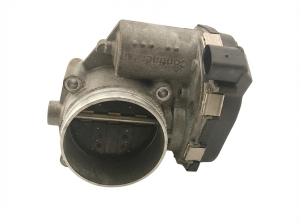
How to confirm: Remove the intake air duct from the throttle body and visually inspect the throttle plate and bore for a thick, black, tar-like coating. The plate should move smoothly when pushed gently (with ignition off).
Typical fix: Remove the throttle body from the vehicle, clean it thoroughly with a dedicated throttle body cleaner and a soft brush, reinstall with a new gasket, and perform a Throttle Body Alignment (TBA).
Est. part cost: $5-$15 for cleaner and a new gasket. - Failed Throttle Body Assembly 🟡 Medium Probability → Shop Fuel Injection Throttle Body Over time, the internal electronic position sensors or the electric motor that actuates the throttle plate can fail. This is a common wear item on higher-mileage vehicles.
How to confirm: If a thorough cleaning and successful Throttle Body Alignment do not resolve the code, the unit itself is likely faulty. A diagnostic scan tool may show erratic throttle position sensor readings or out-of-spec resistance.
Typical fix: Replace the entire throttle body assembly with a new unit. A Throttle Body Alignment is mandatory after replacement.
Est. part cost: $150-$450 - Faulty Throttle Body Wiring or Connector ⚪ Low Probability → Shop Fuel Injection Throttle Body Engine vibration and heat can cause wires to fray or the connector pins to lose tension over many years and miles. Wires can break right at the back of the connector where they are difficult to see.
How to confirm: With the engine off, disconnect the throttle body connector and inspect for corrosion, pushed-out pins, or damaged wires. Gently tug on each wire going into the connector to check for breaks inside the insulation. Wiggle the harness while the engine is idling to see if it causes a change in engine behavior.
Typical fix: Repair the damaged section of wiring or replace the connector pigtail. The 6-pin connector is part number 1J0973713.
Est. part cost: $15-$50
Rare But Worth Checking
- Airbag Crash Signal Fault: This is a very rare alternate definition for P1523 (VAG DTC 17931), indicating the Engine Control Module received a crash signal from the airbag system. This is highly unlikely unless you also have airbag warning lights and related fault codes (like 01366). On some older models, this can be caused by a faulty hazard flasher switch on a shared circuit.
Diagnosis Steps
- Scan the Engine Control Unit for P1523 and any other related codes. Note if the EPC light is also on.
- Before proceeding, ensure certain conditions are met: No other engine DTCs are present, battery voltage is above 11.5V, and engine coolant temp is between 5-95°C.
- Remove the intake boot connected to the throttle body.
- Visually inspect the throttle plate and the inside of the throttle body for heavy carbon and oil buildup.
- If dirty, remove the four T30 Torx bolts holding the throttle body to the intake manifold. Disconnect the electrical connector.
- Thoroughly clean the throttle body using a dedicated throttle body cleaner and a soft brush or microfiber towel. Pay special attention to the edges of the throttle plate and the bore where it seats. Do not use abrasive tools.
- Reinstall the throttle body using a new gasket to prevent vacuum leaks.
- Reconnect the electrical connector and intake boot.
- Using a VAG-compatible scan tool (like VCDS or OBDeleven), perform the Throttle Body Alignment (TBA). With the ignition ON and engine OFF, navigate to 'Engine - 01' -> 'Basic Settings - 04'. For drive-by-wire systems, select or enter group 060 and activate. You should hear the throttle body motor cycle. The display will show 'ADP RUN' and then 'ADP OK'.
- Wait 30 seconds after 'ADP OK' is displayed, then exit the procedure.
- Clear all fault codes. Start the engine and check for smooth idle and proper throttle response.
- If the code returns after a proper cleaning and alignment, the throttle body's internal electronics have likely failed, and the unit needs to be replaced.
Parts You'll Likely Need
- Throttle Body Assembly
(OEM #For 2.0T TFSI: 06F133062T (Bosch/Pierburg are OEM suppliers). For 3.2L V6 FSI: 06E133062C.)— This is the complete fix if cleaning doesn't work, as the internal sensors or motor have failed. Replacement is the only option.
Trusted brands: Bosch, VDO, Pierburg, Continental
OEM price range: $350-$500
Aftermarket price range: $150-$300 - Throttle Body Gasket
(OEM #06F133073D)— This is a required replacement part whenever the throttle body is removed to ensure there are no vacuum leaks upon reinstallation.
Trusted brands: Victor Reinz, Elring
OEM price range: $10-$20
Aftermarket price range: $5-$10 - Throttle Body Cleaner — A specialized solvent is needed to break down the carbon and oil deposits without damaging the electronic components or special coatings.
Trusted brands: CRC, Liqui Moly
Aftermarket price range: $8-$15
Related Codes That Often Appear With This One
- P0507 — This code indicates 'Idle Air Control System RPM Higher Than Expected,' which is a direct consequence of a sticking throttle body or an uncalibrated one after service.
- P2187 — 'System Too Lean at Idle.' A dirty throttle body can cause incorrect airflow that the ECU can't properly compensate for, leading to a lean condition at idle.
Platform-Specific Known Issues
- On the 2.0T engine, a failing PCV valve (part number 06H103495) often precedes throttle body issues. A failed PCV allows excessive oil into the intake tract, which rapidly coats the throttle body in carbon. Many owners report that after cleaning the throttle body for P1523, the code returns quickly until the underlying PCV issue is also addressed.
- Real Owner Experience: A user on the Audizine forum with a 2010 A5 2.0T reported getting the P1523 code along with an EPC light and rough idle. They initially replaced the throttle body, but the problem persisted. After further diagnosis, they discovered a frayed wire in the harness about 6 inches from the throttle body connector. Repairing the wire permanently solved the issue, highlighting the importance of checking the wiring harness thoroughly.
Mechanic-Grade Diagnostic Values
- VCDS Live Data: Measuring Block 062 — expected: Field 1 (Sensor G187) and Field 2 (Sensor G188) should show opposing percentages that add up to approximately 100%. As one value rises, the other should fall smoothly.. Failure: Jumpy, erratic, or non-responsive values in either field as the throttle is manually opened and closed (with engine off).
- Throttle Position Sensor (TPS) Voltage at Connector — expected: At closed throttle (idle position), voltage should be ~0.2–1.0 V. At wide-open throttle, voltage should be ~4.0–4.5 V. Voltage should sweep smoothly with no dropouts as the throttle plate is moved.. Failure: Voltage outside of expected range, or signal that is jumpy or has dead spots.
- Throttle Actuator Motor Winding Resistance — expected: Approximately 2.0-2.5 Ohms (anecdotal).. Failure: A significantly higher reading, such as 9 Ohms, or an open circuit (infinite resistance) indicates a failed motor inside the throttle body assembly.
Hidden / Shadow Codes Worth Checking
- 17931: This is the VAG-specific equivalent of the generic P1523 code, often displayed by tools like VCDS. It may have a more specific description, such as 'Crash Signal from Airbag Controller: Implausible Signal' in rare cases. (see via VAG-specific scan tools like VCDS or OBDeleven.)
- 01366: 'Opened Due to Crash Signal'. This code may be stored in the Airbag or Central Convenience modules alongside P1523 in the ECU if the rare 'crash signal' fault is the actual cause. (see via VAG-specific scan tools like VCDS, checking fault codes in modules 15-Airbags and 46-Central Conv.)
Scan Tool Commands That Help
- VCDS (VAG-COM): Basic Settings - Group 060 — This is the mandatory Throttle Body Alignment (TBA) procedure. It must be run any time the throttle body is cleaned, replaced, or the ECU is disconnected. It allows the ECU to relearn the closed, open, and partial positions of the throttle plate.
- VCDS (VAG-COM): Measuring Blocks - Group 062 — Used to monitor the live output of the two throttle position sensors (G187 and G188). This is critical for diagnosing a faulty sensor within the throttle body assembly by observing for erratic or non-correlating percentage values.
Wiring & Ground Locations
- J338 (Throttle Valve Control Module) Connector — The 6-pin electrical connector on the throttle body assembly itself.. This is the primary connection point for all power, ground, and signal wires for the throttle body. Damage here is a common cause of P1523. The connector part number is 1J0973713. Wire colors are typically: Yellow/Black, Blue/Black, Violet, Yellow/Blue, Brown/Violet, and Brown/Green.
- Engine Block Ground Point — There are multiple ground posts on the engine block and chassis. A key one is often located on the left side of the engine compartment near the strut tower or on the engine block itself.. A poor engine or ECU ground can cause unstable reference voltages for sensors, leading to erratic behavior and fault codes like P1523.
Real Owner Repair Stories
- AudiWorld Forums (Audi with Drive-By-Wire and water/methanol injection) — Repeated throttle body failures, EPC light, erratic tachometer, loss of throttle control.
❌ Tried (didn't work) Replacing the throttle body (worked for a few weeks then failed again), Replacing the ECU
✅ What actually fixed it The owner discovered that condensation from their aftermarket water/methanol injection system was accumulating inside the throttle body housing, causing the electronics to short out over time. The final fix was to reduce the amount of fluid being injected to prevent this accumulation. - AudiWorld Forums user 'vegg' (2013 2.0 TFSI (CFKA engine)) — Rough idle, especially when cold and below 2k RPM. VCDS adaptation would abort.
❌ Tried (didn't work) Replacing the throttle body with a new one; the issue persisted and adaptation still failed.
✅ What actually fixed it The user was misinterpreting the fault. The actual code was P2015, 'Intake Manifold Runner Position Sensor/Switch Circuit Range/Performance'. The symptoms were similar to a throttle body issue, but the problem was with the intake manifold flaps, not the throttle body. This highlights a common point of misdiagnosis.
When the Usual Fixes Don't Work
- While cleaning the throttle body is the most common fix, it is not always successful. If the internal position sensors have failed or the actuator motor is worn, cleaning will not resolve the issue and the code will return. In these cases, replacement is the only option. Furthermore, similar symptoms like a rough idle can be caused by other components, such as a faulty intake manifold runner flap (DTC P2015), which can be mistaken for a throttle body problem. A thorough diagnosis is key before replacing parts.
OEM Part Supersession History
06F133062T (For 2.0T Engines)→Minor revisions exist, such as 06F133062Q, 06F133062J, and 06F133062AG. These are generally considered interchangeable and reflect small manufacturing updates.— Incremental improvements in materials or internal components.
Heads up: While physically interchangeable, always verify compatibility with your specific VIN.06E133062C (For 3.2L/3.0T V6 Engines)→06E133062G, then 06E133062H.— Updated design to improve reliability and performance.
Heads up: It is recommended to use the latest revision (H) when replacing an older part.
Model Year Variations Within This Range
- 2008-2016 (B8/B8.5 Generation): These models predominantly use the EA888 Gen 2 (2.0T) or EA837 (V6) engines and share the common part numbers (06F133062T for 2.0T, 06E133062C/G/H for V6). The diagnostic process is consistent across these years.
- 2017 (B9 Generation): The 2017 A5 marks the beginning of the B9 generation, which uses different engines (e.g., EA888 Gen 3 or EA839 V6). The throttle body is a completely different part (e.g., 06Q133062A for some gas engines) and is not interchangeable with B8 parts. While the P1523 code could theoretically occur, the specific parts and procedures differ significantly.
Diagnostic Flowchart
Other Known Issues on This Vehicle
Issues unrelated to this code that are worth knowing about as an owner of this generation:
- 2.0T TFSI Excessive Oil Consumption 🔴 High — Extremely common on pre-2012 EA888 Gen 2 engines. Caused by flawed piston ring design. Many vehicles had pistons/rings replaced under a class-action lawsuit, but un-repaired examples still exist. (Ref: Class-action settlement (expired). TSBs were issued but the primary fix was a lawsuit.)
- Timing Chain Tensioner Failure (2.0T) 🔴 High — Common on EA888 engines from approx. 2008-2013. The original tensioner can fail without warning, allowing the timing chain to jump, causing catastrophic engine damage. A rattling noise on cold start is a key warning sign. (Ref: An updated tensioner (P/N 06K109467K) was released. No recall, but warranty was extended for some vehicles.)
- Plastic Water Pump / Thermostat Housing Failure 🟠 Medium — Very common across most B8/B8.5 engines (2.0T, 3.0T). The plastic housing becomes brittle with heat cycles and cracks, causing coolant leaks. Failure often occurs between 40,000 and 80,000 miles. (Ref: Multiple part revisions exist. A class-action lawsuit was filed for later model years regarding this issue.)
- PCV Valve Failure 🟠 Medium — Common on the 2.0T engine. The diaphragm inside the PCV valve tears, leading to a loud whistling sound, rough idle, and increased oil consumption. This failure also accelerates carbon buildup in the intake and on the throttle body. (Ref: Updated part numbers (e.g., 06H103495AK) are available.)
- Carbon Buildup on Intake Valves 🟠 Medium — An inherent issue with all direct-injection engines on this platform (FSI/TFSI). Fuel is injected directly into the cylinder, so it no longer cleans the intake valves. Over 50k-80k miles, carbon chokes the intake ports, causing misfires and reduced performance. Requires manual (walnut blasting) cleaning.
- S-Tronic (DSG) Mechatronic Unit Failure 🔴 High — Affects cars with the 7-speed dual-clutch S-Tronic gearbox. Can cause jerky shifting, loss of gears, or complete transmission failure. Regular fluid changes every 40,000 miles are critical to longevity.
Used vs. New Parts: Buying Guide for This Vehicle
When a used part is the smart pick: A used throttle body from a salvage yard is a high-risk, low-cost gamble. It may be a viable short-term solution if your failure is confirmed to be only mechanical binding from carbon (which you can clean). However, since the internal electronics are a common failure point and their remaining life is unknown, a used part may fail quickly.
Donor-vehicle mileage cap: roughly under 75000 miles for the part to have meaningful remaining life.
What to inspect on the donor part:
- Ensure the electrical connector and pins are clean, straight, and free of corrosion.
- Manually (with ignition off) push the throttle plate to feel for smooth movement and a strong spring return. Avoid any that feel gritty or stick.
- Check for a date code on the part if possible; a newer part is preferable.
- Ask for the donor vehicle's mileage and history if available.
OEM-only on this vehicle (don't cheap out):
- Throttle Body Assembly
Aftermarket brands forum-validated for this vehicle:
- Bosch
- VDO
- Pierburg
- Continental
Brands owners have reported issues with on this vehicle:
- Unbranded, low-cost units from online marketplaces are frequently reported on forums to have calibration issues or premature failure. It is strongly recommended to stick with Genuine Audi or a known OEM supplier.
Real Owner Stories
Aggregated from forums and TSBs cited above. Mileages and costs reflect what owners reported in those sources.
2010 Audi A5 2.0T
Symptoms: P1523 code, EPC light illuminated, and a rough idle.
What fixed it: Repairing a frayed wire in the harness located about 6 inches from the throttle body connector.
Source hint: Audizine forum user report mentioned in vehicle_specific_issues
Related OBD-II Codes
Frequently Asked Questions
My 2010 Audi A5 2.0T has P1523 and the EPC light is on. Could a bad PCV valve be the cause?
What specific part number do I need if I have to replace the throttle body wiring connector on my A5?
I'm cleaning my throttle body to fix P1523; what tools do I need to remove it from the intake manifold?
Can I perform the Throttle Body Alignment (TBA) on my A5 without a scan tool?
What are the specific battery and temperature requirements to clear P1523 via a Throttle Body Alignment?
Is there an updated part for the timing chain tensioner on my 2.0T A5 that I should check while fixing this?
Helpful Videos
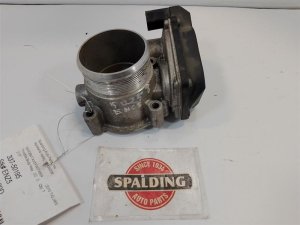
We Have This Part in Stock

The information in this article is provided for general reference and educational purposes only. Vehicle specifications, procedures, and part compatibility can vary by production date, trim level, and region. Always consult your vehicle's factory service manual and verify part numbers before purchasing or performing repairs. Safety-critical components such as airbags, seat belts, and braking systems should be installed by a qualified professional.
- Audi A5:
- 🧭 Diagnostic Flowchart
- 🎬 Helpful Videos
- 🛍️ Shop This Part
- What's Unique About the 2008-2017 Audi A5
- Symptoms You May Notice
- Most Likely Causes
- Rare But Worth Checking
- Diagnosis Steps
- Parts You'll Likely Need
- Related Codes That Often Appear With This One
- Platform-Specific Known Issues
- Mechanic-Grade Diagnostic Values
- Hidden / Shadow Codes Worth Checking
- Scan Tool Commands That Help
- Wiring & Ground Locations
- Real Owner Repair Stories
- When the Usual Fixes Don't Work
- OEM Part Supersession History
- Model Year Variations Within This Range
- Other Known Issues on This Vehicle
- Used vs. New Parts: Buying Guide for This Vehicle
- Real Owner Stories
- 2010 Audi A5 2.0T
- Related OBD-II Codes
- Frequently Asked Questions
- 🎟️ Get 5% Off