

P1523 on 2008-2017 Audi Q5: Throttle Body vs. Crash Signal Explained
For the 2008-2017 Audi Q5, code P1523 most likely indicates a dirty or failing throttle body. Cleaning the throttle body and performing a reset procedure is the most common fix. However, on some, particularly early models, this code can indicate a serious 'Crash Signal' fault from the airbag system, which may prevent the engine from starting.
- P1523 on a Q5 has two possible meanings: a common throttle body problem or a rare but critical airbag crash signal fault.
- Your first diagnostic step should be a full system scan with a VAG-specific tool to check for any airbag-related codes (like 01366 or 00595), which would point towards the 'crash signal' issue.
- If no airbag codes are present, the most likely cause is a dirty throttle body that needs cleaning.
- After cleaning or replacing the throttle body, a 'Throttle Body Alignment' with a proper scan tool is mandatory.
What's Unique About the 2008-2017 Audi Q5
The Audi Q5 (Typ 8R) sits at a crossroads of VAG code definitions. While most modern Audis use P1523 to denote a common throttle body fault, the code has a legacy definition on older platforms relating to a critical airbag crash signal. Early Q5 models (circa 2008-2010) could potentially have either system logic. This ambiguity is the single most important factor when diagnosing this code; one fix is a simple cleaning, while the other involves the SRS (airbag) system. A full system scan with a VAG-compatible tool is essential to check for codes in the Airbag module (Address 15) before assuming it's a throttle body issue.
Symptoms You May Notice
- Check Engine Light is on
- Engine runs with an irregular or fluctuating idle speed
- Vehicle enters 'limp mode' with reduced engine power
- Hesitation or jerking when accelerating
- Engine is difficult to start or stalls immediately after starting
- In the case of a 'Crash Signal' fault, the engine may crank but not start
- Airbag warning light may be illuminated on the instrument cluster
- Replacing the accelerator pedal position (APP) sensor. While pedal sensor faults can cause similar symptoms, they typically generate their own specific trouble codes.
- Replacing the Mass Airflow (MAF) sensor. A MAF issue might cause performance problems but is not the direct cause of a P1523 code.
- Ignoring the 'Crash Signal' possibility and repeatedly replacing throttle bodies when the root cause is in the airbag system.
Most Likely Causes
- Dirty or Jammed Throttle Body 🔴 High Probability → Shop Fuel Injection Throttle Body Direct injection engines, like the 2.0T and 3.0T found in the Q5, are prone to significant carbon and oil deposits in the intake system. This buildup can cause the throttle plate to stick, impeding its movement.
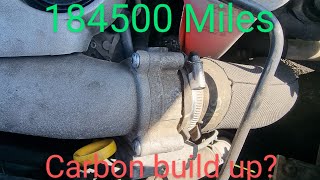
How to confirm: Remove the intake hose from the throttle body and visually inspect for a thick layer of black carbon/soot 🎬 Watch: Checking an Audi Q5 throttle body for carbon buildup around the throttle plate and bore. Check if the plate moves smoothly by hand (with the ignition off).
Typical fix: Thoroughly clean the throttle body with a dedicated throttle body cleaner and a soft brush. After reinstallation, a 'Throttle Body Alignment' (TBA) must be performed using a VAG-compatible scan tool (like VCDS or OBDeleven).
Est. part cost: $10-$20 for cleaning supplies - Faulty Throttle Body Assembly 🟡 Medium Probability → Shop Fuel Injection Throttle Body The internal electronic motor or position sensors within the throttle body can fail over time, independent of carbon buildup. This is a common wear item on many VAG vehicles of this era.
How to confirm: If cleaning and performing a TBA does not resolve the issue, and live data on a scan tool shows the 'commanded' throttle position does not match the 'actual' position, the unit is likely faulty.
Typical fix: Replace the entire throttle body assembly. A Throttle Body Alignment is required after installation.
Est. part cost: $250-$600
Rare But Worth Checking
- Airbag 'Crash Signal' Fault: This is a critical but less likely cause for this model year. The ECM thinks the car has been in an accident. This may be due to a faulty Airbag Control Module, a wiring issue between the module and the ECM, or a past accident where the crash data was not properly cleared. This fault is often accompanied by other airbag-related codes (like 01366 or 00595) and a flashing airbag warning light on the dash. On some older Audis, even a faulty hazard light switch could trigger this, as it was on the same circuit.
- Wiring or Connector Issue: Damage or corrosion on the wiring harness or connector pins leading to the throttle body can cause an intermittent signal and trigger this code. A visual inspection of the harness is warranted, especially the connector right at the throttle body.
Diagnosis Steps
- Scan for all codes in all modules using a VAG-specific tool (VCDS, OBDeleven). Pay close attention to codes from the Engine (01) and Airbags (15) modules.
- Analyze the codes. If code 01366, 00595, or any other airbag system faults are present with P1523, prioritize diagnosing the 'Crash Signal' fault. The problem is with the airbag system, its wiring, or stored crash data. Do not proceed with throttle body work.
- If P1523 is the only code (or is present with other engine-related codes), the throttle body is the primary suspect.
- With the ignition off, disconnect the intake boot from the throttle body. Visually inspect for heavy carbon buildup.
- If dirty, remove the throttle body and clean it thoroughly 🎬 See this walkthrough on how to easily remove the throttle body using appropriate throttle body cleaner and a soft cloth/brush. Do not use harsh tools that could scratch the bore. A new gasket is recommended upon reinstallation.
- Reinstall the throttle body with a new gasket. Reconnect all hoses and electrical connectors.
- Using a VAG-compatible scan tool, clear the fault codes and perform a 'Throttle Body Alignment' (TBA). This step is mandatory. For VCDS, go to [01-Engine] -> [Basic Settings-04] -> Group 060 and activate. You will hear the throttle body cycle. 🎬 Watch: Step-by-step VCDS throttle body alignment tutorial
- If the code returns after cleaning and alignment, use the scan tool to monitor live data for the throttle position sensors (e.g., in measuring blocks). If the actual position does not track with the commanded position, the throttle body assembly is likely defective and needs replacement.
- If the 'Crash Signal' fault is confirmed, the Airbag Control Module may need to be reprogrammed by a specialist to clear the crash data or replaced entirely if faulty.
Parts You'll Likely Need
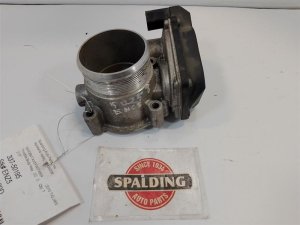
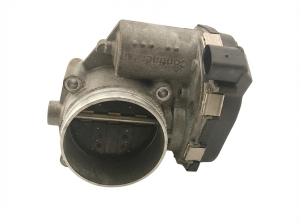
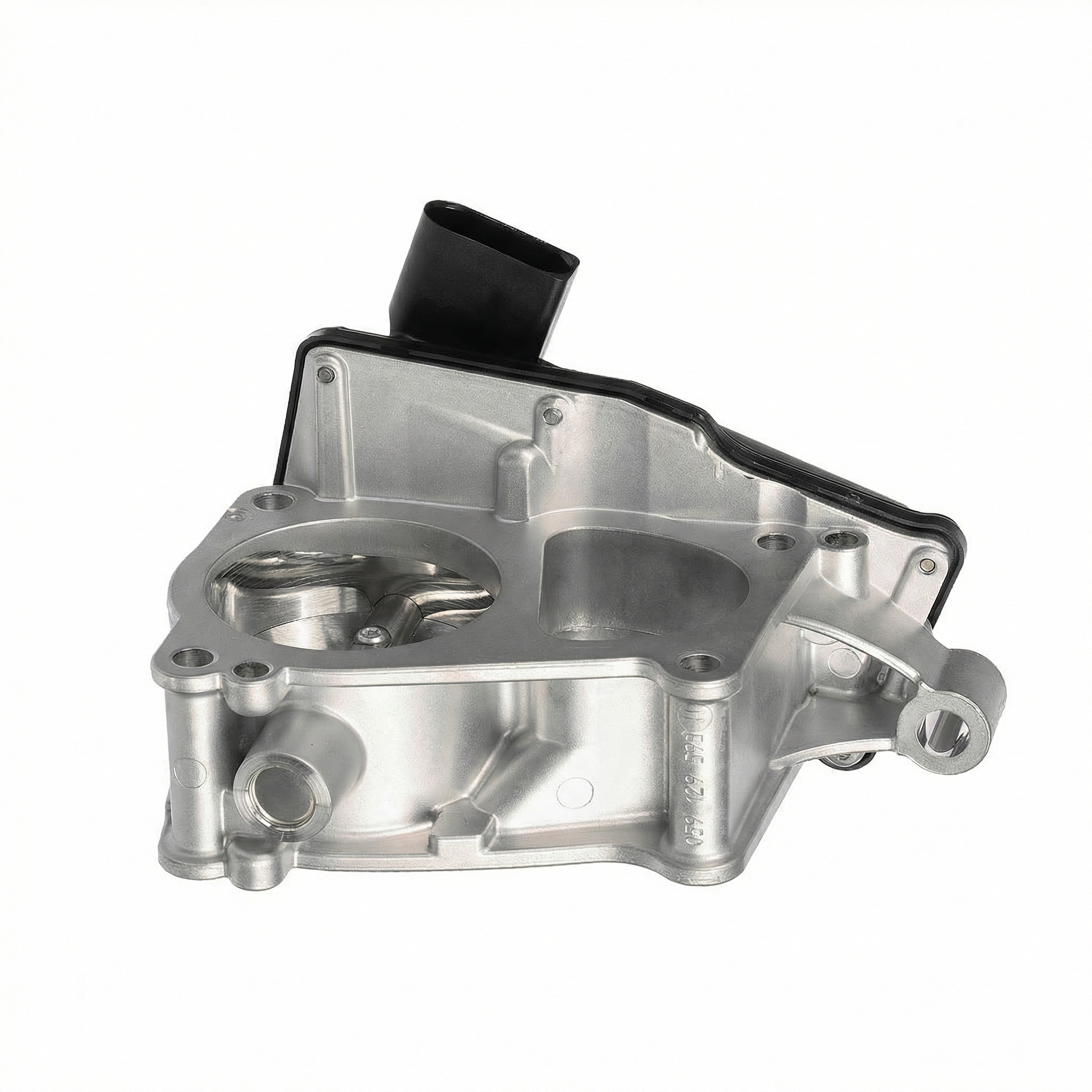
- Throttle Body Assembly
(OEM #06F133062Q (or T, J, AG), 06E133062H (or C, G))— This is the complete unit that is replaced if cleaning fails or the internal electronics have failed. Part number is highly dependent on the specific engine (e.g., 2.0T vs 3.2L vs 3.0T) and model year. Always verify with VIN.
Trusted brands: Bosch, VDO (Continental), Genuine Audi
OEM price range: $450-$600
Aftermarket price range: $250-$400 - Throttle Body Gasket
(OEM #06F133073D (for 2.0T), 06E133073A (for 3.2L))— Should always be replaced whenever the throttle body is removed for cleaning or replacement to prevent vacuum leaks.
Trusted brands: Victor Reinz, Elring, Mahle
OEM price range: $10-$20
Aftermarket price range: $5-$15
Related Codes That Often Appear With This One
- 01366 — This code means 'Opened Due to Crash Signal'. If you see P1523 (17931) and 01366 together, it strongly points to the 'Crash Signal' definition, not the throttle body.
- 00595 — This code, found in the airbag module, means 'Crash Data Stored'. It is the root cause that makes the airbag module send the signal to the engine, triggering P1523. Standard scan tools cannot clear this fault.
Platform-Specific Known Issues
- Real-World Forum Example (Crash Signal): On the Audi-Sport.net forum, a user with an Audi A3 (8L chassis) reported P1523 appearing in the Engine module but not the Airbag module after the airbag light and hazards randomly came on. This highlights that the fault can log in the engine ECU first, making it confusing for diagnosis.
- Real-World Forum Example (Throttle Body): A user on a VW/Audi forum described a classic scenario: after disconnecting the battery, the car had a hunting idle. Reading online pointed to a misaligned throttle body. Using VCDS to perform a Throttle Body Alignment (Basic Settings, Group 060) completely resolved the idle issue, demonstrating the necessity of the electronic reset procedure.
Mechanic-Grade Diagnostic Values
- Throttle Body Connector - Pin 1 to Ground (Key On, Engine Off) — expected: ~5.0 V. Failure: No voltage or significantly low voltage indicates a wiring or ECU power supply issue.
- Throttle Body Connector - Pin 3 to Good Chassis Ground (Key On, Engine Off) — expected: Near 0.0 V (checking for good sensor ground). Failure: Voltage above a few millivolts indicates a poor ground connection.
- Throttle Body Connector - Pin 2 (Signal Wire) to Ground (Key On, Engine Off) — expected: ~0.2 V to ~1.0 V at closed throttle, sweeping up to ~4.8 V at wide-open throttle.. Failure: No change, erratic jumps, or values outside the expected range indicate a failed internal position sensor.
- VCDS - Measuring Blocks - Group 054 (Idle Control) — expected: The 'Thr Valve Adjuster' value in degrees should change in opposition to the throttle angle as engine speed changes.. Failure: Values not changing or showing 'ERROR' can point to a communication or component fault.
Scan Tool Commands That Help
- VCDS (Ross-Tech): Throttle Body Alignment (TBA) — Mandatory after cleaning or replacing the throttle body. Go to [01-Engine] -> [Basic Settings-04] -> Group 060 -> [Go!]. For UDS modules, select 'Throttle Valve Adaptation' from the dropdown. The process is complete when 'ADP OK' is displayed.
- VCDS (Ross-Tech): Advanced Measuring Blocks — To monitor live data such as 'Commanded Throttle Angle' vs 'Actual Throttle Angle' to confirm if the throttle body is physically responding to ECU commands. A discrepancy points to a faulty throttle body.
Wiring & Ground Locations
- G615 / 12 — On the left suspension strut tower in the engine compartment.. This is a primary engine compartment ground point. A corroded or loose connection here can cause a variety of sensor and ECU issues, including erratic throttle body behavior.
- G609 — In the plenum chamber (water drainage box) on the right side, near the ECU box.. This ground point is physically close to the Engine Control Module (ECM/ECU). Poor contact here can directly affect the ECU's operation and its ability to control components like the throttle body.
- Engine-to-Chassis Ground Strap — A primary ground strap often connects the engine block or transmission bellhousing to the firewall or chassis rail.. This is the main ground return path for the entire engine's electrical system. Degradation from heat and vibration is common and can cause widespread, difficult-to-diagnose electrical gremlins, including insufficient power or ground for the throttle control system.
- Throttle Body Connector (J338) — A 6-pin connector directly on the throttle body assembly, located at the rear of the supercharger (3.0T) or attached to the intake manifold (2.0T).. This is the direct connection point. Check for corrosion on pins, fretting, or damaged wires in the harness leading to this connector.
OEM Part Supersession History
06F133062Q→06F133062AK— Component revisions for improved reliability or manufacturing process changes.
Heads up: Part number 06F133062Q has been superseded by multiple revisions including T, J, G, E, and AG, with the latest being 06F133062AK. For replacement, using the latest revision is generally recommended. Always verify fitment with the vehicle's VIN.
Model Year Variations Within This Range
- 2013-2017 (B8.5 Facelift): The B8.5 facelift introduced minor changes to engine components and software. While the fundamental cause of P1523 (throttle body vs. crash signal) remains the same, part numbers for the throttle body and ECU software versions may differ from the earlier B8 models (2008-2012). For the 3.0T engine, aftermarket performance companies offer different throttle body upgrade kits for B8 vs B8.5, indicating some physical or electronic differences.
Diagnostic Flowchart
Other Known Issues on This Vehicle
Issues unrelated to this code that are worth knowing about as an owner of this generation:
- Excessive Oil Consumption (2.0T TFSI) 🔴 High — Very common on early EA888 Gen 2 engines (approx. 2009-2012). Can start as early as 50k miles. Caused by faulty piston rings and/or PCV system. (Ref: Multiple TSBs were issued, and a class-action lawsuit led to an extended warranty/settlement program for piston ring replacement.)
- Timing Chain Tensioner Failure 🔴 High — Common across 2.0T and 3.0T engines. A rattle on cold start for 1-3 seconds is the primary warning sign. Failure can cause catastrophic engine damage. (Ref: TSBs were issued recommending the replacement of original tensioners with an updated design. A class-action lawsuit also addressed this for some engines.)
- Water Pump / Thermostat Failure 🟠 Medium — Common failure item on both 2.0T and V6 engines, often between 60k-100k miles. The plastic housing can crack or leak, causing coolant loss and overheating.
- Intake Manifold Carbon Buildup 🟠 Medium — Inevitable on all direct-injection engines (2.0T, 3.2L, 3.0T). Typically requires cleaning every 60k-80k miles to prevent misfires, rough idle, and performance loss.
- Leaking Fuel Pump Flange 🔴 High — Affected Q5s from 2009-2017, leading to a recall. Hairline cracks in the flange could cause fuel leaks and a fire risk. (Ref: Recall was issued to address the issue.)
Used vs. New Parts: Buying Guide for This Vehicle
When a used part is the smart pick: A used throttle body can be a cost-effective option if the failure on the original part is confirmed to be electronic (failed sensor/motor) and not just carbon buildup. If buying used, it's a gamble on the amount of internal wear and remaining electronic life.
Donor-vehicle mileage cap: roughly under 70000 miles for the part to have meaningful remaining life.
What to inspect on the donor part:
- Ask for the mileage of the donor vehicle. Lower is always better.
- Inspect the throttle plate and bore for scoring or deep scratches. Light carbon is acceptable as it can be cleaned.
- Ensure the electrical connector pins are straight, clean, and free of corrosion.
- If possible, check that the butterfly valve moves smoothly by hand without binding (with ignition off).
OEM-only on this vehicle (don't cheap out):
- Airbag Control Module. Due to safety implications and the need for specialized coding and crash data clearing, only a new OEM part or a professional reset of the original module should be considered.
Aftermarket brands forum-validated for this vehicle:
- Bosch (Often the OEM supplier)
- VDO / Continental (Often the OEM supplier)
Brands owners have reported issues with on this vehicle:
- Unbranded, generic parts from online marketplaces. These often have lower quality electronics, leading to premature failure or inconsistent performance, and may not respond correctly to the mandatory Throttle Body Alignment procedure.
Real Owner Stories
Aggregated from forums and TSBs cited above. Mileages and costs reflect what owners reported in those sources.
Audi A3 (8L chassis)
Symptoms: The airbag light and hazard lights came on randomly. Code P1523 appeared in the Engine module, but surprisingly no codes were initially found in the Airbag module.
What fixed it: Diagnosis confirmed the 'Crash Signal' definition of the code, where the fault logs in the engine ECU due to an issue with the airbag system or controller.
Source hint: Audi-Sport.net Forum Thread
Audi Q5 (B8 platform)
Symptoms: After the battery was disconnected, the engine developed a hunting idle (fluctuating idle speed).
What fixed it: Performed a Throttle Body Alignment (TBA) using VCDS in Basic Settings, Group 060, which performed an electronic reset and resolved the idle issue.
Source hint: Real-World Forum Example (Throttle Body)
Related OBD-II Codes
Frequently Asked Questions
My 2010 Audi Q5 2.0T is consuming a lot of oil; could this be related to the P1523 code?
Is there a recall for the fuel system on my 2009-2017 Audi Q5 that I should check while fixing this code?
Do I need a special tool to fix the P1523 code on my Audi Q5?
My airbag light is on and I have code P1523; should I replace the throttle body?
Can I just clean the throttle body on my 3.0T Q5 to fix this?
Helpful Videos

We Have This Part in Stock

The information in this article is provided for general reference and educational purposes only. Vehicle specifications, procedures, and part compatibility can vary by production date, trim level, and region. Always consult your vehicle's factory service manual and verify part numbers before purchasing or performing repairs. Safety-critical components such as airbags, seat belts, and braking systems should be installed by a qualified professional.
- Audi Q5:
- 🧭 Diagnostic Flowchart
- 🎬 Helpful Videos
- 🛍️ Shop This Part
- What's Unique About the 2008-2017 Audi Q5
- Symptoms You May Notice
- Most Likely Causes
- Rare But Worth Checking
- Diagnosis Steps
- Parts You'll Likely Need
- Related Codes That Often Appear With This One
- Platform-Specific Known Issues
- Mechanic-Grade Diagnostic Values
- Scan Tool Commands That Help
- Wiring & Ground Locations
- OEM Part Supersession History
- Model Year Variations Within This Range
- Other Known Issues on This Vehicle
- Used vs. New Parts: Buying Guide for This Vehicle
- Real Owner Stories
- Audi A3 (8L chassis)
- Audi Q5 (B8 platform)
- Related OBD-II Codes
- Frequently Asked Questions
- 🎟️ Get 5% Off