

P1523 on 2011-2019 Chevrolet Cruze: Throttle Control Faults and Fixes
For a 2011-2019 Chevy Cruze, the code P1523 is exceptionally rare. It points to a throttle control issue, but on this car, a faulty throttle body almost always triggers more common codes like P2135 or P0223. The fix is replacing the throttle body assembly, costing $70-$250 for the part. An idle relearn procedure is required after replacement.
- P1523 is a generic GM throttle control code that is extremely uncommon on the Chevy Cruze.
- If you have this code, the root cause is almost certainly the same as for the more common codes P2135 and P0223: a faulty throttle body.
- Symptoms will include 'Reduced Engine Power' mode and poor acceleration.
- The most reliable fix is to replace the entire throttle body assembly; cleaning is sometimes a temporary solution but often fails to resolve the underlying electronic fault.
- Always replace the throttle body gasket when performing this repair to avoid future vacuum leaks.
What's Unique About the 2011-2019 Chevrolet Cruze
While P1523 exists in GM's code library, the first and second-generation Cruze platforms are notorious for throttle body failures that manifest as a different set of codes, primarily P2135 (Throttle Position Sensor Correlation) and P0223 (TPS 'B' Circuit High). Owners and technicians almost never encounter P1523. The practical result is the same: the car enters 'Reduced Engine Power' mode, and the throttle body assembly requires replacement. 🎬 Watch: Diagnose Reduced Engine Power and P2135 codes The underlying issue is a well-documented high failure rate of the internal, non-serviceable sensors within the throttle body on these models.
Generation note: This issue covers both the first generation (2011-2016) and second generation (2016-2019) Cruze. Both generations are known for throttle body issues, although the part numbers may differ. The first generation, in particular, has a very high documented rate of throttle body failure. The 1.4L Turbo and 1.8L engines use different throttle bodies.
Symptoms You May Notice
- Check Engine Light is on
- 'Reduced Engine Power' message displayed
- 'Service Stabilitrak' or 'Service Traction Control' message displayed
- Poor or no acceleration
- Rough, unstable, or high idle
- Vehicle stalling unexpectedly
- Delayed throttle response
- Replacing the Accelerator Pedal Position (APP) Sensor. While the APP sensor is part of the throttle control system, it is far less likely to fail than the throttle body itself on a Cruze. The diagnostic codes for APP sensor failure are also different (e.g., P2122, P2127, P2138).
Most Likely Causes
- Faulty Throttle Body Assembly 🔴 High Probability → Shop Fuel Injection Throttle Body The internal throttle position sensors (TPS) are a known, widespread failure point on the throttle bodies used in the Cruze. These sensors are not sold separately, requiring the replacement of the entire assembly. Extreme cold has been anecdotally linked to triggering this failure.
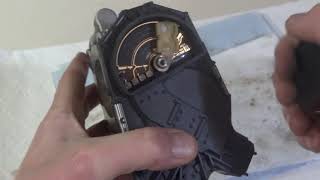
How to confirm: Use a scan tool to monitor throttle position sensor voltages (TPS1 and TPS2). If the voltages are erratic, do not correlate, or are out of range when the pedal is pressed, the throttle body is faulty. Often, wiggling the connector will cause the values to jump, confirming an internal fault.
Typical fix: Replace the entire throttle body assembly and perform an idle relearn procedure.
Est. part cost: $70-$250 - Dirty or Obstructed Throttle Body 🟡 Medium Probability → Shop Fuel Injection Throttle Body PCV systems on the 1.4L Turbo engine can introduce oil and carbon into the intake, which builds up around the throttle plate. This can cause the plate to stick or move slowly, potentially triggering a performance code like P1101, which has similar symptoms.
How to confirm: Remove the charge air pipe from the throttle body and visually inspect the throttle plate and bore for heavy carbon or oil deposits.
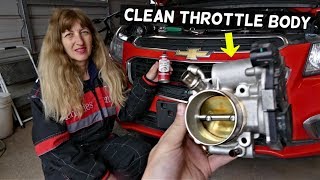
Typical fix: Clean the throttle body bore and plate thoroughly with a dedicated throttle body cleaner and a soft cloth. A relearn procedure may be necessary afterward. 🎬 See how to clean the throttle body properly
Est. part cost: $5-$15 - Wiring or Connector Issue at Throttle Body ⚪ Low Probability → Shop Fuel Injection Throttle Body The engine bay environment (heat and vibration) can cause the electrical connector pins to become loose, corroded, or damaged over time. The connector lock tab can also become brittle and break.
How to confirm: Unplug the throttle body connector and inspect for any signs of green corrosion, backed-out pins, or damaged wires. Ensure it is seated securely. Wiggle the connector with the engine running and scan tool connected to see if voltage readings fluctuate.
Typical fix: Clean the connector terminals with a contact cleaner or replace the connector pigtail if damaged.
Est. part cost: $15-$40
Rare But Worth Checking
- Faulty Engine Control Module (ECM): This is extremely rare. The ECM should only be considered after all other possibilities, including the throttle body and wiring, have been exhaustively ruled out.
Diagnosis Steps
- Scan for all diagnostic trouble codes. Note P1523 but pay close attention to other codes like P2135, P0223, or P1101, as they are more specific and common.
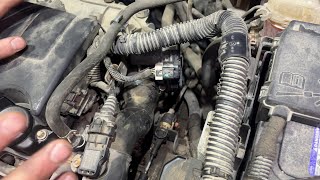
- Inspect the throttle body electrical connector. Disconnect it and check for corrosion, moisture, or loose pins. Re-seat it firmly.
- With the engine off, remove the intake duct from the throttle body. Visually inspect the throttle plate and bore for heavy carbon buildup or any foreign objects that could prevent it from closing.
- If dirty, clean the throttle body thoroughly using throttle body cleaner and a microfiber towel. Do not push the plate open manually. Have an assistant turn the ignition to 'On' (engine off) and press the gas pedal to open the plate for cleaning.
- If the problem persists, use a scan tool with live data capabilities to monitor the TPS1 and TPS2 voltage readings while pressing the accelerator pedal slowly. The voltages should change smoothly and be within the specified range. Any jumps, flat spots, or non-correlation points to a failed throttle body.
- If scan tool data confirms a fault, replace the entire throttle body assembly.
- After replacement, perform a throttle idle relearn procedure. This can be done manually: Start the engine and let it idle in Park for 3 minutes. Turn the engine off for 60 seconds. Restart and let it idle in Park for another 3 minutes. A short drive cycle may be needed to finalize the relearn.
Parts You'll Likely Need
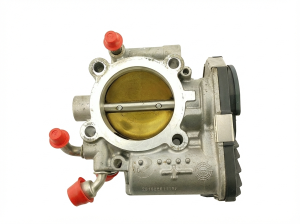
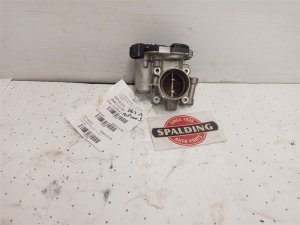
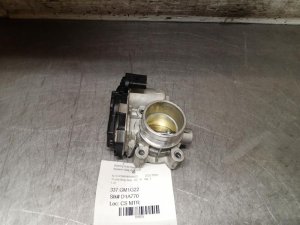
- Throttle Body Assembly
(OEM #55577375 (For 1.8L Engine), 55565596 (For 1.4L Turbo Engine))— This is the overwhelming cause of throttle-related faults on the Cruze. The internal sensors fail and are not serviceable separately. Note that the 1.4L Turbo and 1.8L engines use different parts. 🎬 Watch: 1.4T throttle body replacement walkthrough
Trusted brands: ACDelco, Bosch, Hitachi, Standard Motor Products
OEM price range: $180-$250
Aftermarket price range: $70-$150 - Throttle Body Gasket — Should always be replaced when the throttle body is removed to prevent vacuum leaks. Some new throttle bodies include one.
Trusted brands: ACDelco, Fel-Pro, Mahle
OEM price range: $10-$20
Aftermarket price range: $5-$15
Related Codes That Often Appear With This One
- P2135 — This is the most common code for a failed throttle body on a Cruze, indicating a mismatch between the two internal throttle position sensors.
- P0223 — Indicates a high voltage fault in the secondary throttle position sensor, also pointing directly to a faulty throttle body assembly.
- P2111 — Indicates the throttle actuator is stuck open, a mechanical or electronic failure within the throttle body.
- P1101 — This code for 'Intake Air Flow System Performance' is often caused by a dirty throttle body or other intake/PCV system issues on the Cruze.
Technical Service Bulletins (TSBs) & Recalls
- TSB 14371A: Special coverage for leaking water pumps on 1.4L engines, which can cause overheating and related electronic issues.
- TSB PI0762D: Details coolant leaks from water pump mounting bolts on the 1.4L engine, another common source of coolant loss.
- TSB PIP5163D: Discusses diagnosis of cylinder bore issues, which can be a consequence of severe overheating or dirt ingestion, sometimes related to failed PCV or intake components.
- Recall 14801: A voluntary emissions recall for some 2011-2013 models to reprogram the ECM, related to air/fuel management.
- GM Recall for PCV: A recall was issued that included instructions to clean the throttle body and plate, acknowledging the link between PCV issues and throttle contamination.
Platform-Specific Known Issues
- PCV System Contribution to Dirtiness: The 1.4L Turbo engine has a notoriously problematic PCV system. Check valves in the intake manifold and valve cover are known to fail, causing improper crankcase pressure regulation. This can force oil vapor into the intake tract, coating the throttle body and leading to sticking/performance issues that can mimic a failed throttle body. Owners often find a significant amount of oil in the intake piping when inspecting the throttle body.
Mechanic-Grade Diagnostic Values
- Throttle Position Sensor 1 (TPS1) Voltage — expected: Approximately 0.5V - 0.7V at closed throttle, rising smoothly to ~4.5V at wide-open throttle (Key On, Engine Off).. Failure: Voltage is stuck, erratic, or does not sweep smoothly through the range.
- Throttle Position Sensor 2 (TPS2) Voltage — expected: Approximately 4.5V at closed throttle, decreasing smoothly to ~0.5V at wide-open throttle (Key On, Engine Off).. Failure: Voltage is stuck, erratic, or does not sweep smoothly. A reading stuck high (above 4.5V) can trigger a P0223.
- 5-Volt Reference at Throttle Body Connector — expected: A steady 5 volts between the reference pin and the ground pin with the key on, engine off.. Failure: Voltage is significantly higher or lower than 5V, indicating a wiring or ECM issue, not a sensor failure.
- Throttle Body Connector Pinout (Gen 1 1.8L LUW/LDE) — expected: Pin 1: TPS Signal 1, Pin 2: Low Reference (Ground), Pin 3: 5V Reference, Pin 4: TPS Signal 2, Pin 5: Motor Control (+), Pin 6: Motor Control (-). Note: Pinouts can vary. A different source shows a 6-pin connector with Pin 1 (TPS1 Signal), Pin 4 (TPS2 Signal), and Pin 6 (TPS Low Reference).. Failure: Incorrect voltages or lack of continuity when testing against the specified function.
Scan Tool Commands That Help
- GDS2 / Professional Scan Tool: Idle Learn / Throttle Relearn — This function must be performed after replacing the throttle body or disconnecting the battery to reset the learned idle and throttle position values stored in the ECM.
- GDS2 / Professional Scan Tool: Throttle Position Sensor Sweep Test — This is a specific diagnostic test that commands the throttle plate to move through its full range of motion while the scan tool graphs the response of both TPS sensors. It is used to confirm if the sensors are tracking correctly or if there are dead spots or glitches, confirming a faulty throttle body.
Wiring & Ground Locations
- Q38 — The 6-way electrical connector at the throttle body itself.. This is the primary connection to test for 5V reference, ground, and signal wires. Fretting corrosion or loose pins in this connector are a common cause of intermittent throttle faults.
- ECM Grounds — The Engine Control Module (ECM) has multiple ground pins. On one harness connector (X1), pins 20 and 35 are grounds. On the other (X2), pins 1, 3, and 5 are grounds.. A poor ground connection for the ECM can cause a wide range of bizarre electrical issues, including incorrect sensor readings that could falsely trigger throttle-related codes.
- X110 Connector — A large, 40-pin connector, typically grey, located under the battery tray, that connects the main engine harness to the body harness.. This is a major junction point for many signals. Corrosion or water intrusion in this connector can cause communication issues between the ECM, BCM, and other modules, leading to various faults.
- Harness Chafe Point — The wiring harness near the throttle body can rub against engine components due to its routing from the factory.. Vibrations can cause the harness to wear through its insulation, leading to wires shorting to ground or to each other. This can cause intermittent throttle codes that are difficult to diagnose and may persist even after replacing the throttle body.
Real Owner Repair Stories
- Reddit user This_Location3381 on r/cruze (Chevrolet Cruze (year not specified)) — Throttle body problems that persisted even after reprogramming.
❌ Tried (didn't work) Reprogramming the throttle body
✅ What actually fixed it A mechanic found two wires in the throttle body harness were grounding out in a difficult-to-see spot. The issue was attributed to the way the harness was routed from the factory, causing it to rub and chafe over time.
OEM Part Supersession History
55561495→55577375— Part revision by manufacturer, likely for improved durability or to address a known failure mode.
Heads up: The new part number (55577375) is the correct replacement for the original on the 1.8L engine.
Model Year Variations Within This Range
- 2011-2016 (Gen 1) vs 2016.5-2019 (Gen 2): The physical location and procedure to access the throttle body differs. On the Gen 2 (2016.5+) 1.4L Turbo, a large foam cover under the plastic engine cover must be removed to gain access to the throttle body, which is located at the back of the engine.
Diagnostic Flowchart
Other Known Issues on This Vehicle
Issues unrelated to this code that are worth knowing about as an owner of this generation:
- PCV System Failure (1.4L Turbo) 🔴 High — Extremely common on Gen 1 (2011-2016.5). A failed check valve in the intake manifold or a ruptured diaphragm in the valve cover can cause oil leaks, high oil consumption, rough idle, and whistling noises. (Ref: A GM recall included cleaning the throttle body due to PCV issues.)
- Water Pump & Coolant Leaks (1.4L Turbo) 🔴 High — Very common on 2011-2016 models. Leaks often occur from the pump itself, thermostat housing, or various plastic hose connectors, leading to coolant loss and potential overheating. (Ref: TSB 14371A (Special Coverage for 10 years/150k miles for water pump replacement).)
- Automatic Transmission (6T40) Failures 🔴 High — Common in early Gen 1 models (2011-2014). Issues include harsh shifting, slipping, failing to go into gear, and complete failure, often linked to internal component failure like broken wave plates or solenoid issues.
- Cracked Pistons (2016-2017 1.4L Turbo) 🔴 High — A notable issue on early Gen 2 models, often attributed to Low-Speed Pre-Ignition (LSPI). Results in rough running, loss of power, and requires significant engine repair. (Ref: TSB PIP5163D provides guidance on diagnosing cylinder damage.)
- Negative Battery Cable Defect 🟠 Medium — Widespread on 2011-2015 models. A poor ground connection at the negative battery cable can cause a wide array of intermittent electrical problems, including no-start conditions and flickering lights.
Used vs. New Parts: Buying Guide for This Vehicle
When a used part is the smart pick: Given the extremely high failure rate of the internal sensors, buying a used throttle body is a significant gamble. It should only be considered as a temporary diagnostic part to confirm a fault or as a last resort if a new part is unavailable. One technician noted they installed a used part which also failed within days.
Donor-vehicle mileage cap: roughly under 30000 miles for the part to have meaningful remaining life.
What to inspect on the donor part:
- Look for a donor vehicle with the lowest possible mileage.
- Inspect the electrical connector pins for any signs of corrosion or damage.
- Check the throttle plate for excessive carbon buildup, which might indicate a hard life or related PCV issues.
- If possible, get a warranty from the salvage yard.
Aftermarket brands forum-validated for this vehicle:
- ACDelco (OEM)
- Bosch
- Hitachi
Brands owners have reported issues with on this vehicle:
- Unnamed, no-brand parts from online marketplaces should be treated with caution. While some may work, quality control can be inconsistent. A user reported success with a low-cost Amazon part, but this is anecdotal.
Real Owner Stories
Aggregated from forums and TSBs cited above. Mileages and costs reflect what owners reported in those sources.
2011 Chevy Cruze LTE
Symptoms: User reported 'Engine Power Reduced' alert along with 'Service Stabilitrak' message.
What fixed it: Replacement of the throttle body assembly.
Source hint: reddit.com/r/MechanicAdvice - Thread titled '2011 Chevy Cruze LTE “Engine Power Reduced” alert.' (Dec 2020)
2011 Manual Chevy Cruze
Symptoms: Owner experienced Reduced Power mode specifically in very cold weather. The car would run normally once temperatures warmed up, but the issue returned when it got cold again.
What fixed it: Diagnosis pointed to temperature sensitivity in the failing throttle body.
Source hint: reddit.com/r/ChevyCruze - Thread titled 'P2135 Code - 2011 Manual Chevy Cruze' (Jan 2018)
Related OBD-II Codes
Frequently Asked Questions
My 2011 Chevrolet Cruze is displaying 'Reduced Engine Power' and 'Service Stabilitrak' in cold weather. Is this a known issue?
Can I just replace the throttle position sensor (TPS) on my 1.4L Turbo engine?
Is there a recall for the throttle body issues on the 2011-2013 Cruze?
How does the PCV system on my 1.4L Turbo affect the throttle body?
Do I need to do anything special after replacing the throttle body on my Cruze?
Does TSB 14371A regarding water pumps have anything to do with my engine codes?
Helpful Videos
We Have This Part in Stock

The information in this article is provided for general reference and educational purposes only. Vehicle specifications, procedures, and part compatibility can vary by production date, trim level, and region. Always consult your vehicle's factory service manual and verify part numbers before purchasing or performing repairs. Safety-critical components such as airbags, seat belts, and braking systems should be installed by a qualified professional.
- Chevrolet Cruze:
- 🧭 Diagnostic Flowchart
- 🎬 Helpful Videos
- 🛍️ Shop This Part
- What's Unique About the 2011-2019 Chevrolet Cruze
- Symptoms You May Notice
- Most Likely Causes
- Rare But Worth Checking
- Diagnosis Steps
- Parts You'll Likely Need
- Related Codes That Often Appear With This One
- Technical Service Bulletins (TSBs) & Recalls
- Platform-Specific Known Issues
- Mechanic-Grade Diagnostic Values
- Scan Tool Commands That Help
- Wiring & Ground Locations
- Real Owner Repair Stories
- OEM Part Supersession History
- Model Year Variations Within This Range
- Other Known Issues on This Vehicle
- Used vs. New Parts: Buying Guide for This Vehicle
- Real Owner Stories
- 2011 Chevy Cruze LTE
- 2011 Manual Chevy Cruze
- Related OBD-II Codes
- Frequently Asked Questions
- 🎟️ Get 5% Off