

P1523 on 2008-2014 Chevrolet Malibu: Throttle Return Fault Causes and Fixes
On a 2008-2012 Malibu, code P1523 almost always means the electronic throttle body is sticking due to carbon buildup. A thorough cleaning of the throttle plate and bore for under $20 often fixes it. If not, replacing the throttle body assembly is the next step, costing around $140-$200 for the part.
- P1523 on a 2008-2012 Malibu almost always points to a problem with the electronic throttle body, not other sensors.
- The most common and cheapest fix is to remove and thoroughly clean the carbon buildup from the throttle body plate and bore.
- If cleaning doesn't resolve the code, the entire throttle body assembly must be replaced; its internal parts are not sold separately.
- Always use a new gasket when reinstalling the throttle body to prevent vacuum leaks.
- An idle relearn procedure is recommended after cleaning or replacing the throttle body to ensure smooth operation.
What's Unique About the 2008-2014 Chevrolet Malibu
For this generation of Malibu, the code P1523 is a straightforward indicator of a common mechanical issue rather than a complex electronic failure. Both the Ecotec 2.4L and LY7 3.6L engines are known to accumulate carbon and oil deposits in the intake system, and the throttle body is a frequent victim. While some GM vehicles have TSBs for related electronic issues, the fix for P1523 on the Malibu is overwhelmingly mechanical: clean or replace the sticky throttle body.
Generation note: The 2008-2014 range covers the seventh generation (2008-2012) and the start of the eighth generation (2013-2014). The specified Ecotec 2.4L and LY7 3.6L V6 engines are primarily found in the 2008-2012 models. The eighth generation, starting in 2013, introduced a new 2.5L engine which can experience similar throttle body issues, but this guide focuses on the specified 2.4L and 3.6L engines.
Symptoms You May Notice
- Check Engine Light illuminated
- Vehicle enters 'Reduced Engine Power' or 'Limp Mode'
- Engine stalling, especially when coming to a stop or at idle
- Rough, unstable, or surging idle
- Delayed or inconsistent throttle response
- Hesitation or lack of power during acceleration
- Replacing the Accelerator Pedal Position (APP) Sensor. P1523 specifically relates to the throttle body's ability to return to its closed position, not the signal from the driver's foot pedal.
Most Likely Causes
- Dirty/Sticking Throttle Body 🔴 High Probability → Shop Fuel Injection Throttle Body The PCV (Positive Crankcase Ventilation) system can introduce oil vapor into the intake tract, which combines with soot to form carbon deposits. Over time, this buildup becomes thick enough to physically restrict the movement of the throttle plate, causing it to bind.
How to confirm: Remove the air intake duct from the throttle body. Visually inspect the throttle plate and the inside of the throttle body bore for a thick, black layer of carbon buildup.
Typical fix: Remove the throttle body from the engine (typically four 10mm bolts) and clean it thoroughly using a dedicated throttle body cleaner, a soft brush, and a microfiber towel. Manually move the plate to clean all edges. Reinstall with a new gasket and perform an idle relearn procedure. 🎬 Watch: Step-by-step guide to cleaning your Malibu's throttle body
Est. part cost: $10-$25 for cleaner and a new gasket. - Failed Throttle Body Assembly 🟡 Medium Probability → Shop Fuel Injection Throttle Body If cleaning does not resolve the issue, the internal electronic components—the actuator motor or the integrated throttle position sensor (TPS)—have likely failed. These components are not serviced separately.
How to confirm: The code P1523 returns shortly after a thorough cleaning of the throttle body. A scan tool may show that the 'Commanded Throttle Position' and 'Actual Throttle Position' do not match, even when the plate is clean.
Typical fix: Replace the entire throttle body assembly. 🎬 See this video walkthrough on replacing the throttle body This is a bolt-on part, but a throttle relearn procedure is required after installation.
Est. part cost: $100-$250
Rare But Worth Checking
- Damaged Wiring or Connector: The wiring harness leading to the throttle body can become brittle from heat and vibration. Check for chafed wires, bent pins, or corrosion at the connector, especially if the problem is intermittent or accompanied by other throttle-related codes.
- Faulty Powertrain Control Module (PCM): This is extremely rare. The PCM should only be considered as a potential cause after all other possibilities, including the throttle body and wiring, have been exhaustively tested and ruled out.
Diagnosis Steps
- Verify the presence of code P1523 with an OBD-II scanner.
- Disconnect the battery's negative terminal.
- Remove the plastic engine cover and the air intake duct connected to the throttle body.
- Visually inspect the throttle plate and bore for carbon buildup. This is the most likely cause.
- If dirty, unbolt the throttle body (typically four 10mm bolts) and disconnect the electrical connector.
- Thoroughly clean the throttle body and plate using a dedicated throttle body cleaner and a soft brush/cloth. Do not use a wire brush or scratch the surfaces.
- Reinstall the throttle body using a new gasket. Reconnect the electrical connector and intake duct.
- Reconnect the battery.
- Perform an Idle Relearn Procedure. This allows the PCM to learn the new clean/closed position of the throttle plate. A common manual procedure is: 1. Start the engine and let it idle in Park for 3 minutes. The idle may be high or rough. 2. Turn the engine OFF for 60 seconds. 3. Start the engine again and let it idle in Park for another 3 minutes. The idle should stabilize. 🎬 Watch: How to manually reset and relearn your GM throttle body 4. If idle is still not correct, a drive cycle may be needed: drive the vehicle above 45 mph with several decelerations and extended idles.
- If the code returns, the throttle body assembly itself has likely failed and needs to be replaced.
Parts You'll Likely Need
- Throttle Body Assembly
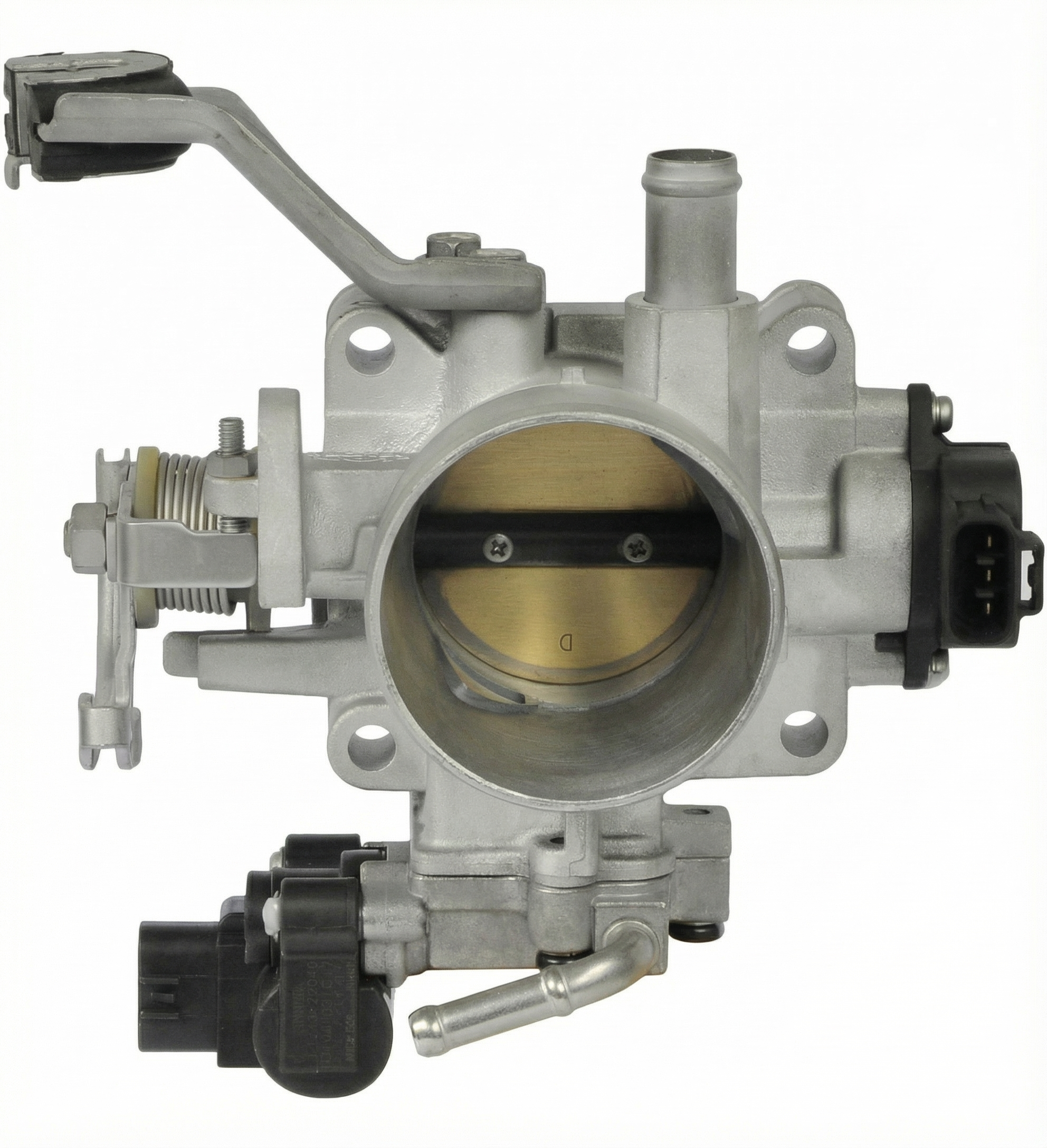
(OEM #12694871)— This is the complete fix if a thorough cleaning doesn't work. It contains the throttle plate, actuator motor, and position sensors. This part number is for the 2.4L Ecotec engine.
Trusted brands: ACDelco, Bosch, Standard Motor Products, Dorman
OEM price range: $140-$200
Aftermarket price range: $80-$150 - Throttle Body Assembly
(OEM #12615503)— This is the complete fix if a thorough cleaning doesn't work. This part number is for the 3.6L V6 engine and may require programming.
Trusted brands: ACDelco, Bosch, Standard Motor Products, Dorman
OEM price range: $150-$220
Aftermarket price range: $90-$160 - Throttle Body Gasket
(OEM #Fel-Pro 61459)— A new gasket should always be used whenever the throttle body is removed to prevent vacuum leaks. While this Fel-Pro part is listed as an exhaust gasket, its dimensions and material are often cross-referenced by owners and parts stores for this application. Always verify fitment.
Trusted brands: Fel-Pro, ACDelco, Mahle
OEM price range: $5-$10
Aftermarket price range: $3-$8 - Throttle Body Cleaner — Required for the most common fix. Use a cleaner specifically formulated for throttle bodies to avoid damaging sensors or coatings.
Trusted brands: CRC, Berryman, Gumout
OEM price range: $8-$15
Aftermarket price range: $8-$15
Related Codes That Often Appear With This One
- P2135 — Indicates a correlation error between the two throttle position sensors inside the throttle body assembly. Its presence strongly suggests the throttle body itself has an internal electronic failure and needs replacement.
- P0506 — This code means 'Idle Air Control System RPM Lower Than Expected'. It can be triggered by a dirty throttle body that isn't allowing enough air past the plate at idle, causing the engine speed to drop too low.
Technical Service Bulletins (TSBs) & Recalls
- GM TSB PIP4535A: This technical service bulletin addresses various driveability issues, including stalling and rough idle on Ecotec engines, caused by excessive carbon buildup on intake valves and in the throttle body. While not exclusively for P1523, it acknowledges the root cause and recommends cleaning procedures.
Platform-Specific Known Issues
- Owner Experience: Cleaning vs. Replacing: A common owner experience shared on forums is that cleaning the throttle body provides an immediate fix for the stalling and P1523 code. For many, this is a long-term solution. However, for others, the code returns within a few weeks or months. This typically indicates that while carbon was the trigger, the internal motor or sensors were already weakened and are now failing completely, necessitating a full replacement of the throttle body assembly.
Mechanic-Grade Diagnostic Values
- Throttle Position Sensor (TPS) Voltage at Closed Throttle (Idle) — expected: ~0.4–1.0 V. Failure: Voltage significantly higher or lower than this range at idle, or not returning to this range when the accelerator is released.
- Throttle Position Sensor (TPS) Voltage at Wide-Open Throttle (WOT) — expected: ~4.0–4.5 V. Failure: Voltage does not reach this range when the accelerator is fully depressed.
- Scan Tool Live Data: Commanded vs. Actual Throttle Position — expected: The two values should track each other closely with minimal deviation as the accelerator pedal is pressed and released.. Failure: A significant and persistent difference (delta) between the commanded and actual position values indicates a fault in the throttle body or its control circuit.
Scan Tool Commands That Help
- GDS2 (GM Global Diagnostic System 2): Data Display > Engine Control Module — To monitor live data PIDs like 'Commanded Throttle Position' and 'Actual Throttle Position' to confirm if the throttle plate is physically responding to PCM commands.
- GDS2 (GM Global Diagnostic System 2): Configuration/Reset Functions > Throttle/Idle Learn — This function should be performed after cleaning or replacing the throttle body. It forces the PCM to relearn the new closed-throttle position and idle airflow characteristics, which is more reliable than the manual relearn procedure.
- GDS2 (GM Global Diagnostic System 2): Control Functions > Output Controls > TAC Motor — Allows a technician to command the throttle actuator motor to specific percentages (e.g., 10%, 25%, 50%) while observing its movement and live data. This bidirectional control helps isolate a faulty motor from a wiring or PCM issue.
Wiring & Ground Locations
- G103 — On the left rear of the engine compartment.. This is a primary engine and control module ground point. A loose or corroded G103 can cause erratic voltage and unpredictable behavior in various sensors, including the throttle body, leading to performance codes like P1523.
- G106 (2.4L) — On the left rear of the engine block.. Another critical engine ground. Poor connection here can directly impact the performance and reference signals for engine-mounted components like the electronic throttle body.
- Throttle Body Connector Harness — The 6-pin electrical connector on the throttle body assembly itself.. This is the most common point for wiring failure. Wires can break internally within 1-3 inches of the connector due to engine vibration and heat. A 'wiggle test' on this harness while monitoring scan tool data can often reveal intermittent open circuits.
- Engine Control Module (ECM) — Located on the left front of the engine compartment.. All throttle control signals originate from and return to the ECM. While rare, checking for corrosion or bent pins at the ECM connectors is a final step if the throttle body and its harness check out.
Real Owner Repair Stories
- YouTube video by Kangol Automotive (2012 Chevrolet Malibu) — Car died while driving and would not restart. Multiple throttle-related codes were present, including 'throttle close position performance'.
❌ Tried (didn't work) Initial diagnosis pointed towards a failed throttle body.
✅ What actually fixed it Upon inspection, a rubber gasket from the intake system had become dislodged and was physically obstructing the throttle plate, preventing it from closing. Removing the obstruction and clearing the codes resolved the no-start condition and all DTCs. - Reddit user on r/MechanicAdvice (2011 Chevrolet Malibu 2.4L) — Vehicle repeatedly enters 'Reduced Engine Power' mode.
❌ Tried (didn't work) The owner was considering replacing more parts.
✅ What actually fixed it A technician advised that a broken wire, typically 1-3 inches back from the throttle body connector, is a 'super common' issue. The fix is to inspect the harness closely and repair any broken wires found, rather than replacing the entire throttle body.
Model Year Variations Within This Range
- 2013-2014: The 2013 model year marked the beginning of the 8th generation Malibu, which introduced a new 2.5L LCV engine as the base option, replacing the 2.4L. While the P1523 code and its causes are similar (related to the throttle body), the specific part numbers for the throttle body and related components are different from the 2008-2012 models. Always verify the part number by VIN for 2013+ models.
Diagnostic Flowchart
Other Known Issues on This Vehicle
Issues unrelated to this code that are worth knowing about as an owner of this generation:
- Premature Timing Chain Stretch (3.6L LY7 V6) 🔴 High — Common, especially on vehicles with extended oil change intervals. Often occurs between 70,000 and 120,000 miles. Can cause catastrophic engine damage if ignored. (Ref: TSB #12-06-01-009F; Special Coverage Adjustment #11340C (Expired).)
- Excessive Oil Consumption & Timing Chain Failure (2.4L Ecotec) 🔴 High — Widespread issue, particularly in 2010-2013 models, often due to piston ring design. Low oil levels can then lead to timing chain tensioner failure. (Ref: Multiple TSBs exist; a class-action lawsuit led to an extended warranty for piston ring repair on some vehicles.)
- Fractured 3-5-R Wave Plate (6T70/6T75 Automatic Transmission) 🔴 High — A well-known failure in the 6-speed automatic transmission, leading to a sudden loss of 3rd, 5th, and Reverse gears. Typically occurs without warning. (Ref: Special Coverage Adjustment #14404B extended the warranty to 10 years/120,000 miles for this specific failure.)
- Sudden Loss of Electric Power Steering (EPS) 🟠 Medium — Affects many 2008-2009 models, causing a sudden increase in steering effort, especially at low speeds. Can be intermittent. (Ref: Recall #N140115 (GM bulletin #14116) was issued to replace the torque sensor assembly.)
- Broken Transmission Shift Cable 🟡 Low — The tabs on the transmission shift cable end can fracture, causing a mismatch between the gear selector position and the actual transmission gear. This can lead to a rollaway risk. (Ref: Recall #12V480000; GM Recall #12191.)
Used vs. New Parts: Buying Guide for This Vehicle
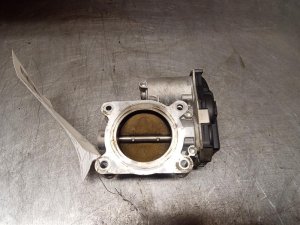
When a used part is the smart pick: A used throttle body from a junkyard can be a cost-effective option for this repair, as the failure is often mechanical (carbon buildup) rather than a guaranteed electronic failure. If the used part is clean and comes from a lower-mileage donor, it can be a viable alternative to a new aftermarket part.
Donor-vehicle mileage cap: roughly under 80000 miles for the part to have meaningful remaining life.
What to inspect on the donor part:
- Check for a clean throttle plate and bore. If it's as carbon-caked as your old one, pass on it.
- Ensure the electrical connector pins are straight, clean, and free of corrosion.
- Manually (gently) move the throttle plate; it should move smoothly without binding or gritty feeling.
- Ask for the VIN or mileage of the donor vehicle if possible to gauge its lifespan.
Aftermarket brands forum-validated for this vehicle:
- ACDelco (GM Original Equipment): Considered the factory replacement, offering the highest quality and reliability.
- Bosch: A reputable OEM supplier that also offers high-quality aftermarket parts.
Brands owners have reported issues with on this vehicle:
- Dorman (Standard Line): While some Dorman 'OE FIX' parts are considered upgrades, their standard replacement line has a mixed reputation among mechanics for electronics, with some reporting higher failure rates compared to OEM.
- Store Brands (e.g., Duralast): These can be hit-or-miss as they are often rebranded parts from various manufacturers. One user reported receiving a defective store-brand part out of the box.
Real Owner Stories
Aggregated from forums and TSBs cited above. Mileages and costs reflect what owners reported in those sources.
2009 Chevrolet Malibu
Symptoms: The vehicle was experiencing a stalling problem, specifically when coming to a stop.
What fixed it: A thorough cleaning of the throttle body resolved the stalling and cleared the issue.
Source hint: chevymalibuforum.com - Thread: '2009 Malibu Stalling Problem'
2008-2014 Chevrolet Malibu
Symptoms: The car entered 'Reduced Engine Power' mode and experienced stalling. An initial cleaning provided a fix, but the code returned within a few weeks.
What fixed it: Full replacement of the throttle body assembly because the internal motor or sensors had failed completely.
Source hint: gmauthority.com - Article Comments on 'Common Problems With The Chevy Malibu'
2007-2009 Saturn Aura
Symptoms: The vehicle shared the same platform-specific symptoms of carbon buildup leading to stalling and rough idle.
What fixed it: Replacement of the throttle body assembly (demonstrated as identical to the Malibu procedure).
Source hint: youtube.com - Video: 'How to Replace Throttle Body 2007-2009 Saturn Aura' by 1A Auto
Related OBD-II Codes
Frequently Asked Questions
My 2009 Malibu is stalling at stop signs; does GM TSB PIP4535A apply to my Ecotec engine?
I have a 2008 Malibu with a P1523 code and heavy steering. Is there a recall for the steering issue?
Can I use a throttle body from a Saturn Aura to fix the P1523 on my Malibu?
Is there a specific part number I should look for if I need to replace the throttle body on my 2010 Equinox with the 2.4L engine?
My 2011 Malibu 2.4L has a P1523 code and is consuming a lot of oil. Are these related?
What is the manual idle relearn procedure for the Malibu after cleaning the throttle body?
Helpful Videos
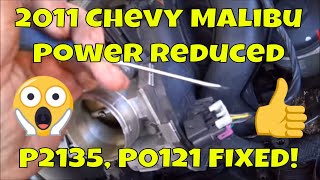
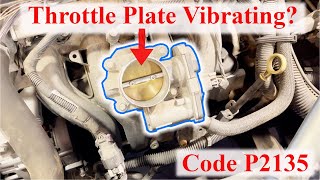
We Have This Part in Stock
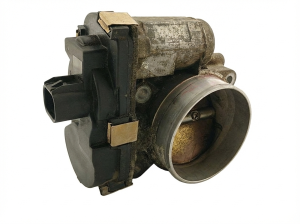
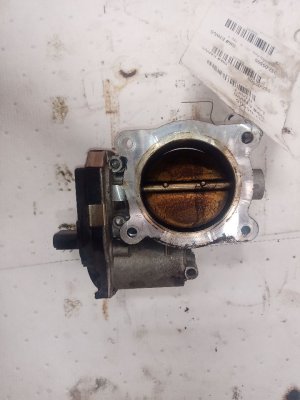

The information in this article is provided for general reference and educational purposes only. Vehicle specifications, procedures, and part compatibility can vary by production date, trim level, and region. Always consult your vehicle's factory service manual and verify part numbers before purchasing or performing repairs. Safety-critical components such as airbags, seat belts, and braking systems should be installed by a qualified professional.
- Chevrolet Malibu:
- 🧭 Diagnostic Flowchart
- 🎬 Helpful Videos
- 🛍️ Shop This Part
- What's Unique About the 2008-2014 Chevrolet Malibu
- Symptoms You May Notice
- Most Likely Causes
- Rare But Worth Checking
- Diagnosis Steps
- Parts You'll Likely Need
- Related Codes That Often Appear With This One
- Technical Service Bulletins (TSBs) & Recalls
- Platform-Specific Known Issues
- Mechanic-Grade Diagnostic Values
- Scan Tool Commands That Help
- Wiring & Ground Locations
- Real Owner Repair Stories
- Model Year Variations Within This Range
- Other Known Issues on This Vehicle
- Used vs. New Parts: Buying Guide for This Vehicle
- Real Owner Stories
- 2009 Chevrolet Malibu
- 2008-2014 Chevrolet Malibu
- 2007-2009 Saturn Aura
- Related OBD-II Codes
- Frequently Asked Questions
- 🎟️ Get 5% Off