

P1523 on 2012-2020 Chevrolet Sonic: Throttle Return Fault Causes and Fixes
On a 2012-2020 Chevy Sonic, code P1523 is almost always caused by a dirty, carbon-clogged electronic throttle body. A thorough cleaning and a throttle relearn procedure usually fixes it for under $25 in materials. If that fails, the throttle body assembly needs replacement.
- P1523 on a Chevy Sonic means the throttle plate is sticking and not closing properly, almost always due to carbon buildup.
- The most common and effective first step is to remove and thoroughly clean the throttle body and perform an idle relearn procedure.
- If cleaning does not solve the problem, the entire throttle body assembly needs to be replaced.
- This issue is also common on platform mates like the Chevy Cruze and Buick Encore with the same engines.
What's Unique About the 2012-2020 Chevrolet Sonic
The Chevrolet Sonic, like many modern GM vehicles, uses a 'drive-by-wire' electronic throttle control system. This system is known to be sensitive to carbon and oil vapor deposits that accumulate in the throttle body over time, largely due to the design of the PCV (Positive Crankcase Ventilation) system. Because the ECM continuously learns and adjusts for this buildup, simply cleaning the throttle body without performing a 'relearn' procedure can cause idle problems until the computer adapts.
Symptoms You May Notice
- Check Engine Light is illuminated.
- "Reduced Engine Power" or "Limp Mode" message on the dashboard.
- Rough, unstable, or unusually high idle speed.
- Engine stalling, particularly when slowing down or coming to a stop.
- Hesitation or delayed response when pressing the gas pedal.
- Difficulty starting the engine.
- Whistling or hissing sounds from the engine bay, which can be related to the underlying PCV issue causing the carbon buildup.
- Replacing the Accelerator Pedal Position (APP) sensor. While the APP sensor is part of the system, code P1523 specifically points to a performance issue at the throttle body itself (its return to closed position), not the driver's pedal input.
Most Likely Causes
- Dirty or Sticking Throttle Body 🔴 High Probability → Shop Fuel Injection Throttle Body The PCV (Positive Crankcase Ventilation) system routes oil vapors and combustion byproducts back into the intake, which can bake onto the throttle plate and bore over time, causing it to bind. This is a very common issue on the Sonic's Ecotec engines.
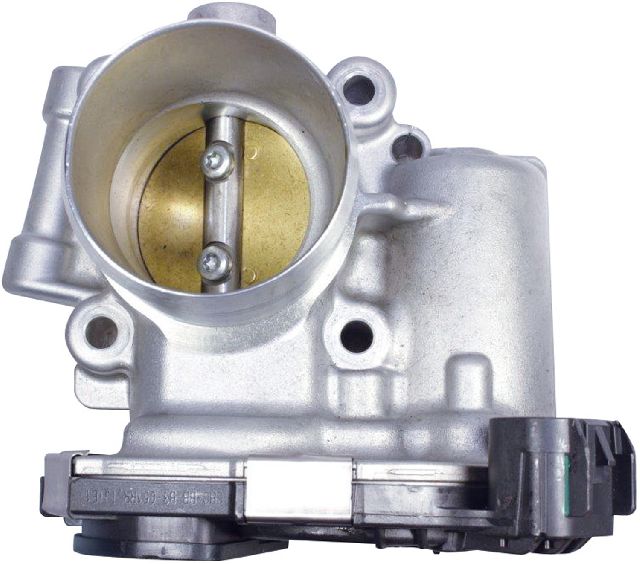
How to confirm: Remove the air intake hose connected to the throttle body. Visually inspect the throttle plate and the inside of the throttle body bore for a thick, black layer of carbon buildup. Manually (with the engine off) push the plate open with a finger to feel for any stickiness, grittiness, or resistance.
Typical fix: Thoroughly clean the throttle plate and bore using a dedicated throttle body cleaner and a soft cloth or brush. A throttle relearn procedure must be performed afterward.
Est. part cost: $10-$25 - Failed Throttle Body Assembly 🟡 Medium Probability → Shop Fuel Injection Throttle Body If cleaning doesn't resolve the issue, the internal electronic motor or position sensors within the sealed throttle body unit may have failed. These components are not typically sold separately, requiring a full assembly replacement.
How to confirm: If the P1523 code returns immediately after a thorough cleaning and successful relearn procedure, and the wiring is confirmed to be intact, the throttle body assembly itself is the likely culprit.
Typical fix: Replace the entire throttle body assembly and the corresponding gasket. A throttle relearn procedure is required after installation.
Est. part cost: $100-$250 - Damaged Wiring or Connector ⚪ Low Probability
How to confirm: Visually inspect the wiring harness and connector going to the throttle body. Look for any frayed or broken wires, signs of heat damage, or corrosion on the connector pins. Perform a 'wiggle test' on the harness while monitoring throttle position data with a scan tool to see if it causes erratic readings.
Typical fix: Repair the damaged section of wire or replace the connector pigtail.
Est. part cost: $15-$50
Diagnosis Steps
- Read the DTCs with an OBD-II scanner to confirm P1523 is the primary code.
- Visually inspect the air intake hose for cracks or loose connections.
- Disconnect the air intake hose from the throttle body.
- Inspect the throttle body bore and plate for heavy carbon buildup. The buildup is often worst on the back of the plate and the area where the plate seats when closed.
- With the ignition off, gently move the throttle plate with your finger to check for any binding or sticking. It should move smoothly and snap back shut.
- If dirty, remove the four bolts holding the throttle body, disconnect the electrical connector, and clean it thoroughly off the vehicle with appropriate cleaner and a soft brush/rag. Do not spray cleaner directly into electrical components.
- Inspect the throttle body electrical connector and wiring for any signs of damage, corrosion, or loose pins.
- After cleaning and reinstalling with a new gasket, reconnect everything and perform a throttle relearn procedure. This can be done with a capable scan tool or by following the manual procedure.
- Manual Relearn Procedure: 1. Turn ignition ON (engine OFF) for 5 seconds. 2. Turn ignition OFF for 10 seconds. 3. Repeat steps 1 & 2. 4. Start the engine and let it idle for at least 5 minutes to allow the ECM to learn the new idle values.
- Clear the DTCs and test drive the vehicle. Monitor for the return of the code and symptoms.
- If the code returns after cleaning, the throttle body assembly is likely faulty and requires replacement.
Parts You'll Likely Need
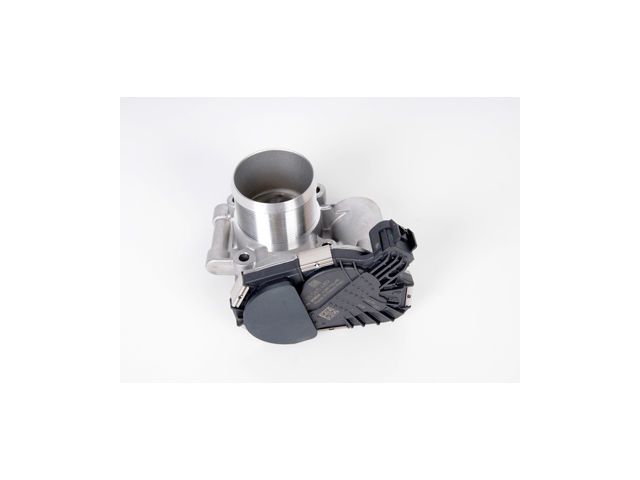
- Throttle Body Assembly
(OEM #55577371)— If cleaning does not fix the sticking throttle plate, the entire assembly, including the integrated motor and sensors, must be replaced.
Trusted brands: ACDelco (GM OE), Bosch, Hitachi, Standard Motor Products
OEM price range: $180-$250
Aftermarket price range: $100-$170 - Throttle Body Cleaner — This is the first-line fix. A specialized solvent is needed to break down the carbon deposits without damaging sensors or the throttle body coating.
Trusted brands: CRC, Gumout, ACDelco Top Engine and Fuel Injector Cleaner
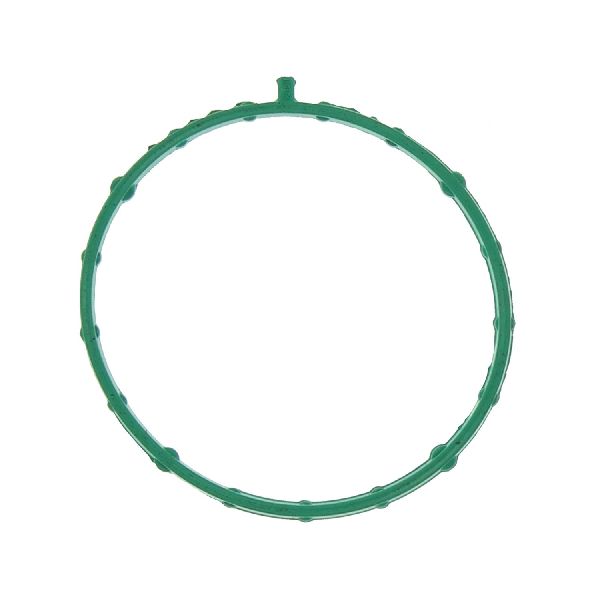
Aftermarket price range: $10-$25 - Throttle Body Gasket
(OEM #55565490)— The gasket should always be replaced whenever the throttle body is removed to prevent future vacuum leaks, which can cause other performance issues.
Trusted brands: ACDelco (GM OE), Fel-Pro, Mahle
OEM price range: $8-$15
Aftermarket price range: $3-$10
Related Codes That Often Appear With This One
- P1516 — This code indicates a mismatch between the commanded throttle position and the actual throttle position, often set for the same reason as P1523 (a sticking throttle plate).
- P2135 — This code points to a correlation error between the two throttle position sensors inside the throttle body assembly. It often indicates an internal electronic failure of the throttle body, which can also cause P1523.
- P0171 — System Too Lean. This can be a companion code if the underlying cause of carbon buildup is a faulty PCV system, which creates a vacuum leak. 🎬 Watch: How to replace the valve cover and PCV
Technical Service Bulletins (TSBs) & Recalls
- GM TSB PIP5162: While not directly for P1523, this bulletin addresses related camshaft actuator codes (P0011/P0014) that can occur alongside throttle body issues. It details diagnostic procedures for cleaning and checking related engine components, which can be useful context.
Mechanic-Grade Diagnostic Values
- Throttle Position Sensor (TPS) Voltage at Closed Throttle/Idle — expected: ~0.4V - 1.2V. Failure: Voltage is significantly higher at idle or does not return to this range when the pedal is released.
- Throttle Position Sensor (TPS) Voltage at Wide-Open Throttle (WOT) — expected: ~4.0V - 4.5V. Failure: Voltage does not increase smoothly or fails to reach this range when the pedal is fully depressed.
- Throttle Body Connector 5V Reference — expected: ~5.0V. Failure: Voltage is significantly lower than 5V, indicating a wiring or ECM issue.
- Throttle Actuator Motor Resistance — expected: 2 to 15 Ohms. Failure: Reading is over the limit (open circuit) or less than 1 Ohm (short circuit).
Scan Tool Commands That Help
- GDS2 / Professional Scan Tool: Throttle/Idle Learn — This function must be used after cleaning or replacing the throttle body to reset learned idle trim values and prevent high or unstable idle. It is a more robust alternative to the manual relearn procedure.
- GDS2 / Professional Scan Tool: Throttle Position Control — This bidirectional command allows a technician to command the throttle plate to specific percentages (e.g., 10%, 25%, 50%) while monitoring the actual position. It is used to test the actuator motor and sensor response without engine load.
Wiring & Ground Locations
- Throttle Body Assembly — Located on the right front of the engine, mounted to the intake manifold.. This is the location of the component that sets the code. The connector and harness are subject to engine bay heat and vibration, making them a point of inspection.
- ECM (Engine Control Module) — Located on the left side of the engine compartment.. The ECM sends commands to and receives signals from the throttle body. All wiring terminates here.
- G105 — Under the battery tray, on the frame rail.. This is a critical engine and module ground point. A TSB (PIC5574A) notes that paint or weld slag on this stud can cause poor connections, leading to multiple intermittent electrical issues, including communication and control module faults.
- G104 — Lower right rear of the engine.. Another primary engine ground point. A poor connection here can cause erratic sensor readings and actuator behavior.
Real Owner Repair Stories
- Chevrolet Forum user 'Rigog007' (2015 Chevrolet Sonic 1.8L) — Check Engine Light with codes P0171 (System Too Lean) and P0131, engine stalling, and a noticeable hissing sound from the valve cover.
❌ Tried (didn't work) Replacing the O2 Sensor (the light came back on).
✅ What actually fixed it Replacing the valve cover assembly, which includes the integrated PCV diaphragm. The hissing sound was a vacuum leak from the failed PCV system, which caused the lean condition and stalling. - Reddit r/ChevySonic user 'ColJake' (2014 Chevrolet Sonic 1.4L Turbo) — Persistent codes after a PCV failure, oil leaks.
❌ Tried (didn't work) Replacing the intake manifold., Replacing the valve cover.
✅ What actually fixed it After replacing the intake and valve cover, the codes remained. The final fix was replacing a PCV tube that had a bad internal check valve, which finally cleared the codes. This highlights the complexity of the PCV system on the 1.4T engine.
"I Checked Everything" — The Actual Cause
- A common scenario for P1523 and related codes (especially P0171) is not a typical vacuum leak that a smoke test would find, but a failure of the integrated PCV system. On both the 1.4L and 1.8L engines, a diaphragm inside the valve cover can rupture, creating a large internal vacuum leak. This is often audible as a distinct hissing or whistling sound coming directly from the valve cover itself. On the 1.4L Turbo, this failure is often precipitated by a small orange check valve in the intake manifold failing first, which then over-stresses and destroys the valve cover diaphragm. Technicians may clean or replace the throttle body, but if the root cause is the massive, unmetered air leak from the PCV system, the problem will quickly return. The fix is to replace the entire valve cover assembly and, on the 1.4T, inspect and likely replace the intake manifold if its internal check valve is missing.
Model Year Variations Within This Range
- 2012-2020: The primary variation is the engine. The 1.4L Turbo (LUV engine) and 1.8L Naturally Aspirated (LWE/LUW engine) use different throttle bodies and have distinct PCV system failure modes that lead to P1523. The 1.4L Turbo has a complex PCV system with a failure-prone check valve inside the intake manifold. The 1.8L's PCV system is simpler but still suffers from diaphragm failure in the valve cover. It is critical to order the correct throttle body for the specific engine.
Diagnostic Flowchart
Other Known Issues on This Vehicle
Issues unrelated to this code that are worth knowing about as an owner of this generation:
- PCV System & Intake Manifold Failure (1.4L Turbo) 🔴 High — Very common. A failed diaphragm in the valve cover or a check valve in the intake manifold causes high crankcase pressure, leading to oil leaks, high oil consumption, and rough idle. (Ref: GM TSB PIP5197)
- Cracked Plastic Water Outlet / Thermostat Housing 🔴 High — Extremely common on both 1.4L and 1.8L engines. The plastic housing becomes brittle from heat cycles and cracks, causing significant coolant leaks and potential for overheating.
- Leaking Water Pump (1.4L Turbo) 🟠 Medium — Common enough that GM issued a special coverage program. The pump leaks from the shaft seal or weep hole, leading to coolant loss and overheating. (Ref: GM Special Coverage 14371A (extends warranty to 10 yrs/150k miles))
- Oil Cooler Leaks 🟠 Medium — Common issue where the seals for the oil cooler, located at the base of the oil filter housing, degrade and cause oil and/or coolant leaks.
- Turbocharger Failure (1.4L Turbo) 🔴 High — Failures can occur due to oil starvation from clogged feed lines or wastegate actuator issues, resulting in loss of power, noise, and oil consumption.
Used vs. New Parts: Buying Guide for This Vehicle
When a used part is the smart pick: A used throttle body is NOT recommended for this repair. It is a high-wear electronic and mechanical part. The risk of purchasing a used unit with existing carbon buildup, a weak actuator motor, or worn position sensors is very high. The cost savings do not justify the risk of having to perform the labor twice.
Donor-vehicle mileage cap: roughly under 40000 miles for the part to have meaningful remaining life.
What to inspect on the donor part:
- Must be from a vehicle with a known, very low mileage.
- Visually inspect the throttle plate and bore for any signs of scoring or heavy carbon that can't be easily wiped away.
- Manually move the plate (if possible); it should be smooth with no gritty feeling and have strong spring-back tension.
- Ensure the electrical connector is free of corrosion or bent pins.
OEM-only on this vehicle (don't cheap out):
- Valve Cover Assembly: Due to the integrated and high-failure PCV diaphragm, using an OEM or ACDelco part is strongly advised to ensure material quality and correct diaphragm function.
- Intake Manifold (1.4L Turbo): If the manifold needs replacement due to the internal PCV check valve, an OEM part is recommended to avoid immediate repeat failure of the PCV system.
Aftermarket brands forum-validated for this vehicle:
- Bosch: Listed as an Original Equipment supplier for the throttle body.
- Hitachi: A known OE supplier of electronic throttle bodies.
- Dorman OE FIX: This specific line often includes design improvements, such as an upgraded shaft seal to prevent moisture intrusion.
- Fel-Pro: A trusted brand for gaskets, including the valve cover and throttle body gaskets.
Brands owners have reported issues with on this vehicle:
- No-name, unbranded parts from online marketplaces. While tempting due to low cost, these often have poor quality control for the internal electronics and motor, leading to premature failure.
Real Owner Stories
Aggregated from forums and TSBs cited above. Mileages and costs reflect what owners reported in those sources.
2012-2020 Chevrolet Sonic Ecotec
Symptoms: Owner reported getting codes P1516 and P1523, which caused the car to enter 'Reduced Engine Power' (limp mode) and experience stalling.
What fixed it: The owner cleaned the throttle body as suggested by forum members, which completely resolved the stalling and limp mode issues.
Source hint: Reddit r/ChevySonic - Owner gets P1523, cleans throttle body, problem solved.
2018 Chevrolet Sonic
Symptoms: Persistent 'low engine power' issue that remained even after a mechanic replaced the throttle body assembly.
What fixed it: While the throttle body is the most common fix, forum members advised the owner to investigate a potentially clogged catalytic converter or a failing APP sensor.
Source hint: Reddit r/ChevySonic - Mechanic can't figure out Reduced Power issue
2012-2020 Chevrolet Sonic
Symptoms: Dealer recommended a $100 throttle body cleaning service.
What fixed it: Owner performed a 30-minute DIY cleaning using a $5 can of cleaner and following step-by-step instructions for removal and cleaning.
Cost: $5-$100
Source hint: Sonic Owners Forum - Throttle Body Cleaning Discussion
Related OBD-II Codes
Frequently Asked Questions
My 2012-2020 Chevrolet Sonic is in 'Reduced Engine Power' mode; is there a TSB for this?
The dealer wants $100 to clean the throttle body on my Sonic. Is this a fair price?
I replaced the throttle body on my Sonic but the P1523 code and 'low engine power' message won't go away. What else could it be?
How do I perform a throttle relearn on my Chevrolet Sonic after cleaning the assembly?
Why does my Sonic's Ecotec engine keep getting carbon buildup in the throttle body?
Are there any other common failures on the Sonic I should look for while fixing P1523?
Helpful Videos

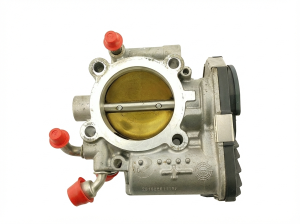
Used OEM Parts in Stock
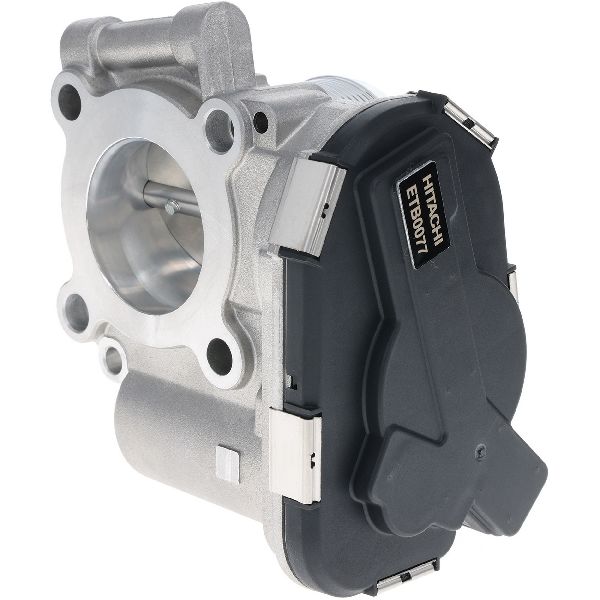
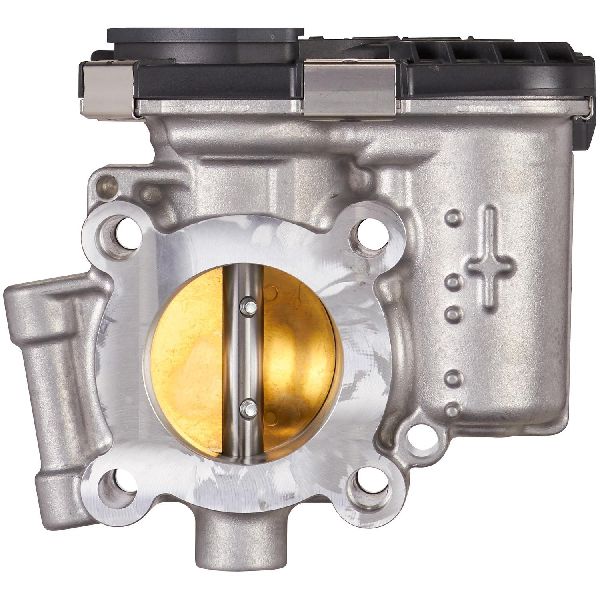
New Aftermarket Parts Available


The information in this article is provided for general reference and educational purposes only. Vehicle specifications, procedures, and part compatibility can vary by production date, trim level, and region. Always consult your vehicle's factory service manual and verify part numbers before purchasing or performing repairs. Safety-critical components such as airbags, seat belts, and braking systems should be installed by a qualified professional.
- Chevrolet Sonic:
- 🧭 Diagnostic Flowchart
- 🎬 Helpful Videos
- 🛍️ Shop This Part
- What's Unique About the 2012-2020 Chevrolet Sonic
- Symptoms You May Notice
- Most Likely Causes
- Diagnosis Steps
- Parts You'll Likely Need
- Related Codes That Often Appear With This One
- Technical Service Bulletins (TSBs) & Recalls
- Mechanic-Grade Diagnostic Values
- Scan Tool Commands That Help
- Wiring & Ground Locations
- Real Owner Repair Stories
- "I Checked Everything" — The Actual Cause
- Model Year Variations Within This Range
- Other Known Issues on This Vehicle
- Used vs. New Parts: Buying Guide for This Vehicle
- Real Owner Stories
- 2012-2020 Chevrolet Sonic Ecotec
- 2018 Chevrolet Sonic
- 2012-2020 Chevrolet Sonic
- Related OBD-II Codes
- Frequently Asked Questions
- 🎟️ Get 5% Off