

P1523 on 2001-2007 Ford Escape 3.0L V6: Intake Manifold Runner Control Fixes
On a 2001-2007 Ford Escape with the 3.0L V6, code P1523 almost always points to a problem with the Intake Manifold Runner Control (IMRC) system. The most common failure is the IMRC actuator or the small plastic clips on its linkage breaking due to heat and age. The actuator is located on the driver's side of the intake manifold. Expect to pay $40-$90 for a new aftermarket actuator.
- P1523 on your 3.0L V6 Escape refers to the Intake Manifold Runner Control (IMRC) system, not the VCT system.
- The most likely cause is a failed IMRC actuator or its broken plastic linkage clips, located on the driver's side of the intake manifold.
- This is a common DIY repair with a difficulty of 2/5; the primary part needed is usually the actuator assembly.
- Driving with this code is possible, but you'll experience a noticeable loss of power until it is fixed.
- Before buying parts, visually inspect the actuator and linkage for obvious breaks, as this can confirm the diagnosis instantly.
What's Unique About the 2001-2007 Ford Escape
It is critical to know that P1523 means different things even within the Ford brand. On many Ford trucks with the 5.4L Triton V8, this code points to the Variable Camshaft Timing (VCT) system. However, on the Duratec 3.0L V6 engine in your Escape, P1523 refers exclusively to the Intake Manifold Runner Control (IMRC) system. This system, also called VICS (Variable Intake Control System) on some platform mates like the Mazda Tribute, is known for the failure of its plastic linkage clips and actuator motor over time due to engine heat and vibration.
Symptoms You May Notice
- Noticeable loss of power or a 'flat spot' during acceleration, typically around 3,000 RPM
- Reduced low-end torque or high-end horsepower, depending on which position the runner flaps are stuck in
- Check Engine Light is on
- Poor or erratic idle
- Engine may hesitate or stumble under load
- Replacing spark plugs or ignition coils hoping to fix the poor performance, when the issue is purely airflow related.
- Confusing the IMRC system with the VCT (Variable Camshaft Timing) system, which can trigger a P1523 code on other Ford engines but not this one.
Most Likely Causes
- Failed IMRC Actuator / Solenoid 🔴 High Probability The actuator is a plastic assembly with an internal motor located in the high-heat environment of the engine bay. Over many cycles, the plastic housing and linkage arm become brittle and crack, and the internal motor can burn out.
How to confirm: Visually inspect the actuator on the driver's side of the intake manifold for cracks or breakage. Use a scan tool to command the IMRC system on and off; if the actuator linkage does not move, it has likely failed. You can also have a helper rev the engine past 3,500 RPM while you watch the linkage for movement.
Typical fix: Replace the IMRC actuator assembly. The Dorman 911-907 is a common aftermarket replacement.
Est. part cost: $40-$100 - Broken IMRC Linkage Clips 🔴 High Probability The small plastic clips that connect the actuator rod to the flaps on the intake manifold are a known weak point. They are subjected to constant heat and vibration, causing them to become brittle and break, which is often the primary failure point even if the actuator motor is still working.
How to confirm: Visually inspect the linkage running from the actuator to the intake manifold. The actuator motor may be moving, but if the clips are broken, the rod will be disconnected from the levers on the manifold. The linkage will appear loose or completely detached.
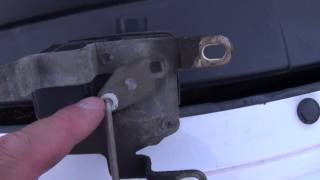
Typical fix: Replace the broken clips. Aftermarket clips are available separately (e.g., Dorman CM-5125 or part number F5RZ9F955AB) 🎬 Watch: How to replace these plastic linkage bushings, which is a cheaper fix than replacing the entire actuator.
Est. part cost: $10-$30 - Sticking Intake Runner Flaps 🟡 Medium Probability Over many miles (typically 100k+), carbon and oil vapor from the PCV system can build up inside the intake manifold, causing the metal flaps to bind and stick. This prevents the actuator from moving them.
How to confirm: Disconnect the actuator linkage from the manifold levers. Attempt to move the levers by hand. They should move smoothly with light spring tension. If they are very stiff, stuck, or do not spring back, the flaps are binding internally.
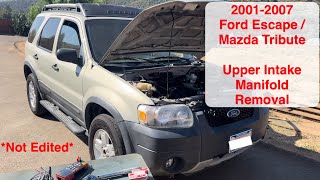
Typical fix: Remove the upper and lower intake manifolds and clean the internal runners and butterfly flaps thoroughly with an appropriate solvent like carburetor cleaner. This requires replacing the intake manifold gaskets upon reassembly. 🎬 See how to remove the upper intake manifold
Est. part cost: $30-$60 (for gaskets) - Damaged Wiring or Connector ⚪ Low Probability
How to confirm: Visually inspect the wiring harness leading to the IMRC actuator for any signs of chafing, melting, or corrosion. Unplug the connector and check for bent or corroded pins. Use a multimeter to test for 12V power and a good ground at the connector with the key on.
Typical fix: Repair the damaged section of the wiring harness or clean/replace the electrical connector.
Est. part cost: $5-$50
Diagnosis Steps
- Retrieve all codes from the PCM using an OBD-II scanner.
- Locate the IMRC actuator on the driver's side end of the intake manifold. It is a black plastic box with an electrical connector and a linkage arm.
- Perform a close visual inspection of the actuator, its electrical connector, and the linkage rods and clips that connect to the manifold. Look for obvious breakage, especially in the small plastic clips. Check if the rod is disconnected.
- With the engine off, gently try to move the linkage by hand to feel if the flaps inside the manifold move freely or are stuck. They should have light spring tension and move smoothly.
- If you have a bidirectional scan tool, command the IMRC actuator on and off. Watch the linkage to see if it moves through its full range of motion.
- If the actuator does not move, disconnect the connector and use a multimeter to check for 12V power and a good ground signal at the harness connector with the key on.
- If power and ground are present but the actuator doesn't move, the actuator is faulty and needs replacement.
- If the actuator moves but the linkage is broken or disconnected, replace the linkage clips or the full actuator assembly.
- If the actuator tries to move but can't, or if the linkage feels stuck when moved by hand, the intake manifold flaps are likely binding from carbon buildup, requiring removal and cleaning of the manifold.
Parts You'll Likely Need
- Intake Manifold Runner Control (IMRC) Actuator
(OEM #1L8Z-9J559-BB)— This is the most common point of failure for this code on this engine, either due to internal motor failure or breakage of its integrated plastic linkage.
Trusted brands: Motorcraft, Dorman (911-907)
OEM price range: $80-$150
Aftermarket price range: $40-$90 - IMRC Linkage Retaining Clips
(OEM #F5RZ9F955AB)— These small plastic clips are a frequent failure point and can often be replaced without needing a whole new actuator.
Trusted brands: Motorcraft (CM-5125), Dorman
OEM price range: $15-$30
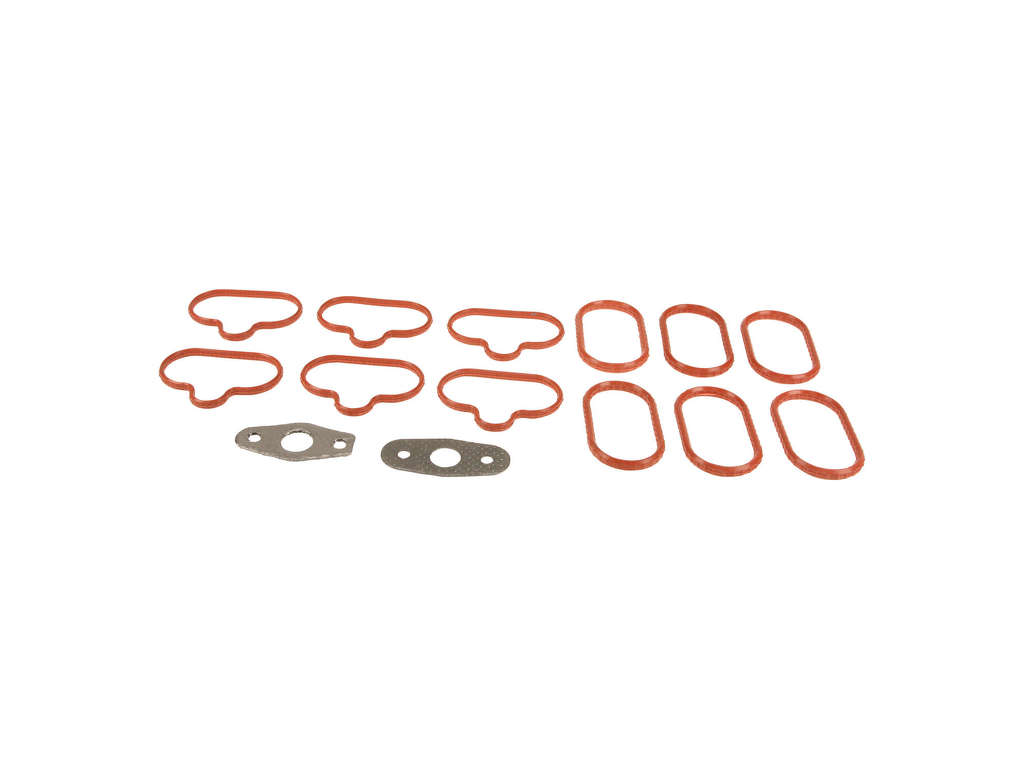
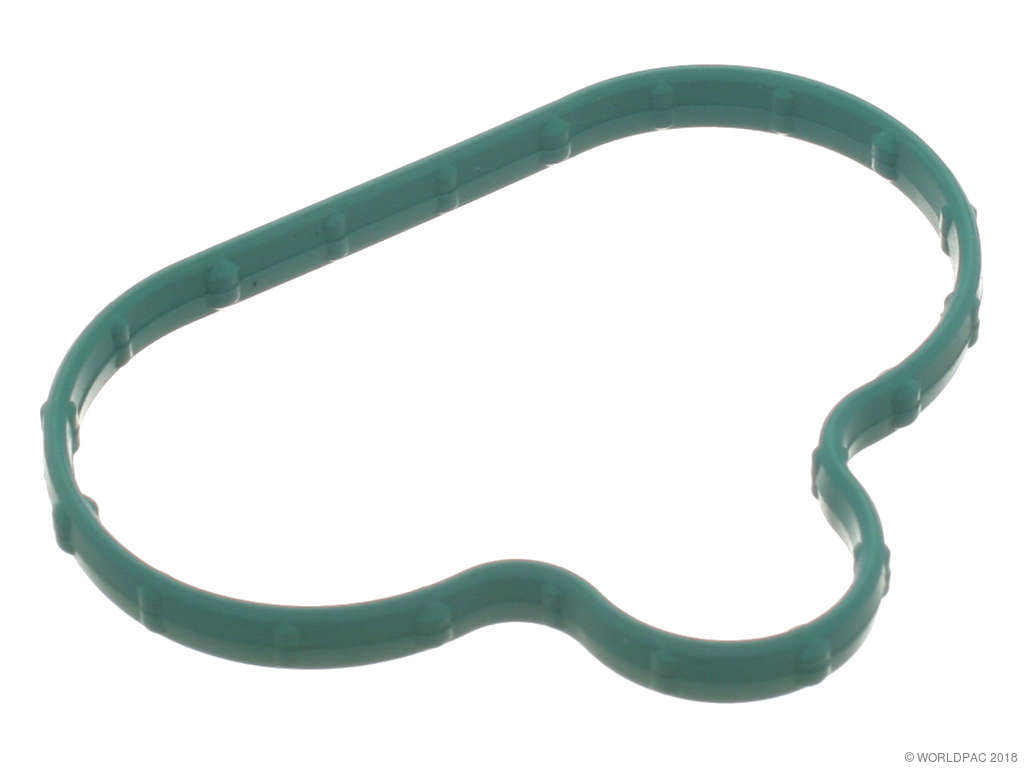
Aftermarket price range: $10-$20 - Upper Intake Manifold Gaskets — If the intake manifold must be removed to clean stuck runner flaps, these gaskets are single-use and must be replaced to prevent vacuum leaks.
Trusted brands: Fel-Pro, Motorcraft
OEM price range: $40-$70
Aftermarket price range: $20-$40
Related Codes That Often Appear With This One
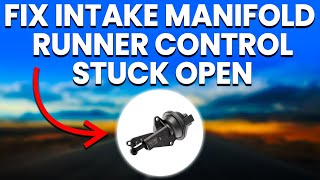
- P2004 — This code means 'Intake Manifold Runner Control Stuck Open'. It often appears with P1523 if the PCM determines the flaps are mechanically stuck in the open position 🎬 Watch: Understanding IMRC stuck open symptoms and causes as a result of the circuit fault.
- P2008 — This code means 'Intake Manifold Runner Control Circuit/Open', which is very similar to P1523 and points to the same set of electrical failures, confirming a circuit problem.
- P1537 — This code specifically indicates that the IMRC for Bank 1 is stuck open, often triggered by the same mechanical or electrical failures that cause P1523.
- P1518 — A related Ford code for 'Intake Manifold Runner Control Stuck Open', which points to the same mechanical failure (broken clips or stuck flaps).
Mechanic-Grade Diagnostic Values
- IMRC Actuator Connector - Power Supply Pin (Red/Yellow Wire) — expected: ~12V (Battery Voltage) with Key On, Engine Off.. Failure: 0V or significantly low voltage points to a wiring or PCM power relay issue.
- IMRC Actuator Connector - Ground Pin (Black Wire) — expected: Near 0 Ohms continuity to a known good chassis ground.. Failure: High resistance or an Open Loop (OL) reading indicates a bad ground connection, likely at G101.
- IMRC Actuator Connector - PCM Command Pin (Brown Wire) — expected: The PCM grounds this circuit to activate. Voltage should be ~12V when inactive (low RPM) and drop to 0V to activate the actuator (high RPM).. Failure: Voltage does not change when revving the engine past 3,500 RPM, indicating a PCM or wiring fault.
- IMRC Actuator/Solenoid Coil Resistance — expected: While no exact OEM spec is published for the 3.0L, similar Ford/Mazda IMRC solenoids measure between 20-40 Ohms.. Failure: A reading of 0 Ohms (short) or infinite/OL (open circuit) indicates a failed internal coil.
- IMRC Actuator Hold Voltage — expected: After activating at 12V, the PCM may drop the voltage to ~5V to hold the flaps open under sustained load.. Failure: If the actuator cannot remain open at 5V, it may indicate a weak internal motor or worn gears.
Scan Tool Commands That Help
- Ford IDS (Integrated Diagnostic System) or equivalent: IMRC Actuator Active Command / On-Board System Test — This bidirectional command manually cycles the IMRC actuator with the engine off (key on). It is the most definitive way to test the actuator's motor and linkage, separating it from engine RPM inputs. If the actuator moves with the scan tool but not while driving, the problem is more likely related to PCM logic or its inputs rather than the actuator itself.
Wiring & Ground Locations
- IMRC Actuator Connector — On the IMRC actuator itself, a black plastic box on the driver's side of the intake manifold.. This 4-pin connector is where all electrical tests are performed. Pin functions are: Red/Yellow (12V Power), Black (Ground), Brown (PCM Command), and Orange/White (Position Feedback to PCM).
- G101 — A primary engine ground point located in the engine compartment, near the battery.. This is a likely termination point for the IMRC actuator's ground circuit. A loose or corroded connection at G101 can cause an open or high-resistance ground path, leading to a P1523 circuit code.
Model Year Variations Within This Range
- 1999-2000 vs 2001+: The Duratec 3.0L engine block casting changed in 1999 and 2000, affecting coolant passages and knock sensor thread sizes. In 2001, the cylinder heads and timing cover were changed when Ford moved the water pump location. While these are significant engine changes, the IMRC actuator design and function remained consistent for the P1523 fault across the 2001-2007 Escape model years.
Diagnostic Flowchart
Other Known Issues on This Vehicle
Issues unrelated to this code that are worth knowing about as an owner of this generation:
- Automatic Transmission Failure (CD4E) 🔴 High — Very common, especially on V6 models. Failures often occur between 80,000 and 120,000 miles. Many owners report sudden failure without prior slipping or warning signs.
- Premature Alternator Failure 🟠 Medium — Common failure item, often due to its location near the exhaust manifold, leading to heat damage. Replacement is labor-intensive, requiring removal of the passenger side wheel and CV axle for access.
- Subframe and Rear Shock Tower Rust/Corrosion 🔴 High — Widespread issue, particularly in regions that use road salt. The rear subframe and shock towers can rust through, leading to suspension failure. This was subject to safety recalls in some areas. (Ref: Recall 14S02 (for certain states/provinces))
- Ignition Coil Failure 🟡 Low — The coil-on-plug ignition coils are a common failure item, leading to engine misfires. This is a relatively simple and common repair for this engine.
- Engine Stalling During Deceleration 🟠 Medium — An issue affecting some 3.0L V6 models where the engine could stall when slowing down. (Ref: Recall 04V165000 (PCM Reprogram))
Used vs. New Parts: Buying Guide for This Vehicle
When a used part is the smart pick: For this specific repair, a used part is almost never a smart choice. The primary failure mode is the heat- and age-related degradation of the plastic housing and linkage clips. A used part from a salvage yard will have experienced similar wear and is likely to fail soon after installation.
What to inspect on the donor part:
- Not applicable, as used parts are not recommended for this repair.
OEM-only on this vehicle (don't cheap out):
- While not strictly 'OEM-only', many forum users report issues with the fitment and durability of aftermarket linkage clips, specifically the Dorman brand, which may lack the necessary internal 'teeth' to grip the actuator rod securely. For the clips, OEM (Motorcraft) is highly recommended.
Aftermarket brands forum-validated for this vehicle:
- Motorcraft (OEM)
- Dorman (911-907) for the complete actuator assembly is widely used, but with mixed reviews on longevity compared to OEM. Some users have no issues, while others report premature failure.
Brands owners have reported issues with on this vehicle:
- Dorman linkage clips (Part #47099 for other applications) have been specifically cited by some Ford owners as being poorly designed and failing to lock onto the linkage rod, making them useless. While this is for a different part number, it highlights potential quality control issues with aftermarket plastic clips.
Real Owner Stories
Aggregated from forums and TSBs cited above. Mileages and costs reflect what owners reported in those sources.
2001-2007 Ford Escape 3.0L V6
Symptoms: Noticeable loss of power or a 'flat spot' during acceleration, typically around 3,000 RPM; Check Engine Light is on.
What fixed it: Replacing just the small plastic linkage clips rather than the entire actuator assembly.
Source hint: Escape-City.com forum discussion on P1523 and IMRC issues
2002 Ford Escape 3.0L V6 — ~95000 miles
Symptoms: Sudden transmission failure without prior slipping or warning signs.
What fixed it: The CD4E transmission is noted as highly stressed and prone to failure before 100,000 miles.
Source hint: BobIsTheOilGuy.com - 2002 ford escape transmission failure thread
2001 Ford Escape 3.0L V6
Symptoms: Alternator failure; repair was noted as very difficult due to poor accessibility.
What fixed it: Replacement of the alternator, which required removal of the axle shaft.
Source hint: CarComplaints.com - 2001 Ford Escape Alternator Failure
Frequently Asked Questions
Is there a recall for the stalling issues on my 2004 Ford Escape 3.0L V6?
My 2001 Escape has severe rust near the rear shocks; is this a known safety issue?
Can I fix the P1523 code without replacing the entire IMRC actuator assembly?
What aftermarket part is recommended if I need to replace the full IMRC actuator?
Why is the alternator on my 2001-2007 Escape failing so frequently?
Does the Mazda Tribute suffer from the same P1523 IMRC issues as the Escape?
Helpful Videos
We Have This Part in Stock

The information in this article is provided for general reference and educational purposes only. Vehicle specifications, procedures, and part compatibility can vary by production date, trim level, and region. Always consult your vehicle's factory service manual and verify part numbers before purchasing or performing repairs. Safety-critical components such as airbags, seat belts, and braking systems should be installed by a qualified professional.
- Ford Escape:
- 🧭 Diagnostic Flowchart
- 🎬 Helpful Videos
- 🛍️ Shop This Part
- What's Unique About the 2001-2007 Ford Escape
- Symptoms You May Notice
- Most Likely Causes
- Diagnosis Steps
- Parts You'll Likely Need
- Related Codes That Often Appear With This One
- Mechanic-Grade Diagnostic Values
- Scan Tool Commands That Help
- Wiring & Ground Locations
- Model Year Variations Within This Range
- Other Known Issues on This Vehicle
- Used vs. New Parts: Buying Guide for This Vehicle
- Real Owner Stories
- 2001-2007 Ford Escape 3.0L V6
- 2002 Ford Escape 3.0L V6 — ~95000 miles
- 2001 Ford Escape 3.0L V6
- Frequently Asked Questions
- 🎟️ Get 5% Off