

P1523 on 2012-2018 Ford Focus 2.0L: IVC Solenoid Circuit Malfunction Explained
P1523 on a 2012-2018 Ford Focus indicates an electrical fault in a solenoid circuit, most likely for the Intake Manifold Runner Control (IMRC). The most common fix involves inspecting the IMRC solenoid wiring, the solenoid itself, or addressing carbon buildup causing the system to bind. This is often a DIY-friendly diagnosis.
- P1523 most likely indicates an electrical fault with the Intake Manifold Runner Control (IMRC) solenoid.
- Before replacing parts, perform a thorough visual inspection of the solenoid's wiring and connector for damage.
- Use a multimeter or a bidirectional scan tool to confirm if the solenoid is receiving power and functioning correctly.
- Be aware that mechanical issues, like carbon-stuck runner flaps common to this GDI engine, can cause electrical fault codes.
- Ensure your vehicle's software is up to date by checking the status of recall 18S32 for the canister purge valve, as it involves a PCM update.
What's Unique About the 2012-2018 Ford Focus
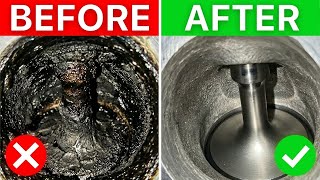
While P1523 specifically points to an electrical circuit fault, the 2.0L GDI engine in the Mk3 Focus is well-known for mechanical issues within the IMRC system that can mimic or lead to electrical faults. As a Gasoline Direct Injection (GDI) engine, fuel does not wash over the intake valves, making them susceptible to heavy carbon buildup. This carbon can cause the runner flaps to stick, which can put stress on the actuator motor and its related electrical components, potentially leading to a circuit malfunction code like P1523. Therefore, diagnosis should not be limited to just wiring, but also the mechanical condition of the intake runners. Forum users on Reddit and FocusST.org have documented extensive carbon buildup requiring manual cleaning or walnut blasting.
🎬 Watch: A complete DIY guide to cleaning GDI intake valvesSymptoms You May Notice
- Check Engine Light is on
- Reduced engine power and poor acceleration, particularly at high RPM
- Rough or unstable idle
- Hesitation during acceleration
- Decreased fuel economy
- Replacing the Variable Camshaft Timing (VCT) solenoids. Some generic code readers misinterpret P1523 as a VCT fault, but Ford's VCT codes are typically in the P13xx range. VCT solenoid replacement is a different procedure.
- Replacing spark plugs or ignition coils, which would not fix a specific IMRC circuit fault.
Most Likely Causes
- Faulty Intake Manifold Runner Control (IMRC) Solenoid 🔴 High Probability The solenoid is an electro-mechanical part that can fail over time from heat cycles and continuous use. It is a common failure point discussed in owner forums.
How to confirm: Locate the solenoid on the intake manifold. Check for 12V power and ground at the connector with the key on. Use a scan tool with bidirectional controls to command the solenoid on and off while listening for a click. You can also test the solenoid's internal resistance with a multimeter and compare it to the manufacturer's specification (typically between 30-50 ohms).
Typical fix: Replace the IMRC solenoid. This is often a simple repair involving a couple of bolts and electrical/vacuum connections.
Est. part cost: $25-$70 - Damaged Wiring or Connector for IMRC Solenoid 🟡 Medium Probability Engine vibration and heat can cause wiring to become brittle, chafed, or connectors to become loose or corroded over time. The harness runs near hot and vibrating components.
How to confirm: Visually inspect the wiring harness leading to the IMRC solenoid for any signs of damage, melting, or corrosion. Perform a 'wiggle test' on the connector and wiring while the engine is running to see if it affects the idle or triggers the code.
Typical fix: Repair the damaged section of the wiring harness or clean/replace the electrical connector.
Est. part cost: $5-$50 - Sticking IMRC Flaps due to Carbon Buildup 🟡 Medium Probability The 2.0L is a GDI engine, where oil vapors from the PCV system bake onto the intake valves and runner flaps, causing them to bind. This mechanical restriction can overwork the control solenoid or actuator, leading to an electrical fault. This is a widely discussed issue in online communities for Focus ST models, which share the GDI architecture.
How to confirm: With the engine off, try to move the IMRC actuator linkage by hand. It should move smoothly with some spring resistance. If it is seized or very difficult to move, the flaps are likely stuck. This often requires removing the intake manifold for visual confirmation and cleaning.
Typical fix: Remove the intake manifold and manually clean the carbon deposits from the intake runners and flaps. This is often referred to as 'walnut blasting' for best results.
Est. part cost: $20-$100 (for cleaning supplies or walnut blasting media) - Failed IMRC Actuator ⚪ Low Probability The actuator motor or internal diaphragm can fail, creating an open or short in the control circuit that the PCM may interpret as a solenoid fault.
How to confirm: If the system is vacuum-operated, use a handheld vacuum pump to test if the actuator holds vacuum and moves the linkage. If it's an electric motor, use a scan tool to command it to move and watch for a response.
Typical fix: Replace the IMRC actuator. On this vehicle, the actuator is often sold as part of the entire intake manifold assembly.
Est. part cost: $150-$400 (for a complete intake manifold assembly)
Rare But Worth Checking
- Faulty Powertrain Control Module (PCM): This is extremely rare. The PCM should only be considered after all other possibilities, including wiring, solenoid, and mechanical issues, have been exhaustively ruled out.
Diagnosis Steps
- Verify the code with a reliable OBD-II scanner.
- Visually inspect the IMRC solenoid and actuator area on the side of the intake manifold. Check for obvious damage, disconnected vacuum lines, or broken electrical connectors.
- Inspect the wiring harness going to the IMRC solenoid. Look for chafed, burnt, or broken wires.
- With the engine off, attempt to move the external IMRC linkage by hand to check if the flaps are mechanically stuck. It should move with some resistance.
- Using a scan tool with bidirectional controls, command the IMRC solenoid on and off. Listen for an audible click from the solenoid.
- If the solenoid does not click, use a multimeter to check for 12V power and good ground at the solenoid's electrical connector with the key on.
- If power and ground are present but the solenoid doesn't activate, the solenoid itself has likely failed. Test its resistance; a reading far outside the 30-50 ohm range confirms failure.
- If the solenoid activates but the runners don't move, investigate the actuator and the mechanical condition of the flaps inside the manifold (carbon buildup).
- If there is no power or ground at the solenoid connector, trace the wiring back to the PCM to find the open or short in the circuit.
Parts You'll Likely Need
- Intake Manifold Runner Control Solenoid
(OEM #3S4Z-9J559-AA)— This code directly points to a circuit malfunction for this solenoid, making it the most likely electrical failure point. This part number is widely cross-referenced for this application.
Trusted brands: Motorcraft, Dorman, Standard Motor Products (SMP)
OEM price range: $40-$70
Aftermarket price range: $25-$50 - Intake Manifold Assembly
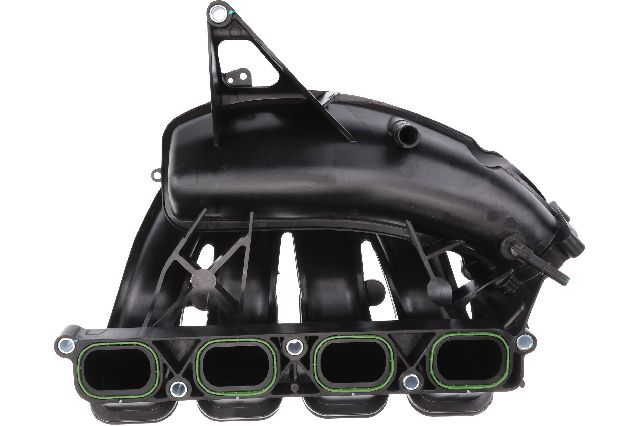
(OEM #BV6Z-9424-J (example, verify by VIN))— If the runner flaps are seized with carbon or the actuator has failed, Ford often services these components only as a complete intake manifold assembly.
Trusted brands: Motorcraft, Dorman
OEM price range: $250-$400
Aftermarket price range: $150-$250
Related Codes That Often Appear With This One
- P2004 — Indicates IMRC stuck open. A circuit fault (P1523) could prevent the solenoid from activating, causing the runners to remain in their default (often open) position.
- P2006 — Indicates IMRC stuck closed. A circuit fault (P1523) could cause the system to fail in the closed position. This code is common on the related Focus ST platform.
- P2016 / P2017 — These codes relate to the IMRC position sensor circuit. A failure in the control solenoid circuit (P1523) can lead to the flaps being in the wrong position, triggering a sensor fault code.
Platform-Specific Known Issues
- Recall 18S32 / NHTSA 18V735: While not directly for the IMRC system, this major recall affects the 2012-2018 Focus 2.0L for a canister purge valve (CPV) that can stick open. The fix involves a PCM software update. It's crucial to ensure this recall has been performed, as PCM software can affect various engine control systems.
Mechanic-Grade Diagnostic Values
- IMRC Solenoid Coil Resistance — expected: 25-35 Ohms (Ω). Some sources cite a tighter range of 32-34 Ohms.. Failure: Infinite resistance ('OL' on a multimeter) indicates an open circuit, while near-zero resistance indicates a short circuit.
- IMRC Solenoid Connector Voltage — expected: Approximately 12V (battery voltage) on one pin with Key On, Engine Off (KOEO).. Failure: No voltage suggests a wiring issue, a blown fuse, or a problem with the PCM driver circuit.
- Manifold Vacuum at IMRC Solenoid Supply Hose — expected: 15-22 inHg at idle.. Failure: Low or no vacuum indicates a leak in the vacuum lines leading to the solenoid.
Scan Tool Commands That Help
- Ford IDS (Integrated Diagnostic System) or equivalent (e.g., FORScan): Output State Test / Actuator Command — This bidirectional control allows a technician to command the IMRC solenoid on and off directly from the scan tool. This is used to verify if the solenoid clicks and if the PCM driver circuit is functioning, isolating the problem to the solenoid itself or the wiring.
- Ford IDS (Integrated Diagnostic System): KOEO (Key On, Engine Off) Self-Test — Running the KOEO self-test will cycle various actuators, including the IMRC. A technician can watch the IMRC linkage and listen for actuation to confirm mechanical and electrical operation without needing to manually command it.
Wiring & Ground Locations
- Main Engine Bay Ground Points — Under the airbox, on the chassis frame rail. There are typically two grounds in this area, one for the main battery cable and another for the engine harness.. A poor ground at these locations can cause a variety of intermittent electrical issues and fault codes, including circuit codes like P1523. Cleaning these grounds is a critical first step in diagnosing any electrical fault.
- PCM Ground — The Powertrain Control Module (PCM) is located in the engine bay, at the front of the left front wheel well. It will have its own dedicated ground nearby.. The PCM provides the ground signal to activate the IMRC solenoid. A faulty PCM ground can interrupt this signal, leading to a circuit malfunction code.
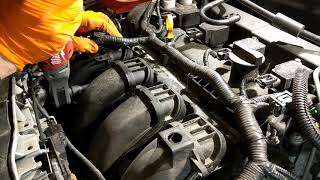
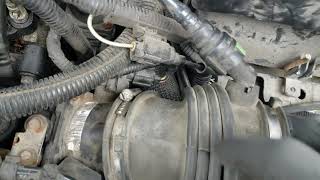
- IMRC Solenoid Connector — A 2-pin connector attached directly to the IMRC solenoid, which is mounted on or near the intake manifold.. This is the primary point for electrical testing. One pin receives 12V power (Key On), and the other is the control wire that the PCM grounds to activate the solenoid. A video guide on de-pinning similar Ford connectors is available for harness repairs.
OEM Part Supersession History
1S7Z-9J559-BA→3S4Z-9J559-AA— Part revision and update by Ford.
Heads up: The new part number (3S4Z-9J559-AA) is the correct replacement for the original and is widely used across many Ford 2.0L and 2.3L applications from the 2000s and 2010s.
Diagnostic Flowchart
Other Known Issues on This Vehicle
Issues unrelated to this code that are worth knowing about as an owner of this generation:
- PowerShift (DPS6) Automatic Transmission Failure 🔴 High — Extremely common on 2012-2016 models. Symptoms include shuddering, hesitation, and outright failure. Subject of class-action lawsuits and multiple warranty extensions. (Ref: Multiple TSBs and warranty extensions (e.g., 14M01, 14M02) were issued.)
- Electric Power Steering Failure 🔴 High — Common on 2012-2014 models. Can result in a sudden loss of power steering assist, making the vehicle difficult to steer. (Ref: Several TSBs and a recall (14S05) were issued for related software and sensor issues.)
- Canister Purge Valve (CPV) Failure 🟠 Medium — Widespread on 2012-2018 models with the 2.0L GDI engine. A stuck valve can cause rough idle, stalling after refueling, and potential fuel tank deformation. (Ref: NHTSA Recall 18V735 (Ford recall 18S32))
- Passenger-Side Engine Mount Failure 🟠 Medium — Common across all years. The hydraulic mount fails, leading to excessive engine vibration felt in the cabin, especially at idle.
- Door Latch Failures 🟠 Medium — Affects multiple model years, causing doors to not close properly or potentially open while driving. (Ref: Subject to multiple recalls (e.g., 15S16, 16S30).)
Used vs. New Parts: Buying Guide for This Vehicle
When a used part is the smart pick: For the complete intake manifold assembly. If diagnosis confirms stuck runner flaps due to carbon, and a simple cleaning is not possible or desired, a used manifold from a low-mileage donor vehicle can be a cost-effective alternative to a new OEM unit, which can be expensive.
Donor-vehicle mileage cap: roughly under 60000 miles for the part to have meaningful remaining life.
What to inspect on the donor part:
- Check for a clean part with no obvious cracks or damage to the plastic housing.
- Ensure all vacuum nipples and connector housings are intact.
- If possible, manually actuate the runner linkage arm on the side of the manifold. It should move smoothly without binding or excessive play.
- Ask the seller for the VIN of the donor car to verify it had low mileage and was not from a front-end collision.
OEM-only on this vehicle (don't cheap out):
- While not strictly 'OEM-only', the IMRC solenoid is a critical electronic part. Given the low cost of a new aftermarket unit from a reputable brand, purchasing a used solenoid is generally not recommended as its remaining lifespan is unknown.
Aftermarket brands forum-validated for this vehicle:
- Dorman: Offers both the IMRC solenoid and complete intake manifold assemblies for this application. They are a well-regarded aftermarket choice.
- Standard Motor Products (SMP): A reliable source for the IMRC solenoid.
Real Owner Stories
Aggregated from forums and TSBs cited above. Mileages and costs reflect what owners reported in those sources.
2012-2018 Ford Focus 2.0L GDI — 336000 miles
Symptoms: Severe carbon buildup on the intake valves and runner flaps due to the GDI engine architecture.
What fixed it: Manually cleaning the carbon deposits from the intake runners and flaps, often using walnut blasting.
Source hint: Reddit thread r/FocusST titled 'just hit 336k miles please check and clean your'
Related OBD-II Codes
Frequently Asked Questions
Is there a recall for the 2012-2018 Ford Focus 2.0L that affects engine performance and idle?
Can carbon buildup on my GDI engine cause the P1523 code?
How can I tell if my IMRC solenoid has failed versus a mechanical flap issue?
What is the estimated cost to fix a faulty IMRC solenoid on a Ford Focus?
Does the Ford Focus ST share this IMRC architecture?
Will a failed passenger-side engine mount cause P1523?
Helpful Videos


We Have This Part in Stock

The information in this article is provided for general reference and educational purposes only. Vehicle specifications, procedures, and part compatibility can vary by production date, trim level, and region. Always consult your vehicle's factory service manual and verify part numbers before purchasing or performing repairs. Safety-critical components such as airbags, seat belts, and braking systems should be installed by a qualified professional.
- Ford Focus:
- 🧭 Diagnostic Flowchart
- 🎬 Helpful Videos
- 🛍️ Shop This Part
- What's Unique About the 2012-2018 Ford Focus
- Symptoms You May Notice
- Most Likely Causes
- Rare But Worth Checking
- Diagnosis Steps
- Parts You'll Likely Need
- Related Codes That Often Appear With This One
- Platform-Specific Known Issues
- Mechanic-Grade Diagnostic Values
- Scan Tool Commands That Help
- Wiring & Ground Locations
- OEM Part Supersession History
- Other Known Issues on This Vehicle
- Used vs. New Parts: Buying Guide for This Vehicle
- Real Owner Stories
- 2012-2018 Ford Focus 2.0L GDI — 336000 miles
- Related OBD-II Codes
- Frequently Asked Questions
- 🎟️ Get 5% Off