

P1523 on 2014-2018 Kia Sorento 3.3L V6: Intake Manifold Runner Control Circuit Fault Guide
P1523 on your Kia Sorento 3.3L V6 indicates an electrical fault in the intake manifold runner control (IMRC) actuator motor circuit. The most common fix is replacing the IMRC actuator motor itself, which costs between $150-$250 for the part and requires removing the upper intake manifold for access. This motor is often referred to as a VCM (Variable Charge Motion) motor.
- P1523 is an electrical circuit code, not a mechanical code. Your diagnostic process should focus on wiring, fuses, and the actuator motor itself.
- The most likely cause is a failed Intake Manifold Runner Control Actuator Motor, OEM part number 28320-3C100.
- When replacing the actuator, it is mandatory to also replace the upper intake manifold gaskets.
- This code is often seen with P200A, which points to a mechanical performance issue, but both can be caused by the same failed actuator.
What's Unique About the 2014-2018 Kia Sorento
On the Lambda 3.3L GDI V6, Kia uses a fully electronic actuator motor to control the intake runners, not a vacuum-operated solenoid like on some older or different engines. While the generic Kia definition for P1523 is 'VICS Solenoid Valve', for this specific Sorento, it applies to the electrical circuit of this electronic motor. Owners often encounter the related P200A code for mechanical performance issues, but P1523 specifically isolates the problem to the electrical side, pointing directly at the actuator's internal circuitry or its wiring harness. It's important not to confuse this with the definition for P1523 on other makes like VW or Fiat, where it can mean throttle body or oil pressure issues.
Generation note: The 2014-2018 model years span two Sorento generations: the second (XM; 2014-2015) and the third (UM; 2016-2018). The Lambda 3.3L GDI V6 engine and its Variable Intake System are fundamentally the same across these years, so the causes and fixes for P1523 are consistent.
Symptoms You May Notice
- Check Engine Light is on
- Reduced engine power, especially at either low or high RPMs
- Hesitation during acceleration
- Increased fuel consumption
- Rough or unstable idle
- A rattling or buzzing noise from the top of the engine may be present if the actuator is failing or its internal gears are stripped
- Replacing the entire intake manifold when only the external actuator motor is faulty. For a P1523 electrical code, the internal flaps are not the primary suspect.
- Confusing the P1523 electrical circuit code with the P200A mechanical performance code, leading to unnecessary replacement of mechanical parts when the issue is wiring or the actuator motor itself.
Most Likely Causes
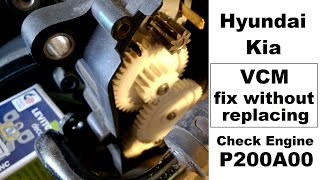
- Failed Intake Manifold Runner Control (IMRC) Actuator Motor 🔴 High Probability The electronic motor is subject to heat and vibration, leading to internal circuit failure over time. It's a common failure point for the Variable Intake System on this engine family. The plastic internal gears and 🎬 Watch: How to repair a broken intake runner linkage can also wear or break.
How to confirm: After verifying the wiring is intact, test the actuator. Use a scan tool to command the actuator on and off while monitoring its status. If it doesn't respond or the code returns immediately, the actuator is faulty. You can also test the resistance across the motor's pins, though specific values may require a service manual. An open circuit or dead short indicates failure.
Typical fix: Replace the IMRC actuator motor. This part is often called a VCM (Variable Charge Motion) motor. The OEM part number is 28320-3C100.
Est. part cost: $150-$250 - Damaged Wiring or Loose Connector 🟡 Medium Probability The wiring harness is located in the hot engine valley, making it susceptible to heat damage, brittleness, and chafing over time. Rodents are also known to chew on wiring in this area.
How to confirm: Visually inspect the entire wiring harness leading to the IMRC actuator for any signs of melting, chafing, or breaks. Unplug the connector and check for corrosion, moisture, or bent/loose pins. Use a multimeter to check for continuity and for proper voltage and ground at the connector with the key on.
Typical fix: Repair the damaged section of wiring or clean/replace the connector pigtail.
Est. part cost: $10-$50 - Blown Fuse ⚪ Low Probability
How to confirm: Consult the owner's manual or the fuse box diagram to locate the fuse for the intake runner control system or related engine sensors. Visually inspect the fuse and test it with a multimeter for continuity.
Typical fix: Replace the blown fuse. If the fuse blows again, it indicates a short circuit in the wiring or the actuator motor that must be diagnosed.
Est. part cost: $1-$5
Rare But Worth Checking
- Faulty Powertrain Control Module (PCM): This is extremely rare. The PCM should only be considered after all other possibilities, including the actuator and its entire circuit, have been thoroughly tested and ruled out.
Diagnosis Steps
- Scan for Codes: Confirm P1523 is the active code and check for any other related codes (like P200A or P2009). Note the freeze frame data.
- Visual Inspection: Inspect the IMRC actuator motor, located on the side of the upper intake manifold. Check its wiring harness and connector for any obvious signs of damage, melting, corrosion, or rodent nesting.
- Check for Power and Ground: Disconnect the actuator connector. With the ignition on (engine off), use a multimeter to verify that you have battery voltage on the power wire and a good ground on the ground wire. Refer to a workshop manual for the specific pinout.
- Test the Circuit: If power or ground is missing, trace the circuit back to its source (fuse box or PCM) to find the break or short. Pay close attention to areas where the harness may rub against the engine.
- Test the Actuator: If the circuit has power and ground, the actuator is the primary suspect. While not a definitive test, you can check the resistance between the motor pins. An open circuit (infinite resistance) or a dead short (zero resistance) indicates a failed motor.
- Command Actuation (if scan tool is available): Use a bidirectional scan tool to command the IMRC actuator to open and close. If the actuator does not respond to the command despite having a good circuit, it has failed and must be replaced.
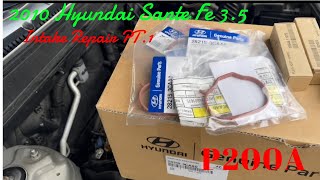
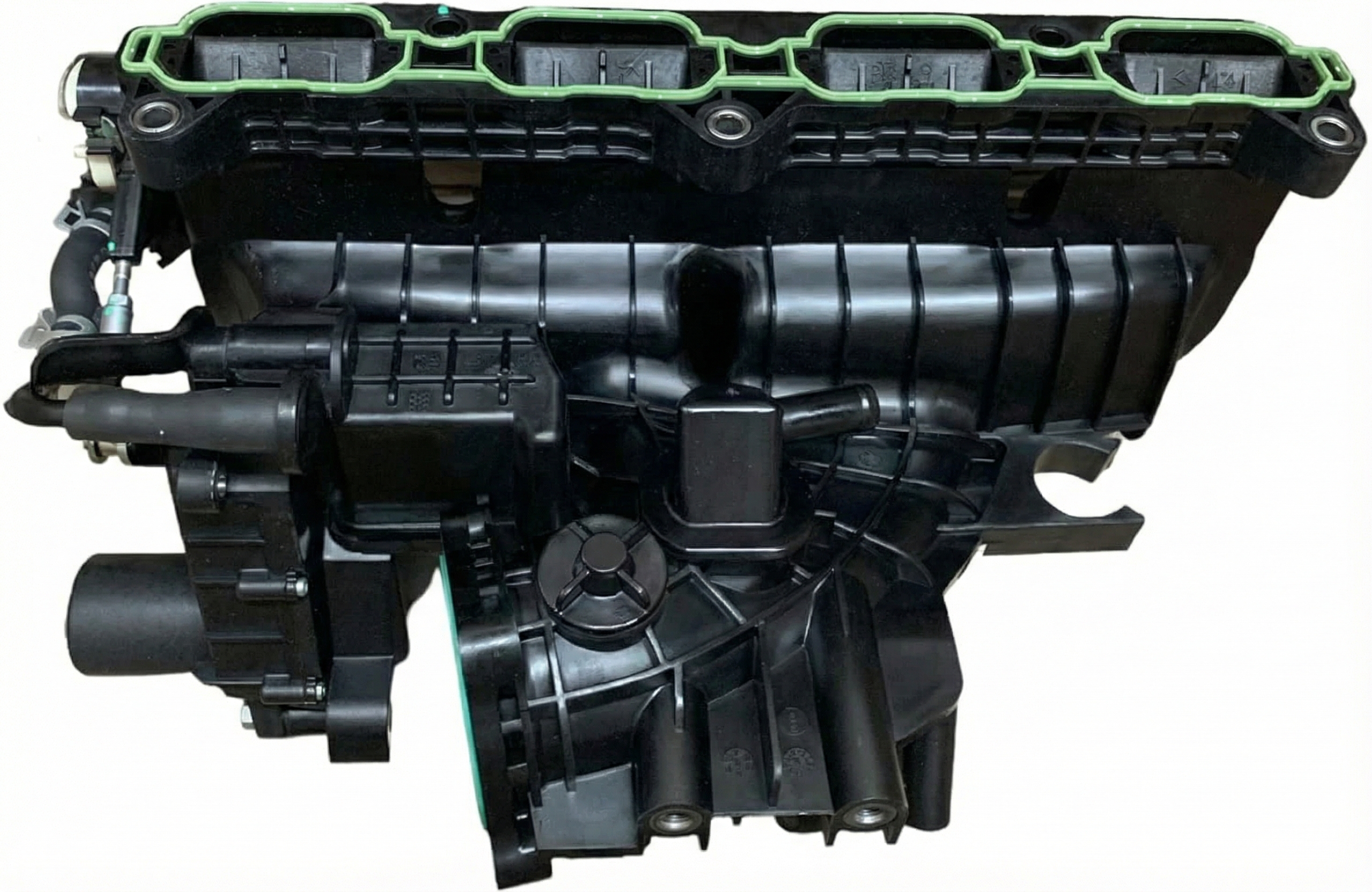
- Replace the Actuator: If the actuator is confirmed to be faulty, it must be replaced. This requires removing the upper intake manifold to gain access. It is critical 🎬 See this quick intake manifold removal walkthrough to also replace the upper intake manifold gaskets at this time.
Parts You'll Likely Need
- Intake Manifold Runner Control Motor
(OEM #28320-3C100)— This electronic motor is the most common failure point for a P1523 electrical circuit fault.
Trusted brands: Kia (Genuine OEM), Dorman
OEM price range: $190-$280
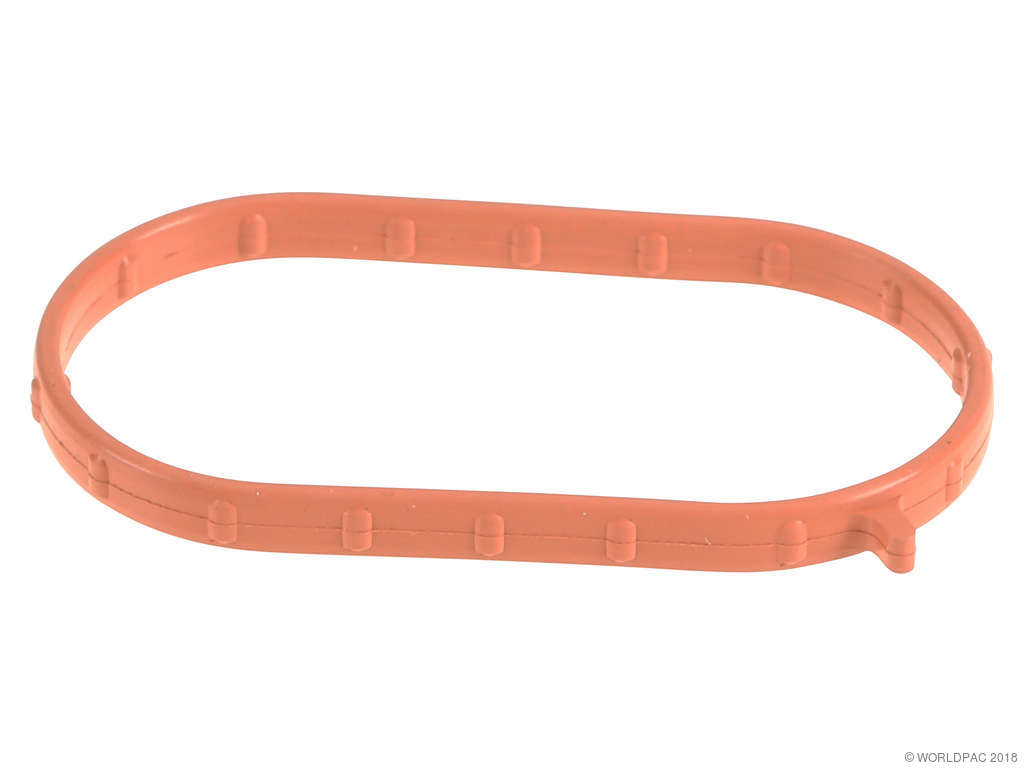
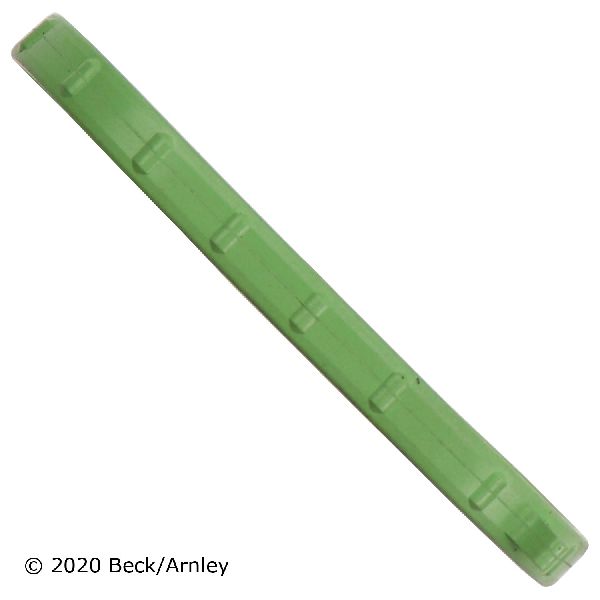
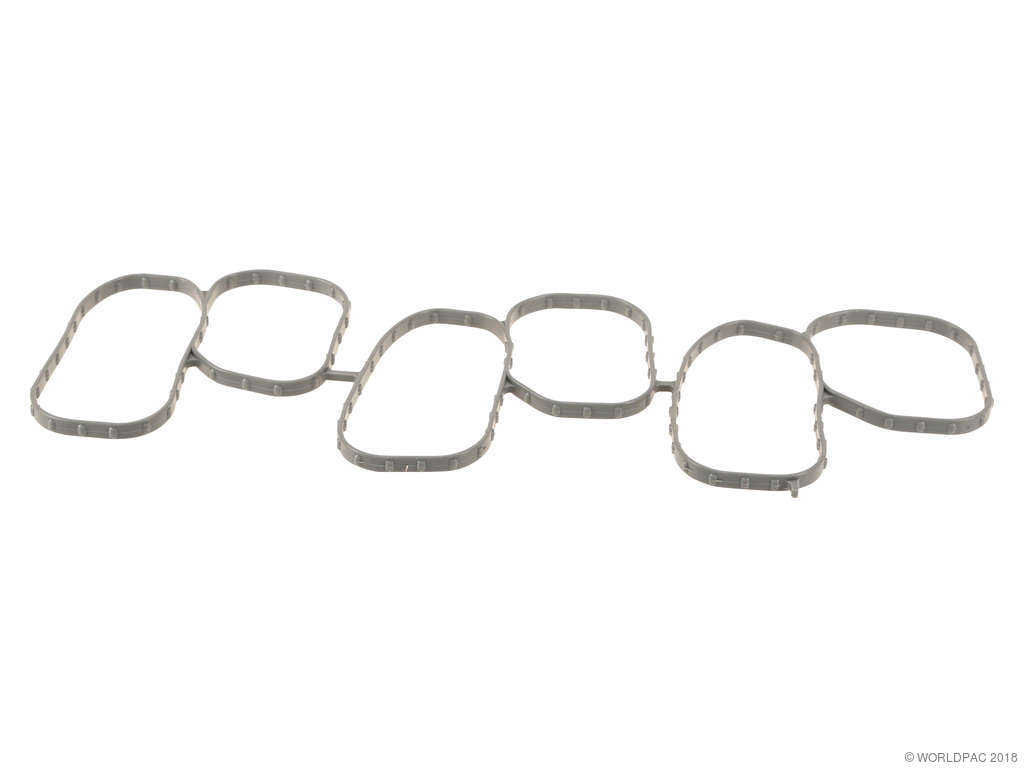
Aftermarket price range: $150-$220 - Upper Intake Manifold Gasket Set
(OEM #28411-3C200)— These gaskets must be replaced whenever the upper intake manifold is removed to access the IMRC actuator.
Trusted brands: Mahle, Fel-Pro
OEM price range: $30-$50
Aftermarket price range: $15-$30
Related Codes That Often Appear With This One
- P200A — P200A means 'Intake Manifold Runner Performance Bank 1'. This code indicates a mechanical problem (stuck open/closed). It can appear alongside P1523 if the actuator fails in a way that causes both an electrical fault and a mechanical performance issue.
- P2009 — P2009 means 'Intake Manifold Runner Control Circuit Low Bank 1'. This is a more specific version of the P1523 electrical fault, pointing to a short to ground in the circuit.
Technical Service Bulletins (TSBs) & Recalls
- While no TSB is specific to P1523, Hyundai (Kia's parent company) released TSB 21-EM-008H for similar 🎬 Watch: How to fix a VCMA issue for free 2.4L engines, which provides detailed diagnostic and repair guidelines for the VCM system, including checking the rod and lever arm for damage when replacing the motor. The principles are applicable to the V6 as well.
Platform-Specific Known Issues
- Owner Experience: P1523 and P200A Together: A user on kia-forums.com reported having both P1523 and P200A codes on their 2016 Sorento 3.3L. The dealership diagnosed a failed VCM (Variable Charge Motion) actuator. After replacing the actuator (part 28320-3C100) and the required intake gaskets, both codes were resolved. This highlights that a single failed actuator can trigger both electrical (P1523) and mechanical performance (P200A) codes simultaneously.
Mechanic-Grade Diagnostic Values
- VCM Actuator Position Sensor Live Data Voltage — expected: A voltage reading that changes smoothly between approximately 0.5V and 4.5V as the actuator is commanded to move.. Failure: A steady, stuck, or erratic voltage reading while the command PID is changing indicates a faulty position sensor inside the actuator or mechanically stuck flaps.
- VCM Actuator Motor Supply Voltage — expected: ~12V (Battery Voltage) at the power supply pin of the connector with Key On, Engine Off.. Failure: No voltage indicates a problem with the fuse, relay, or wiring leading to the connector.
- VCM Actuator Motor Coil Resistance — expected: While a specific value for the 3.3L V6 motor is not published, similar Kia VICS solenoids have a specification of 28-33 Ohms. A reading in a similar range (e.g., 10-50 Ohms) would be expected.. Failure: Infinite resistance (open circuit) or near-zero resistance (short circuit) indicates a failed motor.
Scan Tool Commands That Help
- Kia GDS (Global Diagnostic System): Actuation Test > VCM Motor — This is the primary factory-level bidirectional test to command the VCM actuator to move. It allows a technician to verify if the motor is responding to PCM commands, isolating the fault to the motor itself if the wiring is known to be good.
- Kia GDS (Global Diagnostic System): Special Function > Resetting adaptive values — After replacing the VCM actuator, this function should be used to clear the ECM's learned values. This forces the module to re-adapt to the new component's performance characteristics and can prevent the code from returning erroneously.
Wiring & Ground Locations
- VCM Actuator Connector (5-pin) — Bolted to the side of the upper intake manifold, in the engine valley.. This is the primary test point. Pins 4 and 5 are for the motor itself. Pins 1, 2, and 3 are for the integrated position sensor (5V reference, ground, signal). P1523 is a circuit fault, so testing for power, ground, and continuity at these pins is essential.
- Main Engine Ground Assembly (P/N 91860-C6020) — A large gauge wire assembly connecting the battery negative terminal, chassis, and engine block/transmission case.. A poor main engine ground can cause erratic voltage and incorrect readings from all sensors and actuators, including the VCM. Verifying this connection is clean and tight is a crucial step for any electrical diagnosis.
- Ground Point GF02 — A main body ground point located in the area of the right (passenger side) kick panel.. While not a direct engine ground, intermittent electrical issues and module communication problems can sometimes be traced back to poor body grounds like this one, which can affect the overall stability of the electrical system.
Real Owner Repair Stories
- Reddit user on r/kia (2011 Kia Sorento 4-cyl (similar VCM system)) — Check Engine Light with P200A code.
✅ What actually fixed it The dealership diagnosed a failed VCM (Variable Control Motor). The user was advised that the car was safe to drive but would have impacted fuel economy. This confirms the VCM as the common failure and provides real-world context on the severity.
Diagnostic Flowchart
Other Known Issues on This Vehicle
Issues unrelated to this code that are worth knowing about as an owner of this generation:
- Potential for Catastrophic Engine Failure 🔴 High — Affects a subset of 2016-2017 models. NHTSA opened a preliminary evaluation (PE23-020) in November 2023 after receiving multiple complaints of sudden power loss and engine failure. (Ref: NHTSA PE23-020 (Investigation))
- Leaking Oil Pressure Switch 🟠 Medium — Common enough that Kia extended the warranty for this specific part. Affects 2014-2018 models. (Ref: Kia Warranty Extension Program (SC228) extends coverage to 15 years/150,000 miles for the oil pressure switch.)
- Intake Valve Carbon Buildup 🟠 Medium — A common issue for all Gasoline Direct Injection (GDI) engines, including the Lambda 3.3L. Becomes noticeable after 60,000-80,000 miles, causing rough idle, misfires, and reduced performance.
- Improperly Heat-Treated Crankshaft 🔴 High — Very rare, affecting only a small batch of 2017 models with the 3.3L engine. (Ref: Recall SC153 was issued for 62 specific vehicles. A failed crankshaft could lead to engine stall and fire risk.)
- HECU (Hydraulic Electronic Control Unit) Fire Risk 🔴 High — Affects a wide range of Kia models, including the 2014-2015 Sorento. A short circuit inside the HECU can cause an engine compartment fire while parked or driving. (Ref: Recall SC212.)
Used vs. New Parts: Buying Guide for This Vehicle
When a used part is the smart pick: A used part is generally NOT recommended for this repair. The failure is due to wear of internal plastic gears and motor burnout, and the labor to access the part is significant. A used part carries a high risk of premature failure.
Donor-vehicle mileage cap: roughly under 50000 miles for the part to have meaningful remaining life.
What to inspect on the donor part:
- If considering used, only select from a very low-mileage donor vehicle.
- Manually move the actuator arm; it should move smoothly with no binding or clicking.
- Inspect the plastic housing for any cracks or heat damage.
- Ensure the electrical connector pins are straight and free of corrosion.
Aftermarket brands forum-validated for this vehicle:
- Dorman (e.g., part 911-923 for similar applications) is a widely available aftermarket alternative that explicitly states it fixes codes like P200A.
Brands owners have reported issues with on this vehicle:
- Avoid unbranded, no-name parts from online marketplaces, as quality control can be inconsistent.
Real Owner Stories
Aggregated from forums and TSBs cited above. Mileages and costs reflect what owners reported in those sources.
2016 Kia Sorento 3.3L V6
Symptoms: The owner reported having both P1523 and P200A codes appearing simultaneously.
What fixed it: Replacement of the VCM (Variable Charge Motion) actuator (part 28320-3C100) and the required intake gaskets.
Source hint: kia-forums.com thread titled 'P200A and P1523 codes'
Related OBD-II Codes
Frequently Asked Questions
What is the specific OEM part number for the IMRC actuator on my 3.3L Sorento?
Does TSB 21-EM-008H apply to my 3.3L V6 Sorento?
Is there a recall for engine failure on the 2016-2017 Sorento 3.3L?
Can I just replace the IMRC motor, or do I need other parts for the 3.3L GDI engine?
My 2015 Sorento has a fire risk; is this related to the P1523 code?
Is the oil pressure switch failure covered by a warranty extension on my 2014-2018 Sorento?
Helpful Videos
Used OEM Parts in Stock
New Aftermarket Parts Available


The information in this article is provided for general reference and educational purposes only. Vehicle specifications, procedures, and part compatibility can vary by production date, trim level, and region. Always consult your vehicle's factory service manual and verify part numbers before purchasing or performing repairs. Safety-critical components such as airbags, seat belts, and braking systems should be installed by a qualified professional.
- Kia Sorento:
- 🧭 Diagnostic Flowchart
- 🎬 Helpful Videos
- 🛍️ Shop This Part
- What's Unique About the 2014-2018 Kia Sorento
- Symptoms You May Notice
- Most Likely Causes
- Rare But Worth Checking
- Diagnosis Steps
- Parts You'll Likely Need
- Related Codes That Often Appear With This One
- Technical Service Bulletins (TSBs) & Recalls
- Platform-Specific Known Issues
- Mechanic-Grade Diagnostic Values
- Scan Tool Commands That Help
- Wiring & Ground Locations
- Real Owner Repair Stories
- Other Known Issues on This Vehicle
- Used vs. New Parts: Buying Guide for This Vehicle
- Real Owner Stories
- 2016 Kia Sorento 3.3L V6
- Related OBD-II Codes
- Frequently Asked Questions
- 🎟️ Get 5% Off