

P1523 on 2006-2007 Saturn Ion: Throttle Return Performance Causes and Fixes
On a 2006-2007 Saturn Ion, code P1523 almost always means the electronic throttle body is dirty and sticking. The throttle plate can't close properly due to carbon buildup. A thorough cleaning of the throttle body is the most common fix, costing under $20 for a can of cleaner and about an hour of your time. If cleaning doesn't work, the throttle body assembly itself has likely failed.
- P1523 on your Ion almost certainly means the throttle body is dirty.
- Start with the cheapest fix: a can of throttle body cleaner and a new gasket.
- Do not replace the gas pedal sensor; it is not the cause of this code.
- After cleaning, be prepared for the engine to idle high temporarily as the computer relearns the new throttle position.
- If cleaning doesn't fix it, the throttle body assembly itself likely needs to be replaced.
What's Unique About the 2006-2007 Saturn Ion
The Ecotec engines in the Saturn Ion are generally reliable, but their Positive Crankcase Ventilation (PCV) system design routes oil vapors and combustion byproducts back into the air intake. Over many miles, this creates a sticky, black layer of carbon inside the throttle body, which is the primary reason this code is so common on this platform. The fix is almost always mechanical cleaning rather than a complex electronic failure.
Symptoms You May Notice
- Check Engine Light is on
- Engine enters 'Reduced Power' or 'Limp Mode'
- High, unstable, or surging idle speed
- Engine stalls when coming to a stop or after releasing the gas pedal
- Delayed or hesitant throttle response
- Noticeable delay for engine RPMs to drop back to idle after revving
- Replacing the Accelerator Pedal Position (APP) sensor. P1523 is specific to the throttle body's return action, not the signal from the driver's pedal.
Most Likely Causes
- Dirty Throttle Body 🔴 High Probability → Shop Fuel Injection Throttle Body The Ecotec engine's PCV system routes oily vapor into the intake, leading to a guaranteed buildup of carbon and gunk on the throttle plate and bore over time. This buildup physically prevents the throttle plate from closing quickly.
How to confirm: Remove the intake air duct from the throttle body and visually inspect the throttle plate and the inside of the bore. A visible black, sticky coating confirms the issue. With the ignition off, you can manually push the plate to feel for a sticky or binding sensation.
Typical fix: Remove the throttle body from the intake manifold for a thorough cleaning. 🎬 See this quick guide on how to clean a throttle body Use a dedicated throttle body cleaner and a soft brush or microfiber rag to remove all carbon deposits from the plate and bore. Replace the throttle body gasket to prevent vacuum leaks.
Est. part cost: $10-$25 - Failing Throttle Body Assembly ⚪ Low Probability → Shop Fuel Injection Throttle Body
How to confirm: If a thorough cleaning does not resolve the code, and the wiring is confirmed to be good, the internal motor or position sensors within the throttle body assembly have likely failed. This is often accompanied by other throttle-related codes like P1516 or P2135.
Typical fix: Replace the entire throttle body assembly with a new unit. An idle relearn procedure will be required after installation.
Est. part cost: $100-$350
Rare But Worth Checking
- Wiring or Connector Issue: A TSB for similar GM models with Ecotec engines (TSB 07-06-04-019) points to potential issues with water intrusion and corrosion in the IP-to-body harness connector in the driver's kick panel, which can cause various throttle-related codes. While this TSB specifically calls out P2138, a short in these circuits could potentially contribute to other throttle performance codes. If cleaning the throttle body doesn't work, inspecting the wiring harness and connectors at both the throttle body and the ECM is a valid next step.
Diagnosis Steps
- Scan the vehicle for codes to confirm P1523 and any other related DTCs.
- Disconnect the negative battery terminal for safety.
- Remove the plastic engine cover and the flexible intake air duct connected to the throttle body.
- Visually inspect the throttle plate and the inside of the throttle body bore for black carbon buildup.
- If dirty (which is highly likely), unbolt the four 10mm bolts holding the throttle body to the intake manifold and disconnect the electrical connector.
- Thoroughly clean the throttle body using a dedicated throttle body cleaner and a non-abrasive cloth or soft brush. Ensure the plate moves freely. Do not spray cleaner directly on electrical connections.
- Install a new throttle body gasket, then reinstall the cleaned throttle body and torque the bolts to 89 in-lbs (about 7.4 ft-lbs).
- Reconnect the electrical connector, intake duct, and negative battery terminal.
- Perform an idle relearn procedure: Start the engine and let it idle in Park for 3 minutes. Turn the engine off for 60 seconds. Restart the engine and let it idle for another 3 minutes. The idle should stabilize. A few drive cycles may be needed for the PCM to fully adapt.
- If the code returns after cleaning, inspect the wiring and connector at the throttle body for damage or corrosion. If the wiring is good, the throttle body assembly itself is likely faulty and needs replacement.
Parts You'll Likely Need
- Throttle Body Cleaner — This is the required solvent to perform the most common fix: cleaning the carbon buildup from the throttle plate and bore.
Trusted brands: CRC, Berryman, Gumout
Aftermarket price range: $10-$20 - Throttle Body Assembly
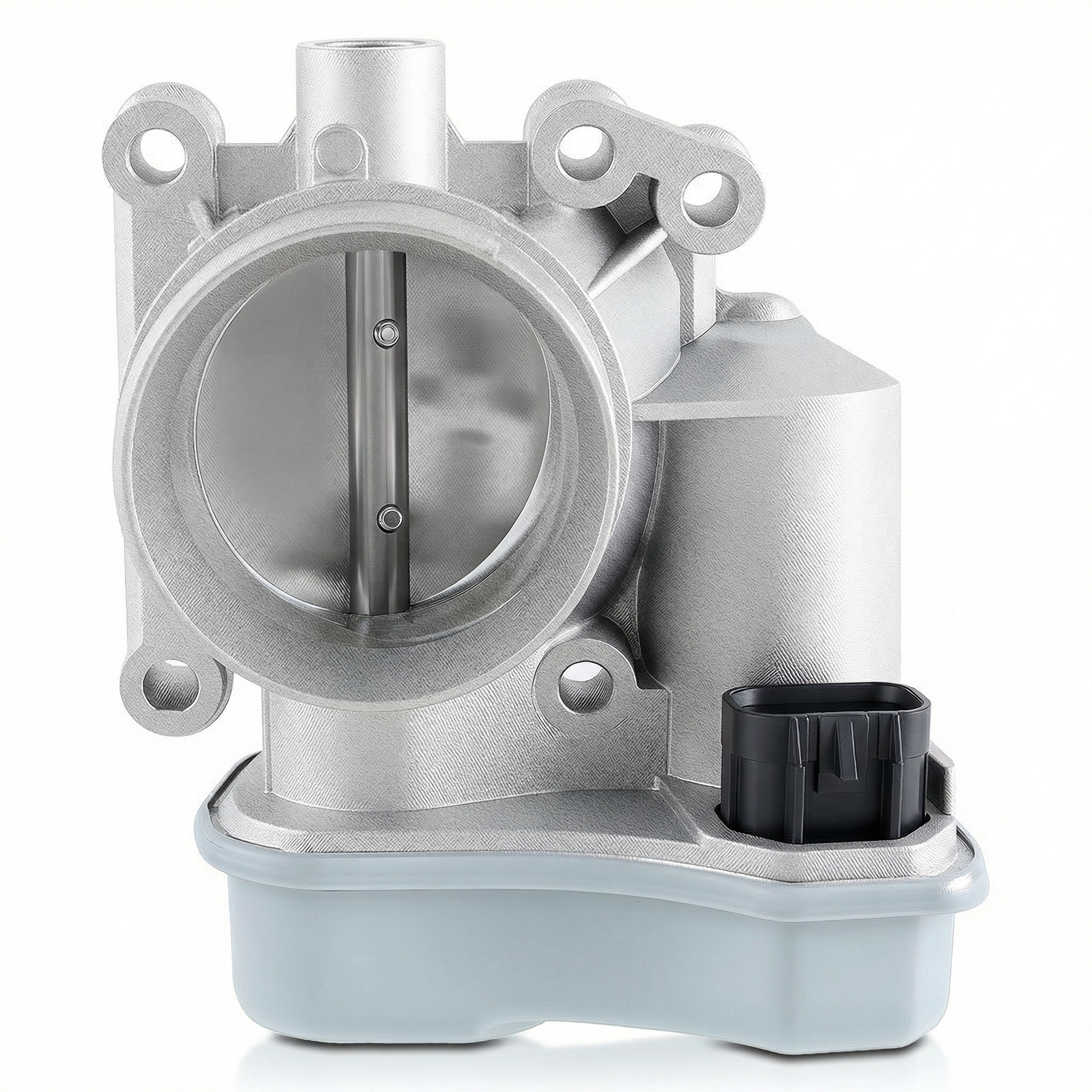
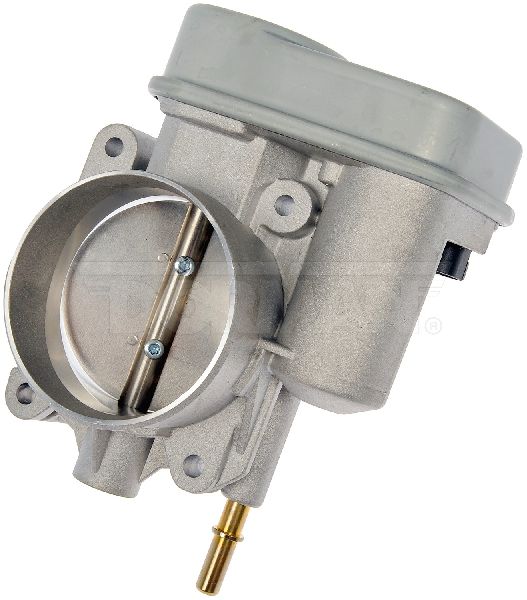
(OEM #ACDelco 12568796 (For 2.2L L61 Engine), ACDelco 217-3349 (For 2.4L LE5 Engine))— If a thorough cleaning does not resolve the issue, the internal motor or sensors have failed, requiring replacement of the entire assembly.
Trusted brands: ACDelco (GM Genuine), Dorman, Spectra Premium
OEM price range: $200-$350
Aftermarket price range: $100-$250 - Throttle Body Gasket — It is best practice to replace the gasket anytime the throttle body is removed to prevent vacuum leaks.
Trusted brands: ACDelco, Fel-Pro
OEM price range: $5-$15
Aftermarket price range: $3-$10
Related Codes That Often Appear With This One
- P1516 — This code also indicates a Throttle Actuator Control (TAC) performance error. A sticking throttle plate that causes P1523 can also cause the general performance error of P1516.
- P2135 — This code indicates a correlation error between the two internal throttle position sensors. If the throttle plate is sticking, it can cause the sensors to report conflicting information. However, P2135 more often points to an internal electronic failure requiring throttle body replacement.
- P0506 / P0507 — These codes indicate idle speed is lower (P0506) or higher (P0507) than expected. A dirty throttle body can cause either condition depending on whether the plate is sticking closed or slightly open.
Technical Service Bulletins (TSBs) & Recalls
- 07-06-04-019: While primarily for P2138, this TSB addresses intermittent 'Reduced Engine Power' messages caused by water leaking into the IP-to-body harness connector. This highlights a known wiring vulnerability in the platform that can cause various electronic throttle control issues.
- PIP4125C: Addresses idle instability and stalling, with the recommended fix being throttle body cleaning, which directly relates to the cause of P1523.
Platform-Specific Known Issues
- The Ecotec platform is well-known for throttle body carbon buildup issues, making P1523 a common and well-documented code.
- After cleaning the throttle body, some owners report a temporary high idle until the computer relearns the new, clean closed-throttle position. This is normal and usually resolves after a few drive cycles or a manual relearn procedure.
- A user on SaturnFans.com with a 2006 Ion reported similar idle stalling issues which were resolved by a thorough throttle body cleaning, confirming the common fix. Another thread details a user replacing the entire throttle body after cleaning failed to solve the problem, which is the correct second step.
Mechanic-Grade Diagnostic Values
- Throttle Actuator Motor (TAC) Resistance — expected: Between 2 and 15 Ohms between the two motor control pins (A and B on the 6-pin connector).. Failure: A reading over the limit (Open Loop) or under 1 Ohm (Short) indicates a failed motor requiring throttle body replacement.
- Throttle Position Sensor (TPS) Resistance — expected: For TPS2, resistance should be around 2.2 kOhms and decrease as the throttle plate is opened. For TPS1, resistance is also in the kOhm range and should change smoothly.. Failure: Resistance that is jumpy, erratic, or does not change when the throttle plate is moved indicates a failed sensor.
- 5-Volt Reference at Throttle Body Connector — expected: 4.8V to 5.2V with Key On, Engine Off (KOEO) between the 5V reference pin (Pin E) and the Low Reference/Ground pin (Pin C).. Failure: Voltage outside this range points to a problem with the PCM or the wiring harness, not necessarily the throttle body itself.
- Scan Tool Live Data: Commanded vs. Actual Throttle Position — expected: The two percentage values should track each other very closely (within a few percent) as the accelerator pedal is pressed and released.. Failure: A significant, persistent gap between the commanded and actual values while the throttle is not physically binding indicates an electronic fault within the throttle body.
Hidden / Shadow Codes Worth Checking
- Failure Records vs. Freeze Frame: For this specific DTC, the PCM stores the conditions present when the code was set as 'Failure Records' only. It does not store a standard 'Freeze Frame Record'. (see via This data is accessible with a professional scan tool like the GM Tech2 or GDS2. This is a subtle but important detail for a technician, as the usual freeze frame data may be absent.)
Scan Tool Commands That Help
- GM Tech2 / GDS2: TAC System Tests / Special Functions — After confirming the throttle is physically clean and moves freely, a technician can use this function to command the throttle plate to specific angles (e.g., 10%, 25%, 50%) and verify that the 'Actual Throttle Position' PID matches the command. This directly tests the actuator motor and sensors, isolating the fault to the throttle body if it fails the test.
Wiring & Ground Locations
- Throttle Body Connector (6-Pin) — Plugged directly into the electronic throttle body assembly.. This is the single point of connection for power, ground, and sensor signals. Corrosion or backed-out pins here will directly cause throttle codes. The pinout for the 2.2L L61 is: Pin A: TAC Motor Control 1, Pin B: TAC Motor Control 2, Pin C: Low Reference (Ground), Pin D: TP Sensor 1 Signal, Pin E: 5-Volt Reference, Pin F: TP Sensor 2 Signal.
- G101 — Located behind the left front headlamp assembly.. This is a primary engine compartment ground. Some diagrams show this as a ground point for the Engine Control Module (ECM). A poor ground here can cause a host of erratic engine control issues, including throttle control problems.
- G109 — Located at the left rear side of the engine compartment.. Another critical engine bay ground point that provides a ground path for various engine components.
- Engine Compartment Fuse Box - Fuse F13 — Located in the fuse box in the engine compartment on the left side.. This fuse is listed as providing power to the Engine Control Module (ECM). Loss of power here would cause more than just a P1523, but intermittent issues could be traced back to this fuse or its contacts.
Real Owner Repair Stories
- Reddit user EmoFluffButt, r/MechanicAdvice (2007 Saturn Ion) — Check engine light, 'engine power down' light, jerking motion on acceleration.
❌ Tried (didn't work) Cleaning the throttle body. The issue returned in less than a month., Cleaning the throttle body a second time.
✅ What actually fixed it The consensus from other technicians in the thread was that the electronic throttle body assembly itself had failed and needed to be replaced, as cleaning is often only a temporary fix for an internal electronic failure. - Medium.com article by Ryan Cresawn (2006 Saturn Ion, Manual Transmission, 142k+ miles) — Fluctuating RPMs (+/- 100) at idle, engine struggling not to stall when cold, especially with A/C on.
❌ Tried (didn't work) Replacing the spark plugs.
✅ What actually fixed it The owner removed and performed a thorough cleaning of the throttle body and replaced the gasket, which resolved the idle fluctuation and stalling tendency. - Reddit user, r/MechanicAdvice (2006 Saturn Ion 2, Ecotec engine) — High idle at 1,500 RPM immediately after a thorough throttle body cleaning.
❌ Tried (didn't work) Disconnecting the battery for 15 minutes., Turning the key to 'on' for 30 seconds to try and reset the throttle position., Disconnecting the throttle position sensor connector to force a code, then reconnecting.
✅ What actually fixed it The high idle is a classic symptom of the PCM not having relearned the new, cleaner closed-throttle position. The fix is to perform the idle relearn procedure or allow the computer to adapt over several drive cycles. This story confirms the necessity of the relearn step.
"I Checked Everything" — The Actual Cause
- The equivalent for this code is 'throttle body cleaned, but the code returned.' This scenario almost universally points to an internal electronic failure of the throttle body assembly. While cleaning removes the physical blockage (carbon), it cannot fix a failing position sensor or actuator motor inside the sealed unit. A user on Reddit experienced this directly: cleaning provided a temporary fix for less than a month before symptoms returned, indicating the underlying electronic components were the true cause of failure, not just the carbon buildup.
OEM Part Supersession History
12565553→ACDelco 217-3349— Part number update and consolidation by GM/ACDelco.
Heads up: Part 217-3349 is the correct service replacement for the 2.4L LE5 engine in the 2006-2007 Ion.
Model Year Variations Within This Range
- 2006-2007: The 2.2L L61 engine and 2.4L LE5 engine use different throttle body part numbers (12568796 for 2.2L, 217-3349 for 2.4L). While the failure cause and diagnostic process are identical, the parts are not interchangeable. The 2.2L part (12568796) is primarily listed for 2005-2006 models, while the 2.4L part (217-3349) covers 2006-2007, suggesting a potential mid-cycle change or carryover difference. Always verify the correct part by VIN.
Diagnostic Flowchart
Other Known Issues on This Vehicle
Issues unrelated to this code that are worth knowing about as an owner of this generation:
- Defective Ignition Switch 🔴 High — Extremely widespread across all 2003-2007 models. A heavy keychain or knee bump could turn the engine off while driving, disabling power steering, brakes, and airbags. (Ref: GM Safety Recall 14063. This was a major, well-publicized recall.)
- Sudden Loss of Electric Power Steering (EPS) 🔴 High — Very common on 2004-2007 models. The EPS motor fails suddenly, making the car extremely difficult to steer at low speeds. (Ref: GM Safety Recall 14115.)
- Timing Chain Wear and Failure (2.2L L61) 🔴 High — Common on higher-mileage engines (typically over 100k miles). A rattling noise on startup is the primary symptom. Failure is catastrophic as it's an interference engine. (Ref: TSB #03-06-01-017 addressed an oiler nozzle design, but the chains and plastic guides remain a wear item.)
- Ignition Control Module (ICM) Failure 🟠 Medium — A very common cause of random misfire (P0300) codes. The module is located under the coil pack and is prone to failure from engine heat.
- Failing Transmission Shift Solenoids 🟠 Medium — Owners report issues with harsh shifting, failure to shift, or getting stuck in gear, often traced back to failing 1-2 or 2-3 shift solenoids inside the transmission.
Used vs. New Parts: Buying Guide for This Vehicle
When a used part is the smart pick: For this specific repair, buying a used throttle body is NOT recommended. The failure is often electronic and internal to the sealed unit. A used part from a junkyard carries a high risk of having the same wear and potential for imminent failure, leaving you stranded.
Donor-vehicle mileage cap: roughly under 50000 miles for the part to have meaningful remaining life.
What to inspect on the donor part:
- If considering a used part despite the risk, insist on one from a low-mileage vehicle.
- Visually inspect the throttle bore and plate. While it can be cleaned, heavy, baked-on carbon suggests a hard life.
- If possible, test the resistance of the actuator motor (pins A & B) and sensors before purchase. Look for values within the specified ranges (Motor: 2-15 Ohms).
OEM-only on this vehicle (don't cheap out):
- While not strictly 'OEM-only', using a GM Genuine (ACDelco) part is the safest bet for fitment and reliability. The electronic components must communicate perfectly with the factory ECM.
Aftermarket brands forum-validated for this vehicle:
- Dorman and Spectra Premium are common aftermarket suppliers for this part, but no specific forum consensus strongly endorses them over OEM for this application.
Brands owners have reported issues with on this vehicle:
- Avoid no-name, unbranded parts from online marketplaces, as their electronic tolerances and long-term durability are highly questionable.
Real Owner Stories
Aggregated from forums and TSBs cited above. Mileages and costs reflect what owners reported in those sources.
2006 Saturn Ion 2.2L/2.4L
Symptoms: Stalling issues when coming to a stop or idling.
What fixed it: A thorough throttle body cleaning resolved the idle stalling issues.
Source hint: SaturnFans.com thread
2006 Saturn Ion 2.2L/2.4L
Symptoms: Fluctuating idle and code P1523; cleaning the throttle body did not resolve the issue.
What fixed it: Replacing the entire throttle body assembly after cleaning failed to solve the problem.
Source hint: SaturnFans.com thread
2006 Saturn Ion 2.2L
Symptoms: Fluctuating idle speed.
What fixed it: Removing and cleaning the throttle body to clear carbon deposits.
Source hint: Medium.com blog post by a 2006 Saturn Ion owner
Related OBD-II Codes
Frequently Asked Questions
Does TSB 07-06-04-019 apply to my 2006 Saturn Ion if I'm seeing 'Reduced Engine Power'?
Is there a recall for the ignition issues on my 2007 Saturn Ion?
My 2006 Ion is stalling at stops; does PIP4125C recommend a specific fix?
Should I buy a used throttle body from a junkyard to save money on my 2.2L Ecotec?
Is there a recall for the power steering failure on the 2004-2007 Saturn Ion?
Why does my engine idle high after I cleaned the throttle body to fix P1523?
Helpful Videos

Used OEM Parts in Stock
New Aftermarket Parts Available




The information in this article is provided for general reference and educational purposes only. Vehicle specifications, procedures, and part compatibility can vary by production date, trim level, and region. Always consult your vehicle's factory service manual and verify part numbers before purchasing or performing repairs. Safety-critical components such as airbags, seat belts, and braking systems should be installed by a qualified professional.
- Saturn Ion:
- 🧭 Diagnostic Flowchart
- 🎬 Helpful Videos
- 🛍️ Shop This Part
- What's Unique About the 2006-2007 Saturn Ion
- Symptoms You May Notice
- Most Likely Causes
- Rare But Worth Checking
- Diagnosis Steps
- Parts You'll Likely Need
- Related Codes That Often Appear With This One
- Technical Service Bulletins (TSBs) & Recalls
- Platform-Specific Known Issues
- Mechanic-Grade Diagnostic Values
- Hidden / Shadow Codes Worth Checking
- Scan Tool Commands That Help
- Wiring & Ground Locations
- Real Owner Repair Stories
- "I Checked Everything" — The Actual Cause
- OEM Part Supersession History
- Model Year Variations Within This Range
- Other Known Issues on This Vehicle
- Used vs. New Parts: Buying Guide for This Vehicle
- Real Owner Stories
- 2006 Saturn Ion 2.2L/2.4L
- 2006 Saturn Ion 2.2L/2.4L
- 2006 Saturn Ion 2.2L
- Related OBD-II Codes
- Frequently Asked Questions
- 🎟️ Get 5% Off