

P1524 on 2004-2011 Audi A6 3.2L V6: Fuel Pump Relay Circuit Fault Causes and Fixes
On a 2004-2011 Audi A6, code P1524 indicates an electrical fault with the fuel pump relay circuit, not an oil pressure or camshaft issue. The most common fix is replacing the fuel pump relay (J17), often labeled '614' or similar, located in the electronics box in the driver's side plenum chamber. Expect a relay to cost between $15 and $50.
- P1524 on an Audi A6 is a fuel system electrical code, not an oil or timing code.
- The most common symptom is the engine cranking but failing to start, or stalling while driving.
- Start your diagnosis by checking for water in the plenum chamber and swapping the fuel pump relay (J17). This is the most frequent and cheapest fix.
- The fuel pump relay is located under the hood in the driver's side electronics box, near the firewall, often under the ECU.
- Do not replace the oil pressure sensor or camshaft parts for this code; it is a common misdiagnosis based on what this code means for other car brands.
What's Unique About the 2004-2011 Audi A6
Unlike many other manufacturers such as Dodge, Chrysler, and BMW where P1524 points to oil pressure or variable valve timing (VVT) problems, on Volkswagen and Audi vehicles it specifically refers to a fuel system electrical fault. This is a critical distinction, as mechanics or owners familiar with other brands might mistakenly diagnose an oil system or engine timing issue. The actual problem lies within the power supply circuit for the fuel pump, which on the C6 A6 involves both the J17 relay and the J538 control module.
Symptoms You May Notice
- Engine cranks but will not start (most common symptom).
- Engine stalls intermittently while driving, sometimes after a specific runtime (e.g., 5-15 minutes).
- No sound from the fuel pump (a faint hum) from the rear seat area when the key is turned to the 'On' position.
- Car starts sometimes but not others (intermittent no-start).
- Engine starts but runs poorly, hesitates, or has low power before stalling.
- Replacing the in-tank fuel pump itself. While the pump can fail, the P1524 code specifically points to an electrical circuit issue *before* the pump. Diagnose the relay, module, and wiring first.
- Diagnosing an oil pressure problem. This is the correct interpretation of P1524 on many other car brands (like Dodge/Ram) but is incorrect for Audi.
- Replacing the High Pressure Fuel Pump (HPFP). The 3.2L FSI engine has an HPFP, but P1524 relates to the low-pressure fuel system that feeds it. HPFP failure typically produces different codes (e.g., P0087, P2294, P2296) and symptoms.
- Replacing camshaft position sensors or VVT solenoids. These components are unrelated to the P1524 fault code on this vehicle.
Most Likely Causes
- Failed Fuel Pump Relay (J17) 🔴 High Probability → Shop Fuel Pump Relays are electromechanical switches that wear out over time. More critically, the plenum chamber E-box where the relay resides is highly susceptible to water ingress from clogged plenum drains, causing corrosion and electrical shorts.
How to confirm: Locate the relay in the driver's side plenum E-box, under the ECU. It is often a black cube relay labeled '614' or similar. Check for signs of water damage, such as corrosion on the relay pins or socket. Swap it with an identical relay from a non-essential system. If the car starts, the relay is bad.
Typical fix: Replace the fuel pump relay. It is a plug-and-play component. Crucially, clear the plenum drains below the E-box to prevent a repeat failure.
Est. part cost: $15-$50 - Faulty Fuel Pump Control Module (J538) 🟡 Medium Probability → Shop Fuel Pump The control module can fail due to heat, age, and internal electronic faults. On some VW/Audi platforms, these modules were known for overheating and were subject to recalls. A user on Reddit with a C6 A6 reported replacing this module for a stalling issue.
How to confirm: Locate the module, which is typically under the rear seat bench on the passenger side. Visually inspect the module and its electrical connector for signs of melting, burning, or corrosion. A VCDS scan may show communication errors with the module.
Typical fix: Replace the fuel pump control module and repair any damage to the connector. The part number is often a variation of 4F0 906 093.
Est. part cost: $100-$200 - Wiring Issue (Open or Short Circuit) ⚪ Low Probability Wires can become brittle and break, or insulation can rub through. Water ingress in the plenum E-box is a primary cause of shorts and corrosion in the relay wiring. On the 3.2L FSI, brittle plastic vacuum lines near the front of the engine are also a known failure point that can cause various running issues, though not directly P1524.
How to confirm: This requires a multimeter and wiring diagram. Check for continuity and voltage at the fuse box (driver's side dash), the J17 relay socket in the plenum box, and the J538 module connector under the rear seat.
Typical fix: Repair or replace the damaged section of wiring. Ensure the E-box lid and gasket are properly sealed to prevent future water damage.
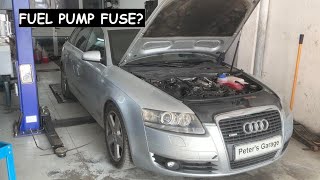
Est. part cost: $5-$100 (depending on complexity) - Blown Fuel Pump Fuse ⚪ Low Probability → Shop Fuel Pump A short circuit in the relay, module, or pump can cause the fuse to blow as a protective measure. A failing pump drawing excessive current can also be a cause.
How to confirm: Check the fuse panel on the driver's side of the dashboard. The fuel pump fuse is typically a 20A fuse. Also, check the fuses in the plenum E-box, as a shorted coil pack was reported to blow a 20A fuse in this location, causing a no-start.
Typical fix: Replace the fuse. If it blows again immediately, there is an underlying short circuit that must be diagnosed.
Est. part cost: $1-$5
Rare But Worth Checking
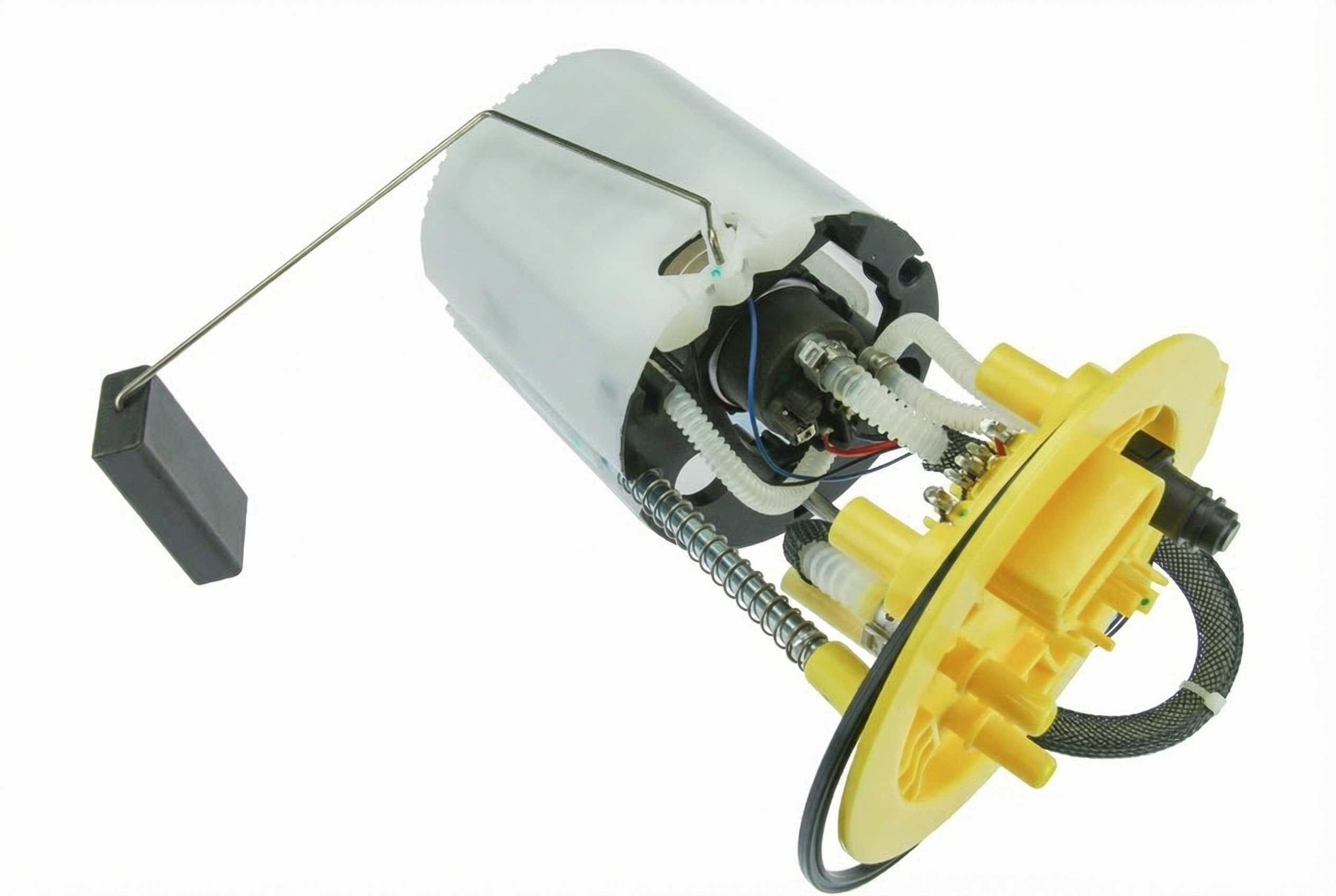
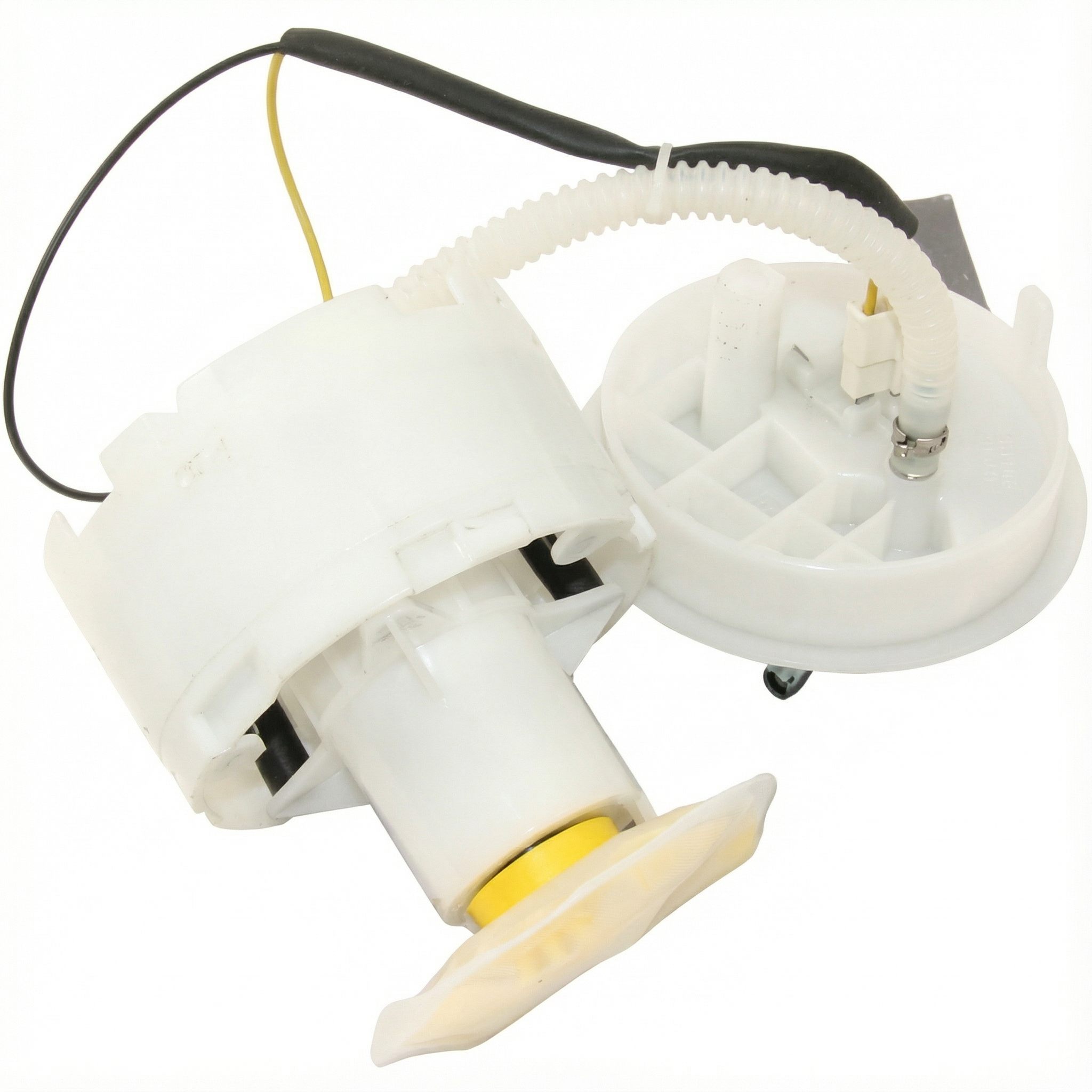
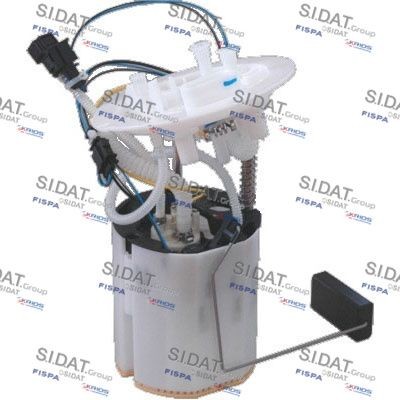
- Failed In-Tank Fuel Pump (Low Pressure Fuel Pump - LPFP): → Shop Fuel Pump
Diagnosis Steps
- Verify the battery is fully charged and properly coded to the vehicle's Battery Regulation Module (61). A weak or improperly coded battery can cause myriad electrical faults on this platform.
- Turn the key to the 'On' position (without starting) and listen for a faint hum from the rear passenger seat area. No hum suggests the low-pressure fuel pump is not activating.
- Scan the vehicle with a VAG-specific tool like VCDS (Ross-Tech). Check for codes in the Engine (01), Central Electronics (09), and CAN Gateway (19) modules.
- Check the fuel pump fuse (typically 20A) in the fuse panel on the driver's side of the dashboard.
- Inspect the plenum chamber (under the cowl, driver's side) for any signs of standing water or moisture. Clogged drains here are a very common cause of electrical issues.
- Locate the Fuel Pump Relay (J17) in the electronics box within the plenum chamber. It's often under the ECU and may be labeled '614'. Inspect the socket for corrosion.
- Swap the fuel pump relay with a known good, identical relay (e.g., from the horn) to see if the car starts. If it does, the original relay is faulty. This is the most common and cheapest fix.
- If the relay is not the issue, locate and inspect the Fuel Pump Control Module (J538) under the rear passenger-side seat bench. Check its connector for any signs of burning, melting, or corrosion.
- If visual inspections are inconclusive, use a multimeter to test for proper voltage and ground signals at the relay socket and at the fuel pump control module connector to trace the open or short circuit, using a wiring diagram for reference.
Parts You'll Likely Need
- Fuel Pump Relay (J17)
(OEM #8Z0951253 (often marked '614' or similar, verify application))— This is the most common failure point for a P1524 code, often due to water ingress in the plenum box or simple wear. It's an inexpensive and easy first part to replace.
Trusted brands: Genuine VW/Audi, Bosch, HELLA, Vemo
OEM price range: $30-$50
Aftermarket price range: $15-$35 - Fuel Pump Control Module (J538)
(OEM #4F0906093L (or similar, verify by VIN))— This module regulates voltage to the fuel pump and is the second most common point of failure, often due to heat or internal faults.
Trusted brands: Genuine VW/Audi, VDO, Hitachi, VIKA
OEM price range: $150-$250
Aftermarket price range: $100-$180
Related Codes That Often Appear With This One
- U0109 - Lost Communication With Fuel Pump Control Module: Often appears with P1524 if the J538 module has completely failed or its wiring is compromised.
Platform-Specific Known Issues
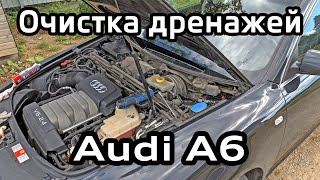
- Plenum Chamber Water Ingress: The C6 A6 is notorious for its plenum drains (under the windshield cowl) getting clogged with leaves and debris. When this happens, rainwater fills the chamber, submerging the electronics box that houses the ECU and critical relays like the J17 fuel pump relay. This leads to corrosion, short circuits, and component failure. Regular cleaning of these drains is essential preventative maintenance. 🎬 Watch: How to clean your plenum drains to prevent water damage.
Mechanic-Grade Diagnostic Values
- Voltage at Fuel Pump Control Module (J538) output to pump — expected: Approx. 4.0 to 5.7 V at idle. Voltage should briefly rise, then fall, then return to the idle value during a quick throttle burst.. Failure: No voltage or voltage that does not respond as expected to throttle changes indicates a faulty module or input signal.
- Voltage supply to Fuel Pump Control Module (J538) — expected: Approx. battery voltage at pins 3 and 4 of the harness connector with the ignition on.. Failure: Less than battery voltage indicates an open or high resistance in the supply wiring from the relay.
- Fuel Pump Relay (J17) coil resistance — expected: A good relay winding should typically measure between 60 to 80 Ohms across the coil pins (85 and 86).. Failure: A reading significantly outside this range, such as below 40Ω or above 120Ω, suggests the relay is faulty and should be replaced.
Hidden / Shadow Codes Worth Checking
- 17932: This is the VAG-specific equivalent of P1524, defined as 'Fuel Pump Relay (J17): Open or Short to Ground'. (see via VCDS (VAG-COM) or other VAG-specific diagnostic tools.)
Scan Tool Commands That Help
- VCDS (VAG-COM): Engine -> Output Tests -> 'Fuel Pump Electronics' OR Basic Settings -> 'Transfer Fuel Pump Test' — This command forces the fuel pump to run, allowing a technician to verify if the entire circuit (relay, module, pump) is functional. If the pump runs during this test but not during a normal start attempt, it points to a problem with the trigger signal from the ECM rather than the components themselves.
Wiring & Ground Locations
- Engine Harness Ground — A small gauge ground wire attached to one of the bolts on the oil filter housing.. This ground is part of the main engine harness. If left disconnected after engine work, it can cause various confusing electrical issues, potentially including faults related to ECM-controlled relays.
- J538 Connector (T10N) — Under the rear passenger seat bench, connected to the Fuel Pump Control Module.. Pin-point testing is critical here. Pin T10N/2 is the signal wire from the ECM, Pin T10N/6 is the module's ground, and power is supplied from the J17 relay. Testing these specific pins can isolate the fault to the module, its power supply, or its ground path.
- Ground Point 50 — On the left side of the luggage compartment.. This is a major chassis ground point. While not directly for the fuel pump module, corrosion or looseness at main ground points can cause unpredictable electrical behavior throughout the vehicle.
OEM Part Supersession History
4F0906093B, 4F0906093C, 4F0906093G→4F0906093L— Internal revisions for improved reliability and heat management.
Heads up: Later revisions (like 'L') are generally backwards compatible with earlier letter versions for this platform.8E0951253 (marked '614')→4H0951253C— Updated part for broader application and potential internal improvements.
Heads up: The new part number is the correct service replacement for the original relay.
Model Year Variations Within This Range
- 2004-2008 vs 2009-2011: The C6 platform received a facelift for the 2009 model year. While the core electrical design for the fuel pump circuit remained the same, fuse and relay panel layouts in the passenger compartment and trunk may have minor differences. The primary J17 relay location in the plenum e-box is consistent.
Diagnostic Flowchart
Other Known Issues on This Vehicle
Issues unrelated to this code that are worth knowing about as an owner of this generation:
- Intake Valve Carbon Buildup 🔴 High — Very common, typically requires cleaning every 40,000-60,000 miles. Symptoms include rough idle, hesitation, misfires, and loss of power.
- Timing Chain Tensioner & Guide Wear 🔴 High — Common issue, especially on higher mileage vehicles (60,000+ miles). Symptoms start with a brief 'rattle' on cold starts from the rear of the engine. Failure is catastrophic and requires engine removal for repair.
- High-Pressure Fuel Pump (HPFP) Failure 🟠 Medium → Shop Fuel Pump — The HPFP can fail, causing stalling, surging, and fuel pressure-related fault codes (e.g., P0087, P2296). It is a separate issue from the P1524 code, which relates to the low-pressure system.
- Oil Leaks (Valve Cover, Timing Cover) 🟠 Medium — As the engine ages, gaskets for the valve covers and timing chain covers can become brittle and leak oil. This is a common maintenance item on higher-mileage examples.
- Intake Manifold Runner Flap Issues 🟡 Low → Shop Engine Intake Manifold — The plastic components of the variable intake manifold runners can fail, leading to fault codes and minor performance issues.
Used vs. New Parts: Buying Guide for This Vehicle
When a used part is the smart pick: A used Fuel Pump Control Module (J538) is a reasonable choice as it does not require 'Component Protection' programming on this C6 platform, making it plug-and-play. A used relay is also acceptable if tested or from a low-mileage donor.
Donor-vehicle mileage cap: roughly under 80000 miles for the part to have meaningful remaining life.
What to inspect on the donor part:
- For the J538 module, inspect the connector pins for any green/white corrosion or signs of melting on the plastic housing.
- For the J17 relay, check for corrosion on the pins. Avoid parts from vehicles with obvious signs of water damage in the plenum area.
- Verify the part number on the used component matches your original or a known superseded number.
OEM-only on this vehicle (don't cheap out):
- Fuel Pump Control Module (J538): It is strongly recommended to use a Genuine OEM part (new or used) over a new aftermarket one. The original modules were known to have overheating issues, and a low-quality aftermarket part poses a significant fire risk due to its location and function.
Aftermarket brands forum-validated for this vehicle:
- For the Fuel Pump Relay (J17), brands like Bosch, HELLA, and Vemo are reputable OEM-quality suppliers.
Brands owners have reported issues with on this vehicle:
- Unknown or unbranded 'white-box' fuel pump control modules should be avoided due to the high risk of premature failure and potential for causing further damage.
Real Owner Stories
Aggregated from forums and TSBs cited above. Mileages and costs reflect what owners reported in those sources.
2005-2008 Audi A6 Allroad 3.2L V6 FSI
Symptoms: The owner experienced a no-start condition and needed to locate the fuel pump relay to restore operation.
What fixed it: Located and replaced the J17 fuel pump relay in the plenum chamber electronics box.
Source hint: Ross-Tech forum post from an Allroad C6 owner
2006 Audi A6 (C6) 3.2L V6 FSI
Symptoms: The vehicle was experiencing intermittent stalling issues while driving.
What fixed it: Replacement of the J538 fuel pump control module.
Source hint: User on Reddit with a C6 A6
Related OBD-II Codes
Frequently Asked Questions
Where is the fuel pump relay located on my 2005 Audi A6 Allroad 3.2L?
Why does my Audi A6 stall after driving for about 10 minutes?
I suspect my Fuel Pump Control Module is bad; where should I look for it?
Can a blown fuse in the plenum box cause a no-start even if the dash fuses are okay?
Is there a specific part number for the fuel pump control module on the 3.2L FSI?
How can I prevent my fuel pump relay from corroding again?
Helpful Videos
Used OEM Parts in Stock
New Aftermarket Parts Available

The information in this article is provided for general reference and educational purposes only. Vehicle specifications, procedures, and part compatibility can vary by production date, trim level, and region. Always consult your vehicle's factory service manual and verify part numbers before purchasing or performing repairs. Safety-critical components such as airbags, seat belts, and braking systems should be installed by a qualified professional.
- Audi A6:
- 🧭 Diagnostic Flowchart
- 🎬 Helpful Videos
- 🛍️ Shop This Part
- What's Unique About the 2004-2011 Audi A6
- Symptoms You May Notice
- Most Likely Causes
- Rare But Worth Checking
- Diagnosis Steps
- Parts You'll Likely Need
- Related Codes That Often Appear With This One
- Platform-Specific Known Issues
- Mechanic-Grade Diagnostic Values
- Hidden / Shadow Codes Worth Checking
- Scan Tool Commands That Help
- Wiring & Ground Locations
- OEM Part Supersession History
- Model Year Variations Within This Range
- Other Known Issues on This Vehicle
- Used vs. New Parts: Buying Guide for This Vehicle
- Real Owner Stories
- 2005-2008 Audi A6 Allroad 3.2L V6 FSI
- 2006 Audi A6 (C6) 3.2L V6 FSI
- Related OBD-II Codes
- Frequently Asked Questions
- 🎟️ Get 5% Off