

P1524 on 2010-2017 GMC Terrain 2.4L: Throttle Position Error Causes and Fixes
On a 2010-2017 GMC Terrain, P1524 indicates a throttle position error, not an oil pressure problem. The most common cause is carbon buildup inside the throttle body, which can be fixed by cleaning it. A throttle relearn procedure is required after cleaning. If cleaning doesn't work, the throttle body assembly likely needs replacement.
- P1524 on your GMC Terrain is a throttle body problem, NOT an oil pressure problem.
- The most likely fix is cleaning the carbon buildup from the inside of the throttle body, which is an inexpensive DIY job.
- Always disconnect the battery before cleaning and use a new gasket upon reassembly to prevent vacuum leaks.
- If cleaning doesn't solve the issue, the entire throttle body assembly will likely need to be replaced.
- After cleaning or replacement, a throttle relearn procedure is necessary for the ECM to adapt to the clean, correct closed position.
What's Unique About the 2010-2017 GMC Terrain
It is critical to know that P1524 means something completely different on GM vehicles versus others like Dodge, Ram, or Jeep. Many online resources incorrectly state this code is for 'Oil Pressure Out Of Range'. On your GMC Terrain, P1524 is strictly related to the electronic throttle body system. Ignoring this distinction can lead to expensive and incorrect repairs related to the oil system. The 2.4L Ecotec engine is known for carbon buildup in the throttle body, which is a primary cause of this specific code. This buildup is exacerbated by the engine's tendency for high oil consumption and PCV system issues, which introduce more oil vapor into the intake tract.
Symptoms You May Notice
- Check Engine Light is on
- Rough or unstable idle
- Engine stalling, especially when coming to a stop
- Hesitation or stumbling on acceleration
- Reduced engine power or 'limp mode'
- Service Stabilitrak warning message on the dash
- Replacing the oil pressure sensor. This is the most common misdiagnosis due to the code's definition on other vehicle brands.
- Replacing the accelerator pedal position (APP) sensor. While the APP sensor is part of the throttle control system, P1524 points specifically to a problem at the throttle body itself, related to the learned closed-throttle value.
Most Likely Causes
- Dirty Throttle Body 🔴 High Probability The 2.4L Ecotec engine's PCV (Positive Crankcase Ventilation) system can route oil vapor and fumes into the intake, which over time bake into carbon deposits around the throttle plate. This engine platform is known for a fixed-orifice PCV system that can clog, increasing crankcase pressure and oil vapor flow into the intake.
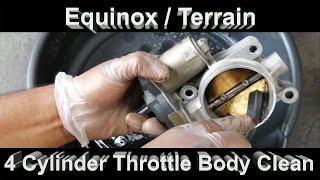
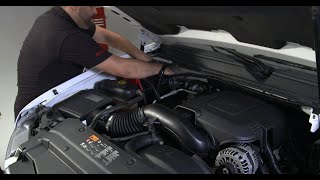
How to confirm: Remove the air intake hose connected to the throttle body. Visually inspect the inside of the throttle body 🎬 Watch: 2.4L Ecotec throttle body cleaning walkthrough and the edges of the metal throttle plate for a thick, black carbon ring. The buildup is often heaviest on the back side of the plate.
Typical fix: Clean the throttle body bore and plate with a dedicated throttle body cleaner and a soft cloth or toothbrush. A throttle relearn procedure is required after cleaning.
Est. part cost: $5-$15 - Failed Throttle Body Assembly 🟡 Medium Probability
How to confirm: If a thorough cleaning of the throttle body does not resolve the code, the internal components (motor or sensor) have likely failed. The sensors are integrated and not typically replaced separately. A professional scan tool can command the throttle to different angles to test its response, but if cleaning fails, replacement is the next logical step.
Typical fix: Replace the entire electronic throttle body assembly and the corresponding gasket. Perform a throttle relearn procedure after installation.
Est. part cost: $100-$250 - Wiring or Connector Issue ⚪ Low Probability
How to confirm: With the vehicle off, disconnect the electrical connector at the throttle body. Inspect the connector and the throttle body pins for corrosion, moisture, or damage. Check the wiring harness for any signs of chafing or breaks, especially where it might rub against other components.
Typical fix: Clean the connector pins with an electrical contact cleaner. Repair or replace any damaged wiring. Replace the connector pigtail if it is damaged.
Est. part cost: $10-$50
Diagnosis Steps
- Verify the code with an OBD-II scanner. Confirm that P1524 is present.
- Disconnect the negative battery terminal for safety.
- Remove the engine cover and the air intake duct that leads to the throttle body.
- Visually inspect the throttle body bore and plate for carbon buildup. Pay close attention to the edges where the plate seats at idle.
- If dirty, clean it thoroughly. For best results, remove the four bolts holding the throttle body to the intake manifold. Use a new gasket upon reassembly. Do not force the throttle plate open by hand; have a helper turn the ignition to 'ON' (engine off) and press the gas pedal to open it for cleaning if leaving it on the vehicle.
- Spray a dedicated throttle body cleaner on a microfiber rag or soft brush (not directly into the intake) and wipe all carbon deposits from the bore and both sides of the throttle plate.
- Reinstall the throttle body with a new gasket. Reconnect all hoses and the electrical connector.
- Reconnect the battery.
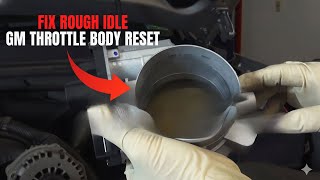
- Perform a throttle relearn procedure. This is a critical step. A common manual method is: Start the engine and let it idle in Park for 3 minutes. Turn the engine off for 60 seconds. Start the engine again and let it idle in Park for another 3 minutes. The idle should stabilize. 🎬 See: How to manually reset and relearn your GM throttle body
- If the code returns after cleaning, the throttle body assembly is likely faulty and should be replaced.
- If the problem persists after replacement, perform a detailed inspection of the wiring harness and connector leading to the throttle body for any breaks, corrosion, or loose pins.
Parts You'll Likely Need
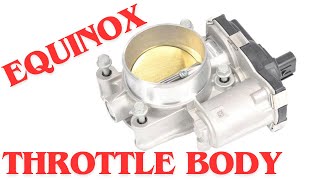
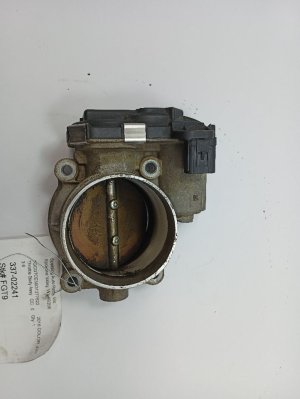
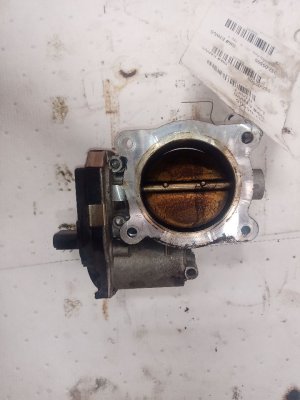
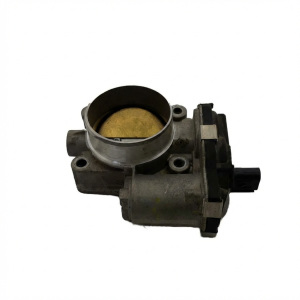
- Electronic Throttle Body Assembly
(OEM #12631186 (Note: This part may be superseded by 12694871))— This is the complete unit that fails if cleaning does not resolve the issue. It contains the integrated throttle position sensor and motor.
Trusted brands: ACDelco, Bosch, Hitachi
OEM price range: $150-$250
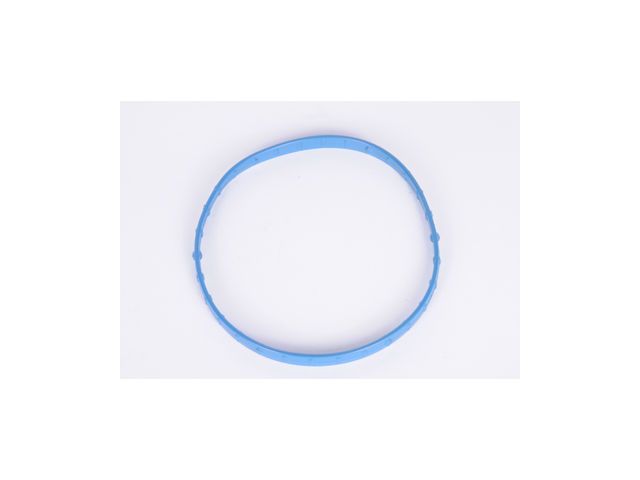
Aftermarket price range: $100-$180 - Throttle Body Gasket
(OEM #12620352)— A new gasket is required to prevent vacuum leaks whenever the throttle body is removed and reinstalled.
Trusted brands: ACDelco, Fel-Pro, Mahle
OEM price range: $10-$20
Aftermarket price range: $5-$15 - Throttle Body Cleaner — Required for the most common and least expensive repair attempt.
Trusted brands: CRC, Berryman, WD-40
Aftermarket price range: $5-$15
Related Codes That Often Appear With This One
- P1525 — P1525 means 'Throttle Body Service Required'. It is a companion code that is often set alongside P1524 to indicate a general fault with the throttle body system.
- P2101 — P2101 ('Throttle Actuator Control Motor Circuit Range/Performance') is another common code related to the throttle body. It often triggers 'Reduced Engine Power' mode and points to a failure of the throttle body's internal motor, frequently caused by the same carbon buildup that triggers P1524.
Platform-Specific Known Issues
- Owner Experience: Cleaning Solved the Problem: A YouTube user demonstrated cleaning the throttle body on a 2010 GMC Terrain to fix the 'Reduced Engine Power' message. After cleaning the heavy carbon buildup with a toothbrush and carburetor cleaner, the Check Engine Light turned off upon restart, resolving the issue without replacing parts. 🎬 Watch: Fixing reduced engine power with a throttle body clean
- Forum Discussion: Importance of Relearn Procedure: On the ScannerDanner forum, a user reported a high/unstable idle after cleaning the throttle body. Experts in the thread explained that this is a common outcome if a throttle body adaptation (relearn) is not performed, as the ECU is still using learned values for the old, dirty throttle body.
Mechanic-Grade Diagnostic Values
- Throttle Position Sensor (TPS) Voltage — expected: One sensor (TP1) should read approximately 0.5V at closed throttle and sweep smoothly to ~4.5V at wide-open throttle. A second sensor (TP2) will have a different or inverse voltage sweep for redundancy.. Failure: Voltage that is erratic, jumps, has dead spots when the throttle is slowly opened, or is stuck at a specific value.
- Throttle Actuator Control (TAC) Motor Resistance — expected: 2 to 15 Ohms when measured between the two motor control pins on the throttle body assembly.. Failure: A reading below 1 Ohm indicates a short circuit, while an infinite or OL (Over Limit) reading indicates an open circuit in the motor.
Scan Tool Commands That Help
- GDS2 / Tech2 (or high-end bidirectional scanner): Idle Learn Reset / Throttle Relearn — This function must be used after cleaning or replacing the throttle body. It resets the ECM's learned values for the closed throttle position and allows it to adapt to the clean or new part, preventing high or unstable idle.
- GDS2 / Tech2 (or high-end bidirectional scanner): Throttle Position Display / TAC Data — Use this to monitor the commanded vs. actual throttle position percentages and sensor voltages in real-time. This is critical for diagnosing intermittent issues or confirming if the ECM is processing the sensor data correctly, as a discrepancy between scan tool data and physical voltage measurements can indicate a faulty ECM.
Wiring & Ground Locations
- Throttle Body Connector Pin 2 — The main 6-pin electrical connector on the electronic throttle body assembly.. This pin, typically with a green wire, is the signal wire for Throttle Position Sensor 1 (TP1). Back-probing this pin to test for a smooth voltage sweep (0.5V-4.5V) is a key diagnostic step to isolate a fault between the throttle body itself, the wiring, or the ECM.
- G106 / G107 — G106 is located on the left rear of the engine block. G107 is on the lower left side of the engine block.. These are primary grounds for the Engine Control Module (ECM) and engine sensors. A loose or corroded ground at these locations can cause erratic sensor readings and phantom codes, including P1524.
- ECM Connector X1/X2 — The main connectors at the Engine Control Module, located in the engine compartment.. The throttle body wiring harness terminates here. Wires for TP Sensor 1, TP Sensor 2, and the TAC motor control circuits can be tested for continuity from this point back to the throttle body connector to rule out a wiring harness break.
Real Owner Repair Stories
- YouTube channel 'GMC Terrain DTC P2101' (2009 GMC Terrain 2.4L (Same platform/engine)) — Check Engine Light, traction control light, lack of power, engine would not rev past 2500 RPM. Codes P2101, P2119, P0121 were present.
❌ Tried (didn't work) Cleaning the throttle body., Replacing the throttle body with a new part.
✅ What actually fixed it The Engine Control Module (ECM) was faulty. A diagnostic check showed a steady 4.2V when back-probing the TP1 signal wire (indicating a bad sensor), but the scan tool reported fluctuating data. This discrepancy pointed to the ECM misinterpreting the signal. Replacing the ECM with a used, reprogrammed unit resolved all codes and symptoms.
OEM Part Supersession History
12631186 (For 2010-2011 models)→12694871— Part has been updated by the manufacturer. The new part number is the current service replacement.
Heads up: Part 12694871 also replaces previous numbers 12607362, 12616668, 19420133, and 19421514.12632101 (For 2012-2017 models)→12670834, 12669146— Part has been updated by the manufacturer. Multiple numbers may be applicable depending on the specific year and production date.
Heads up: It is critical to verify the correct part number by VIN for models from 2012 onward, as several different throttle bodies were used.
Model Year Variations Within This Range
- 2010-2011 vs. 2012-2017: The OEM part number for the electronic throttle body assembly is different. 2010-2011 models typically use part #12631186 (or its successor #12694871). Models from 2012-2017 use a different part, such as #12670834 or #12632101. Using the wrong part can lead to incompatibility issues. Always verify with a VIN.
Diagnostic Flowchart
Other Known Issues on This Vehicle
Issues unrelated to this code that are worth knowing about as an owner of this generation:
- Excessive Oil Consumption 🔴 High — Very common, especially in 2010-2013 models. Caused by poor piston ring design, leading to oil blow-by. Can cause low oil levels, engine damage, and catalytic converter failure. (Ref: Multiple TSBs and a Special Coverage Adjustment (#15285C, #16118, N192291100) were issued to address this by replacing pistons and rings on affected vehicles.)
- Timing Chain Stretch / Failure 🔴 High — Common issue, often starting with a rattling noise on cold starts around 65,000+ miles. Stretched chains, failing tensioners, and worn guides can lead to poor performance, engine codes, and catastrophic engine failure if the chain jumps timing.
- Clogged / Frozen PCV Orifice 🔴 High — Common in cold climates. The engine uses a fixed orifice in the intake manifold instead of a traditional PCV valve. This orifice can clog with sludge or freeze, causing excessive crankcase pressure that blows out the rear main seal, leading to a massive oil leak. (Ref: Special Coverage Adjustment #14882 addresses the plugged PCV orifice. TSB 19-NA-021 also details the issue.)
- High-Pressure Fuel Pump Failure 🟠 Medium → Shop Fuel Pump — Common on 2010-2011 models. The pump, driven by the camshaft, can fail internally, causing fuel to leak into the engine crankcase. This dilutes the engine oil, leading to poor lubrication, a rough running engine, and potential for severe engine damage. (Ref: Voluntary Emission Recall #43180 was issued to replace the high-pressure fuel pump on affected 2010-2011 models.)
- Catalytic Converter Failure 🟠 Medium — This is often a secondary failure caused by the excessive oil consumption issue. Unburned oil contaminates and clogs the catalytic converter, leading to reduced performance, and codes like P0420. (Ref: Indirectly related to oil consumption TSBs. TSBs like #0106 01 011L address the oil consumption that leads to this failure.)
Used vs. New Parts: Buying Guide for This Vehicle
When a used part is the smart pick: A used throttle body is a high-risk, budget-only option for a DIYer. The failure is often electronic or internal mechanical wear, which may not be visible. Given the labor involved and the required relearn procedure, a new part is strongly recommended to avoid doing the job twice.
Donor-vehicle mileage cap: roughly under 70000 miles for the part to have meaningful remaining life.
What to inspect on the donor part:
- Inspect connector pins for any signs of green or white corrosion.
- Check for physical damage to the housing or connector.
- Ask for the donor vehicle's VIN to verify mileage and check for accident history.
- Avoid parts from vehicles with known electrical issues or flood damage.
OEM-only on this vehicle (don't cheap out):
- While not strictly OEM-only, this is a part where quality is critical. Cheap, unbranded aftermarket units have a higher failure rate due to less robust internal electronics and motors.
Aftermarket brands forum-validated for this vehicle:
- Bosch is a well-regarded premium aftermarket brand that often serves as an OEM supplier and is considered a safe alternative to the dealer part.
- Hitachi
Brands owners have reported issues with on this vehicle:
- Unbranded, no-name throttle bodies sold on marketplace sites should be avoided, as their long-term reliability is questionable for this sensitive electronic component.
Real Owner Stories
Aggregated from forums and TSBs cited above. Mileages and costs reflect what owners reported in those sources.
2010 GMC Terrain 2.4L I-4
Symptoms: Check Engine Light and 'Reduced Engine Power' message on the dashboard.
What fixed it: Cleaning heavy carbon buildup from the throttle body using a toothbrush and cleaner.
Source hint: YouTube user experience cited in vehicle_specific_issues
2010 GMC Terrain 2.4L I-4 — ~95000 miles
Symptoms: Significant engine noise, oil consumption issues, and timing chain problems.
What fixed it: The source discusses these as known failures leading to engine noise before 100k miles, often requiring timing chain and piston ring service.
Source hint: BobIsTheOilGuy.com - Problems with GM 2.4 Ecotec Motors?
2014 GMC Terrain 2.4L I-4
Symptoms: Multiple engine codes present; mechanic recommended a full engine replacement.
What fixed it: Commenters suggested a methodical diagnosis of VVT solenoids and timing chains rather than full engine replacement.
Source hint: Reddit - r/MechanicAdvice: 2014 GMC Terrain throwing codes, mechanic told me to replace entire engine
Related OBD-II Codes
Frequently Asked Questions
Is there a specific GMC coverage adjustment for the oil consumption issues on my 2010-2013 Terrain?
My 2010 Terrain has a 'Reduced Engine Power' message and P1524. Do I need to replace the throttle body immediately?
What is the correct manual throttle relearn procedure for the 2010-2017 GMC Terrain after cleaning the throttle body?
My Terrain is experiencing a massive oil leak from the rear main seal in cold weather; is this related to the P1524 issue?
Why is my GMC Terrain idling roughly after I cleaned the throttle body to fix P1524?
Helpful Videos
Used OEM Parts in Stock
New Aftermarket Parts Available





The information in this article is provided for general reference and educational purposes only. Vehicle specifications, procedures, and part compatibility can vary by production date, trim level, and region. Always consult your vehicle's factory service manual and verify part numbers before purchasing or performing repairs. Safety-critical components such as airbags, seat belts, and braking systems should be installed by a qualified professional.
- GMC Terrain:
- 🧭 Diagnostic Flowchart
- 🎬 Helpful Videos
- 🛍️ Shop This Part
- What's Unique About the 2010-2017 GMC Terrain
- Symptoms You May Notice
- Most Likely Causes
- Diagnosis Steps
- Parts You'll Likely Need
- Related Codes That Often Appear With This One
- Platform-Specific Known Issues
- Mechanic-Grade Diagnostic Values
- Scan Tool Commands That Help
- Wiring & Ground Locations
- Real Owner Repair Stories
- OEM Part Supersession History
- Model Year Variations Within This Range
- Other Known Issues on This Vehicle
- Used vs. New Parts: Buying Guide for This Vehicle
- Real Owner Stories
- 2010 GMC Terrain 2.4L I-4
- 2010 GMC Terrain 2.4L I-4 — ~95000 miles
- 2014 GMC Terrain 2.4L I-4
- Related OBD-II Codes
- Frequently Asked Questions
- 🎟️ Get 5% Off