

P1524 on 2015-2017 Jeep Renegade: Oil Pressure and Camshaft Disabled Fixes
Code P1524 on a Jeep Renegade with the 2.4L engine almost always means the oil level is low or the wrong type/filter of oil was used. Before buying any parts, check your oil level and ensure you are using a quality, full-synthetic 0W-20 oil and an OEM-spec filter. This is often a no-cost or low-cost fix that resolves the issue.
- P1524 is a serious warning about your engine's oil pressure.
- The first and most important step is to check your engine oil level immediately.
- This code is extremely common on the 2.4L Renegade due to known oil consumption issues; always use full synthetic 0W-20 oil.
- Do not replace any expensive parts until you have confirmed the oil level, oil type, and filter quality are correct.
- If your vehicle consumes a lot of oil, ask your dealer about the XB1 warranty extension and an oil consumption test.
What's Unique About the 2015-2017 Jeep RENEGADE

This code is particularly common on the 2.4L Tigershark MultiAir engine found in the Renegade and its platform mates. This engine's unique MultiAir technology uses engine oil as hydraulic fluid to control the intake valves' lift and timing. Because of this design, the system is extremely sensitive to oil level, viscosity (thickness), and quality. Many owners experience this code simply because the engine has consumed oil between changes, a known issue with this platform, causing the level to drop too low for the MultiAir system to function correctly. If the vehicle sits for an extended period, oil can also drain from the MultiAir 'brick', causing a temporary loss of pressure on startup.
Diagnostic Flowchart

Tap your situation to follow the diagnostic path that matches what you're seeing on this vehicle.
Symptoms You May Notice
- Check Engine Light (MIL) is on
- Rough or unstable idle
- Poor acceleration and loss of power
- Engine may stall, especially at low speeds or when stopping
- Ticking noise from the top of the engine
- Vehicle may enter 'limp mode', limiting speed to around 40-45 mph
- Replacing camshaft or crankshaft sensors. This code is specifically about the oil pressure needed for the timing system, not the position sensors themselves.
- Immediately assuming the oil pump has failed. Due to the extreme prevalence of oil level and type issues, these must be ruled out first before condemning an expensive part like the oil pump.
Most Likely Causes

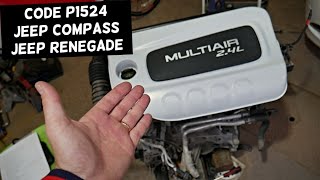
- Low Engine Oil Level 🔴 High Probability The 2.4L Tigershark engine is known for excessive oil consumption, which can cause the oil level to drop significantly between scheduled changes. Many owners report needing to add a quart of oil every 1,000-3,000 miles. A low level can cause the oil pump to momentarily suck in air during turns or on inclines, triggering the code. 🎬 Watch: A diagnostic overview of the P1524 code and oil issues.
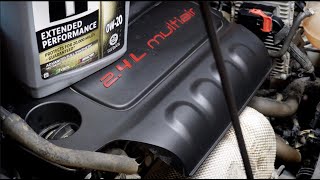
How to confirm: Park the vehicle on a level surface, wait at least 5 minutes after shutting off the engine, and check the oil level using the dipstick. Check more frequently than the manufacturer's recommended oil change interval.
Typical fix: Top off the oil to the 'FULL' mark using the correct specification (full-synthetic 0W-20). Reset the code and monitor the level closely.
Est. part cost: $10-$20 - Incorrect Oil Viscosity or Type 🔴 High Probability The MultiAir system requires 0W-20 oil meeting Chrysler's MS-6395 specification to maintain proper hydraulic pressure. Using a thicker oil (like 5W-20 or 5W-30) or a non-specified oil can prevent the oil from flowing correctly through the small passages of the MultiAir actuator, triggering this code.
How to confirm: Review service records or the oil cap to see what oil was last used. Many forum users report this code appearing after an oil change at a quick-lube shop that used the wrong oil weight. If unknown, an oil change is the best confirmation.
Typical fix: Perform an oil and filter change using a quality, full-synthetic 0W-20 oil that meets the MS-6395 spec.
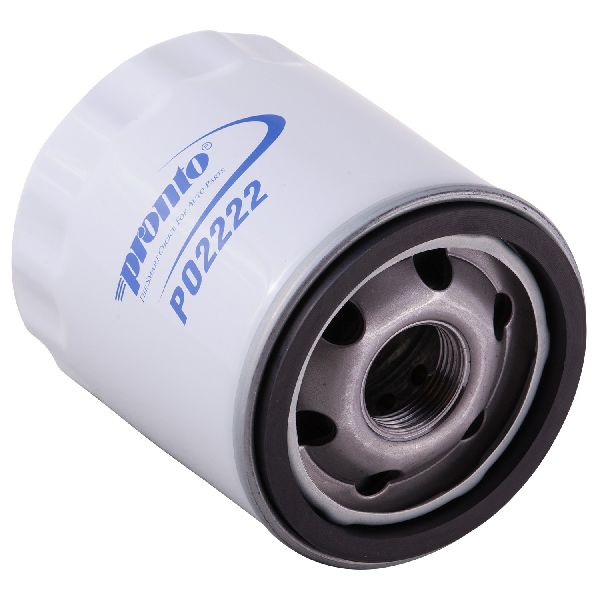
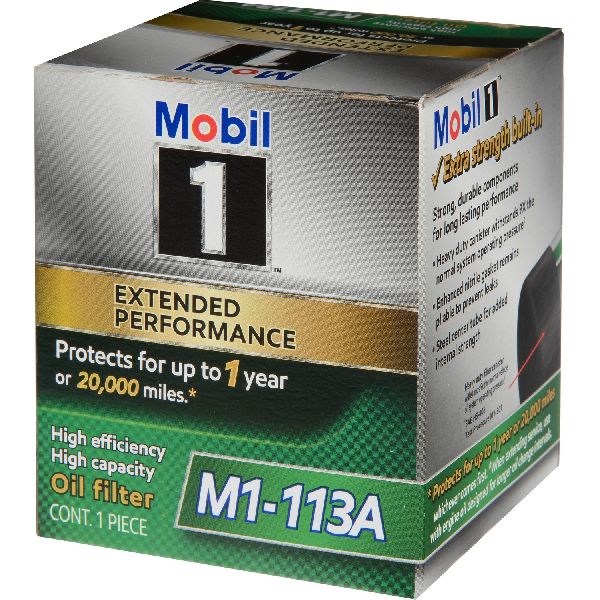
Est. part cost: $50-$90 - Clogged or Low-Quality Oil Filter 🟡 Medium Probability → Shop Engine Oil Filter Adapter A cheap or incorrect oil filter can have a faulty anti-drainback valve or poor flow characteristics, restricting oil pressure to the top of the engine. Several owners have fixed code P1524 simply by replacing a low-quality aftermarket filter (often installed by a third-party shop) with an OEM Mopar filter.
How to confirm: Inspect the brand and part number of the installed oil filter. If it's a no-name or incorrect part, replace it. A user on Reddit reported their oil pressure was stuck at 35 PSI with a 'Carguard' filter, which shot up to 60 PSI after switching to an OEM Mopar filter, clearing the code.
Typical fix: Replace the oil filter with a quality OEM (Mopar) or reputable aftermarket brand filter (Wix, Purolator) along with a proper oil change.
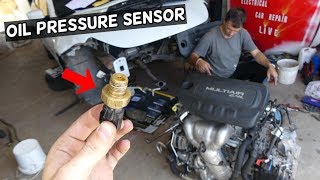
Est. part cost: $10-$25 - Faulty Oil Pressure Sensor ⚪ Low Probability The sensor provides the pressure reading to the PCM. It can fail, sending inaccurate data and causing the code to appear even if the pressure is normal. This is less common than oil level/type issues but is a known failure point.
How to confirm: Use a scan tool to monitor live oil pressure data. If the reading is erratic, stuck, or zero, test the sensor's circuit. A definitive test involves comparing the scan tool reading to a manual pressure gauge connected to the engine.
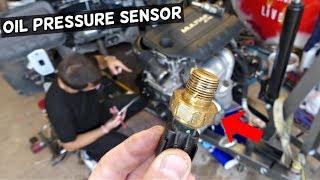
Typical fix: Replace the oil pressure sensor and its connector if corroded or damaged. The sensor is located on the engine block, near the oil filter housing. 🎬 Watch: How to locate and replace the oil pressure sensor.
Est. part cost: $30-$70
Rare But Worth Checking
- Failing Oil Pump: → Shop Engine Oil Pump If the oil level, type, filter, and sensor are all confirmed to be good, but a mechanical gauge shows genuinely low oil pressure across all RPMs, the oil pump itself may be failing. A recall was issued for a small number of 2017 Renegades for a cracked oil pump housing.
- Failing MultiAir Actuator ('Brick'): In rare cases, if oil pressure is confirmed to be good, the internal passages of the MultiAir actuator assembly (often called the 'brick') can become clogged or its solenoids can fail. This requires replacement of the entire unit, which is an expensive repair often costing over $2,000. This is a last resort after all other causes are ruled out.
Diagnosis Steps
- Check Engine Oil Level: This is the most critical first step. Ensure the vehicle is on level ground and the oil level is at the 'FULL' mark on the dipstick. Top off if necessary.
- Verify Oil Type and Filter: Confirm that the correct 0W-20 full-synthetic oil and a quality oil filter are being used. If in doubt, or if the service history is unknown, perform a full oil and filter change with OEM-spec products. This alone solves the problem for many owners.
- Scan for Live Data: Use an OBD-II scanner to monitor the engine oil pressure reading. See if the pressure reading is stable or fluctuates wildly. At a fully warmed-up idle, it should be above 10 PSI. At 3,000 RPM, it should increase to over 35-40 PSI. If it's stuck at a specific number or reads very low, suspect the sensor or a real pressure issue.
- Inspect Oil Pressure Sensor: Visually inspect the oil pressure sensor and its wiring harness for any signs of damage, oil leaks, or corrosion. The sensor is located on the engine block, accessible after removing the front passenger wheel and splash shield.
- Mechanical Oil Pressure Test: If the sensor reading is suspect, connect a mechanical oil pressure gauge to the engine to get a true reading. This will definitively confirm if you have a real pressure problem or just a faulty sensor.
- Check for TSBs: Ask a dealer if TSBs 18-043-21 or 18-042-21 apply to your VIN. A PCM software update may improve the logic for setting this code.
- Diagnose Oil Pump or MultiAir System: If mechanical pressure is genuinely low, further diagnosis of the oil pump is needed. If pressure is good, the issue may lie within the MultiAir actuator assembly ('brick').
Parts You'll Likely Need

- Engine Oil — The most common cause is low or incorrect oil. The 2.4L MultiAir engine requires full synthetic 0W-20 oil meeting Chrysler specification MS-6395.
Trusted brands: Mopar, Pennzoil Platinum, Valvoline SynPower
OEM price range: $50-$70
Aftermarket price range: $40-$60 - Oil Filter
(OEM #68191349AB)— A low-quality or clogged filter can restrict oil flow and cause this code. Using an OEM or equivalent quality filter is highly recommended and has solved the issue for many owners.
Trusted brands: Mopar, Wix, Purolator
OEM price range: $15-$25
Aftermarket price range: $8-$15 - Oil Pressure Sensor
(OEM #68252672AB (Verify by VIN))— If oil level and quality are correct, the sensor itself may have failed and is sending incorrect data to the computer.
Trusted brands: Mopar, Standard Motor Products (SMP)
OEM price range: $50-$80
Aftermarket price range: $30-$60 - MultiAir Actuator Assembly ('Brick')
(OEM #68289724AD (Verify by VIN))— In rare cases where oil pressure is verified as good, the actuator itself can fail internally, preventing proper valve operation.
Related Codes That Often Appear With This One
- P1523 — This code for 'VVA Low Oil Pressure' is a more direct indicator of low pressure in the Variable Valve Actuation (MultiAir) system and is often triggered alongside P1524.
- P1D7F — This code for 'ETC Self-Learning Failure' can appear with P1524 as part of a group of powertrain faults identified in a Technical Service Bulletin for a PCM update.
- P06DD — This code for 'Engine Oil Pressure Control Circuit Stuck Off' can appear with P1524, pointing more strongly towards a mechanical oil pressure issue, such as a failing dual-stage oil pump.
Technical Service Bulletins (TSBs) & Recalls
- TSB 18-043-21: Involves reprogramming the Powertrain Control Module (PCM) with updated software for 2017 models. It addresses a list of DTCs including P1524, P1D7F, and others to improve diagnostic logic and prevent false triggers.
- TSB 18-042-21: A similar PCM flash update for 2015-2016 models that also includes P1524 in its list of addressed codes, along with P1523 and P1D7F.
Platform-Specific Known Issues
- The 2.4L Tigershark MultiAir engine has a well-documented history of excessive oil consumption. This can cause the oil level to become critically low long before a scheduled oil change, triggering P1524. Owners have filed class-action lawsuits regarding this issue.
- A warranty extension (X81, formerly XB1) was issued by FCA for some vehicles to address the oil consumption problem. If an owner complains of high oil use, a dealer will perform a two-part oil consumption test. If the vehicle fails the test (typically by consuming more than 1 quart in 2,000 miles), the remedy may be a new engine long block, covered by the extended warranty.
Mechanic-Grade Diagnostic Values
- Engine Oil Pressure (Mechanical Gauge) — expected: Minimum 4 psi at curb idle; 25 - 80 psi at 3000 RPM.. Failure: Pressure below minimums, or zero pressure at idle. CAUTION: Do not run engine at 3000 RPM if pressure is zero at idle.
- Variable Camshaft Timing (VCT) Enablement Pressure — expected: Pressure must reach 42 psi to enable VCT, and must not drop below 31 psi to remain enabled.. Failure: If oil pressure cannot consistently stay above 31 PSI under load, the PCM will set P1524 and disable the system.
- Oil Pressure Sensor Circuit Voltage Test — expected: With ignition on/engine off, jumping the sensor ground (K900) and signal (G6) circuits should cause scan tool voltage to drop from ~4.5V to less than 0.5V.. Failure: Voltage does not drop, indicating an open or high resistance in the signal or ground circuit.
Scan Tool Commands That Help
- wiTECH or equivalent professional scanner: Live Data - Engine Oil Pressure — To monitor the oil pressure as reported by the sensor in real-time. This is the first step before performing a mechanical pressure test to see if the sensor's readings are logical.
- wiTECH: Powertrain Verification Test — This is a guided routine to be performed after a repair (like replacing a sensor or flashing a module) to confirm the fault is resolved and all systems are operating correctly.
- wiTECH: Reprogram TCM/ECM — Used to apply software updates as specified in Technical Service Bulletins (e.g., #1804321, #1804221). An update can fix logic errors that cause the code to be set improperly.
Wiring & Ground Locations
- Oil Pressure Sensor — On the back side of the 2.4L engine block, located directly underneath the water pump.. This is the primary sensor for this code. Its wiring is near the serpentine belt and can be damaged. The connector itself can also become loose or corroded, causing faulty readings.
- Oil Pressure Sensor Connector — A 3-wire, oval-shaped connector that plugs into the oil pressure sensor.. A poor connection here is a common point of failure. The connector has a red safety lock tab that must be disengaged before the connector can be removed. Inspecting the pins for corrosion or damage is a key diagnostic step.
- Sensor Circuits at PCM — At the Powertrain Control Module (PCM) C2 harness connector.. For advanced electrical diagnosis, you may need to test continuity from the sensor to the PCM. The key circuits are the (G6) Engine Oil Pressure Signal circuit and the (K900) Sensor Ground circuit.
Real Owner Repair Stories
- Reddit user, r/ram_trucks (Ram truck with similar engine architecture) — Check engine light with code P1524, oil pressure stuck at 35 PSI regardless of RPM.
❌ Tried (didn't work) Contemplated taking it to the dealer, assuming a complex issue.
✅ What actually fixed it Replaced a cheap aftermarket 'Carguard' oil filter with an OEM Mopar filter and performed an oil change. Oil pressure immediately rose to 55-60 PSI while driving and the code was resolved. - RamForum.com user (Ram truck, 102,000 miles) — P1524 code appeared. Oil pressure was low: 26 PSI at idle and 34 PSI on the highway.
❌ Tried (didn't work) The user had always used a specific brand (Wix) of aftermarket filters without issue, so the filter was not the initial suspect.
✅ What actually fixed it Despite having used a reputable aftermarket filter, simply swapping the oil filter fixed the low pressure problem and cleared the code. - YouTube video by channel 'Dan...' (2016 Ram 1500 5.7L Hemi) — P1524 code, rattling noise between 1500-2000 RPM.
❌ Tried (didn't work) Replaced the oil pressure sensor., Replaced the PCV valve.
✅ What actually fixed it The owner realized the problem started after switching to a different brand of oil and oil filter. Changing the oil and filter back to the brands used previously (Valvoline synthetic and a Mobil 1 filter) resolved the code.
"I Checked Everything" — The Actual Cause
- For code P1524, the equivalent of a 'smoke test clean' scenario is when a mechanical oil pressure gauge shows the pressure is perfectly within spec, yet the code keeps appearing. In this situation, the root cause is not the oil or the pump, but the information the PCM is receiving. This can be due to a failing oil pressure sensor that reads correctly sometimes but intermittently sends bad data, a corroded connector or damaged wire between the sensor and the PCM, or an overly sensitive fault logic within the PCM itself, which can often be corrected by a software update from the dealer as mentioned in TSBs #1804321 and #1804221.
When the Usual Fixes Don't Work
- The advanced repair stories found in Pass 3 do not contradict the advice from Pass 2, but rather strongly reinforce it. Multiple owners have replaced sensors and other parts unnecessarily, only to find that the actual, final fix was to perform a simple oil change using high-quality, OEM-spec oil and, most importantly, a quality OEM Mopar oil filter. One owner's pressure readings were stuck at a fixed value with a cheap aftermarket filter and immediately returned to normal after installing a Mopar filter. This serves as a strong counter-argument to immediately suspecting expensive components like the oil pump or MultiAir 'brick' before rigorously ruling out the basics.
OEM Part Supersession History
Varies→Varies— Part Variation
Heads up: There are at least two physically different oil pressure sensors used on 2.4L engines with the same electrical connector but different thread sizes. A technician reported receiving a replacement sensor that would not fit. It is critical to verify the correct part number by VIN or by physically matching the old part before purchasing a replacement to avoid this trap.
Model Year Variations Within This Range
- 2015-2017: While Jeep introduced new trim levels like the Altitude (2017) and features like the Beats audio system (2016), the core 2.4L MultiAir engine and its oiling system did not undergo significant changes that would alter the root causes of code P1524. The issue of oil sensitivity is consistent across this year range, as evidenced by TSBs that cover multiple model years.
Helpful Videos
We Have This Part in Stock


The information in this article is provided for general reference and educational purposes only. Vehicle specifications, procedures, and part compatibility can vary by production date, trim level, and region. Always consult your vehicle's factory service manual and verify part numbers before purchasing or performing repairs. Safety-critical components such as airbags, seat belts, and braking systems should be installed by a qualified professional.
- Jeep RENEGADE:
- 🧭 Diagnostic Flowchart
- 🎬 Helpful Videos
- 🛍️ Shop This Part
- What's Unique About the 2015-2017 Jeep RENEGADE
- Symptoms You May Notice
- Most Likely Causes
- Rare But Worth Checking
- Diagnosis Steps
- Parts You'll Likely Need
- Related Codes That Often Appear With This One
- Technical Service Bulletins (TSBs) & Recalls
- Platform-Specific Known Issues
- Mechanic-Grade Diagnostic Values
- Scan Tool Commands That Help
- Wiring & Ground Locations
- Real Owner Repair Stories
- "I Checked Everything" — The Actual Cause
- When the Usual Fixes Don't Work
- OEM Part Supersession History
- Model Year Variations Within This Range
- 🎟️ Get 5% Off