

OBD-II Code P1530: A Comprehensive Guide for Mechanics and DIYers
What P1530 means, why it triggers, and how to diagnose and fix it on your specific vehicle
- Verify your vehicle's specific P1530 definition before buying parts; it means an A/C clutch failure on Fords but a camshaft timing fault on Porsches and VWs.
- For camshaft-related P1530 codes, check your oil first; low or sludge-filled oil causes 30% of variable valve timing (VVT) actuator failures.
- Never replace a $500 A/C compressor without first testing the $15 A/C clutch relay and measuring the clutch coil resistance (target: 2-5 Ohms).
- Do not drive for more than 1-2 weeks with a camshaft-related P1530; the resulting misfires dump unburned fuel into the exhaust, destroying the catalytic converter and adding $1,500+ to your repair bill.
What Does P1530 Mean?
P1530 is a manufacturer-specific code with entirely different definitions based on your car's make. For European brands (Porsche, Audi, VW, BMW), it indicates a failure in the camshaft timing adjustment system. For American brands (Ford, GM), it points to an electrical fault in the air conditioning (A/C) compressor clutch circuit. For Hyundai, it flags a knock sensor malfunction.
Technical definition: The SAE designates P1xxx codes as manufacturer-specific. Common definitions include: Ford/Lincoln/Mercury: A/C Clutch Circuit Malfunction; Porsche/Audi/VW: Camshaft Position Actuator Circuit Short to Ground; GM/Chevrolet: Ignition Timing Adjustment Switch Circuit Fault; BMW: 'B' Camshaft Position Actuator Control Circuit Signal High; Hyundai: Knock Sensor Circuit Malfunction; Saab: Accelerator Pedal Position Sensor Circuit Fault.
Can I Drive With P1530?
Yes, But With Caution. Driving is possible but not recommended for extended periods. For A/C-related faults (Ford/GM), the only risk is a lack of air conditioning. For camshaft-related faults (Porsche/Audi/VW/BMW), continued driving causes rough idling, stalling, and engine 'limp mode' with reduced power. Ignoring a camshaft timing fault forces unburned fuel into the exhaust, destroying the catalytic converter—a secondary repair costing $800 to $2,500.
Common Causes
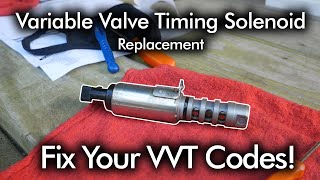
- Faulty Camshaft Position Actuator Solenoid (Porsche, Audi, VW, BMW) (Very Common) — This oil control solenoid is the most frequent failure point on European models. It sticks from disuse or fails electrically, preventing the engine computer from adjusting camshaft timing. 🎬 See how to replace a faulty VVT solenoid on Audi/VW.
- A/C Compressor Clutch Circuit Fault (Ford, GM, Peugeot) (Very Common) — The PCM detects an open or short circuit when attempting to engage the A/C compressor clutch. This is usually caused by a failed clutch coil, a bad relay, or a blown fuse.
- Low, Dirty, or Sludge-Filled Engine Oil (Camshaft-Related Makes) (Common) — The camshaft adjustment system is hydraulic. Low oil pressure, incorrect viscosity, or sludge blocking the fine mesh screens on the actuator immediately triggers timing faults.
- Wiring Harness Damage or Corrosion (All Makes) (Common) — Wires leading to the camshaft actuator or A/C clutch become frayed, melted by exhaust heat (common on Porsches), or shorted to ground.
- Faulty Knock Sensor (Hyundai) (Common) — On Hyundai models like the Terracan, the ECM fails to receive a baseline signal from the knock sensor at idle, triggering the code and limiting engine power.
- Failing PCV System (VW/Audi) (Less Common) — A failing Positive Crankcase Ventilation (PCV) valve creates a massive vacuum leak. The engine overcompensates, triggering camshaft adjustment faults.
- Mechanical Camshaft Actuator Failure (Rare) — The entire mechanical variable valve timing (VVT) phaser assembly fails internally. This requires specialized engine timing tools to replace.
Symptoms
- Check Engine Light is On — The Malfunction Indicator Lamp (MIL) illuminates immediately upon the PCM detecting the circuit fault.
- Rough Idle or Stalling (Camshaft-Related) — The engine idles erratically, vibrates heavily, hunts for RPMs, or stalls when coming to a stop.
- A/C System Not Blowing Cold Air (A/C-Related) — The air conditioning blows warm air because the compressor clutch fails to engage.
- Reduced Engine Performance or Limp Mode (Camshaft-Related) — The vehicle feels sluggish, lacks acceleration, or enters a protective 'limp mode' with severely limited power.
- Misfire Codes on One Engine Bank (Camshaft-Related) (scan-tool only — no driver-felt sign) — P1530 is frequently accompanied by misfire codes (P0301-P0306) on the affected engine bank due to incorrect valve timing.
Diagnostic Flowchart
Tap your situation to follow the diagnostic path that matches what you're seeing on this code.
Common Fixes & Costs
- Change Engine Oil and Filter (Camshaft-Related) — Parts: $40 - $100, Labor: $20 - $60, ~0.5 hr book time (DIY)
- Replace A/C Relay or Fuse (A/C-Related) — Parts: $10 - $35, Labor: $0 - $50, ~0.1 hr book time (DIY)
- Replace Camshaft Position Actuator Solenoid (Porsche, VW, Audi) — Parts: $200 - $450, Labor: $300 - $1,200, ~2.5-8.0 hr book time (Professional)
- Replace A/C Compressor Clutch or Assembly (Ford, GM) — Parts: $80 - $350, Labor: $200 - $400, ~1.5-2.5 hr book time (Intermediate)
- Repair Damaged Wiring or Connectors (All Makes) — Parts: $10 - $50, Labor: $120 - $300, ~1.0-2.0 hr book time (Intermediate)
Used vs. New Parts: Buying Guide
When a used part is worth it: Buy a used A/C compressor clutch for older, high-mileage domestic vehicles to save money. Never buy a used VVT solenoid; the labor cost to install it is too high to risk a premature failure.
Donor-vehicle mileage cap: roughly under 60000 miles for the part to have meaningful remaining life.
Donor quality checklist:
- Verify the part number matches exactly.
- For A/C parts, ensure the donor vehicle was not in a front-end collision.
- Ensure the clutch pulley spins freely without grinding.
Decision logic:
- If The part is a VVT solenoid on a European car. → Buy new OEM or a top-tier OE-supplier brand (INA, Hitachi). The labor cost is too high to risk a cheap part.
- If The part is an A/C clutch and the vehicle is over 10 years old. → A used or remanufactured part is an acceptable budget-friendly option.
- If The labor for the repair is more than 3x the cost of the new part. → Always buy new to avoid paying for the same labor twice.
Warranty tradeoff: Used parts offer a 30-day warranty for part replacement only (no labor). New OEM parts offer 1-year warranties and guarantee correct fitment.
Worst-case if a used part fails: 500-1800. This represents the cost of repeating the labor for a VVT solenoid replacement if the used part fails.
What Happens If You Wait — Timeline
- 0-4 weeks: For a camshaft fault, the Check Engine Light illuminates. A rough idle is noticeable on cold starts. The VVT solenoid sticks intermittently. (MPG impact: 0-5%% · Added cost: $0-50 in wasted fuel)
- 1-3 months: The rough idle becomes permanent. The vehicle feels sluggish during acceleration. Incorrect valve timing causes measurable fuel economy loss. (MPG impact: 5-10%% · Added cost: $50-150 in wasted fuel)
- 3-9 months: Engine stalling occurs. Constant incorrect valve timing dumps unburned fuel into the exhaust, overheating and damaging the catalytic converter substrate. (MPG impact: 10-20%% · Added cost: $800-2,500 (Catalytic converter replacement required))
- 9+ months: The catalytic converter melts internally, causing a severe exhaust restriction. The engine loses massive power and cannot accelerate past 40 mph. (MPG impact: 20-40%% · Added cost: $1,500-4,000+ (Full exhaust system replacement))
Cost of Not Fixing It
- Immediate (A/C Fault): No air conditioning. No risk of further engine damage. (Added cost: 0)
- 0-3 months (Camshaft Fault): Reduced fuel economy (5-15% drop), rough idle, stalling, and failed emissions tests. (Added cost: 50-200)
- 3-12 months (Camshaft Fault): Unburned fuel overheats the catalytic converter, causing the internal substrate to melt and clog the exhaust. (Added cost: 1200-2800)
- 12+ months (Camshaft Fault): Catastrophic catalytic converter failure causes severe loss of engine power and requires full exhaust replacement. (Added cost: 1500-4500)
Diagnosis Steps
- Identify Your Vehicle's P1530 Definition
Search your car's make, model, year, and 'P1530' to confirm the definition. Diagnosis splits entirely based on whether it is an A/C or camshaft fault.
Tools: OBD-II Scanner, Internet Access (Beginner) - Path B (Camshaft): Check Engine Oil Level and Condition
Pull the dipstick. Low, old, or sludgy oil causes hydraulic VVT systems to fail. If the oil is dark, gritty, or below the minimum line, perform an oil change before replacing any parts.
Tools: Dipstick, Paper Towel (Beginner) - Path A (A/C Clutch): Visual Inspection & Relay Swap
Check the under-hood fuse box for blown A/C fuses. Swap the A/C clutch relay with an identical non-essential relay (like the horn). If the A/C engages, replace the bad relay.
Tools: Flashlight, Owner's Manual (Beginner) - [PRO TIP] Path B (Camshaft): Swap Solenoids Between Banks
If your V6/V8 engine has two identical camshaft solenoids, swap them. Clear the codes and drive. If the fault moves to the other bank (e.g., P1530 becomes P1531), the solenoid is definitively dead.
Tools: Basic Hand Tools (Intermediate) - Path A (A/C Clutch): Test Clutch Circuit Voltage
Disconnect the A/C clutch connector. Set a multimeter to DC Volts. With the engine running and A/C on, check for 12V+ at the harness. No voltage means an upstream wiring or PCM issue. 12V present means a bad clutch coil.
Tools: Multimeter (Intermediate) - Path B (Camshaft): Test Solenoid Resistance and Function
Set a multimeter to Ohms (Ω). A healthy Porsche/Audi solenoid reads 10-15 Ohms. Next, apply 12V directly to the solenoid pins. A sharp 'click' means it works; a faint click or silence means it is mechanically stuck.
Tools: Multimeter, 12V Power Source (Intermediate) - Path A (A/C Clutch): Test Clutch Coil Resistance
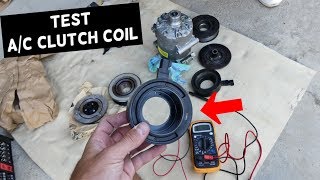
Measure resistance across the two pins on the A/C compressor clutch. A healthy coil reads 2-5 Ohms. 'OL' (Over Limit) confirms an open circuit requiring coil replacement.
Tools: Multimeter (Intermediate) - Path B (Camshaft): Advanced Scan Tool Activation
Use a bidirectional scan tool (like Durametric or VCDS) to command the solenoid on while monitoring camshaft deviation ('specified' vs 'actual' angle). A deviation exceeding +/- 5 degrees confirms a mechanical failure.
Tools: Advanced Bi-Directional Scan Tool (Advanced) - Path A (A/C Clutch): Check Air Gap
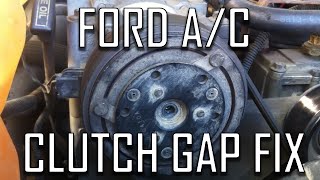
Measure the gap between the A/C clutch plate and pulley. The Ford specification is typically 0.014-0.033 inches (0.36-0.84 mm). If too wide, the electromagnet cannot engage the clutch. Remove a shim to fix.
Tools: Feeler Gauge (Advanced)
When This Code Triggers (Freeze-Frame Conditions)
- Engine Coolant Temp: 180-210°F (82-99°C) (The engine must reach full operating temperature for the camshaft actuator monitor to run.)
- Engine Load: 20-50% (Occurs under light to moderate load when the ECU actively commands camshaft timing adjustments.)
- Vehicle Speed: 40-65 mph (65-105 kph) (Typically triggers during steady-state cruising, not during heavy acceleration.)
Related Codes
- P1340 — On Porsches, this code ('Timing Chain Out of Position') confirms the P1530 electrical fault has resulted in physical mechanical timing failure.
- P0010 / P0011 / P0012 — These are the generic OBD-II equivalents. P0010 is an electrical circuit fault, while P0011 (Over-Advanced) and P0012 (Over-Retarded) indicate mechanical VVT performance issues.
- P1531 — On V6/V8 engines, P1530 and P1531 refer to the exact same camshaft fault on opposite engine banks (Bank 1 vs. Bank 2). Swapping solenoids between banks is the best diagnostic test.
- P1313 / P1314 / P1315 — These are cylinder-specific misfire codes. They appear alongside P1530 because incorrect camshaft timing prevents complete combustion in those cylinders.
Climate & Environmental Factors
- Long-Term Storage: For camshaft faults, months of disuse (like winter storage) causes the actuator solenoid to stick. Upon startup, it fails to move freely, triggering the code.
- High Engine Heat: Wiring harnesses near exhaust components (especially on Porsches) become brittle and crack due to prolonged heat exposure, causing electrical shorts.
- Oil Contamination: Dirty oil or metal particles clog the fine mesh screens in VVT solenoids, restricting hydraulic pressure and causing immediate timing deviation codes.
How to Talk to a Mechanic About This Code
Say this: "I have a P1530 code. If it's an A/C issue, please test the clutch coil resistance and check for voltage at the connector before quoting a full compressor replacement. If it's a camshaft issue, please test the solenoid's resistance and command its activation with a scan tool before quoting a full actuator replacement."
This directs the mechanic to perform targeted electrical diagnostics, preventing them from immediately upselling you a $1,000 compressor or VVT phaser assembly when a $50 relay or wiring repair is all that is needed.
Avoid saying:
- 'My check engine light is on, can you just fix it?'
- 'I have a P1530, just replace the part.'
- 'Whatever you think is best.'
Questions to ask before authorizing the repair:
- Can you show me the multimeter resistance reading for the failed coil or solenoid?
- For a camshaft fault, did swapping the solenoids make the code move to the other bank?
- For an A/C fault, did you measure the clutch air gap?
- Is this an OEM part or an aftermarket part, and what brand is it?
Where to Take It: Dealer vs Independent vs Chain
- Dealer:
Recommended only for complex camshaft faults on European cars if a trusted independent specialist isn't available.
Best for: Vehicles under warranty., Complex camshaft faults on German brands requiring specialized software (PIWIS, ISTA)., Known software glitches, like the Porsche Cayenne PCCM+ radio issue.
Downsides: Highest labor rates., Will default to replacing the entire A/C compressor instead of just the clutch coil. (Typical cost: +50% vs. baseline) - Independent Shop:
Best overall fit. Use a general indie for A/C faults, and a brand-specific specialist for camshaft faults.
Best for: A/C-related faults on common domestic vehicles., Out-of-warranty vehicles where cost is a factor., Shops specializing in your specific European brand for camshaft faults.
Downsides: A general mechanic lacks the specific timing tools required for a Porsche or BMW VVT repair. (Typical cost: +0% vs. baseline) - Chain Shop:
AVOID. Do not use chain shops for diagnosing or repairing A/C or camshaft-related P1530 codes.
Best for: Simple oil changes to rule out dirty oil as the cause of a VVT fault.
Downsides: Technicians lack the training for complex electrical or engine-specific diagnostics., High pressure to upsell unnecessary fluid flushes. (Typical cost: -10% vs. baseline)
When to Walk Away From the Repair
If the estimated repair cost exceeds 40-50% of your car's private-party market value, pause and consider selling the vehicle.
- Car worth $5000, fix is $400: Fix it. The vehicle is a 2005 Ford F-150 with an A/C clutch fault. The repair cost is only 8% of the car's value.
- Car worth $12000, fix is $1500: Fix it. The vehicle is a 2002 Porsche 911 with a camshaft actuator fault. The repair cost is 12% of the car's value, which is standard maintenance for this tier of vehicle.
- Car worth $2500, fix is $1800: Walk away. The repair cost is 72% of the car's value. It is not economically sensible to proceed.
What Scan Tool You Need for This Code
Minimum: A basic OBD-II code reader to confirm the P1530 code and a multimeter to perform electrical resistance tests.
For camshaft faults, a basic scanner cannot perform bidirectional control to command the solenoid to activate. This active test is crucial for confirming if the solenoid is mechanically stuck.
Budget: BlueDriver Pro / Basic Autel (~$100) — Reads and clears codes and graphs live sensor data. Sufficient for the A/C version of the fault when paired with a multimeter.
Mid-range: Foxwell NT510 Elite / NT530 (~$160) — Provides full bidirectional control to actively command the camshaft solenoid or A/C clutch. This is the minimum recommended tool for DIY camshaft diagnosis.
Professional: Durametric (Porsche) / VCDS (VW/Audi) (~$500-1200) — Offers full OEM-level diagnostic functions, including coding and adaptations. These are the gold standards for European vehicles.
Rent vs buy: Rent a basic scanner from AutoZone's 'Loan-A-Tool' program if you only need to read the code. Buy a mid-range bidirectional scanner if you are diagnosing a camshaft fault.
How to Clear the Code After You Fix It
- Use an OBD-II scan tool to clear the Diagnostic Trouble Code (DTC).
- Ensure the fuel tank is between 15% and 85% full.
- Perform a complete drive cycle to allow all readiness monitors to run.
Drive cycle (~20 minutes): Start with a cold engine. Idle for 3 minutes with the A/C and rear defrost on. Drive for 5 minutes at a steady 55 mph. Coast down to 20 mph without touching the brakes. Accelerate back to 55 mph and hold for 3 minutes.
Readiness monitors affected: Catalyst (CAT) Monitor, Comprehensive Component Monitor (CCM), Misfire Monitor
Before emissions retest: drive at least 50 miles to fully set monitors.
Watch out for:
- Disconnecting the battery clears the code but resets all readiness monitors, guaranteeing an automatic emissions test failure.
- The catalyst monitor requires multiple drive cycles to complete if the catalytic converter was stressed by the fault.
Will This Fail Emissions / State Inspection?
Yes — this code typically fails an OBD-II emissions inspection.
- California: An active P1530 code is an automatic failure. After repair, you must complete a drive cycle to set all readiness monitors before re-testing.
- New York: An illuminated Check Engine Light from a P1530 code causes an immediate failure of the OBD-II emissions inspection.
- Texas: In the 17 counties requiring emissions testing, an active P1530 code causes an automatic failure.
Most Commonly Affected Vehicles
- Porsche Boxster / 911 (986, 996, 997) (1997-2008) — Extremely common code for a failing VarioCam actuator solenoid (Part #99610530307).
- Ford F-150 / Explorer / Crown Victoria (1997-2008) — Indicates an open or short in the A/C compressor clutch circuit. The relay is usually in the under-hood fuse box.
- Audi / Volkswagen A4 / A6 / Passat (2.8L V6, 1.8T) (1998-2005) — Caused by a short to ground in the camshaft actuator circuit or oil sludge clogging the tensioner screen.
- Chevrolet / GMC Cruze / Aveo / Silverado (2000-2015) — Relates to the Ignition Timing Adjustment Switch Circuit, causing poor performance when the switch grounds out.
- BMW 3-Series / 5-Series (w/ VANOS) (2000-2010) — Points to a high signal in the 'B' Camshaft Position Actuator (VANOS) control circuit due to a faulty solenoid or dirty oil.
- Hyundai Terracan (2001-2007) — Indicates a knock sensor circuit fault, limiting engine power to 75%.
- Saab 9-3 / 9-5 (2003-2011) — Points to the accelerator pedal position sensors. Triggers limp mode if sensor voltages do not sum to 5V.
Manufacturer-Specific Notes
- Porsche: The Bank 1 actuator solenoid (Cylinders 1-3) is notoriously difficult to access. While official manuals suggest dropping the engine, experienced independent specialists can perform the replacement in 4-8 hours with the engine in the car.
- Ford: Mechanics frequently quote a full $800 A/C compressor replacement when only the $100 clutch coil has failed. Always demand a coil resistance test before authorizing a full compressor swap.
- Audi/VW: Oil sludge clogs the tiny screen on the camshaft adjuster tensioner. Before replacing the $700 tensioner assembly, remove and clean the screen with compressed air—this often permanently fixes the code.
- Saab: On the 9-3 and 9-5, P1530 has nothing to do with the engine. It points to the accelerator pedal position sensors. If the two sensor voltages do not equal exactly 5V, the car enters limp mode.
Real Owner Stories
1999 Porsche 911 C2 with rough idle after sitting
After sitting during a storm, the engine idled terribly but ran fine above 1,000 RPM. The Check Engine Light showed P1530 and P1340 (Timing chain out of position).
What they tried:
- Replaced all coils and plugs, but the code returned immediately.
- Measured the Bank 1 camshaft solenoid resistance at 14.1 Ohms (normal range).
- Tested the solenoid with a 12V battery and heard only a faint click, with no change in idle.
Outcome: The faint click proved the solenoid was mechanically stuck despite passing the electrical resistance test. The owner paid an independent specialist $1,200 for a solenoid replacement.
Lesson: A solenoid passing a resistance test can still be mechanically dead. An audible 'click' test or active scan tool command is mandatory before ruling out the solenoid.
2014 Ford F-150 with no A/C
The A/C stopped blowing cold air. The compressor clutch was not engaging, and the scanner showed an A/C clutch circuit fault.
What they tried:
- Verified refrigerant level was full.
- Swapped the A/C relay with the horn relay; no change.
- Checked the 10A A/C fuse; it was intact.
Outcome: Using a multimeter, the owner found 12V at the compressor clutch connector, proving the wiring and PCM were fine. The clutch coil itself had an 'OL' resistance reading. Replacing the $110 clutch assembly fixed the issue.
Lesson: Always trace the voltage. If 12V reaches the compressor but the clutch doesn't engage, the clutch coil is the culprit.
How to Prevent This Code From Triggering
- Use high-quality synthetic engine oil meeting exact manufacturer specifications. (Every oil change) — VVT systems are highly sensitive to oil viscosity. Synthetic oil resists sludge formation, keeping the fine mesh screens in the VVT solenoids clear.
- Shorten oil change intervals for severe driving conditions. (Every 5,000 miles) — Frequent short trips and stop-and-go driving break down oil rapidly. Fresh oil removes contaminants before they destroy VVT actuators.
- Periodically cycle the A/C system during winter months. (Monthly) — Running the air conditioner circulates refrigerant lubricant, preventing the compressor clutch components from seizing due to disuse.
Frequently Asked Questions
What does P1530 mean on my Chevy Cruze or GMC truck?
On GM vehicles, P1530 indicates an Ignition Timing Adjustment Switch Circuit fault. The PCM detected the timing adjustment switch was grounded for more than 5 seconds, impacting engine performance.
What are the most common misdiagnoses for a Porsche P1530?
Mechanics often mistakenly replace spark plugs and coil packs to fix the rough idle. The root cause is the camshaft actuator; replacing ignition parts will not clear the code.
Can I just clear the P1530 code and keep driving?
Clearing the code will not fix the mechanical issue, and the light will return immediately. Driving with a camshaft-related P1530 dumps raw fuel into the exhaust, destroying your catalytic converter.
Why is the repair so expensive for a Porsche P1530?
The high cost is entirely labor-driven. The camshaft actuator is buried against the firewall, requiring 4 to 8 hours of labor by a specialized technician.
My A/C stopped working and I got code P1530. Are they related?
Yes. On Ford, GM, and Peugeot vehicles, P1530 specifically means the engine computer detected an electrical break in the A/C compressor clutch circuit.
Can a simple oil change really fix a P1530 code?
Yes, if the code relates to camshaft timing (BMW, Porsche, VW). The VVT system relies on clean oil at high pressure. Old, sludgy oil causes the actuator to stick, making an oil change the smartest first diagnostic step.
My scanner shows P1530 but my friend's shows P1531 on the same car. Why?
P1530 and P1531 refer to the same camshaft fault on different engine banks (Bank 1 vs. Bank 2). Generic scanners sometimes misinterpret the specific bank.
I installed a new radio in my Porsche Cayenne and now I have a P1530 code. What happened?
Installing a Porsche Classic Communication Management Plus (PCCM+) unit causes a known CAN-bus communication glitch that falsely triggers P1530. A dealer must perform a software update to fix it.
Key Takeaways
- Verify your vehicle's specific P1530 definition before buying parts; it means an A/C clutch failure on Fords but a camshaft timing fault on Porsches and VWs.
- For camshaft-related P1530 codes, check your oil first; low or sludge-filled oil causes 30% of variable valve timing (VVT) actuator failures.
- Never replace a $500 A/C compressor without first testing the $15 A/C clutch relay and measuring the clutch coil resistance (target: 2-5 Ohms).
- Do not drive for more than 1-2 weeks with a camshaft-related P1530; the resulting misfires dump unburned fuel into the exhaust, destroying the catalytic converter and adding $1,500+ to your repair bill.
Helpful Videos
Shop the Parts Behind P1530
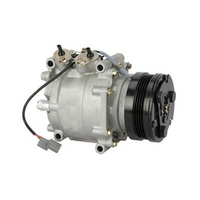
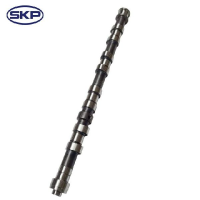
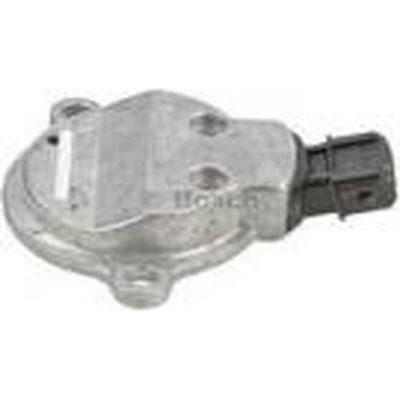
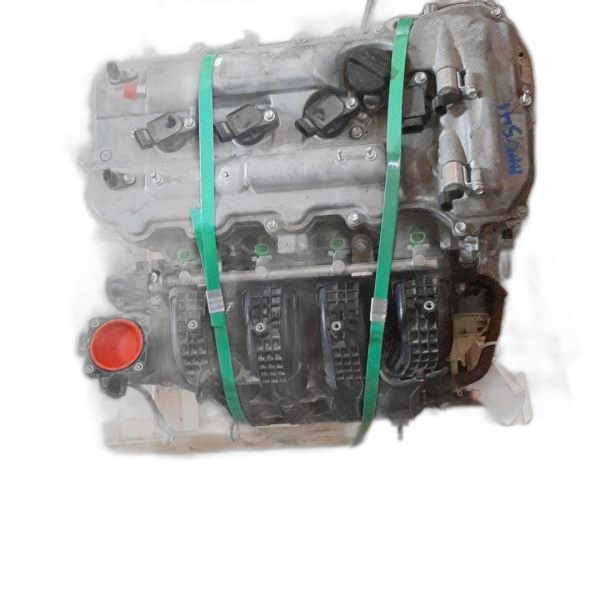
Below are the parts most often responsible for code P1530, ranked by how frequently each one is the actual culprit (per the diagnosis above). Tap any to see what we have for your vehicle.




The information in this article is provided for general reference and educational purposes only. Vehicle specifications, procedures, and part compatibility can vary by production date, trim level, and region. Always consult your vehicle's factory service manual and verify part numbers before purchasing or performing repairs. Safety-critical components such as airbags, seat belts, and braking systems should be installed by a qualified professional.
- 🧭 Diagnostic Flowchart
- 🎬 Helpful Videos
- 🛍️ Shop This Part
- What Does P1530 Mean?
- Can I Drive With P1530?
- Common Causes
- Symptoms
- Common Fixes & Costs
- Used vs. New Parts: Buying Guide
- What Happens If You Wait — Timeline
- Cost of Not Fixing It
- Diagnosis Steps
- When This Code Triggers (Freeze-Frame Conditions)
- Related Codes
- Climate & Environmental Factors
- How to Talk to a Mechanic About This Code
- Where to Take It: Dealer vs Independent vs Chain
- When to Walk Away From the Repair
- What Scan Tool You Need for This Code
- How to Clear the Code After You Fix It
- Will This Fail Emissions / State Inspection?
- Most Commonly Affected Vehicles
- Manufacturer-Specific Notes
- Real Owner Stories
- 1999 Porsche 911 C2 with rough idle after sitting
- 2014 Ford F-150 with no A/C
- How to Prevent This Code From Triggering
- Frequently Asked Questions
- What does P1530 mean on my Chevy Cruze or GMC truck?
- What are the most common misdiagnoses for a Porsche P1530?
- Can I just clear the P1530 code and keep driving?
- Why is the repair so expensive for a Porsche P1530?
- My A/C stopped working and I got code P1530. Are they related?
- Can a simple oil change really fix a P1530 code?
- My scanner shows P1530 but my friend's shows P1531 on the same car. Why?
- I installed a new radio in my Porsche Cayenne and now I have a P1530 code. What happened?
- Key Takeaways
- 🎟️ Get 5% Off