

OBD-II Code P1538: Intake Manifold Runner Control Stuck Open & Other Meanings
The Ultimate Guide: What P1538 means, why it triggers, and exactly how to fix it on your vehicle.
- Verify your vehicle's specific P1538 definition first, as it means 'Intake Manifold Runner Control Stuck Open' on Fords and BMWs, but indicates an A/C circuit fault on Chevrolets.
- Inspect the vacuum hoses behind the battery and the plastic linkage clips at the rear of the intake manifold, as these $10-$30 parts cause 80% of P1538 codes on Ford V6 engines.
- Expect a 10-20% drop in fuel economy and sluggish low-speed acceleration because the engine's air-fuel mixture is severely imbalanced.
- Test the IMRC actuator with a $20 hand-held vacuum pump before authorizing a $1,000+ intake manifold replacement.
- Fix this code within 1 to 2 months to prevent unmetered air leaks from overheating and destroying your $1,500 catalytic converter.
What Does P1538 Mean?
P1538 is a manufacturer-specific diagnostic trouble code (DTC). For Ford, Lincoln, Mercury, and BMW vehicles, it signifies the Intake Manifold Runner Control (IMRC) system for engine bank 2 is stuck open. The IMRC uses butterfly valves to alter air passage length, optimizing low-speed torque with long runners and high-speed horsepower with short runners.
Technical definition: The Powertrain Control Module (PCM) commanded the IMRC flaps to close (their default state at idle and low RPM), but the monitoring sensor or switch reported they remained in the open position.
Can I Drive With P1538?
Yes, But With Caution. You can drive with this code, but do not exceed a few weeks. Your engine will have noticeably reduced power at low speeds, worse gas mileage, and stalls when coming to a stop. Continuing to drive for hundreds of miles strains engine components and destroys the catalytic converter from an imbalanced air-fuel mixture, a repair costing $800 to $2,500. Get the vehicle inspected soon to pass emissions and prevent further damage.
Common Causes
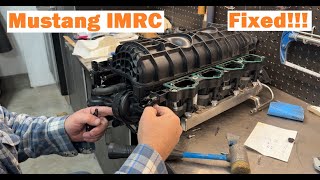
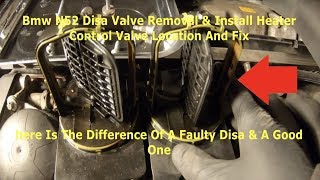
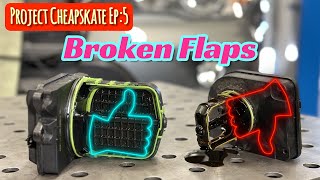
- Broken or disconnected IMRC linkage bushings/clips (Very Common) — Small plastic bushings connecting the actuator rod to the intake flaps become brittle and break. This disconnects the actuator from the flaps, a frequent and overlooked failure point. 🎬 Watch: Full service guide for replacing IMRC motors and bushings.
- Cracked, disconnected, or leaking vacuum lines (Very Common) — Small rubber hoses crack, become brittle, or suffer battery acid damage, creating a vacuum leak that prevents the actuator from moving. This is the primary cause on Ford V6 engines.
- Failed IMRC actuator or solenoid (Common) — The vacuum diaphragm or electric motor (actuator) fails. Alternatively, the electronic solenoid controlling vacuum flow burns out or sticks, disabling the system. 🎬 See how to test your intake manifold solenoid with a multimeter.
- Carbon buildup on intake runner flaps (Common) — Carbon deposits from the EGR and PCV systems accumulate inside the intake manifold, causing the runner control flaps to physically bind and stick.
- Damaged IMRC wiring harness (Less Common) — Electrical wires leading to the IMRC solenoids or position sensor chafe, melt, or corrode, resulting in a short or open circuit.
- Faulty IMRC position sensor/potentiometer (Rare) — The sensor reporting flap position to the computer fails, sending an incorrect 'open' signal even if flaps are closed. This is a known issue on BMW models.
- Leaking intake manifold gaskets (Rare) — A significant vacuum leak from the intake manifold gaskets affects the vacuum supply to the IMRC system, contributing to this code.
- Failed Powertrain Control Module (PCM) (Very Rare) — The driver circuit within the engine computer controlling the IMRC solenoid fails. Consider this only after exhaustively testing all other components.
Symptoms
- Reduced engine power and sluggish acceleration — With intake runners stuck open, the engine loses low-end torque, making the vehicle feel slow and unresponsive from a stop.
- Poor fuel economy — The incorrect air path length disrupts the ideal air-fuel mixture, causing the engine to consume significantly more fuel.
- Rough idle or stalling — Incorrect airflow volume at low speeds destabilizes the air-fuel mixture, leading to a rough idle or stalling when coming to a stop.
- Audible vacuum hiss or 'sucking' sound — A significant vacuum leak from a broken IMRC hose creates a distinct hissing noise near the back of the intake manifold or behind the battery.
- Check Engine Light is on (also visible on scanner) — The vehicle's computer illuminates the check engine light (CEL) immediately upon detecting the IMRC is not in the commanded position.
- Failed emissions test (also visible on scanner) — A P1538 code causes an automatic failure of an OBD-II emissions test and increases harmful tailpipe emissions.
Diagnostic Flowchart
Tap your situation to follow the diagnostic path that matches what you're seeing on this code.
Common Fixes & Costs
- Replacing broken IMRC linkage bushings/clips — Parts: $5-$20, Labor: $100-$300, ~1.5 hr book time (DIY)
- Repairing or replacing vacuum lines — Parts: $5-$30, Labor: $75-$175, ~0.8 hr book time (DIY)
- Replacing the IMRC control solenoid — Parts: $40-$160, Labor: $150-$250, ~1.2 hr book time (Intermediate)
- Replacing the IMRC actuator(s) — Parts: $75-$250, Labor: $300-$600, ~2.5 hr book time (Professional)
- Cleaning or replacing the intake manifold — Parts: $20-$400, Labor: $400-$800, ~4.5 hr book time (Professional)
Used vs. New Parts: Buying Guide
When a used part is worth it: For complex, expensive components like an entire intake manifold assembly, a used part from a low-mileage vehicle offers significant savings.
Donor-vehicle mileage cap: roughly under 70000 miles for the part to have meaningful remaining life.
Donor quality checklist:
- Verify the donor vehicle was not scrapped due to engine failure or overheating.
- Inspect plastic components for hairline cracks or heat discoloration.
- Ensure all mounting points and vacuum nipples are intact.
- Match part numbers exactly.
Decision logic:
- If The failed part is a small component like a vacuum hose or linkage clip. → Always buy new. Cost savings are negligible, and new parts ensure reliability.
- If The failed part is an electronic solenoid or a BMW DISA valve. → Favor new OEM or high-quality aftermarket. These parts have a finite lifespan.
- If The entire intake manifold is required and the vehicle is over 10 years old. → A used part is a reasonable choice if budget is a primary concern.
Warranty tradeoff: Used parts from a salvage yard typically come with a 30-90 day 'parts only' warranty. New aftermarket parts carry a 1-year to lifetime warranty, while new OEM parts offer the best guarantee.
Worst-case if a used part fails: $500-$1000 if a used intake manifold fails after installation, requiring repeat labor.
What Happens If You Wait — Timeline
- 0-1 month: Check Engine Light illuminates. The driver notices slight hesitation accelerating from a stop and an uneven cold idle. (MPG impact: 3-8%% · Added cost: $10-$40 in wasted fuel.)
- 1-4 months: Low-speed power loss becomes severe. Fuel economy worsens significantly. The engine stalls intermittently when stopping. Lean codes (P0171/P0174) appear. (MPG impact: 8-15%% · Added cost: $50-$150 in wasted fuel and diagnostic fees.)
- 4-12 months: The imbalanced air-fuel mixture stresses components. Spark plugs foul, and the catalytic converter overheats, reducing its lifespan. (MPG impact: 10-20%% · Added cost: $200-$500 for new spark plugs and ongoing fuel waste.)
- 12+ months: The catalytic converter melts down or clogs. On BMWs, the DISA valve disintegrates, sending debris into the engine and causing catastrophic internal damage. (MPG impact: 15-25%% · Added cost: $800-$3,500+ for catalytic converter replacement or major engine repair.)
Cost of Not Fixing It
- 0-1 month: Noticeable drop in fuel economy (5-15%) and poor low-speed acceleration. (Added cost: $20-$60 in extra fuel costs.)
- 1-6 months: The imbalanced air-fuel mixture overheats the catalytic converter and causes carbon fouling on spark plugs. (Added cost: $100-$300 for spark plug replacement, plus ongoing fuel costs.)
- 6+ months: Catastrophic failure of the catalytic converter. On BMWs, the DISA valve pin breaks and is ingested by the engine, causing severe internal damage. (Added cost: $800-$2,500 for catalytic converter replacement. $3,000+ for engine repairs.)
Diagnosis Steps
- Verify Code Definition and Check for TSBs
Confirm the exact meaning of P1538 for your vehicle's make and year. A P1538 on a Ford is an intake issue, while on a Chevy it's an A/C circuit fault. Check for Technical Service Bulletins (TSBs) related to this code.
Tools: OBD-II Scanner, Online Repair Database Access (Beginner) - Thorough Visual Inspection (The 'Money Maker' Step)
Inspect all small rubber vacuum lines, paying close attention to the area behind the battery tray for acid damage. Locate the IMRC actuators at the rear of the intake and verify the small plastic linkage clips are intact and connected.
Tools: Flashlight, Inspection Mirror (Beginner) - Test Actuator Function with a Vacuum Pump
Disconnect the vacuum line from the Bank 2 IMRC actuator. Apply 15-20 inHg of vacuum using a hand pump. The actuator arm must move smoothly and hold the vacuum without leaking down. If it fails, the internal diaphragm is ruptured and requires replacement.
Tools: Hand-held Vacuum Pump with Gauge (Intermediate) - Test the Control Solenoid Resistance
Disconnect the solenoid's electrical connector. Measure the resistance across the two pins. A typical Ford/Mazda IMRC solenoid reads between 30 and 70 Ohms. A reading of infinity (OL) or near zero indicates a bad solenoid requiring replacement.
Tools: Multimeter (Intermediate) - Verify Solenoid Command Signal
Have a partner start the engine while you observe the Bank 2 actuator linkage. The PCM commands the solenoid at startup to close the runners. If the linkage doesn't move, back-probe the solenoid connector. The ground-side control wire voltage should drop from 12V to near 0V when commanded. If voltage drops but the solenoid doesn't click, the solenoid is bad.
Tools: Multimeter with Back-Probe Pins (Advanced) - Check for Sticking Flaps or Binding Linkage
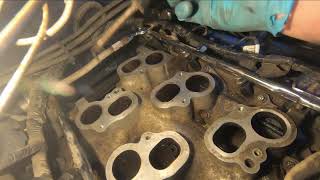
With the engine off, move the linkage by hand. It should move with light spring resistance. If it feels gritty, stiff, or stuck, the flaps inside the manifold are binding due to carbon buildup. This requires removing the upper intake manifold for cleaning.
Tools: Socket Set, Gaskets, Intake Cleaner Spray (Advanced) - Perform a Smoke Test for Vacuum Leaks
If lean codes (P0171/P0174) are present alongside P1538, inject smoke into the intake manifold. Watch for smoke escaping from cracked IMRC vacuum lines, actuator diaphragms, or intake gaskets. This pinpoints the exact location of the unmetered air leak.
Tools: Automotive Smoke Machine (Advanced) - Test Electronic Actuator Motors
For newer vehicles (2015+ Ford, BMW) with electronic IMRC motors, use a bidirectional scan tool to manually command the actuator open and closed. Listen for the motor operating and watch the data PIDs to confirm the position sensor registers the movement.
Tools: Bidirectional Scan Tool (Advanced) - Inspect IMRC Position Sensor
Monitor the IMRC position PID for Bank 2 using a scan tool. The voltage or percentage must change smoothly as you manually move the linkage or rev the engine. A static or erratic reading indicates a faulty sensor.
Tools: Advanced Scan Tool, Multimeter (Advanced) - Inspect Wiring and Connectors
Meticulously inspect the wiring harness for the IMRC solenoids and position sensor. Look for chafing, melted insulation, or corrosion on connector pins. Perform a continuity test on each wire from the component to the PCM to locate breaks.
Tools: Flashlight, Multimeter (Advanced)
When This Code Triggers (Freeze-Frame Conditions)
- Engine Coolant Temp: 170-210°F (The engine has reached full operating temperature.)
- Engine RPM: 700-1200 RPM (The code sets when the PCM commands the runners closed at idle or low RPM, but the sensor reports them open.)
- Engine Load: 15-40% (Occurs under light load conditions, such as idling or steady-state cruising.)
- Vehicle Speed: 0-25 mph (Triggered at low speeds or when stopping, as runners are commanded to close for low-end torque.)
Related Codes
- P1537 — IMRC Stuck Open on Bank 1. If you have BOTH P1537 and P1538, the cause is a shared component, like a single cracked vacuum line supplying both actuators or a common control solenoid.
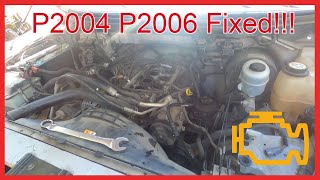
- P2004 / P2005 / P2007 — Standardized OBD-II codes for 'IMRC Stuck Open' (Bank 1/2) and 'Stuck Closed'. Newer vehicles use this P2xxx series instead of the older P1537/P1538 codes.
- P0171 and P0174 — System Too Lean for Bank 1 and Bank 2. A vacuum leak in the IMRC system causes these codes to appear with P1538. Fixing the vacuum leak resolves all codes simultaneously.
- P1516, P1518, P1520 — Other Ford-specific IMRC codes indicating the system is stuck closed or experiencing a general control circuit malfunction.
Climate & Environmental Factors
- Extreme Cold: Cold temperatures cause plastic and rubber vacuum hoses and linkage bushings to become hard and brittle, increasing the likelihood of cracking during normal engine vibration.
- Extreme Heat & Heat Cycles: Prolonged exposure to high under-hood temperatures degrades plastic and rubber. This thermal breakdown causes components to become weak, leading to cracked vacuum lines and broken linkage clips.
How to Talk to a Mechanic About This Code
Say this: "I have a P1538 code on my [Make, Model]. Could you please start by visually inspecting the vacuum lines, especially behind the battery, and the plastic linkage clips on the back of the intake, before quoting a more complex repair?"
This directs the mechanic to check the most common, simple, and cheap failure points first, preventing them from immediately quoting a $1,000 intake manifold replacement.
Avoid saying:
- 'Just fix my check engine light.' (Invites a shop to replace parts without proper diagnosis).
- 'I read online it's the solenoid, just replace that.' (Makes you responsible if the diagnosis is wrong).
- 'Do whatever you think is best.' (Gives up your control over the repair process and cost).
Questions to ask before authorizing the repair:
- Can you confirm if it was a vacuum leak, a broken linkage, a bad solenoid, or a faulty actuator?
- If it's a vacuum-operated part, did you test it with a vacuum pump to confirm it failed?
- Can you show me the broken part after it's removed?
- Does the estimate include all parts and labor, and what is the warranty?
Where to Take It: Dealer vs Independent vs Chain
- Dealer:
Best for: Vehicles still under powertrain or emissions warranty., Newer vehicles (2015+) with electronically integrated IMRC systems., Complex BMW DISA valve diagnostics.
Downsides: Highest labor rates, often $150-$250 per hour., Defaults to replacing a full assembly instead of repairing a smaller component. (Typical cost: +50% vs. baseline) - Independent Shop:
Best overall fit for most common P1538 scenarios on older Ford models. For newer electronic systems or BMWs, use a brand-specialist independent shop.
Best for: Out-of-warranty vehicles, especially older Fords with vacuum-operated IMRC systems., Diagnosing common issues like vacuum leaks and broken linkage clips.
Downsides: Quality varies greatly; look for ASE certification., A general shop lacks specific tools for newer electronic or German systems. (Typical cost: +0% vs. baseline) - Chain Shop:
AVOID for diagnosing P1538. The risk of replacing parts without proper diagnosis is high.
Best for: Simple maintenance like oil changes or tire rotations.
Downsides: Technician diagnostic ability is inconsistent., High pressure to upsell services leads to misdiagnosis for nuanced codes like P1538. (Typical cost: -10% vs. baseline)
When to Walk Away From the Repair
If the estimated repair cost for the P1538 fault exceeds 40-50% of your car's private-party value, seriously consider selling the vehicle as-is.
- Car worth $3500, fix is $1200: Borderline. Get a second opinion to confirm a full intake manifold replacement is truly necessary before proceeding.
- Car worth $15000, fix is $650: Fix it. The repair cost is well below the threshold and restores performance.
- Car worth $2000, fix is $1100: Walk away. The repair cost is over 50% of the car's value.
What Scan Tool You Need for This Code
Minimum: A code reader that displays manufacturer-specific codes and live data PIDs.
A $20 generic code reader won't provide the live data needed to see IMRC command status or actuator position.
Budget: BlueDriver Pro (~$119) — Reads manufacturer-specific codes and graphs live data for the IMRC command status, essential for initial diagnosis.
Mid-range: Foxwell NT510 Elite (~$199) — Offers bidirectional control to manually command the IMRC solenoid open and closed, letting you test the solenoid and actuator without disassembly.
Professional: Autel MaxiCOM MK808S (~$450) — Provides comprehensive bidirectional controls and runs active tests on the entire IMRC system, making diagnosis faster and more accurate.
Rent vs buy: Auto parts stores offer free code reading, but their tools won't help with diagnosis. Buy a mid-range scanner like the Foxwell NT510 Elite; its bidirectional ability saves hundreds in diagnostic fees, paying for itself in one use.
How to Clear the Code After You Fix It
- Use an OBD-II scan tool to clear the diagnostic trouble codes.
- Reconnect any disconnected components, including the battery.
- Perform a drive cycle to allow the vehicle's readiness monitors to run.
Drive cycle (~20 minutes): Start with a cold soak (engine off for 8+ hours). Start the engine and idle for 3 minutes. Drive for 7 minutes in stop-and-go city traffic. Drive for 7 minutes at a steady highway speed (55-60 mph). Allow the vehicle to cool down.
Readiness monitors affected: Catalyst Monitor, Evaporative System Monitor, Oxygen Sensor Monitor
Before emissions retest: drive at least 50 miles to fully set monitors.
Watch out for:
- Disconnecting the battery clears the code but resets all readiness monitors, causing an immediate emissions test failure.
- The code returns immediately if the underlying mechanical or electrical fault is not repaired.
- Failing to perform a complete drive cycle leaves monitors 'incomplete', preventing you from passing emissions.
Will This Fail Emissions / State Inspection?
Yes — this code typically fails an OBD-II emissions inspection.
- California: An active P1538 code is an automatic failure. After repair, a full drive cycle must be completed to set all readiness monitors before a re-test.
- New York: The NYS DMV inspection includes an OBD-II scan. The presence of the MIL and the P1538 code results in an immediate failure.
- Texas: In counties requiring emissions testing, an illuminated 'Check Engine' light and a stored P1538 code causes the vehicle to fail the OBD-II inspection.
Most Commonly Affected Vehicles
- Ford F-150 (1997-2003) — Extremely common on 4.2L V6 engines. The primary cause is vacuum lines behind the battery degrading from acid exposure and failure of the plastic linkage clips.
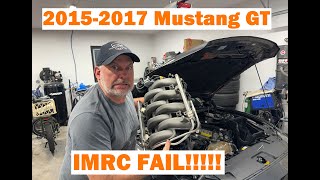
- Ford Mustang (2015-2017) — Common on early S550 generation Mustangs with the 5.0L V8. The issue stems from electronically controlled IMRC motors integrated into the intake manifold.
- Ford Windstar / Freestar (1999-2007) — Shares the same IMRC system design and common failures with other Ford V6 models, including actuator diaphragm failure and broken linkage clips.
- Ford Taurus / Mercury Sable (1996-2005) — Models equipped with the 3.0L DOHC 'Duratec' V6 are known for IMRC issues related to stuck flaps or actuator failure.
- BMW 5, 6, 7 Series, X5 (2003-2010) — On models with the N62 V8 engine, this code points to a stuck IMRC flap or a faulty potentiometer on the variable intake manifold (DISA system).
- Toyota Highlander, Venza, Corolla (2009-2017) — On vehicles with Stop/Start technology, P1538 means 'Circuit Malfunction between AT Oil Pump and Stop and Start ECU', an electrical fault unrelated to the intake.
- Porsche Panamera / Cayenne (2010-2016) — Indicates a fault with the 'Activation Oil pump', caused by a faulty oil pressure solenoid inside the oil pan.
- Chevrolet / GM Various models (1999-2007) — Defines P1538 as 'A/C Compressor Clutch Relay Control Circuit' or 'Class 2 Circuit Short to Battery'. This is an electrical fault.
- Volkswagen / Audi Various models with TDI engines (1998-2006) — Defines P1538 as 'Fuel Shutoff Solenoid (N109): Open or Short to Ground'. This prevents the engine from starting or causes it to shut off.
Manufacturer-Specific Notes
- Ford / Lincoln / Mercury: The most common meaning is 'Intake Manifold Runner Control Stuck Open, Bank 2'. Owners should check for TSBs specific to their VIN.
- Chevrolet / GM: Defines P1538 as 'A/C Compressor Clutch Relay Control Circuit' or 'Class 2 Circuit Short to Battery', completely unrelated to the intake manifold.
- Volkswagen / Audi: Defines P1538 as 'Fuel Shutoff Solenoid (N109): Open or Short to Ground', causing a no-start condition.
- Porsche: Indicates an 'Activation Oil pump' fault related to the variable pressure oil pump signal.
- Toyota: On vehicles with Stop/Start technology, P1538 relates to the auxiliary oil pump used to maintain transmission pressure when the engine is off.
- BMW: Means 'IMRC Stuck Open, Bank 2' or indicates a fault with the differentiated intake manifold's position sensor (DISA system).
- Land Rover: Defined as 'Air conditioning compressor request high input', indicating an electrical short in the A/C clutch relay circuit.
Real Owner Stories
1998 Ford F-150 with 4.2L V6 at 130K miles
Check Engine Light came on, codes P1537 and P1538 were pulled. The truck ran rough.
What they tried:
- Initial inspection focused on the hard-to-reach solenoids at the back of the engine.
- Hired a mechanic for diagnosis.
- The mechanic identified a vacuum hose behind the battery corroded by battery acid and one failed IMRC control solenoid.
Outcome: The mechanic replaced the faulty solenoid and repaired the vacuum lines for $200. This resolved both codes.
Lesson: When both P1537 and P1538 appear, the cause is a shared component. Always inspect the vacuum hoses routed behind the battery tray first, as they are notoriously prone to acid damage.
Ford F-150 with V8 Engine
The Check Engine Light illuminated with code P1538. The owner feared a major repair.
What they tried:
- Called a Ford parts dealer who suggested checking the linkage clips.
- Removed the upper intake plenum to gain access.
- Found a small broken plastic clip, 'no bigger than a pencil eraser', causing the disconnect.
Outcome: Replaced the clip with an $8 new part. The repair took 4 hours of DIY labor, saving an estimated $500 in professional repair costs.
Lesson: Do not assume a major internal manifold failure. Visually inspect the small, inexpensive plastic linkage clips connecting the actuator rods before attempting expensive repairs.
2007 BMW 325i (E90) with N52 engine at 150K miles
The engine developed severe misfires on cylinder 6. Suspected a bad coil or spark plug.
What they tried:
- Replaced coil and spark plug for cylinder 6, but the misfire persisted.
- A compression test at an independent shop showed only 40 PSI on cylinder 6.
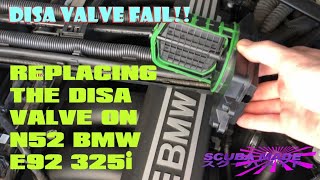
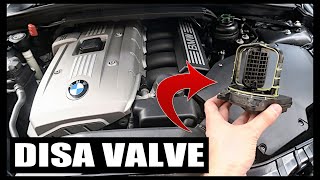
- Discovered the large DISA valve disintegrated, dropping plastic and the metal spindle into the intake manifold.
Outcome: The DISA valve failure caused catastrophic internal engine damage. Fixing the engine was not financially viable due to the $1,000+ cost of rebuilding the cylinder head.
Lesson: On BMWs, a failing DISA valve (P1538 equivalent) is critical. If you hear rattling from the intake or have persistent misfires, investigate immediately to prevent engine ingestion.
How to Prevent This Code From Triggering
- Clean the intake system with a dedicated aerosol cleaner (Every 30,000 miles) — Dissolves carbon and oil deposits from the PCV and EGR systems before they build up and cause the IMRC flaps to stick.
- Install an oil catch can (Once, then empty every 3,000-5,000 miles) — Intercepts oil vapor from the PCV system, preventing it from coating the intake runners and baking into hard carbon deposits.
- Inspect and protect vacuum hoses (Every oil change) — Applying a silicone-based rubber protectant keeps hoses supple. Adding thermal sleeving protects hoses routed near hot exhaust components.
- Neutralize battery acid spills (After any battery leak or replacement) — Acid leakage destroys the IMRC vacuum lines routed behind the battery on many Fords. Wash the tray with baking soda and water to protect the lines.
- Perform an 'Italian Tune-Up' (Once a month) — Sustained high-RPM driving increases engine temperatures and airflow, burning off light carbon deposits from intake valves and runner flaps.
Frequently Asked Questions
What is Bank 2 on my engine?
Bank 2 is the side of a V-style engine that does NOT contain cylinder #1. On most American and German V-engines, it's the driver's side. On a transverse V6, it is often the bank closer to the radiator.
What is the most common misdiagnosis for P1538 on a Ford?
The most frequent mistake is assuming an expensive intake manifold failure before checking simple failure points. Mechanics often overlook a broken plastic linkage clip or a cracked vacuum hose hidden behind the battery. Always inspect vacuum lines and linkage clips first.
Can I just replace the little plastic IMRC clips?
Yes, if the clip is the only broken part, you can buy replacements like Dorman part #47099. However, access is very difficult. You may need to remove the upper intake manifold to install the new clip.
What's the difference between the IMRC being stuck open vs. stuck closed?
The 'stuck open' P1538 code hurts low-speed torque, fuel economy, and idle quality because short runners are active. The 'stuck closed' code restricts airflow at high RPM, hurting top-end horsepower. On Ford vacuum systems, the default no-vacuum position is open.
Can I fix P1538 myself?
A simple vacuum leak or broken plastic bushing is a straightforward DIY repair if you can access the components. Replacing an actuator or the entire intake manifold is difficult and best left to a professional.
How much does it cost to fix P1538?
A DIY fix for a vacuum hose or bushing costs under $30 for parts. A professional repair for a bad solenoid or actuator ranges from $250 to $600. A full intake manifold replacement exceeds $1,000.
Will clearing the code fix the problem?
No, clearing the code only turns the check engine light off temporarily. The PCM will detect the persistent physical or electrical fault again on its next self-test cycle.
I have P1537 and P1538. What does that mean?
Getting both codes indicates a problem common to both cylinder banks. The most likely culprit is a vacuum supply hose feeding both IMRC actuators or the main control solenoid. It is highly unlikely both actuators failed simultaneously.
Key Takeaways
- Verify your vehicle's specific P1538 definition first, as it means 'Intake Manifold Runner Control Stuck Open' on Fords and BMWs, but indicates an A/C circuit fault on Chevrolets.
- Inspect the vacuum hoses behind the battery and the plastic linkage clips at the rear of the intake manifold, as these $10-$30 parts cause 80% of P1538 codes on Ford V6 engines.
- Expect a 10-20% drop in fuel economy and sluggish low-speed acceleration because the engine's air-fuel mixture is severely imbalanced.
- Test the IMRC actuator with a $20 hand-held vacuum pump before authorizing a $1,000+ intake manifold replacement.
- Fix this code within 1 to 2 months to prevent unmetered air leaks from overheating and destroying your $1,500 catalytic converter.
Helpful Videos

![[DIY] BMW N52 Disa Valve Replacement & Test With Inpa!](https://img.youtube.com/vi/vaeAKeq371w/mqdefault.jpg)
Shop the Parts Behind P1538
Below are the parts most often responsible for code P1538, ranked by how frequently each one is the actual culprit (per the diagnosis above). Tap any to see what we have for your vehicle.

The information in this article is provided for general reference and educational purposes only. Vehicle specifications, procedures, and part compatibility can vary by production date, trim level, and region. Always consult your vehicle's factory service manual and verify part numbers before purchasing or performing repairs. Safety-critical components such as airbags, seat belts, and braking systems should be installed by a qualified professional.
- 🧭 Diagnostic Flowchart
- 🎬 Helpful Videos
- 🛍️ Shop This Part
- What Does P1538 Mean?
- Can I Drive With P1538?
- Common Causes
- Symptoms
- Common Fixes & Costs
- Used vs. New Parts: Buying Guide
- What Happens If You Wait — Timeline
- Cost of Not Fixing It
- Diagnosis Steps
- When This Code Triggers (Freeze-Frame Conditions)
- Related Codes
- Climate & Environmental Factors
- How to Talk to a Mechanic About This Code
- Where to Take It: Dealer vs Independent vs Chain
- When to Walk Away From the Repair
- What Scan Tool You Need for This Code
- How to Clear the Code After You Fix It
- Will This Fail Emissions / State Inspection?
- Most Commonly Affected Vehicles
- Manufacturer-Specific Notes
- Real Owner Stories
- 1998 Ford F-150 with 4.2L V6 at 130K miles
- Ford F-150 with V8 Engine
- 2007 BMW 325i (E90) with N52 engine at 150K miles
- How to Prevent This Code From Triggering
- Frequently Asked Questions
- What is Bank 2 on my engine?
- What is the most common misdiagnosis for P1538 on a Ford?
- Can I just replace the little plastic IMRC clips?
- What's the difference between the IMRC being stuck open vs. stuck closed?
- Can I fix P1538 myself?
- How much does it cost to fix P1538?
- Will clearing the code fix the problem?
- I have P1537 and P1538. What does that mean?
- Key Takeaways
- 🎟️ Get 5% Off