

OBD-II Code P1540: Comprehensive Guide to a Complex Manufacturer-Specific Fault
What P1540 means, why it triggers, and how to fix it on your vehicle
- P1540 is a manufacturer-specific code, meaning it indicates a failed accelerator pedal on a BMW, but a disabled A/C compressor on a GM vehicle.
- You must search 'P1540 + [Your Make and Year]' before buying parts, as misinterpreting the code guarantees a wasted repair.
- Expect immediate symptoms like a 5-15% drop in fuel economy, limp mode activation, or the total loss of cruise control and air conditioning.
- Test the affected sensor's 5-volt reference and ground wires with a multimeter before replacing it, as broken wiring causes up to 30% of P1540 faults.
What Does P1540 Mean?
P1540 is a manufacturer-specific diagnostic trouble code (DTC), meaning its definition changes entirely based on your vehicle's make. The Engine Control Unit (ECU) detects an electrical or mechanical fault in systems like the turbocharger, air conditioning, throttle pedal, vehicle speed sensor, or brake booster. You must identify the precise definition for your specific car to diagnose it accurately.
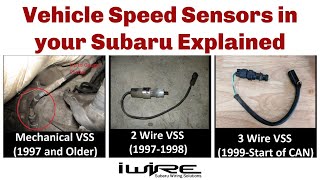
Technical definition: There is no universal SAE/OBD-II definition for P1540. The formal definition changes by brand. For example: Volkswagen/Audi indicates 'Vehicle Speed Signal High Input'; BMW means 'Pedal Position Sensor Malfunction'; modern Toyota points to 'Brake Booster Sensor Circuit Malfunction'; GM relates to 'A/C System, High Pressure Conditions'; Subaru indicates 'Vehicle Speed Sensor Malfunction 2'.
Can I Drive With P1540?
Yes, But With Caution. Short-term driving is possible but strongly discouraged. Your vehicle enters 'limp mode' with reduced power, disabling systems like A/C or cruise control. Ignoring a turbo overboost-related P1540 causes catastrophic engine failure costing thousands. For other faults, prolonged driving accelerates wear on the turbocharger or clogs the particulate filter.
Common Causes
- Faulty Sensor (Pedal, Throttle, Brake Booster, A/C, or VSS) (Very Common) — The system-specific sensor fails internally or sends inaccurate signals. This is the most frequent trigger across all vehicle makes.
- Wiring or Connector Issues (Common) — Electrical wiring or connectors leading to the sensor are damaged, corroded, or shorted. An internally broken wire near a connector, which looks fine externally, is a frequent real-world failure.
- Vacuum Leaks or Blockages (Common) — Cracked, disconnected, or clogged vacuum lines trigger this code, especially in systems related to the brake booster, turbocharger wastegate, or EGR valve.
- Defective Actuator or Servomotor (Turbo or EGR) (Common) — The electronic servomotor controlling the turbo or EGR system seizes mechanically or fails electrically.
- Low System Refrigerant or A/C Component Failure (GM) (Less Common) — On GM vehicles, an overcharged system, undercharged system, or physical blockage causes A/C pressure to spike, triggering the code.
- Dirty or Clogged Components (Less Common) — Carbon buildup clogs an EGR valve or throttle body, preventing correct movement and forcing sensor readings out of their expected range.
- Faulty Variable Oil Pump Solenoid (Less Common) — On FIAT/Alfa Romeo models with TwinAir or 1.6L diesel engines, this code indicates a 'short to ground' fault in the variable displacement oil pump control solenoid.
- Cold Weather Effects (Rare) — In sub-zero temperatures, electronic sensors deliver incorrect values or mechanical actuators react slowly during a cold start. The fault often disappears once the engine warms up.
- Faulty Engine Control Unit (ECU) (Rare) — The ECU itself fails, misinterpreting signals from a perfectly good sensor or actuator. Consider this only after ruling out all other causes.
Symptoms
- Check Engine Light is On — The Malfunction Indicator Lamp (MIL) illuminates on your dashboard. Traction control or stop/start system indicators also light up on specific models.
- Reduced Engine Power / Limp Mode — The ECU intentionally limits engine power to prevent damage, resulting in poor acceleration and sluggish responsiveness.
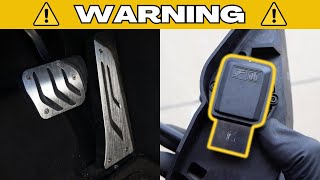
- Poor Throttle Response or Hesitation — You experience a delay, surge, or hesitation when pressing the accelerator pedal, which is the primary symptom on BMWs. 🎬 Watch: How to remove and install a BMW gas pedal
- A/C System Not Working — On GM models where the code relates to A/C pressure, the ECU disables the air conditioning compressor as a protective measure.
- Inaccurate or Non-Functional Speedometer — On VW or Subaru vehicles where the code points to a Vehicle Speed Sensor fault, the speedometer stops working or provides erratic readings.
- Rough or Uneven Idle — The engine runs poorly, idles at a lower-than-normal RPM, or surges inconsistently when stopped.
- Black Smoke from Exhaust — Common on diesel vehicles when the code relates to a turbo or EGR system fault, indicating a rich air-fuel mixture.
Diagnostic Flowchart
Tap your situation to follow the diagnostic path that matches what you're seeing on this code.
Common Fixes & Costs
- Replace Faulty Sensor (Throttle, Pedal, Brake Booster, A/C, or VSS) — Parts: $50-$250, Labor: $75-$150, ~1.0 hr book time (DIY)
- Repair Damaged Wiring or Connectors — Parts: $10-$50, Labor: $125-$250, ~1.5 hr book time (Intermediate)
- Replace Turbo/EGR Actuator (Servomotor) — Parts: $150-$400, Labor: $200-$450, ~2.5 hr book time (Professional)
- Clean Clogged EGR Valve or Throttle Body — Parts: $15-$30, Labor: $100-$200, ~1.2 hr book time (Intermediate)
- Recharge or Repair A/C System (GM Models) — Parts: $30-$60, Labor: $100-$150, ~1.0 hr book time (Professional)
Used vs. New Parts: Buying Guide
When a used part is worth it: For electronic sensors like an accelerator pedal or vehicle speed sensor, a used OEM part from a low-mileage, accident-damaged vehicle is a cost-effective alternative to a new aftermarket part. Avoid used parts for high-wear items like turbo actuators.
Donor-vehicle mileage cap: roughly under 80000 miles for the part to have meaningful remaining life.
Donor quality checklist:
- Verify the donor vehicle was not scrapped for a related failure (e.g., engine fire, flood).
- Match the OEM part number exactly; visual similarities are not sufficient.
- Purchase from a reputable salvage yard offering at least a 30-day warranty.
Decision logic:
- If The part is a simple, bolt-on sensor and the vehicle is over 100,000 miles → A used OEM part is a better value than a new aftermarket part.
- If The part requires extensive labor to access (e.g., inside transmission) → Buy a new OEM part to minimize the risk of paying for labor twice.
- If The cost of a new OEM part is less than 50% higher than a used one → Buy new for the longer warranty and peace of mind.
Warranty tradeoff: Used parts typically come with a 30-90 day functional warranty. New aftermarket parts offer a 1-year warranty but inconsistent quality. New OEM parts carry a 1-2 year warranty and are the most reliable.
Worst-case if a used part fails: $250-$800 if a used electronic part fails shortly after installation, primarily due to repeat labor costs.
What Happens If You Wait — Timeline
- 0-1 month: Check Engine Light illuminates. You notice manageable symptoms like throttle hesitation or an incorrect speedometer. (MPG impact: 0-5%% · Added cost: $0-$50 in wasted fuel)
- 1-3 months: Symptoms become consistent. The vehicle enters 'limp mode' intermittently. A bad VSS causes harsh shifts, stressing the transmission. (MPG impact: 5-15%% · Added cost: $50-$200 in wasted fuel and early component stress)
- 3-6 months: If the fault is a turbo overboost, continued driving risks blowing a head gasket. A VSS fault causes premature wear on transmission clutches. (MPG impact: 10-20%% · Added cost: $1,500-$4,000 for a potential turbo or transmission repair)
- 6+ months: A persistent turbo overboost condition leads to catastrophic engine failure. A long-term VSS failure destroys the transmission. (MPG impact: 15-25%% · Added cost: $3,000-$8,000+ for major engine or transmission replacement)
Cost of Not Fixing It
- 0-1 month: Causes a 5-15% drop in fuel economy, an automatic emissions test failure, and limp mode activation. (Added cost: Negligible, other than increased fuel costs.)
- 1-6 months: Continued driving with a turbo overboost causes severe stress, leading to a blown head gasket. A VSS failure causes premature transmission wear from incorrect shifting. (Added cost: $1500-$5000+)
- 6+ months: Catastrophic engine failure occurs in a persistent overboost scenario. Long-term rich/lean conditions destroy the catalytic converter, and a bad VSS destroys the transmission. (Added cost: $2500-$8000+)
Diagnosis Steps
- Identify the Code's Specific Meaning
Use an OBD-II scanner to confirm P1540. Search online for 'P1540 [Your Car's Make, Model, and Year]' to find the affected system (e.g., throttle, brakes, turbo, A/C, vehicle speed). Misinterpreting the definition guarantees an incorrect diagnosis.
Tools: OBD-II Scanner (Beginner) - Perform a Thorough Visual Inspection
Inspect the related area based on your car's specific code definition. Look for cracked vacuum hoses, frayed wires, or corroded connectors on the relevant sensor. Check for physical damage, like a shredded serpentine belt hitting other components.
Tools: Flashlight (Beginner) - Check for Technical Service Bulletins (TSBs)
Search online for manufacturer TSBs regarding code P1540. Manufacturers release bulletins for known issues, saving diagnostic time by pointing to a common problem or required software update.
Tools: Internet Access (Beginner) - Test Sensor Voltage with a Multimeter
Test pedal or throttle position sensors with a multimeter. Back-probe the signal wire with the key on (engine off). The voltage must increase smoothly from ~0.5V to ~4.5V as you press the pedal, with no dropouts. For a Toyota brake booster sensor, check the ECU's PB terminal for 0.6V to 4.7V.
Tools: Multimeter, Vehicle-specific wiring diagram (Intermediate) - Check Sensor Reference Voltage and Ground
Back-probe the sensor's electrical connector with the ignition on. Verify the reference voltage wire reads exactly 5.0 volts. Check the ground wire for continuity to the chassis ground (less than 0.1 ohms). If either is missing, the fault lies in the wiring or ECU, not the sensor.
Tools: Multimeter, Wiring Diagram (Advanced) - Analyze Live Data PIDs
For GM A/C faults, monitor the 'High-Side Pressure' PID. Readings over 350-400 PSI confirm a system pressure problem. For pedal sensor faults, monitor APP1 and APP2 PIDs. A jump or flat-line in one of the signals indicates a failed sensor.
Tools: Advanced Scan Tool (Advanced) - Check for Vacuum Leaks with a Smoke Machine
If the issue relates to a brake booster or turbo system, feed smoke into the intake system or vacuum lines. Watch for smoke escaping from cracked hoses, bad gaskets, or faulty seals.
Tools: Smoke Machine (Advanced) - Test Actuators and Solenoids
If the code points to a turbo or EGR actuator, use a bidirectional scanner to command the actuator to move. Manually check if the component's linkage moves freely without binding.
Tools: Advanced Bidirectional Scanner (Intermediate) - Analyze the Signal with an Oscilloscope
Connect an oscilloscope to the sensor's signal wire to visualize the waveform. A faulty sensor reveals glitches, dropouts, or excessive electrical noise, confirming failure even if static voltage tests appear normal.
Tools: Oscilloscope, Wiring Diagram (Advanced) - Check ECU Software Version
Manufacturers release software updates to fix glitches that misinterpret sensor signals and trigger a false P1540. A dealership checks if your ECU software requires an update.
Tools: Dealer-level scan tool (Professional)
When This Code Triggers (Freeze-Frame Conditions)
- Engine Coolant Temp: 175-210°F (80-99°C) (Engine is fully warmed up when the ECU detects the fault.)
- RPM: 1200-3000 (Occurs during steady cruise or light acceleration, rarely at idle.)
- Engine Load: 25-70% (Vehicle is under moderate power demand, not coasting or at full throttle.)
- Vehicle Speed: 25-65 mph (40-105 kph) (Triggers during city or highway driving, depending on the specific fault (e.g., VSS fault at speed, pedal fault during acceleration).)
Related Codes
- P1541 — On FIAT/Alfa Romeo, P1540 indicates a 'short to ground' for the oil pump solenoid, while P1541 indicates an 'open circuit'. On BMWs, P1541 indicates a severe 'double error' from the pedal sensor.
- P0121 — P0121 is a generic code for 'Throttle/Pedal Position Sensor Circuit'. If paired with P1540, it confirms the problem is a specific electrical failure (bad sensor, wiring short) rather than a dirty throttle body.
- P0234 — P0234 is a generic code for 'Turbo Overboost'. P1540 points to the cause of the overboost, such as a 'Turbo Actuator Malfunction'. The P1540 directs diagnosis toward the turbo's control mechanism.
- P0500 — P0500 is a generic code for 'Vehicle Speed Sensor Malfunction'. Seeing both codes together strongly confirms the fault lies within the VSS circuit, resulting in a dead speedometer.
Climate & Environmental Factors
- Cold Weather: Low temperatures change the electrical resistance of sensors or stiffen mechanical actuators, causing a momentary out-of-range condition. The fault often disappears once the engine warms up.
- High Humidity / Water Ingress: Prolonged moisture exposure corrodes electrical connectors and wiring harnesses. This increases resistance and disrupts the signal, leading to an intermittent or permanent fault code.
- High Altitude: High altitude exacerbates pre-existing mechanical issues with a turbo actuator or boost control system due to lower air density, making a fault more likely to trigger.
How to Talk to a Mechanic About This Code
Say this: "I have a P1540 check engine light. I know this is a manufacturer-specific code, so the first step is to confirm the exact definition for my [Insert Vehicle Make, Model, and Year]. Once you identify the affected system, call me with a specific diagnostic plan and an estimate before replacing parts."
This prevents a shop from guessing the code's meaning, which is the most common cause of misdiagnosis for P1540. It establishes a clear 'authorize before acting' relationship.
Avoid saying:
- 'Just fix whatever's wrong'
- 'My check engine light is on, can you look at it?'
- 'I think it's the gas cap'
Questions to ask before authorizing the repair:
- Now that you know the code means [System X], what specific tests confirmed the [Part Y] is the failure point?
- Did you test the sensor's wiring for power and ground first, to rule out a circuit issue?
- Did you check for any Technical Service Bulletins (TSBs) for this code on my car?
- Can I see the old part you're replacing?
- What is the warranty on this repair, for both the parts and your labor?
Where to Take It: Dealer vs Independent vs Chain
- Dealer:
Recommended for newer (under 8 years old) vehicles, especially German brands or those with known recalls for this code.
Best for: Vehicles under warranty or with a known recall (Toyota brake booster), Complex manufacturer-specific issues requiring proprietary software (BMW, Mercedes-Benz), Repairs requiring an ECU software update.
Downsides: Highest labor rates ($150-$250/hr) and parts costs., Inclined to replace an entire assembly rather than performing a smaller wiring repair. (Typical cost: +50% vs. baseline) - Independent Shop:
Best overall fit for most out-of-warranty P1540 repairs, provided you choose a reputable shop with ASE-certified technicians.
Best for: Out-of-warranty vehicles where the P1540 cause is well-documented (Subaru VSS, GM A/C sensor)., Diagnosing electrical circuit and wiring issues., Owners looking for better value and flexible repair options.
Downsides: Diagnostic capabilities vary widely; ensure the shop has modern equipment. (Typical cost: +0% vs. baseline) - Chain Shop:
AVOID for initial diagnosis. The complexity and brand-specific nature of P1540 make it a poor fit for the chain shop model.
Best for: Simple, confirmed part replacements where you have already performed the diagnosis.
Downsides: High risk of misdiagnosis due to the variable nature of P1540., Technician skill and diagnostic equipment are lacking for complex electrical faults. (Typical cost: -10% vs. baseline)
When to Walk Away From the Repair
If the repair cost exceeds 40% of the car's private-party market value, sell or trade in the vehicle.
- Car worth $4000, fix is $2200: Walk away. The repair cost is over 50% of the car's value.
- Car worth $12000, fix is $1800: Fix it. The repair cost is only 15% of the vehicle's value.
- Car worth $3000, fix is $800: Borderline. Consider the car's overall condition, age, and mileage before proceeding.
What Scan Tool You Need for This Code
Minimum: A scanner that reads manufacturer-specific trouble codes and displays live sensor data.
A basic $20 code reader only shows 'P1540' without the crucial manufacturer-specific definition. Live data is essential to watch the sensor's performance in real-time to confirm it's faulty.
Budget: BlueDriver Pro or Autel AP200 (~$60-120) — These Bluetooth dongles read the manufacturer-specific P1540 definition and display live data streams for the relevant sensor, enough to diagnose most common sensor failures.
Mid-range: Foxwell NT510 Elite or Innova 5610 (~$150-350) — Offers bidirectional controls. Critical if P1540 relates to a turbo or EGR actuator, allowing you to command the component to move and test its function directly.
Professional: Autel MaxiCOM MK808BT / MK900BT or Launch X431 Series (~$500-1200) — Provides full bidirectional control, advanced coding functions, and access to all OEM-level diagnostics. Necessary for calibrating a new turbo actuator.
Rent vs buy: Auto parts stores rent basic scanners, but these may not provide the manufacturer-specific definition needed for P1540. Buying a budget or midrange tool is a worthwhile investment.
How to Clear the Code After You Fix It
- Ensure the repair is complete and all connectors are secure.
- Use an OBD-II scan tool to select the 'Clear Codes' or 'Erase DTCs' function.
- Disconnecting the battery for 15-30 minutes also clears the code, but it resets all vehicle memory and readiness monitors.
Drive cycle (~30 minutes): Start with a cold engine. Idle for 2-3 minutes with A/C on. Drive for 10-15 minutes in mixed city conditions. Accelerate to and maintain highway speed (55-60 mph) for 10-15 minutes. Allow the vehicle to cool down completely.
Readiness monitors affected: Catalyst (CAT), Evaporative System (EVAP), Oxygen (O2) Sensor, EGR System
Before emissions retest: drive at least 100 miles to fully set monitors.
Watch out for:
- Clearing the code without fixing the underlying issue causes the Check Engine Light to return immediately.
- Clearing the code resets readiness monitors to 'incomplete', causing an automatic failure at an emissions testing station.
- Modern Toyotas require a specific re-learn procedure using a dealer-level scan tool (GTS) after repair for the Stop/Start system to function.
Will This Fail Emissions / State Inspection?
Yes — this code typically fails an OBD-II emissions inspection.
- California: An illuminated Check Engine Light causes an automatic failure. For 2010+ vehicles, a stored Permanent Diagnostic Trouble Code (PDTC) causes a failure until the vehicle completes a specific drive cycle (approx. 200 miles and 15 warm-up cycles).
- New York: The NYS DMV inspection includes an OBD-II scan. An active P1540 code results in an automatic emissions failure.
- Texas: In the 17 counties requiring emissions testing, an active powertrain code like P1540 causes the vehicle to fail the OBD portion of the inspection.
Most Commonly Affected Vehicles
- BMW 1, 3, 5 Series, X3, X5 (2005-2015) — P1540 almost always points to a fault with the accelerator pedal position sensor. Early signs include intermittent throttle hesitation.
- Volkswagen / Audi Golf, Passat, A3, A4, A6 (2005-2014) — Relates to 'Vehicle Speed Signal High Input'. Caused by a faulty Vehicle Speed Sensor (VSS) or wiring, disabling cruise control and causing an inaccurate speedometer.
- Toyota Avensis, Yaris, Corolla, C-HR (2017-2022) — Triggered by a failure of the vacuum sensor on the brake booster, disabling the stop/start system. A specific re-learn procedure using a Toyota scanner is required after repair.
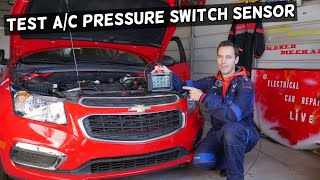
- Chevrolet / GM Cruze, Aveo, Captiva, Celta (2005-2015) — Indicates 'A/C System, High Pressure Conditions', disabling the A/C compressor. A broken wire a few inches from the sensor connector is a frequent culprit.
- Subaru Legacy, Outback, Impreza, Forester (1997-2014) — Consistently points to 'Vehicle Speed Sensor Malfunction 2'. Appears with P0500, causing the speedometer to fail and a low, rough idle.
- Alfa Romeo / FIAT Giulietta, MiTo, 500, Ducato (2010-2021) — Indicates a short in the variable displacement oil pump solenoid on 1.6L Diesels. On other models, a shredded A/C belt destroys nearby sensor wiring, triggering the code.
- Mercedes-Benz C-Class, E-Class, Sprinter (2004-2012) — Signals a problem with the turbocharger or EGR system actuators, causing limp mode and black exhaust smoke.
- Ford Focus, Mondeo, Galaxy (2007-2016) — Associated with issues in the EGR or turbocharger control systems, resulting in severe power loss.
Manufacturer-Specific Notes
- Toyota / Lexus: P1540 is 'Brake Booster Sensor Circuit Malfunction', disabling the stop/start system. Recalls (K1L/K0L, J0K/JLD) cover 2017-2020 models for defective brake booster pumps containing this sensor. Check your VIN for free replacement.
- BMW: P1540 points to the accelerator pedal position sensor. Technicians check for a smooth voltage rise from the sensor with a multimeter to confirm failure before replacing the entire pedal assembly.
- General Motors (GM): P1540 indicates 'A/C System, High Pressure Conditions', disabling the A/C compressor. A common failure point is a break in the wiring harness 10-15 cm from the connector, not the sensor itself.
- Volkswagen / Audi: P1540 means 'Vehicle Speed Sensor High Input'. The ECU receives a voltage out of the plausible range on the high end, pointing towards a short to power in the wiring or an internal sensor failure.
- Subaru: P1540 is specifically 'Vehicle Speed Sensor Malfunction 2'. It disables cruise control, causes a rough idle, and appears with P0500. The issue is almost always the sensor on the transmission.
- Alfa Romeo / FIAT: On diesel engines, it points to a 'short to ground' in the variable oil pump solenoid. On other models, it triggers when a failing serpentine belt shreds and damages unrelated sensor wiring.
Real Owner Stories
1998 Subaru Outback with 295k miles
Check Engine Light came on with codes P1540, P0500, and P1507. The speedometer was dead, and the engine had a very rough idle.
What they tried:
- Initially considered cleaning the airflow sensor and checking various wiring.
Outcome: The owner replaced the 'Vehicle Speed Sensor 2'. This single fix resolved all codes, restored the speedometer, and smoothed out the engine idle.
Lesson: When a manufacturer-specific code (P1540) appears with a generic code for the same system (P0500), it strongly confirms the fault lies with that specific sensor circuit.
2011 BMW E90 335i
Car experienced slight throttle hesitation and jerky response in low-speed traffic at 2-4% accelerator pedal position. No fault codes were present initially.
What they tried:
- Replaced injectors, coil packs, vacuum hoses, boost solenoids, and VANOS solenoids without fixing the hesitation.
Outcome: The problem was solved by performing a full ECU reset to default factory settings, indicating a software adaptation problem within the engine computer.
Lesson: For subtle drivability issues on complex modern cars, resetting ECU adaptations resolves persistent problems that mimic hardware failures.
2018 Toyota Avensis
The Stop/Start system warning light was blinking, and the feature was disabled. A scan revealed fault code P1540.
What they tried:
- Diagnosed the code as 'Brake Booster Sensor Circuit Malfunction'.
Outcome: The fix required replacing the pressure sensor on the brake booster. The owner discovered Toyota issued recalls for similar brake booster pump failures on other 2017-2020 models.
Lesson: On modern Toyotas, P1540 disables the Stop/Start system. Before purchasing the part, check if your VIN is covered by a manufacturer recall for a free brake booster replacement.
2014 Ford Escape with EcoBoost Engine
Check Engine Light appeared with code P0234 (Turbo Overboost) and P1540. The owner perceived no lack of power.
What they tried:
- Initially ignored the light since there were no drivability symptoms.
Outcome: A mechanic diagnosed a faulty wastegate solenoid. The repair cost $450 at a dealership.
Lesson: When P1540 pairs with P0234 (Overboost), the problem is in the turbo's boost control system. Ignoring an overboost code risks catastrophic engine failure.
How to Prevent This Code From Triggering
- Allow a 30-60 second cool-down idle after hard driving (After spirited driving or towing (turbo models)) — Prevents oil from coking in the turbocharger's bearings. This keeps the actuator from working against soot buildup, extending its life.
- Clean electrical connectors during other maintenance (Every 30,000 miles) — Disconnecting and reconnecting key sensor connectors scrapes away early-stage corrosion. Applying dielectric grease prevents moisture intrusion.
- Use high-quality engine oil and follow change intervals (Per manufacturer schedule) — Clean oil is essential for the health of oil-pressure-controlled actuators and reduces soot buildup in EGR and turbo systems.
- Keep the A/C system properly charged (GM models) (Check annually) — An undercharged or overcharged system forces the compressor and sensor to operate outside their intended range, triggering the code.
- Periodically exercise actuators with a bidirectional scanner (Every 60,000 miles) — Commanding turbo or EGR actuators through their full range of motion prevents them from seizing due to carbon buildup.
Frequently Asked Questions
Why does P1540 have so many different meanings?
Codes starting with P1XXX are manufacturer-specific, allowing automakers to create unique codes for proprietary systems. This means the exact same code number indicates a pedal fault on a BMW but an A/C fault on a Chevy.
What is the most common misdiagnosis for P1540?
The most common mistake is failing to look up the manufacturer-specific definition and replacing the wrong part. For example, assuming it's a throttle issue on a GM vehicle when the code actually refers to the A/C pressure sensor.
Can I fix a P1540 error myself?
Simple fixes like replacing a bolt-on accelerator pedal sensor or a vehicle speed sensor are DIY-friendly. However, diagnosing intermittent wiring faults or replacing a turbo actuator requires specialized tools and professional calibration.
Can a bad battery or alternator cause a P1540 code?
Yes. Unstable voltage from a failing charging system causes control modules to receive erratic signals from sensors. This sets a P1540 code even if the sensor itself is perfectly fine.
How do I clear the P1540 code?
Clear the code using an OBD-II scanner, but it returns immediately if the underlying problem remains. On systems like Toyota's stop/start, the code will not clear until a specific re-learn drive cycle is completed.
What happens if I ignore code P1540?
Ignoring the code leads to complete turbocharger failure, a clogged diesel particulate filter, or catastrophic engine damage in an overboost situation.
Can cold weather trigger a P1540 code?
Yes. At sub-zero temperatures, the electrical characteristics of sensors change and mechanical actuators stiffen. This causes a temporary out-of-range reading during a cold start, setting the code until the engine warms up.
Key Takeaways
- P1540 is a manufacturer-specific code, meaning it indicates a failed accelerator pedal on a BMW, but a disabled A/C compressor on a GM vehicle.
- You must search 'P1540 + [Your Make and Year]' before buying parts, as misinterpreting the code guarantees a wasted repair.
- Expect immediate symptoms like a 5-15% drop in fuel economy, limp mode activation, or the total loss of cruise control and air conditioning.
- Test the affected sensor's 5-volt reference and ground wires with a multimeter before replacing it, as broken wiring causes up to 30% of P1540 faults.
Helpful Videos
Shop the Parts Behind P1540
Below are the parts most often responsible for code P1540, ranked by how frequently each one is the actual culprit (per the diagnosis above). Tap any to see what we have for your vehicle.



The information in this article is provided for general reference and educational purposes only. Vehicle specifications, procedures, and part compatibility can vary by production date, trim level, and region. Always consult your vehicle's factory service manual and verify part numbers before purchasing or performing repairs. Safety-critical components such as airbags, seat belts, and braking systems should be installed by a qualified professional.
- 🧭 Diagnostic Flowchart
- 🎬 Helpful Videos
- 🛍️ Shop This Part
- What Does P1540 Mean?
- Can I Drive With P1540?
- Common Causes
- Symptoms
- Common Fixes & Costs
- Used vs. New Parts: Buying Guide
- What Happens If You Wait — Timeline
- Cost of Not Fixing It
- Diagnosis Steps
- When This Code Triggers (Freeze-Frame Conditions)
- Related Codes
- Climate & Environmental Factors
- How to Talk to a Mechanic About This Code
- Where to Take It: Dealer vs Independent vs Chain
- When to Walk Away From the Repair
- What Scan Tool You Need for This Code
- How to Clear the Code After You Fix It
- Will This Fail Emissions / State Inspection?
- Most Commonly Affected Vehicles
- Manufacturer-Specific Notes
- Real Owner Stories
- 1998 Subaru Outback with 295k miles
- 2011 BMW E90 335i
- 2018 Toyota Avensis
- 2014 Ford Escape with EcoBoost Engine
- How to Prevent This Code From Triggering
- Frequently Asked Questions
- Why does P1540 have so many different meanings?
- What is the most common misdiagnosis for P1540?
- Can I fix a P1540 error myself?
- Can a bad battery or alternator cause a P1540 code?
- How do I clear the P1540 code?
- What happens if I ignore code P1540?
- Can cold weather trigger a P1540 code?
- Key Takeaways
- 🎟️ Get 5% Off