

OBD-II Code P1541: The Ultimate Mechanic's Guide
What P1541 means, why its definition changes depending on your car's brand, and how to diagnose it like a pro.
- Identify your vehicle's make before buying parts; P1541 has at least 7 different definitions, ranging from a $40 VW fuel relay to a $1,500 Peugeot timing belt repair.
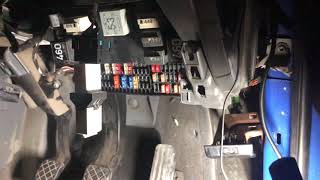
- For Volkswagen and Audi vehicles experiencing a crank-no-start, replace the fuel pump relay (often marked '409' or '167') before replacing the $300 fuel pump.
- On Fiat, Alfa Romeo, and Suzuki 1.3L diesels in limp mode, test the variable oil pump control solenoid (typically 5-15 Ohms) before authorizing a $1,000+ oil pump replacement.
- Stop driving immediately if P1541 appears on a Peugeot or Citroen 1.2L PureTech engine; this indicates a degrading wet timing belt that will cause catastrophic engine failure.
What Does P1541 Mean?

P1541 is a manufacturer-specific code, meaning its definition changes entirely based on your car's brand. On a Volkswagen, it flags a fuel pump relay failure. On a Fiat or Alfa Romeo, it warns of a critical oil pump system fault. You must look up the code alongside your specific vehicle make to diagnose it accurately.
Technical definition: P1541 is a powertrain code ('P1') reserved for manufacturers. Definitions include: Volkswagen/Audi: Fuel Pump Relay Open Circuit. Fiat/Alfa Romeo/Suzuki: Variable Displacement Oil Pump Pressure Fault. BMW: Pedal Position Sensor Double Error. Ford: Intake Manifold Runner Control (IMRC) Circuit Open. Chevrolet/GM: A/C High Side Over Temperature. Peugeot/Citroen: Engine Oil Pressure Too Low.
Can I Drive With P1541?
No — Do Not Drive. Do not drive. For VW/Audi, the fault causes sudden stalling in traffic. For Fiat, Alfa Romeo, Suzuki, and Peugeot/Citroen, the code indicates critical oil pressure loss. Continued driving guarantees oil starvation and catastrophic engine failure, with repair costs exceeding $8,000. Identify the specific cause before starting the engine.
Common Causes

- Faulty Fuel Pump Relay (VW/Audi) (Very Common) — The relay fails internally and cannot complete the circuit to deliver electricity to the fuel pump, preventing the engine from starting.
- Defective Variable Oil Pump Solenoid (Fiat/Alfa/Suzuki) (Very Common) — This solenoid regulates the variable displacement oil pump and is a known, frequent failure point that triggers limp mode.
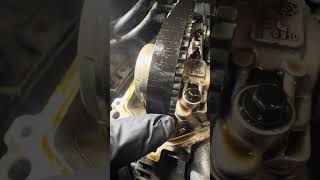
- Degrading Wet Timing Belt (Peugeot/Citroen) (Common) — The 'wet' timing belt degrades, shedding particles that clog the oil pump pickup strainer 🎬 See how to inspect your wet belt for degradation. and cause critical oil starvation.
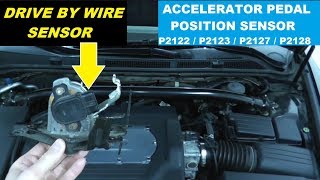
- Failed Accelerator Pedal Position Sensor (BMW) (Common) — Internal wear of the sensor's tracks sends conflicting signals to the ECU regarding pedal position, causing 🎬 Watch: Testing and replacing the accelerator pedal position sensor. unpredictable acceleration.
- Damaged or Corroded Wiring/Connectors (Common) — Frayed wires, loose connections, or corrosion create an open circuit or high resistance, triggering the code across all makes.
- Faulty Neutral Position Switch (Hyundai/Kia) (Common) — An open circuit in the switch prevents the ECU from knowing when the vehicle is in neutral, affecting idle and starting.
- Blown or Missing Fuse (Less Common) — A blown or missing fuse in the fuel pump or ECU circuit immediately triggers an open circuit code, especially on VW models.
- Contaminated or Sludgy Engine Oil (Less Common) — Old oil clogs the fine passages of the variable oil pump or its control solenoid, causing it to stick and trigger pressure faults.
- Faulty Intake Manifold Runner Control (IMRC) Actuator (Ford) (Less Common) — The actuator fails to adjust airflow into the engine, reducing efficiency and causing rough idle.
- Low Engine Oil Level (Rare) — Extreme low oil starves the pump, triggering a pressure control fault. Check the dipstick first before replacing parts.
- Faulty Engine Control Module (ECU/PCM) (Rare) — The ECU fails to send the correct grounding signal to control the component. Consider this only after ruling out wiring and fuses.
Symptoms

- Check Engine Light is On — The universal first symptom for any P1541 fault.
- Engine Cranks But Will Not Start — The primary symptom for the Volkswagen/Audi fuel pump relay fault. The engine is starved of gasoline.
- Limp Mode and Severely Reduced Power — The ECU limits engine RPM (often below 3000 RPM) to prevent catastrophic damage. Common on Fiat, Alfa Romeo, Suzuki, and BMW.
- Low Oil Pressure Warning Light — Accompanies the check engine light on Peugeot, Citroen, Fiat, and Alfa Romeo models, indicating critical lubrication loss.
- Rough Idle or Poor Acceleration — Occurs with Ford's IMRC issue, BMW's pedal sensor fault, or a faulty Neutral Position Switch on Hyundai/Kia models.
Diagnostic Flowchart

Tap your situation to follow the diagnostic path that matches what you're seeing on this code.
Common Fixes & Costs
- Replace Fuel Pump Relay — Parts: $20-$60, Labor: $30-$90, ~0.2 hr book time (DIY)
- Replace Variable Oil Pump Control Solenoid — Parts: $80-$200, Labor: $100-$250, ~1.5 hr book time (Intermediate)
- Replace Accelerator Pedal Assembly — Parts: $75-$300, Labor: $60-$180, ~0.8 hr book time (Intermediate)
- Replace Wet Timing Belt and Clean Oil Pickup — Parts: $300-$600, Labor: $1000-$1800+, ~8.5 hr book time (Expert)
- Replace Neutral Position Switch — Parts: $30-$70, Labor: $100-$220, ~1.2 hr book time (Intermediate)
- Repair Damaged Wiring or Connector — Parts: $5-$25, Labor: $120-$400, ~2.0 hr book time (Advanced)
DIY vs Professional
- Replace Fuel Pump Relay — Beginner: Yes
Tools: None, or a small flathead screwdriver. - Replace Accelerator Pedal Assembly — Beginner: Yes
Tools: Basic socket set, screwdriver. - Replace Variable Oil Pump Control Solenoid — Beginner: No
Tools: Socket set, torque wrench, drain pan, new engine oil. - Repair Damaged Wiring or Connector — Beginner: No
Tools: Multimeter, wire strippers, crimpers, heat shrink tubing, soldering iron. - Replace Wet Timing Belt — Beginner: No
Tools: Professional mechanic's toolset, engine timing tools, engine support.
Used vs. New Parts: Buying Guide
When a used part is worth it: For electronic components like relays, sensors, and solenoids, buying used is never recommended. A used BMW accelerator pedal assembly from a verified low-mileage vehicle is the only viable budget option.
Donor-vehicle mileage cap: roughly under 50000 miles for the part to have meaningful remaining life.
Donor quality checklist:
- Verify the donor vehicle's mileage and ensure it wasn't scrapped for a related electronic issue.
- Avoid parts from flood-damaged vehicles, as corrosion destroys electronics.
- Match the part number exactly. Minor variations lead to incompatibility.
Decision logic:
- If Part is a relay, sensor, or solenoid under $200 → Always buy new. The labor cost to replace it again outweighs any savings.
- If Part is an expensive assembly (e.g., pedal assembly > $300) and budget is critical → A used part from a reputable salvage yard with a warranty is a calculated risk.
- If Part is a known high-failure item (e.g., Fiat oil solenoid, Peugeot wet belt) → Never buy used. Purchase a new OEM or high-quality aftermarket part.
Warranty tradeoff: Used parts offer a 30-90 day warranty covering only the part. New aftermarket parts have a 1-year to lifetime warranty. New OEM parts carry a 1-2 year warranty.
Worst-case if a used part fails: $200-$500 if a used electronic part fails shortly after installation, requiring repeat labor charges.
What Happens If You Wait — Timeline
- 0-1 week (First Occurrence): For oil pressure faults (Fiat/Peugeot), the Check Engine Light illuminates and the car enters limp mode. No immediate mechanical damage if driving is stopped. (MPG impact: 10-25% (due to limp mode)% · Added cost: $0)
- 1 week - 1 month (Intermittent Driving): Intermittent low oil pressure starves the camshafts and turbocharger. On Peugeot engines, belt debris heavily clogs the oil pickup strainer. Ticking noises begin. (MPG impact: 5-10%% · Added cost: $50-$200 in wasted fuel and accelerated wear.)
- 1-3 months (Continued Driving): Sustained oil starvation destroys turbocharger bearings, leading to exhaust smoke. Camshaft journals score heavily. (MPG impact: 10-20%% · Added cost: $1,500 - $4,000 (Turbocharger replacement))
- 3+ months (Catastrophic Failure): Complete engine failure. Connecting rod bearings seize to the crankshaft ('spun bearing'), destroying the engine block. (MPG impact: 100% (vehicle is undriveable)% · Added cost: $5,000 - $10,000+ (Engine replacement))
Cost of Not Fixing It
- Immediate: VW/Audi: Vehicle will not start, resulting in a tow. Fiat/Alfa/Peugeot: Vehicle enters limp mode with severely reduced power. BMW: Unpredictable acceleration creates a major safety hazard. (Added cost: $75-$300 (Towing and diagnostic fee))
- Days to Weeks: Fiat/Alfa/Peugeot: Continued driving with low oil pressure starves the turbocharger and engine bearings of lubrication, leading to accelerated wear. (Added cost: $1,500-$4,000 (Turbocharger replacement, extensive engine cleaning))
- Weeks to Months: Fiat/Alfa/Peugeot: Catastrophic engine failure. Lack of oil pressure causes spun bearings and a seized engine, requiring complete replacement. (Added cost: $5,000-$10,000+ (Engine replacement))
Diagnosis Steps
- Identify Your Vehicle's Make and Code Definition
Use a search engine or service manual to find exactly what P1541 means for your specific car brand. Do not proceed until you know which system is affected.
Tools: OBD-II Scanner, Smartphone/Internet (Beginner) - Perform a Basic Systems Check
Check the basics related to your code's definition. For Fiat/Alfa/Peugeot, check the engine oil level and condition. For VW, visually inspect the fuel pump fuses.
Tools: Flashlight, Dipstick, Fuse Puller (Beginner) - Visually Inspect Wiring and Connectors
Examine the component related to your code (fuel pump relay, oil pressure solenoid, pedal sensor). Look for burnt wires, corrosion on connector pins, or loose connections.
Tools: Flashlight (Beginner) - Scan for Manufacturer-Specific Live Data
Use an advanced scan tool to read live data. For Fiat/Alfa, monitor 'Desired Oil Pressure' vs. 'Actual Oil Pressure'. For BMW, graph the voltage from both tracks of the accelerator pedal sensor.
Tools: Advanced OBD-II Scan Tool (Advanced) - Test the Fuel Pump Relay (VW/Audi)
Remove the relay. Connect jumper wires from a 12V source to the coil terminals (85 and 86). You should hear a click. While energized, test for continuity between the switch terminals (30 and 87). No continuity means the relay is dead.
Tools: Multimeter, Jumper Wires, 12V Source (Intermediate) - Test the Oil Pump Solenoid (Fiat/Alfa)
Disconnect the oil pump control solenoid. Measure the resistance across its two pins. A reading of 'O.L.' (Open Loop) or near zero Ohms (dead short) confirms a failed solenoid. Good solenoids typically read 5-15 Ohms.
Tools: Multimeter (Intermediate) - Check for Power and Ground at the Connector
Verify the component's electrical connector receives 12V (with key on) and has a solid ground. A lack of power or ground points to a wiring or ECU issue, not the component itself.
Tools: Multimeter, Service Manual (Intermediate) - Load Test the Power Supply Circuit
Connect a test light between the power pin on the connector and a known good ground. If the test light is dim or doesn't light, there is high resistance in the power wire upstream.
Tools: 12V Test Light (Advanced) - Measure Fuel Pressure (VW/Audi)
Connect a fuel pressure gauge to the fuel rail. Cycle the key to prime the system. Pressure should hit 43.5-58 PSI (3.0-4.0 Bar). Low pressure points to a failing pump or a relay failing under load.
Tools: Fuel Pressure Gauge Kit, Safety Glasses (Advanced) - Measure Engine Oil Pressure (Fiat/Alfa/Peugeot)
Connect a mechanical oil pressure gauge. At hot idle, 8-14 PSI is normal. At 2,000 RPM, pressure must jump to 35-45 PSI. If pressure remains low, you have a mechanical failure (clogged pickup, bad pump, bad solenoid).
Tools: Mechanical Oil Pressure Gauge Kit, Service Manual (Advanced)
When This Code Triggers (Freeze-Frame Conditions)
- Engine Coolant Temp: 185-210°F (85-99°C) (Engine at normal operating temperature. The ECU runs most checks when the engine is fully warmed up.)
- Engine RPM: 700-3000 RPM (VW fuel relay faults log at key-on (0 RPM). Fiat/Alfa oil pressure faults log above idle as the system commands pressure changes.)
- Engine Load: 20-70% (Faults set under moderate load, such as during acceleration or steady cruising, when component demand is highest.)
- Vehicle Speed: 0-65 mph (Can be set at a standstill (VW crank-no-start) or during city/highway driving (Fiat limp mode).)
Related Codes
- P1619 — On VW diesels, this glow plug relay code often appears with P1541. If both lack a command signal, the ECU or its main power supply is the root cause.
- P0011 — On Fiat/Alfa Romeo, camshaft timing codes appear because the oil pressure fault (P1541) starves the VVT system. Fixing P1541 resolves both.
- P0705 — On Kia/Hyundai, P0705 (Transmission Range Sensor) is a companion to P1541. If you have both, the neutral switch/sensor assembly is the guaranteed culprit.
- P0521 — On Fiat/Peugeot, P0521 (Oil Pressure Sensor) appears with P1541. P1541 points to the control system, which causes the sensor to report bad readings. Prioritize P1541.
Climate & Environmental Factors
- Extreme Heat: High engine bay temperatures accelerate the aging of relay internal components, causing coil burnout or contact failure.
- High Humidity / Road Salt: Moisture and salt cause corrosion on electrical connectors and relay pins, creating high resistance and triggering 'Open Circuit' faults.
- Extreme Cold & Short Trips: Short drives in freezing temperatures prevent oil from burning off condensation. This moisture forms sludge, clogging the oil pump pickup screen and variable pressure solenoids.
How to Talk to a Mechanic About This Code
Say this: "{'Volkswagen/Audi': "My car has a P1541 code and won't start. I understand this is likely the fuel pump relay. Please test the relay and its circuit before quoting a fuel pump replacement.", 'Fiat/Alfa Romeo': "I have a P1541 and the car is in limp mode. I've read this is commonly the variable oil pump control solenoid. Please test the solenoid resistance before we consider replacing the oil pump.", 'Peugeot/Citroen': 'My 1.2 PureTech has an oil pressure warning and code P1541. I need a diagnosis that includes inspecting the oil pickup strainer for wet timing belt debris.'}"
Brand-specific language signals you are an informed customer. It directs the mechanic to the cheapest, most likely fix first, preventing unnecessary part replacements.
Avoid saying:
- 'My check engine light is on, can you just fix it?' (Invites unnecessary diagnostic time).
- 'I think it's the fuel pump.' (Unless certain, let them diagnose it, but guide their starting point).
- 'Just do whatever it takes to get it running.' (Gives the shop a blank check).
Questions to ask before authorizing the repair:
- Can you provide a written estimate breaking down parts and labor costs?
- For a Fiat/Alfa, what was the exact resistance reading on the oil pump solenoid?
- For a VW, did you confirm the relay is receiving power and a ground signal from the ECU?
- For a Peugeot, can you show me photos of the oil pickup strainer?
- Is this Peugeot wet belt repair eligible for coverage under the manufacturer's customer support program?
Where to Take It: Dealer vs Independent vs Chain
- Dealer:
Recommended only for Peugeot/Citroen goodwill repairs or vehicles under warranty.
Best for: Vehicles under warranty., Peugeot/Citroen 1.2L PureTech wet belt issues, to check for goodwill coverage., Complex electronic issues on newer BMWs.
Downsides: Highest labor rates, often $150-$250/hour., Defaults to replacing expensive assemblies rather than troubleshooting small components. - Independent Shop:
Excellent choice for VW, Fiat, and BMW scenarios, provided the shop specializes in European brands.
Best for: Out-of-warranty vehicles., Known failures like the VW fuel pump relay or Fiat oil pump solenoid.
Downsides: May lack access to manufacturer goodwill programs for Peugeot wet belts. - Chain Shop:
AVOID. The risk of misdiagnosis and incorrect repairs is extremely high.
Best for: Simple, non-diagnostic work like oil changes and tires.
Downsides: Technician diagnostic skill is highly variable., Guaranteed to misdiagnose a nuanced, brand-specific code like P1541.
When to Walk Away From the Repair
If the estimated repair cost exceeds 40-50% of your car's private-party value, seriously consider if the investment is worthwhile.
- Car worth $3500, fix is $250: Fix it. A VW fuel pump relay or BMW pedal sensor is a low-cost repair that makes the car perfectly driveable.
- Car worth $7000, fix is $2800: Borderline. A Peugeot 1.2L wet belt replacement is a massive cost. If the rest of the car is pristine, fix it. If it needs other work, walk away.
- Car worth $4000, fix is $4500: Walk away. If a Fiat has been driven with P1541 long enough to destroy the turbo and engine, the repair exceeds the car's value.
What Scan Tool You Need for This Code
Minimum: A scanner that displays manufacturer-specific codes and live data streams. A basic $20 reader is insufficient.
You must read the manufacturer-specific definition. For Fiat/Alfa, you MUST view live data for 'Desired Oil Pressure' vs. 'Actual Oil Pressure'. For BMW, you must graph pedal sensor voltages.
Mid-range: XTOOL D7 or Foxwell NT680 (~$350) — Offers bidirectional controls. You can command the VW fuel pump on or perform advanced system tests on the Fiat oiling system.
Professional: Autel MaxiCOM MK808 (~$500) — Provides full bidirectional control and access to guided functions with a superior database for European vehicle-specific procedures.
Rent vs buy: For a simple VW fuel pump relay fix, use a free loaner tool from AutoZone. For any P1541 issue requiring live data (Fiat, Peugeot, BMW), buy at least a budget-pick scanner.
How to Clear the Code After You Fix It
- Use an OBD-II scan tool to clear the diagnostic trouble code (DTC).
- Perform a complete drive cycle to allow the vehicle's readiness monitors to run and set to 'Ready'.
Drive cycle (~30 minutes): A cold start after sitting for 8+ hours, 2-3 minutes of idling, 10 minutes of steady highway driving at 55 mph, followed by 15 minutes of mixed stop-and-go city driving.
Readiness monitors affected: Comprehensive Component Monitor, Fuel System Monitor, Catalyst Monitor
Before emissions retest: drive at least 100 miles to fully set monitors.
Watch out for:
- Disconnecting the battery clears the code but resets all readiness monitors to 'Not Ready', causing an automatic emissions test failure.
- The code returns immediately if the underlying mechanical or electrical fault is not repaired.
Will This Fail Emissions / State Inspection?
Yes — this code typically fails an OBD-II emissions inspection.
- California: An illuminated Check Engine Light is an automatic failure. After repair, a full drive cycle must be completed to set readiness monitors before a re-test.
- New York: The NYS Vehicle Inspection Program includes an OBD-II check. A P1541 code causes an automatic failure.
- Texas: In the 17 counties requiring emissions testing, an active P1541 code results in failure. Attempting a test with 'Not Ready' monitors also results in failure.
Most Commonly Affected Vehicles
- Volkswagen Passat, Caddy, Jetta, Golf (2000-2015) — Extremely prone to the 'Fuel Pump Relay Open Circuit' fault, causing a crank-no-start condition.
- Alfa Romeo Giulietta, MiTo (2010-2020) — Commonly experiences the 'Variable Displacement Oil Pump' issue, triggering limp mode. The control solenoid is the primary suspect.
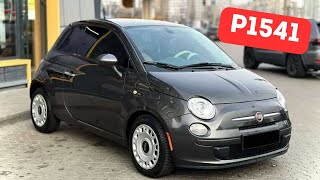
- Fiat 500, 500L, Punto, Doblo (1.3L/1.6L Multijet) (2012-2018) — Shares the oil pump solenoid issue with Alfa Romeo. The code is frequently P1541-21.
- Suzuki Swift, Vitara (1.3 DDiS diesel) (2010-2018) — Uses Fiat-derived engines and suffers from the same 'Variable Displacement Pump' fault code.
- BMW Various (E46, E39, E53 generations) (2000-2010) — Indicates a 'Pedal Position Sensor Double Error', causing driveability problems and limp mode.
- Kia Sorento (Manual Transmission) (2003-2019) — Triggers code P1541 for 'Neutral gear recognition switch - open'.
- Hyundai Matrix (Manual Transmission) (2001-2010) — Uses P1541 for 'Neutral Gear Recog. Switch - Open', affecting fuel mapping on takeoff.
- Chevrolet / GM Malibu, Impala, Silverado, Cruze (2005-2015) — P1541 indicates 'A/C High Side Over Temperature' or a general 'Engine Control Modulation' fault.
- Peugeot / Citroen Various with 1.2L PureTech engines (2014-2020) — Indicates low oil pressure, often a symptom of a degrading wet timing belt clogging the oil pump strainer. Critical failure.
Manufacturer-Specific Notes
- Volkswagen / Audi: P1541 almost always means 'Fuel Pump Relay Open Circuit'. The car cranks but won't start. It is a high-severity issue but a low-cost, easy DIY fix.
- Fiat / Alfa Romeo / Suzuki (Diesel): Indicates a 'Variable Displacement Oil Pump' fault. The car enters limp mode. The cause is frequently the $150 external control solenoid, not the $1,000 pump itself.
- Peugeot / Citroen: On 1.2L PureTech engines, P1541 is a major red flag for low oil pressure caused by the wet timing belt disintegrating. Stop driving immediately.
- BMW: Points to a 'Pedal Position Sensor Double Error'. The computer gets conflicting signals from the accelerator pedal, triggering limp mode.
- Kia / Hyundai (Manual): Specifically points to the 'Neutral Gear Recognition Switch', causing high idle or hesitation when accelerating from a stop.
- Ford: Indicates a fault in the 'Intake Manifold Runner Control (IMRC) Circuit', causing poor acceleration and rough running.
- Chevrolet / GM: The definition varies widely. A GM-specific scan tool is crucial to read freeze-frame data and determine the exact subsystem at fault.
Real Owner Stories
2014 Alfa Romeo Giulietta 1.6 JTDm2 with 60,000km
Check engine light appeared with P1541. A mechanic suggested replacing the oil pressure sensor.
What they tried:
- Replaced the oil pressure sensor, but the light returned.
- The mechanic then suggested replacing the entire oil pump.
Outcome: The owner replaced the variable oil pump's external flow rate regulator solenoid instead. This $150 repair completely resolved the issue.
Lesson: On Fiat/Alfa Romeo diesels, P1541 is almost always the external solenoid, not the pump itself. Replace the solenoid first.
2005 VW Caddy 2.0 SDI
Vehicle cranked but would not start. Codes P1541 (Fuel Pump Relay) and P1619 (Glow Plug Relay) were present.
What they tried:
- Tested the fuel pump relay, which was functional but receiving no power.
Outcome: A check of the fuse box revealed the fuse for the fuel pump relay circuit was missing after previous service work. Installing a $1 fuse fixed the car.
Lesson: Always perform the simplest checks first. Verify all related fuses are intact before condemning expensive relays or ECUs.
2018 Peugeot 5008 1.2 PureTech with 46,000 miles
A red 'STOP' alert for severe engine oil pressure fault appeared one day after a dealer recall check.
What they tried:
- The dealer found codes P15A1 and P15A8 (related to P1541) and suggested a costly engine strip-down.
Outcome: The owner discovered this is the classic symptom of the wet timing belt degrading and clogging the oil pickup. The dealer's initial recall check failed to catch it.
Lesson: On a Peugeot 1.2 PureTech, an oil pressure fault is a critical warning of wet belt failure. Press the dealer for goodwill coverage under manufacturer support programs.
How to Prevent This Code From Triggering
- Use the exact manufacturer specification of engine oil. (Every oil change) — For Peugeot/Citroen 1.2L PureTech engines, using incorrect oil causes the wet timing belt to swell, shed particles, and trigger P1541 oil pressure faults.
- Perform regular, shorter-interval oil changes. (Every 6,000-8,000 miles) — Prevents sludge buildup that clogs the oil pump pickup or variable pressure solenoid on Fiat, Alfa, and Peugeot engines.
- Adhere to the wet timing belt replacement interval. (Every 6 years or 62,000 miles (Peugeot/Citroen)) — Ignoring the replacement interval guarantees belt failure, which is the primary cause of P1541 on these engines.
- Inspect electrical connections and fuse boxes. (Annually) — Cleaning green or white corrosion off relay pins and fuse holders prevents the open circuit faults common on VWs.
Frequently Asked Questions
Why can't I find a single definition for code P1541?
P1541 is a manufacturer-specific code. The 'P1' prefix allows carmakers to assign their own unique diagnostic definitions. The meaning changes entirely from brand to brand.
What is the most common misdiagnosis with P1541?
On Fiat/Alfa/Suzuki, mechanics often replace the entire $1,000 oil pump when the actual fault is the $150 external control solenoid. On VWs, technicians frequently replace the fuel pump instead of the $40 fuel pump relay.
Is it safe to clear the P1541 code and keep driving?
No. Clearing the code does not fix the underlying hardware failure. If the cause is low oil pressure (Fiat/Peugeot), driving will cause catastrophic engine failure.
My car won't start and I have code P1541. What's the most likely cause?
If you drive a Volkswagen or Audi, a failed fuel pump relay is the primary suspect. The engine cranks but receives no fuel.
My car is stuck in limp mode with code P1541. What does that mean?
Limp mode is a safety feature that limits engine RPM to prevent catastrophic damage. It is a standard response to P1541 on Fiat, Alfa Romeo, Suzuki, and BMW vehicles.
The code came back after I replaced the part. Now what?
The replaced part was not the root cause. Meticulously inspect the wiring harness for intermittent breaks or corrosion. Perform a load test on the power wire and verify the ECU ground signal.
What does the sub-code P1541-21 mean on my Fiat or Alfa Romeo?
The '-21' suffix means 'Signal below lower limit.' This confirms the ECU is not receiving the expected voltage from the oil pressure control system, pointing directly to a faulty solenoid or wiring.
Can a low oil level cause a P1541 code?
Yes. On vehicles where P1541 relates to oil pressure, an extremely low oil level causes the pump to suck in air, triggering a pressure control fault. Always check your dipstick first.
Key Takeaways
- Identify your vehicle's make before buying parts; P1541 has at least 7 different definitions, ranging from a $40 VW fuel relay to a $1,500 Peugeot timing belt repair.
- For Volkswagen and Audi vehicles experiencing a crank-no-start, replace the fuel pump relay (often marked '409' or '167') before replacing the $300 fuel pump.
- On Fiat, Alfa Romeo, and Suzuki 1.3L diesels in limp mode, test the variable oil pump control solenoid (typically 5-15 Ohms) before authorizing a $1,000+ oil pump replacement.
- Stop driving immediately if P1541 appears on a Peugeot or Citroen 1.2L PureTech engine; this indicates a degrading wet timing belt that will cause catastrophic engine failure.
Helpful Videos
Shop the Parts Behind P1541
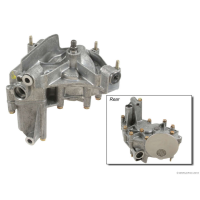
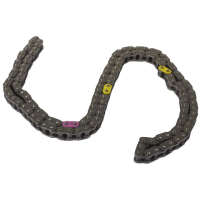
Below are the parts most often responsible for code P1541, ranked by how frequently each one is the actual culprit (per the diagnosis above). Tap any to see what we have for your vehicle.



The information in this article is provided for general reference and educational purposes only. Vehicle specifications, procedures, and part compatibility can vary by production date, trim level, and region. Always consult your vehicle's factory service manual and verify part numbers before purchasing or performing repairs. Safety-critical components such as airbags, seat belts, and braking systems should be installed by a qualified professional.
- 🧭 Diagnostic Flowchart
- 🎬 Helpful Videos
- 🛍️ Shop This Part
- What Does P1541 Mean?
- Can I Drive With P1541?
- Common Causes
- Symptoms
- Common Fixes & Costs
- DIY vs Professional
- Used vs. New Parts: Buying Guide
- What Happens If You Wait — Timeline
- Cost of Not Fixing It
- Diagnosis Steps
- When This Code Triggers (Freeze-Frame Conditions)
- Related Codes
- Climate & Environmental Factors
- How to Talk to a Mechanic About This Code
- Where to Take It: Dealer vs Independent vs Chain
- When to Walk Away From the Repair
- What Scan Tool You Need for This Code
- How to Clear the Code After You Fix It
- Will This Fail Emissions / State Inspection?
- Most Commonly Affected Vehicles
- Manufacturer-Specific Notes
- Real Owner Stories
- 2014 Alfa Romeo Giulietta 1.6 JTDm2 with 60,000km
- 2005 VW Caddy 2.0 SDI
- 2018 Peugeot 5008 1.2 PureTech with 46,000 miles
- How to Prevent This Code From Triggering
- Frequently Asked Questions
- Why can't I find a single definition for code P1541?
- What is the most common misdiagnosis with P1541?
- Is it safe to clear the P1541 code and keep driving?
- My car won't start and I have code P1541. What's the most likely cause?
- My car is stuck in limp mode with code P1541. What does that mean?
- The code came back after I replaced the part. Now what?
- What does the sub-code P1541-21 mean on my Fiat or Alfa Romeo?
- Can a low oil level cause a P1541 code?
- Key Takeaways
- 🎟️ Get 5% Off