

P1548 on 2015-2018 Ford Transit: Engine Air Filter Restriction Causes and Fixes
On a 2015-2018 Ford Transit, code P1548 indicates an engine air filter restriction. The most common cause is a water-soaked air filter due to a known water leak from the cowl area, a design flaw addressed by Ford's TSB 19-2091. The permanent fix involves installing an updated water deflector kit, seals, and a new air filter to prevent recurrence.
- P1548 on a 2015-2018 Transit means the engine isn't getting enough air, most likely due to a restricted air filter.
- The number one cause for this specific vehicle is a water-soaked air filter due to a known water leak into the engine bay.
- Before replacing any sensors, inspect the air filter. If it's wet, you must perform the fix in TSB 19-2091 to prevent the problem from happening again.
- Simply replacing a wet filter without addressing the leak is a temporary fix; the code will likely return.
What's Unique About the 2015-2018 Ford TRANSIT

For the 2015-2018 Ford Transit, P1548 is almost always linked to a specific design flaw where water ingress is common. Water running down the windshield can overwhelm the cowl drains, which can be easily clogged with debris. This allows water to spill into the engine bay directly onto the air filter housing, saturating the air filter and causing a severe restriction. This known issue is documented in Ford's Technical Service Bulletin (TSB) 19-2091, which provides a specific hardware fix. Unlike other vehicles where P1548 is usually just a dirty filter, on the Transit it points to a recurring water intrusion problem that requires more than just a filter change to permanently resolve.
Diagnostic Flowchart

Tap your situation to follow the diagnostic path that matches what you're seeing on this vehicle.
Symptoms You May Notice
- Check Engine Light (MIL) illuminated
- Reduced engine power or 'limp mode'
- Poor or sluggish acceleration
- Engine knocking, especially on the motorway
- Difficulty starting
- Engine misfires
- Increased fuel consumption
- Black smoke from exhaust during acceleration
- Replacing the MAP sensor without first inspecting the air filter and checking for water intrusion.
- Replacing the air filter without addressing the underlying water leak, leading to the code returning after the new filter gets wet.
- Only cleaning the air filter. A water-damaged paper filter element can have its pores blocked even after drying, still causing a restriction.
Most Likely Causes

- Water-Saturated Air Filter 🔴 High Probability → Shop Air Cleaner Assembly A known design issue where water from the windshield cowl area can leak into the engine compartment directly onto the airbox, especially when drains are clogged with debris. This is documented in TSB 19-2091.
How to confirm: Visually inspect the air filter element. If it is damp, saturated with water, frozen, or has disintegrated, this is the cause. Check for standing water in the bottom of the air filter housing.
Typical fix: Install a new air filter and the updated water management hardware (deflectors, seals, mastic patch) as specified in TSB 19-2091 to prevent recurrence. This involves sealing body joints and installing new deflectors in the cowl area.
Est. part cost: $25-$50 for the air filter, plus $75-$150 for the TSB hardware kit. - Clogged or Dirty Air Filter 🟡 Medium Probability → Shop Air Cleaner Assembly This is the standard cause for this code on any vehicle, resulting from normal accumulation of dust and debris over time. On the Transit, this can happen faster if driven in dusty environments.
How to confirm: Remove the air filter and inspect it for excessive dirt, dust, leaves, or other debris blocking airflow.
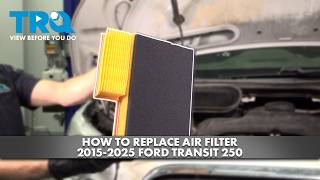
Typical fix: Replace the engine air filter (Motorcraft P/N: CK4Z-9601-A). 🎬 See this walkthrough on how to replace the air filter
Est. part cost: $25-$50 - Obstruction in Air Intake Ducting ⚪ Low Probability
How to confirm: Inspect the entire air intake path from the inlet to the throttle body for any foreign objects, nests, or collapsed ducting.
Typical fix: Remove the obstruction.
Est. part cost: $0
Rare But Worth Checking
- Faulty Manifold Absolute Pressure (MAP) Sensor: While not common for this specific issue on the Transit, a MAP sensor providing incorrect low readings could trick the PCM into thinking there's a restriction. This is more likely if the filter and intake tract are perfectly clean and dry.
- Collapsed Intake Tubing: In rare cases, the flexible intake tubing itself can become soft with age and oil contamination, causing it to collapse inward under high engine vacuum, creating a restriction.
Diagnosis Steps
- Confirm the P1548 code is present using an OBD-II scanner.
- Check for any Technical Service Bulletins (TSBs) related to your vehicle's VIN, specifically TSB 19-2091, which supersedes TSB 18-2321 and 17-0014.
- Open the air filter housing and visually inspect the air filter. Note if it is dirty, damp, or completely saturated with water/ice. Look for a 'tide line' of dirt or water staining on the filter media.
- Check the bottom of the air filter housing for any pooled water.
- If the filter is wet, this is the primary cause. Replace the filter (P/N: CK4Z-9601-A) and proceed with the repairs outlined in TSB 19-2091 to prevent water intrusion.
- If the filter is just dirty, replace it, clear the code, and test drive to confirm the fix.
- If the filter is clean and dry, thoroughly inspect the entire air intake tract from the snorkel inlet to the throttle body for any obstructions or collapsed hoses.
- If no restrictions are found, consider monitoring the MAP sensor data with a scan tool during a test drive to ensure it is reading correctly. A sensor that reads artificially low under load could be faulty.
Parts You'll Likely Need
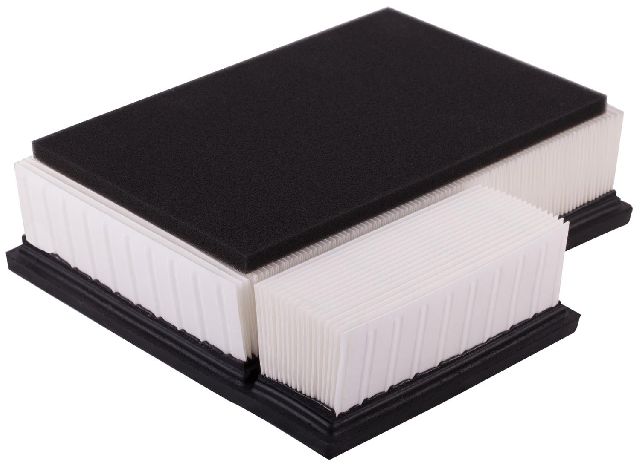
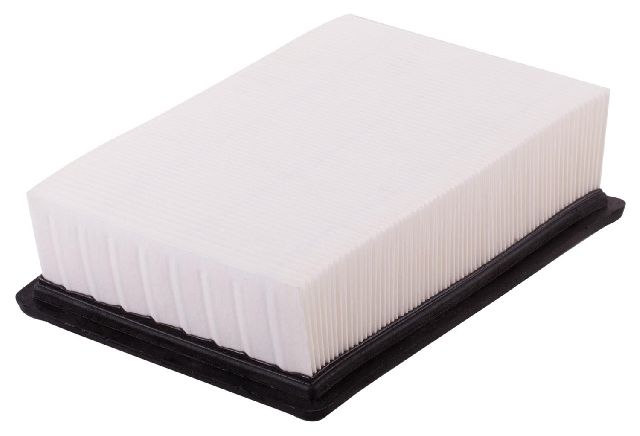
- Engine Air Filter
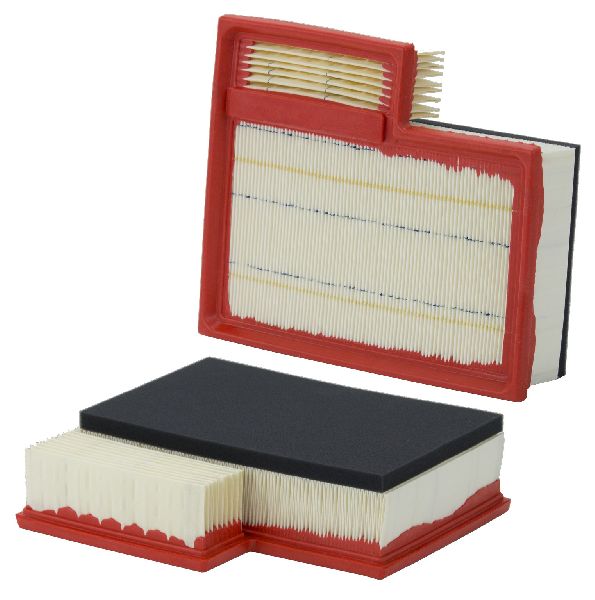
(OEM #CK4Z-9601-A)— This is the most common failure point, either from normal clogging or from water saturation specific to the Transit. It is a required replacement part for the TSB fix.
Trusted brands: Motorcraft, WIX, Fram
OEM price range: $30-$50
Aftermarket price range: $20-$40 - Water Deflector Kit (TSB Fix)
(OEM #CK4Z-6102408-AA)— If the cause is a water-soaked filter, this hardware is required to permanently fix the water intrusion issue as per TSB 19-2091. This is the main deflector for the cowl area.
Trusted brands: Ford (Motorcraft)
OEM price range: $20-$40 - Revised Engine Air Cleaner Cover
(OEM #JK4Z-9661-D (for 3.5L EcoBoost), JK4Z-9661-A (for 3.7L), JK4Z-9661-B (for 3.2L))— Part of the TSB 19-2091 procedure for some engines to prevent water intrusion. The correct part number depends on the engine.
Trusted brands: Ford (Motorcraft)
OEM price range: $65-$100 - TSB Sealant and Patch Kit
(OEM #Includes 4L3Z-18203A16-AA (Mastic Patch), CK4Z-61021A46-A (Leaf Screen Foam Seal), TA-30 (Silicone Sealant))— These are additional components listed in TSB 19-2091 required to properly seal the cowl panel and body seams against water entry.
Trusted brands: Ford (Motorcraft)
OEM price range: $30-$50
Related Codes That Often Appear With This One
- P00BD — Mass Air Flow (MAF) 'A' Circuit Range/Performance - Air Flow Too High. This can occur with P1548 if water affects the MAF sensor or if the PCM sees conflicting data between the MAF and MAP sensors due to the restriction. It is listed in TSB 19-2091.
- P0171, P0174 — System Too Lean. If the air restriction causes inaccurate readings from the MAF sensor, the PCM might incorrectly calculate the fuel mixture, leading to lean conditions. These codes are also mentioned in TSB 19-2091.
- P1247 — Turbocharger Boost Pressure Low. An air restriction before the turbocharger will prevent it from building the expected amount of boost. This is another code listed in TSB 19-2091.
- P061B — Internal Control Module Torque Calculation Performance. The PCM may set this code when the calculated engine torque does not match the expected torque, a condition that can be caused by a severe air restriction. Also listed in TSB 19-2091.
Technical Service Bulletins (TSBs) & Recalls

- TSB 19-2091: The most current bulletin that addresses various drivability concerns, including P1548, caused by undesired water entry into the engine compartment. Recommends installing updated water management hardware.
- TSB 18-2321: An earlier, superseded version of the bulletin for the same water intrusion issue.
- TSB 17-0014: The original bulletin that also identifies P1548 in relation to drivability concerns, later superseded by TSB 18-2321 and 19-2091.
Platform-Specific Known Issues
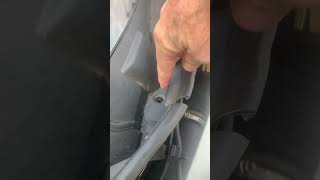
- TSB 19-2091 (superseding 18-2321 and 17-0014) explicitly details an issue on 2015-2018 Transits where water can enter the engine bay, leading to a saturated air filter and a host of drivability problems, including code P1548. The fix involves installing new water deflectors, seals, a mastic patch 🎬 Watch: A helpful tip for keeping your air filter dry on a body joint, and potentially a revised air cleaner cover depending on the engine.
Mechanic-Grade Diagnostic Values
- MAP Sensor Supply Voltage — expected: 4.8V to 5.2V. Failure: Voltage outside this range indicates a problem with the PCM or wiring, not necessarily the sensor itself.
Scan Tool Commands That Help
- Ford IDS / FORScan: DTC Self-Test & Live Data Monitoring (MAP, MAF) — Used to confirm P1548 and check for the other related codes mentioned in TSB 19-2091. After the repair, live data can be monitored on a test drive to ensure MAP and MAF readings are within expected parameters under load, confirming the restriction is gone. No special resets are required.
Wiring & Ground Locations
- MAP Sensor Connector — On the air intake ducting, typically near the throttle body.. This 4-pin connector provides power, ground, and signal paths for both the Manifold Absolute Pressure (MAP) and Intake Air Temperature (IAT) sensors. The pins are typically: 5V reference, ground, MAP signal, and IAT signal. A replacement pigtail is available under part number WPT-508. Checking for 5V reference at this connector is a key first step if the air filter is found to be clean and dry.
Real Owner Repair Stories
- GEL Automotive, Ford Specialist Shop (Ford Transit MK8 (2014+ generation)) — Poor performance and a flashing engine management light.
❌ Tried (didn't work) The referring garage could not diagnose the fault.
✅ What actually fixed it The shop used Ford's IDS to find code P0299 (Turbocharger Underboost). Physical inspection revealed the root cause was a soaking wet, torn, non-genuine air filter. Replacing the filter with a genuine Ford part and clearing the codes resolved all issues. This is the same root cause that triggers P1548.
OEM Part Supersession History
TSB 17-0014→TSB 18-2321, then TSB 19-2091— TSB 18-2321 superseded 17-0014 to update the service procedure. TSB 19-2091 then superseded 18-2321 to update the service labor time standards. The core issue and parts for the fix remained consistent through the revisions.
Model Year Variations Within This Range
- 2015-2018 (built on or before July 24, 2018): Vehicles built before this date are explicitly covered by TSB 19-2091 for the water intrusion issue. Vehicles built after this date are presumed to have the updated cowl and airbox components from the factory, though some owner reports on later models (e.g., 2021) suggest water can still enter the engine bay, even if the specific path to the air filter has been addressed.
Helpful Videos

We Have This Part in Stock


The information in this article is provided for general reference and educational purposes only. Vehicle specifications, procedures, and part compatibility can vary by production date, trim level, and region. Always consult your vehicle's factory service manual and verify part numbers before purchasing or performing repairs. Safety-critical components such as airbags, seat belts, and braking systems should be installed by a qualified professional.
- Ford TRANSIT:
- 🧭 Diagnostic Flowchart
- 🎬 Helpful Videos
- 🛍️ Shop This Part
- What's Unique About the 2015-2018 Ford TRANSIT
- Symptoms You May Notice
- Most Likely Causes
- Rare But Worth Checking
- Diagnosis Steps
- Parts You'll Likely Need
- Related Codes That Often Appear With This One
- Technical Service Bulletins (TSBs) & Recalls
- Platform-Specific Known Issues
- Mechanic-Grade Diagnostic Values
- Scan Tool Commands That Help
- Wiring & Ground Locations
- Real Owner Repair Stories
- OEM Part Supersession History
- Model Year Variations Within This Range
- 🎟️ Get 5% Off