

OBD-II Code P1553: A Highly Manufacturer-Specific Fault
What P1553 means, why it triggers, and how to fix it on your VW, BMW, Hyundai, Nissan, Chevy, and more
- Verify your vehicle's specific P1553 definition before replacing parts, as it means a vacuum leak on a VW, a VANOS fault on a BMW, or a battery sensor issue on a Nissan.
- For Volkswagen and Audi models, perform a smoke test to locate cracked vacuum hoses before spending $50-$150 on a new MAP sensor.
- On BMWs experiencing a rough idle and P1553, swap the intake and exhaust VANOS solenoids to see if the fault code follows the suspected bad part.
- For 2011-2016 Chevy Cruze models, inspect the plastic thermostat housing for coolant leaks, which short out the temperature sensor wiring and trigger this code.
What Does P1553 Mean?
Code P1553 is a manufacturer-specific code with drastically different definitions depending on your vehicle. For Volkswagen/Audi, the Engine Control Unit (ECU) sees a major disagreement between the Manifold Absolute Pressure (MAP) and Barometric Pressure (BARO) sensors. For BMW, it points to a VANOS variable valve timing system fault. For Hyundai, it indicates an Idle Air Control (IAC) valve circuit failure. For Nissan, it flags a Battery Current Sensor problem. You must identify the correct definition for your car before diagnosing.
Technical definition: The technical definition of P1553 varies significantly. For VAG (Volkswagen Auto Group), it is 'Barometric / Manifold Pressure Signal Ratio Out of Range / Implausible Correlation,' indicating the ECU found the ratio between the MAP and BARO sensor signals outside the expected range. For other manufacturers, this exact code points to faults in variable valve timing (BMW), idle air control (Hyundai), battery charging systems (Nissan), or coolant temperature circuits (Chevrolet).
Can I Drive With P1553?
Yes, But With Caution. You can drive, but expect poor engine performance, rough idling, and reduced fuel economy. Continued driving with a vacuum leak (common on VW/Audi) creates a lean condition that burns hotter, accelerating engine wear and irreversibly damaging the catalytic converter—an $800-$2500 repair. Unexpected stalling creates a safety hazard in traffic. Diagnose the issue within a week.
Common Causes
- Cracked, disconnected, or leaking vacuum hoses (Very Common) — This is the number one cause for P1553 on Volkswagen and Audi vehicles. Over time, rubber and plastic hoses connected to the intake manifold, brake booster, or PCV system become brittle and crack. This allows unmetered air to enter the engine, creating a pressure reading that conflicts with what the BARO sensor expects.
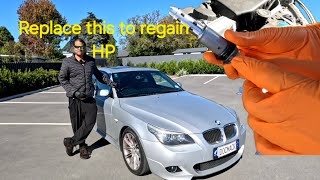
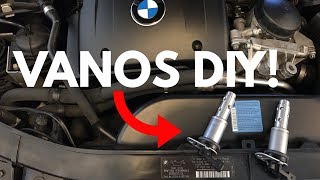
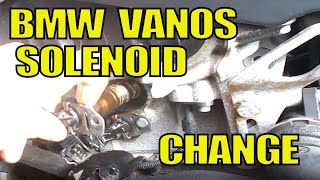
- Faulty or Dirty VANOS Solenoid (Very Common) — On BMWs, this is the most frequent culprit. The VANOS solenoids control oil flow to adjust camshaft timing. 🎬 Watch: A DIY guide to cleaning and swapping VANOS solenoids. They get clogged with old oil sludge or fail electrically, preventing proper cam adjustment and triggering a P1553 fault.
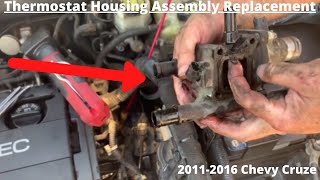
- Leaking/Melted Thermostat Housing (Chevy Cruze/Sonic) (Common) — On 2011-2016 Chevy Cruze and Sonic models, the plastic thermostat housing cracks or melts, leaking coolant. This coolant wicks into the main engine wiring harness and shorts out the coolant temperature sensor circuit, 🎬 See this walkthrough for replacing the Chevy thermostat housing. logging code P1553.
- Faulty Idle Air Control (IAC) Valve (Common) — For many Hyundai and Kia models, P1553 points directly to an electrical fault in the IAC valve's closing coil circuit, 🎬 Watch: An easy way to test your Idle Air Control valve. such as an open or short. This prevents the ECU from properly controlling idle speed.
- Faulty Battery Current Sensor (Common) — On many Nissan and Infiniti models, P1553 indicates a performance problem with the battery current sensor, which is part of the smart charging system. This is caused by a bad sensor, corroded terminals, or an improper jump-start procedure.
- Faulty Manifold Absolute Pressure (MAP) Sensor (Common) — The MAP sensor itself fails, providing incorrect readings to the ECU. It gets clogged with oil or carbon, or fails electronically, causing a mismatch with the BARO sensor's reading. On VAG cars, this is less common than a vacuum leak.
- Leaking Intake Manifold Gasket (Common) — The gasket sealing the intake manifold to the cylinder head fails, creating a significant vacuum leak. This is a more involved repair but a common source of unmetered air that triggers this code on VAG vehicles.
- Damaged Wiring or Poor Electrical Connection (Less Common) — Frayed wires, corrosion on connector pins, or a loose connector interrupts the signal from the relevant sensor (MAP, VANOS, IAC, etc.) to the ECU, resulting in an implausible or missing signal.
- Faulty or Stuck-Open EGR (Exhaust Gas Recirculation) valve (Less Common) — If the EGR valve is stuck open, it creates a constant vacuum leak, allowing exhaust gases into the manifold at the wrong time. This disrupts the expected pressure readings and causes rough running and triggers P1553 on some VAG models.
- Worn Piston Rings or Valve Guides (Rare) — On high-mileage engines, extreme internal wear causes excessive crankcase pressure (blow-by). If the PCV system is overwhelmed and routes this unexpected pressure back into the intake, it disrupts manifold pressure enough to cause a disagreement with the BARO sensor.
- Faulty Powertrain Control Module (PCM/ECU) (Very Rare) — In very rare instances, the vehicle's main computer fails to correctly interpret sensor signals. This should only be considered after all other possibilities, including wiring, have been exhaustively checked.
Symptoms
- Check Engine Light is on — The Malfunction Indicator Lamp (MIL) illuminates on your dashboard.
- Rough, Unstable, or High Idle — The engine idles erratically, surges up and down, idles higher than normal, or feels like it is about to stall. This is a primary symptom for all variants of the code.
- Reduced Engine Power and Poor Acceleration — The car feels sluggish, hesitates when you press the gas pedal, and enters a reduced-power "limp mode."
- Hissing Sound from the Engine Bay — A distinct hissing or whistling sound at idle is a classic sign of a vacuum leak, the most common cause of P1553 on VW and Audi cars.
- Engine Stalling — The engine stalls when coming to a stop or during idle, a common issue when the IAC valve fails on Hyundai models or when a vacuum leak is severe.
- Cold-Start Rattle (BMW) — A brief metallic rattle or ticking sound for a few seconds after a cold start that then fades is an early warning sign of a failing VANOS system.
- Decreased Fuel Economy — The engine runs inefficiently due to an incorrect air-fuel mixture or improper timing, causing you to use more gas than usual.
- High Long-Term Fuel Trims (also visible on scanner) — On a scan tool, you will see long-term fuel trim values greater than +10%, indicating the ECU is consistently adding extra fuel to compensate for unmetered air from a vacuum leak.
- Incorrect MAP/BARO correlation at KOEO (scan-tool only — no driver-felt sign) — With Key On, Engine Off, the MAP and BARO readings on a scan tool should be nearly identical. A significant difference points to a sensor or wiring fault before the engine even starts.
Diagnostic Flowchart
Tap your situation to follow the diagnostic path that matches what you're seeing on this code.
Common Fixes & Costs
- Replace cracked or broken vacuum hoses (VAG) — Parts: $10-$50, Labor: $130-$150, ~1.0 hr book time (DIY)
- Replace faulty VANOS solenoid(s) (BMW)
— Parts: $40-$200, Labor: $85-$130, ~0.8 hr book time
(DIY)
BMW (N52, N54 Engines): OEM 11367585425 (Alt: Pierburg: 7.06117.01.0, Magneti Marelli: 1AMVVT00074, Dorman: 917-241) - Replace thermostat housing assembly (Chevy Cruze)
— Parts: $40-$90, Labor: $150-$250, ~1.8 hr book time
(Intermediate)
Chevy Cruze/Sonic (2011-2016): OEM 55591401 (Alt: Dorman: 902-682 (Aluminum), ACDelco: 15-11105 (Plastic)) - Replace faulty Idle Air Control (IAC) Valve (Hyundai)
— Parts: $50-$150, Labor: $95-$150, ~1.0 hr book time
(DIY)
Hyundai Elantra (2001-2006): OEM 35150-22600 (Alt: Duralast: AC4229, Walker Products: 215-2098, Standard Motor Products: AC485)
Hyundai Accent (2000-2005): OEM 35150-22000 (Alt: Duralast: AC121) - Replace negative battery cable with integrated sensor (Nissan) — Parts: $75-$150, Labor: $100-$200, ~0.9 hr book time (DIY)
- Replace a faulty MAP sensor (VAG)
— Parts: $35-$150, Labor: $60-$90, ~0.5 hr book time
(DIY)
VW Golf/Jetta 1.8T: OEM 038906051D (Alt: Bosch: 0281002401)
VW Golf 1.6 (BCB engine): OEM 036906051 (Alt: Bosch: 0261230095)
Used vs. New Parts: Buying Guide
When a used part is worth it: For complex electronic parts like VANOS solenoids, MAP sensors, or IAC valves, buying new is strongly recommended due to the high risk of used parts having hidden electrical faults or significant wear. A used part only makes sense for purely mechanical, non-wear items or for very tight budgets where the risk is understood.
Donor-vehicle mileage cap: roughly under 60000 miles for the part to have meaningful remaining life.
Donor quality checklist:
- Verify the donor vehicle's mileage and reason for being scrapped (e.g., collision damage is better than engine failure).
- Only buy from reputable sellers who test and offer a warranty (even if short) on their parts.
- Match the OEM part number exactly. Small variations lead to incompatibility.
Decision logic:
- If The part is an electronic sensor or solenoid (MAP, VANOS, IAC). → Buy new (preferably OEM or a reputable OEM supplier like Bosch) to avoid premature failure and re-doing the labor.
- If The part is a simple mechanical item like a battery cable or a metal thermostat housing. → A used part from a low-mileage vehicle is an acceptable budget option.
- If Vehicle is high-value or you plan to keep it long-term. → Invest in new OEM parts to ensure reliability and performance.
Warranty tradeoff: Used parts typically come with a 30-90 day warranty that covers the part only, not labor. New aftermarket parts often have a 1-year to limited-lifetime warranty. New OEM parts carry the manufacturer's warranty, typically 1-2 years.
Worst-case if a used part fails: $200-$500 if a used electronic part fails after the warranty period, requiring you to pay for a new part plus the labor to replace it again.
What Happens If You Wait — Timeline
- 0-1 month: For VAG: A small vacuum leak starts. For BMW: VANOS solenoid screens begin to get clogged. The Check Engine Light is intermittent. Symptoms are subtle, like a slightly unstable idle or a minor hesitation. (MPG impact: 0-5%% · Added cost: $0-$40 in wasted fuel.)
- 1-3 months: The Check Engine Light is permanently on. For VAG: The lean condition from the vacuum leak becomes consistent, forcing high long-term fuel trims (>10%). For BMW: Power loss at low RPMs becomes noticeable and fuel economy drops significantly. (MPG impact: 5-15%% · Added cost: $50-$150 in wasted fuel and accelerated O2 sensor wear.)
- 3-9 months: For VAG: The prolonged lean condition causes higher combustion temperatures, which begin to overheat and degrade the precious metals inside the catalytic converter. For BMW: Continued operation with incorrect timing puts extra strain on timing chain guides. (MPG impact: 10-20%% · Added cost: $300-$800 for potential damage to the catalytic converter or timing components.)
- 9+ months: Catastrophic secondary failure. For VAG: The catalytic converter melts down internally, causing a major exhaust blockage, or a burnt exhaust valve results from the chronic lean condition. For BMW: A plastic timing chain guide breaks, leading to chain slip and catastrophic engine damage (piston-to-valve contact). (MPG impact: 15-25%+% · Added cost: $1500-$4500+ for catalytic converter replacement, cylinder head repair for a burnt valve, or major timing job/engine replacement.)
Cost of Not Fixing It
- 0-1 Month: Noticeable drop in fuel economy (5-15%), rough idle, and poor acceleration. Annoying, but typically no permanent damage yet. (Added cost: $20-$60 in wasted fuel.)
- 1-6 Months: For VAG/vacuum leak issues: The lean condition causes higher combustion temperatures, overheating and degrading the catalytic converter's internal structure. For BMW/VANOS issues: Continued operation with faulty timing strains the timing chain guides and causes premature wear. (Added cost: $250-$500 in accelerated wear on related parts.)
- 6+ Months: Catastrophic failure of the catalytic converter requires a costly replacement. The engine suffers from burnt valves or damaged pistons due to prolonged operation in a lean state. In severe VANOS cases, chain guide failure leads to catastrophic engine damage. (Added cost: $1200-$4500 for catalytic converter and/or other major engine repairs.)
Diagnosis Steps
- Identify the Correct Code Definition for Your Vehicle
This is the most critical step. Before touching any tools, confirm what P1553 means for your specific make, model, and year. Misinterpreting a VAG 'pressure sensor' code on a BMW leads you to diagnose the wrong system entirely. Refer to the 'Manufacturer Quirks' section below.
Tools: Vehicle Service Information (Beginner) - Check for Related Trouble Codes
Use an OBD-II scanner to check for other codes. On a VAG vehicle, P1553 is often accompanied by P1504 (Intake Air System Leak Detected) or P0171 (System Too Lean), which strongly point to a vacuum leak. On a BMW, you will see VANOS-specific codes like 2A82 or 2A87.
Tools: OBD-II Scanner (Beginner) - Perform a Visual Inspection
Carefully inspect all vacuum hoses connected to the intake manifold for obvious cracks, splits, or disconnections. On a BMW, inspect the VANOS solenoid connectors for oil contamination. On a Chevy Cruze, look for signs of coolant leakage around the thermostat housing and on the wiring harness below it.
Tools: Flashlight (Beginner) - [Pro Tip - VAG] Perform a Smoke Test
For VW/Audi, this is the most effective way to find a vacuum leak. A smoke machine forces low-pressure smoke into the intake system. Smoke pours out of any cracks or bad seals, making even the smallest leak easy to spot. Do not replace the MAP sensor until you test for leaks.
Tools: Automotive Smoke Machine (Intermediate) - [Pro Tip - BMW] Swap the VANOS Solenoids
The intake and exhaust VANOS solenoids are identical and interchangeable. Label them, swap their positions, clear the codes, and drive the vehicle. If the P1553 code (intake-related) disappears and a new exhaust-related VANOS code (like 2A87 or P0015) appears, you have confirmed the solenoid you moved to the exhaust position is faulty.
Tools: Basic Hand Tools (Intermediate) - [Pro Tip - VAG] Analyze Scan Tool Live Data
With the Key On, Engine Off (KOEO), the Manifold Absolute Pressure (MAP) and Barometric Pressure (BARO) values should be nearly identical, reflecting ambient air pressure (approx. 101 kPa or 29.9 inHg at sea level). At idle, the MAP reading should drop significantly to a low value (e.g., 30-40 kPa) indicating high vacuum. If the KOEO values do not match or the idle value is too high (e.g., >60 kPa), it strongly suggests a vacuum leak or a faulty MAP sensor.
Tools: OBD-II Scanner with Live Data (Advanced) - [Pro Tip - VAG] Test the MAP Sensor and Wiring
With a multimeter, back-probe the MAP sensor connector with the key on, engine off. You should find a 5-volt reference wire, a ground wire (check for continuity to chassis ground), and a signal wire. The signal wire should read close to 5V (matching BARO). With the engine idling, this signal voltage should drop to 1-2 volts. If reference voltage is missing or the signal voltage does not change, suspect a wiring or ECU issue. If voltages are correct but the code persists, the sensor is faulty.
Tools: Multimeter, Back-probe Kit (Advanced) - [Pro Tip - BMW] Test VANOS Solenoid Resistance
Disconnect the VANOS solenoid connector. Using a multimeter set to Ohms, measure the resistance across the two pins of the solenoid. A healthy solenoid for an N52/N54 engine reads between 10 and 12 Ohms. A reading that is significantly higher, lower, or open (infinite) indicates an electrically failed solenoid that must be replaced.
Tools: Multimeter (Advanced) - [Pro Tip - Hyundai] Test the IAC Valve Coils
Disconnect the IAC valve connector. Using a multimeter set to Ohms, measure the resistance between the coil terminals. For a 3-pin connector, check between the center pin and each outer pin; the reading should be around 16-28 Ohms. For a 4-pin connector, check between pairs (e.g., pins 1-2 and 3-4); the reading should be around 40-80 Ohms. A reading that is open (infinite) or significantly outside this range indicates a failed coil in the IAC valve.
Tools: Multimeter (Advanced) - [Pro Tip - Nissan] Test the Battery Current Sensor Circuit
For a Nissan P1553, inspect the battery terminals for corrosion or looseness. If clean, test the sensor circuit. With the ignition on, check the voltage between the ECM's battery current sensor signal terminal (often pin 71) and a good ground. The reading should be approximately 2.5 volts. A significantly different reading points to a faulty sensor (integrated into the negative battery cable) or a wiring issue.
Tools: Multimeter, Vehicle-Specific Wiring Diagram (Advanced)
When This Code Triggers (Freeze-Frame Conditions)
- Engine Coolant Temp: 185-210°F (85-99°C) (The fault sets after the engine is fully warmed up and enters closed-loop operation.)
- RPM: 1500-2500 (Triggers during steady-state cruising or light, constant acceleration, where the ECU has a stable baseline to detect sensor correlation errors.)
- Engine Load: 20-50% (Occurs under moderate load conditions, not typically at idle or full throttle. This is the range where vacuum leaks have a significant but not overwhelming effect on pressure readings.)
- Vehicle Speed: 40-60 mph (64-96 km/h) (Logged during highway driving when engine speed and load are held constant for several minutes, allowing the diagnostic monitor to run.)
Related Codes
- P1504 — Means 'Intake Air System Leak Detected.' It is a direct confirmation of the most common cause of P1553 in VAG cars. If you have both codes, a vacuum leak is almost certain. P1553 is the sensor disagreement, and P1504 is the ECU confirming how it happened.
- P0171 — Means 'System Too Lean (Bank 1).' A vacuum leak allows extra, unmetered air into the engine. This creates a lean air/fuel ratio detected by the O2 sensor (triggering P0171) and simultaneously causes the MAP/BARO pressure disagreement (triggering P1553). Seeing them together strongly points to a vacuum leak.
- 2A82 / 2A87 (BMW) — These are BMW-specific codes for 'VANOS Intake Solenoid' and 'VANOS Exhaust Solenoid' faults, respectively. They are more specific than the generic P1553 and directly point to the VANOS system as the problem area.
- P1142 (VAG) — Indicates a 'Load Calculation Cross Check' failure. It is often a secondary fault triggered by P1553's root cause. The vacuum leak provides bad data (P1553), and the ECU sets P1142 when its engine load calculations based on that bad data do not match other sensors. Fix the cause of P1553 first.
Climate & Environmental Factors
- Cold Weather: Extremely cold temperatures (below 32°F) cause air to become denser. This affects the accuracy of barometric altimeters and the BARO sensor in a car's ECU. The ECU interprets the denser, colder air as a pressure difference when compared to the MAP sensor during startup, triggering a P1553 correlation fault in VAG vehicles. On BMWs, cold, thick oil on startup slows the response of the VANOS system, triggering VANOS-related faults.
- High Altitude: At higher altitudes, the baseline atmospheric pressure is lower. The ECU accounts for this, but a pre-existing, minor vacuum leak becomes more pronounced at altitude. The larger differential between the low atmospheric pressure and the manifold pressure pushes the MAP/BARO ratio outside its expected range, triggering a P1553 code on VAG vehicles.
How to Talk to a Mechanic About This Code
Say this: "I have a P1553 code on my [Make/Model/Year]. I've researched that for this car, it often means [common cause, e.g., 'a vacuum leak,' 'a faulty VANOS solenoid,' 'a leaking thermostat housing']. I'd like to schedule a diagnostic appointment to confirm the root cause."
This signals you are an informed customer. It directs the technician toward the most likely issue, saving diagnostic time and preventing them from starting with expensive, unlikely fixes. It establishes you as a partner in the repair process, not an easy upsell.
Avoid saying:
- 'My check engine light is on, can you just fix it?' (This is too vague and invites a costly, broad diagnosis).
- 'Just do whatever you think is necessary.' (This gives the shop a blank check).
- 'I think it's the [incorrect part], can you replace it?' (Don't guess; state the code and symptoms, and ask for a proper diagnosis).
Questions to ask before authorizing the repair:
- For a VAG vehicle: Did the smoke test show the exact location of the leak? Can you show me?
- For a BMW: Did you test the VANOS solenoid? What was its resistance reading, or did the fault code move when you swapped them?
- For any repair: Can you provide a written estimate that breaks down parts and labor costs?
- What is the warranty on this specific repair, covering both the part and the labor?
Where to Take It: Dealer vs Independent vs Chain
- Dealer:
A safe but expensive option. Recommended if you suspect the issue is complex or might be covered by a warranty or recall.
Best for: Vehicles still under a factory or extended warranty., Complex, model-specific issues on newer cars (e.g., a Chevy Cruze wiring issue caused by a coolant leak)., When a potential recall might be involved (e.g., BMW VANOS bolts).
Downsides: Highest labor rates, often 1.5-2x more than an independent shop., Often favors replacing entire assemblies instead of smaller, failed components. (Typical cost: +50% vs. baseline) - Independent Shop:
Best fit, especially a shop that specializes in your vehicle's brand (e.g., German, Asian). They are most likely to recognize the common failure patterns for P1553 and diagnose it efficiently.
Best for: Out-of-warranty vehicles where cost is a major factor., Common P1553 issues on brands they specialize in (e.g., a European auto specialist for VW/BMW)., Building a long-term relationship with a trusted mechanic.
Downsides: Quality and expertise vary widely; vetting the shop's reputation and certifications (like ASE) is crucial., A generalist shop often lacks experience with the specific quirk of P1553 for your car. (Typical cost: +0% vs. baseline) - Chain Shop:
Not recommended for diagnosing P1553. The manufacturer-specific nature of this code requires specialized knowledge that is often lacking at general service chains.
Best for: Simple, routine maintenance like oil changes or tire rotations.
Downsides: Technicians often have less experience and face pressure to upsell., High risk of misdiagnosis for a manufacturer-specific code like P1553; they often replace the most obvious part (like a MAP sensor) without proper diagnosis, wasting your money. (Typical cost: -10% vs. baseline)
When to Walk Away From the Repair
If the estimated repair cost exceeds 50% of the car's private-party market value, seriously consider selling or trading it in rather than fixing it.
- Car worth $4000, fix is $600: Fix it. The repair cost is well below the 50% threshold and makes economic sense.
- Car worth $3000, fix is $1600: Walk away. The repair cost is over half the car's value. It is better to put that money toward a replacement vehicle.
- Car worth $8000, fix is $550: Fix it. This is a routine cost for a vehicle of this value.
What Scan Tool You Need for This Code
Minimum: A code reader that displays Live Data. For P1553, simply reading the code is not enough. You need to see live sensor values (like MAP vs. BARO on a VW) to understand the problem.
A $20 code reader only tells you the P1553 code exists. It will not show you the live data needed to determine if it is a vacuum leak (high MAP at idle), a bad sensor (mismatched KOEO readings), or a VANOS issue, leading you to guess and replace the wrong parts.
Budget: BlueDriver Bluetooth Pro (~$100) — Connects to your phone and provides live data graphing, freeze frame data, and reads manufacturer-specific codes. This is enough to diagnose most P1553 variants, such as comparing MAP/BARO on a VW or checking for specific VANOS codes on a BMW.
Mid-range: Foxwell NT510 Elite / NT530 (~$180) — Can be loaded with manufacturer-specific software (e.g., for BMW or VAG) that offers dealer-level diagnostics. It reads proprietary codes and performs bidirectional tests (active tests), which is very helpful for confirming if a component like a VANOS solenoid is responding to commands.
Professional: Autel MaxiCOM MK808 / MK808Z (~$500) — A professional-level tablet scanner with full bidirectional controls, extensive service functions, and detailed live data. It allows a technician to command components to activate, making it easier to pinpoint the exact point of failure in a circuit or system.
Rent vs buy: Many auto parts stores (like AutoZone) read your codes for free. However, they typically use basic readers and will not perform the in-depth diagnosis needed for P1553. If this is a one-time issue, paying a shop for a proper diagnostic is best. If you plan to do your own repairs regularly, buying a scanner in the $100-$200 range offers the best long-term value.
How to Clear the Code After You Fix It
- Ensure all connections are secure and parts are properly installed.
- Use a compatible OBD-II scan tool to erase the diagnostic trouble codes.
- Perform a complete OBD-II drive cycle to allow readiness monitors to run.
Drive cycle (~30 minutes): A general drive cycle includes a cold start (sitting overnight), 2-3 minutes of idling, 10-15 minutes of mixed city driving (stops, starts, varied speeds), followed by 5-10 minutes of steady highway speed (55-60 mph). The vehicle must then be shut off and allowed to cool.
Readiness monitors affected: Catalyst Monitor, Oxygen (O2) Sensor Monitor, Evaporative (EVAP) System Monitor, EGR System Monitor
Before emissions retest: drive at least 100 miles to fully set monitors.
Watch out for:
- Simply disconnecting the battery clears codes but also resets all readiness monitors to 'Not Ready', guaranteeing an immediate emissions test failure.
- The code returns within a few drive cycles if the underlying root cause (e.g., a small vacuum leak) was not correctly identified and fixed.
- Not driving the vehicle under the specific conditions required for a particular monitor (e.g., steady highway speed for the catalyst monitor) prevents it from setting to 'Ready'.
Will This Fail Emissions / State Inspection?
Yes — this code typically fails an OBD-II emissions inspection.
- California: An illuminated Check Engine Light is an automatic failure. All readiness monitors must be 'Ready' (with the potential exception of the EVAP monitor). It takes 100-200 miles of driving after a repair for all monitors to complete.
- New York: A vehicle fails the OBD-II inspection if the Check Engine Light is on. For 2001 and newer vehicles, you fail if more than one readiness monitor is 'Not Ready'. For 1996-2000 vehicles, you fail if more than two are 'Not Ready'.
- Texas: In counties requiring emissions testing, an illuminated Check Engine Light is an automatic fail. After clearing codes, you can have only one monitor 'Not Ready' (two for 1996-2000 models) to pass.
Most Commonly Affected Vehicles
- Volkswagen Golf, Jetta, Polo (1998-2010) — Especially models with 1.6L 16V (AZD, BCB) and 1.4L (BBY) engines. The brake booster vacuum hose is a particularly common failure point leading to P1553 and P1504.
- Audi A3, A4, TT (1999-2008) — Particularly the 1.8T models (B5, B6 chassis) are prone to a complex network of vacuum and breather hoses that become brittle and crack, causing P1553.
- BMW 3-Series (E46, E90), 5-Series (E39, E60), X3, X5 (2000-2013) — Affects many models with N52, N54, and M54 engines. For the N52 (e.g., 2006 325i), the solenoids are located on the front of the engine and are relatively easy to access.
- Hyundai Elantra, Accent, Tucson (1999-2012) — On these models, P1553 indicates a fault with the Idle Air Control (IAC) valve, typically an open in the closing coil circuit. Part numbers for the IAC valve vary by year, so confirm fitment.
- Chevrolet Cruze, Sonic (2011-2016) — P1553 points to a coolant temperature sensor circuit malfunction. This is most often caused by the plastic thermostat housing (Part #55591401 or similar) failing and leaking coolant into the wiring. An aluminum housing is a recommended upgrade.
- Nissan Xterra, Altima, Maxima, various Infiniti models (2005-2015) — For many Nissan and Infiniti vehicles, P1553 refers to a 'Battery Current Sensor Performance' problem. The sensor is integrated into the negative battery cable assembly.
- SEAT / Skoda Ibiza, Leon / Fabia, Octavia (2000-2010) — Utilizing the same VAG group engines and components as VW, these models often experience identical failures of vacuum lines and sensors causing P1553.
- Ford Various models with Active Roll Control (2005-2015) — On some Ford vehicles, P1553 indicates 'Lost Communication with Active Roll Control Module,' a chassis/network issue unrelated to engine performance.
Manufacturer-Specific Notes
- Volkswagen / Audi / SEAT / Skoda: For this group, P1553 almost always points to a disagreement between the MAP and BARO sensors, most commonly caused by a physical vacuum leak. A smoke test is essential.
- BMW: On many BMWs, P1553 is a VANOS variable valve timing system fault. It often points to a faulty or dirty VANOS solenoid. Swapping the intake and exhaust solenoids is a key diagnostic trick. BMW has issued extended warranties (up to 10 years/unlimited miles) for VANOS adjustment units on some 6-cylinder engines and a safety recall (Campaign No. 23V-707) for VANOS assembly bolts on certain 2010-2013 models, which cause similar symptoms.
- Hyundai / Kia: On models like the Elantra, Accent, and Optima, P1553 indicates a fault in the Idle Air Control (IAC) valve circuit, such as 'Closing Coil Circuit Open.' Diagnosis involves checking coil resistance.
- Nissan / Infiniti: For these brands, P1553 typically means 'Battery Current Sensor Performance.' The sensor is part of the negative battery cable and is crucial for the smart charging system.
- Chevrolet: The meaning varies by model. On the Cruze and Sonic (2011-2016), it is a 'Coolant Temperature Sensor Circuit' fault, often caused by a leaking thermostat housing. On some trucks, it is a cruise control communication issue.
- Ford: On some Ford vehicles, P1553 indicates 'Lost Communication with Active Roll Control Module,' which is a chassis/network issue, not an engine performance fault.
- SAAB: For certain SAAB models, P1553 means 'Idle Air Control (IAC) valve Short Circuit to Ground,' a specific electrical fault with the idle control system.
- Honda: On some Honda hybrid models, P1553 indicates a problem with the hybrid battery pack temperature sensor, reporting a low signal.
Real Owner Stories
2007 VW Jetta 2.0T with 110K miles
Check engine light came on with P1553. Car had a slightly rough idle and noticeable hissing sound from the engine bay. Fuel economy dropped by about 4-5 MPG.
What they tried:
- Initially replaced the MAP sensor based on the code definition, but the code and symptoms returned immediately.
- Performed a smoke test which revealed a significant leak from a cracked plastic vacuum hose connected to the brake booster.
Outcome: Instead of buying the expensive factory hose assembly, the owner repaired the line using 10mm ID silicone vacuum hose and hose clamps for under $20. The hissing stopped, idle smoothed out, and the code was cleared and did not return.
Lesson: On a VAG car, a P1553 is far more likely to be a vacuum leak than a bad MAP sensor. Always perform a visual inspection and smoke test before replacing sensors.
2006 BMW 325i (E90) with 195K miles
Intermittent 'Service Engine Soon' light with code P1553. The engine had a slight 'murmur' or rough idle when the light was on, but it would often go away on its own after a day or two.
What they tried:
- The owner suspected the intake VANOS solenoid. They removed both intake and exhaust solenoids.
- Cleaned both solenoids thoroughly with brake cleaner, lubricated them with fresh oil, and swapped their positions (intake to exhaust, exhaust to intake).
Outcome: After swapping the cleaned solenoids, the P1553 code did not return. The intermittent rough idle was resolved. The original fault was likely caused by minor oil sludge on the intake solenoid screen, which was cleared by cleaning.
Lesson: For an intermittent BMW P1553, cleaning and swapping the VANOS solenoids is an effective, no-cost diagnostic step. If the code changes to an exhaust-related fault after the swap, you've confirmed the solenoid is bad. If it disappears, cleaning was sufficient.
2012 Chevy Cruze with 85K miles
Check Engine Light with P1553, along with a dashboard message 'AC Off Due to High Engine Temp' even when the engine was cold. The radiator fan was also running constantly.
What they tried:
- A visual inspection revealed dried coolant stains around the thermostat housing on the side of the engine.
- The owner correctly identified this as a known issue where a leaking thermostat housing allows coolant to contaminate the engine coolant temperature sensor wiring.
Outcome: Replaced the original plastic thermostat housing with an upgraded aluminum aftermarket version (Dorman 902-682) and cleaned the coolant off the wiring harness connector. After clearing the code, all symptoms, including the false overheating warnings, were resolved.
Lesson: On a Chevy Cruze/Sonic, P1553 is almost always a symptom of the notoriously leaky plastic thermostat housing. Don't replace the sensor first; inspect the housing for leaks and consider upgrading to a metal replacement for a permanent fix.
How to Prevent This Code From Triggering
- Perform regular engine oil changes with high-quality synthetic oil. (Every 5,000-7,500 miles or as per manufacturer's severe schedule.) — For BMWs, this is the #1 way to prevent VANOS solenoid failure. Clean oil prevents the buildup of sludge and varnish that clogs the tiny screens and passages in the solenoids, ensuring proper oil flow and pressure.
- Use an engine flush product before an oil change on high-mileage cars. (Once, when trying to resolve an existing sludge issue, or every 30,000-50,000 miles.) — Products like Liqui Moly Engine Flush dissolve varnish and sludge deposits from critical areas like VANOS solenoids and piston rings on engines like the BMW N52, improving oil circulation and preventing sticking.
- Periodically inspect all accessible vacuum hoses. (Every 15,000 miles or annually.) — For VAG vehicles, the plastic and rubber vacuum lines become brittle with age and heat cycles. Catching cracks or soft/swollen spots early prevents a P1553 fault. Pay special attention to hoses connected to the brake booster and intake manifold.
- Apply a rubber and plastic protectant to hoses. (Annually.) — While not a substitute for replacement, applying a protectant like Son of a Gun or Armor All keeps rubber and plastic hoses pliable for longer, slowing down the process of them becoming brittle and cracking.
Frequently Asked Questions
My car isn't a VW or Audi. Why do I have a P1553 code?
P1553 is a manufacturer-specific code with different definitions for different brands. While it means a pressure sensor issue on a Volkswagen, it points to the valve timing system on a BMW, the idle control valve on a Hyundai, or the charging system on a Nissan. Always verify the code's meaning for your exact vehicle before starting repairs.
Can a vacuum leak damage my catalytic converter?
Yes, over time, a vacuum leak causes a lean air-fuel mixture that burns hotter in the combustion chambers. This elevated temperature overheats and damages the internal ceramic structure of the catalytic converter, leading to an $800-$2500 repair. Fix the leak promptly to avoid this long-term damage.
What are the most common misdiagnosis mistakes with P1553?
For VAG cars, the biggest mistake is replacing the MAP sensor without first performing a smoke test to find a more common vacuum leak. For BMWs, it is replacing camshaft position sensors or assuming a stretched timing chain before testing the much cheaper VANOS solenoids.
On a BMW, can I just clean the VANOS solenoids instead of replacing them?
Sometimes, cleaning the solenoids with brake cleaner and removing sludge from the mesh screens restores function if the issue is just clogging. However, if the solenoid has failed electrically internally, or if cleaning does not resolve the issue, replacement is necessary. Always test the resistance to confirm electrical health.
How can I find a vacuum leak without a smoke machine?
You can carefully spray a small amount of starting fluid near suspected leak areas while the engine idles; a sudden RPM change indicates a leak. However, this method is a fire hazard and requires extreme caution. A smoke test remains the safest and most effective method.
What is the difference between code P1553 and P1504 on my VW?
P1553 indicates the symptom: the MAP and BARO sensors are giving conflicting readings. P1504 indicates the cause: the ECU has detected a leak in the intake air system. If you have both codes, you almost certainly have a vacuum leak that needs fixing.
Why does my Chevy Cruze say 'AC Off Due to High Engine Temp' when the engine is cold?
This is a classic symptom of a failed coolant temperature sensor circuit, which triggers P1553 on a Cruze. The ECU enters a fail-safe mode, disabling the A/C and turning cooling fans on high to prevent assumed overheating. The root cause is almost always a leaking thermostat housing that contaminates the sensor's wiring.
Key Takeaways
- Verify your vehicle's specific P1553 definition before replacing parts, as it means a vacuum leak on a VW, a VANOS fault on a BMW, or a battery sensor issue on a Nissan.
- For Volkswagen and Audi models, perform a smoke test to locate cracked vacuum hoses before spending $50-$150 on a new MAP sensor.
- On BMWs experiencing a rough idle and P1553, swap the intake and exhaust VANOS solenoids to see if the fault code follows the suspected bad part.
- For 2011-2016 Chevy Cruze models, inspect the plastic thermostat housing for coolant leaks, which short out the temperature sensor wiring and trigger this code.
Helpful Videos

Shop the Parts Behind P1553
Below are the parts most often responsible for code P1553, ranked by how frequently each one is the actual culprit (per the diagnosis above). Tap any to see what we have for your vehicle.



The information in this article is provided for general reference and educational purposes only. Vehicle specifications, procedures, and part compatibility can vary by production date, trim level, and region. Always consult your vehicle's factory service manual and verify part numbers before purchasing or performing repairs. Safety-critical components such as airbags, seat belts, and braking systems should be installed by a qualified professional.
- 🧭 Diagnostic Flowchart
- 🎬 Helpful Videos
- 🛍️ Shop This Part
- What Does P1553 Mean?
- Can I Drive With P1553?
- Common Causes
- Symptoms
- Common Fixes & Costs
- Used vs. New Parts: Buying Guide
- What Happens If You Wait — Timeline
- Cost of Not Fixing It
- Diagnosis Steps
- When This Code Triggers (Freeze-Frame Conditions)
- Related Codes
- Climate & Environmental Factors
- How to Talk to a Mechanic About This Code
- Where to Take It: Dealer vs Independent vs Chain
- When to Walk Away From the Repair
- What Scan Tool You Need for This Code
- How to Clear the Code After You Fix It
- Will This Fail Emissions / State Inspection?
- Most Commonly Affected Vehicles
- Manufacturer-Specific Notes
- Real Owner Stories
- 2007 VW Jetta 2.0T with 110K miles
- 2006 BMW 325i (E90) with 195K miles
- 2012 Chevy Cruze with 85K miles
- How to Prevent This Code From Triggering
- Frequently Asked Questions
- My car isn't a VW or Audi. Why do I have a P1553 code?
- Can a vacuum leak damage my catalytic converter?
- What are the most common misdiagnosis mistakes with P1553?
- On a BMW, can I just clean the VANOS solenoids instead of replacing them?
- How can I find a vacuum leak without a smoke machine?
- What is the difference between code P1553 and P1504 on my VW?
- Why does my Chevy Cruze say 'AC Off Due to High Engine Temp' when the engine is cold?
- Key Takeaways
- 🎟️ Get 5% Off