

P1556 on 2019 Volkswagen Beetle Convertible: Turbo Underboost Causes and Fixes
On a 2019 VW Beetle, code P1556 indicates the turbo isn't producing enough boost. The most common causes are a leaking vacuum hose, a faulty N75 boost control solenoid, a torn diverter valve, or a sticking wastegate actuator arm. Check these inexpensive parts before suspecting a failed turbocharger.
- P1556 means your Beetle's engine is not receiving the amount of turbo boost that the computer is requesting, resulting in a major loss of power.
- Do not assume the turbo has failed. The problem is most often a cheap and simple-to-fix component like a cracked vacuum hose, a bad N75 control valve, or a torn diverter valve.
- Start your diagnosis with the least expensive and most common failures: visually inspect all vacuum lines and test the N75 valve.
- If replacing the diverter valve, ensure you purchase the updated piston-style version (OEM part ending in 'D' or later) to prevent future failures.
- The vehicle is safe to drive to a repair shop, but its performance will be severely limited, so avoid aggressive acceleration or highway merging.
What's Unique About the 2019-2019 Volkswagen BEETLE CONVERTIBLE
The 2019 Beetle is equipped with the EA888 Gen3 2.0T engine, which is widely used across the VW/Audi lineup (e.g., GTI, Jetta GLI, Audi A3). While generally reliable, this engine's turbo system has well-documented failure points that lead to P1556. The electronic diverter valve is a known weak spot, with original diaphragm-style versions prone to tearing, causing a boost leak. Additionally, the turbo's internal wastegate actuator arm can seize from corrosion or the linkage can develop excessive play, preventing proper boost control—a widely recognized issue on EA888 engines. VW even released a special clip (P/N 06J145220A) to address looseness at the actuator arm pivot.
Diagnostic Flowchart
Tap your situation to follow the diagnostic path that matches what you're seeing on this vehicle.
Symptoms You May Notice
- Significant loss of engine power, especially during acceleration
- Sluggish or slow acceleration
- Check Engine Light (MIL) illuminated
- EPC (Electronic Power Control) light may be illuminated
- Vehicle enters 'limp mode', limiting RPM and speed
- Inability to build boost pressure
- Audible 'whooshing' or hissing sound from the engine bay if a large boost leak is present
- Slight metallic rattle from the turbo area if the wastegate actuator arm is loose
- Replacing the entire turbocharger without first checking for vacuum leaks, a bad N75 valve, or a torn diverter valve. These smaller components are far more likely to be the cause of the problem and are much cheaper to fix.
Most Likely Causes
- Leaking/Cracked Vacuum Hoses 🔴 High Probability → Shop Vacuum Hose The small rubber vacuum lines that control the turbo wastegate and N75 valve become brittle and crack from constant exposure to engine heat. This is a very common failure point on most turbocharged VW engines, causing control signals to be lost.
How to confirm: Visually inspect all vacuum lines connected to the N75 valve, turbo actuator, and intake manifold for cracks, breaks, or loose connections. A smoke test is a more definitive way to find hidden leaks. A handheld vacuum pump can also be used to test the integrity of individual hose segments.
Typical fix: Replace the damaged section of vacuum hose. It's often recommended to replace all accessible vacuum lines at once with OEM or more durable silicone hoses as a preventative measure.
Est. part cost: $10-$30 - Faulty N75 Boost Control Solenoid 🔴 High Probability → Shop Turbocharger The N75 valve is an electronic solenoid that actively manages the turbo's wastegate by pulsing vacuum/pressure. It operates under high-frequency cycles and can fail electrically or mechanically over time, leading to incorrect boost levels.
How to confirm: A mechanic can test the valve's operation with a VW-specific diagnostic tool (like VCDS) to run an output test. Resistance can also be checked with a multimeter; a healthy valve should measure between 25 and 35 ohms across its two pins.
Typical fix: Replace the N75 valve. It is typically mounted near the turbo and is accessible from the top of the engine bay. Using an OEM supplier like Pierburg is recommended.
Est. part cost: $40-$100 - Torn or Failed Diverter Valve (DV) 🟡 Medium Probability → Shop Turbocharger The diverter valve releases excess boost pressure when the throttle is closed. The EA888 engine has used several revisions of this part. Earlier diaphragm-style versions are known to tear, creating a significant boost leak that prevents the system from reaching target pressure.
How to confirm: Remove the diverter valve (usually three bolts on the turbo housing) and visually inspect the rubber diaphragm or piston seal for tears or holes. A torn diaphragm can cause a boost leak that is not detectable with a smoke test.
Typical fix: Replace the diverter valve. It is highly recommended to upgrade to the latest OEM piston-style revision (P/N 06H145710D) for improved durability. Aftermarket solutions like the GFB DV+ are also popular upgrades.
Est. part cost: $80-$150 - Sticking or Seized Turbo Wastegate Actuator Arm 🟡 Medium Probability → Shop Turbocharger The pivot arm for the internal wastegate on the turbocharger can corrode and seize, a widely recognized issue on EA888 engines. This prevents it from moving freely, so the wastegate flap cannot close properly to build boost. The linkage can also wear and become loose, causing 'wastegate rattle' and a loss of precise control.
How to confirm: With the engine off and cool, attempt to move the actuator arm by hand or with a vacuum pump applied to the actuator. It should move smoothly through its range of motion. If it is stuck or has excessive play, this is the likely cause.
Typical fix: In some cases, the arm can be freed up with penetrating oil and lubrication. If the linkage is loose, a special clip (P/N 06J145220A) may fix it. Some shops use a special tool to bend the actuator rod to restore preload. If the actuator itself has failed or the arm cannot be freed, the entire turbocharger assembly may need to be replaced, as the actuator is often not sold separately.
Est. part cost: $20 for a clip/lubricant, or $1000-$2500 for a turbocharger
Rare But Worth Checking
- Failed Turbocharger: → Shop Turbocharger While possible, complete turbo failure (e.g., bearing failure) is much less common than the failure of its supporting components. This should only be considered after all other causes (leaks, valves, actuators) have been ruled out.
- Boost Pressure Sensor (MAP) Failure: A faulty sensor could incorrectly report low boost, but this is less common than an actual mechanical issue causing the low boost.
- Clogged Catalytic Converter: A blocked exhaust can prevent the turbo from spooling up correctly, leading to an underboost code. This can sometimes be a consequence of a previously failing turbo leaking oil into the exhaust.
Diagnosis Steps
- Read the fault codes with a VW-specific scanner (like VCDS or OBDeleven) to confirm P1556 and check for any other related codes like P0299.
- Log requested vs. actual boost pressure while driving. Using Advanced Measuring Values in VCDS, monitor 'Charge pressure actuator: specified value' and 'Charge pressure actuator: actual value'. A large, consistent deviation confirms the underboost condition.
- Perform a thorough visual inspection of all vacuum lines running to and from the N75 valve and turbocharger wastegate actuator for cracks, breaks, or disconnections.
- Perform a smoke test on the entire charge air system (from the turbo outlet to the throttle body) to identify any boost leaks that are not visually apparent.
- Inspect the diverter valve. Remove it from the turbo housing and check its diaphragm or piston seal for any tears or damage. This is critical as an internal DV leak won't show on a smoke test.
- Test the N75 boost control solenoid. Use a diagnostic tool to perform an output test, or use a vacuum pump to check if the actuator arm on the turbo moves when vacuum is applied through the N75 valve. Check the solenoid's resistance with a multimeter; it should be between 25-35 ohms.
- Check the movement of the turbocharger wastegate actuator arm. With the engine cool, ensure it moves freely without binding or excessive looseness.
- If all other components check out, the issue may be with the turbocharger itself or, more rarely, a clogged exhaust or failed PCV system.
Parts You'll Likely Need
- N75 Boost Control Solenoid
(OEM #06F906283F)— This valve directly controls the turbo's output and is a very common failure point leading to underboost conditions.
Trusted brands: Pierburg (OEM Supplier), Bosch, Genuine VW/Audi
OEM price range: $70-$110
Aftermarket price range: $40-$80 - Diverter Valve (Piston-Style Update)
(OEM #06H145710D)— The original diaphragm-style valves are prone to tearing. This updated piston-style part is a direct replacement that is much more durable and prevents a common boost leak source.
Trusted brands: Genuine VW/Audi, Pierburg (OEM Supplier)
OEM price range: $100-$150
Aftermarket price range: $80-$120 - Vacuum Hose — Rubber hoses become brittle and crack, causing vacuum leaks that prevent the turbo control system from working correctly. This is often the simplest and cheapest fix.
Trusted brands: Continental, Rein
OEM price range: $10-$20
Aftermarket price range: $5-$15
Related Codes That Often Appear With This One
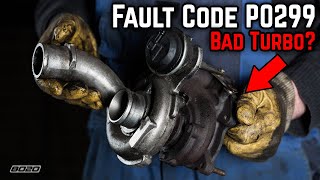
- P0299 — P0299 is the generic SAE code for 'Turbocharger/Supercharger Underboost Condition'. P1556 is the manufacturer-specific version, and they frequently appear together as they describe the same fundamental problem of actual boost being lower than requested boost.
Technical Service Bulletins (TSBs) & Recalls
- VIN4APIN20190610: Customer states MIL-on with P1429 and/or P1556
Platform-Specific Known Issues
- A Technical Service Bulletin (TSB) #VIN4APIN20190610 for the 2019 VW Beetle mentions customer complaints of the MIL being on with P1556, among other codes, but does not provide a specific diagnostic procedure.
Mechanic-Grade Diagnostic Values
- N75 Boost Control Solenoid Resistance — expected: 25 - 35 Ohms. Failure: A reading outside this range (e.g., open circuit or a value below 25 Ohms) indicates a faulty solenoid coil.
- Wastegate Actuator Position Sensor Voltage (VCDS) — expected: Approximately 3.6V - 3.9V at rest (engine running). Failure: Voltage significantly outside this range may indicate a misadjusted, binding, or faulty wastegate actuator, requiring adjustment or replacement.
- VCDS Advanced Measuring Values for Boost — expected: During a pull under load, 'Charge pressure actuator: actual value' should closely track 'Charge pressure actuator: specified value'.. Failure: If the 'actual value' is consistently and significantly lower than the 'specified value', it confirms an underboost condition.
Scan Tool Commands That Help
- VCDS (VAG-COM): Output Test (in Engine-01 controller) — To manually cycle the N75 solenoid. This allows a technician to hear if the valve is clicking and to verify with a vacuum gauge that it is switching pressure correctly, confirming electrical function.
- VCDS (VAG-COM): Basic Settings > Initial adaptation of charge pressure actuator — This is a mandatory procedure after replacing the turbocharger or wastegate actuator. It calibrates the electronic actuator's range of motion so the ECU knows the fully open and fully closed positions. Failure to perform this can cause boost control issues.
Wiring & Ground Locations
- ECU (Engine Control Unit) — Located in the engine bay, next to the battery and main fuse panel, under a protective cover.. The ECU sends the control signal to the N75 valve and receives data from the MAP sensor. A poor connection at the main ECU connector could theoretically cause this issue, though it's rare.
- N75 Connector — Directly on the N75 valve, which is typically mounted on or near the turbocharger assembly.. This connector provides power and the control signal to the valve. One pin should have 12V with the ignition on, and the other receives a pulse-width modulated ground signal from the ECU. Checking for voltage here is a key diagnostic step.
- Main Engine Harness Grounds — General ground points for the platform are located in the driver and passenger footwells, near the base of the A-pillars.. While a bad ground here would likely cause multiple other issues, a corroded or loose main ground can create unpredictable behavior in sensors and actuators controlled by the ECU.
Real Owner Repair Stories
- YouTube video by 'Fix it Angel' (Volkswagen 2.0T (EA888 family)) — Underboost code (P0299), audible rattle, and noticeable play in the wastegate linkage.
❌ Tried (didn't work) The video focuses on the direct cause, but this issue is often misdiagnosed as total turbo failure.
✅ What actually fixed it The hole on the wastegate arm where the actuator rod connects had become worn and oval-shaped, creating excessive play. This prevented the wastegate flap from closing tightly, causing a constant boost leak. The fix involved welding a washer over the worn hole to restore a tight linkage. - YouTube video by 'Nobre MotorSport' (Audi/VW with EA888 Gen 3 engine) — Oil consumption, potential for boost leaks or incorrect crankcase pressure.
❌ Tried (didn't work) Replacing only the main, large diaphragm of the PCV valve.
✅ What actually fixed it The entire PCV assembly contains multiple, smaller, non-serviceable internal check valves that can fail or stick. A key failure indicator is finding significant oil in the PCV outlet hose that connects to the turbo inlet pipe. This indicates an internal failure allowing oil and unmetered air to be sucked into the turbo, affecting boost control. The only fix is to replace the entire PCV valve assembly.
"I Checked Everything" — The Actual Cause
- A torn diaphragm in the Diverter Valve (DV). Because the DV is designed to recirculate boost pressure back into the turbo's intake side, a tear will cause boost to leak internally from the high-pressure side to the low-pressure side. Since the air never escapes to the atmosphere, a smoke test of the charge pipes will come back clean, leading to a misdiagnosis. The only way to confirm is to physically remove and inspect the valve.
OEM Part Supersession History
06F145710B, 06F145710C, 06F145710G→06H145710D— The original parts used a rubber diaphragm that was prone to tearing under heat and pressure, causing a major boost leak. The 'D' revision is a more robust piston-style design that eliminates the diaphragm.06F906283D→06F906283F— Internal revision by the manufacturer (Pierburg/Bosch) for improved reliability or manufacturing process.
Heads up: The 'F' revision is the current replacement for the 'D' part and is functionally identical for this application.
Model Year Variations Within This Range
- 2019: As the 2019 model was the final year of production for the Beetle, there were no significant mid-year mechanical changes reported that would alter the diagnosis or common causes for code P1556.
Helpful Videos

The information in this article is provided for general reference and educational purposes only. Vehicle specifications, procedures, and part compatibility can vary by production date, trim level, and region. Always consult your vehicle's factory service manual and verify part numbers before purchasing or performing repairs. Safety-critical components such as airbags, seat belts, and braking systems should be installed by a qualified professional.
- Volkswagen BEETLE CONVERTIBLE:
- 🧭 Diagnostic Flowchart
- 🎬 Helpful Videos
- What's Unique About the 2019-2019 Volkswagen BEETLE CONVERTIBLE
- Symptoms You May Notice
- Most Likely Causes
- Rare But Worth Checking
- Diagnosis Steps
- Parts You'll Likely Need
- Related Codes That Often Appear With This One
- Technical Service Bulletins (TSBs) & Recalls
- Platform-Specific Known Issues
- Mechanic-Grade Diagnostic Values
- Scan Tool Commands That Help
- Wiring & Ground Locations
- Real Owner Repair Stories
- "I Checked Everything" — The Actual Cause
- OEM Part Supersession History
- Model Year Variations Within This Range
- 🎟️ Get 5% Off