

P1556 on 2018-2019 Volkswagen Jetta: Charge Pressure Negative Deviation Causes and Fixes
On 2018-2019 VW Jettas, code P1556 means the turbo is not producing enough boost. The most common serious cause, especially on 1.8T/2.0T EA888 Gen3 engines, is a seized wastegate pivot pin on the turbocharger, which often requires a full turbo replacement. Always check for simple air leaks in the intake hoses and test the N75 solenoid first.
- P1556 means your Jetta's engine isn't making the turbo boost it's supposed to, resulting in major power loss.
- Before suspecting expensive parts, always perform a visual inspection and a smoke test to check for simple air leaks in the charge pipes.
- The most likely major failure, especially on 1.8T/2.0T engines, is a seized wastegate arm on the turbo itself. Check its movement before replacing any other parts.
- Due to the complexity of the turbo system and the high cost of the most common repair, professional diagnosis is strongly recommended.
What's Unique About the 2018-2019 Volkswagen JETTA
The 2018-2019 Jetta spans two generations (Mk6 and Mk7), with different engines. The 2018 Mk6 model, especially with the 1.8T and 2.0T EA888 Gen3 engines, is part of a larger group of VW/Audi vehicles known for a specific defect where the turbocharger's wastegate pivot pin seizes due to corrosion and wear. This prevents the wastegate from closing properly to build boost, directly causing the P1556 or the generic equivalent P0299 code. While the 2019 Mk7's 1.4T engine has had fewer complaints, the underlying issue of a seizing wastegate remains a high probability and a well-documented problem for the VW/Audi platform as a whole.
Diagnostic Flowchart
Tap your situation to follow the diagnostic path that matches what you're seeing on this vehicle.
Generation note: The 2018 model year was the last for the Mk6 generation Jetta, which could be equipped with a 1.4T, 1.8T, or 2.0T (GLI) engine. The 2019 model year introduced the Mk7 generation, which primarily used a 1.4T engine. The seizing wastegate issue is most prominently documented for the 1.8T and 2.0T EA888 Gen3 engines common in the 2018 models and their platform mates.
Symptoms You May Notice
- Significant loss of engine power
- Vehicle enters "limp mode"
- Poor acceleration and throttle response
- Check Engine Light (MIL) is illuminated
- EPC (Electronic Power Control) light may be on
- A rattling noise from the turbo area at idle or during deceleration may be heard if the wastegate linkage is loose.
- Replacing the MAP sensor without first checking for mechanical faults like a seized wastegate or air leaks.
- Replacing the N75 valve when the actual problem is a seized wastegate arm that the solenoid cannot move.
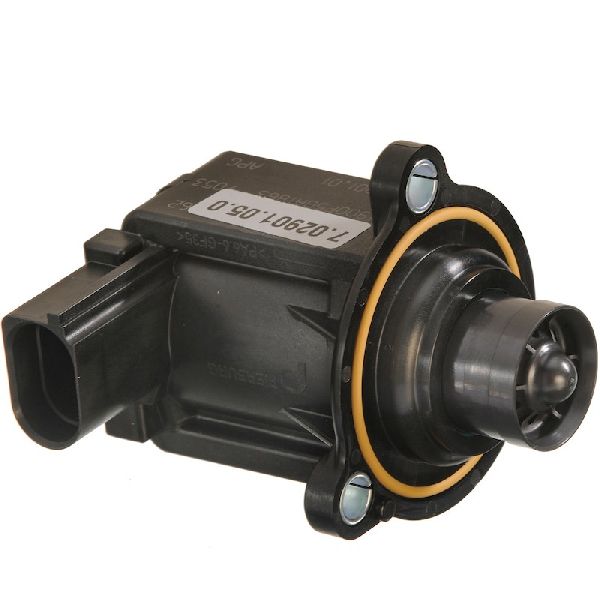
- Replacing the diverter valve when the issue is a seized wastegate.
Most Likely Causes
- Seized or Sticking Turbocharger Wastegate Actuator Arm 🔴 High Probability → Shop Turbocharger A well-documented issue where the pivot pin for the wastegate arm corrodes and binds, preventing it from closing to build boost. This is especially common on the 1.8T and 2.0T EA888 engines from this era.
How to confirm: Visually inspect the wastegate actuator arm on the turbocharger. Attempt to move it by hand or with a vacuum pump (engine off). It should move smoothly through its range of motion. If it is stiff, gritty, or completely stuck, it has failed. This may require removing a heat shield for access.
Typical fix: The official dealer repair is to replace the entire turbocharger assembly. Some independent specialists may be able to free the seized pin, but this is often a temporary solution. There are aftermarket clips (e.g., part 06J 145 220 B for some models) designed to fix excessive play, but they are not a solution for a seized pin. A full turbo replacement is the most reliable fix.
Est. part cost: $1000-$2000 - Boost/Charge Air Leak 🟡 Medium Probability Plastic and rubber components in the charge air system can become brittle and crack over time due to heat cycles. Loose clamps are also common.
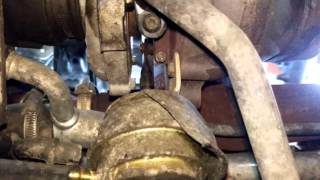
How to confirm: Perform a smoke test on the intake and 🎬 Watch: A real-world fix for the P0299 underboost code. charge air system. Smoke will escape from any cracked hoses, loose clamps, or bad seals between the turbo outlet and the engine's intake manifold. A hissing sound may be audible while driving under boost.
Typical fix: Tighten loose clamps or replace the failed hose or intercooler.
Est. part cost: $20-$300 - Defective Boost Pressure Control Solenoid (N75 Valve) 🟡 Medium Probability → Shop Transmission Clutch Pressure Control Solenoid This solenoid is a common failure point on many VW/Audi models. It controls the vacuum/pressure sent to the actuator, and if it fails, it cannot properly command the wastegate to close.
How to confirm: Use a diagnostic tool like VCDS to perform an output test on the N75 valve. You can also test its resistance with a multimeter (should be 25-35 ohms) or check for vacuum/pressure pass-through when actuated with a hand pump.
Typical fix: Replace the N75 valve. A common part number for related 🎬 See this walkthrough on diagnosing and replacing the N75 valve. engines is 06H906517B.
Est. part cost: $40-$100 - Failed Turbocharger Actuator ⚪ Low Probability → Shop Turbocharger The internal diaphragm of the vacuum actuator can rupture over time, causing a vacuum leak.
How to confirm: Apply vacuum directly to the actuator with a hand pump. It should hold vacuum and move the wastegate arm smoothly through its full range. If it does not hold vacuum, the internal diaphragm has ruptured.
Typical fix: Replace the turbocharger actuator. On some models, this is serviceable separately from the turbo, while on others it is integrated. Ensure the new actuator rod is adjusted to the same length as the old one.
Est. part cost: $50-$150
Rare But Worth Checking
- Faulty MAP (Boost Pressure) Sensor: A faulty sensor could incorrectly report low boost to the ECM. This is less common than a mechanical failure in the boost control system.
- Clogged Catalytic Converter: A severe exhaust restriction can prevent the turbo from spooling up effectively, leading to an underboost condition.
- Failed Diverter Valve (DV): → Shop Turbocharger A torn diaphragm in the diverter valve can create a boost leak, though this is more common on older revisions of the part.
Diagnosis Steps
- Scan the ECM for any other accompanying fault codes. P0299 is a common companion to P1556.
- With the engine off and cool, visually inspect all charge air piping from the turbo to the throttle body for obvious cracks, loose connections, or oil residue indicating a leak.
- Locate the turbocharger wastegate actuator arm. Attempt to move it manually. It should move freely with spring tension. If it is seized or very stiff, the turbocharger assembly is the likely failure point.
- If the arm moves freely, perform a smoke test on the entire intake and charge air system to check for leaks that are not visually apparent.
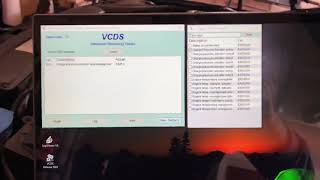
- If no leaks are found, test the wastegate actuator by applying vacuum with a hand pump. Ensure it holds vacuum and moves the arm 🎬 Watch: How to test your vacuum-type wastegate actuator. through its full range of motion.
- Test the N75 Boost Pressure Control Solenoid. Check for correct voltage and ground signals, and use a scan tool (VCDS) to run an output test to confirm it is functioning. Resistance should be 25-35 ohms.
- If all other components are confirmed to be working, investigate the MAP sensor by comparing its readings at idle and key-on-engine-off to atmospheric pressure.
- Inspect the diverter valve for a torn diaphragm, especially on older revision parts.
Parts You'll Likely Need
- Turbocharger Assembly
(OEM #06K145713L (1.8T), 06K145874M (IS20 for 2.0T), 06K145874N (IS38 for 2.0T GLI/R))— This is the most common fix due to the high probability of a seized wastegate pivot pin, which is integrated into the turbo's exhaust housing.
Trusted brands: IHI (OEM supplier), BorgWarner
OEM price range: $1200-$2000
Aftermarket price range: $700-$1500 - Boost Pressure Control Solenoid (N75 Valve)
(OEM #06H906517B (verify by VIN))— This is a common electronic failure point that controls the wastegate. It's a logical part to replace if the wastegate mechanics are confirmed to be working correctly.
Trusted brands: Pierburg (OEM supplier), Bosch
OEM price range: $70-$120
Aftermarket price range: $40-$80 - Charge Air Hose / Pipe — Plastic and rubber components in the charge air system can crack with age and heat cycles, causing boost leaks.
Trusted brands: Vaico, Rein
OEM price range: $100-$300
Aftermarket price range: $50-$150
Related Codes That Often Appear With This One
- P0299 — P0299 is the generic SAE equivalent of P1556, also meaning 'Turbocharger/Supercharger Underboost'. They describe the same fundamental problem and are often used interchangeably in diagnostic literature.
- P2563 — This code relates to the 'Turbocharger Boost Control Position Sensor Circuit'. A problem with the wastegate's position sensor can occur alongside the underboost condition if the wastegate is physically stuck.
Technical Service Bulletins (TSBs) & Recalls
- VIN4APIN20190610: A manufacturer Technical Service Bulletin mentions P1556 as a possible trouble code that may illuminate the MIL (Malfunction Indicator Lamp).
Platform-Specific Known Issues
- A widespread, documented issue of the turbocharger wastegate pivot pin seizing from corrosion affects many VW models from this period, including the 2018 Jetta with the 1.8T/2.0T engine.
- The manufacturer-recommended repair for a seized wastegate is a full turbocharger replacement, leading to a very high repair cost for what is a small mechanical failure.
- Some owners on forums report success with temporary fixes for a loose (not seized) wastegate, such as installing a stronger spring or an aftermarket clip, but these are not official repairs and do not address a seized pivot.
Mechanic-Grade Diagnostic Values
- Live Data Log: Specified vs. Actual Boost Pressure — expected: Using VCDS Measuring Block Group 115, the 'Actual Pressure' should closely follow the 'Specified Pressure' during a 3rd or 4th gear pull from 2000 to 3500 RPM.. Failure: If the Actual Pressure is consistently and significantly lower than the Specified Pressure, it confirms an underboost condition.
- Wastegate Actuator Vacuum Test — expected: Applying vacuum with a hand pump, the actuator linkage should begin to move at approximately 100 mbar and reach its mechanical stop by 700 mbar.. Failure: The actuator fails to hold vacuum (indicating a ruptured diaphragm) or the linkage does not move smoothly through its range (indicating a seized wastegate arm).
- Wastegate Actuator Position Sensor Voltage (VCDS) — expected: For IS38 turbos, during adjustment, the 'Charge air pressure control valve uncond voltage sensor' value should be set to ~3.9V before running the adaptation. Other models may have different target ranges, such as 0.65-0.85V and 3.3-3.9V during the basic settings procedure.. Failure: If the voltage is far outside the expected range (e.g., 4.7V) and the adaptation fails to run, it indicates a mechanical adjustment of the wastegate rod is required.
Hidden / Shadow Codes Worth Checking
- 17964: This is the VAG-specific (Ross-Tech) fault code number that corresponds directly to the generic OBD-II code P1556, 'Charge Pressure Control: Negative Deviation'. (see via VCDS, ODIS, or other VAG-specific diagnostic scan tools.)
Scan Tool Commands That Help
- VCDS (VAG-COM): Selective Output Test for N75 Valve — Go to [01-Engine] -> [Output Tests - 03]. This allows you to directly command the N75 (Solenoid Valve for Boost Pressure Control) to cycle, helping to determine if the solenoid itself is functional without having to remove it. You should hear it clicking.
- VCDS (VAG-COM): Basic Settings: Charge Pressure Actuator Adaptation — After replacing a turbocharger or wastegate actuator, go to [01-Engine] -> [Basic Settings - 04] and select a channel like 'First adaptation of charge pressure actuator'. This command cycles the actuator to teach the ECM its new electronic and mechanical limits.
- ODIS (VW Dealer Tool): Guided Fault Finding (GFF) — When diagnosing P1556, GFF will create a test plan, prompting the technician to check specific components and values in a logical order, including launching tests for related parts.
Wiring & Ground Locations
- MQB Platform Engine Ground — On the Mk7 Jetta (MQB platform), a critical grounding lug is located on the frame rail behind the passenger-side headlight.. A poor ground connection at this point can cause erratic behavior in various engine sensors and actuators, including the N75 valve and MAP sensor, potentially leading to incorrect readings and fault codes like P1556.
Real Owner Repair Stories
- GasCars on YouTube (VW Golf 1.9 TDI (similar system)) — P1556 code, turbo would not activate consistently.
❌ Tried (didn't work) Replaced the entire turbocharger assembly., Replaced the EGR valve.
✅ What actually fixed it The problem was finally solved by replacing the N75 boost control solenoid valve. - Reddit user Real-Efficiency-3216 (2010 VW Jetta SportWagen TDI (CJAA engine)) — Blinking glow plug light, CEL, limp mode, and codes P00AF / 000175 (actuator stuck).
✅ What actually fixed it Diagnosis confirmed a failed actuator. The user connected a hand vacuum pump to the actuator nipple and it would not build or hold any vacuum, confirming the internal diaphragm was ruptured. This test proved the actuator itself was the point of failure.
"I Checked Everything" — The Actual Cause
- In some cases, after all boost-related components (hoses, N75, actuator) have been checked and even replaced, the P1556 fault can be caused by a faulty Engine Coolant Temperature (ECT) sensor. The ECU uses ECT data for fuel and boost calculations, and an incorrect reading can lead the ECU to mismanage the turbo, triggering an underboost code even with a mechanically sound system. This is often overlooked because it's not directly in the charge air path.
Model Year Variations Within This Range
- 2019 (Mk7): The 2019 Mk7 Jetta is based on the MQB platform. On these vehicles, the wastegate adaptation procedure and target voltages in VCDS can differ depending on the specific turbo installed (e.g., IS12, IS20, or an upgraded IS38). Using the correct procedure for the installed turbo is critical for proper function after a replacement.
Helpful Videos


We Have This Part in Stock



The information in this article is provided for general reference and educational purposes only. Vehicle specifications, procedures, and part compatibility can vary by production date, trim level, and region. Always consult your vehicle's factory service manual and verify part numbers before purchasing or performing repairs. Safety-critical components such as airbags, seat belts, and braking systems should be installed by a qualified professional.
- Volkswagen JETTA:
- 🧭 Diagnostic Flowchart
- 🎬 Helpful Videos
- 🛍️ Shop This Part
- What's Unique About the 2018-2019 Volkswagen JETTA
- Symptoms You May Notice
- Most Likely Causes
- Rare But Worth Checking
- Diagnosis Steps
- Parts You'll Likely Need
- Related Codes That Often Appear With This One
- Technical Service Bulletins (TSBs) & Recalls
- Platform-Specific Known Issues
- Mechanic-Grade Diagnostic Values
- Hidden / Shadow Codes Worth Checking
- Scan Tool Commands That Help
- Wiring & Ground Locations
- Real Owner Repair Stories
- "I Checked Everything" — The Actual Cause
- Model Year Variations Within This Range
- 🎟️ Get 5% Off