

P1556 on 2017-2019 Volkswagen Passat: Turbo Underboost Causes & Fixes
On the 2017-2019 Passat, this code usually points to a sticking turbocharger wastegate, a very common issue. Before agreeing to a costly turbo replacement, check for simpler fixes like a torn diverter valve or a boost leak from a cracked pipe, which are also frequent causes.
- P1556 means your Passat's turbo is not producing enough boost, resulting in a major loss of power.
- The most probable cause is a seized turbocharger wastegate arm, a known flaw in this engine series.
- Before paying for a new turbo, always check for cheaper fixes: a torn diverter valve (~$100), a cracked charge pipe, or a bad N75 solenoid (~$60).
- A smoke test is the best way to find hidden leaks in the intake system.
- Due to the complexity of turbo systems, professional diagnosis is recommended if the problem isn't immediately obvious.
What's Unique About the 2017-2019 Volkswagen PASSAT
The 2017-2019 Passat uses the EA888 engine family (1.8T or 2.0T), which is known for a specific design flaw. The pivot pin and bushing for the turbocharger's internal wastegate flapper are prone to significant wear and seizing due to heat and corrosion. This wear creates excessive play, preventing the wastegate from closing properly to build boost, directly causing the P1556 or the equivalent P0299 code. While other causes exist, this wastegate issue is a very common, well-documented weak point for this specific platform, often leading shops to recommend a full turbo replacement when the turbo itself is otherwise functional.
Diagnostic Flowchart
Tap your situation to follow the diagnostic path that matches what you're seeing on this vehicle.
Generation note: The 2017-2019 North American Passat is one generation, but it uses two similar engines: the 1.8T TSI (2017) and the 2.0T TSI 'B-Cycle' (2018-2019). Both are from the EA888 Gen3 family and share the same fundamental IHI turbo system design, making them susceptible to the same common failures like a seized/worn wastegate and diverter valve issues.
Symptoms You May Notice
- Significant loss of engine power, especially during acceleration
- EPC (Electronic Power Control) light illuminated on the dashboard
- Check Engine Light illuminated
- Vehicle enters 'limp mode,' limiting RPMs and speed
- A 'whoosh' or hissing noise during acceleration if a charge pipe is disconnected or has a large crack
- Metallic rattling noise from the turbo area, especially at idle or on cold starts, indicating a loose wastegate actuator rod or clip.
- Replacing the entire turbocharger without first confirming the wastegate arm is seized or has excessive bushing wear, and without performing a smoke test to rule out a simple boost leak from a pipe, hose, or diverter valve.
Most Likely Causes
- Sticking, Worn, or Seized Turbocharger Wastegate Arm/Bushing 🔴 High Probability → Shop Turbocharger The pivot pin and bushing for the wastegate on the factory IHI turbocharger are made of materials that wear and corrode, causing it to bind or develop excessive play in the cast iron housing. This is a widely documented failure on 2015-2019 VW/Audi 1.8T/2.0T engines.
How to confirm: With the engine off and cool, attempt to move the wastegate actuator arm by hand. If it's stiff, gritty, or completely stuck, it has seized. More commonly, the linkage will feel loose and have excessive play where the arm connects to the flapper valve, indicating a worn internal bushing. A borescope can be used to inspect the wastegate flapper itself for excessive movement.
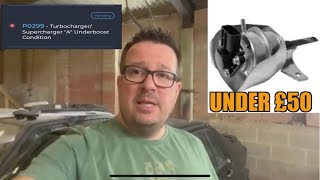
Typical fix: The official dealer repair is to replace the entire turbocharger assembly. Some independent shops or DIYers may free a seized pin with penetrating lubricant, but this is often temporary. For worn bushings, aftermarket companies offer repair kits with improved stainless steel components that can be installed after removing the turbo. Another common, but less robust, fix is to install an aftermarket wastegate actuator clip to reduce rattle and improve linkage tension. 🎬 Watch: How to fix that annoying wastegate rattle for $50.
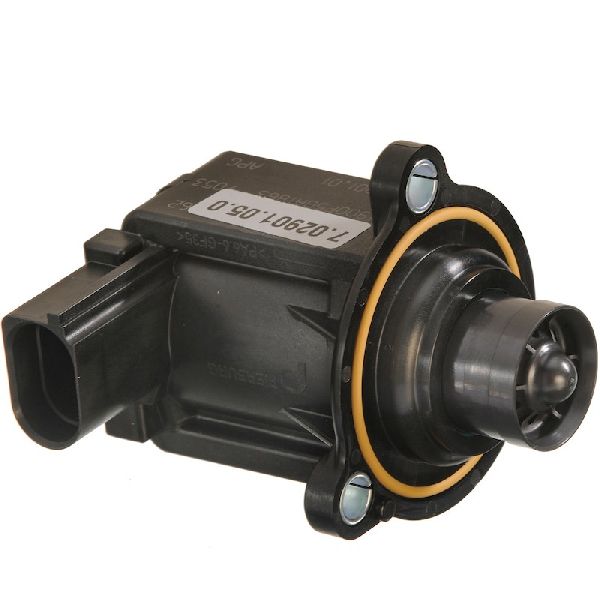
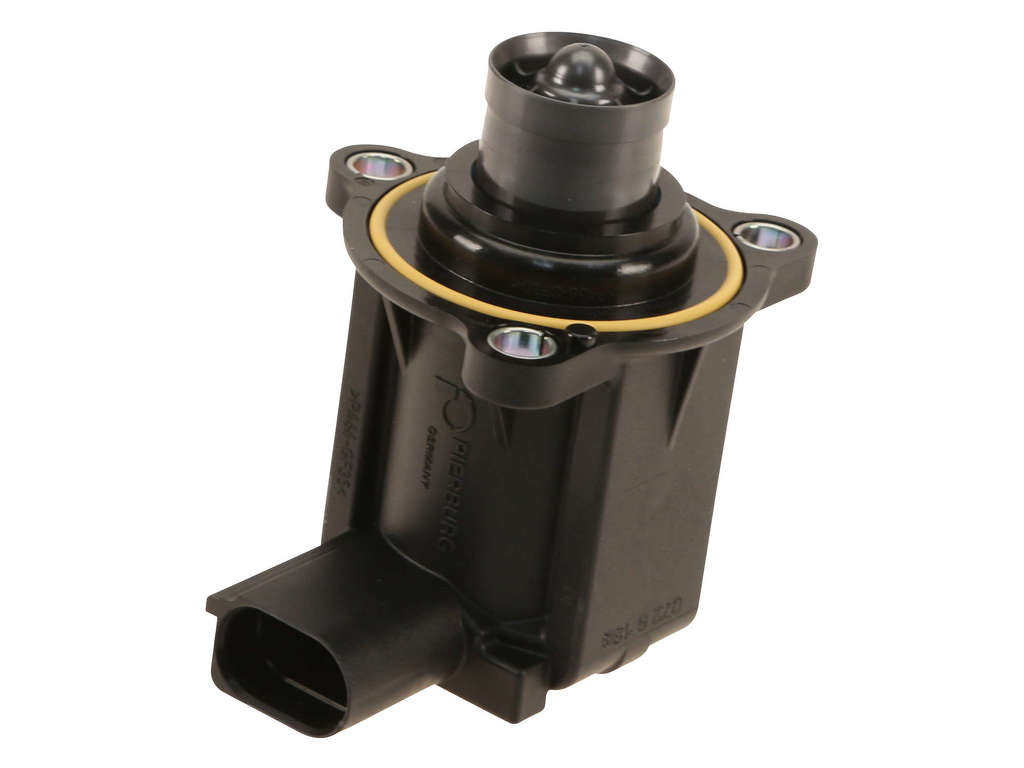
Est. part cost: $1000-$2500 for a new turbocharger assembly. Wastegate repair kits cost $30-$100. - Leaking or Failed Diverter Valve (DV) 🟡 Medium Probability → Shop Turbocharger The factory diverter valve uses a rubber diaphragm that is known to tear over time with heat cycles and boost pressure. A tear creates a direct path for boost pressure to leak out, causing an underboost condition.
How to confirm: Remove the diverter valve from the turbocharger (it's held by three small bolts) and visually inspect the rubber diaphragm for any rips, tears, or deterioration. 🎬 See how a torn diverter valve causes this common issue. A torn diaphragm is a very common cause for P0299/P1556.
Typical fix: Replace the diverter valve. Many owners opt for an upgraded piston-style valve (like the OEM 'Revision D' or aftermarket billet options from GFB or CTS Turbo) that eliminates the failure-prone diaphragm.
Est. part cost: $80-$160 - Boost Leak from Charge Pipes or Hoses 🟡 Medium Probability The charge pipes are made of plastic and can become brittle with age, leading to cracks, especially at the seams. Connections can also become loose, or a pipe could be damaged from road debris or improper service.
How to confirm: Perform a visual inspection of all pipes between the turbo outlet, intercooler, and throttle body. The definitive method is to have a shop perform a smoke test, which will force smoke through the intake system and reveal the source of any leaks.
Typical fix: Replace the cracked or broken charge pipe or hose and secure all clamps. Sometimes a clamp simply needs to be retightened.
Est. part cost: $100-$300 depending on the specific pipe - Faulty N75 Boost Control Solenoid/Wastegate Actuator ⚪ Low Probability → Shop Turbocharger On the EA888 Gen3 engine, the boost control solenoid (N75) is integrated into the electronic wastegate actuator. This electronic component can fail, or the diaphragm inside the pneumatic portion can rupture, preventing it from properly controlling the wastegate. This is less common than the mechanical wastegate pivot failure.
How to confirm: A technician can test the valve's operation using a capable scan tool (like VCDS) to run an output test. A vacuum pump can also be used to see if the actuator holds vacuum and moves the arm smoothly through its range of motion. A ruptured diaphragm will not hold vacuum.
Typical fix: Replace the electronic wastegate actuator. It is serviceable separately from the turbocharger, but calibration may be required after installation.
Est. part cost: $150-$250
Rare But Worth Checking
- Failed Boost Pressure Sensor (MAP): A faulty sensor could incorrectly report low boost to the ECU. This is less common than an actual mechanical leak or fault.
- Complete Turbocharger Mechanical Failure: → Shop Turbocharger While the wastegate is the most common failure point, internal damage to the turbo's compressor or turbine wheels can also cause a lack of boost. This is usually accompanied by loud whining or grinding noises and potential oil consumption/smoke.
- Failed PCV Valve: A failed Positive Crankcase Ventilation (PCV) valve can create a significant vacuum leak, which can sometimes be misinterpreted by the ECU and contribute to boost-related fault codes.
Diagnosis Steps
- Read the fault codes with an OBD-II scanner to confirm P1556 and any other related codes like P0299.
- Perform a thorough visual inspection of the engine bay. Look for any disconnected vacuum lines, or obviously cracked or loose charge pipes between the turbo and the engine intake.
- With the engine cool, locate the turbocharger wastegate actuator arm. Check for excessive play by wiggling the arm; significant looseness points to a worn internal bushing. Attempt to move the arm through its full range of motion. If it is stiff or stuck, the wastegate is seized.
- If the wastegate arm seems functional, the next step is to perform a boost leak test (smoke test). This will identify any hard-to-see cracks or leaks in the hoses, intercooler, or connections.
- If no leaks are found, remove and inspect the diverter valve (typically three bolts on the turbo compressor housing). Check its rubber diaphragm for tears.
- If the diverter valve is intact, test the electronic wastegate actuator. Use a scan tool to perform an output test or use a handheld vacuum pump on the actuator's port to ensure it holds vacuum and moves the arm smoothly.
- If all other components are verified to be working, the issue is almost certainly internal to the turbocharger (worn wastegate bushing/flapper), requiring turbo replacement or rebuilding.
Parts You'll Likely Need
- Turbocharger Assembly
(OEM #06K145721C (1.8T IHI RHF4), 06K145874M (2.0T IHI IS20))— Required if the integrated wastegate bushing is excessi
Related Codes That Often Appear With This One
- P0299 — This is the generic SAE equivalent of P1556. They both mean 'Turbo/Supercharger Underboost' and are often triggered together or interchangeably for the same fault.
- P2563 — This code relates to the 'Turbocharger Boost Control Position Sensor Circuit Range/Performance'. If the wastegate is stuck or its linkage is worn, the position sensor will report a value that doesn't match what the ECU expects, potentially triggering this code alongside the underboost fault.
Technical Service Bulletins (TSBs) & Recalls
- VIN4APIN20190610 - A general bulletin listing multiple potential MIL-on causes, including P1556, but lacks specific diagnostic detail.
- While not a formal TSB, there is a known service bulletin for earlier TSI engines (TSB 2024061) addressing wastegate rattle and P0299, which involves installing a clip on the actuator rod. A similar principle applies to the Gen3 issue.
Platform-Specific Known Issues
- A widespread and well-documented issue exists concerning the premature seizure of the turbocharger wastegate pivot pin on EA888 Gen3 engines used from roughly 2015-2019. The Automobile Protection Association (APA) has investigated this issue due to the high number of owner complaints and expensive repair costs.
Mechanic-Grade Diagnostic Values
- Wastegate Actuator Position Sensor Voltage (Acknowledgement) — expected: 3.310V - 3.510V (3310-3510 mV) when actuator is set to its lower limit. Some tuners target a slightly higher range of 3.700V - 3.850V.. Failure: Voltage outside the specified range after running the basic setting indicates a need for mechanical adjustment of the actuator rod or a faulty actuator.
- Boost Pressure Sensor (G31) Pin Voltage (Key-On, Engine-Off, Connector unplugged) — expected: Pin 3: 5V reference from ECU. Pin 1: Ground (0V).. Failure: Absence of 5V on the reference wire or lack of a solid ground points to a wiring issue between the sensor and the ECU, not a faulty sensor.
Scan Tool Commands That Help
- VCDS (VAG-COM) or OBDeleven: Basic Settings - IDE04304: First adaptation of charge pressure actuator — This procedure is used after replacing the turbocharger or wastegate actuator. It allows the ECU to learn the end-stops of the new actuator's travel.
- VCDS (VAG-COM) or OBDeleven: Basic Settings - IDE05192: Test for replacing turbocharger servo-motor — This function drives the actuator to its lower limit (minimum position) to allow for mechanical adjustment of the actuator rod's length to set the correct voltage.
- VCDS (VAG-COM) or OBDeleven: Basic Settings - IDE03869: Test charge pressure actuator — This command cycles the actuator arm back and forth, allowing a technician to visually confirm its range of motion and check for any binding or sticking without driving the car.
- VCDS (VAG-COM) or OBDeleven: Advanced Measuring Values - Charge Pressure Actuator, Acknowledgement — Used to monitor the real-time voltage from the wastegate actuator's position sensor. This is critical for verifying the correct mechanical adjustment of the actuator rod.
Wiring & Ground Locations
- Boost Pressure / Temp Sensor (G31) Connector — On the charge pipe leading to the throttle body.. This 4-pin sensor provides the primary 'actual' boost reading to the ECU. A damaged connector or chafed wires can send an implausible signal, mimicking a mechanical boost issue. Wires can chafe on nearby hoses.
- Ignition Coil Grounding Point — The factory design grounds each ignition coil to a stud on the soft aluminum cam cover. Aftermarket solutions relocate this to a chassis ground point, often behind the passenger-side headlight or on the engine mount.. While not a direct cause, a weak ignition coil ground is a common EA888 issue that can lead to misfires and general poor running, which could potentially be misdiagnosed or complicate the diagnosis of a boost issue.
Real Owner Repair Stories
- YouTube channel 'I Am The Fix' (2011 Volkswagen GTI 2.0TSI (EA888 Gen2, but same principle applies)) — P0299 low boost pressure fault.
❌ Tried (didn't work) The owner notes that adjusting the actuator rod is not possible on many OEM turbos and that replacing the turbo is the standard fix.
✅ What actually fixed it Used a specialty tool called a 'Turbo Bend' to put a small, calculated kink in the non-adjustable wastegate actuator rod. This effectively shortened the rod, increasing the preload on the worn wastegate flapper and restoring proper boost control without removing or replacing the turbocharger. - Ross-Tech Forums user (VW with electronic wastegate actuator) — Check engine light after replacing actuator.
❌ Tried (didn't work) Simply replacing the actuator did not resolve the issue.
✅ What actually fixed it The fix required using VCDS to run two specific Basic Settings functions in sequence. First, 'Test for replacing turbocharger servo-motor' (IDE05192) was used to set the actuator to its lower limit for adjustment. Second, 'First adaptation of charge pressure actuator' (IDE04304) was run to allow the ECU to learn the new actuator's range. This calibration was essential for the new part to function correctly.
OEM Part Supersession History
06H145710C / 06H145710G (Diaphragm Style)→06H145710D (Piston Style)— The original diverter valves used a rubber diaphragm that was prone to tearing, causing a boost leak. The 'D' revision replaces this with a more durable piston design.
Heads up: A later part, 06H145710J, also exists and is interchangeable on MK7 platform cars. The Pierburg-branded 06H145710D is the same as the OEM part without the VW/Audi logo.
Model Year Variations Within This Range
- 2018-2019: The 2018-2019 Passat uses the 2.0T EA888 Gen3B 'B-Cycle' engine. While mechanically similar to the 2017's 1.8T Gen3, the B-Cycle engine is designed for efficiency using the Miller combustion cycle. It has a higher compression ratio (11.7:1 vs 9.8:1), different pistons, and a variable valve lift system (AVS) on the intake side (vs. exhaust side on the high-power Gen3). While the turbo system and its common faults are largely the same, the ECU and engine internals are different.
Helpful Videos
We Have This Part in Stock



The information in this article is provided for general reference and educational purposes only. Vehicle specifications, procedures, and part compatibility can vary by production date, trim level, and region. Always consult your vehicle's factory service manual and verify part numbers before purchasing or performing repairs. Safety-critical components such as airbags, seat belts, and braking systems should be installed by a qualified professional.
- Volkswagen PASSAT:
- 🧭 Diagnostic Flowchart
- 🎬 Helpful Videos
- 🛍️ Shop This Part
- What's Unique About the 2017-2019 Volkswagen PASSAT
- Symptoms You May Notice
- Most Likely Causes
- Rare But Worth Checking
- Diagnosis Steps
- Parts You'll Likely Need
- Related Codes That Often Appear With This One
- Technical Service Bulletins (TSBs) & Recalls
- Platform-Specific Known Issues
- Mechanic-Grade Diagnostic Values
- Scan Tool Commands That Help
- Wiring & Ground Locations
- Real Owner Repair Stories
- OEM Part Supersession History
- Model Year Variations Within This Range
- 🎟️ Get 5% Off