

P1571 on 2010-2014 Jaguar XJ: Brake Switch & Park Brake Fault Guide
On a 2010-2014 Jaguar XJ, code P1571 indicates a 'Brake Switch Signal Plausibility' fault. This is often caused by a software communication issue between the Powertrain Control Module (PCM) and the Park Brake Module, as noted in Jaguar TSB SSM 71218. Other common causes include a faulty brake light switch (which contains two internal switches that can conflict) or a weak battery causing electronic glitches.
- P1571 on a 2010-2014 XJ points to a brake switch signal that the car's computers find illogical.
- Before replacing any parts, check for TSB SSM 71218. If code U0100 is also present, the fix is likely a software update or code clear, not a new part.
- If no communication codes are found, the most common fix is replacing the brake light switch.
- Always ensure the vehicle's battery is healthy before diagnosing this code, as low voltage is a known cause of electronic issues on this platform.
- This fault is a safety concern and should be addressed promptly as it can affect brake lights, ABS, and stability control.
What's Unique About the 2010-2014 Jaguar XJ

Unlike many vehicles where this code would simply point to a bad brake light switch, Jaguar issued a Special Service Message (SSM 71218) for the XJ, XF, and XK models acknowledging this code is often due to a communication glitch between the powertrain and park brake modules. 🎬 Watch: How to release a Jaguar parking brake that is stuck. This means that simply replacing the brake switch might not fix the issue, and a software-level diagnosis is often the correct first step. A weak or failing AGM battery is also a very common trigger for various electronic faults on this platform, including P1571, as the sensitive modules can misbehave with unstable voltage.
Diagnostic Flowchart

Tap your situation to follow the diagnostic path that matches what you're seeing on this vehicle.
Symptoms You May Notice

- "Parkbrake Fault" message displayed on the instrument panel.
- Check Engine Light or other brake-related warning lamp is on.
- "DSC Not Available" warning message.
- Cruise control is inoperative.
- Brake lights are stuck on or do not illuminate when the pedal is pressed.
- Vehicle may enter "Failsafe Engine Mode" or "Restricted Performance" mode.
- Inability to shift the gear selector out of Park.
- Replacing the brake light switch when the actual cause is the software/communication issue described in TSB SSM 71218.
- Immediately assuming a major module has failed when the root cause is simply a weak or dying battery, a very common issue reported by owners on forums.
Most Likely Causes

- Module Communication/Software Issue 🔴 High Probability Jaguar explicitly documented this as a known issue in TSB SSM 71218, where a communication conflict between the PCM and Park Brake Module triggers the fault. This TSB applies to the XJ, XF, and XK models.
How to confirm: Use a Jaguar-specific scan tool (like SDD) to check for code P1571-64 and any accompanying communication codes, like U0100-00 ('Lost Communication with ECM/PCM'). If both are present and there are no other brake switch codes, the TSB applies.
Typical fix: The TSB advises to clear the DTCs. If they return, a software update performed by a Jaguar dealer or specialist with the appropriate tools is required. The TSB specifically states that replacing the brake light switch will not resolve this particular issue.
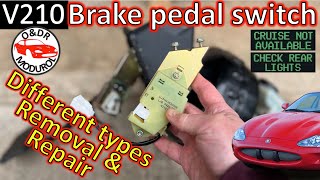
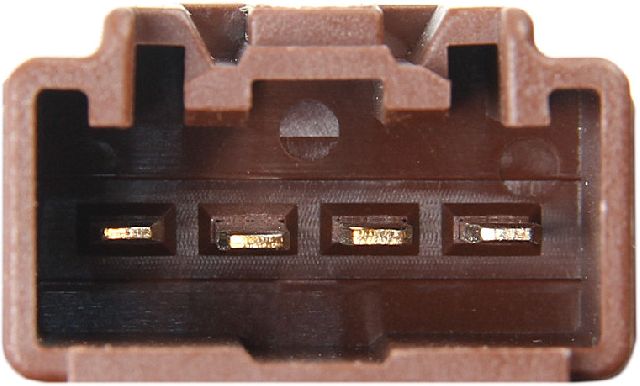
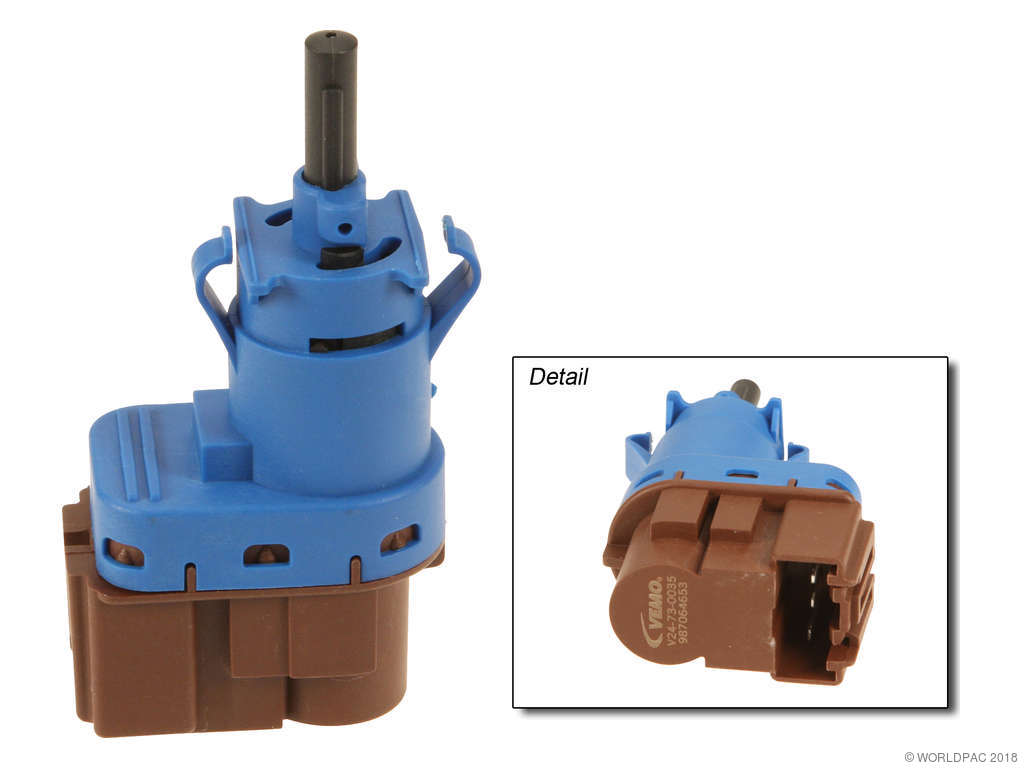
Est. part cost: $0 - $250 (for dealer diagnostic/software update) - Faulty Brake Light Switch 🟡 Medium Probability → Shop Brake Light Switch The brake light switch is a mechanical part with two sets of internal contacts that wear out over time. It sends signals to multiple systems (brake lights, cruise control, ABS), and if its internal switches become misaligned, worn, or have a bad solder joint, it can send the conflicting signals that trigger P1571.
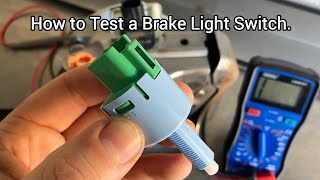
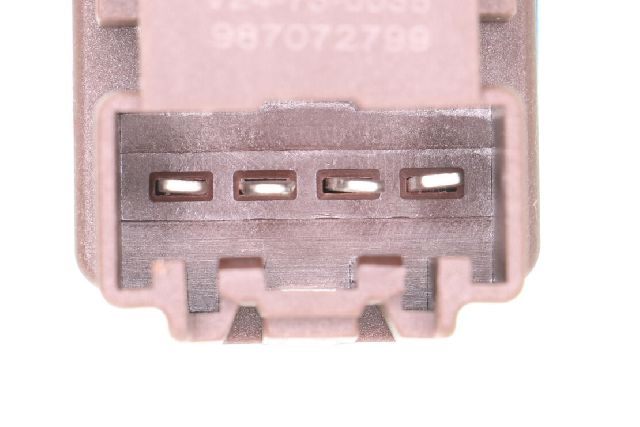
How to confirm: If only P1571 is present (especially without a -64 suffix or U-codes), the switch is the prime suspect. Use a scan tool to monitor the brake switch live data PIDs while pressing and releasing the pedal. The signals for both internal switches should change instantly and reliably. A multimeter can also be used to check for continuity and resistance across the switch's pins; resistance should be near zero ohms when activated.
Typical fix: Replace the brake light switch, located above the brake pedal arm. This is a common DIY repair.
Est. part cost: $40-$100 - Weak or Failing Battery 🟡 Medium Probability The XJ's complex electronic modules are highly sensitive to voltage. A weak or improperly specified (non-AGM) battery can cause transient voltage drops during startup or even while driving, leading to a cascade of communication errors and spurious fault codes, including P1571 and 'Parkbrake Fault' messages.
How to confirm: Test the battery voltage with a multimeter. A healthy, resting AGM battery should be at or above 12.4V. A reading below this, especially after sitting, is a red flag. A proper load test is the definitive way to check its ability to hold a charge under stress. A voltage drop test on key ground points should read well under 0.5V (500mV) while cranking.
Typical fix: Recharge or replace the vehicle's battery with a new, correct-spec AGM battery. After replacement, the Battery Monitoring System (BMS) may need to be reset.
Est. part cost: $200-$400
Rare But Worth Checking
- Wiring Harness Damage: Damage to the wiring or corrosion in the connectors for the brake switch, Park Brake Module, or between modules can cause signal integrity issues. Check for corrosion at the ground points behind the headlamps, a known issue on related platforms. The main engine-to-chassis ground strap, often located under the starter, is also a common point of failure.
- Faulty Park Brake Module (PBM) or Powertrain Control Module (PCM): While rare, the module itself could be the source of the communication error. This is typically diagnosed only after all other possibilities (software, switch, wiring, battery) have been eliminated. A faulty PCM is noted in other Jaguar TSBs as a cause for a U0100 code.
Diagnosis Steps
- Check Battery Health: First, ensure the battery is a healthy, fully charged AGM battery reading 12.4V+ at rest. Perform a load test. Low voltage is a notorious cause of random electronic faults on these vehicles.
- Scan for Codes: Use a Jaguar-compatible scanner (like SDD) to read codes from all modules. Specifically look for P1571 and its sub-code (e.g., P1571-64), and note any accompanying 'U' (network) codes like U0100-00.
- Consult TSB SSM 71218: If P1571-64 and U0100-00 are present together, the TSB indicates a communication issue. Do not replace the brake switch. Clear the codes and test drive. If they return, a dealer software update is the prescribed fix.
- Test the Brake Switch: If only P1571 is present, use the scan tool's live data function to monitor the brake switch status (both circuits) as you press and release the pedal. The readings should be clean, immediate, and logical (not conflicting). Alternatively, test the switch with a multimeter; resistance across the contacts should be near zero ohms when closed.
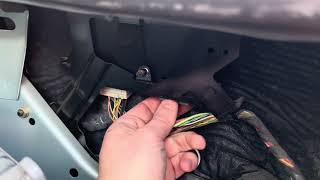
- Inspect Wiring: Visually inspect the wiring and connector at the brake light switch (located above the brake pedal) for any signs of damage, corrosion, or loose connections. Also check the main chassis ground points in the engine bay and trunk for corrosion.
- Replace Brake Switch: If the switch fails the live data test, appears physically damaged, or is the only remaining suspect, replace it. The OEM part number is C2P14525.
- Advanced Diagnostics: If the problem persists, a more in-depth diagnosis of the CAN bus wiring between the PCM and Park Brake Module may be necessary, which is best left to a professional with an oscilloscope and wiring diagrams.
Parts You'll Likely Need
- Brake Light Switch
(OEM #C2P14525)— This is the most likely physical component to fail if the issue is not software-related. It contains two sets of contacts that wear out or develop bad solder joints, causing the illogical signals that trigger the code. This part number supersedes the older C2P3763.
Trusted brands: Jaguar (OEM), Standard Motor Products, Intermotor
OEM price range: $70-$100
Aftermarket price range: $40-$60
Related Codes That Often Appear With This One
- U0100-00 — This code means 'Lost Communication With ECM/PCM'. Its presence alongside P1571-64 is a strong indicator that the problem is the communication glitch described in TSB SSM 71218, not a faulty switch.
- C0040-21 — This is a more generic 'Brake Pedal Switch A' fault code. If seen with P1571, it further points to the brake light switch assembly as the likely source of the problem.
Technical Service Bulletins (TSBs) & Recalls
- SSM 71218: Notes that a 'Parkbrake Warning Lamp Illuminated' and/or 'Parkbrake fault message' can be caused by P1571-64 due to a communication issue between the PCM and Parkbrake Module. It explicitly advises against replacing the switch if U0100-00 is also present and no other brake switch P-codes are logged.
Platform-Specific Known Issues
- A known software/communication issue between the Powertrain Control Module and the Parkbrake Module can trigger P1571-64, as documented in Jaguar's Special Service Message SSM 71218. This is a critical distinction from a simple hardware failure.
- These vehicles are extremely sensitive to battery voltage. A slightly weak battery that still starts the car can cause a cascade of seemingly unrelated electronic faults, including P1571 and various dashboard warnings.
Mechanic-Grade Diagnostic Values
- Brake Light Switch Continuity — expected: Near 0 Ohms when the switch plunger is depressed.. Failure: High or infinite resistance when the switch should be closed, indicating worn internal contacts.
- Ground Point Voltage Drop — expected: Well under 0.5V (500mV).. Failure: A reading higher than 0.5V indicates high resistance in the ground path, which can cause module communication errors.
Hidden / Shadow Codes Worth Checking
- P1571-64: This sub-code for P1571 specifically means 'Signal Plausibility Failure'. Its presence strongly indicates a communication conflict between the Powertrain Control Module (PCM) and the Park Brake Module (PBM), as described in TSB SSM 71218. (see via Requires a Jaguar-specific diagnostic tool like SDD (Symptom Driven Diagnostics). Standard OBD-II readers will typically only show the base P1571 code.)
Scan Tool Commands That Help
- Jaguar SDD (Symptom Driven Diagnostics): Clear DTCs — This is the first action prescribed by TSB SSM 71218 when P1571-64 is found with U0100-00. If the code returns, a software update (another dealer-level function) is required.
- Jaguar SDD (Symptom Driven Diagnostics): EPB Module Actuation / Calibration — To test the functionality of the Electronic Park Brake motor directly and to recalibrate the system after component replacement. TSB S206-04 on a similar platform describes this calibration.
Wiring & Ground Locations
- Park Brake Module (PBM) — Located in the trunk (boot), behind the right-hand side trim/carpet panel.. This module is the other half of the communication fault described in TSB SSM 71218. Checking its connector for corrosion or damage is a key diagnostic step.
- Brake Pedal Switch Connector — Above the brake pedal arm, under the driver's side dashboard.. A wiring diagram shows a Violet/Brown wire is critical for communication between the switch, Central Junction Box, and the Park Brake Module (at pin C3BP01D/22).
- Main Engine Ground Strap — On similar platforms, this strap runs from the transmission bellhousing to the vehicle underbody, often near the starter motor on the right side.. This is a critical ground path for the entire powertrain. Corrosion or looseness here can cause widespread, intermittent electrical faults and communication errors between modules, mimicking other failures.
- Park Brake Motor — Bolted to the rear subframe, generally located above the rear differential.. While the code points to a signal issue, a failing motor drawing too much current can damage the Park Brake Module, leading to communication faults.
Real Owner Repair Stories
- YouTube user (Jaguar XJ) — Parking brake fault, park brake would not disengage.
❌ Tried (didn't work) Cycling the ignition and park brake switch.
✅ What actually fixed it As an emergency measure to move the car, the owner accessed the Park Brake Module in the trunk, unplugged its connector, and applied 12V directly to the green/white and red/white wires to manually power the motor and release the brake. This allowed the vehicle to be driven to a repair facility. - Jaguar Forums user (Jaguar XJ (X308, older but relevant principle)) — 'Failsafe Engine Mode' warning, DTC P1571, and loss of cruise control.
❌ Tried (didn't work) Driving with cruise control disabled prevented the fault but did not fix the root cause.
✅ What actually fixed it The user bench-tested the brake light switch and found high resistance on one set of contacts. The community confirmed this indicated a faulty switch. The user ordered a replacement switch, which was the confirmed repair path for a hardware-based P1571 fault.
"I Checked Everything" — The Actual Cause
- The most common scenario fitting this pattern is when a technician tests the brake light switch (part C2P14525) and finds it works perfectly (correct continuity and resistance), and the battery is also healthy. Despite the primary hardware checking out, code P1571-64 with U0100-00 keeps returning. The actual cause, as per TSB SSM 71218, is a software communication glitch between the Powertrain Control Module and the Park Brake Module that requires a code clear or software update, not hardware replacement.
OEM Part Supersession History
C2P3763→C2P14525— Standard part revision/update.
Heads up: No known incompatibilities for the specified vehicle range. The new part is a direct replacement.
Helpful Videos


We Have This Part in Stock


The information in this article is provided for general reference and educational purposes only. Vehicle specifications, procedures, and part compatibility can vary by production date, trim level, and region. Always consult your vehicle's factory service manual and verify part numbers before purchasing or performing repairs. Safety-critical components such as airbags, seat belts, and braking systems should be installed by a qualified professional.
- Jaguar XJ:
- 🧭 Diagnostic Flowchart
- 🎬 Helpful Videos
- 🛍️ Shop This Part
- What's Unique About the 2010-2014 Jaguar XJ
- Symptoms You May Notice
- Most Likely Causes
- Rare But Worth Checking
- Diagnosis Steps
- Parts You'll Likely Need
- Related Codes That Often Appear With This One
- Technical Service Bulletins (TSBs) & Recalls
- Platform-Specific Known Issues
- Mechanic-Grade Diagnostic Values
- Hidden / Shadow Codes Worth Checking
- Scan Tool Commands That Help
- Wiring & Ground Locations
- Real Owner Repair Stories
- "I Checked Everything" — The Actual Cause
- OEM Part Supersession History
- 🎟️ Get 5% Off