

P1571 on 2007-2014 Jaguar XK: Brake Switch Plausibility Fault Guide
On a 2007-2014 Jaguar XK, code P1571 typically indicates a 'Brake Switch Signal Plausibility' fault. While this can be a faulty brake light switch, a Jaguar Technical Service Bulletin (SSM-71218) points to a known communication issue between the Powertrain Control Module and the Parkbrake Module. Often, the first step is a software check and clearing the code before replacing parts. A weak battery is also a very common trigger for this code.
- P1571 on a Jaguar XK means there's an illogical signal from the brake switch circuit.
- Before replacing any parts, check for Jaguar TSB SSM-71218, as the cause could be a known software/communication issue between modules.
- If no communication codes (like U0100) are present, the most likely faulty part is the brake light switch (Part No. C2P14525).
- Always ensure your battery is fully charged and healthy before diagnosing electronic faults on this vehicle, as low voltage can cause this code.
- This fault affects safety systems like ABS and DSC, so it should be addressed promptly.
What's Unique About the 2007-2014 Jaguar XK
For this specific Jaguar XK (X150 generation), the P1571 code is often more complex than just a bad switch. Jaguar issued a Special Service Message (SSM-71218) acknowledging a communication problem between the Powertrain Control Module (PCM) and the Parkbrake Module as a root cause for the P1571-64 variant. In cases where P1571-64 is accompanied by code U0100-00 ('Lost Communication with ECM/PCM'), Jaguar advised technicians *not* to replace the brake light switch, as a software fix was the intended solution. This makes proper diagnosis critical to avoid unnecessary parts replacement, as many owners on forums have successfully fixed the issue by replacing the switch when only P1571 was present.
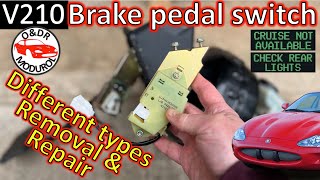
🎬 See how to repair the brake micro switch yourself.Diagnostic Flowchart
Tap your situation to follow the diagnostic path that matches what you're seeing on this vehicle.
Symptoms You May Notice
- "PARKBRAKE FAULT" message on the instrument cluster
- ABS, DSC, or other brake-related warning lights illuminated
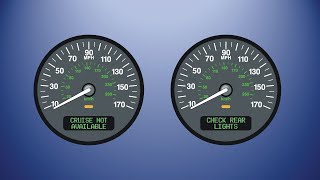
- "Cruise not available" message displayed.
- Vehicle may not shift out of Park.
- Brake lights may not function correctly or may stay on.
- Engine may enter a "Failsafe Engine Mode", sometimes accompanied by misfire-like symptoms.
- "Check rear lights" warning message.
- Immediately replacing the brake light switch without checking for TSBs or communication codes. The TSB specifically warns that replacing the switch may not resolve the issue if it's a communication fault (P1571-64 with U0100-00).
- Chasing module faults when the root cause is a weak or failing battery. Many forum users report that a new battery resolved a cascade of error messages, including the ones related to P1571.
Most Likely Causes
- Faulty Brake Light Switch 🔴 High Probability → Shop Brake Light Switch The brake light switch is a high-use mechanical part with internal plastic and metal contacts that wear out. Over time, the internal microswitches can fail, develop high resistance, or become misaligned, sending conflicting signals to the car's computers. It is the most common repair for this code when no communication faults are present.
How to confirm: Use a multimeter to test the switch's continuity and resistance as the plunger is depressed; resistance should be near zero ohms. Live data on a scan tool can also show if the switch state changes correctly and instantly. If the code appears without U0100, the switch is the prime suspect.
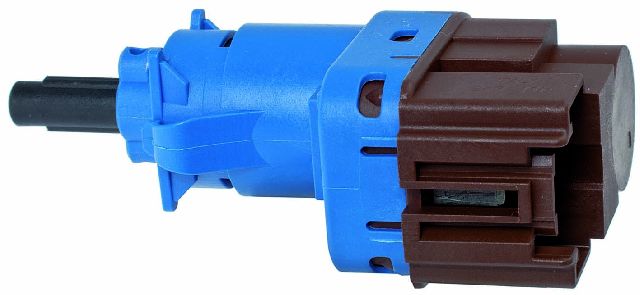
Typical fix: Replace the brake light switch assembly located above the brake pedal. This is often a 15-30 minute DIY job requiring removal of a lower dash panel and twisting the switch out of its bracket.
Est. part cost: $50-$100 - Low or Unstable Battery Voltage 🟡 Medium Probability The electronic modules in the XK are highly sensitive to voltage. An aging or weak battery, even if it can still start the car, can cause voltage drops during operation that lead to random communication faults between modules, triggering P1571 and other warnings. These cars require a specific, healthy AGM battery.
How to confirm: Test the battery voltage at rest (should be >12.4V) and while the engine is running (should be 13.5V-14.5V). A proper load test is the best confirmation of battery health. If multiple, seemingly unrelated electrical faults occur simultaneously, the battery is a strong suspect.
Typical fix: Charge or replace the vehicle's battery. Ensure the replacement is the correct type (AGM, Group 49) and size, and that the terminals are clean and tight. After replacement, window and seat memory may need to be reset.
Est. part cost: $200-$350 - Communication Issue Between Modules (SSM-71218) ⚪ Low Probability A known software/communication glitch documented by Jaguar in TSB SSM-71218, which points to an issue between the Powertrain Control Module (PCM) and the Parkbrake Module (PBM).
How to confirm: A professional scan tool (like Jaguar's SDD) is needed to check for accompanying U-codes. If both P1571-64 and U0100-00 (Lost Communication with ECM/PCM) are present without other brake switch P-codes, this is the likely cause.
Typical fix: Per the TSB, the initial fix was to clear the codes and await a software update. A dealer or specialist may need to update module software. The TSB explicitly states that adjusting or replacing the brake light switch will not resolve this specific combination of codes.
Est. part cost: $0-$200
Rare But Worth Checking
- Corroded Wiring or Connectors: Check the connectors at the brake light switch, ABS module, and Central Junction Box (Body Control Module) for any signs of corrosion or damage, especially if the car has any history of water leaks in the footwells. A bad ground for a module can also cause communication issues.
- Faulty ABS Module or Park Brake Module: While less common for this specific code, an internal failure in the ABS or Park Brake Module can cause communication errors. This is usually a last resort after all other causes have been ruled out and is often accompanied by other specific module-related codes.
- Dry Solder Joint on Brake Switch PCB: Some owners have found that the issue is not the microswitch itself, but a dry or cracked solder joint on the small printed circuit board inside the brake switch assembly. Reflowing the solder on the pins can sometimes fix the switch without needing to replace it.
Diagnosis Steps
- Check Battery Health First. Before any other steps, test the battery. Ensure it is fully charged and passes a load test. A weak battery is a known cause of numerous electronic issues on these cars.
- Perform a full vehicle scan with a diagnostic tool capable of reading Jaguar-specific codes from all modules (PCM, ABS, PBM, etc.).
- Document all stored codes. Pay close attention to the suffix on P1571 (e.g., P1571-64) and look for any U-codes, especially U0100-00.
- If P1571-64 and U0100-00 are present together, follow the guidance in TSB SSM-71218. Clear the codes and test drive. If they return, a dealer software update may be required. Do not replace the switch.
- If P1571 is present without communication codes, investigate the brake light switch. Use the scan tool's live data to monitor the brake switch status while pressing and releasing the pedal. The status should change instantly and reliably.
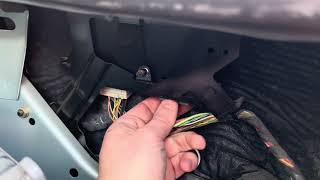
- Inspect the brake light switch connector for corrosion or loose pins. The switch is located above the brake pedal, accessible after removing a lower dash panel.
- If live data is inconclusive, remove the switch (it typically twists out of its bracket) and test its internal switches with a multimeter for proper continuity. Resistance should be very low when the switch is activated.
- If the switch and battery are good, inspect the wiring harness between the brake switch, PCM, and Parkbrake Module for any signs of chafing, damage, or corrosion.
Parts You'll Likely Need
- Brake Light Switch
(OEM #C2P14525)— This switch is a mechanical part that wears out. It's often the primary hardware suspect when P1571 appears without other communication codes. It is a very common point of failure across multiple Jaguar models.
Trusted brands: Jaguar (OEM), Standard Motor Products, Direct Replacement (from suppliers like British Parts or Rimmer Bros)
OEM price range: $60-$90
Aftermarket price range: $40-$70
Related Codes That Often Appear With This One
- U0100-00 — This code indicates 'Lost Communication With ECM/PCM'. Its presence alongside P1571-64 strongly points to the communication issue described in TSB SSM-71218, rather than a simple switch failure.
- C1095 — This code indicates an ABS pump motor circuit failure. On Jaguars, this is often caused by cracked solder joints within the ABS module itself, which can create electrical noise and communication issues on the CAN bus, potentially triggering other codes like P1571.
Technical Service Bulletins (TSBs) & Recalls
- SSM-71218: Notes that P1571-64 can be caused by a communication issue between the PCM and Parkbrake module, and replacing the switch may not be the correct fix if U0100-00 is also present. The TSB applies to XK, XF, and XJ models.
Platform-Specific Known Issues
- TSB SSM-71218 Communication Fault: Jaguar Special Service Message SSM-71218 explicitly identifies a communication issue between the Powertrain Control Module and the Parkbrake Module as a cause for P1571-64, advising against automatically replacing the brake light switch if code U0100-00 is also present.
- Owner Experience: DIY Brake Switch Replacement: Numerous owner accounts on forums confirm that when P1571 appears alone or with just symptoms like 'Cruise not available', replacing the brake light switch (C2P14525) is a highly successful DIY repair. It is described as a 15-30 minute job requiring basic tools and some contortion in the driver's footwell.
- Battery Voltage Sensitivity: The X150 platform is notoriously sensitive to battery voltage. A weak or failing battery can cause a cascade of seemingly unrelated electronic faults, including P1571, ABS, and DSC warnings.
Mechanic-Grade Diagnostic Values
- Brake Light Switch Continuity Test (Multimeter) — expected: The switch has two independent circuits. One is Normally Open (NO) for the brake lights, and the other is Normally Closed (NC) for the cruise control/ECU signal. When the plunger is pressed (simulating brake pedal at rest), the NO circuit should show infinite resistance (open) and the NC circuit should show near-zero resistance (closed). When the plunger is released (simulating brake pedal pressed), the NO circuit should show near-zero resistance and the NC circuit should show infinite resistance.. Failure: If either circuit shows high resistance (more than a few ohms) when it should be closed, or fails to switch states cleanly, the switch is faulty. Any reading other than open or closed indicates internal contact failure.
Hidden / Shadow Codes Worth Checking
- P1571-64: This is a manufacturer-specific sub-code for P1571. The '-64' suffix explicitly means 'Signal Plausibility Failure'. Its presence is a strong indicator that the PCM has received a signal from the brake switch that contradicts information from another module, such as the Parkbrake Module. This is the specific code addressed by TSB SSM-71218. (see via A Jaguar-specific diagnostic tool like SDD (Symptom Driven Diagnostics) is required to view these suffix codes. Standard OBD-II readers will typically only show 'P1571'.)
Scan Tool Commands That Help
- Jaguar SDD (or equivalent advanced scanner like iCarsoft LR): Clear Fault Memory / Erase DTCs — This is a required step in the official diagnostic path for TSB SSM-71218. If P1571-64 is present with U0100-00, the official action from Jaguar was to clear the codes and monitor if they return before performing any parts replacement.
Wiring & Ground Locations
- Engine-to-Chassis Ground Strap — On the driver's side (LHD), a braided strap runs from the gearbox bellhousing area to a stud on the chassis, just behind the front wheel.. This is a primary ground path for the entire powertrain. Corrosion or failure of this strap can introduce significant electrical noise and voltage differentials between modules, leading to a wide range of communication faults, including those that could trigger P1571.
- Driver's Side A-Pillar Ground Stud — Located inside the cabin, behind the driver's side kick panel or A-pillar trim. Multiple brown and black wires are often attached to this stud.. This is a major grounding point for many interior modules and switches, including potentially the brake light switch circuit. A loose or corroded connection here can cause intermittent and difficult-to-diagnose electrical issues.
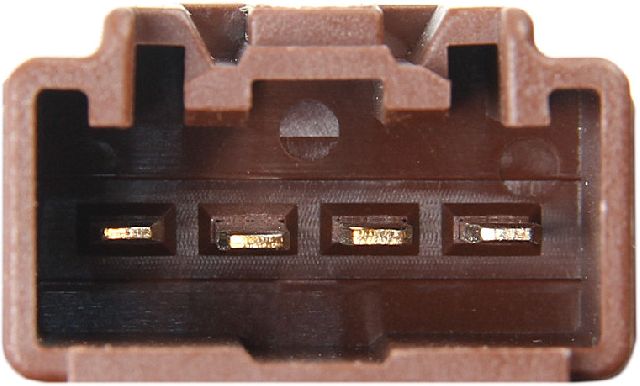
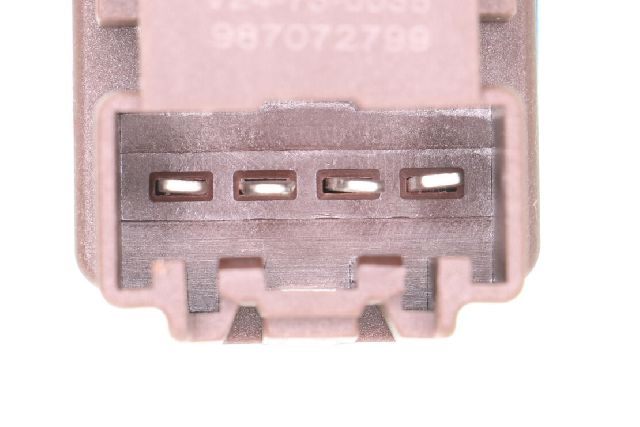
- C2P0036 — This is the identifier for the 4-pin electrical connector that plugs into the brake light switch (C2P14525) itself, located above the brake pedal.. This is the first place to check for loose pins, corrosion, or wiring damage when diagnosing a switch-related P1571 fault.
Real Owner Repair Stories
- Jaguar Forums User (2007 Jaguar XK) — ABS fault, DSC unavailable, and engine lights came on after replacing a dead battery. After clearing codes, they returned. Eventually, the DSC light flashed, the car went into limp mode, and the rear brakes locked up, causing a fire.
❌ Tried (didn't work) Replacing the battery, Clearing codes (they returned immediately), Replacing front ABS sensors
✅ What actually fixed it The root cause was determined to be a cascade of electrical faults originating from the unstable voltage of the new, but potentially not fully charged or properly integrated, battery. The final fix required a full diagnostic check with Jaguar-specific equipment to reset all modules, particularly the Electronic Parking Brake (EPB), which had likely been stuck on due to poor signals. - Jaguar Forums User (Jaguar XK8 (X100, similar switch logic)) — 'Check Rear Lights' and 'Cruise Not Available' messages. Brake lights worked perfectly.
❌ Tried (didn't work) Initial diagnosis was confusing because the brake lights functioned correctly.
✅ What actually fixed it The user replaced the brake light switch. After installation, the problem persisted. The user then removed the new switch and tested it with a multimeter, confirming it was functional. The actual fix was realizing that the problem was intermittent and related to the switch's internal contacts for the cruise control circuit, not the brake light circuit. A second attempt at replacing the switch, ensuring proper adjustment, resolved the issue. This highlights that even with working brake lights, the switch can be the cause.
OEM Part Supersession History
c2p3763→C2P14525— Standard part revision and consolidation across multiple vehicle lines (XF, XJ, E-Pace).
Heads up: No known incompatibility issues; C2P14525 is the correct and direct replacement.
Model Year Variations Within This Range
- 2010-2014: Models from 2010 onwards feature the 5.0L engine with more advanced electronics and a different PCM compared to the 4.2L engine in 2007-2009 models. While the P1571 fault code and brake switch part are the same, the later models' increased electronic complexity and sensitivity may make them more susceptible to the communication-based P1571-64 fault described in TSB SSM-71218, which was issued in 2014.
Helpful Videos
We Have This Part in Stock


The information in this article is provided for general reference and educational purposes only. Vehicle specifications, procedures, and part compatibility can vary by production date, trim level, and region. Always consult your vehicle's factory service manual and verify part numbers before purchasing or performing repairs. Safety-critical components such as airbags, seat belts, and braking systems should be installed by a qualified professional.
- Jaguar XK:
- 🧭 Diagnostic Flowchart
- 🎬 Helpful Videos
- 🛍️ Shop This Part
- What's Unique About the 2007-2014 Jaguar XK
- Symptoms You May Notice
- Most Likely Causes
- Rare But Worth Checking
- Diagnosis Steps
- Parts You'll Likely Need
- Related Codes That Often Appear With This One
- Technical Service Bulletins (TSBs) & Recalls
- Platform-Specific Known Issues
- Mechanic-Grade Diagnostic Values
- Hidden / Shadow Codes Worth Checking
- Scan Tool Commands That Help
- Wiring & Ground Locations
- Real Owner Repair Stories
- OEM Part Supersession History
- Model Year Variations Within This Range
- 🎟️ Get 5% Off