

P1572 on 2004-2010 Audi A8: Left Engine Mount Solenoid Failure Causes and Fixes
This code means the left-side active engine mount has an electrical fault, usually an internal short circuit. The most common fix is to replace the entire left engine mount assembly. Expect to pay $300-$500 for an OEM-quality part and 2-4 hours of labor. Before replacing, check the wiring for damage and consider the official Audi resistor bypass as a cheaper alternative if vibration is not a concern.
- P1572 on your A8 specifically points to an electrical short in the left (driver's side) active engine mount.
- The primary symptom is a harsh vibration at idle. Do not mistake it for a transmission problem.
- Before buying a new mount, carefully inspect the wiring harness for damage and test the mount's resistance with a multimeter (expect 10-20 ohms).
- If the mount has not physically ruptured and leaked fluid, a resistor bypass (per Audi TSB 10-08-04) is a valid, low-cost fix to eliminate the CEL.
- If replacement is necessary, use an OEM or high-quality OES brand like Lemförder. It is often recommended to replace both left and right mounts at the same time.
What's Unique About the 2004-2010 Audi A8
Unlike many vehicles with simple rubber engine mounts, the Audi A8 D3 platform uses sophisticated, electronically controlled 'active' hydraulic mounts to balance comfort and performance. This P1572 code is exclusive to this system and is not related to the brake switch or immobilizer, which are common misinterpretations from generic code readers for other brands. The failure is almost always electrical within the mount's internal solenoid or its wiring, rather than just physical wear of the rubber. Some owners and even an Audi TSB suggest bypassing the faulty solenoid with a resistor to clear the code, treating the active mount as a passive one.
Symptoms You May Notice
🎬 Watch: Common signs and symptoms of failing motor mounts.- Check Engine Light is on.
- Excessive vibration felt in the steering wheel, dashboard, or seats, particularly at idle when the car is in gear (Drive or Reverse). The vibration may lessen when shifted into Neutral or Park.
- A noticeable 'clunk' or 'thud' from the engine bay when accelerating from a stop or shifting between Drive and Reverse.
- A general feeling of roughness or harshness from the engine, as the mount is stuck in its stiffest setting.
- Replacing the front 'torque mount' or 'snub mount'. This mount is purely mechanical and has no electrical connection, so it cannot cause the P1572 code.
- Assuming the issue is with the transmission due to harsh engagement or clunking noises.
- Interpreting the code as a brake switch failure, which is the correct definition for other car brands but not for Audi.
Most Likely Causes
- Internal Failure of Left Engine Mount Solenoid 🔴 High Probability The solenoid is integrated into the mount, which is subject to constant heat and vibration, leading to eventual electrical failure of the internal coil winding, causing a short circuit.
How to confirm: Disconnect the mount's electrical connector and measure the resistance across the two pins on the mount itself. A reading near zero ohms indicates a short circuit. A good mount should have a resistance between 10-20 ohms. Compare the reading to the right-side mount for a reference.
Typical fix: Replace the entire left engine mount assembly. The solenoid is not sold as a separate component. Use a high-quality OEM (Genuine Audi) or OES (Lemförder) part for best results.
Est. part cost: $300-$550 - Damaged Wiring Harness or Connector 🟡 Medium Probability The wiring harness is routed in a hot, tight engine bay where it can become brittle, chafe against the chassis or engine, and cause a short to ground. The connector itself can also fill with oil or moisture, causing a short.
How to confirm: Visually inspect the entire length of the wiring going to the left engine mount for cracks, melting, or chafing. Check the connector for corrosion, moisture, or pushed-out pins. With the connector unplugged from the mount, use a multimeter to check for continuity between the control wire and a chassis ground; there should be none (infinite resistance).
Typical fix: Repair the damaged section of the wire or replace the connector pigtail. Ensure the harness is properly secured away from heat sources and sharp edges.
Est. part cost: $10-$50
Rare But Worth Checking
- Failed Resistor Bypass Fix: For cars that have had the TSB 10-08-04 performed, the resistor itself can fail or the connections can corrode. If you find a resistor spliced into the harness, test it to ensure it hasn't failed open or shorted.
- Engine Control Module (ECM) Fault: → Shop Engine Control Module (ECM) This is extremely rare. The ECM's internal driver for the mount would have to fail. This should only be considered after definitively ruling out the mount, its wiring, and any resistor bypass as the cause.
Diagnosis Steps
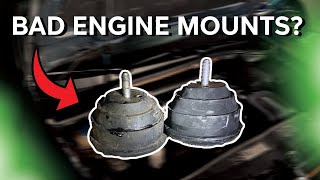
- Read the fault codes with an Audi-specific scan tool like VCDS to confirm P1572 is present and active. 🎬 See how to locate and identify a bad engine mount.
- Clear the codes. If P1572 returns immediately, it confirms a persistent short circuit.
- Visually inspect the left engine mount. Look for signs of purple or dark brown hydraulic fluid leakage, which indicates a complete mechanical failure of the mount in addition to the electrical fault. If it's leaking, it must be replaced regardless of electrical tests.
- Locate the electrical connector on the left engine mount. Disconnect it and inspect for corrosion, oil, or damage.
- Using a multimeter, measure the resistance of the solenoid inside the mount. A reading near 0 ohms confirms an internal short. A good mount should read between 10-20 ohms. A reading of infinity (OL) would indicate an open circuit (P1573).
- As a quick test, swap the electrical connectors between the left and right engine mounts (if the harness length allows). Clear codes and see if the fault moves to the right side (P1577). If the fault moves, the issue is in the wiring or ECM. If the P1572 fault stays on the left side, the mount itself is bad.
- If the mount tests bad, inspect the vehicle-side harness for a previously installed resistor bypass from TSB 10-08-04. If present, test the resistor and its connections.
- If the mount tests good, inspect the vehicle-side harness. Check for continuity to ground on the signal wire leading back to the ECM. If continuity is found, trace the harness to find the location of the short.
- If both the mount and wiring test good, the fault may lie within the ECM, but this is highly unlikely.
Parts You'll Likely Need
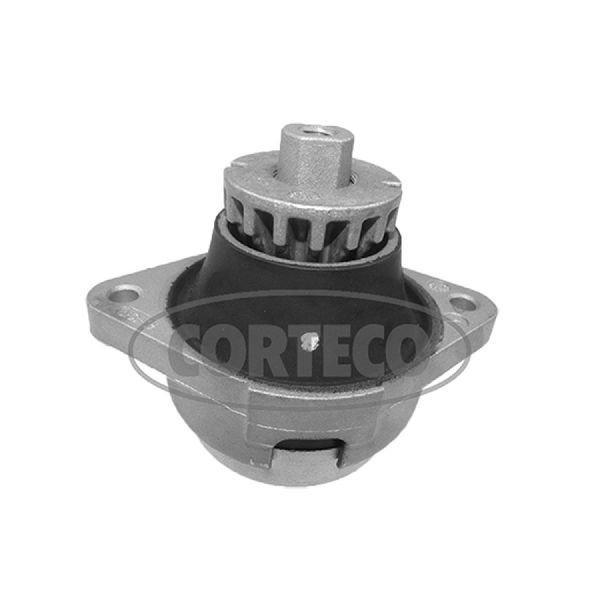
- Left Engine Mount (Active/Electronic)
(OEM #4E0199381FL (for 4.2L V8 / 5.2L V10), 4E0199381FM (for 6.0L W12))— This is the most common failure point. The internal solenoid shorts out, requiring the replacement of the entire mount assembly. Part numbers vary by engine.
Trusted brands: Genuine Audi, Lemförder
OEM price range: $450-$600
Aftermarket price range: $300-$450 - Right Engine Mount (Active/Electronic)
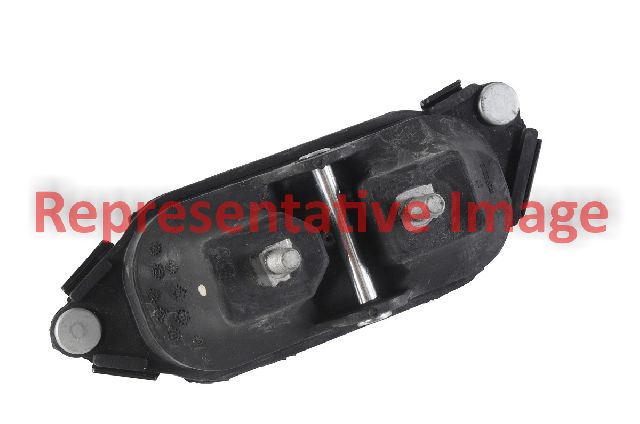
(OEM #4E0199382G (for 4.2L V8 / 5.2L V10), 4E0199382D (for 6.0L W12))— Often replaced at the same time as the left mount, as they are the same age and subject to the same conditions. A failure on the right side would trigger code P1577.
Trusted brands: Genuine Audi, Lemförder
OEM price range: $450-$600
Aftermarket price range: $300-$450 - Active Mount Resistor Bypass
(OEM #034-708-0000 (Aftermarket Example))— A low-cost alternative to replacing the mount if vibration is not a concern. This plugs into the harness to trick the ECM into thinking the mount is functional, clearing the Check Engine Light. Audi TSB 10-08-04 describes a similar procedure.
Trusted brands: 034Motorsport, DIY Resistor
OEM price range: $25
Aftermarket price range: $5-$25
Related Codes That Often Appear With This One
- P1573 — This is the equivalent code for the left-side engine mount ('Open Circuit'). If wiring is damaged or work was done on both mounts, you might see faults for both.
- P1577 — This is the code for 'Right Engine Mount Solenoid Valve (N145): Short to Ground'. Seeing both P1572 and P1577 could indicate a systemic wiring issue, a problem with the ECM power supply, or simply that both mounts have failed over time, which is common.
Technical Service Bulletins (TSBs) & Recalls
- Audi TSB 10-08-04: Describes a procedure to bypass the active engine mount solenoid by installing a resistor into the wiring harness. This is an official Audi-sanctioned fix to extinguish the check engine light without replacing the mount, effectively making it a passive mount.
Platform-Specific Known Issues
- The hydraulic fluid inside these mounts is a distinct purple or dark brown color. Any sign of this fluid on or below the mount indicates it has failed mechanically and must be replaced, regardless of any electrical codes.
- Replacement requires supporting the engine from above with an engine support bar or from below with a jack. The front subframe may need to be lowered slightly to gain clearance for removal and installation, especially on the V10 and W12 models.
Mechanic-Grade Diagnostic Values
- Left Engine Mount (N144) Solenoid Resistance — expected: 14-15 ohms. The range of 10-20 ohms is acceptable, but a healthy mount is often tighter.. Failure: Near 0 ohms indicates a short to ground (P1572). Infinite resistance (OL) indicates an open circuit (P1573).
- Voltage at Engine Mount Harness Connector (Key On, Engine Off) — expected: Approximately 12V DC on one pin, 0V on the other.. Failure: No voltage suggests a break in the power supply wire from the ECM or a blown fuse. Voltage on both pins could indicate a short to power.
Scan Tool Commands That Help
- VCDS (VAG-COM): Engine (01) -> Output Tests (03) -> Left Engine Mount Solenoid Valve (N144) — Use this to command the solenoid to activate. You should hear an audible 'click' from the mount if the solenoid and its wiring are functional. This helps differentiate a wiring/ECM issue from an internal mount failure. The test is typically run with the engine off.
Wiring & Ground Locations
- Ground Connection 12 — In the engine compartment, on the left side frame rail.. A corroded or loose main engine bay ground can cause a variety of intermittent electrical faults, including short-to-ground codes for various components like the N144 solenoid.
- Ground Connection 640 — Also located in the left side of the engine compartment, serves as another key grounding point for components in that area.. Similar to ground point 12, ensuring this connection is clean and tight is a crucial step when diagnosing any electrical fault on the left side of the engine.
- N144 Connector (T2du) — A 2-pin black connector directly on the body of the left engine mount.. This is the primary point for testing. Pin 1 typically receives the control signal from the ECM, and Pin 2 is the ground path. All resistance and voltage checks for the mount and harness begin here.
Real Owner Repair Stories
- AudiWorld Forums (2005 Audi A8 with 85,000 miles) — Check Engine Light with code P1572 (Left Engine Mount Solenoid Valve (N144): Short to Ground).
❌ Tried (didn't work) The owner considered replacing both mounts as preventative maintenance but was hesitant due to cost.
✅ What actually fixed it The owner followed advice from other forum members and implemented the resistor bypass fix outlined in Audi TSB 10-08-04. This cleared the check engine light without the expense of replacing the mount, as the mount was not physically leaking.
OEM Part Supersession History
4E0199381BS, 4E0199381CQ, 4E0199381EF, 4E0199381ES→4E0199381FL— Standard part evolution for improved durability or manufacturing process changes.
Heads up: All previous revisions are replaced by 4E0199381FL, which is the current part for the 4.2L V8 and 5.2L V10. Always verify with VIN as there can be mid-year splits.
Diagnostic Flowchart
Other Known Issues on This Vehicle
Issues unrelated to this code that are worth knowing about as an owner of this generation:
- Timing Chain Tensioner & Guide Failure (4.2L V8) 🔴 High — Common on engines over 100,000 miles. Characterized by a startup rattle from the rear of the engine. Repair is extremely labor-intensive (engine out service) and can cost $2,500-$4,500+.
- Adaptive Air Suspension Leaks 🟠 Medium — Very common after 100,000-150,000 km. Air struts (especially rear) develop slow leaks, causing the vehicle to sag overnight and the compressor to overwork and fail.
- MMI Screen Mechanism Gear Failure 🟡 Low — Extremely common. The plastic gears that operate the retractable MMI screen strip or break, causing grinding noises or the screen to get stuck. Aftermarket brass or bronze replacement gears are widely available as a permanent fix.
- Clogged Plenum Drains & Water Ingress 🔴 High — Debris clogs the drains under the windshield cowl, causing water to pool and leak into the cabin's passenger footwell. This can destroy sensitive electronics located under the carpet, such as the keyless entry module. Audi has issued a TSB (2025048/2, formerly 80-10-01) for a related water ingress issue from a body seam. (Ref: TSB 2025048/2)
- Upper Front Control Arm Bushing Wear 🟠 Medium — The large bushings on the upper control arms frequently fail, causing clunking noises over bumps and alignment issues. A known issue on many Audi platforms of this era.
- ZF 6HP Transmission Mechatronic Sleeve/Seal Leak 🟠 Medium — The transmission can develop harsh shifting or slipping. This is often caused by fluid leaks from the mechatronic unit's electrical connector sleeve, leading to low fluid levels.
Used vs. New Parts: Buying Guide for This Vehicle
When a used part is the smart pick: A used engine mount is generally not recommended for this repair. The part is a known failure item that degrades from heat and vibration, and contains both a rubber element and an electrical solenoid. A used part has an unknown remaining lifespan and could fail shortly after installation, wasting significant labor costs.
Donor-vehicle mileage cap: roughly under 50000 miles for the part to have meaningful remaining life.
What to inspect on the donor part:
- Check for any signs of purple or dark brown fluid residue, indicating a hydraulic leak.
- Inspect the rubber for any cracks, perishing, or separation from the metal body.
- If possible, test the resistance of the solenoid pins; it should be between 10-20 ohms.
- Ensure the electrical connector is not cracked, corroded, or damaged.
OEM-only on this vehicle (don't cheap out):
- While not strictly 'OEM-only', using a Genuine Audi part or a high-quality OES (Original Equipment Supplier) part is strongly advised for active engine mounts. Cheaper, unbranded aftermarket versions may not have the correct hydraulic properties or solenoid specifications, leading to persistent vibration or premature failure.
Aftermarket brands forum-validated for this vehicle:
- Lemförder: Widely regarded as the OEM supplier for many Audi suspension and chassis components, including these mounts. Often the exact same part as Genuine Audi without the dealer markup.
- Corteco: Another reputable OES brand that is often considered equivalent to original parts for European vehicles.
Brands owners have reported issues with on this vehicle:
- Unbranded or generic parts from online marketplaces. While significantly cheaper, forum discussions often highlight issues with poor fitment, incorrect rubber durometer (hardness) causing vibration, and rapid failure.
Real Owner Stories
Aggregated from forums and TSBs cited above. Mileages and costs reflect what owners reported in those sources.
2004 Audi A8L 4.2L V8
Symptoms: Check Engine Light was on for an engine mount fault. Owner was trying to determine if the issue was purely electrical or if the mount had also failed mechanically by leaking fluid.
What fixed it: The owner learned that if the mount is not physically ruptured or leaking, the electrical fault can be bypassed to turn off the light, but a leaking mount must be replaced entirely.
Source hint: AudiWorld Forums - '2004 A8L Engine Mount Replacement' (2017-10-23)
2007 Audi A8 4.2L V8
Symptoms: Check Engine Light on, and the car had a rougher idle and more vibration because the failed mount defaulted to its firmest setting.
What fixed it: The owner considered the official Audi TSB 10-08-04 fix, which involves installing a resistor in the wiring harness to bypass the faulty solenoid and turn off the Check Engine Light, accepting that the mount would remain in its passive (firm) state.
Source hint: AudiWorld Forums - 'Motor Mount Replacement - All or Just One?' (2020-12-01)
Related OBD-II Codes
Frequently Asked Questions
My 2005 A8 has a P1572 code but no vibrations. Can I just clear it and ignore it?
What is the resistor bypass mentioned in Audi TSB 10-08-04 for the P1572 code?
I see purple fluid leaking from under my engine. Is this related to the P1572 fault?
How can I determine if the P1572 fault is caused by the engine mount itself or the wiring harness?
What is the recommended replacement part for a failed engine mount on my A8 W12?
Is this engine mount problem common on other vehicles besides the Audi A8?
How difficult is the engine mount replacement job on a 2008 Audi A8?
Helpful Videos
We Have This Part in Stock




The information in this article is provided for general reference and educational purposes only. Vehicle specifications, procedures, and part compatibility can vary by production date, trim level, and region. Always consult your vehicle's factory service manual and verify part numbers before purchasing or performing repairs. Safety-critical components such as airbags, seat belts, and braking systems should be installed by a qualified professional.
- Audi A8:
- 🧭 Diagnostic Flowchart
- 🎬 Helpful Videos
- 🛍️ Shop This Part
- What's Unique About the 2004-2010 Audi A8
- Symptoms You May Notice
- Most Likely Causes
- Rare But Worth Checking
- Diagnosis Steps
- Parts You'll Likely Need
- Related Codes That Often Appear With This One
- Technical Service Bulletins (TSBs) & Recalls
- Platform-Specific Known Issues
- Mechanic-Grade Diagnostic Values
- Scan Tool Commands That Help
- Wiring & Ground Locations
- Real Owner Repair Stories
- OEM Part Supersession History
- Other Known Issues on This Vehicle
- Used vs. New Parts: Buying Guide for This Vehicle
- Real Owner Stories
- 2004 Audi A8L 4.2L V8
- 2007 Audi A8 4.2L V8
- Related OBD-II Codes
- Frequently Asked Questions
- 🎟️ Get 5% Off